Certificate of Eligibility for Expungement in Florida
Understanding the impact of a certificate of eligibility for expungement in Florida is crucial for immigrants. Learn how expunged and sealed records can affect your immigration status, and discover the steps involved in the expungement process. Florida Immigration Lawyers in Orlando offer expert guidance for navigating these complexities.
A certificate of eligibility for expungement in Florida can significantly impact your immigration status. Understanding how expungement and sealed records affect immigration is crucial, especially for immigrants in Orlando, Florida. Key takeaways include:
- Expunged records may still be visible to immigration authorities.
- Sealed records can influence immigration decisions.
- Consulting an immigration attorney is advised for personalized guidance.
Certificate of Eligibility for Expungement in Florida: Impact on Immigration
In Florida, obtaining a certificate of eligibility for expungement is a vital step for those looking to clear their criminal records. This process offers a chance at a fresh start, removing past mistakes from public view. However, for immigrants, it's essential to understand that expungement's impact extends beyond state-level benefits, significantly affecting immigration status. Whether you're in Orlando or elsewhere in Central Florida, knowing these implications is crucial for your immigration journey. Federal immigration laws often operate under different rules than state laws, still considering expunged offenses. Contact Florida Immigration Lawyers at 1-844-YO-PELEO for a free case review.
What is a Certificate of Eligibility for Expungement?
A certificate of eligibility for expungement in Florida is a document that confirms your eligibility to have a criminal record expunged. This certificate is the first, indispensable step in the expungement process. Without it, you cannot petition the court.
To obtain this certificate, you must meet specific criteria, including having no prior expungements or sealings and ensuring the offense is eligible under Florida law. This process can be complex, especially for immigrants, as even eligible state offenses might carry federal immigration consequences. The certificate does not automatically expunge the record but allows you to petition the court. Understanding the distinct immigration implications of expunged records is paramount.
For example, while a misdemeanor shoplifting charge might be expungeable in Florida, federal immigration law could still classify it as a Crime Involving Moral Turpitude (CIMT), potentially impacting your admissibility or eligibility for certain immigration benefits. This discrepancy between state and federal definitions highlights why personalized legal advice from Florida Immigration Lawyers is so critical.
How Does Expungement Affect Immigration Status?
Expungement can affect immigration status in several critical ways. While an expunged record is typically inaccessible to the public and many employers, it's a common misconception that it vanishes entirely from federal immigration authorities' view. U.S. immigration law often defines "conviction" broadly, encompassing offenses that have been expunged or sealed under state law.
This means federal agencies like USCIS, ICE, and CBP can and will access these records when making decisions about visas, green cards, and citizenship applications. Transparency is crucial; failing to disclose an expunged record can lead to accusations of misrepresentation. If the expunged offense involves a "crime involving moral turpitude" (CIMT) or an aggravated felony under federal law, it could still render an immigrant inadmissible or deportable. Understanding these significant impacts, especially in Florida, is vital for immigrants seeking legal status in the U.S.
A real-world scenario could involve an immigrant who successfully expunges a DUI charge in Florida. While this looks clean on a state background check, USCIS, during a naturalization interview, might still inquire about the underlying facts of the DUI. Depending on the specifics, such as reckless driving or injury, it could still be deemed a negative factor or even a bar to good moral character, which is required for citizenship. This illustrates the fundamental difference between state and federal legal interpretations regarding criminal histories.
Steps to Obtain a Certificate of Eligibility for Expungement
Embarking on the expungement process in Florida requires meticulous attention to detail and a clear understanding of each step. Successfully navigating these stages is critical to obtaining your Certificate of Eligibility and ultimately clearing your record.
- Determine Eligibility: Ensure your offense is eligible under Florida law.
- Complete Application: Fill out the application form provided by the Florida Department of Law Enforcement (FDLE).
- Submit Fingerprints: Provide a set of fingerprints for a background check.
- Pay Fees: Pay the required fees to process the application.
- Receive Certificate: If approved, receive the certificate of eligibility.
- File Petition: Submit a petition for expungement to the court with the certificate.
The entire process, from initial application to final court decision, can be lengthy, often taking several months. Delays can arise from incomplete paperwork or background check issues. Consulting with an experienced immigration lawyer, such as Florida Immigration Lawyers, is highly recommended to navigate these complexities, especially for immigrants in Orlando, ensuring all documentation is correctly prepared and potential immigration challenges are anticipated.
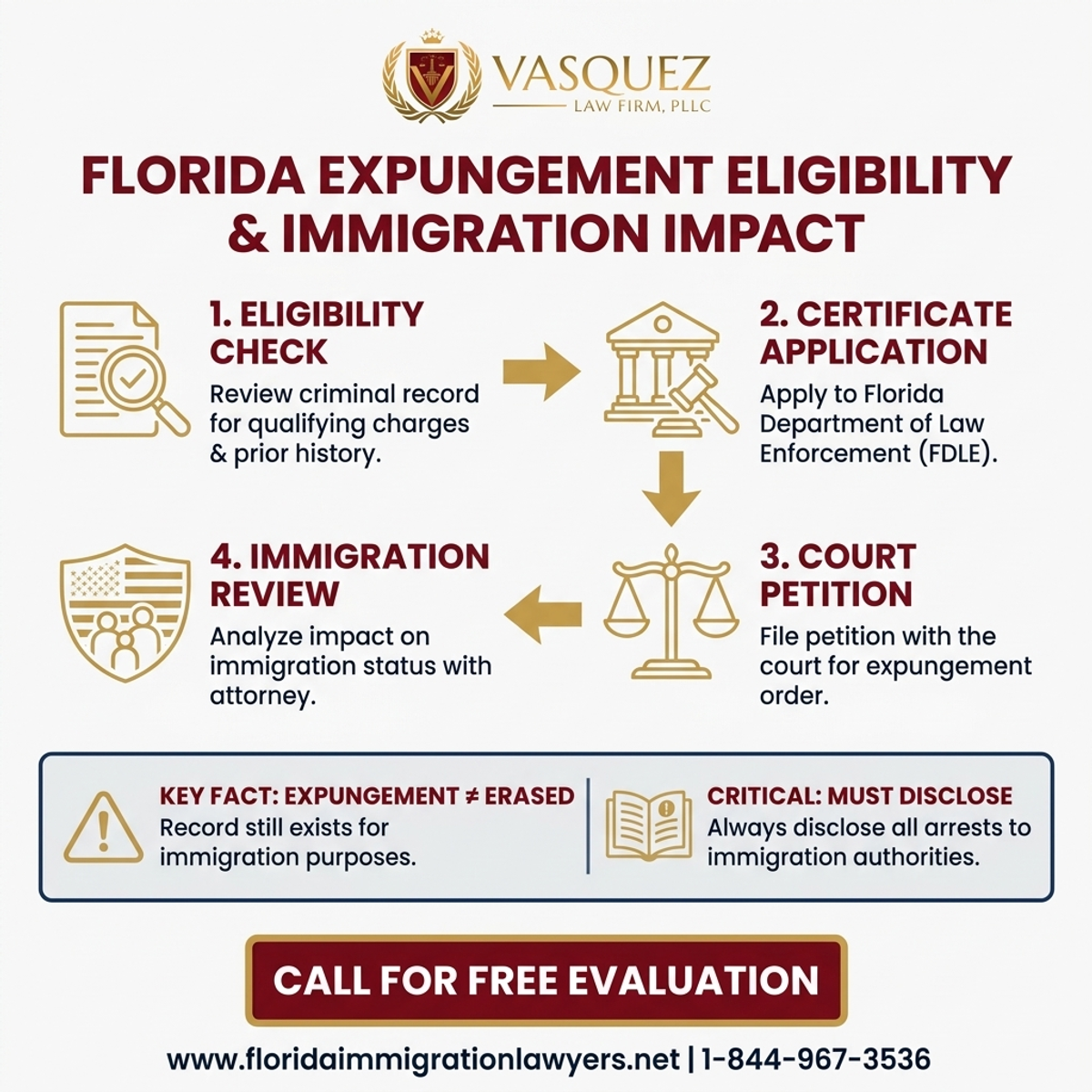
Step-by-Step Process — Certificate of Eligibility for Expungement in Florida: Impact on Immigration
Document Checklist for Expungement
A comprehensive and accurate document checklist is the backbone of a successful expungement application. Missing or incorrectly completed documents can lead to significant delays or even outright denial, jeopardizing your efforts to clear your record.
- Completed Application Form
- Fingerprint Card
- Payment for Fees
- Supporting Documents (e.g., court documents, police reports)
- Certificate of Eligibility
- Petition for Expungement
Ensuring you have all necessary documents, meticulously completed and accurately submitted, is crucial for a smooth expungement process. Beyond just gathering the items, it’s vital to ensure their contents are consistent and that they meet all legal requirements. An immigration attorney from Florida Immigration Lawyers can assist in reviewing these documents, ensuring they do not inadvertently create issues for your immigration case.
Timeline and Processing Expectations
Understanding the timeline and processing expectations for expungement in Florida is vital for managing your expectations and planning your future. While the table below provides typical timeframes, remember these are estimates, and individual cases can vary significantly.
| Stage | Typical Timeframe | Notes |
|---|---|---|
| Application Submission | 1-2 months | Includes background checks |
| Certificate Issuance | 1 month | Dependent on eligibility |
| Petition Filing | 1-3 months | Varies by court |
| Hearing and Decision | 1-6 months | May involve multiple court appearances |
Several factors can influence the overall timeline, including court caseloads, FDLE processing efficiency, and your criminal history's complexity. For immigrants, additional scrutiny or the need for foreign documents can also extend these periods. Proactive follow-up and legal guidance from Florida Immigration Lawyers can help streamline the process and address delays swiftly.
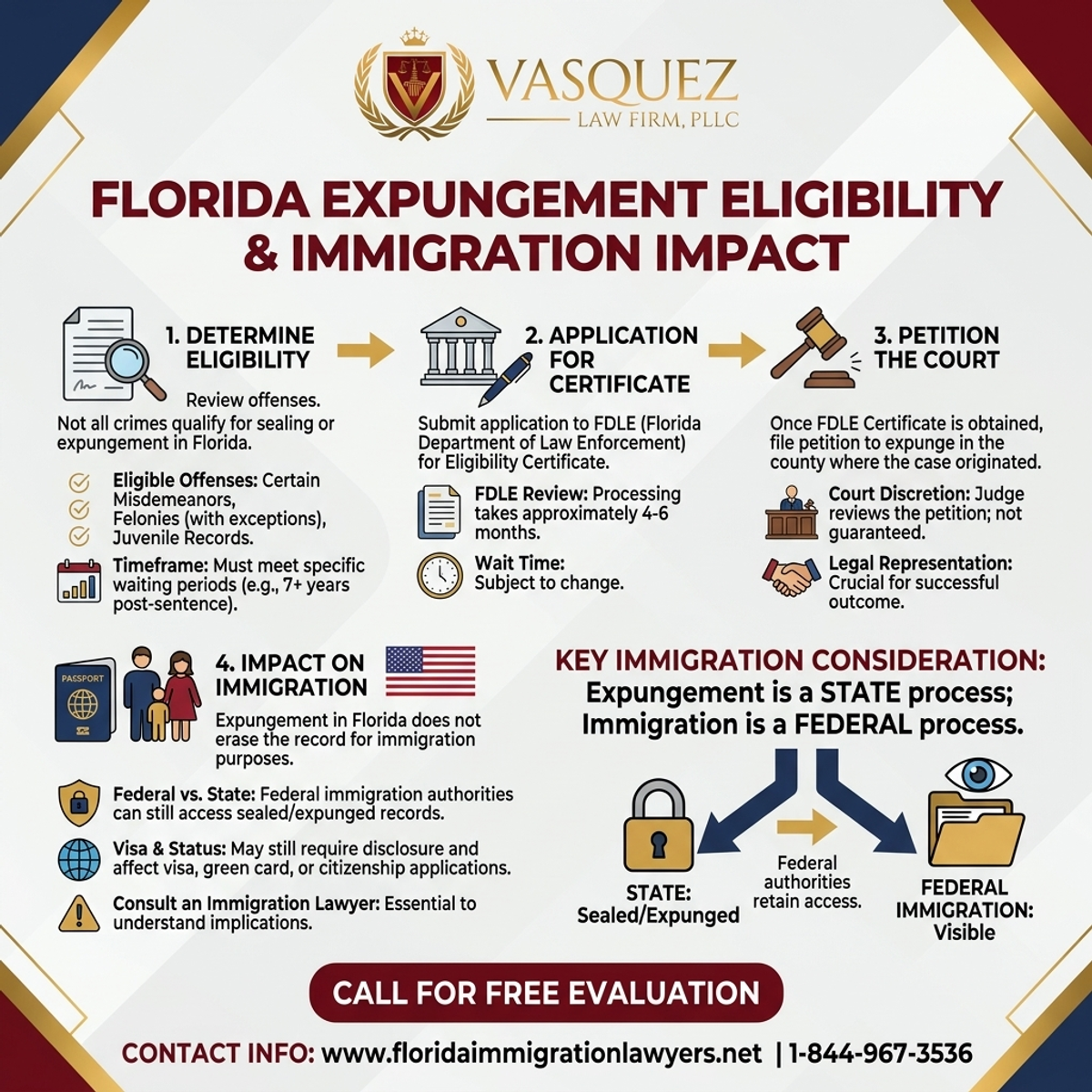
Key Statistics — Certificate of Eligibility for Expungement in Florida: Impact on Immigration
Cost Factors and Fee Breakdown
Navigating the expungement process involves various cost factors, and understanding these fees upfront is essential for proper financial planning. While some costs are fixed, others can vary significantly depending on your case's specifics and the level of legal assistance required.
| Item | Typical Fee | Notes |
|---|---|---|
| Application Fee | Varies | FDLE processing fee |
| Fingerprinting | Varies | Cost for fingerprint card |
| Attorney Fees | Varies | Depends on case complexity |
| Court Filing Fee | Varies | Charged by the court |
While the costs may seem like an investment, consider it an investment in your future, especially for your immigration journey. Attempting this complex legal process without professional guidance can lead to costly errors, delays, or even denial, with long-term negative implications for your immigration status. Florida Immigration Lawyers can ensure the process is handled correctly and protect your immigration interests. Do not navigate this process alone. Contact Florida Immigration Lawyers today.
Common Mistakes to Avoid
The expungement process, while offering significant benefits, is riddled with potential pitfalls. For immigrants, these mistakes carry even greater weight, as an error in the state expungement process can have irreversible negative consequences on your immigration status. Being aware of these common mistakes is the first step toward avoiding them.
- Not Checking Eligibility: Ensure your offense qualifies for expungement.
- Failing to Disclose All Records: Immigration authorities can access expunged records.
- Missing Deadlines: Timely filing is crucial to avoid delays.
- Incorrectly Filing Paperwork: Mistakes can result in application denial.
- Not Consulting an Attorney: Legal advice can prevent costly errors.
- Ignoring Immigration Implications: Understand how expungement affects your status.
- Failing to Prepare for Court: Be ready for possible hearings.
- Overlooking Required Documents: Missing documents can stall the process.
- Assuming Expungement Erases All Issues: Some consequences may remain.
- Not Considering Future Implications: How might this affect future applications?
Avoiding these common mistakes is
Sources and References
- U.S. Citizenship and Immigration Services (USCIS)
- Executive Office for Immigration Review (EOIR)
- U.S. Department of State
- Immigration and Nationality Act (INA), 8 U.S.C. Chapter 12
Do Not Navigate This Process Alone
Our experienced immigration attorneys are ready to fight for you. Get a free, confidential case review today.
Se Habla Español
Or leave your details and we’ll call you:
Free Evaluation in 24 Hours
Or talk to us right now

AI voice assistant — available 24/7
FreeFrequently Asked Questions

William J. Vásquez
Founding Attorney · Vasquez Law Firm
U.S. Air Force veteran and immigration attorney with years of hands-on U.S. immigration experience. J.D., NCCU School of Law. AILA member. Admitted to the 4th, 5th, and 11th Circuit Courts.
Available 24/7 - Free Evaluations
Reviewed for legal accuracy by William J. Vásquez
Licensed in North Carolina; U.S. immigration is federal practice.
Related Legal Services
Our Florida immigration attorneys can help you with deportation defense, family immigration services and immigration lawyer cost in Florida. Call today at 1-844-YO-PELEO for a free case review.
Related Links
Related Topics
Free Legal Case Review
Discuss your case with our experienced attorneys. We're available 24/7.
Se Habla Español - Estamos aquí para ayudarle.
Related Articles
DUI Immigration Consequences in Florida 2026
A DUI conviction in Florida can have severe immigration consequences, potentially leading to inadmissibility, deportation, or denial of immigration benefits. For non-citizens, a DUI is not just a traffic offense but a serious criminal matter that federal immigration law scrutinizes closely. Factors like multiple offenses, injury, or property damage can escalate a simple DUI to a Crime Involving Moral Turpitude (CIMT) or even an aggravated felony, triggering mandatory detention and removal proceedings. Understanding the specific nature of your Florida conviction and its interpretation under the Immigration and Nationality Act (INA) is crucial. This article outlines how DUIs impact immigration status, the grounds for inadmissibility and deportation, a step-by-step guide to navigating the process, essential documentation, and expected timelines for 2026. We also highlight common mistakes to avoid and when to seek legal counsel from an experienced immigration attorney. Florida Immigration Lawyers offers comprehensive support for individuals facing these challenging situations, providing expert guidance through complex legal landscapes.
Dual Citizenship Lawyer in Florida: What You Need to Know
For Florida residents, the concept of dual citizenship, or holding two passports, offers a compelling blend of opportunities and challenges. While the U.S. generally permits dual nationality, the path to achieving this status requires a meticulous understanding of both U.S. immigration laws and the citizenship policies of your country of origin. This guide explores the definition of dual citizenship, the detailed step-by-step process for U.S. naturalization, and the significant benefits and potential pitfalls involved. We cover essential documentation, typical timelines, and cost considerations for 2026, providing crucial insights for anyone in Orlando, Miami, or across Florida considering this important legal step. Learn about common mistakes to avoid and understand when to seek professional legal counsel to navigate this complex process successfully. Florida Immigration Lawyers is here to provide expert, bilingual support for your dual citizenship journey.
Immigration Lawyer Orlando Free Consultation in Florida
For individuals and families in Orlando, Florida, navigating the complexities of U.S. immigration law requires expert guidance. An immigration lawyer in Orlando offers crucial support for everything from visa applications and green card processes to naturalization and deportation defense. This comprehensive guide details what a free consultation covers, providing a step-by-step overview of immigration pathways, essential document checklists, and expected timelines in 2026. We also highlight common mistakes to avoid, discuss the critical role of legal counsel in deportation and asylum cases, and explain why choosing a local Orlando immigration attorney is beneficial. Florida Immigration Lawyers is dedicated to serving the diverse community of Orlando with compassionate, effective legal solutions, ensuring you receive personalized advice and robust representation for a successful immigration journey.
EAD Advance Parole Combo Card in Florida: What You Need
An EAD advance parole combo card allows individuals with pending adjustment applications to both work and travel abroad without jeopardizing their green card application. Learn how to apply in Florida, what documents you need, and common mistakes to avoid.