Asylum Interview Preparation in Florida
Prepare effectively for your asylum interview in Coral Springs, Florida. Learn crucial steps, avoid common mistakes, and understand the asylum process with our expert guidance.

Asylum Interview Preparation in Florida: Your Comprehensive Guide to Success
The asylum interview is arguably the most critical step in your journey toward securing protection in the United States. For individuals seeking refuge in Florida, this interview with a USCIS Asylum Officer is a pivotal moment where you present your case, share your story of persecution, and demonstrate your eligibility for asylum. The stakes are incredibly high, and thorough preparation is not just recommended—it's essential. A well-prepared applicant can articulate their experiences clearly, consistently, and compellingly, significantly increasing their chances of a positive outcome. This comprehensive guide will walk you through the intricacies of preparing for your asylum interview in Florida, offering expert tips and highlighting the importance of legal counsel to navigate this complex process. If you're facing an asylum interview, understanding what to expect and how to present your case effectively is paramount. Contact us today for a free consultation to begin your preparation.
Understanding the Asylum Process in Florida
Before diving into interview preparation, it's crucial to grasp the broader asylum process, particularly as it pertains to Florida. Asylum is a form of protection granted to people who meet the definition of a refugee—someone who has been persecuted or fears they will be persecuted on account of race, religion, nationality, membership in a particular social group, or political opinion. The process typically begins with filing Form I-589, Application for Asylum and for Withholding of Removal, within one year of your arrival in the U.S., though exceptions exist.
In Florida, asylum seekers interact primarily with USCIS asylum offices, such as the one in Orlando, which serves a wide geographical area. There are two main paths to asylum: affirmative asylum and defensive asylum. Affirmative asylum is sought by individuals who are not currently in removal proceedings and proactively apply with USCIS. Defensive asylum, on the other hand, is requested by individuals who are already in removal proceedings before an immigration judge. Understanding which path you are on is fundamental, as it dictates the specific procedures and timelines you will follow. Navigating the complex landscape of U.S. immigration law requires a deep understanding of these distinctions. For a broader overview of various immigration pathways and legal assistance, explore our dedicated resources on immigration law. Our firm specializes in helping individuals with all aspects of asylum law, ensuring your application is robust and well-supported.
Key Steps to Prepare for Your Asylum Interview
Effective preparation is the cornerstone of a successful asylum interview. This involves meticulous attention to detail, a clear understanding of your narrative, and strategic practice.
Gathering Essential Documents:
Your claim is only as strong as the evidence supporting it. Begin by compiling all relevant documents:
- Personal Identification: Passports, birth certificates, national ID cards, marriage certificates, and any other official identification for yourself and any family members included in your application.
- Evidence of Persecution: This is the core of your case. Collect police reports, medical records (detailing injuries from persecution), court documents, letters from witnesses, affidavits from family or friends, photos, videos, and any official documents that substantiate your claims.
- Country Conditions Evidence: Include news articles, human rights reports, and expert testimony about the general conditions in your home country that support your fear of persecution.
- Your I-589 Application: Ensure you have a complete copy of your filed I-589 and all supporting documents. Review it thoroughly to refresh your memory and ensure consistency with your testimony.
- Translations: Any document not in English must be accompanied by a certified English translation.
Organize these documents neatly, perhaps in binders, making them easy to reference during the interview.
Mastering Your Narrative:
The asylum officer needs to hear a clear, consistent, and credible account of your experiences.
- Develop a Chronological Story: Outline the events of your persecution in a logical, chronological order. Practice telling your story aloud, focusing on key details, dates, and locations.
- Consistency is Key: Your oral testimony must align perfectly with the information provided in your I-589 application and supporting documents. Any inconsistencies, even minor ones, can raise doubts about your credibility.
- Be Specific and Detailed: Avoid vague statements. Provide specific examples of threats, attacks, or discrimination you faced. Explain who persecuted you, when it happened, where it occurred, what happened, and why you believe you were targeted (on account of a protected ground).
- Emotional Impact vs. Factual Accuracy: While your story is deeply personal and emotional, focus on presenting the facts clearly and calmly. The officer is looking for credible evidence, not just an emotional appeal.
- Anticipate Difficult Questions: Think about potential challenging questions the officer might ask, especially regarding inconsistencies, gaps in your story, or alternative solutions you might have pursued.
Understanding the Interview Environment:
Knowing what to expect can alleviate anxiety.
- Who Will Be Present: Typically, you, your attorney (if you have one), the asylum officer, and a USCIS-provided interpreter (if needed). Family members included in your application may also be present.
- Role of the Asylum Officer: The officer's job is to gather all relevant facts, assess your credibility, and determine if you meet the legal definition of an asylum seeker. They will ask open-ended questions and follow-up questions.
- Honesty and Clarity: Always tell the truth, even if a detail seems minor or embarrassing. If you don't understand a question, ask for clarification. If you don't know an answer, say so. Guessing can lead to inconsistencies.
- Dress Code and Demeanor: Dress respectfully, as you would for a professional meeting. Maintain eye contact, speak clearly, and try to remain calm.
Practice, Practice, Practice:
Rehearsal is invaluable.
- Mock Interviews: Conduct mock interviews with your attorney, a trusted friend, or family member. This helps you practice articulating your story, anticipate questions, and manage your nerves.
- Review Your I-589: Read your application multiple times. You should be intimately familiar with every detail.
- Anticipate Follow-Up Questions: For every statement you make, consider what follow-up questions an officer might ask.
Common Pitfalls and How to Avoid Them
Even with diligent preparation, certain mistakes can jeopardize an asylum claim. Being aware of these common pitfalls is the first step in avoiding them.
- Inconsistencies in Testimony or Documents: This is perhaps the most damaging error. Discrepancies between your oral testimony, your I-589 application, and supporting documents can severely undermine your credibility. Even minor inconsistencies in dates, locations, or sequences of events can lead an officer to doubt your entire story. Avoidance: Thoroughly review your I-589 and all evidence multiple times. Practice your story to ensure it aligns perfectly with written submissions.
- Lack of Sufficient Supporting Evidence: A compelling story needs corroboration. Relying solely on your testimony without any supporting documents (e.g., medical records, police reports, news articles) can weaken your case, especially if the events are not easily verifiable. Avoidance: Collect every piece of evidence you can, no matter how small. Even affidavits from witnesses who can attest to your character or events can be helpful.
- Failure to Disclose All Relevant Information: Sometimes applicants omit details they deem embarrassing, irrelevant, or too painful to recount. However, withholding information that later comes to light can be interpreted as an attempt to deceive. Avoidance: Be completely transparent with your attorney and the asylum officer. It's better to address sensitive issues upfront with proper context.
- Nervousness Impacting Clarity: It's natural to be nervous, but extreme anxiety can make it difficult to articulate your story clearly or remember crucial details. This can be misinterpreted as evasiveness or dishonesty. Avoidance: Practice mock interviews to build confidence. Focus on breathing techniques and remember that the officer expects you to be nervous.
- Misunderstanding Questions or Interpreter Issues: If you don't understand a question, do not guess. Similarly, if you believe the interpreter is misinterpreting your words or the officer's questions, you must speak up immediately. Avoidance: Clearly state "I don't understand" or "Can you please rephrase the question?" If there's an issue with interpretation, politely inform the officer.
- Not Knowing Your Own Story Well Enough: While you've lived your story, the stress of the interview can cause memory blanks. Fumbling for details or appearing unsure of your own experiences can raise red flags. Avoidance: Rehearse your narrative until it feels natural and you can recall key facts effortlessly.
- Failing to Connect Your Story to Legal Grounds: The officer isn't just listening to a tragic story; they are assessing if your persecution falls under one of the five protected grounds for asylum (race, religion, nationality, membership in a particular social group, or political opinion). Many applicants fail to explicitly link their experiences to these legal definitions. Avoidance: Work with your attorney to understand how your specific experiences fit within the legal framework of asylum. Be prepared to explain why you believe you were targeted based on a protected ground.
- Attending Without Legal Representation: While not legally required, attending an asylum interview without an experienced immigration attorney can be a significant disadvantage. An attorney can prepare you, accompany you, clarify questions, object to improper lines of questioning, and ensure your rights are protected. They are invaluable in navigating the nuances of the law and procedure. Our team of dedicated attorneys specializes in asylum cases and can provide the expert guidance you need.
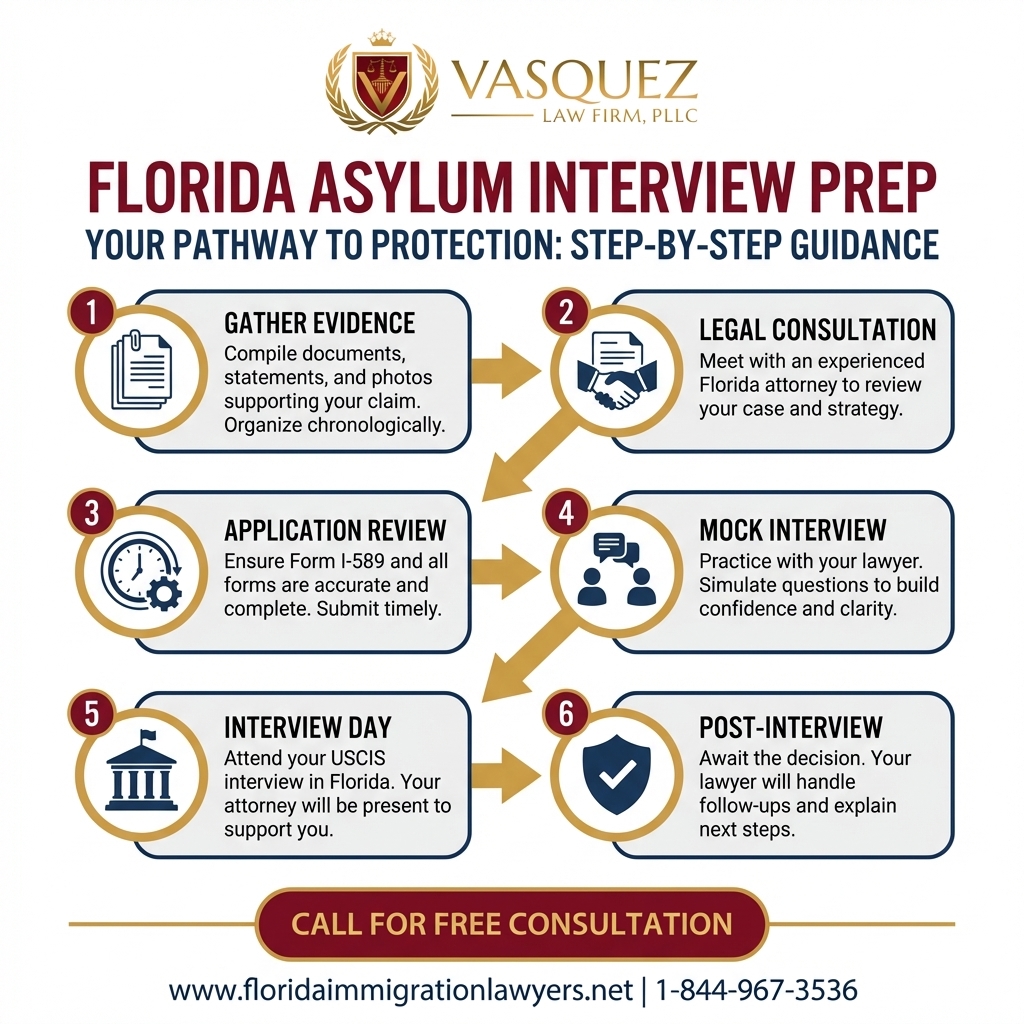
The Role of an Immigration Attorney in Your Asylum Case
Having an experienced immigration attorney by your side throughout the asylum process, especially during the interview, can be a game-changer. Their expertise extends far beyond simply filling out forms.
- Pre-Interview Preparation: An attorney will meticulously review your I-589 application and all supporting documents, identifying potential weaknesses or inconsistencies. They will conduct thorough mock interviews, simulating the actual experience, asking challenging questions, and providing constructive feedback to refine your testimony. This preparation ensures you are confident, clear, and consistent.
- Accompanying You to the Interview: Your attorney will be present with you at the USCIS asylum office. While they generally cannot answer questions for you, they can clarify ambiguous questions posed by the asylum officer, object to inappropriate lines of questioning, and ensure that the process is fair and your rights are protected. Their presence alone often lends a sense of calm and confidence to the applicant.
- Protecting Your Rights: Should any procedural irregularities arise, or if the officer oversteps their bounds, your attorney is there to intervene and safeguard your legal rights. They understand the nuances of immigration law and can advocate on your behalf.
- Addressing Legal Complexities: Asylum law is intricate. An attorney can help you understand how your personal story fits within the legal definition of asylum, ensuring you address all necessary elements of your claim. They can also prepare a legal brief to accompany your application, outlining the legal arguments supporting your case.
- Handling Potential Issues: If issues of inadmissibility arise (factors that could prevent you from being granted asylum), or if your case is referred to an immigration court for defensive asylum proceedings, your attorney is prepared to handle these complex situations. For those facing the daunting prospect of removal from the U.S., our firm also offers robust deportation defense services.
What Happens After the Interview?
The interview itself is a significant hurdle, but the process doesn't end there. Understanding the post-interview phase is crucial.
- Decision Process: After your interview, the asylum officer will review your testimony, documents, and country conditions information. They may also conduct background checks. USCIS aims to issue a decision within 180 days of the filing date of your I-589, but processing times can vary significantly.
- Potential Outcomes:
- Asylum Granted: If the officer finds you credible and determines you meet the legal definition of an asylum seeker, you will receive a notice of approval. This grants you asylum status, allowing you to live and work in the U.S. and eventually apply for a Green Card.
- Referred to Immigration Court: If the asylum officer does not grant asylum, and you are not in lawful immigration status, your case will typically be referred to an immigration court for defensive asylum proceedings before an immigration judge. This is not a denial but a transfer of jurisdiction. Here, you will have another opportunity to present your case.
- Notice of Intent to Deny (NOID): In some cases, USCIS may issue a NOID, giving you an opportunity to respond and present additional evidence or arguments before a final decision is made. This is a critical juncture where legal counsel is highly beneficial.
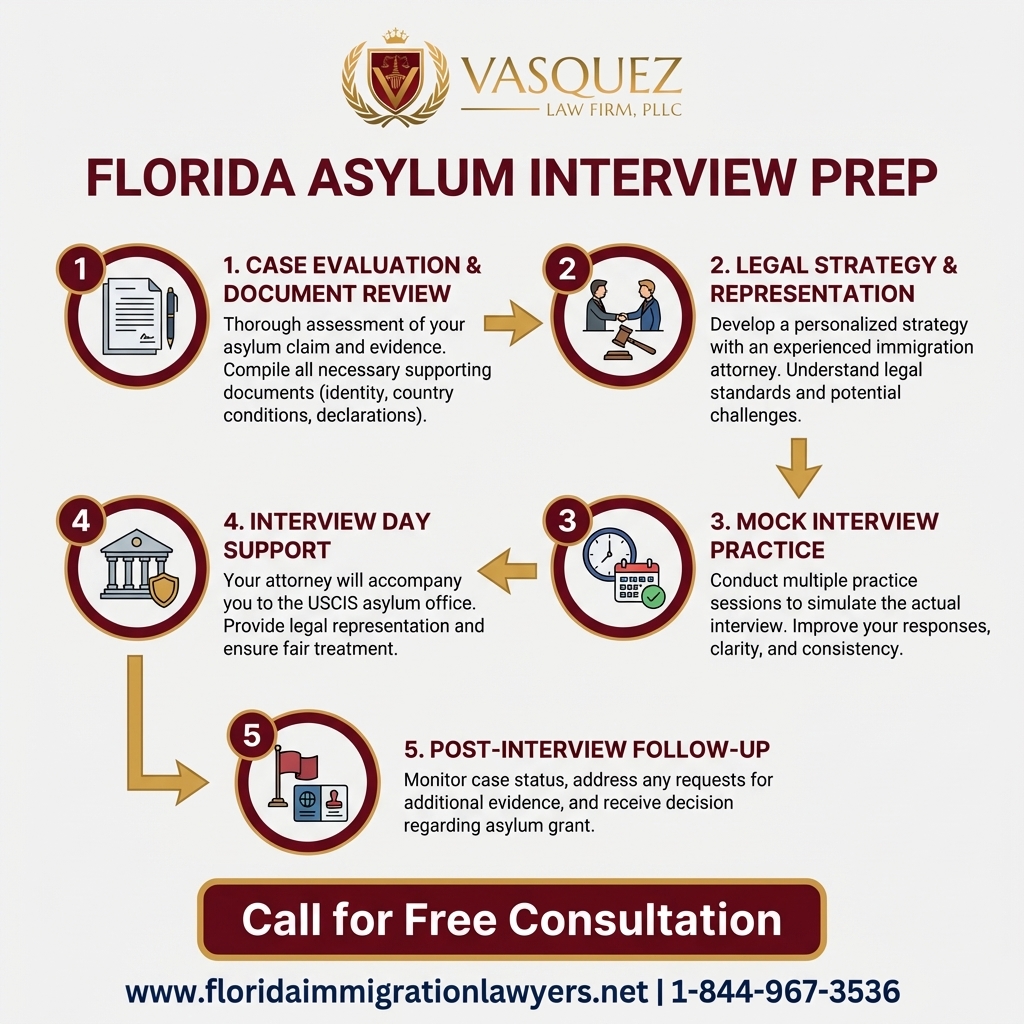
- Next Steps for Each Outcome: Your attorney will guide you through the next steps, whether it's applying for a Green Card after asylum approval, preparing for immigration court, or responding to a NOID.
Conclusion
The asylum interview is a critical juncture in your pursuit of safety and a new life in Florida. While the process can be overwhelming, thorough preparation, a clear understanding of your story, and the strategic guidance of an experienced immigration attorney can significantly enhance your chances of success. Do not underestimate the importance of this interview; your future depends on it. If you are preparing for an asylum interview in Florida, we urge you to seek professional legal assistance. Our dedicated team is here to provide the support and expertise you need. Contact us today for a free consultation and let us help you navigate this vital step with confidence.
Do Not Navigate This Process Alone
Our experienced immigration attorneys are ready to fight for you. Get a free, confidential consultation today.
Se Habla Español
Frequently Asked Questions

William J. Vásquez
Founding Attorney · Vasquez Law Firm
U.S. Air Force veteran and immigration attorney with thousands of cases resolved. J.D., NCCU School of Law. AILA member. Admitted to the 4th, 5th, and 11th Circuit Courts.
Available 24/7 - Free Evaluations
Related Legal Services
Our Florida immigration attorneys can help you with asylum protection, deportation defense and citizenship and naturalization. Call today at 1-844-967-3536 for a free consultation.
Related Links
Related Topics
Free Legal Consultation
Discuss your case with our experienced attorneys. We're available 24/7.
Se Habla Español - Estamos aquí para ayudarle.
Related Articles
Protect Yourself from Immigration Scams in Florida
Immigration scams are a serious issue in Florida, particularly in areas like Hollywood. Learn how to identify and avoid scams such as notario fraud. Stay informed and seek legal help when necessary. Call Florida Immigration Lawyers for a free consultation.
H-4 EAD Spouse Work Permit Rules in Florida | VLF Florida
Discover how the H-4 EAD can empower spouses of H-1B visa holders in Florida to work legally. Our detailed guide covers eligibility, application process, and common pitfalls. Call Florida Immigration Lawyers for personalized assistance.
U Visa Immigration Relief for Crime Victims in Florida
U Visa provides a crucial pathway to legal status for crime victims in Florida. Learn about eligibility, application steps, and common pitfalls to avoid. Contact Florida Immigration Lawyers for expert guidance and a free consultation.
Immigration Bond Hearing Florida: Your 2026 Guide | VLF Florida
Navigating an immigration bond hearing in Florida requires a clear understanding of the process, eligibility, and legal requirements. This 2026 guide from Florida Immigration Lawyers provides essential information on securing release from ICE detention, including details on bond hearings, required documents, typical timelines, and associated costs. Learn about the factors immigration judges consider, common mistakes to avoid, and when it's critical to enlist expert legal counsel. With Florida-specific insights and practical advice, this resource aims to empower individuals and families facing immigration detention across the state, from West Palm Beach to Miami. Secure a free consultation with our experienced attorneys for dedicated support.