Annual Asylum Fee: Preparation for Florida Interviews
As of 2026, there is no annual asylum fee in the U.S. Preparing for your asylum interview in Florida is crucial for success. Learn more about the process, necessary documentation, and common mistakes to avoid. Florida Immigration Lawyers are here to help.
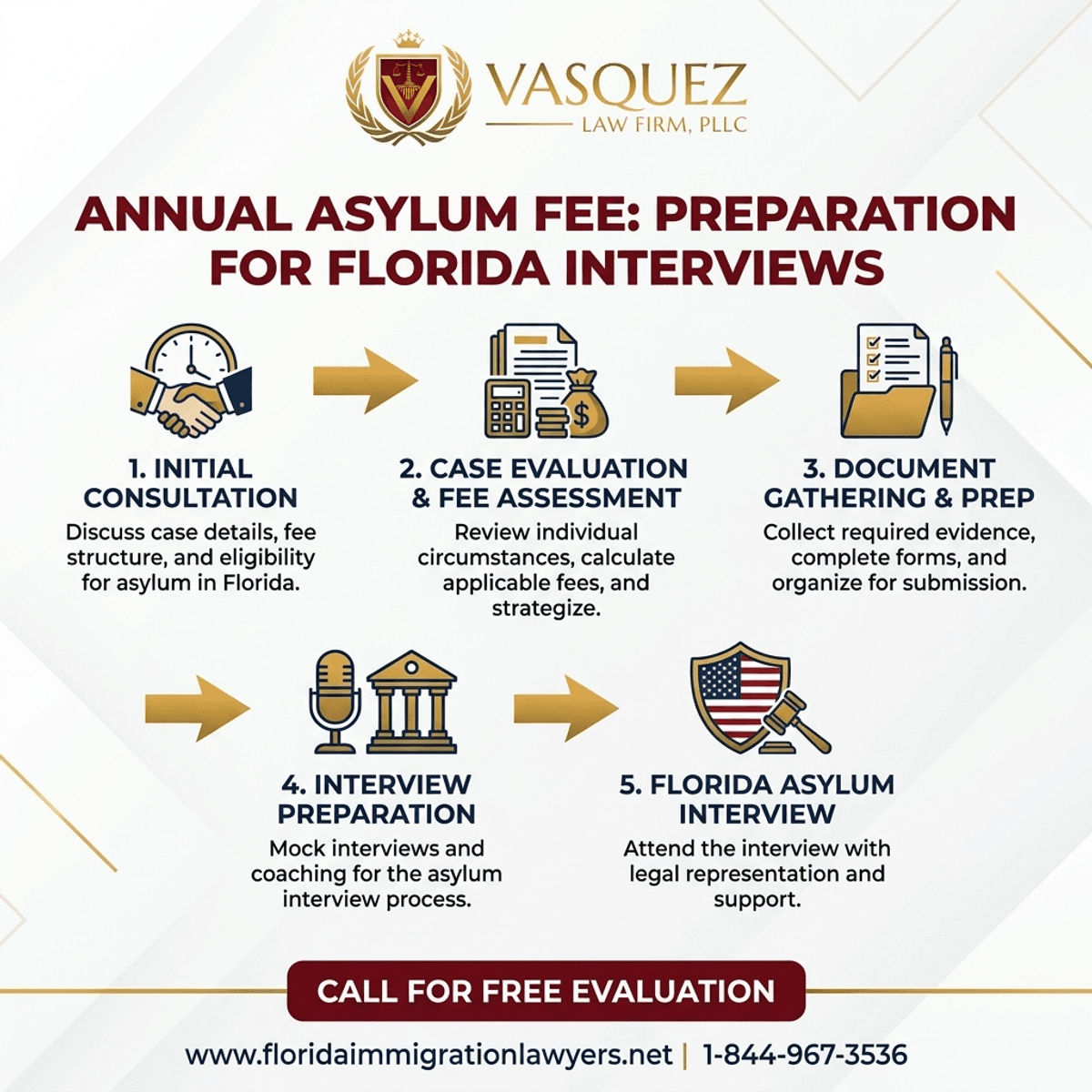
- No fee for filing Form I-589
- Interviews conducted by USCIS
- Preparation is crucial for success
- Orlando has dedicated immigration services
- Seek legal guidance for best outcomes
Introduction
Preparing for an asylum interview in Florida can be a daunting task. With no annual asylum fee imposed for the application process, the focus should be on thorough preparation. This article will guide you through what to expect during the asylum interview process in Orlando, Florida, providing essential tips and resources to enhance your readiness. Call Florida Immigration Lawyers at 1-844-YO-PELEO for a free case review and let us help you navigate this complex journey.
The journey to seeking asylum is often fraught with emotional hardship, having fled persecution and navigated challenging circumstances to reach safety. The interview itself is a pivotal moment, representing your opportunity to articulate your experiences and fears to a USCIS officer. Understanding the nuances of this process and being well-prepared can significantly alleviate stress and improve your chances of a favorable outcome. This guide aims to demystify the process, offering clarity and practical steps for asylum seekers in Florida.
At Florida Immigration Lawyers, we recognize the immense pressure you face. Our commitment is to provide compassionate and legal guidance every step of the way. From gathering crucial documentation to meticulously preparing your testimony, our team at 1-844-YO-PELEO is here to ensure your voice is heard effectively and your rights are protected throughout the asylum interview process.
What is the Asylum Interview Process in Florida?
The asylum interview process in Florida involves several key steps conducted by the USCIS. Applicants must file Form I-589, Application for Asylum and for Withholding of Removal, to initiate their request for asylum. This process allows individuals to seek protection if they have suffered persecution or fear persecution due to race, religion, nationality, membership in a particular social group, or political opinion.
After filing, applicants will receive a notice for their interview at a USCIS office, such as the Orlando Asylum Office. During the interview, the officer will assess your eligibility for asylum. It is critical to provide accurate and comprehensive information, as inconsistencies could adversely affect your case. As of 2026, it is important to stay updated on any policy changes, such as those concerning the Duration of Status Immigration Policy.
The asylum interview is a non-adversarial proceeding, meaning the USCIS officer's role is to elicit testimony and determine your credibility and eligibility, not to act as a prosecutor. However, this does not diminish the importance of preparation. You will be asked to recount your experiences of persecution, detailing the "who, what, when, where, and why" of your claim. This often involves discussing traumatic events, which can be emotionally taxing. Having legal representation can provide crucial support, helping you articulate your story clearly and concisely while managing the emotional weight.
For instance, an individual seeking asylum due to political opinion might need to describe specific instances of threats, arrests, or violence they faced because of their activism. A religious minority might detail discrimination, property destruction, or physical attacks targeting their community. The officer will be looking for a consistent narrative supported by evidence, demonstrating a well-founded fear of future persecution if you were to return to your home country. Understanding these criteria and how your story fits within them is paramount for a successful interview.
How to Prepare for Your Asylum Interview?
Effective preparation is the cornerstone of a successful asylum interview. It involves not just gathering documents but also mentally and emotionally preparing to recount your traumatic experiences. This systematic approach ensures that you present your case clearly, consistently, and credibly.
- Understand the Process: Begin by familiarizing yourself with the asylum process and the criteria for eligibility. Resources like the USCIS website provide comprehensive guidelines. Knowing the legal definitions of persecution and the five protected grounds (race, religion, nationality, membership in a particular social group, or political opinion) is essential to frame your narrative effectively. Your attorney from Florida Immigration Lawyers can help you understand these complex legal standards and how they apply to your unique situation.
- Gather Documentation: Collect evidence that supports your claim, including affidavits, police reports, medical records, and any other relevant documents. This could include articles about country conditions, letters from human rights organizations, or even social media posts demonstrating persecution. Organize these documents meticulously, ensuring all foreign-language documents are translated by certified translators. A well-organized packet of evidence significantly strengthens your claim and demonstrates your diligence.
- Practice Your Testimony: Rehearse your story with a trusted friend or legal advisor to ensure clarity and consistency during the interview. This practice helps you articulate difficult memories calmly and coherently. Focus on providing specific details, dates, and locations. While it's important to be truthful, practicing helps you avoid rambling or omitting crucial information under pressure. Your attorney will conduct mock interviews to prepare you for the types of questions you might face.
- Seek Legal Assistance: Consider consulting an immigration attorney experienced in asylum cases to help you prepare effectively. An attorney can review your Form I-589, help you identify and gather supporting evidence, prepare you for potential questions, and even accompany you to the interview. The presence of an attorney can provide a sense of security and ensure that your rights are protected throughout the process. Florida Immigration Lawyers are experienced in this field and are ready to assist you.
- Be Punctual and Polite: Arrive on time for your interview and be respectful to the USCIS officer conducting it. Punctuality demonstrates your seriousness about your application. Maintaining a respectful demeanor, even when discussing difficult topics, is crucial. Remember to answer all questions truthfully and to the best of your ability. If you don't understand a question, ask for clarification.
Beyond these steps, consider the emotional preparation. The interview can be a retraumatizing experience. Developing coping strategies and having a support system in place can be incredibly beneficial. Your legal team at Florida Immigration Lawyers can also discuss strategies for managing stress during the interview, ensuring you can present your case effectively without being overwhelmed.
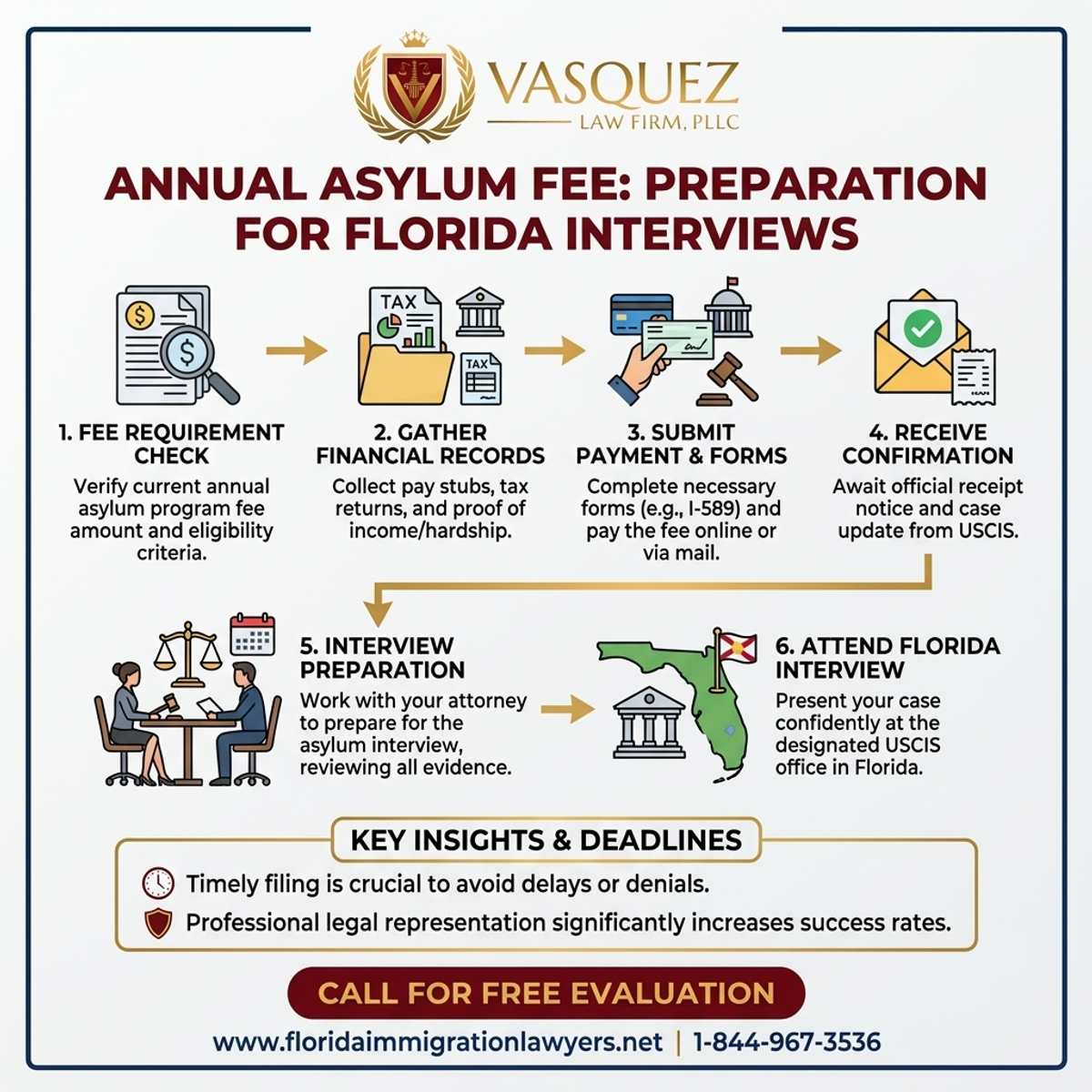
Step-by-Step Process — Annual Asylum Fee: Preparation for Florida Interviews
What Documents Do You Need for the Asylum Interview?
Bringing a comprehensive set of documents to your asylum interview is vital for substantiating your claim and demonstrating your credibility. These documents serve as tangible evidence that supports the narrative you present to the USCIS officer.
- Form I-589 Receipt Notice: This notice confirms that USCIS received your application. It’s essential for verifying your case and should be presented at the start of your interview. Keep this document safe from the moment you receive it.
- Government-issued identification (passport, national ID): You must prove your identity to the USCIS officer. Bring all forms of identification you possess, even if expired, as they can help establish your nationality and personal details. Ensure these documents are easily accessible.
- Originals and copies of supporting documents: This includes any affidavits, police reports, medical records, news articles, or other evidence you submitted with your Form I-589. Bring both the originals for the officer to review and copies for them to keep. This prevents delays and ensures all evidence is considered.
- Proof of any claims made in your I-589 application: Every statement in your application should ideally be backed by evidence. For example, if you claim political persecution, bring evidence of your political activities, threats received, or arrests. If you suffered physical harm, medical records are crucial.
- Any correspondence from USCIS related to your application: This includes interview notices, requests for evidence (RFEs), or any other official communications. These documents provide a complete record of your application's journey and ensure you are prepared for any specific issues USCIS might raise.
In addition to these, remember to bring two passport-style photos, a copy of your birth certificate, marriage certificate (if applicable), and birth certificates of any children included in your application. All documents not in English must be accompanied by a certified English translation. Your attorney from Florida Immigration Lawyers can help you compile and organize these documents efficiently, ensuring nothing is overlooked.
Timeline and Processing Expectations for Asylum Interviews
Understanding the timeline for asylum interviews can help manage expectations and reduce anxiety. While specific processing times can vary significantly based on factors like USCIS workload, the complexity of your case, and current immigration policies, there's a general framework to be aware of.
| Stage | Typical Timeframe | Notes |
|---|---|---|
| Filing Form I-589 | Within one year of arrival | Filing deadline is critical |
| Interview Scheduling | 6-12 months after filing | Varies based on USCIS workload |
| Interview | Approximately 1-2 hours | Conducted at USCIS office |
| Decision Notification | 2-4 weeks post-interview | Written notice sent via mail |
The "one-year filing deadline" is particularly critical; failing to file within one year of your last arrival in the U.S. can lead to ineligibility unless you qualify for an exception. It's imperative to consult with an attorney immediately if you are approaching this deadline or have already passed it. While the typical timeframe for interview scheduling is 6-12 months, some cases may experience longer waits due to backlogs, especially in high-volume offices like Orlando. During this waiting period, it's crucial to keep your contact information updated with USCIS and to continue gathering any new evidence that emerges to strengthen your case.
After your interview, the decision notification typically arrives within 2-4 weeks. However, some cases may require additional review, leading to longer waiting periods. If your case is not decided by an Asylum Officer, it may be referred to an Immigration Judge in immigration court. This referral is not a denial but rather a transfer of jurisdiction. Throughout these stages, having the guidance of Florida Immigration Lawyers can prove invaluable, as they can monitor your case status, respond to any USCIS requests, and prepare you for subsequent steps, including potential court proceedings.
Cost Factors and Fee Breakdown
While there is no fee for filing Form I-589, applicants might incur costs related to gathering documentation, legal assistance, and travel to the USCIS office. These factors can vary significantly based on individual circumstances.
| Item | Typical Fee | Notes |
|---|---|---|
| Legal Assistance | Varies | Depends on the attorney |
| Document Translation | Varies | Depends on service provider |
| Travel Expenses | Varies | Depends on distance to USCIS office |
Do not navigate this process alone. Contact Florida Immigration Lawyers today.
Legal assistance, while an investment, can significantly impact the outcome of your case. Attorneys provide expertise in navigating complex immigration law, preparing comprehensive applications, and representing you during the interview. While fees vary, many firms, including Florida Immigration Lawyers, offer flexible payment plans or initial free consultations to make legal help accessible. Investing in experienced legal counsel can prevent costly mistakes and enhance your chances of success.
Document translation is another essential cost. All documents not in English must be translated by a certified translator, and the translation must include a certification stating the translator's competence and the accuracy of the translation. The cost depends on the length and complexity of the documents. It's crucial to use reputable translation services to avoid issues with USCIS accepting your evidence.
Travel expenses to the USCIS office for your interview should also be factored in. For applicants in Florida, this might mean traveling to the Orlando Asylum Office. Consider transportation, potential lodging if you're traveling a long distance, and any lost wages from taking time off work. Planning ahead can help minimize these ancillary costs. Remember, while these costs exist, the invaluable protection asylum offers far outweighs the financial outlay, and Florida Immigration Lawyers are here to discuss these factors transparently.
Common Mistakes to Avoid in Asylum Interviews
Navigating an asylum interview can be challenging, and even minor missteps can have significant repercussions. Being aware of common pitfalls can help you avoid them and strengthen your case. Here are crucial mistakes to steer clear of:
- Providing inconsistent information, which can lead to denial. Discrepancies between your written application (Form I-589) and your oral testimony, or inconsistencies within your oral testimony itself, can severely damage your credibility. Always be truthful and ensure your story remains consistent across all platforms. If there are minor inaccuracies in dates or details due to trauma, be prepared to explain them honestly.
- Failing to bring original documents, causing delays. USCIS officers need to see original documents to verify their authenticity. Bringing only copies can lead to requests for evidence (RFEs) or even a referral to immigration court, prolonging your case. Always have your originals and a complete set of copies ready.
- Not preparing for the interview, risking unconvincing testimony. A lack of preparation often results in a hesitant, disorganized, or incomplete testimony. While you should never memorize a script, being familiar with your story and key details allows you to present it confidently and clearly. Practice articulating your experiences and fears.
- Missing the interview date, which might result in case closure. Missing your scheduled interview without a valid reason and proper notification to USCIS can lead to your application being denied or referred to an immigration judge. Always prioritize your interview and notify USCIS immediately if an emergency prevents your attendance.
- Ignoring legal advice, leading to avoidable errors. Immigration law is complex and constantly evolving. Attempting to navigate the asylum process without legal counsel, or disregarding the advice of your attorney, can lead to critical errors in documentation, testimony, or legal strategy. Trust your legal team to guide you.
- Submitting incomplete forms, causing processing delays. An incomplete Form I-589 or missing required attachments can cause significant delays or even rejection of your application. Double-check all sections and ensure all necessary supporting documents are included before submission.
- Not staying informed about policy changes, affecting eligibility. Immigration policies can change rapidly. What might have been a valid claim yesterday could be affected by new regulations today. Staying informed, ideally through your legal counsel, ensures your strategy remains current and compliant.
- Overstating or fabricating claims, which can damage credibility. While it might be tempting to exaggerate details to strengthen your case, any fabrication or overstatement, if discovered, will severely undermine your credibility and almost certainly lead to a denial. Honesty and truthfulness are paramount.
- Lack of knowledge about the process, resulting in errors. Understanding each step of the asylum process, from filing to interview to decision, empowers you to participate effectively and avoid common procedural errors. Your attorney can provide this essential knowledge.
- Not seeking legal assistance when needed, risking unfavorable outcomes. The asylum process is incredibly complex. Without experienced legal representation, you risk missing deadlines, failing to present crucial evidence, or inadequately articulating your claim. Florida Immigration Lawyers are here to provide the guidance you need.
Avoiding these common mistakes requires diligence, attention to detail, and often,
Sources and References
- U.S. Citizenship and Immigration Services (USCIS)
- Executive Office for Immigration Review (EOIR)
- U.S. Department of State
- Immigration and Nationality Act (INA), 8 U.S.C. Chapter 12
Do Not Navigate This Process Alone
Our experienced immigration attorneys are ready to fight for you. Get a free, confidential case review today.
Se Habla Español
Or leave your details and we’ll call you:
Free Evaluation in 24 Hours
Or talk to us right now
AI voice assistant — available 24/7
FreeFrequently Asked Questions

William J. Vásquez
Founding Attorney · Vasquez Law Firm
U.S. Air Force veteran and immigration attorney with years of hands-on U.S. immigration experience. J.D., NCCU School of Law. AILA member. Admitted to the 4th, 5th, and 11th Circuit Courts.
Available 24/7 - Free Evaluations
Reviewed for legal accuracy by William J. Vásquez
Licensed in North Carolina; U.S. immigration is federal practice.
Related Legal Services
Our Florida immigration attorneys can help you with immigration lawyer cost in Florida, experienced immigration attorneys and asylum protection. Call today at 1-844-YO-PELEO for a free case review.
Related Links
Related Topics
Free Legal Case Review
Discuss your case with our experienced attorneys. We're available 24/7.
Se Habla Español - Estamos aquí para ayudarle.
Related Articles
EB-5 Investor Green Card in Florida: A 2026 Guide
Explore how to obtain an EB-5 investor green card in Florida. Learn about the investment requirements, processes, and benefits of participating in this program. Discover how Florida's economic landscape can be an ideal setting for your investment. Contact Florida Immigration Lawyers for a free case review.
Certificate of Eligibility for Expungement in Florida 2026
For non-U.S. citizens in Florida, understanding how a state expungement impacts immigration status is critical. A certificate of eligibility for expungement in Florida allows a criminal record to be sealed or expunged under state law. However, federal immigration agencies often disregard such state-level relief, still considering the original criminal offense as a conviction for immigration purposes. This can have severe implications for visa applications, green card eligibility, naturalization, and even lead to deportation. This guide clarifies the Florida expungement process, its limited effect on federal immigration law, and key steps to protect your status in 2026. Learn about common mistakes, required documents, timelines, and when to seek expert legal counsel from Florida Immigration Lawyers to navigate these complex issues effectively.
Immigration Lawyer Orlando Free Consultation in Florida
For individuals and families in Orlando, Florida, navigating the complexities of U.S. immigration law requires expert guidance. An immigration lawyer in Orlando offers crucial support for everything from visa applications and green card processes to naturalization and deportation defense. This comprehensive guide details what a free consultation covers, providing a step-by-step overview of immigration pathways, essential document checklists, and expected timelines in 2026. We also highlight common mistakes to avoid, discuss the critical role of legal counsel in deportation and asylum cases, and explain why choosing a local Orlando immigration attorney is beneficial. Florida Immigration Lawyers is dedicated to serving the diverse community of Orlando with compassionate, effective legal solutions, ensuring you receive personalized advice and robust representation for a successful immigration journey.
Fiance Visa in Miami: Your 2026 Florida K-1 Guide
For U.S. citizens in Florida, including Miami and Orlando, who wish to bring their foreign fiance(e) to the U.S. for marriage, the K-1 fiance visa is the primary immigration pathway. This comprehensive guide details the K-1 visa process for 2026, covering eligibility requirements for both the petitioner and beneficiary, the necessary documentation, expected timelines, and associated costs. We break down the stages from filing Form I-129F with USCIS to consular processing and the subsequent Adjustment of Status after marriage. Learn about common mistakes to avoid and understand when to seek professional legal assistance. Florida Immigration Lawyers offers expert guidance to help you navigate this complex journey, ensuring a smooth and successful application. Call us for a free case review.