Adjustment of Status Florida Guide 2026: Your Path to a...
This comprehensive guide for Florida residents explains the adjustment of status process, allowing eligible individuals to obtain a green card without leaving the U.S. Learn about Form I-485 requirements, step-by-step procedures, necessary documents, and expected processing times in 2026. We cover common mistakes to avoid and highlight when to seek legal counsel from an experienced Florida immigration lawyer. Secure your future in Florida by understanding this vital immigration pathway. Contact Florida Immigration Lawyers for a free consultation.

Adjustment of status is the process allowing eligible individuals already in the United States to apply for lawful permanent resident status, commonly known as a green card, without leaving the country. This guide details the Form I-485 application, requirements, and steps for obtaining your green card in Florida, helping you understand this crucial immigration pathway.
- Apply for a green card from within the U.S.
- Requires Form I-485 and supporting documents.
- Eligibility often tied to a family petition or employment visa.
- Processing times vary significantly by case type and USCIS office.
- Legal assistance is highly recommended for a successful application.
Introduction: Your Guide to a Florida Green Card
Are you currently in Florida and dreaming of making the Sunshine State your permanent home? The path to lawful permanent residency, often referred to as obtaining a green card, can seem daunting. Fortunately, for many individuals, the adjustment of status process offers a way to achieve this goal without having to leave the United States.
This guide, specifically tailored for those in Florida, including Fort Lauderdale and surrounding areas, will walk you through the intricacies of applying for adjustment of status using Form I-485. Understanding the requirements, gathering the right documents, and navigating the legal landscape are critical steps.
We will provide a comprehensive overview, a step-by-step guide, and crucial insights to help you prepare for this significant immigration journey. Don't face this complex process alone. Call Florida Immigration Lawyers at 1-844-967-3536 for a free consultation and let our experienced team guide your path to a green card.
Understanding Adjustment of Status in Florida
What is Adjustment of Status (AOS)?
Adjustment of status allows certain non-citizens physically present in the United States to apply for lawful permanent resident status. This means you can get your green card without returning to your home country for visa processing. It is a vital pathway for many individuals seeking to establish permanent roots in Florida.
The Immigration and Nationality Act (INA) Section 245, codified at 8 U.S.C. § 1255, outlines the general provisions for adjustment of status. This process is fundamentally different from consular processing, where you would apply for an immigrant visa at a U.S. embassy or consulate abroad. For those living in Fort Lauderdale or anywhere else in Florida, AOS offers a convenient and often preferred option.
Who is Eligible for AOS in Florida?
Eligibility for adjustment of status is not universal; it depends on several factors. Generally, you must have an immigrant visa immediately available to you at the time of filing your Form I-485 application. This usually means you are the beneficiary of an approved immigrant petition, such as an I-130 filed by a U.S. citizen relative or an I-140 filed by an employer.
Common categories of eligibility include immediate relatives of U.S. citizens (spouses, unmarried children under 21, and parents), family-sponsored immigrants with a current priority date, and employment-based immigrants with a current priority date. Certain special immigrants, refugees, and asylees may also be eligible. Importantly, you must have been lawfully admitted or paroled into the U.S., although there are exceptions. Consulting a Florida immigration lawyer is crucial to determine your specific eligibility.
The Step-by-Step Adjustment of Status Process (Form I-485)
Applying for adjustment of status involves a series of carefully executed steps. Missing any detail or deadline can significantly delay or even jeopardize your green card application. Our firm, Florida Immigration Lawyers, can assist you at every stage.
- Determine Your Eligibility: Before anything else, confirm you meet the specific requirements for adjustment of status. This includes having a qualifying relationship or employment, a current visa number (if not an immediate relative), and a lawful entry into the U.S.
- File the Immigrant Petition (If Applicable): For most family-based green card applications, a U.S. citizen or lawful permanent resident relative must first file Form I-130, Petition for Alien Relative. For employment-based cases, an employer typically files Form I-140, Immigrant Petition for Alien Worker. These petitions must be approved before you can file your Form I-485 in many cases.
- Check the Visa Bulletin (If Applicable): If you are not an immediate relative of a U.S. citizen, you must check the USCIS Visa Bulletin to ensure an immigrant visa number is available for your preference category and country of chargeability. The "Dates for Filing" and "Final Action Dates" charts are critical. You can find the latest bulletin on travel.state.gov.
- Prepare and File Form I-485, Application to Register Permanent Residence or Adjust Status: This is the core of your adjustment of status application. You will submit this form along with numerous supporting documents to USCIS.
- Submit Supporting Forms: Alongside Form I-485, you will typically need to file:
- Form I-765, Application for Employment Authorization: This allows you to work legally while your green card application is pending.
- Form I-131, Application for Travel Document: This allows you to travel internationally and return to the U.S. while your application is pending (Advance Parole).
- Form I-864, Affidavit of Support: For most family-based applications, the petitioner must prove they can financially support you.
- Form I-693, Report of Medical Examination and Vaccination Record: A designated civil surgeon must complete this form.
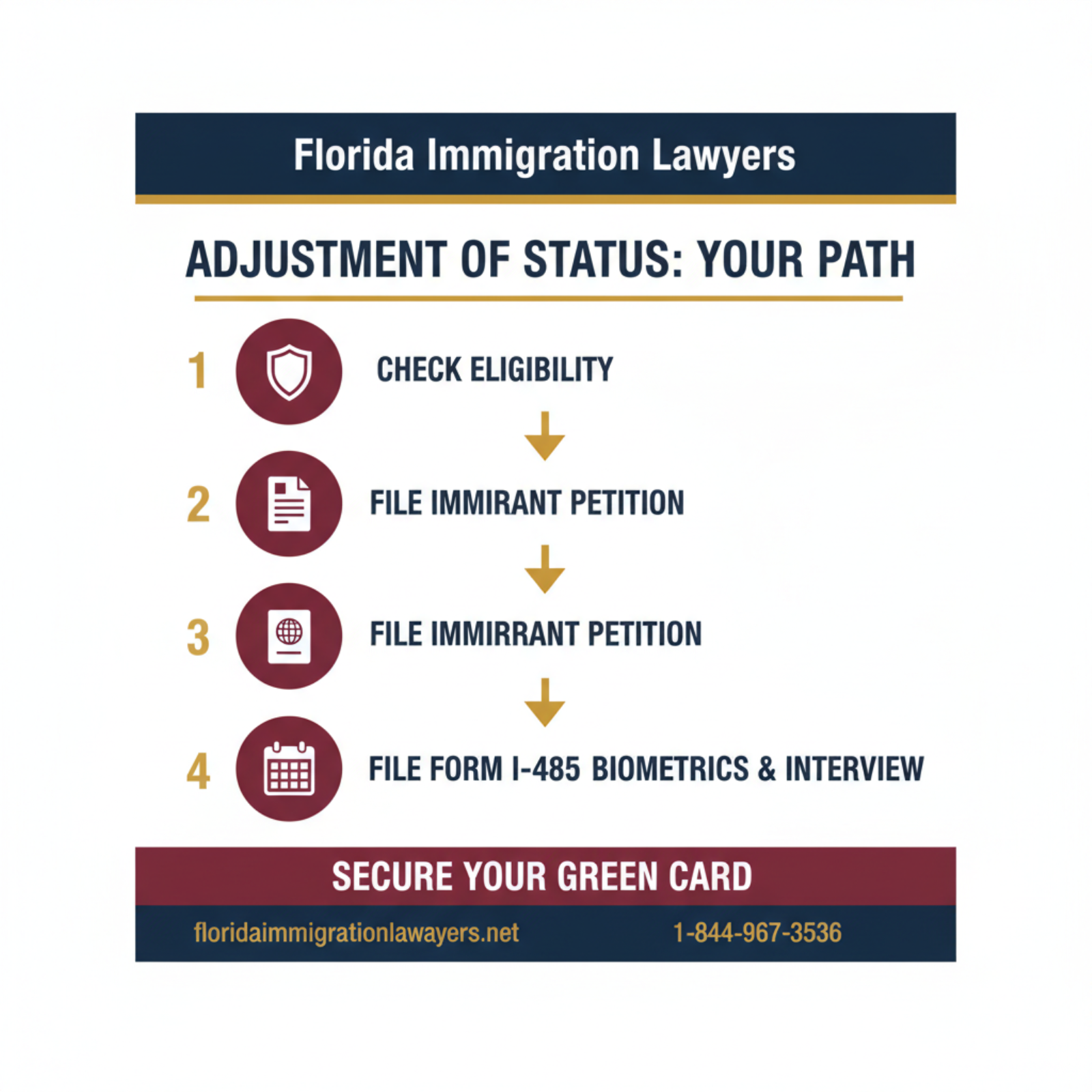
Step-by-Step Process Guide - Attend Biometrics Appointment: After filing, USCIS will send you a notice to attend a biometrics appointment at an Application Support Center (ASC) in Florida, possibly near Fort Lauderdale. Here, your fingerprints, photograph, and signature will be taken for background checks.
- Attend the Interview: Many adjustment of status applicants, especially those based on marriage to a U.S. citizen, will be scheduled for an interview at a local USCIS field office in Florida. Be prepared to answer questions about your application, eligibility, and relationship.
- Receive a Decision: After your interview, or sometimes without one, USCIS will make a decision. If approved, you will receive your green card in the mail. If denied, you may have options to appeal or refile, but immediate consultation with a Florida immigration lawyer is essential.
Essential Documents for Your I-485 Application
Gathering the correct and complete documentation is paramount for a successful adjustment of status application. Incomplete submissions can lead to delays or denials.
- Form I-485, Application to Register Permanent Residence or Adjust Status
- Form I-765, Application for Employment Authorization (Optional, but highly recommended)
- Form I-131, Application for Travel Document (Optional, but highly recommended)
- Form I-864, Affidavit of Support (For family-based petitions)
- Form I-693, Report of Medical Examination and Vaccination Record (Sealed envelope from civil surgeon)
- Copy of your birth certificate
- Copy of your passport biographical page
- Copies of all U.S. visas
- Copies of your Form I-94, Arrival/Departure Record
- Copies of your marriage certificate (if applicable)
- Copies of divorce decrees for prior marriages (if applicable)
- Two passport-style photos
- Copy of the approved Form I-130 or I-140 (if applicable)
- Proof of your relationship (e.g., joint bank statements, utility bills, photos - for marriage-based green card applications)
- Police clearances from countries where you lived (if applicable)
- Certified copies of court and police records (if you have any arrests or convictions)
Ensure all foreign language documents are accompanied by a certified English translation.
Adjustment of Status Processing Times and Expectations in 2026
The USCIS processing times for adjustment of status applications can vary significantly. Factors influencing the timeline include the specific USCIS field office handling your case (e.g., Miami, Orlando, Tampa), the type of underlying immigrant petition (family-based vs. employment-based), the volume of applications, and the completeness of your submission.
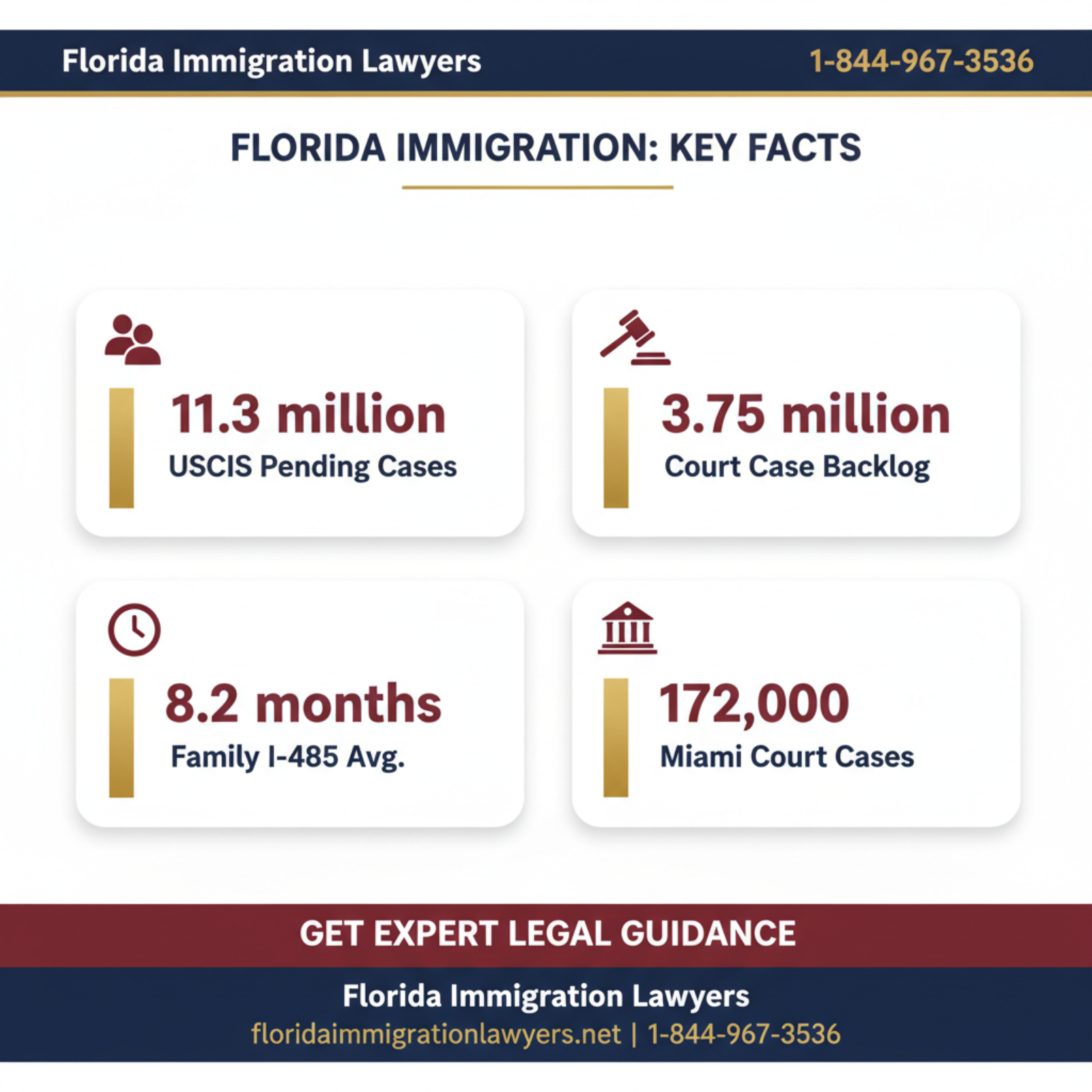
While it's impossible to guarantee a specific timeframe, you can check estimated USCIS processing times on the USCIS website. As of early 2026, many adjustment of status cases in Florida, particularly those filed in busy offices like the one serving Fort Lauderdale, can take anywhere from 12 to 24 months or even longer from the initial filing to the final green card approval. Employment Authorization Documents (EADs) and Advance Parole travel documents generally arrive much sooner, often within 6-12 months. Be prepared for a potentially lengthy wait and maintain patience throughout the process.
Cost Factors and USCIS Fees for Adjustment of Status
The financial aspect of applying for adjustment of status is an important consideration. USCIS fees are subject to change, so always check the latest fee schedule on the official USCIS website before filing.
Typically, the costs associated with a green card application include:
- Form I-485 Filing Fee: This is the primary fee for the adjustment of status application itself.
- Biometrics Services Fee: A separate fee is usually charged for your fingerprinting and background checks.
- Form I-765 and I-131 Fees: Currently, these forms are often filed concurrently with Form I-485 without additional fees for the applicant, but this can change.
- Form I-130 or I-140 Filing Fee: If these underlying petitions are required, they incur separate filing fees.
- Medical Examination Fee: This fee is paid directly to the civil surgeon and varies by provider.
- Attorney Fees: While not mandatory, retaining an experienced Florida immigration lawyer is a wise investment to ensure your application is correctly prepared and submitted.
- Translation Costs: If you have documents in a foreign language, you will incur costs for certified translations.
These costs can add up, so it is essential to budget accordingly.
Do not navigate this complex process alone. The stakes are high, and a single mistake can lead to significant delays or even denial. Contact Florida Immigration Lawyers today for expert guidance and peace of mind, serving clients throughout Fort Lauderdale, Miami, Orlando, and all of Florida.
Common Mistakes to Avoid in Your Adjustment of Status Application
Navigating the adjustment of status process requires meticulous attention to detail. Avoiding common pitfalls can significantly increase your chances of a smooth and successful green card application.
- Filing Without Current Visa Availability: Submitting Form I-485 when an immigrant visa is not immediately available for your category can lead to rejection or denial. Always check the USCIS Visa Bulletin.
- Incomplete or Incorrect Forms: Missing signatures, unchecked boxes, or incorrect information are frequent reasons for USCIS to send a Request for Evidence (RFE) or deny the application. This delays your USCIS processing.
- Insufficient Supporting Documentation: Failing to provide all required documents, such as birth certificates, marriage licenses, or proof of relationship, can lead to substantial delays or denial.
- Ignoring the Medical Exam: Not submitting a completed Form I-693 from a USCIS-approved civil surgeon, or submitting an outdated one, will halt your application.
- Misrepresenting Information: Providing false or misleading information on any form is a serious offense that can lead to a permanent bar from immigration benefits.
- Travel Without Advance Parole: Leaving the U.S. after filing Form I-485 but before receiving Advance Parole (Form I-131) can be considered abandonment of your adjustment of status application.
- Failure to Disclose Criminal History: Not disclosing any arrests or convictions, even minor ones, can have severe negative consequences, including denial and accusations of misrepresentation.
- Not Updating Address Changes: If you move during the USCIS processing of your application, you must inform USCIS promptly using Form AR-11 to ensure you receive all notices.
- Missing Interview or Biometrics Appointments: Failing to attend scheduled appointments without proper rescheduling can result in your application being denied.
- Lack of Financial Support (Form I-864): For family-based cases, inadequate or improperly filed Form I-864, Affidavit of Support, can be a major issue. The petitioner must meet specific income requirements.
When to Call a Florida Immigration Lawyer
While this guide provides extensive information, the adjustment of status process is complex and highly individualized. There are specific scenarios where the expertise of a Florida immigration lawyer becomes not just helpful, but essential.
You should consider contacting Florida Immigration Lawyers if:
- You have a complex immigration history, such as previous visa overstays, prior denials, or issues with unlawful presence.
- You have any criminal record, regardless of how minor it seems.
- You entered the U.S. without inspection or parole, as specific waivers or exceptions may apply.
- You are unsure about your eligibility or which green card application category applies to you.
- USCIS has sent you a Request for Evidence (RFE) or Notice of Intent to Deny (NOID).
- You are applying based on marriage and anticipate questions about the bona fides of your relationship.
- You simply want peace of mind knowing your application is prepared correctly and thoroughly, minimizing risks of delays or denials.
Our firm specializes in navigating the intricacies of adjustment of status and other immigration matters for individuals and families across Florida, including Fort Lauderdale, Miami, and Orlando. We can help with family immigration, deportation defense, and more.
Frequently Asked Questions About Adjustment of Status
What is strong evidence for adjustment of status?
Strong evidence for adjustment of status depends heavily on your application category. For marriage-based green card applications, this includes joint bank accounts, joint leases or mortgages, utility bills in both names, shared insurance policies, birth certificates of joint children, affidavits from friends and family, and extensive photos documenting your relationship over time. For employment-based cases, strong evidence includes employment verification letters, pay stubs, and educational or professional credentials.
What is the 90-day rule for adjustment of status?
The "90-day rule" is an informal guideline used by immigration officers to assess whether an individual misrepresented their intent when entering the U.S. If you apply for adjustment of status or engage in other actions inconsistent with your nonimmigrant visa purpose within 90 days of entry, USCIS may presume you had a preconceived intent to immigrate, potentially leading to a finding of misrepresentation. Actions taken after 90 days are generally not subject to this presumption, though USCIS can still investigate. This rule is not codified in law but is a significant consideration in USCIS processing.
How fast can Form I-485 be approved?
The approval time for Form I-485 varies greatly. While some immediate relative cases with no complications might be approved in under a year, many applications take 12 to 24 months or longer. Factors like the USCIS field office workload (e.g., in Fort Lauderdale or Miami), the complexity of your case, and your response time to RFEs all play a role. There is no guaranteed "fast" approval for adjustment of status.
What are the general steps for adjustment of status?
The general steps for adjustment of status include:
- Determining eligibility and having an immigrant visa available.
- Filing an underlying immigrant petition (e.g., I-130 or I-140) if required.
- Preparing and submitting Form I-485 along with supporting documents (I-765, I-131, I-864, I-693).
- Attending a biometrics appointment.
- Attending an interview at a USCIS field office (if required).
- Receiving a decision on your green card application.
About Florida Immigration Lawyers
Florida Immigration Lawyers is a leading law firm dedicated to providing exceptional legal representation to immigrants across the entire state of Florida. From Fort Lauderdale to Jacksonville, and from Miami to Tampa, we understand the unique challenges faced by individuals seeking to navigate the complex U.S. immigration system. Our compassionate and experienced attorneys are committed to securing the best possible outcomes for our clients.
We offer a comprehensive range of immigration services, including adjustment of status applications, family immigration petitions, deportation defense, asylum claims, citizenship applications, and business immigration solutions. Our firm prides itself on personalized attention, transparent communication, and a deep understanding of immigration law. We believe everyone deserves a fair chance at building a better life in the United States.
Why choose us? We are available 24/7 to address your urgent legal needs and offer free consultations to discuss your case without obligation. Our attorneys are fluent in multiple languages, including Spanish, ensuring effective communication. Trust Florida Immigration Lawyers to be your dedicated advocate every step of the way. Visit our attorneys page to learn more about our team.
Phone: 1-844-967-3536
Website: https://www.floridaimmigrationlawyers.net
Sources and References
- U.S. Citizenship and Immigration Services (USCIS)
- U.S. Department of State - Visa Bulletin
- Executive Office for Immigration Review (EOIR)
- Immigration and Nationality Act (INA) Section 245, 8 U.S.C. § 1255 - Adjustment of Status
- 8 CFR Part 245 - Adjustment of Status to that of Person Admitted for Permanent Residence
- USCIS Policy Manual, Volume 7 - Adjustment of Status
This article provides general legal information and is not intended as legal advice. Every case is unique, and outcomes depend on specific facts and circumstances. Contact an attorney for advice about your particular situation.
Embarking on the adjustment of status journey is a monumental step towards securing your future in Florida. Do not leave your green card application to chance. Our dedicated team at Florida Immigration Lawyers is ready to provide the expert legal support you need. Call us today at 1-844-967-3536 for a free, confidential consultation. Se Habla Español - Estamos aquí para ayudarle.
Do Not Navigate This Process Alone
Our experienced immigration attorneys are ready to fight for you. Get a free, confidential consultation today.
Se Habla Español
Frequently Asked Questions
Florida Immigration Lawyers
Immigration Attorney | Founder, Vasquez Law Firm
U.S. Air Force veteran and immigration attorney with thousands of cases resolved. J.D., NCCU School of Law. AILA member. Admitted to the 4th, 5th, and 11th Circuit Courts.
Available 24/7 - Free Evaluations
Related Legal Services
Our Florida immigration attorneys can help you with business immigration, asylum protection and deportation defense. Call today at 1-844-967-3536 for a free consultation.
Related Links
Related Topics
Free Legal Consultation
Discuss your case with our experienced attorneys. We're available 24/7.
Se Habla Español - Estamos aquí para ayudarle.
Related Articles
Stokes Interview: Navigating Marriage Fraud in Florida
A Stokes interview is a specialized, separate interview conducted by USCIS when there are suspicions of marriage fraud in a green card application. This rigorous process involves individual questioning of spouses, focusing on inconsistencies in their testimonies to determine the authenticity of their marital bond. For couples in Florida, navigating this high-stakes interview requires meticulous preparation, extensive documentation, and often the strategic guidance of an experienced immigration lawyer. Understanding the process, preparing for detailed questions, and presenting a strong case are crucial for overcoming marriage fraud allegations and securing your immigration future. Florida Immigration Lawyers stands ready to assist you.
Immigration Attorney Gainesville: North Florida Legal Help
For those in Gainesville, Alachua County, and throughout North Florida, navigating U.S. immigration law requires expert guidance. An experienced immigration attorney can simplify complex processes, from family-based petitions and employment visas to critical asylum claims and deportation defense. This comprehensive guide outlines the essential services provided by an immigration attorney, details necessary documentation, clarifies processing timelines, and discusses associated costs. We also highlight common mistakes to avoid and crucial scenarios where legal counsel is indispensable. Florida Immigration Lawyers serves all of Florida, including Gainesville and St. Petersburg, providing dedicated legal support to help you achieve your immigration goals. Contact us for a free consultation to discuss your specific needs.
Military Naturalization Expedited at Florida Bases
Explore expedited military naturalization processes for service members at Florida bases like MacDill. Learn about eligibility, steps, and common mistakes. Contact Florida Immigration Lawyers for a free consultation.
Protect Yourself from Immigration Scams in Florida
Learn how to protect against immigration scams in Florida, focusing on St. Petersburg. This guide covers identifying scams, verifying credentials, and getting legal help. Call Florida Immigration Lawyers at 1-844-967-3536 for assistance.