Abrego Garcia Deportation Defense: Florida Immigration Law
Facing Abrego Garcia deportation in Florida? Learn about defense strategies, your rights, and future immigration law. Contact Florida Immigration Lawyers for guidance.
Abrego Garcia Deportation Defense: Florida Immigration Law & 2026 Strategies
The prospect of deportation is a daunting reality for many non-citizens in the United States, and cases like that of Abrego Garcia highlight the critical need for robust legal defense. In Florida, a state with a significant immigrant population, understanding the complexities of immigration law and preparing for potential challenges, especially as we look towards 2026, is paramount. This comprehensive guide delves into the nuances of deportation defense, offering insights into legal strategies, your rights, and how experienced Florida immigration lawyers can make a decisive difference.
Understanding Deportation Proceedings in Florida
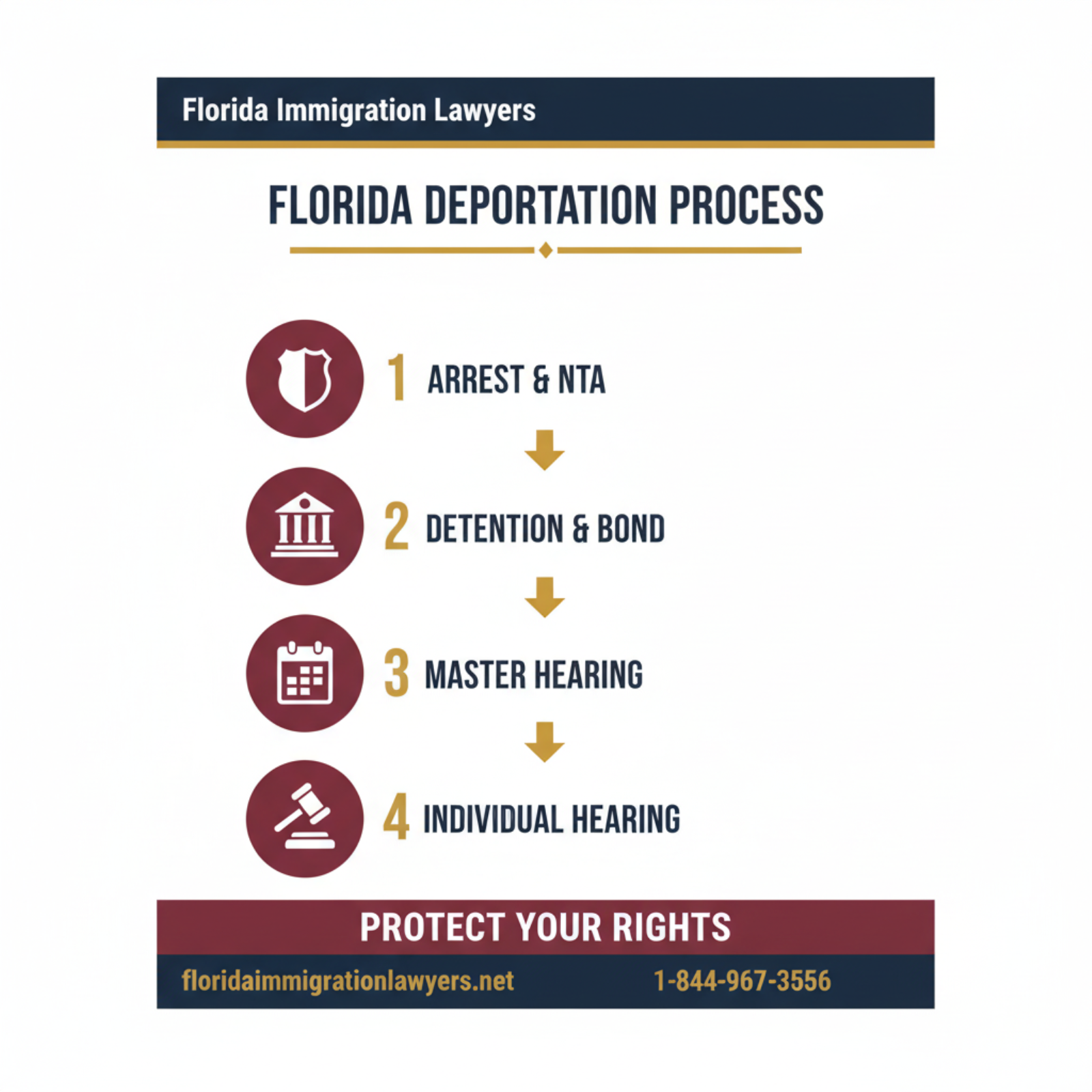
Deportation, also known as removal, is the formal process by which the U.S. government orders a non-citizen to leave the country. This process is initiated by the Department of Homeland Security (DHS), typically through the issuance of a Notice to Appear (NTA). The NTA outlines the alleged violations of immigration law and informs the individual of the date and time of their initial hearing before an Immigration Judge.
Grounds for Deportation
There are numerous reasons why an individual might face deportation. Common grounds include:
- Criminal Offenses: Certain convictions, particularly aggravated felonies, crimes involving moral turpitude, and drug offenses, can lead to mandatory detention and removal.
- Visa Violations: Overstaying a visa, violating the terms of a visa (e.g., working without authorization on a tourist visa), or engaging in fraud to obtain a visa.
- Unlawful Entry: Entering the U.S. without inspection or proper authorization.
- Security Grounds: Engaging in activities deemed a threat to national security.
Regardless of the specific grounds, receiving an NTA is a serious matter that demands immediate legal attention. An experienced attorney can review the NTA, assess the allegations, and begin formulating a defense strategy tailored to your unique circumstances.
Key Defense Strategies Against Deportation
Successfully defending against deportation requires a deep understanding of immigration law and the ability to navigate the complex legal system. Several defense strategies may be available, depending on the specifics of your case.
Asylum and Withholding of Removal
For individuals who fear persecution in their home country, asylum or withholding of removal may be viable options. Asylum is available to those who can demonstrate a well-founded fear of persecution on account of race, religion, nationality, membership in a particular social group, or political opinion. Withholding of removal offers similar protection but has a higher standard of proof and does not lead to permanent residency. Both require compelling evidence and often involve complex legal arguments about country conditions and personal narratives of fear.
Cancellation of Removal
Cancellation of Removal is a discretionary form of relief that allows certain non-citizens to apply for lawful permanent residency despite being in removal proceedings. There are two main categories:
- For Lawful Permanent Residents (LPRs): An LPR may be eligible if they have been a lawful permanent resident for at least five years, have resided continuously in the U.S. for seven years after admission in any status, and have not been convicted of an aggravated felony.
- For Non-Permanent Residents: A non-LPR may be eligible if they have been physically present in the U.S. for at least ten years, have demonstrated good moral character during that period, have not been convicted of certain crimes, and can show that their removal would result in exceptional and extremely unusual hardship to a qualifying U.S. citizen or LPR spouse, parent, or child.
This is a highly competitive form of relief, often requiring extensive documentation of ties to the community and the hardship that would befall qualifying relatives.
Waivers of Inadmissibility
In some cases, individuals may be deemed inadmissible to the U.S. due to past actions (e.g., criminal history, immigration violations). However, certain waivers may be available to overcome these grounds of inadmissibility. Common waivers include the I-601 Application for Waiver of Grounds of Inadmissibility and the I-212 Application for Permission to Reapply for Admission into the United States After Deportation or Removal. These waivers typically require demonstrating extreme hardship to a qualifying relative and presenting compelling humanitarian factors.
The Role of an Immigration Attorney in Your Case
Navigating the intricacies of immigration law without legal representation can be overwhelming and significantly reduce your chances of a favorable outcome. An experienced immigration attorney plays a crucial role throughout the deportation defense process.
- Case Evaluation and Strategy: An attorney will meticulously review your case, identify all potential grounds for relief, and develop a tailored defense strategy. This includes analyzing your immigration history, criminal record, and family ties.
- Court Representation: From master calendar hearings to individual merits hearings, your attorney will represent you in immigration court, present evidence, cross-examine witnesses, and make legal arguments on your behalf.
- Evidence Gathering: Attorneys assist in collecting and organizing critical evidence, such as affidavits, medical records, police reports, and country condition reports, all vital for supporting your claims.
- Appeals: If an Immigration Judge's decision is unfavorable, an attorney can guide you through the appeals process to the Board of Immigration Appeals (BIA) and, if necessary, to federal courts.
Having a dedicated legal advocate by your side ensures that your rights are protected and that every available legal avenue is explored.
Navigating the Immigration Court System
The U.S. immigration court system, overseen by the Executive Office for Immigration Review (EOIR) within the Department of Justice (justice.gov), is a judicial body responsible for interpreting and administering immigration laws. Understanding its structure and procedures is vital for anyone facing removal proceedings.
The process typically begins with a Master Calendar Hearing, which is a preliminary hearing where the Immigration Judge addresses procedural matters, confirms the charges in the NTA, and sets a schedule for future hearings. This is where your attorney formally enters an appearance, discusses the allegations, and indicates the forms of relief you intend to pursue. Following this, an Individual Hearing (or Merits Hearing) is scheduled. This is the main trial where evidence is presented, witnesses testify, and legal arguments are made before the judge renders a decision. The stakes are incredibly high, making thorough preparation and skilled representation essential for any deportation defense case.
Specific Relief Options and Pathways to Stay
Beyond the primary defense strategies, several other avenues might offer a pathway to remain in the U.S. or mitigate the consequences of a removal order.
Voluntary Departure vs. Removal
Voluntary departure allows an individual to leave the U.S. at their own expense within a specified period, avoiding a formal order of removal. This can be advantageous as it typically prevents the accrual of certain bars to future admission that result from a deportation order. However, it requires the individual to waive their right to appeal and meet specific eligibility criteria. It's a critical decision that should only be made after careful consultation with an immigration attorney, weighing the pros and cons against other potential forms of relief.
Other relief options include Adjustment of Status for those who become eligible for a green card while in proceedings, U or T Visas for victims of certain crimes or trafficking, and VAWA (Violence Against Women Act) petitions for victims of abuse by a U.S. citizen or LPR spouse, parent, or child. Each of these pathways has stringent requirements and often involves coordination with other government agencies like USCIS (uscis.gov).
Preparing for Your Immigration Hearing
Preparation is key to a successful outcome in immigration court. This involves more than just showing up; it requires meticulous organization and understanding of what to expect.
- Gathering Documents: Collect all relevant documents, including birth certificates, marriage certificates, police records, tax returns, proof of residence, and any evidence supporting your claims for relief.
- Witness Testimony: Identify and prepare witnesses who can provide credible testimony to support your case. This might include family members, employers, community leaders, or experts.
- Personal Statement: Prepare a detailed personal statement outlining your story, your ties to the U.S., and why you fear returning to your home country, if applicable.
- Understanding Court Procedures: Familiarize yourself with the decorum and procedures of immigration court. Your attorney will guide you through this, ensuring you are comfortable and confident.
Being truthful, consistent, and well-prepared under the guidance of your legal counsel significantly strengthens your position before the Immigration Judge.
The Future of Immigration Law and Policy in 2026
As we approach 2026, the landscape of immigration law and policy in the United States remains dynamic and subject to significant shifts. Political climates, legislative priorities, and judicial interpretations can profoundly impact deportation defense strategies and the availability of relief. For individuals like Abrego Garcia, understanding these potential future changes is not just academic; it's a critical component of long-term legal planning.
Anticipated changes could stem from various sources. New administrations might introduce different enforcement priorities, potentially shifting focus from certain types of offenses or individuals. Legislative efforts in Congress could lead to comprehensive immigration reform, altering pathways to legal status or introducing new grounds for removal. Furthermore, federal court rulings, including those from the Supreme Court, frequently redefine the scope and application of existing immigration statutes. These changes can affect everything from bond eligibility and detention policies to the criteria for asylum and cancellation of removal. Staying informed through official government channels like the Department of State (travel.state.gov) and USCIS (uscis.gov) is crucial, but interpreting these changes and applying them to individual cases requires expert legal analysis. An experienced Florida immigration attorney will not only be abreast of current laws but will also monitor proposed legislation and policy shifts, adapting defense strategies to protect clients against evolving challenges. This forward-thinking approach ensures that clients are prepared for what lies ahead, offering stability and strategic advantage in an often unpredictable legal environment.
Conclusion
Facing deportation is a life-altering experience, but it is not a battle you have to fight alone. The complexities of cases like Abrego Garcia's underscore the necessity of legal representation. With the right defense strategies, a thorough understanding of your rights, and the guidance of an experienced Florida immigration attorney, you can navigate the immigration court system with confidence and pursue the strongest possible outcome. Don't wait until it's too late; proactive legal counsel is your strongest defense. Contact us today for a confidential consultation to discuss your case and explore your options.
Do Not Navigate This Process Alone
Our experienced immigration attorneys are ready to fight for you. Get a free, confidential case review today.
Se Habla Español
Or leave your details and we’ll call you:
Free Evaluation in 24 Hours
Or talk to us right now

AI voice assistant — available 24/7
FreeFrequently Asked Questions

William J. Vásquez
Founding Attorney · Vasquez Law Firm
U.S. Air Force veteran and immigration attorney with years of hands-on U.S. immigration experience. J.D., NCCU School of Law. AILA member. Admitted to the 4th, 5th, and 11th Circuit Courts.
Available 24/7 - Free Evaluations
Reviewed for legal accuracy by William J. Vásquez
Licensed in North Carolina; U.S. immigration is federal practice.
Related Legal Services
Our Florida immigration attorneys can help you with immigration practice areas, free immigration consultation and business immigration. Call today at 1-844-YO-PELEO for a free case review.
Related Links
Related Topics
Free Legal Case Review
Discuss your case with our experienced attorneys. We're available 24/7.
Se Habla Español - Estamos aquí para ayudarle.
Related Articles
DUI Immigration Consequences in Florida 2026
A DUI conviction in Florida can have severe immigration consequences, potentially leading to inadmissibility, deportation, or denial of immigration benefits. For non-citizens, a DUI is not just a traffic offense but a serious criminal matter that federal immigration law scrutinizes closely. Factors like multiple offenses, injury, or property damage can escalate a simple DUI to a Crime Involving Moral Turpitude (CIMT) or even an aggravated felony, triggering mandatory detention and removal proceedings. Understanding the specific nature of your Florida conviction and its interpretation under the Immigration and Nationality Act (INA) is crucial. This article outlines how DUIs impact immigration status, the grounds for inadmissibility and deportation, a step-by-step guide to navigating the process, essential documentation, and expected timelines for 2026. We also highlight common mistakes to avoid and when to seek legal counsel from an experienced immigration attorney. Florida Immigration Lawyers offers comprehensive support for individuals facing these challenging situations, providing expert guidance through complex legal landscapes.
PERM Labor Certification in Florida: A 2026 Guide
Learn all about the PERM labor certification process in Florida, essential for employers sponsoring green card applicants. Understand the steps, document requirements, and common mistakes to avoid in this 2026 guide.
Dual Citizenship Lawyer in Florida: What You Need to Know
For Florida residents, the concept of dual citizenship, or holding two passports, offers a compelling blend of opportunities and challenges. While the U.S. generally permits dual nationality, the path to achieving this status requires a meticulous understanding of both U.S. immigration laws and the citizenship policies of your country of origin. This guide explores the definition of dual citizenship, the detailed step-by-step process for U.S. naturalization, and the significant benefits and potential pitfalls involved. We cover essential documentation, typical timelines, and cost considerations for 2026, providing crucial insights for anyone in Orlando, Miami, or across Florida considering this important legal step. Learn about common mistakes to avoid and understand when to seek professional legal counsel to navigate this complex process successfully. Florida Immigration Lawyers is here to provide expert, bilingual support for your dual citizenship journey.
Immigration Lawyer Orlando Free Consultation in Florida
For individuals and families in Orlando, Florida, navigating the complexities of U.S. immigration law requires expert guidance. An immigration lawyer in Orlando offers crucial support for everything from visa applications and green card processes to naturalization and deportation defense. This comprehensive guide details what a free consultation covers, providing a step-by-step overview of immigration pathways, essential document checklists, and expected timelines in 2026. We also highlight common mistakes to avoid, discuss the critical role of legal counsel in deportation and asylum cases, and explain why choosing a local Orlando immigration attorney is beneficial. Florida Immigration Lawyers is dedicated to serving the diverse community of Orlando with compassionate, effective legal solutions, ensuring you receive personalized advice and robust representation for a successful immigration journey.