Defensa contra la Deportación de Abrego Garcia: Ley de Inmigración en Florida
¿Enfrentando la deportación de Abrego Garcia en Florida? Aprenda sobre estrategias de defensa, sus derechos y la ley de inmigración futura. Contacte a los Abogados de Inmigración de Florida para orientación legal.
Defensa Contra la Deportación de Abrego Garcia: Ley de Inmigración de Florida y Estrategias para 2026
La posibilidad de deportación es una realidad abrumadora para muchos no ciudadanos en los Estados Unidos, y casos como el de Abrego Garcia destacan la necesidad crítica de una defensa legal sólida. En Florida, un estado con una población inmigrante significativa, entender las complejidades de la ley de inmigración y prepararse para posibles desafíos, especialmente mientras miramos hacia 2026, es primordial. Esta guía integral explora las sutilezas de la defensa contra la deportación, ofreciendo información sobre estrategias legales, sus derechos y cómo abogados de inmigración en Florida pueden marcar una diferencia decisiva.
Comprendiendo los Procedimientos de Deportación en Florida
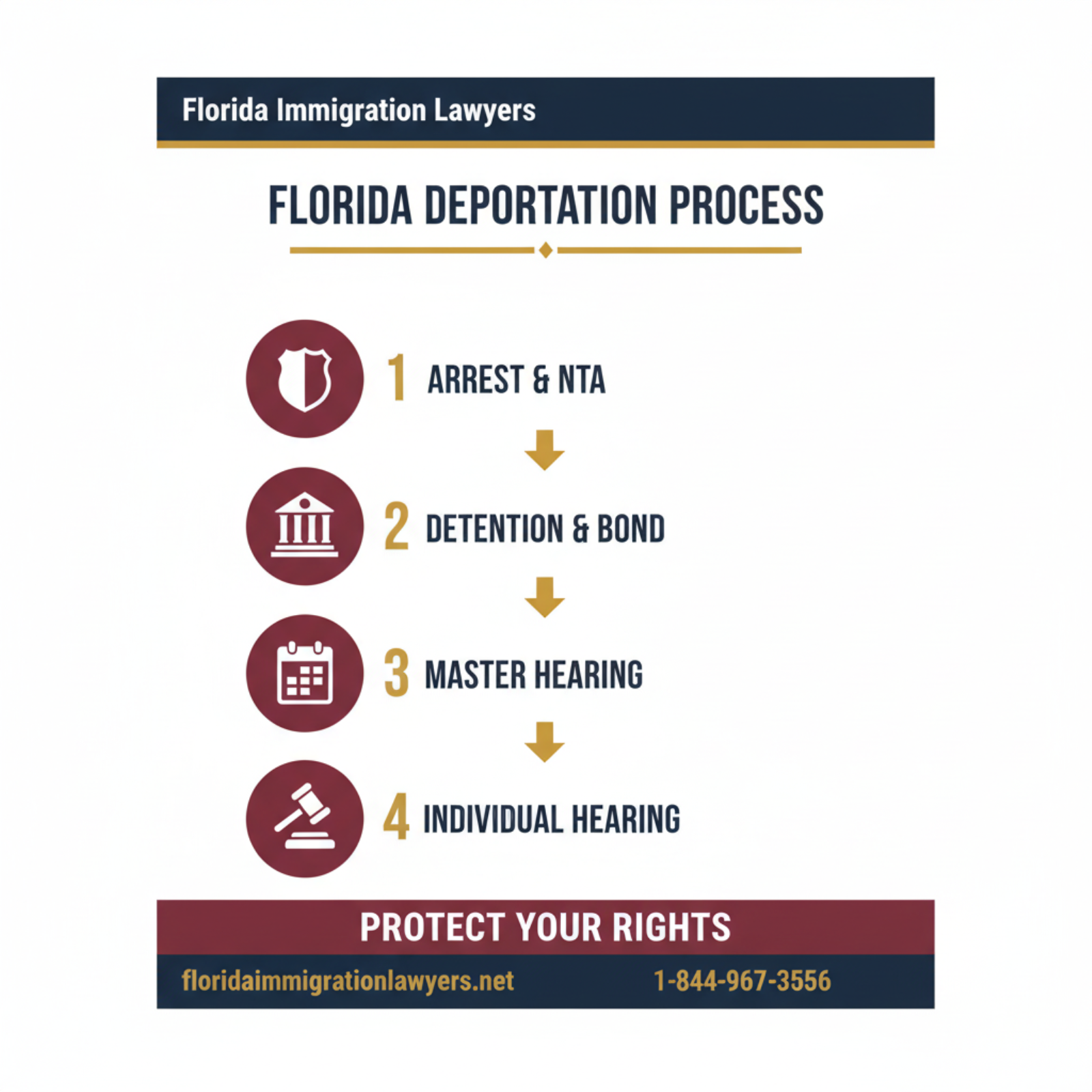
La deportación, también conocida como remoción, es el proceso formal por el cual el gobierno de EE. UU. ordena a un no ciudadano abandonar el país. Este proceso es iniciado por el Departamento de Seguridad Nacional (DHS), típicamente a través de la emisión de un Aviso de Comparecencia (NTA). El NTA describe las supuestas violaciones de la ley de inmigración e informa al individuo de la fecha y hora de su audiencia inicial ante un Juez de Inmigración.
Grounds for Deportation
Existen numerosas razones por las cuales un individuo podría enfrentar la deportación. Los motivos comunes incluyen:
- Delitos Criminales: Ciertas condenas, particularmente delitos graves, crímenes que involucren depravación moral y delitos relacionados con drogas, pueden llevar a la detención y remoción obligatoria.
- Violaciones de Visa: Exceder el tiempo de una visa, violar los términos de una visa (por ejemplo, trabajar sin autorización con una visa de turista) o participar en fraude para obtener una visa.
- Entrada Ilegal: Entrar a EE. UU. sin inspección o autorización adecuada.
- Motivos de Seguridad: Participar en actividades consideradas una amenaza para la seguridad nacional.
Independientemente de los motivos específicos, recibir un NTA es un asunto serio que demanda atención legal inmediata. Un abogado con experiencia puede revisar el NTA, evaluar las acusaciones y comenzar a formular una estrategia de defensa adaptada a sus circunstancias únicas.
Estrategias Clave de Defensa Contra la Deportación
Defenderse con éxito contra la deportación requiere una comprensión profunda de la ley de inmigración y la capacidad de navegar el complejo sistema legal. Varias estrategias de defensa pueden estar disponibles, dependiendo de los detalles de su caso.
Asilo y Suspensión de Remoción
Para individuos que temen persecución en su país de origen, el asilo o la suspensión de remoción pueden ser opciones viables. El asilo está disponible para aquellos que pueden demostrar un temor fundado de persecución por motivos de raza, religión, nacionalidad, pertenencia a un grupo social particular u opinión política. La suspensión de remoción ofrece una protección similar pero tiene un estándar de prueba más alto y no conduce a la residencia permanente. Ambas requieren evidencia convincente y a menudo implican argumentos legales complejos sobre las condiciones del país y narrativas personales de miedo.
Cancelación de Remoción
La cancelación de remoción es una forma de alivio discrecional que permite a ciertos no ciudadanos solicitar la residencia permanente legal a pesar de estar en procedimientos de remoción. Hay dos categorías principales:
- Para Residentes Permanentes Legales (LPR): Un LPR puede ser elegible si ha sido residente permanente legal durante al menos cinco años, ha residido continuamente en EE. UU. durante siete años después de su admisión en cualquier estatus, y no ha sido condenado por un delito grave.
- Para No Residentes Permanentes: Un no LPR puede ser elegible si ha estado presente físicamente en EE. UU. durante al menos diez años, ha demostrado buen carácter moral durante ese período, no ha sido condenado por ciertos delitos y puede demostrar que su remoción resultaría en una dificultad excepcional y extremadamente inusual para un cónyuge, padre o hijo ciudadano o residente permanente calificado.
Esta es una forma de alivio altamente competitiva, que a menudo requiere una amplia documentación de los lazos con la comunidad y la dificultad que les sobrevendría a los familiares calificados.
Exenciones de Inadmisibilidad
En algunos casos, los individuos pueden ser considerados inadmisibles a EE. UU. debido a acciones pasadas (por ejemplo, historial criminal, violaciones de inmigración). Sin embargo, ciertas exenciones pueden estar disponibles para superar estos motivos de inadmisibilidad. Las exenciones comunes incluyen la Solicitud I-601 para Exención de Motivos de Inadmisibilidad y la Solicitud I-212 para Permiso para Volver a Solicitar Admisión a los Estados Unidos Después de la Deportación o Remoción. Estas exenciones generalmente requieren demostrar una dificultad extrema para un familiar calificado y presentar factores humanitarios convincentes.
El Papel de un Abogado de Inmigración en Su Caso
Navegar las complejidades de la ley de inmigración sin representación legal puede ser abrumador y reducir significativamente sus posibilidades de un resultado favorable. Un abogado de inmigración juega un papel crucial a lo largo del proceso de defensa contra la deportación.
- Evaluación del Caso y Estrategia: Un abogado revisará meticulosamente su caso, identificará todas las posibles razones para obtener alivio y desarrollará una estrategia de defensa a medida. Esto incluye analizar su historial migratorio, antecedentes penales y lazos familiares.
- Representación Judicial: Desde audiencias de calendario maestro hasta audiencias de méritos individuales, su abogado lo representará en la corte de inmigración, presentará evidencia, interrogará a testigos y hará argumentos legales en su nombre.
- Recolección de Pruebas: Los abogados ayudan en la recolección y organización de evidencia crítica, como declaraciones juradas, registros médicos, informes policiales e informes sobre las condiciones en su país, todos vitales para respaldar sus reclamaciones.
- Apelaciones: Si la decisión de un juez de inmigración es desfavorable, un abogado puede guiarlo a través del proceso de apelación ante la Junta de Apelaciones de Inmigración (BIA) y, si es necesario, ante los tribunales federales.
Tener un defensor legal dedicado a su lado asegura que sus derechos estén protegidos y que se explore cada vía legal disponible.
Navegando el Sistema de Cortes de Inmigración
El sistema de cortes de inmigración de EE. UU., supervisado por la Oficina Ejecutiva de Revisión de Inmigración (EOIR) dentro del Departamento de Justicia (justice.gov), es un órgano judicial responsable de interpretar y administrar las leyes de inmigración. Comprender su estructura y procedimientos es vital para cualquier persona que enfrente procesos de deportación.
El proceso generalmente comienza con una Audiencia de Calendario Maestro, que es una audiencia preliminar donde el Juez de Inmigración aborda asuntos procesales, confirma los cargos en el NTA y establece un calendario para audiencias futuras. Aquí es donde su abogado formalmente se presenta, discute las alegaciones y señala las formas de alivio que tiene la intención de perseguir. Posteriormente, se programa una Audiencia Individual (o Audiencia de Méritos). Este es el juicio principal donde se presenta evidencia, los testigos declaran y se hacen argumentos legales antes de que el juez emita una decisión. Las apuestas son extremadamente altas, lo que hace que la preparación minuciosa y una representación hábil sean esenciales para cualquier defensa contra la deportación.
Opciones Específicas de Alivio y Vías para Permanezcer
Más allá de las estrategias de defensa principales, hay varias otras vías que podrían ofrecer un camino para permanecer en EE. UU. o mitigar las consecuencias de una orden de deportación.
Salida Voluntaria vs. Deportación
La salida voluntaria permite a un individuo abandonar EE. UU. a su propio costo dentro de un período específico, evitando una orden formal de deportación. Esto puede ser ventajoso, ya que por lo general previene la acumulación de ciertas barreras para futuras admisiones que resultan de una orden de deportación. Sin embargo, requiere que el individuo renuncie a su derecho a apelar y cumpla con criterios específicos de elegibilidad. Es una decisión crítica que solo debe tomarse después de una consulta cuidadosa con un abogado de inmigración, sopesando los pros y los contras frente a otras formas potenciales de alivio.
Otras opciones de alivio incluyen el Ajuste de Estatus para aquellos que se vuelven elegibles para una tarjeta verde mientras están en procedimientos, visas U o T para víctimas de ciertos crímenes o trata de personas, y peticiones VAWA (Ley de Violencia contra la Mujer) para víctimas de abuso por parte de un ciudadano estadounidense o cónyuge, padre o hijo con residencia permanente. Cada uno de estos caminos tiene requisitos estrictos y a menudo implica coordinación con otras agencias gubernamentales como USCIS (uscis.gov).
Preparándose para su Audiencia de Inmigración
La preparación es clave para un resultado exitoso en la corte de inmigración. Esto implica más que solo presentarse; requiere organización meticulosa y comprensión de lo que se puede esperar.
- Recolección de Documentos: Reúna todos los documentos relevantes, incluidas actas de nacimiento, certificados de matrimonio, antecedentes policiales, declaraciones de impuestos, comprobante de residencia y cualquier evidencia que respalde sus reclamaciones de alivio.
- Testimonio de Testigos: Identifique y prepare testigos que puedan proporcionar un testimonio creíble para apoyar su caso. Esto puede incluir miembros de la familia, empleadores, líderes comunitarios o expertos.
- Declaración Personal: Prepare una declaración personal detallada que describa su historia, sus lazos con EE. UU. y por qué teme regresar a su país de origen, si aplica.
- Comprensión de los Procedimientos de la Corte: Familiarícese con el decorum y los procedimientos de la corte de inmigración. Su abogado lo guiará a través de esto, asegurándose de que se sienta cómodo y confiado.
Ser honesto, consistente y estar bien preparado bajo la orientación de su abogado legal fortalece significativamente su posición ante el Juez de Inmigración.
El Futuro de la Ley y la Política de Inmigración en 2026
A medida que nos acercamos a 2026, el panorama de la ley y la política de inmigración en los Estados Unidos sigue siendo dinámico y está sujeto a cambios significativos. Los climas políticos, las prioridades legislativas y las interpretaciones judiciales pueden impactar profundamente las estrategias de defensa contra la deportación y la disponibilidad de alivio. Para individuos como Abrego Garcia, comprender estos posibles cambios futuros no es solo académico; es un componente crítico de la planificación legal a largo plazo.
Los cambios anticipados podrían derivar de diversas fuentes. Nuevas administraciones podrían introducir diferentes prioridades de ejecución, posiblemente cambiando el enfoque de ciertos tipos de delitos o individuos. Los esfuerzos legislativos en el Congreso podrían llevar a una reforma migratoria integral, alterando los caminos hacia el estatus legal o introduciendo nuevas causas para la expulsión. Además, las decisiones de los tribunales federales, incluidas las de la Corte Suprema, redefinen frecuentemente el alcance y la aplicación de las leyes de inmigración existentes. Estos cambios pueden afectar todo, desde la elegibilidad para fianzas y políticas de detención hasta los criterios para solicitar asilo y la cancelación de la expulsión. Mantenerse informado a través de canales oficiales del gobierno como el Departamento de Estado (travel.state.gov) y USCIS (uscis.gov) es crucial, pero interpretar estos cambios y aplicarlos a casos individuales requiere un análisis legal detallado. Un abogado de inmigración con experiencia en Florida no solo estará al tanto de las leyes actuales, sino que también monitoreará la legislación propuesta y los cambios de políticas, adaptando las estrategias de defensa para proteger a los clientes contra desafíos en evolución. Este enfoque proactivo asegura que los clientes estén preparados para lo que les espera, ofreciendo estabilidad y una ventaja estratégica en un entorno legal a menudo impredecible.
Conclusión
Enfrentarse a la deportación es una experiencia que cambia la vida, pero no es una batalla que tenga que librar solo. Las complejidades de casos como el de Abrego Garcia subrayan la necesidad de una representación legal adecuada. Con las estrategias de defensa correctas, un conocimiento profundo de sus derechos y la orientación de un abogado de inmigración con experiencia en Florida, puede navegar por el sistema de tribunales de inmigración con confianza y buscar el mejor resultado posible. No espere hasta que sea demasiado tarde; la orientación legal proactiva es su defensa más fuerte. Contáctenos hoy para una consulta confidencial para discutir su caso y explorar sus opciones.
No Navegue Este Proceso Solo
Nuestros abogados de inmigración con experiencia están listos para luchar por usted. Obtenga una evaluación gratis de su caso y confidencial hoy.
We Speak English
O deje sus datos y le llamamos:
Evaluación Gratis en 24 Horas
O hable con nosotros ahora

Asistente de voz IA — disponible 24/7
GratisPreguntas Frecuentes

William J. Vásquez
Abogado Fundador · Vasquez Law Firm
Veterano de la Fuerza Aérea de EE.UU. y abogado de inmigración con años de experiencia práctica en inmigración de EE.UU. J.D., NCCU School of Law. Miembro de AILA. Admitido en los Circuitos 4.º, 5.º y 11.º.
Disponible 24/7 - Evaluaciones Gratis de su Caso
Revisado para exactitud legal por William J. Vásquez
Con licencia en Carolina del Norte; la inmigración a EE.UU. es una práctica federal.
Servicios legales relacionados
Nuestros abogados de inmigración en Florida pueden ayudarle con áreas de práctica de inmigración, servicios de inmigración familiar y ciudadanía y naturalización. Llame hoy al 1-844-YO-PELEO para una evaluación gratis de su caso.
Enlaces Relacionados
Temas Relacionados
Evaluación Legal Gratis de su Caso
Discuta su caso con nuestros abogados experimentados. Estamos disponibles 24/7.
Artículos Relacionados
Consecuencias de DUI en Inmigración en Florida 2026
Una condena por DUI en Florida puede tener graves consecuencias migratorias, que potencialmente conducen a la inadmisibilidad, la deportación o la denegación de beneficios migratorios. Para los no ciudadanos, un DUI no es solo una infracción de tráfico, sino un asunto penal grave que la ley federal de inmigración examina de cerca. Factores como múltiples delitos, lesiones o daños a la propiedad pueden escalar un DUI simple a un Delito que Involucra Depravación Moral (CIMT) o incluso a un delito grave agravado, lo que desencadena la detención obligatoria y los procedimientos de expulsión. Comprender la naturaleza específica de su condena en Florida y su interpretación bajo la Ley de Inmigración y Nacionalidad (INA) es crucial. Este artículo describe cómo los DUIs impactan el estatus migratorio, los motivos de inadmisibilidad y deportación, una guía paso a paso para navegar el proceso, la documentación esencial y los plazos esperados para 2026. También destacamos los errores comunes a evitar y cuándo buscar asesoramiento legal de un abogado de inmigración experimentado. Florida Immigration Lawyers ofrece apoyo integral para personas que enfrentan estas situaciones desafiantes, brindando orientación experta a través de complejos paisajes legales.
Certificación Laboral PERM en Florida: Guía 2026
Descubra todo sobre el proceso de certificación laboral PERM en Florida, esencial para empleadores que patrocinan solicitantes de tarjeta verde. Entienda los pasos, requisitos de documentos y errores comunes a evitar en esta guía de 2026.
Abogado de Doble Ciudadanía en Florida: Su Guía 2026
Para los residentes de Florida, el concepto de doble ciudadanía, o poseer dos pasaportes, ofrece una convincente combinación de oportunidades y desafíos. Si bien Estados Unidos generalmente permite la doble nacionalidad, el camino para lograr este estatus requiere una comprensión meticulosa tanto de las leyes de inmigración de EE. UU. como de las políticas de ciudadanía de su país de origen. Esta guía explora la definición de doble ciudadanía, el proceso detallado paso a paso para la naturalización en EE. UU. y los importantes beneficios y posibles escollos involucrados. Cubrimos la documentación esencial, los plazos típicos y las consideraciones de costos para 2026, proporcionando información crucial para cualquier persona en Orlando, Miami o en toda Florida que esté considerando este importante paso legal. Conozca los errores comunes a evitar y comprenda cuándo buscar asesoramiento legal profesional para navegar este complejo proceso con éxito. Florida Immigration Lawyers está aquí para brindar apoyo experto y bilingüe en su viaje hacia la doble ciudadanía.