Understanding 212(c) Waiver Legacy Relief in Florida
Explore the 212(c) waiver, essential for long-term residents in Pembroke Pines facing deportation due to past criminal conduct. Learn about eligibility, application steps, and common pitfalls. Call Florida Immigration Lawyers for expert guidance.

- The waiver applies mainly to pre-1996 offenses.
- Eligibility depends on the length of U.S. residency.
- It requires demonstrating rehabilitation.
Introduction
If you're a long-term resident in Pembroke Pines, Florida, facing deportation due to past criminal conduct, the 212(c) waiver may be a lifeline. This waiver, rooted in the Immigration and Nationality Act (INA 212), offers relief to those with a significant U.S. presence and a rehabilitative history. This article explores eligibility, processes, and common pitfalls in seeking this legacy waiver. For personalized guidance, call Florida Immigration Lawyers at 1-844-967-3536 for a free consultation.Understanding the 212(c) Waiver
The 212(c) waiver is a form of discretionary relief available to lawful permanent residents (LPRs) who have committed certain deportable offenses prior to 1996. With changes in immigration laws, particularly the Illegal Immigration Reform and Immigrant Responsibility Act (IIRIRA), the availability of this waiver has been restricted. In Florida, especially in areas like Pembroke Pines, it remains a critical option for those with longstanding ties to the U.S. The waiver allows eligible immigrants to avoid deportation and retain their residency status. Typically, applicants must show rehabilitation and that their positive factors outweigh the negative ones. The adjudication of 212(c) waivers is complex, requiring a nuanced understanding of past and present immigration laws.Eligibility Requirements
To qualify for a 212(c) waiver, you must meet specific criteria:- Lawful Permanent Residence: You must have been a lawful permanent resident for at least 7 years.
- Time of Offense: The deportable offense must have occurred before April 1, 1997.
- Rehabilitation Evidence: Providing evidence of rehabilitation is crucial, demonstrating changes in behavior and character.
- Balancing Test: Positive equities such as family ties, employment history, and community involvement must outweigh the negative factors.
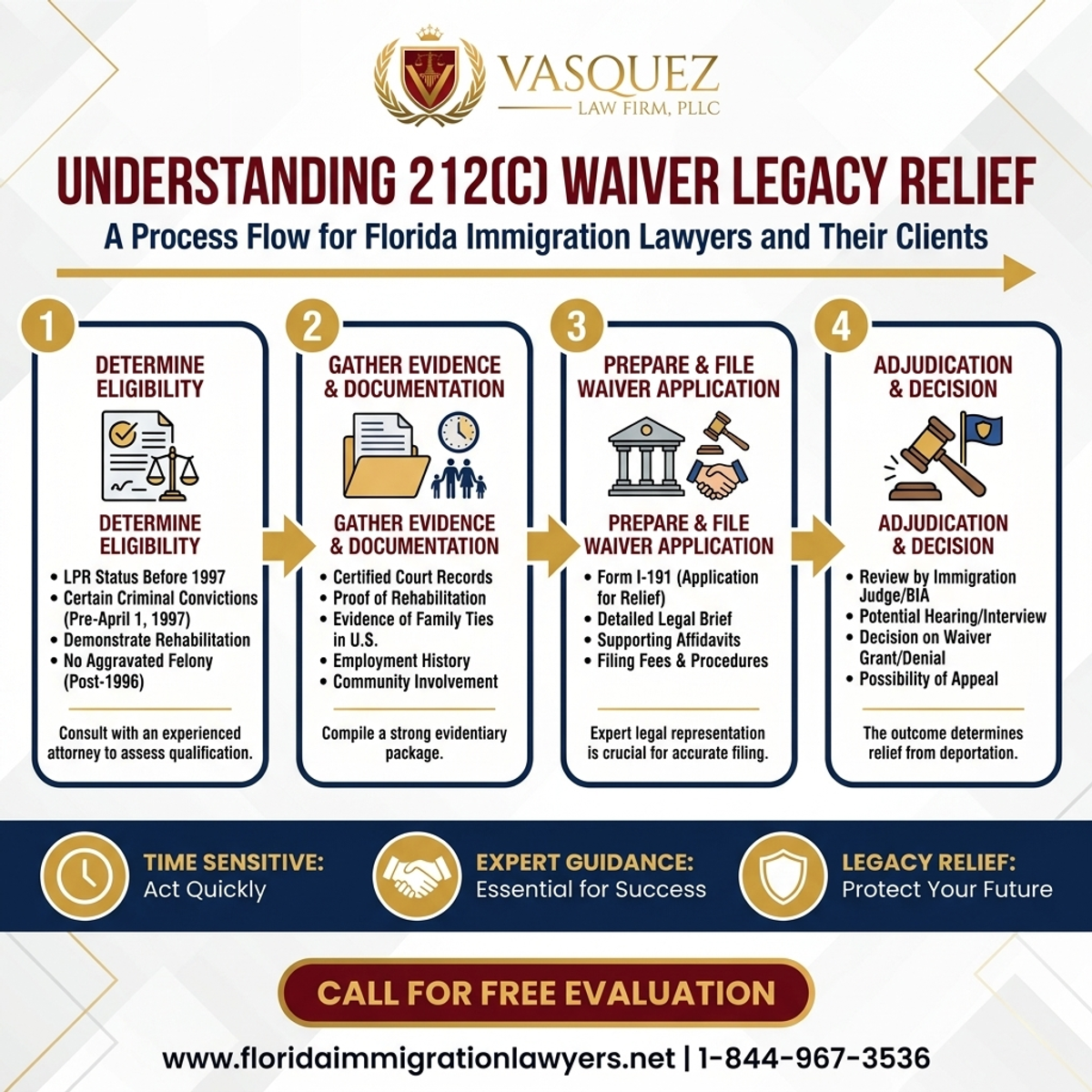
Step-by-Step Process — Understanding 212(c) Waiver Legacy Relief in Florida
Understanding these requirements is essential, and consulting with an experienced immigration attorney can significantly increase your chances of success.Step-by-Step Guide to Filing
Applying for a 212(c) waiver involves several detailed steps:- Consultation: Schedule a consultation with an immigration attorney to evaluate your eligibility.
- Gather Documentation: Collect evidence of your residency, criminal history, and rehabilitation efforts.
- File Form I-191: The application for advanced permission to return to unrelinquished domicile is filed with USCIS.
- Attend Hearings: If required, attend hearings at the immigration court to present your case.
- Await Decision: The decision can take several months, depending on the complexity of the case and the backlog at the court or USCIS.
Document Checklist
Preparing your application requires assembling the right documents:- Proof of lawful permanent residency
- Criminal history records
- Evidence of rehabilitation, such as letters from employers or community leaders
- Family ties documentation
- Documents supporting positive equities (e.g., tax returns, pay stubs)
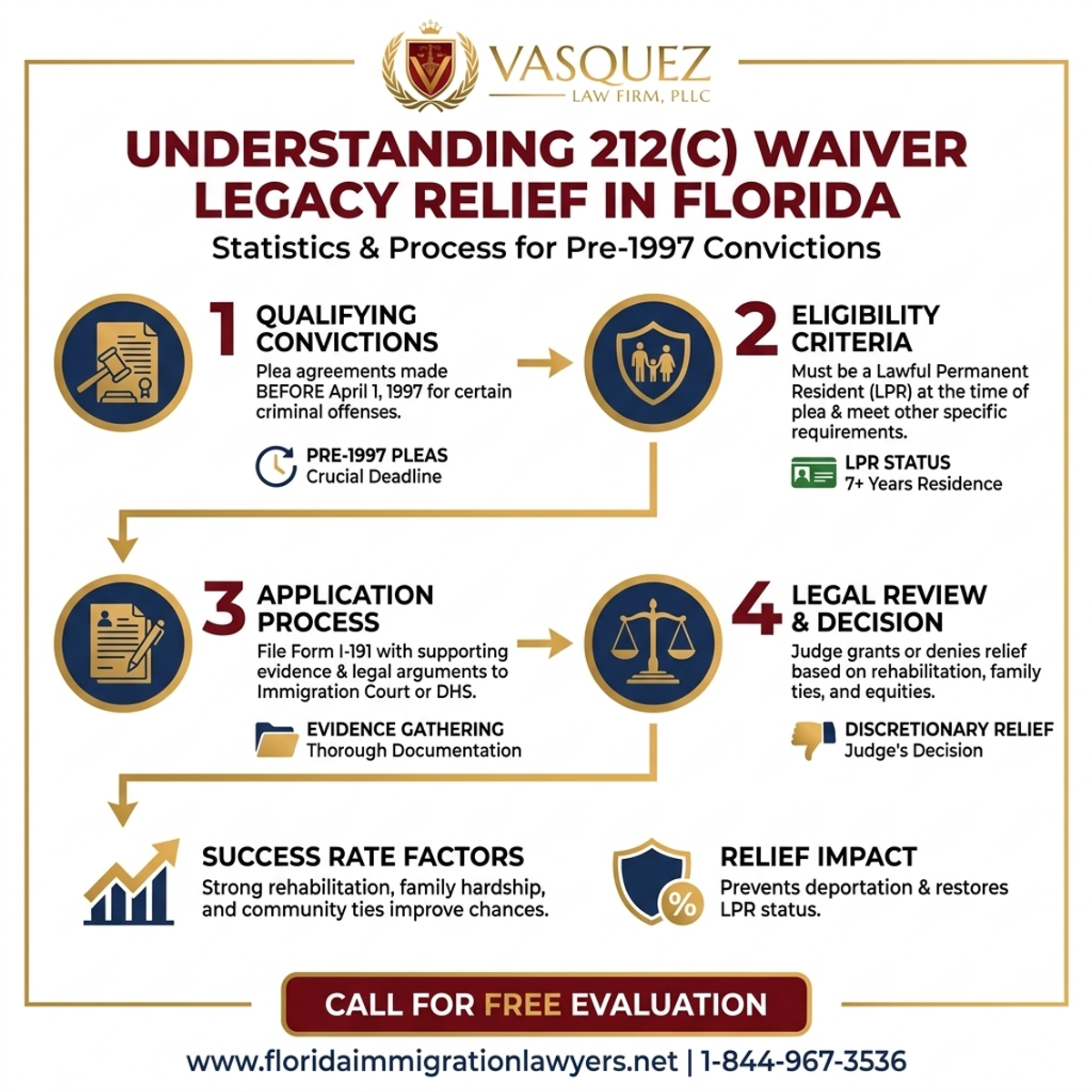
Key Statistics — Understanding 212(c) Waiver Legacy Relief in Florida
Ensure all documents are current and accurately reflect your situation to avoid delays or denials.Timeline and Processing Expectations
The processing time for a 212(c) waiver can vary significantly. Generally, it takes several months to a year, depending on the case's complexity and the current backlog at USCIS or the immigration court. Applicants should be prepared for potential delays and stay in close contact with their legal representatives to manage expectations and respond promptly to any requests for additional information.Cost Factors and Fee Breakdown
While the exact costs can vary, applicants should anticipate fees for filing with USCIS, potential legal fees, and costs associated with gathering necessary documentation. It's important to discuss all potential costs upfront with your attorney to avoid unexpected financial burdens. Do not navigate this process alone. Contact Florida Immigration Lawyers today.Common Mistakes to Avoid
Navigating the 212(c) waiver process can be fraught with challenges. Here are common mistakes and how to avoid them:- Incomplete Applications: Failing to provide all required documents can lead to delays or denials.
- Ignoring Legal Advice: Overlooking legal counsel can result in missed deadlines or incorrect filings.
- Insufficient Rehabilitation Evidence: Not demonstrating adequate rehabilitation may weaken your case.
- Failure to Meet Residency Requirements: Miscalculating your residency duration can disqualify you.
- Overlooking Court Notices: Missing a court date can severely impact your case.
- Not Balancing Equities Properly: Failing to present strong positive equities can result in denial.
- Misunderstanding Legal Changes: Lack of awareness of current laws can lead to incorrect applications.
When to Call a Lawyer
If you are unsure about your eligibility for a 212(c) waiver or if you have received a Notice to Appear for removal proceedings, it is crucial to seek legal counsel immediately. An experienced immigration attorney can provide clarity on your situation and help you navigate complex immigration laws. Florida Immigration Lawyers offer comprehensive services to support your case.About Florida Immigration Lawyers
Florida Immigration Lawyers is a dedicated firm offering expert immigration services across Florida. Our team specializes in deportation defense, family immigration, and business immigration. With a commitment to each client's unique needs, we provide 24/7 availability, ensuring you receive the support you need when you need it. Contact us at 1-844-967-3536 or visit our website for a free consultation.Sources and References
- U.S. Citizenship and Immigration Services (USCIS)
- Executive Office for Immigration Review (EOIR)
- 8 U.S.C. Chapter 12 - Immigration and Nationality Act
- 8 CFR § 212.3 - Waivers of Inadmissibility
Related services: immigration practice areas, family immigration services, citizenship and naturalization.
This article provides general legal information and is not intended as legal advice. Every case is unique, and outcomes depend on specific facts and circumstances. Contact an attorney for advice about your particular situation.
Final CTA
If you need legal assistance, learn more about experienced deportation defense attorneys, or call us at 1-844-967-3536 for a free consultation.
Take the first step toward protecting your residency. Contact Florida Immigration Lawyers at 1-844-967-3536 for a free consultation. Se Habla Espanol - Estamos aqui para ayudarle.Do Not Navigate This Process Alone
Our experienced immigration attorneys are ready to fight for you. Get a free, confidential consultation today.
Se Habla Español
Frequently Asked Questions
Florida Immigration Lawyers
Immigration Attorney | Founder, Vasquez Law Firm
U.S. Air Force veteran and immigration attorney with thousands of cases resolved. J.D., NCCU School of Law. AILA member. Admitted to the 4th, 5th, and 11th Circuit Courts.
Available 24/7 - Free Evaluations
Related Legal Services
Our Florida immigration attorneys can help you with business immigration, asylum protection and deportation defense. Call today at 1-844-967-3536 for a free consultation.
Related Links
Related Topics
Free Legal Consultation
Discuss your case with our experienced attorneys. We're available 24/7.
Se Habla Español - Estamos aquí para ayudarle.
Related Articles
U Visa for Crime Victims Florida: Your Path to Safety
For non-citizen crime victims in Florida, the U visa offers a critical pathway to safety and legal status. This humanitarian visa is designed for individuals who have suffered substantial physical or mental abuse from qualifying criminal activity and are willing to assist law enforcement. It provides temporary legal status, work authorization, and a potential path to a Green Card, offering crucial protection against deportation. Understanding the complex requirements, from obtaining law enforcement certification to compiling extensive documentation, is vital for a successful application. Florida Immigration Lawyers specializes in guiding victims through this sensitive process, ensuring their rights are protected and their voices heard. Contact our experienced team for a free consultation to explore your eligibility and secure your future in the U.S.
USCIS Field Office Locations in Florida | VLF Florida
Discover USCIS field office locations in Florida, including services offered, appointment scheduling, and common mistakes to avoid. Call Florida Immigration Lawyers for a free consultation.
H-2B Visa for Florida Hospitality Workers | VLF Florida
Explore the H-2B visa for seasonal workers in Florida's hospitality sector. Learn the process, avoid common mistakes, and discover when to seek legal help. Contact Florida Immigration Lawyers today for support.
Visa Bulletin Predictions 2026 for Florida | VLF Florida
Discover the visa bulletin predictions for 2026 in Florida. Learn about priority dates, wait times, and how these affect your immigration process. For personalized guidance, call Florida Immigration Lawyers today.