2026 Winter Olympics Ice Hockey: Immigration Pathways
For international athletes, coaches, and support staff, the journey to the 2026 Winter Olympics ice hockey tournament or professional sports in Florida often involves navigating complex U.S. immigration laws. This guide covers O-1 and P-1 visas, essential for individuals with extraordinary abilities or international recognition. We detail the application process, required documentation, processing timelines, and associated costs. Florida's vibrant sports scene, including teams like the Florida Panthers and Tampa Bay Lightning, attracts global talent, making immigration assistance crucial. Learn how Florida Immigration Lawyers can help you avoid common mistakes and achieve your athletic and professional goals in the U.S.
Athletes, coaches, and support staff aiming for the 2026 Winter Olympics ice hockey event, or involved in professional sports in Florida, often require specific U.S. visas like the O-1 or P-1. Navigating these complex immigration processes, from initial petitions to maintaining status, demands meticulous attention to detail and a deep understanding of U.S. immigration law.
- O-1 and P-1 visas are primary options for elite athletes and support staff.
- Strict eligibility criteria and extensive documentation are required for these visas.
- Processing times and government fees for immigration applications vary significantly.
- Consulting a Florida immigration lawyer is crucial for a successful application.
- Florida's vibrant sports landscape offers unique opportunities for international talent.
Imagine the roar of the crowd, the tension on the ice, and the dream of competing on the world stage. For many international athletes, coaches, and support staff, the road to events like the 2026 Winter Olympics ice hockey tournament runs through a critical gateway: U.S. immigration. Florida, a hub for sports and diverse talent, plays a significant role in this global narrative.
This comprehensive guide details the immigration pathways available for those involved in elite sports, focusing on how individuals in Florida, including Tallahassee, can navigate the complexities of obtaining O-1 and P-1 visas. We will explore the requirements, application process, and essential considerations for those contributing to Florida's vibrant sports scene and global events. If you are an athlete, coach, or essential support personnel in Florida seeking to pursue your career in the U.S., do not face this journey alone. Call Florida Immigration Lawyers at 1-844-YO-PELEO for a free consultation today. Our experienced team is ready to assist you.
Understanding Immigration for Olympic Athletes and Staff
The world of professional sports is inherently global, bringing together talent from every corner of the globe. For athletes, coaches, and critical support personnel, participating in high-profile events like the 2026 Winter Olympics ice hockey competition often means navigating the intricate landscape of U.S. immigration law. Specialized nonimmigrant visas exist to facilitate their entry and temporary stay.
These visas are designed to recognize and accommodate individuals with extraordinary abilities or international recognition in their respective fields. Understanding which visa category applies to your unique situation is the first crucial step. The specific requirements for each visa are stringent, demanding a thorough compilation of evidence and a clear demonstration of eligibility.
Types of Visas for Athletes and Support Personnel
Several nonimmigrant visa categories cater to athletes, entertainers, and their essential support staff. For those involved in the 2026 Winter Olympics ice hockey, the O-1A and P-1A visas are typically the most relevant options.
- O-1A Visa: Individuals with Extraordinary Ability in Athletics
This visa is for individuals who possess extraordinary ability in the sciences, arts, education, business, or athletics, demonstrated by sustained national or international acclaim. For athletes, this means a high level of achievement, recognized by a field of expertise. - P-1A Visa: Internationally Recognized Athletes
The P-1A visa is specifically for individual athletes or teams who are internationally recognized with a high level of achievement in their sport. This recognition must be sustained and significant. It is often used for athletes competing in major international events. - O-2 Visa: Essential Support Personnel for O-1 Aliens
Individuals who are an integral part of the O-1 alien's athletic performance and possess critical skills and experience not readily available to a U.S. worker may qualify for an O-2 visa. This includes coaches, trainers, and other vital support staff. - P-S Visa: Essential Support Personnel for P-1 Aliens
Similar to the O-2, the P-S visa is for essential support personnel who provide services to P-1 athletes or teams. Their skills and experience must be critical to the performance of the P-1 visa holder and not generally available in the U.S. labor market.
Other P visa categories, such as P-1B for internationally recognized entertainment groups, P-2 for artists or entertainers under a reciprocal exchange program, and P-3 for artists or entertainers under a culturally unique program, may be applicable in specific, less common scenarios related to sports performances or cultural events surrounding the Olympics.
Florida's Role in Global Sports and Immigration
Florida is a premier destination for professional sports, boasting world-class training facilities, major league teams, and a diverse, international population. Our state, including cities like Tallahassee, serves as a significant hub for athletes and sports professionals from around the globe. The presence of NHL teams like the Florida Panthers and Tampa Bay Lightning underscores Florida's deep connection to ice hockey.
This vibrant sports ecosystem naturally attracts international talent, making Florida a crucial location for understanding and navigating sports-related immigration. From training camps to professional leagues, many athletes and their support teams will require U.S. visas to live and work in the Sunshine State. Florida Immigration Lawyers is uniquely positioned to assist individuals in Tallahassee and throughout Florida with these specialized immigration needs, connecting local talent with global opportunities.
Navigating the Visa Process for 2026 Winter Olympics Ice Hockey Participants in Florida
The process of obtaining an O-1 or P-1 visa is primarily petition-based, meaning a U.S. employer, agent, or sponsor must file a petition on behalf of the foreign national. This involves several critical steps, each requiring meticulous attention to detail and a thorough understanding of U.S. Citizenship and Immigration Services (USCIS) regulations.
For those involved with the 2026 Winter Olympics ice hockey, whether as a player, coach, or essential support staff, a well-prepared petition is paramount. Any misstep can lead to delays, Requests for Evidence (RFEs), or even denial, jeopardizing participation in career-defining events. Our firm focuses on guiding clients through these complex procedures.
Key Steps in Applying for an O-1 or P Visa
-
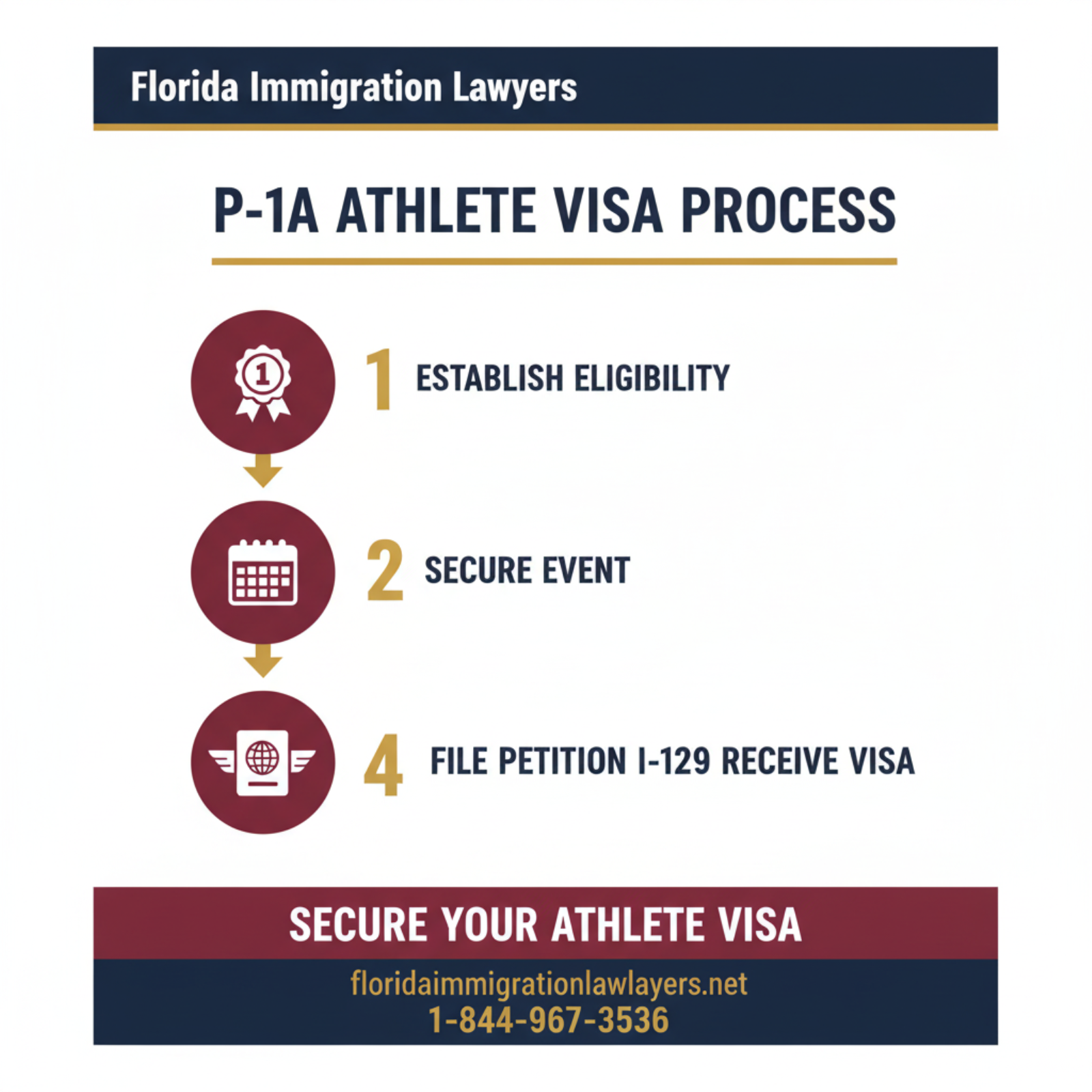
Determine Eligibility and Visa Category: The initial step involves a comprehensive assessment of your qualifications to ascertain whether an O-1A (extraordinary ability) or P-1A (internationally recognized athlete) visa is the most appropriate pathway. This evaluation considers your achievements, awards, and recognition within your sport.
-
Secure a U.S. Petitioner: An approved U.S. employer, agent, or sponsoring organization must file the visa petition on your behalf. This petitioner will serve as your sponsor throughout the immigration process, demonstrating a legitimate need for your skills and talent in the U.S.
-
Gather Comprehensive Documentation: This is a critical phase. You must collect substantial evidence demonstrating your extraordinary ability or international recognition. This includes contracts, awards, media coverage, testimonials from experts, and proof of participation in high-level events. We detail these further in the document checklist.
-
File Form I-129, Petition for a Nonimmigrant Worker: The petitioner submits Form I-129, along with all supporting documents and the required filing fee, to the appropriate USCIS Service Center. The petition package must be complete and accurately reflect all aspects of your qualifications and proposed activities in the U.S.
-
Premium Processing (Optional): For an additional fee, petitioners can opt for Premium Processing, which guarantees USCIS action (approval, denial, RFE, or notice of intent to deny) within 15 calendar days. This option is often crucial for athletes with time-sensitive commitments like the 2026 Winter Olympics ice hockey.
-
Receive Petition Approval: If USCIS approves the petition, they will issue Form I-797, Approval Notice. This document signifies that your qualifications and the proposed employment meet the visa category requirements.
-
Visa Interview (Consular Processing) or Change of Status: If you are outside the U.S., you will attend a visa interview at a U.S. Embassy or Consulate in your home country. If you are already in the U.S. in another valid nonimmigrant status, you may apply for a Change of Status to the O-1 or P-1 category, allowing you to avoid leaving the country.
-
Enter the U.S. or Begin Employment: Upon successful visa issuance or status change, you can enter the U.S. or begin your authorized employment in the specific field for which your visa was approved. It is important to adhere to all visa terms and conditions throughout your stay.
Essential Documents for Your Immigration Application
A successful O-1 or P-1 visa petition hinges on the strength and completeness of your supporting documentation. USCIS requires compelling evidence to establish your extraordinary ability or international recognition. Preparing these documents meticulously is vital for avoiding delays and securing your visa.
While the exact list can vary slightly based on the specific visa type (O-1A vs. P-1A) and individual circumstances, the following general categories of documents are typically required. Working with an experienced Florida immigration lawyer can help ensure you submit a robust and compliant application package.
- Petition Letter from U.S. Employer/Agent: A detailed letter outlining the nature of the events or activities, the dates of employment, the athlete's accomplishments, and why their services are required.
- Contracts: Copies of contracts between the petitioner and the athlete, or between the athlete and other organizations relevant to their athletic endeavors.
- Evidence of Awards and Recognition: Documentation of major, internationally recognized awards, medals, or prizes in your sport. This could include Olympic medals, World Championship titles, or significant league honors.
- Membership in Associations: Proof of membership in associations that require outstanding achievements of their members, as judged by recognized international experts.
- Published Material: Articles, publications, or published material in major newspapers, trade journals, or other media about the athlete and their achievements.
- Testimonials and Expert Opinions: Letters from recognized experts in the field (coaches, sports journalists, former Olympians, league officials) attesting to the athlete's extraordinary ability or international recognition.
- Critical Role in Distinguished Organizations: Evidence that the athlete has performed, or will perform, in a leading or critical role for organizations with a distinguished reputation.
- High Salary or Remuneration: Documentation showing that the athlete commands or has commanded a high salary or other substantial remuneration for services, relative to others in the field.
- Itinerary of Events: A detailed itinerary of the events, competitions, or performances for which the visa is sought, including dates, locations, and the nature of the activities.
- Evidence for Essential Support Personnel: For O-2 or P-S visas, documentation proving the support person's critical skills, experience, and their integral relationship with the principal athlete. This includes letters from the athlete or organization, and resumes.
Timeline and Processing Expectations for Sports Visas
Understanding the processing timeline for O-1 and P-1 visas is crucial for athletes, coaches, and organizations planning participation in events like the 2026 Winter Olympics ice hockey. USCIS processing times can fluctuate significantly based on caseloads, the specific service center handling the petition, and the completeness of the application.
Generally, standard processing for Form I-129 petitions can take several months. These timelines are estimates and are subject to change by USCIS. You can check current processing times on the USCIS website for the most up-to-date information.
- Standard Processing: Without Premium Processing, an O-1 or P-1 petition typically takes anywhere from 2 to 6 months, or even longer, for an initial decision. This does not include time for responding to a Request for Evidence (RFE) or for consular processing.
- Premium Processing: For an additional fee, petitioners can request Premium Processing. This guarantees USCIS will take action on the petition within 15 calendar days. This action could be an approval, denial, or an RFE. If an RFE is issued, a new 15-day period begins once USCIS receives the response.
- Consular Processing: After petition approval, if the applicant is outside the U.S., they must attend a visa interview at a U.S. Embassy or Consulate. Appointment wait times vary widely by country and can add weeks or months to the overall process.
- Change of Status: If the applicant is already in the U.S. and applying for a change of status, the processing time for this phase is typically similar to the initial I-129 petition.
Factors that can impact your specific timeline include the quality of your initial submission, whether an RFE is issued, and the volume of applications at the processing center. Proactive and thorough preparation with a Florida immigration lawyer can help mitigate potential delays.
Cost Factors and Fee Breakdown for Immigration Applications
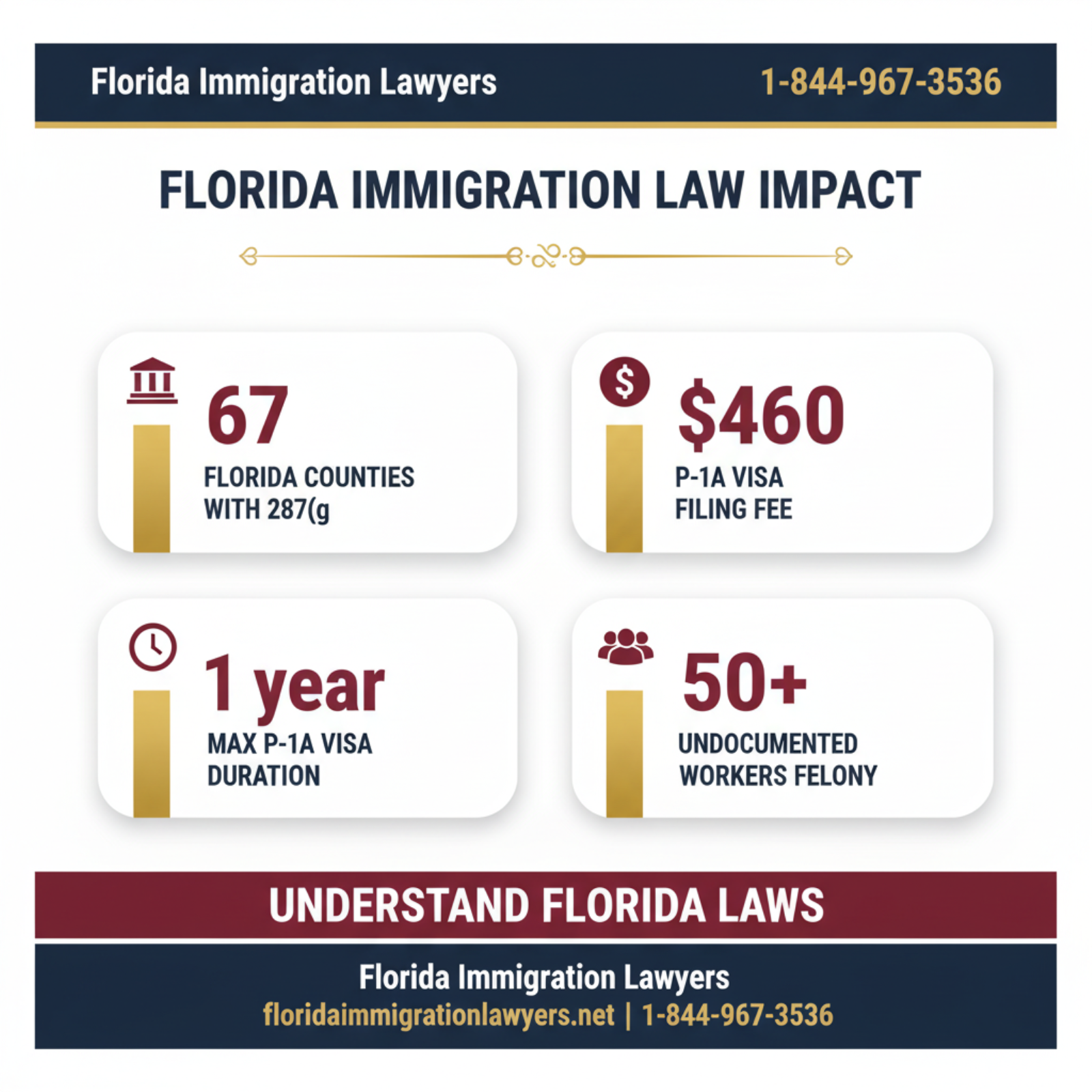
The financial commitment for an O-1 or P-1 visa application involves various fees, which can accumulate. It is important to budget carefully for these expenses, as they are a necessary part of the immigration process. Please note that all government filing fees are subject to change by USCIS without prior notice.
Florida Immigration Lawyers understands the financial considerations involved and strives to provide transparent fee structures. While we cannot provide specific government fee amounts here (as they change), we can outline the general categories of costs you should anticipate.
- USCIS Filing Fee for Form I-129: This is the primary fee for filing the petition for a nonimmigrant worker. The amount depends on the specific visa category and can be found on the official USCIS website.
- Premium Processing Fee: If you opt for expedited processing, an additional fee is required. This fee is separate from the standard I-129 filing fee.
- Attorney Fees: Legal fees for the guidance and representation provided by a Florida immigration lawyer. These fees cover consultation, petition preparation, document review, communication with USCIS, and overall case management.
- Translation Costs: If any supporting documents are not in English, certified translations will be required, incurring additional costs.
- Photocopying and Shipping Costs: Expenses related to preparing and mailing the extensive application package.
- Biometrics Fee: In some cases, a biometrics appointment may be required, incurring a small fee for fingerprinting and photographs.
- Visa Application Fee (DS-160): If consular processing is required, each applicant will pay a separate visa application fee at the U.S. Embassy or Consulate.
- Travel Expenses: Costs associated with traveling to a U.S. Embassy or Consulate for an interview, if applicable.
Thorough financial planning is key. Our firm can provide a clear breakdown of legal fees during your free consultation, helping you understand the total investment required for your immigration journey.
The journey to securing a U.S. visa for athletic pursuits can be filled with complex legal hurdles. Do not navigate this process alone. Contact Florida Immigration Lawyers today to ensure your application is meticulously prepared and strategically managed. Our team is ready to assist you.
Common Mistakes to Avoid in Your Immigration Journey
Navigating the U.S. immigration system, especially for specialized visas like the O-1 and P-1 for athletes, can be fraught with potential pitfalls. Avoiding common mistakes is crucial for a smooth and successful application. Even minor errors can lead to significant delays, Requests for Evidence (RFEs), or outright denials, impacting your ability to participate in events like the 2026 Winter Olympics ice hockey.
-
Underestimating Documentation Requirements: Many applicants fail to provide sufficient evidence to truly demonstrate extraordinary ability or international recognition. USCIS requires extensive proof, not just claims. Inadequate documentation is a leading cause of RFEs.
-
Incomplete or Inaccurate Forms: Errors, omissions, or inconsistencies on Form I-129 or any supporting documents can lead to immediate rejection or delays. Every field must be filled accurately and completely.
-
Missing Deadlines: Failing to file petitions, respond to RFEs, or attend interviews within the specified timeframes can result in the denial of your application or even jeopardize your immigration status. Timeliness is paramount.
-
Lack of a Strong Petitioner: The petitioner (employer or agent) must be legitimate and capable of sponsoring the athlete. A weak or unproven petitioner can raise red flags with USCIS, leading to scrutiny.
-
Inadequate Itinerary: For O and P visas, a detailed itinerary of events, performances, or competitions is often required. A vague or incomplete itinerary can lead to questions about the legitimacy and scope of the proposed activities.
-
Ignoring Essential Support Personnel Visas: Often, the focus is solely on the athlete, overlooking the critical need for O-2 or P-S visas for coaches, trainers, or other essential staff. Their immigration status is just as important for the team's success.
-
Misrepresenting Qualifications: Any exaggeration or false information provided in the application can lead to severe penalties, including a ban from future immigration benefits. Honesty and accuracy are non-negotiable.
-
Not Understanding Visa Limitations: Each visa category has specific terms, conditions, and durations. Failing to understand these limitations, such as work authorization scope or maximum stay, can lead to violations of immigration law.
-
Failing to Consult an Attorney: Attempting to self-file complex sports visa petitions without legal guidance is a common and often costly mistake. An experienced Florida immigration lawyer can navigate the complexities and avoid common pitfalls.
-
Poor Communication with USCIS: Not responding promptly or clearly to Requests for Evidence (RFEs) or other inquiries from USCIS can cause significant delays or lead to adverse decisions. Clear and concise communication is key.
-
Entering on the Wrong Visa: Arriving in the U.S. on a tourist visa (B-1/B-2) with the intent to work or compete professionally is a violation of immigration law and can lead to serious consequences, including future visa denials.
When to Call a Florida Immigration Lawyer
While this guide provides general information, the complexities of U.S. immigration law necessitate personalized legal advice. For athletes, coaches, and support staff, especially those aiming for high-stakes events like the 2026 Winter Olympics ice hockey, a misstep can have profound career implications. Knowing when to seek professional legal assistance is vital.
You should contact Florida Immigration Lawyers if you encounter any of the following scenarios:
- Complex Eligibility Assessment: If your qualifications for an O-1 or P-1 visa are borderline, or if you are unsure which visa category best suits your situation, an attorney can provide a thorough evaluation.
- Previous Immigration Issues: If you have any prior visa denials, overstays, or other immigration complications, legal counsel is essential to address these issues proactively.
- Tight Deadlines: When time is of the essence, such as needing to join a team quickly or participate in an upcoming event, an attorney can help strategize the most efficient path, including Premium Processing.
- Need for Multiple Visas: If you require visas for an entire team, a group of essential support personnel, or family members, managing multiple applications simultaneously is best handled by legal experts.
- Changing Teams or Employment: If you are an athlete already in the U.S. on an O-1 or P-1 visa and wish to change employers or agents, this requires a new petition and careful planning to maintain your legal status.
- Considering a Green Card Pathway: For athletes seeking long-term residency, an attorney can advise on potential Green Card options, such as EB-1A for extraordinary ability, and how your current nonimmigrant status may transition.
- Receiving a Request for Evidence (RFE) or Notice of Intent to Deny (NOID): These notices from USCIS indicate that your petition has deficiencies. Responding effectively requires legal expertise and a strategic approach.
- Deportation Defense Concerns: If you or someone you know faces deportation defense issues, our firm offers robust representation.
- Seeking Family Immigration Options: For athletes with family members, understanding family immigration pathways is critical.
- Business Immigration Needs: Sports organizations often have complex business immigration requirements for their international staff.
- General Immigration Guidance: For any questions related to immigration law or citizenship, our attorneys are here to provide clear answers.
Our experienced attorneys at Florida Immigration Lawyers are dedicated to providing personalized and effective legal strategies. We serve clients across Florida, including those in Tallahassee, and are committed to protecting your rights and achieving your immigration goals. Contact us today.
About Florida Immigration Lawyers
Florida Immigration Lawyers is a leading law firm dedicated to providing exceptional immigration legal services across the entire state of Florida. Our team of highly skilled and compassionate attorneys is committed to helping individuals, families, and businesses navigate the complexities of U.S. immigration law. We pride ourselves on our client-focused approach, offering personalized strategies and unwavering support through every step of the immigration journey.
We focus on a wide range of immigration matters, including visas for athletes and professionals, family-based petitions, employment-based immigration, naturalization and citizenship, asylum, and deportation defense. Our deep understanding of federal immigration regulations, combined with our commitment to staying current with evolving laws, ensures that our clients receive the most accurate and effective legal representation available.
Choosing Florida Immigration Lawyers means partnering with a firm that genuinely cares about your future. We offer free consultations to discuss your specific needs and provide clear, actionable advice. Our firm is available 24/7, ensuring that you have access to legal assistance whenever you need it most. Whether you are in Tallahassee, Miami, Orlando, or anywhere else in Florida, our dedicated team is here to serve you. Visit our website at https://www.floridaimmigrationlawyers.net or call us directly at 1-844-YO-PELEO to begin your journey with confidence.
Frequently Asked Questions (FAQ)
Navigating the intersection of international sports and immigration law often brings up specific questions. Here are answers to some common inquiries, particularly relevant for those interested in the 2026 Winter Olympics ice hockey and related immigration matters in Florida.
-
Where is 2026 Winter Olympics hockey? The 2026 Winter Olympics, including all ice hockey events, will be held in Milano Cortina, Italy. While the games are abroad, many international athletes, coaches, and support staff who eventually participate or work with professional teams in the U.S. often train or reside in Florida. These individuals frequently require specific U.S. visas to pursue their careers and contribute to Florida's vibrant sports community.
-
What NHL team no longer exists? While the NHL has seen teams relocate or rebrand over its history, no current NHL team is slated to cease existence. This question is not directly related to immigration law, but it highlights the dynamic nature of professional sports. For foreign national athletes, a team's status or relocation can significantly impact their visa sponsorship and require careful immigration planning. Our firm assists athletes in navigating these changes to maintain their immigration status.
-
Where is NHL in Florida? Florida is home to two prominent National Hockey League (NHL) teams: the Florida Panthers, based in Sunrise (South Florida), and the Tampa Bay Lightning, based in Tampa. These teams contribute significantly to Florida's robust sports economy and frequently employ international talent. This creates a consistent need for immigration guidance for their foreign-born players and staff, a service Florida Immigration Lawyers proudly provides.
-
Who is on the USA hockey team for the 2026 Olympics? The official rosters for the USA hockey team for the 2026 Winter Olympics are typically announced closer to the event. While Florida Immigration Lawyers does not select team members, we focus on assisting elite athletes, including those who may represent their countries, with securing the necessary U.S. visas. We help them train, compete, or work with professional organizations both in Florida and across the nation, ensuring their immigration pathway is clear.
Sources and References
- U.S. Citizenship and Immigration Services (USCIS) - O-1 Individuals with Extraordinary Ability
- U.S. Citizenship and Immigration Services (USCIS) - P-1A Internationally Recognized Athlete
- U.S. Department of State - Visas for Athletes and Artists
- 8 U.S.C. § 1101(a)(15)(O) - Immigration and Nationality Act (INA) Section 101(a)(15)(O)
- 8 U.S.C. § 1101(a)(15)(P) - Immigration and Nationality Act (INA) Section 101(a)(15)(P)
- 8 CFR Part 214.2(o) - Regulations pertaining to O Nonimmigrants
- 8 CFR Part 214.2(p) - Regulations pertaining to P Nonimmigrants
This article provides general legal information and is not intended as legal advice. Every case is unique, and outcomes depend on specific facts and circumstances. Contact an attorney for advice about your particular situation.
Your athletic dreams deserve legal support. Whether you are an individual athlete, a coach, or a vital support staff member, Florida Immigration Lawyers is here to guide you through every step of the immigration process. We offer comprehensive, compassionate, and effective legal solutions for those contributing to the global sports arena. Do not let immigration complexities derail your career goals, especially with major events like the 2026 Winter Olympics ice hockey on the horizon. Call us today at 1-844-YO-PELEO for a free consultation. Se Habla Español - Estamos aquí para ayudarle.
Do Not Navigate This Process Alone
Our experienced immigration attorneys are ready to fight for you. Get a free, confidential case review today.
Se Habla Español
Or leave your details and we’ll call you:
Free Evaluation in 24 Hours
Or talk to us right now

AI voice assistant — available 24/7
FreeFrequently Asked Questions

William J. Vásquez
Founding Attorney · Vasquez Law Firm
U.S. Air Force veteran and immigration attorney with years of hands-on U.S. immigration experience. J.D., NCCU School of Law. AILA member. Admitted to the 4th, 5th, and 11th Circuit Courts.
Available 24/7 - Free Evaluations
Reviewed for legal accuracy by William J. Vásquez
Licensed in North Carolina; U.S. immigration is federal practice.
Related Legal Services
Our Florida immigration attorneys can help you with business immigration, deportation defense and family immigration services. Call today at 1-844-YO-PELEO for a free case review.
Related Links
Related Topics
Free Legal Case Review
Discuss your case with our experienced attorneys. We're available 24/7.
Se Habla Español - Estamos aquí para ayudarle.
Related Articles
Immigration Lawyer Orlando Free Consultation in Florida
For individuals and families in Orlando, Florida, navigating the complexities of U.S. immigration law requires expert guidance. An immigration lawyer in Orlando offers crucial support for everything from visa applications and green card processes to naturalization and deportation defense. This comprehensive guide details what a free consultation covers, providing a step-by-step overview of immigration pathways, essential document checklists, and expected timelines in 2026. We also highlight common mistakes to avoid, discuss the critical role of legal counsel in deportation and asylum cases, and explain why choosing a local Orlando immigration attorney is beneficial. Florida Immigration Lawyers is dedicated to serving the diverse community of Orlando with compassionate, effective legal solutions, ensuring you receive personalized advice and robust representation for a successful immigration journey.
EAD Advance Parole Combo Card in Florida 2026
For individuals with a pending Form I-485, Application to Register Permanent Residence or Adjust Status, the EAD Advance Parole Combo Card is an essential document. This single card combines the authorization to work legally in the U.S. (Employment Authorization Document - EAD) with permission to travel internationally and re-enter without abandoning your green card application (Advance Parole). This guide from Florida Immigration Lawyers provides a comprehensive overview for applicants in Florida in 2026, covering eligibility, the step-by-step application process, required documents, expected processing times, and associated costs. We also highlight common mistakes to avoid and when to seek legal counsel to ensure a smooth and successful immigration journey. Understanding this vital card is key to maintaining stability while awaiting your permanent residency approval.
Fiance Visa Lawyer in Florida 2026: Your K-1 Guide
For U.S. citizens in Florida, the K-1 fiance visa is the primary path to bring their foreign partners to the U.S. to marry. This comprehensive guide from Florida Immigration Lawyers details the intricate K-1 process, from initial petition to adjustment of status, for 2026. We cover eligibility, a step-by-step application guide, essential document checklists, typical timelines, and associated costs. Learn about common pitfalls to avoid and crucial scenarios when legal counsel is indispensable. Our firm focuses on family-based immigration, offering guidance to navigate USCIS and Department of State requirements. Ensure a smooth and successful journey to reunite with your loved one in Florida with the help of a dedicated immigration attorney.
I-601 Waiver Lawyer Florida: Your Guide
Facing inadmissibility issues in Florida? Learn how an I-601 waiver can help you overcome these challenges with the guidance of an experienced lawyer. This guide provides a detailed overview of the process, eligibility requirements, and common pitfalls to avoid. Call Florida Immigration Lawyers at 1-844-YO-PELEO for assistance today.