Work Permit EAD Florida Application: Your 2026...
Securing a work permit, also known as an Employment Authorization Document (EAD), is a crucial step for many non-citizens seeking to work legally in Florida. This comprehensive guide for 2026 breaks down the Form I-765 application process, categories, required documents, and timelines. Understand the costs involved and common pitfalls to avoid. Florida Immigration Lawyers provides expert assistance to ensure your application is submitted correctly, helping you achieve your employment goals in the Sunshine State. Learn how to apply for your EAD in Florida and what to expect in 2026.

Applying for a work permit, also known as an Employment Authorization Document (EAD), in Florida for 2026 involves submitting Form I-765 to USCIS. This document allows non-citizens to legally work in the U.S. for a specific period. Eligibility depends on your immigration status, such as asylum seeker, adjustment of status applicant, or certain visa holders. The process requires careful documentation and adherence to USCIS guidelines.
- An EAD is essential for non-citizens seeking legal employment in Florida.
- The primary application form is USCIS Form I-765.
- Eligibility varies greatly depending on your specific immigration category.
- Processing times can fluctuate, making early application crucial.
- Consulting an attorney can significantly streamline your application process.
Are you a non-citizen in Florida eager to secure legal employment and contribute to our vibrant economy? Navigating the complexities of immigration law to obtain a work permit, or Employment Authorization Document (EAD), can feel overwhelming. The application process for an EAD, primarily through USCIS Form I-765, involves specific requirements and potential pitfalls that can delay or even jeopardize your ability to work.
At Florida Immigration Lawyers, we understand the importance of securing your right to work in the United States. This comprehensive guide for 2026 will demystify the EAD application process in Florida, from eligibility criteria to document submission and what to expect regarding timelines and costs. We aim to equip you with the knowledge needed to pursue your employment goals confidently.
Do not attempt to navigate this critical process alone. For personalized guidance and to ensure your application is handled correctly, call Florida Immigration Lawyers at 1-844-967-3536 for a free consultation today. We are here to help you achieve your dreams of working legally in Florida.
Understanding the Work Permit (EAD) in Florida
An Employment Authorization Document, commonly known as a work permit or EAD, is a vital card issued by U.S. Citizenship and Immigration Services (USCIS) to non-citizens who are authorized to work in the United States. This document serves as proof of your legal ability to be employed in the U.S. for a specific period.
For individuals residing in Florida, securing an EAD is often the bridge to financial independence and integration into the local community. Whether you are in St. Petersburg, Miami, Orlando, or any other part of the Sunshine State, the EAD allows you to accept job offers legally.
It is important to understand that an EAD is not the same as a visa or green card. While both grant certain rights, an EAD specifically grants permission to work. Your eligibility for an EAD is tied to your underlying immigration status or application, such as being an asylum applicant, a refugee, or someone awaiting adjustment of status to a lawful permanent resident.
What is Form I-765, Application for Employment Authorization?
The cornerstone of the EAD application process is Form I-765, Application for Employment Authorization. This form is used by eligible non-citizens to request permission to work in the United States. USCIS reviews this form along with supporting documentation to determine if you qualify for an EAD.
Understanding each section of Form I-765 is crucial for a successful application. Any errors or omissions can lead to delays or even a denial. This form requires detailed personal information, your immigration history, and the specific category under which you are applying for employment authorization.
EAD vs. Work Permit: Are They the Same?
Yes, for practical purposes, the terms "EAD" and "work permit" are often used interchangeably. An EAD is the official document issued by USCIS that serves as your work permit. When someone refers to needing a work permit in the U.S., they are almost always referring to the Employment Authorization Document (Form I-766).
It is crucial to use the correct terminology when communicating with USCIS or your legal representative to avoid confusion. However, rest assured that whether you say EAD or work permit, the underlying goal is the same: securing legal authorization to work in the United States.
Who is Eligible for an EAD in Florida?
Eligibility for an EAD is not universal; it depends on your specific immigration status or pending application. USCIS categorizes eligible individuals, and your particular category will dictate the requirements for your I-765 application. Understanding your category is the first critical step.
Common EAD Categories in Florida
Many different categories of non-citizens may be eligible for an EAD. Some of the most common categories relevant to Florida residents include:
- Asylum Applicants: Individuals who have filed Form I-589, Application for Asylum and for Withholding of Removal, and whose application has been pending for at least 150 days. Florida has a significant number of asylum seekers, particularly in areas like Miami and Orlando.
- Adjustment of Status Applicants: Those who have filed Form I-485, Application to Register Permanent Residence or Adjust Status, and are awaiting a decision on their green card application. This is a very common pathway for EADs.
- Refugees and Asylees: Individuals granted refugee status or asylum.
- Spouses of Certain Visa Holders: Spouses of E-1, E-2, E-3, H-1B, L-1, and J-1 nonimmigrants may be eligible for their own employment authorization under specific conditions.
- F-1 Students with OPT/CPT: F-1 nonimmigrant students seeking Optional Practical Training (OPT) or Curricular Practical Training (CPT) for employment directly related to their field of study.
- Deferred Action recipients: Individuals granted Deferred Action for Childhood Arrivals (DACA) or other forms of deferred action.
- Temporary Protected Status (TPS) Holders: Nationals of designated countries who cannot return safely to their home country. Florida has a large population eligible for TPS.
Each category has specific requirements and documentation. For example, an asylum applicant must wait a certain period, while an adjustment of status applicant can often file their I-765 concurrently with their I-485. Understanding these nuances is key to a successful work permit Florida application.
Step-by-Step Guide to Your Florida EAD Application
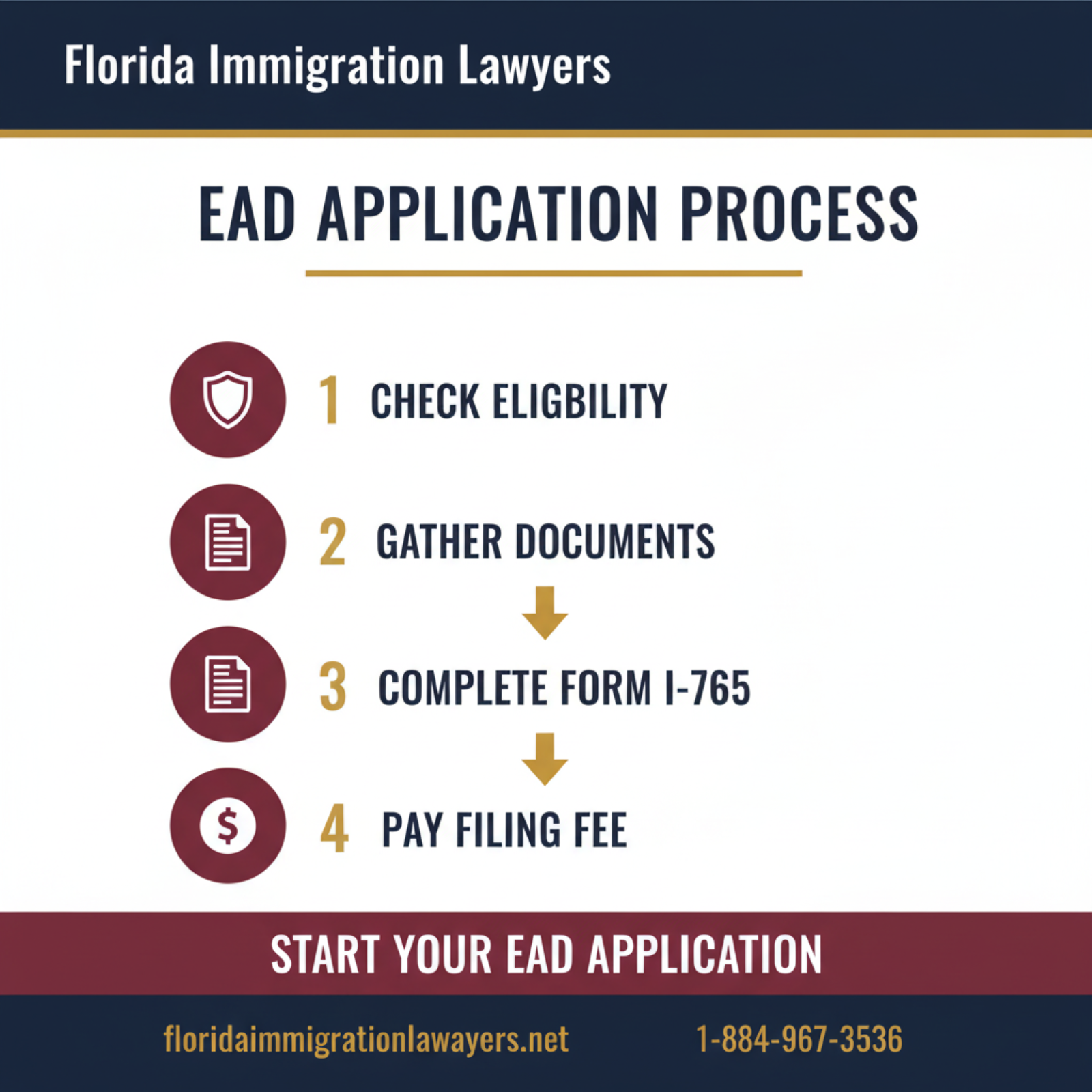
The process of applying for an Employment Authorization Document in Florida involves several crucial steps. Following these steps carefully can help ensure your I-765 Application for Employment Authorization is processed efficiently.
-
Determine Your Eligibility Category: Before you begin, identify which EAD category applies to your situation. This is perhaps the most critical initial step, as it dictates the specific documents and criteria you must meet. Refer to the USCIS instructions for Form I-765 (specifically, the "Who May File Form I-765" section) to confirm your eligibility. Our attorneys can assist you in identifying the correct category.
-
Gather Required Documents: Collect all necessary supporting documents. This typically includes identification, proof of your immigration status, photographs, and any evidence related to your eligibility category. A detailed checklist is provided in the next section.
-
Complete Form I-765 Accurately: Fill out Form I-765, Application for Employment Authorization. Be meticulous and ensure all information is accurate and consistent with your other immigration documents. Use black ink if completing by hand, or type the information. Do not leave any sections blank; if a question does not apply, write "N/A" or "None."
-
Prepare Your Application Packet: Assemble your completed Form I-765, all supporting documents, and the correct filing fee (or fee waiver request). Organize the documents clearly, often with cover sheets, to facilitate USCIS review. Make sure to sign the form in blue or black ink.
-
Mail Your Application to the Correct USCIS Lockbox: The filing address for Form I-765 depends on your eligibility category and where you reside. USCIS has specific "lockbox" facilities. Always check the "Where to File" section of the Form I-765 instructions on the USCIS website to ensure you send your application to the correct address. Sending it to the wrong address will cause significant delays.
Step-by-Step Process Guide -
Receive Receipt Notice: After USCIS receives your application, they will send you Form I-797C, Notice of Action, acknowledging receipt of your I-765 application. This notice will contain your receipt number, which you can use to track your case status online.
-
Attend Biometrics Appointment (If Required): Some applicants may receive a notice for a biometrics appointment at a local Application Support Center (ASC). This appointment is for collecting fingerprints, photographs, and a signature. Ensure you attend this appointment as scheduled.
-
Respond to Requests for Evidence (If Any): USCIS may send a Request for Evidence (RFE) if they need additional information or clarification. It is crucial to respond promptly and thoroughly to an RFE to avoid delays or denial of your employment authorization.
-
Receive Decision: Eventually, USCIS will issue a decision. If approved, you will receive your EAD card (Form I-766) in the mail. If denied, the notice will explain the reasons for denial, and you may be able to appeal or refile, depending on the circumstances.
Essential Documents for Your I-765 Application
Preparing a complete and accurate set of documents is paramount for a successful work permit EAD Florida application. Missing documents or submitting incorrect information are common reasons for delays or denials. The specific documents you need will vary depending on your eligibility category, but a general list includes:
- Completed Form I-765, Application for Employment Authorization.
- Copy of your most recent Form I-94, Arrival/Departure Record (front and back, if applicable).
- Copy of your last EAD card (if you are renewing).
- Two identical passport-style photographs taken within 30 days of filing. Write your name and A-Number (if any) lightly on the back of each photo.
- Copy of a government-issued identification document with your photograph (e.g., passport identity page, visa).
- Copy of your birth certificate (with certified translation if not in English).
- Copy of any previous EADs issued to you.
- Proof of your eligibility category (e.g., copy of Form I-589 receipt for asylum applicants, copy of Form I-485 receipt for adjustment of status applicants, marriage certificate for spouses).
- Copy of visa (if applicable).
- Copy of your passport biographical page.
- Any other documents specifically required by your eligibility category.
Always make copies of everything you submit for your own records. Do not send original documents unless specifically requested by USCIS. For residents in St. Petersburg and across Florida, ensuring every document is precisely prepared can make a significant difference.
Understanding EAD Processing Times and Expectations
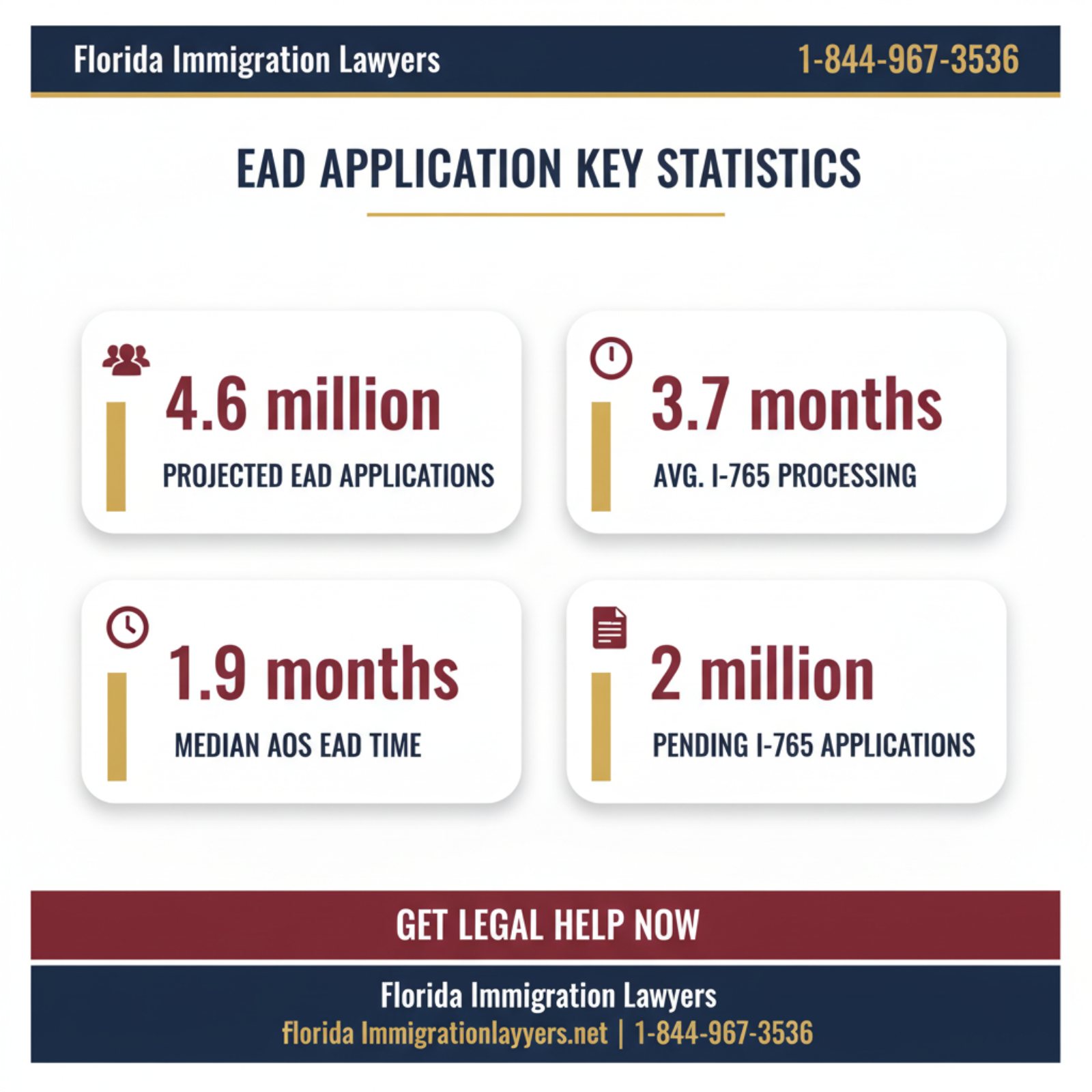
One of the most common questions applicants have concerns how long it will take to receive their work permit. EAD processing times can vary significantly based on several factors, including the USCIS service center handling your case, your eligibility category, and the current workload of the agency. As of 2026, these times are subject to change, but general expectations can be outlined.
Typical Processing Timelines for EAD Applications
Historically, EAD processing times have ranged from a few months to over a year. For example, some categories, such as those tied to pending adjustment of status applications, might see faster processing if filed concurrently. Asylum-based EADs often have a statutory waiting period before an application can even be filed.
You can check the approximate processing times for Form I-765 on the USCIS website by selecting your form number and the service center. Keep in mind that these are estimates and not guarantees. Delays can occur due to RFEs, biometrics scheduling, or general backlogs.
What to Do During the Waiting Period
During the waiting period for your employment authorization, it is crucial to remain patient. You can monitor your case status using the receipt number provided on your I-797C notice. Avoid contacting USCIS unnecessarily, as this can sometimes add to their workload without speeding up your case.
If your processing time exceeds the normal range published by USCIS, or if you encounter an emergency, you may be able to submit an "Outside Normal Processing Time" inquiry or request expedited processing. However, expedited requests are granted only under very specific and compelling circumstances, such as severe financial loss or urgent humanitarian reasons. Our firm can help assess if your situation qualifies for such a request.
Do not navigate this process alone. Contact Florida Immigration Lawyers today to schedule a free consultation and let us help you pursue your work permit with confidence.
Costs Associated with Your EAD Application
Applying for a work permit involves certain fees that are an essential part of the application process. These fees are set by USCIS and are subject to change, typically adjusted every few years. It is critical to pay the correct amount, as incorrect payments can lead to your application being rejected or delayed.
USCIS Filing Fees for Form I-765
The primary cost associated with your I-765 application is the USCIS filing fee. This fee varies by eligibility category. Some categories, such as asylum applicants filing their initial EAD, may be exempt from paying the fee. Others, like those filing concurrently with an I-485, might have the EAD fee included in the adjustment of status fee.
Always check the USCIS website or consult with an attorney for the most current fee schedule. Fees are typically paid by money order, personal check, cashier's check, or by credit card using Form G-1450, Authorization for Credit Card Transactions.
Attorney Fees and Other Potential Costs
While not mandatory, retaining an experienced immigration attorney, such as those at Florida Immigration Lawyers, is a valuable investment. Attorney fees cover expert guidance, preparation of your application, review of documents, and representation throughout the process. This helps to minimize errors and increases the likelihood of a successful outcome for your employment authorization.
Additional costs may include fees for obtaining certified translations of foreign documents, passport-style photos, postage, and travel expenses for biometrics appointments. Being aware of all potential costs upfront can help you budget effectively for your work permit Florida application.
Common Mistakes to Avoid in Your Florida EAD Application
Applying for an EAD requires precision. Even minor errors can cause significant delays or even outright denial. Here are some common mistakes and their potential consequences:
-
Incorrect Eligibility Category: Selecting the wrong EAD category on Form I-765. This often leads to immediate rejection or a Request for Evidence (RFE) and substantial delays, as USCIS cannot process an application under an invalid category.
-
Incomplete or Inaccurate Information: Failing to fill out all required fields on Form I-765 or providing inconsistent data. USCIS will typically reject incomplete applications or issue an RFE, adding months to your processing time.
-
Missing Signature: Forgetting to sign Form I-765. An unsigned application is automatically rejected and returned, requiring you to restart the mailing process and delaying your work permit.
-
Incorrect Filing Fee or Missing Fee Waiver: Submitting the wrong fee amount, an expired payment method, or failing to include a valid fee waiver request (Form I-912) if applicable. This results in the return of your entire application packet, causing significant delays.
-
Submitting to the Wrong USCIS Lockbox: Sending your application to an incorrect USCIS mailing address. The application will be redirected or returned, costing valuable time and potentially missing critical deadlines.
-
Expired Identification or Documentation: Providing copies of expired passports, visas, or I-94 records. USCIS requires current, valid identification and proof of status, and expired documents will lead to an RFE or denial.
-
Poor Quality Photographs: Submitting photos that do not meet USCIS specifications (e.g., incorrect size, not recent, poor lighting). This will result in an RFE for new photos, prolonging your employment authorization process.
-
Not Responding to RFEs Promptly: Failing to respond to a Request for Evidence within the specified timeframe. Non-response typically leads to a denial of your I-765 application, requiring you to refile or potentially pursue an appeal.
-
Not Keeping Copies of Submitted Documents: Failing to retain copies of your entire application packet. Without copies, it is difficult to respond to RFEs, track your case, or prove what you submitted if issues arise.
-
Applying Too Early or Too Late for Renewals: Forgetting to renew your EAD before it expires, or applying too far in advance. Applying too late can result in a lapse in work authorization, while applying too early might lead to rejection. USCIS generally recommends filing within 180 days of expiration for renewals.
When to Consult a Florida Immigration Lawyer
While this guide provides comprehensive information, the complexities of immigration law often necessitate professional legal assistance. Our experienced attorneys at Florida Immigration Lawyers are dedicated to helping individuals in St. Petersburg, Tampa, Miami, and across Florida navigate their work permit EAD application with confidence.
You should consider contacting our firm if you encounter any of the following scenarios:
- Uncertainty About Eligibility: If you are unsure which EAD category applies to you, or if your immigration status is complex.
- Previous Denials or Immigration Issues: If you have had past immigration applications denied, or if you have any criminal history or other factors that could complicate your case.
- Requests for Evidence (RFEs): If you receive an RFE from USCIS, our attorneys can help you understand what is being requested and prepare a thorough, timely response.
- Long Processing Delays: If your EAD application is taking significantly longer than the published processing times, we can help inquire about your case status and explore options for expediting.
- Need for Concurrent Filings: If you are filing your I-765 concurrently with other complex applications, such as Form I-485 for adjustment of status or Form I-130 for family-based immigration. Our expertise in family immigration and business immigration ensures comprehensive support.
- Asylum or Deportation Concerns: If your EAD is related to an asylum application or if you are facing deportation defense proceedings, specialized legal counsel is essential. Our team also handles asylum cases.
- Citizenship Pathway: As you progress towards citizenship, ensuring your work authorization history is clear and accurate is vital.
Florida Immigration Lawyers offers a full range of immigration services. We are committed to providing personalized attention and strategic advice to ensure your application is strong and accurate. Our attorneys are available to discuss your specific situation and guide you through every step.
Frequently Asked Questions About EADs
How to apply for an EAD work permit?
To apply for an EAD work permit, you must file Form I-765, Application for Employment Authorization, with USCIS. The process involves determining your eligibility category, gathering all required supporting documents, completing the form accurately, and mailing the application packet to the correct USCIS lockbox facility. It is crucial to follow the official USCIS instructions for your specific category.
Are EAD and work permit the same?
Yes, the terms EAD (Employment Authorization Document) and work permit are generally used interchangeably. An EAD is the physical card issued by USCIS that serves as official proof of your authorization to work legally in the United States for a specified period.
What is the new rule for EAD?
Immigration laws and regulations, including those affecting EADs, are subject to frequent changes. While there isn't one singular "new rule" that applies universally, USCIS regularly updates policies, processing times, and sometimes eligibility criteria or automatic extension periods. For the most current information regarding any "new rules" affecting EADs in 2026, it is best to check the official USCIS website or consult with an immigration attorney.
How long does it take to get an EAD permit?
The time it takes to get an EAD work permit varies significantly. Processing times can range from a few months to over a year, depending on your eligibility category, the USCIS service center processing your application, and the agency's current workload. You can check estimated processing times on the USCIS website using your form number and service center.
About Florida Immigration Lawyers
Florida Immigration Lawyers is a leading immigration law firm dedicated to serving individuals and families across the entire state of Florida. With offices strategically located to serve communities from St. Petersburg to Miami, our experienced attorneys are committed to providing exceptional legal representation and compassionate support.
We specialize in a wide range of immigration matters, including family-based petitions, employment visas, asylum claims, deportation defense, and naturalization. Our firm understands the unique challenges faced by immigrants in Florida and strives to achieve the best possible outcomes for our clients.
Why choose Florida Immigration Lawyers? We offer personalized attention, clear communication, and a deep understanding of U.S. immigration law. We are available 24/7 to address your concerns and provide timely assistance. We believe everyone deserves access to quality legal counsel, which is why we offer free consultations to help you understand your options.
Your journey through the immigration system is important to us. Let us be your trusted advocates. Contact Florida Immigration Lawyers today at 1-844-967-3536 or visit our website at https://www.floridaimmigrationlawyers.net to schedule your free consultation.
Sources and References
- U.S. Citizenship and Immigration Services (USCIS)
- Form I-765, Application for Employment Authorization - USCIS
- Executive Office for Immigration Review (EOIR) - U.S. Department of Justice
- 8 U.S.C. Chapter 12 - Immigration and Nationality Act (INA)
- 8 CFR Part 274a - Control of Employment of Aliens
This article provides general legal information and is not intended as legal advice. Every case is unique, and outcomes depend on specific facts and circumstances. Contact an attorney for advice about your particular situation.
Securing your work permit EAD Florida application is a critical step toward building your life in the United States. While the process can seem daunting, you do not have to face it alone. Florida Immigration Lawyers is here to provide the expert legal guidance and support you need.
Our dedicated team is ready to answer your questions and help you navigate the complexities of immigration law. We serve clients throughout Florida, offering compassionate and effective legal solutions.
Take the first step towards your future in Florida. Call us now for a free, no-obligation consultation at 1-844-967-3536. Se Habla Español - Estamos aquí para ayudarle.
Do Not Navigate This Process Alone
Our experienced immigration attorneys are ready to fight for you. Get a free, confidential consultation today.
Se Habla Español
Frequently Asked Questions
Florida Immigration Lawyers
Immigration Attorney | Founder, Vasquez Law Firm
U.S. Air Force veteran and immigration attorney with thousands of cases resolved. J.D., NCCU School of Law. AILA member. Admitted to the 4th, 5th, and 11th Circuit Courts.
Available 24/7 - Free Evaluations
Related Legal Services
Our Florida immigration attorneys can help you with business immigration, asylum protection and deportation defense. Call today at 1-844-967-3536 for a free consultation.
Related Links
Related Topics
Free Legal Consultation
Discuss your case with our experienced attorneys. We're available 24/7.
Se Habla Español - Estamos aquí para ayudarle.
Related Articles
Deportation Defense Lawyer in Orlando: Your Guide | VLF Florida
Facing deportation in Orlando? Learn how a deportation defense lawyer can help you navigate removal proceedings and protect your rights. Call now for a free consultation.
Prepare for Credible Fear Interview in Florida | VLF Florida
Preparing for a credible fear interview in Florida is crucial for those facing expedited removal. Learn key steps to take and mistakes to avoid. Call Florida Immigration Lawyers for guidance.
E-2 Visa for Investors in Florida Business | VLF Florida
Explore how the E-2 visa can help you invest in a business in Hollywood, Florida. Learn about eligibility, processing times, and common mistakes. Contact Florida Immigration Lawyers for a free consultation.
TPS Florida Eligible Countries 2026: Your Guide | VLF Florida
For Florida residents in 2026, understanding Temporary Protected Status (TPS) and its eligible countries is essential. TPS offers crucial protection from deportation and work authorization for individuals from nations facing severe crises. This comprehensive guide details the TPS application process, required documentation, and processing timelines. It highlights the importance of continuous physical presence and residence, strict deadlines, and avoiding common mistakes. With the dynamic nature of TPS designations, staying informed through official USCIS channels and seeking expert legal counsel from Florida Immigration Lawyers is paramount to navigate this complex immigration relief successfully. Learn how to protect your status and secure your future in Florida.