Naturalization Ceremony Locations and Schedule 2026
Discover the naturalization ceremony locations and schedule for 2026 in Florida, including insights into the full naturalization process. This guide covers eligibility, the N-400 application steps, required documents, and what to expect during your interview and the final Oath of Allegiance ceremony. Learn about typical timelines, cost factors, and crucial mistakes to avoid. Florida Immigration Lawyers provides essential information for residents across Florida, particularly in Central Florida, seeking U.S. citizenship. Get expert advice to navigate the complexities of immigration law and ensure a successful journey to becoming a U.S. citizen.

Naturalization ceremonies in Florida for 2026 are typically held at various federal courthouses and designated USCIS facilities across the state, including locations in Orlando, Miami, and Tampa. While specific dates and times are not publicly pre-scheduled far in advance, USCIS notifies eligible applicants directly via Form N-445, Notice of Naturalization Oath Ceremony, usually a few weeks before the event. These ceremonies represent the final step in the U.S. citizenship process, where new citizens take the Oath of Allegiance. Understanding the general process and potential locations can help you prepare for this momentous occasion.
- USCIS sends Form N-445 with specific ceremony details.
- Ceremonies are held at federal courthouses or USCIS offices.
- Locations vary but often include major Florida cities.
- The Oath of Allegiance is the final step to citizenship.
- Preparation involves reviewing the N-445 instructions carefully.
Becoming a U.S. citizen is a profound milestone, marking the culmination of a significant journey for many individuals and families across Florida. The naturalization process, while structured, can often feel complex and daunting, especially when anticipating the final step: the naturalization ceremony. As of 2026, understanding the typical naturalization process Florida timeline, eligibility requirements, and what to expect for your citizenship interview and oath ceremony is crucial. This comprehensive guide from Florida Immigration Lawyers aims to demystify this path, providing clarity on everything from filing your N-400 application to attending your naturalization ceremony locations and schedule 2026.
Whether you reside in Orlando or elsewhere in Central Florida, navigating the nuances of immigration law requires precise attention to detail and a thorough understanding of federal regulations. We understand the hopes and challenges you face, and our goal is to empower you with accurate, up-to-date information. If you have questions about your eligibility, the application process, or preparing for your interview, do not hesitate to seek professional guidance. Call Florida Immigration Lawyers at 1-844-YO-PELEO for a free case review and let us help you achieve your American dream.
What is the Naturalization Process and Who is Eligible for U.S. Citizenship?
The naturalization process is the method by which a lawful permanent resident (Green Card holder) becomes a U.S. citizen. This journey is governed by the Immigration and Nationality Act (INA) and administered by U.S. Citizenship and Immigration Services (USCIS). Eligibility for naturalization generally hinges on several key requirements, designed to ensure that applicants are committed to the United States and have demonstrated good moral character. As of 2026, the foundational requirements remain consistent, focusing on continuous residency, physical presence, and adherence to legal standards.
Typically, an applicant must be at least 18 years old and have been a lawful permanent resident for a minimum of five years. This period is reduced to three years if you are married to a U.S. citizen and meet specific cohabitation requirements. During this time, you must demonstrate continuous residency in the U.S. and meet certain physical presence requirements. This means you cannot have taken extended trips outside the country that break the continuity of your residency. Furthermore, applicants must exhibit good moral character for the statutory period, which involves having a clean criminal record and adhering to U.S. laws. Knowledge of U.S. history and government, along with the ability to read, write, and speak basic English, are also critical components of the naturalization test. Exceptions to the English and civics requirements may apply for older applicants or those with certain medical conditions, as outlined in USCIS policy. Understanding these criteria is the first step towards a successful naturalization application. For detailed guidance on your specific eligibility, an experienced attorney can provide invaluable support.
How Long Does the Naturalization Process Take in Florida in 2026?
As of 2026, the naturalization process timeline in Florida can vary significantly depending on the USCIS field office processing your application, the complexity of your case, and the current workload of the agency. Generally, applicants can expect the process to take anywhere from 8 to 24 months from the date of filing Form N-400, Application for Naturalization, to attending the Oath of Allegiance ceremony. This estimate includes time for background checks, biometrics appointments, the interview, and scheduling the final ceremony.
While USCIS provides estimated processing times on its website, these are subject to change and should be used as a general guide. Factors such as a high volume of applications, requests for additional evidence, or issues arising during background checks can extend the timeline. For instance, the Orlando USCIS Field Office may have different processing times compared to the Miami or Tampa offices. It is crucial to monitor your case status online and respond promptly to any USCIS requests. Patience is key, but proactive engagement with your application, often with the help of an attorney, can help prevent unnecessary delays. For the most current processing times relevant to your specific USCIS field office, always consult the official USCIS website. The table below provides a general overview of the typical stages and their durations.
Naturalization Process Timeline in Florida (Estimated for 2026)
| Stage | Typical Timeframe | Notes |
|---|---|---|
| Form N-400 Filing & Receipt | 1-2 weeks | USCIS issues a receipt notice (Form I-797C). |
| Biometrics Appointment | 3-5 months after filing | Fingerprints, photos, and signature collected at an Application Support Center (ASC). |
| Interview Scheduling | 6-12 months after filing | Notice of Interview (Form N-14) sent. |
| Naturalization Interview | Varies (scheduled date) | Tests English and civics knowledge, reviews application. |
| Decision & Oath Ceremony Scheduling | 1-4 months after interview | If approved, Form N-445, Notice of Naturalization Oath Ceremony, is sent. |
| Oath of Allegiance Ceremony | Varies (scheduled date) | Final step to become a U.S. citizen. |
What are the Key Steps to Apply for U.S. Citizenship in Florida?
The application for U.S. citizenship, or naturalization, involves a series of critical steps that must be followed precisely. For residents of Florida, this process begins with determining eligibility and culminates in the Oath of Allegiance. Each step requires careful attention to detail and accurate documentation. Missing a step or providing incorrect information can lead to significant delays or even denial of your application. Florida Immigration Lawyers guides you through each stage, ensuring a smooth and efficient process.
- Determine Your Eligibility: Before anything else, ensure you meet all the requirements for naturalization, including age, continuous residency, physical presence, good moral character, and English/civics knowledge. This is the most crucial preliminary step.
- Complete Form N-400, Application for Naturalization: Fill out Form N-400 accurately and completely. This form is extensive and asks for detailed personal, residential, employment, and criminal history. Any discrepancies with your previous immigration records can raise red flags.
- Gather Supporting Documentation: Collect all necessary documents, such as copies of your Green Card, marriage certificates (if applicable), tax records, selective service registration (for males), and any court or police records. Ensure all foreign language documents are accompanied by certified English translations.
- Pay Filing Fees: Submit the required filing fee for Form N-400, along with the biometrics fee. Check the USCIS website for the most current fee schedule, as it can change. Fee waivers may be available for eligible low-income applicants.
- Attend Biometrics Appointment: After filing, you will receive a notice for a biometrics appointment at an Application Support Center (ASC). This involves fingerprinting, photographing, and signature collection for background checks.
- Attend the Naturalization Interview: USCIS will schedule an interview at a local field office, such as the USCIS Orlando Field Office. During the interview, an officer will review your N-400, test your English reading, writing, and speaking abilities, and assess your knowledge of U.S. civics.
- Receive a Decision: Following the interview, the officer may issue a decision immediately, or you may receive a decision notice by mail. If approved, you will be scheduled for the Oath of Allegiance ceremony.
- Take the Oath of Allegiance: This is the final step. You will attend a naturalization ceremony, take the Oath of Allegiance, and receive your Certificate of Naturalization. This document is proof of your U.S. citizenship.
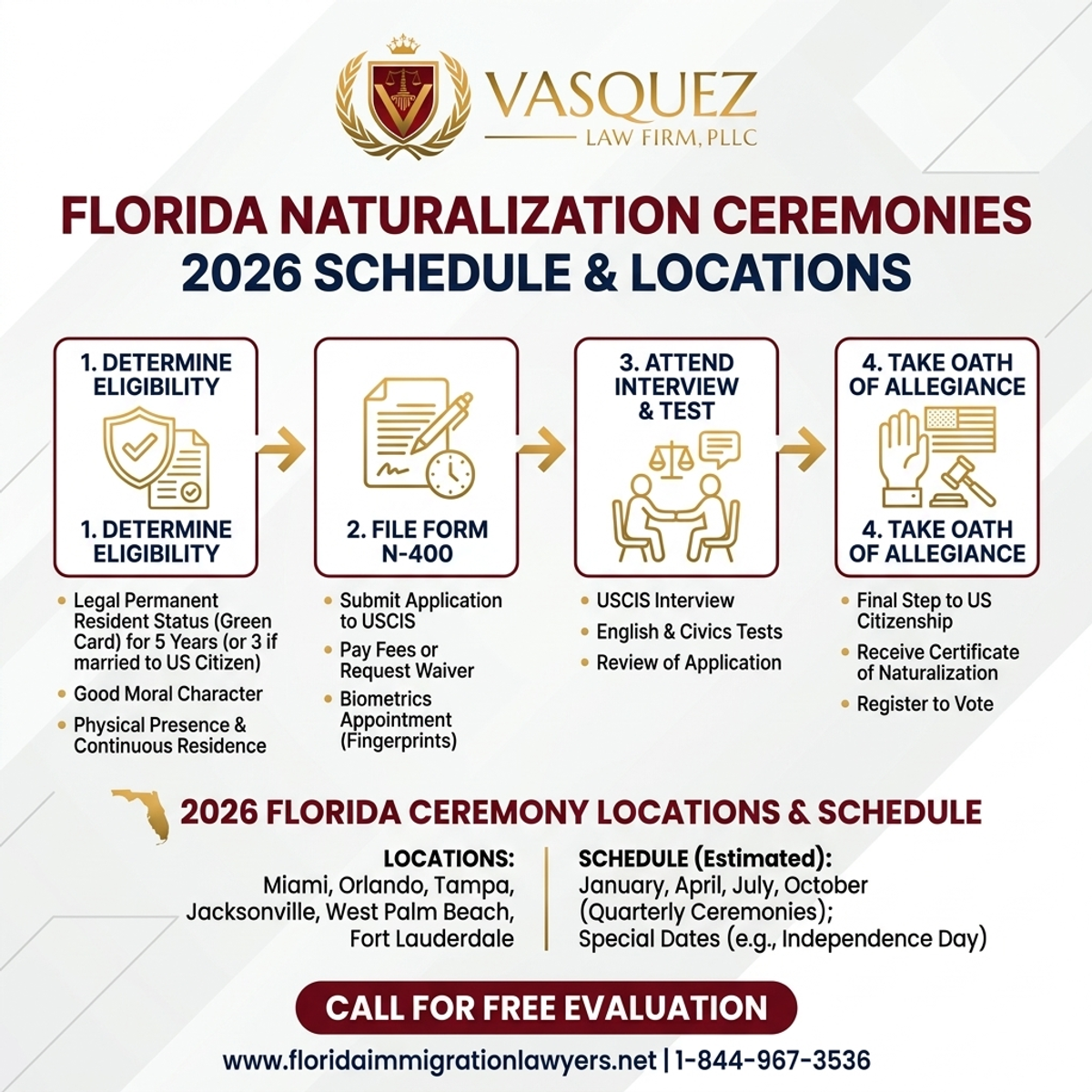
Step-by-Step Process — Naturalization Ceremony Locations and Schedule 2026 in Florida
Throughout these steps, having an experienced immigration attorney by your side can make a significant difference. From preparing your application to representing you at the interview, legal counsel ensures your case is presented effectively.
What Documents Do I Need for My Naturalization Application and Interview?
Preparing a comprehensive and accurate document checklist is paramount for a successful naturalization application. Providing all required documents upfront can prevent delays and requests for additional evidence from USCIS. As of 2026, the general document requirements remain consistent, focusing on verifying identity, residency, and eligibility criteria. When you attend your naturalization interview, you must bring originals of all documents submitted with your N-400 application, plus any additional documents requested by USCIS.
- Your Green Card (Permanent Resident Card).
- State-issued identification (driver's license or state ID card).
- All passports, current and expired.
- Marriage certificate, if applicable (and divorce decrees for any prior marriages of you or your spouse).
- Birth certificates for your children, if applicable.
- Proof of selective service registration (for males aged 18-26 at the time of residency).
- Tax transcripts or returns for the past five years (or three years if married to a U.S. citizen).
- Proof of continuous residence, such as utility bills, lease agreements, or mortgage statements.
- Court disposition records for any arrests or citations, even if charges were dismissed or expunged.
- Travel records, including dates of all trips outside the U.S. since becoming a permanent resident.
- Form N-426, Request for Certification of Military or Naval Service (if applicable).
- Any other documents requested by USCIS in your interview notice.
Organizing these documents thoroughly is a critical step in the naturalization process. It is advisable to make copies of everything you submit and keep the originals safe until your interview. An attorney from Florida Immigration Lawyers can help you compile this checklist and ensure all necessary documentation is prepared correctly.
Naturalization Ceremony Locations and Schedule 2026 in Florida: What to Expect
The naturalization ceremony is the final, celebratory step in becoming a U.S. citizen. While there isn't a fixed, publicly available naturalization ceremony schedule 2026 for specific dates and times, USCIS field offices in Florida consistently hold these events throughout the year. Applicants receive their specific ceremony details, including the date, time, and location, via Form N-445, Notice of Naturalization Oath Ceremony, typically mailed a few weeks after their interview approval. It is essential to carefully review all instructions on Form N-445 and complete any required sections before attending.
In Florida, naturalization ceremonies are frequently held at various federal courthouses or larger USCIS facilities. Common locations include the federal courthouses in Orlando, Miami, Tampa, Jacksonville, and Fort Lauderdale. Occasionally, larger civic centers or auditoriums are used for mass naturalization ceremonies, especially in densely populated areas. The ceremony itself is a solemn yet joyous occasion, often featuring welcoming remarks from a federal judge or USCIS official, a video presentation, and the collective recitation of the Oath of Allegiance. You will be asked to surrender your Green Card at the ceremony. After taking the oath, you will receive your Certificate of Naturalization, which is your official proof of U.S. citizenship. Family and friends are generally welcome to attend, making it a memorable event for all involved. Be sure to arrive on time and dress appropriately for this significant occasion. If you cannot attend your scheduled ceremony, you must notify USCIS immediately and provide a valid reason to request a rescheduling.
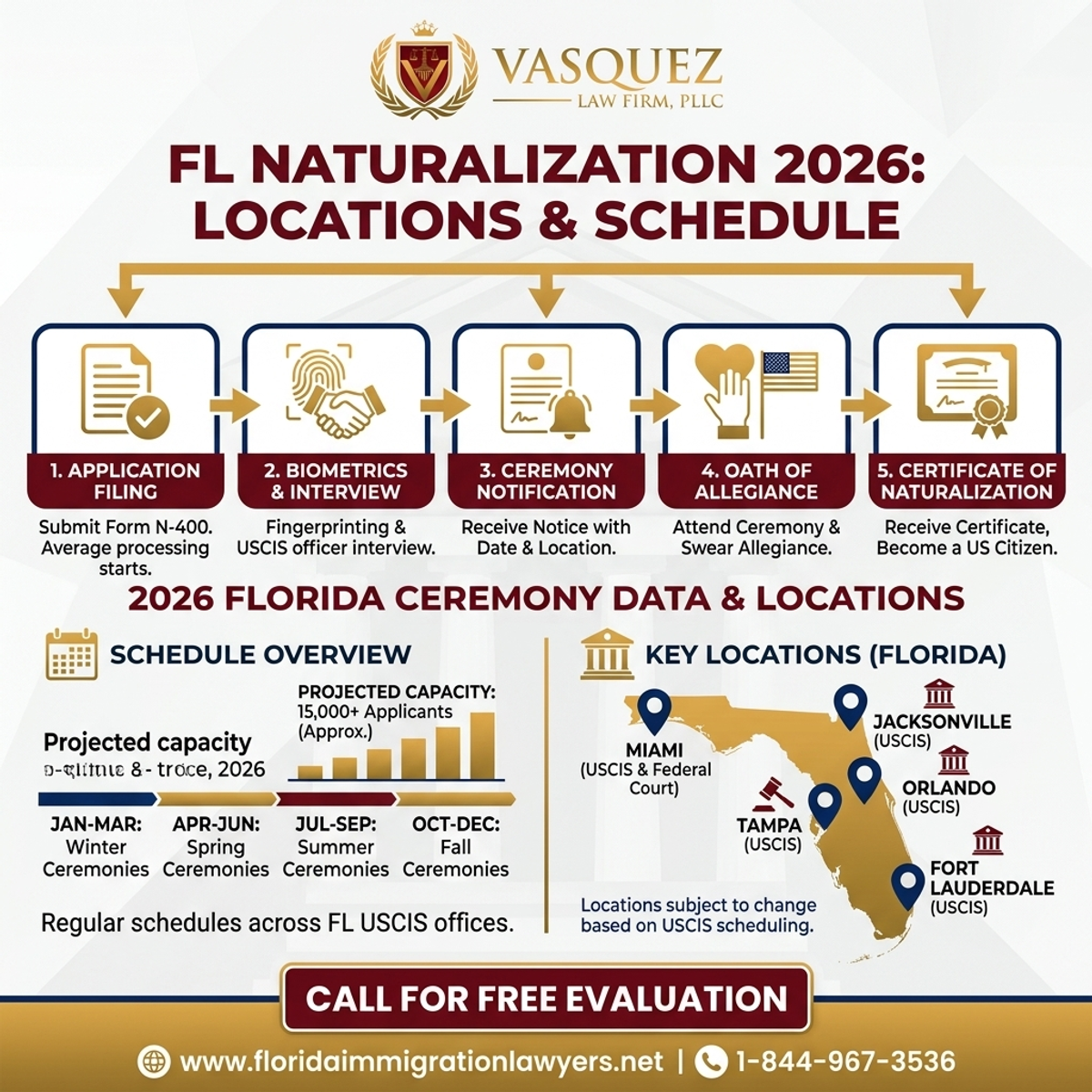
Key Statistics — Naturalization Ceremony Locations and Schedule 2026 in Florida
Do not navigate this process alone. The path to U.S. citizenship is filled with critical steps and complex requirements. Contact Florida Immigration Lawyers today to ensure your application is handled with the expertise and care it deserves. We are here to support you at every stage.
Cost Factors and Fees for the Naturalization Process (2026)
Understanding the financial aspects of naturalization is a crucial part of planning your journey to U.S. citizenship. As of 2026, the primary cost associated with the naturalization process is the USCIS filing fee for Form N-400, Application for Naturalization, which also includes the biometrics service fee. These fees are subject to change, so it is always important to verify the current amounts directly on the USCIS website or by consulting with an immigration attorney. Beyond the government fees, applicants should also consider potential costs for legal assistance, document translation, and travel.
While the exact fee amounts can fluctuate, the government filing fee is a mandatory expense for most applicants. USCIS does offer fee waivers for individuals who meet specific income guidelines or are receiving certain public benefits. It is essential to determine if you are eligible for a fee waiver before submitting your application, as an incorrect fee payment can lead to your application being rejected. Legal fees for an immigration attorney in Florida can vary based on the complexity of your case and the level of service required, but they represent an investment in ensuring your application is complete, accurate, and properly submitted. Additional costs might include postage, photocopying, and transportation to USCIS appointments. Planning for these expenses upfront can help alleviate financial stress during the process. Florida Immigration Lawyers offers transparent fee structures and can discuss all potential costs during your free case review.
Typical Naturalization Process Fees (Estimated for 2026)
| Item | Typical Fee | Notes |
|---|---|---|
| USCIS Form N-400 Filing Fee | Varies (e.g., ~$710) | Includes biometrics fee. Check USCIS website for current amount. |
| Attorney Legal Fees | Varies widely | Depends on complexity, services needed (e.g., full representation, interview prep). |
| Document Translation Costs | Varies by document | Required for non-English documents by certified translators. |
| Travel Expenses | Varies | For biometrics, interview, and oath ceremony appointments. |
| Passport Photos | ~$15-20 | May be required for certain forms or specific circumstances. |
Common Mistakes to Avoid in the Naturalization Process
The naturalization process is meticulous, and even minor errors can lead to significant delays or denial. Avoiding common pitfalls is crucial for a smooth journey to U.S. citizenship. Florida Immigration Lawyers frequently helps clients correct issues stemming from these mistakes.
- Failing to Meet Continuous Residency Requirements: Leaving the U.S. for extended periods (typically six months or more) can break your continuous residency, restarting your eligibility clock. Always track your travel dates carefully.
- Not Disclosing All Criminal History: Even minor offenses, arrests, or traffic citations must be disclosed, regardless of whether they were dismissed or expunged. Failure to disclose can be considered misrepresentation and lead to denial.
- Incomplete or Inaccurate Form N-400: Errors or omissions on the application form are a leading cause of delays. Double-check every section and ensure consistency with previous immigration filings.
- Insufficient Supporting Documentation: Submitting an application without all required evidence, or with uncertified translations, will result in requests for evidence (RFE) and prolong the process.
- Poor English Language Skills: The inability to read, write, or speak basic English (unless exempt) can lead to failure during the interview. Practice regularly or seek language assistance.
- Lack of Civics Knowledge: Failing the civics test demonstrates a lack of understanding of U.S. government and history. Study the official USCIS civics test questions diligently.
- Missing USCIS Appointments: Failing to attend biometrics appointments or naturalization interviews without valid notice and rescheduling can lead to abandonment or denial of your application.
- Not Updating Address with USCIS: Moving without informing USCIS via Form AR-11 can result in missed notices and critical communications, jeopardizing your application.
- Providing False Information: Any attempt to deceive USCIS with false statements or documents is a serious offense and will lead to denial and potential legal consequences.
- Filing Too Early: Submitting your N-400 before meeting the full continuous residency requirement (e.g., 4 years and 9 months for the 5-year rule) will result in rejection.
- Ignoring Selective Service Registration: Males who resided in the U.S. between ages 18-26 must register for Selective Service. Failure to do so can impact good moral character determination.
- Not Seeking Legal Counsel for Complex Cases: If you have a criminal record, significant travel history, or other complicating factors, attempting to navigate the process alone is a major risk.
When to Call a Florida Immigration Lawyer for Naturalization Assistance
While the naturalization process might seem straightforward for some, many individuals encounter complexities that warrant professional legal assistance. Deciding when to call a Florida immigration lawyer can be the difference between a smooth approval and significant delays or even denial. Florida Immigration Lawyers are dedicated to guiding applicants through every aspect of the citizenship journey, particularly when challenging circumstances arise.
You should consider contacting our firm if you have a criminal record, even a minor one, as this can impact your good moral character assessment. Similarly, if you have extended periods of absence from the U.S. that might affect your continuous residency, legal advice is essential. Individuals who have previously been denied naturalization or have had other immigration applications rejected would greatly benefit from an attorney's review. If you have any medical conditions that might qualify you for an exemption from the English or civics test, an attorney can help prepare the necessary documentation. Furthermore, if you find the N-400 application overwhelming, or if you simply want peace of mind that your application is meticulously prepared and accurately submitted, our experienced team provides comprehensive support. We assist with document preparation, interview preparation, and can even represent you during your naturalization interview at local USCIS offices in Florida, including Orlando. Don't leave your American dream to chance; let us help you navigate the path to citizenship with confidence. Explore our citizenship services or learn more about our dedicated attorneys.
About Florida Immigration Lawyers
Florida Immigration Lawyers is a leading law firm dedicated to providing comprehensive and compassionate immigration legal services throughout Florida. With our main office strategically located in Central Florida, we are committed to assisting individuals and families across the state with their most critical immigration needs. Our team of experienced attorneys specializes in a wide range of practice areas, including naturalization, family immigration, asylum, deportation defense, and business immigration.
We understand that each immigration journey is unique and often comes with significant emotional and financial stakes. That's why we offer personalized legal strategies tailored to your specific situation, ensuring you receive the highest level of advocacy and support. Our firm is available 24/7, offering free case reviews to help you understand your options and begin your path forward. When you choose Florida Immigration Lawyers, you choose a partner dedicated to protecting your rights and achieving your immigration goals. Schedule a free consultation today and experience the difference our expertise makes. You can also reach us directly at 1-844-YO-PELEO.
Sources and References
- U.S. Citizenship and Immigration Services (USCIS)
- Executive Office for Immigration Review (EOIR)
- U.S. Department of State
- 8 U.S.C. § 1427 - Requirements for naturalization
- 8 CFR Part 316 - General Requirements for Naturalization
- USCIS Policy Manual, Volume 12 - Citizenship and Naturalization
Related services: citizenship test preparation, dual citizenship guidance, family-based immigration.
This article provides general legal information and is not intended as legal advice. Every case is unique, and outcomes depend on specific facts and circumstances. Contact an attorney for advice about your particular situation.
Your journey to U.S. citizenship is an important one, and you don't have to face it alone. Whether you're just starting to explore your options or are preparing for your naturalization ceremony, Florida Immigration Lawyers is here to provide expert legal guidance and support. We offer free case reviews and are available 24/7 to answer your questions. Call us today at 1-844-YO-PELEO.
Se Habla Espanol - Estamos aqui para ayudarle.
Do Not Navigate This Process Alone
Our experienced immigration attorneys are ready to fight for you. Get a free, confidential case review today.
Se Habla Español
Or leave your details and we’ll call you:
Free Evaluation in 24 Hours
Or talk to us right now
AI voice assistant — available 24/7
FreeFrequently Asked Questions

William J. Vásquez
Founding Attorney · Vasquez Law Firm
U.S. Air Force veteran and immigration attorney with years of hands-on U.S. immigration experience. J.D., NCCU School of Law. AILA member. Admitted to the 4th, 5th, and 11th Circuit Courts.
Available 24/7 - Free Evaluations
Reviewed for legal accuracy by William J. Vásquez
Licensed in North Carolina; U.S. immigration is federal practice.
Related Legal Services
Our Florida immigration attorneys can help you with experienced immigration attorneys, asylum protection and citizenship and naturalization. Call today at 1-844-YO-PELEO for a free case review.
Related Links
Related Topics
Free Legal Case Review
Discuss your case with our experienced attorneys. We're available 24/7.
Se Habla Español - Estamos aquí para ayudarle.
Related Articles
EB-5 Investor Green Card in Florida: A 2026 Guide
Explore how to obtain an EB-5 investor green card in Florida. Learn about the investment requirements, processes, and benefits of participating in this program. Discover how Florida's economic landscape can be an ideal setting for your investment. Contact Florida Immigration Lawyers for a free case review.
Certificate of Eligibility for Expungement in Florida 2026
For non-U.S. citizens in Florida, understanding how a state expungement impacts immigration status is critical. A certificate of eligibility for expungement in Florida allows a criminal record to be sealed or expunged under state law. However, federal immigration agencies often disregard such state-level relief, still considering the original criminal offense as a conviction for immigration purposes. This can have severe implications for visa applications, green card eligibility, naturalization, and even lead to deportation. This guide clarifies the Florida expungement process, its limited effect on federal immigration law, and key steps to protect your status in 2026. Learn about common mistakes, required documents, timelines, and when to seek expert legal counsel from Florida Immigration Lawyers to navigate these complex issues effectively.
Immigration Lawyer Orlando Free Consultation in Florida
For individuals and families in Orlando, Florida, navigating the complexities of U.S. immigration law requires expert guidance. An immigration lawyer in Orlando offers crucial support for everything from visa applications and green card processes to naturalization and deportation defense. This comprehensive guide details what a free consultation covers, providing a step-by-step overview of immigration pathways, essential document checklists, and expected timelines in 2026. We also highlight common mistakes to avoid, discuss the critical role of legal counsel in deportation and asylum cases, and explain why choosing a local Orlando immigration attorney is beneficial. Florida Immigration Lawyers is dedicated to serving the diverse community of Orlando with compassionate, effective legal solutions, ensuring you receive personalized advice and robust representation for a successful immigration journey.
Consular Return After Visa Denial in Florida 2026
A 221(g) visa denial is a temporary refusal, not a final rejection, indicating that your application requires additional documents or administrative processing before a final decision. This often leads to a 'consular return' for further review by the U.S. Embassy or Consulate. Understanding the specific reasons for this refusal and how to respond accurately and promptly is vital for applicants in Florida. This comprehensive guide from Florida Immigration Lawyers explains the 221(g) process, outlines necessary documentation, details typical processing timelines, and highlights common mistakes to avoid. We also discuss when legal counsel is essential to navigate complex issues, address potential inadmissibility grounds, and ensure your response is complete and compelling. Our dedicated attorneys in Central Florida are ready to assist you in overcoming these challenges and advancing your immigration journey.