U Visa Crime Victims Florida Guide
Discover how the U visa offers crucial immigration relief to crime victims in Florida. Learn about eligibility, application steps, and how Florida Immigration Lawyers can assist you.

Introduction
Imagine living in West Palm Beach and becoming a victim of a crime. Beyond the trauma, you worry about your immigration status. Thankfully, the U visa provides relief for crime victims who assist law enforcement. This article covers the U visa process, requirements, and benefits for those in Florida.
For many immigrants in Florida, the aftermath of a crime is compounded by the fear of deportation or uncertainty about their legal standing. This fear can tragically prevent victims from reporting crimes or cooperating with authorities, inadvertently allowing criminals to continue their activities unchecked. The U visa directly addresses this dilemma, providing a crucial lifeline that allows victims to come forward without jeopardizing their future in the U.S. It's a testament to the principle that everyone, regardless of immigration status, deserves protection and justice.
This comprehensive guide will delve into the intricacies of the U visa process, from understanding who qualifies to navigating the complex application steps. We will explore the specific criteria, required documentation, and the invaluable role of law enforcement certification. Our aim is to demystify the process and empower crime victims in Florida with the knowledge they need to pursue this vital immigration relief. For personalized advice tailored to your unique situation, remember that Florida Immigration Lawyers are here to help, offering expert guidance every step of the way.
Call Florida Immigration Lawyers at 1-844-967-3536 for a free consultation.
Understanding the U Visa
The U visa is a form of immigration relief designed for victims of certain crimes who have suffered substantial mental or physical abuse. It aims to strengthen law enforcement’s ability to investigate and prosecute crimes.
To qualify, you must obtain certification from a law enforcement agency confirming your assistance in the investigation or prosecution of the crime.
The U visa is not merely a humanitarian gesture; it's a strategic tool designed to enhance public safety. By offering a pathway to legal status, it encourages victims, who might otherwise be hesitant due to their immigration status, to report crimes and assist in investigations. This cooperation is vital for law enforcement agencies across Florida, from Miami-Dade to Jacksonville, enabling them to build stronger cases, apprehend dangerous criminals, and make our communities safer for everyone. This reciprocal relationship underscores the importance of the U visa in upholding justice and protecting vulnerable populations.
To meet the 'substantial mental or physical abuse' criterion, applicants must demonstrate that they have suffered significant harm as a direct result of the qualifying criminal activity. This can manifest as severe physical injuries requiring extensive medical treatment, or profound psychological trauma such as post-traumatic stress disorder (PTSD), severe anxiety, or depression that impacts daily functioning. Documentation such as medical records, psychological evaluations, and personal statements are crucial in illustrating the extent of this abuse. The law recognizes that the impact of crime extends beyond immediate physical harm, deeply affecting a victim's emotional and mental well-being.
Qualifying criminal activities are specifically defined and include a wide range of serious offenses. Beyond the commonly recognized crimes like domestic violence, sexual assault, and human trafficking, the list also encompasses felonious assault, kidnapping, abduction, blackmail, extortion, false imprisonment, murder, manslaughter, torture, and witness tampering, among others. The key is that the crime must have violated U.S. law or occurred in U.S. territory, including any part of Florida. Understanding if your specific experience aligns with these categories is a critical first step, and Florida Immigration Lawyers can help you assess your situation.
Eligibility Requirements
To be eligible for a U visa, you must be a victim of a qualifying criminal activity that occurred in the U.S., including Florida. Furthermore, you must possess information about the crime and demonstrate cooperation with authorities.
Demonstrating cooperation with law enforcement is paramount. This doesn't necessarily mean the case must lead to a conviction; rather, it means the victim has been helpful and willing to assist in the investigation or prosecution. This cooperation can involve providing statements, identifying perpetrators, testifying in court, or simply being available for interviews. Even if you initially hesitated to cooperate due to fear or language barriers, demonstrating a willingness to assist now can still qualify you. Law enforcement certification (Form I-918, Supplement B) is the official acknowledgment of this cooperation, signifying that your assistance was, or will be, helpful to their efforts.
Step-by-Step Guide to Applying for a U Visa
Navigating the U visa application process can seem daunting, but breaking it down into manageable steps can make it less overwhelming. Each stage requires careful attention to detail and a thorough understanding of USCIS requirements. It's a journey that, while complex, offers a profound opportunity for safety and stability.
- Gather evidence of the crime and your victimization, such as police reports and medical records.
- Obtain a certification from a law enforcement agency using Form I-918, Supplement B.
- Complete Form I-918, Petition for U Nonimmigrant Status.
- Submit your application to the relevant USCIS office in Florida or nearest regional office.
- Attend biometric appointments and respond to any Requests for Evidence (RFEs) promptly.
Gathering comprehensive evidence of the crime and your victimization is foundational to your application. This includes official police reports detailing the incident, medical records documenting any physical injuries, and psychological evaluations that attest to mental or emotional trauma. Photographs, witness statements, and any communication with law enforcement can also strengthen your case. The more robust your evidence, the clearer the picture you paint for USCIS regarding the crime and its impact on you.
Obtaining the U Nonimmigrant Status Certification (Form I-918, Supplement B) from a qualifying law enforcement agency is arguably the most critical component of your application. This document confirms that you were a victim of a qualifying crime and that you have been, are being, or are likely to be helpful in the investigation or prosecution of that crime. This certification can come from various agencies, including local police departments in cities like Orlando or Tampa, sheriff's offices, state attorneys' offices, or federal agencies. Securing this form often requires persistent communication and a clear explanation of your situation to the certifying official.
Completing Form I-918, Petition for U Nonimmigrant Status, requires meticulous attention. This extensive form asks for detailed personal information, background, and specific information about the crime and your victimization. It's crucial to be accurate and consistent with all information provided, ensuring it aligns with your personal statement and supporting evidence. Any discrepancies could lead to delays or requests for additional evidence.
Submitting your complete application package to the correct USCIS lockbox facility is the next logistical step. While there isn't a specific 'USCIS office in Florida' for direct application submission, applications are processed centrally. Ensure all forms are signed, all supporting documents are included, and you keep copies of everything you send. It's also wise to send your application via certified mail with a return receipt to confirm delivery.
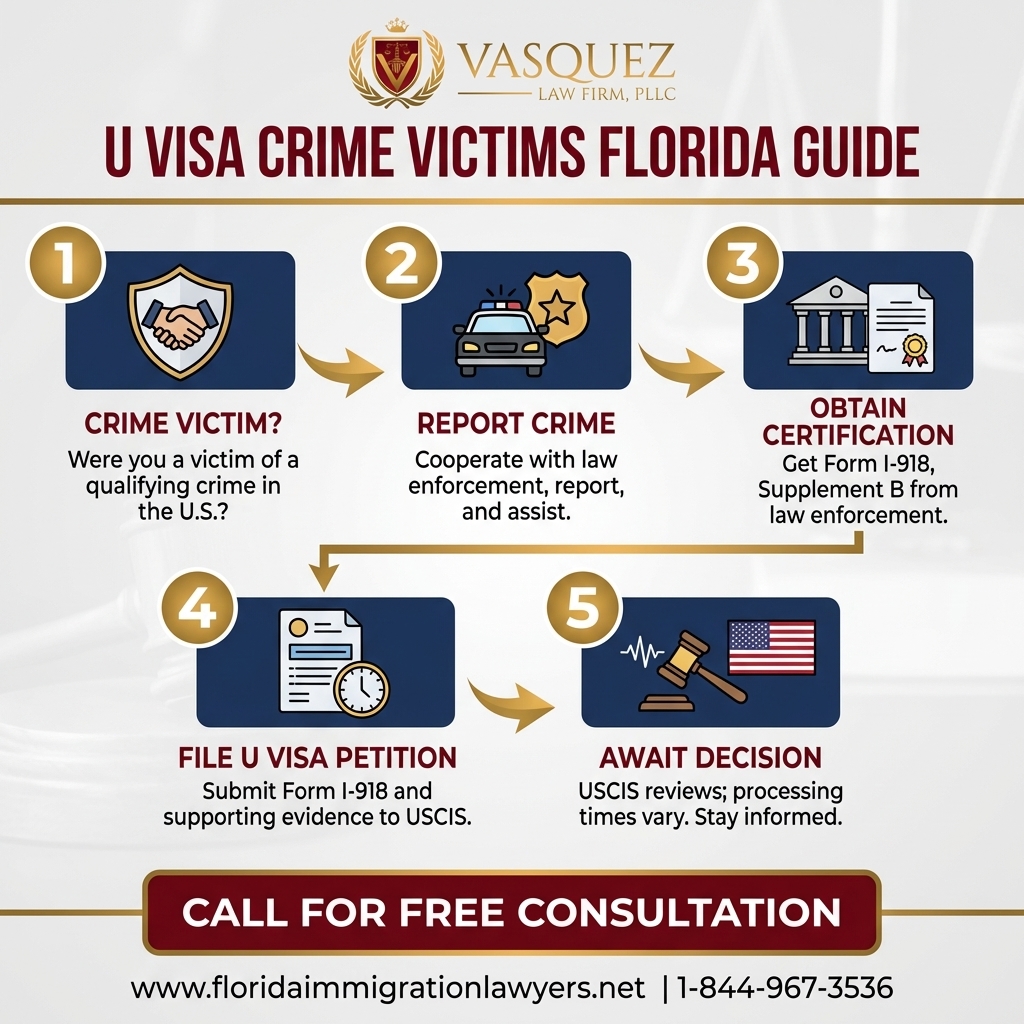
After submission, you will receive a receipt notice, followed by appointments for biometrics (fingerprints, photos). It's essential to attend these appointments promptly. USCIS may also issue a Request for Evidence (RFE) if they need more information or clarification. Responding thoroughly and within the specified deadline is critical to prevent delays or potential denial. Throughout this waiting period, maintaining communication with Florida Immigration Lawyers can help you stay informed and prepared for any USCIS communications.
The application process demands patience and precision. Working with experienced legal counsel like Florida Immigration Lawyers can significantly streamline this journey, ensuring all requirements are met and your case is presented as strongly as possible. They can assist with every step, from gathering evidence to responding to RFEs, maximizing your chances of a successful outcome.
Document Checklist
A well-organized and comprehensive documentation package is the backbone of a strong U visa application. Each document serves a specific purpose, collectively painting a clear picture of your eligibility and the circumstances of your victimization. Missing or incomplete documents are among the leading causes of delays and denials.
- Form I-918, Petition for U Nonimmigrant Status
- Form I-918, Supplement B, U Nonimmigrant Status Certification
- Personal statement describing the crime
- Police reports and medical records
- Proof of identity (passport, birth certificate)
This is the primary application form that details your personal information and the basis of your U visa request. It must be filled out completely and accurately, reflecting all relevant details about your identity, family, and the qualifying crime.
As mentioned, this is a pivotal document signed by a law enforcement official confirming your helpfulness. It's the official recognition of your cooperation and is often the most challenging piece of evidence to secure, requiring advocacy and clear communication with the certifying agency.
Your personal statement is your voice in the application. It should be a detailed, truthful, and emotional account of the crime, how it occurred, the abuse you suffered (mental and physical), and how you cooperated with law enforcement. This narrative helps USCIS understand the human impact of the crime and your eligibility criteria. It should be written in your own words and, if not in English, accompanied by a certified translation.
These objective documents corroborate your personal statement. Police reports provide official details of the incident, while medical records (hospital visits, doctor's notes, therapy records) provide tangible proof of physical injuries or psychological trauma. The more specific and comprehensive these records are, the stronger your claim of substantial abuse.
Standard identity documents are required to establish who you are. This could include a copy of your passport, birth certificate, national identity card, or any other government-issued identification. If you do not have these, an attorney can advise on alternative forms of identity proof that USCIS may accept.
Beyond these core documents, USCIS may also request evidence of your immigration status at the time of the crime, proof of residence in Florida, or evidence of family relationships if you are including qualifying family members in your application. A thorough review by Florida Immigration Lawyers can ensure your documentation is complete and compelling.
Timeline and Processing Expectations
Processing times for U visas can be lengthy due to high demand. Typically, it takes several months to receive a decision. However, once granted, the U visa allows you to live and work in the U.S. for up to four years, with the possibility of applying for a green card.
The U visa program, while incredibly beneficial, is known for its lengthy processing times, primarily due to the statutory annual cap of 10,000 principal U visas. This cap often results in a significant backlog, meaning applicants can wait several years for a final decision. However, there's a critical interim step known as the 'bona fide determination' (BFD) process. USCIS reviews applications to determine if they are filed in good faith and meet certain initial requirements.
If an applicant receives a bona fide determination, they may be granted deferred action and become eligible to apply for employment authorization (work permit). This allows victims to live and work legally in the U.S. while their U visa petition is pending, providing much-needed stability and peace of mind during the long wait. This interim relief is a game-changer for many, offering a sense of security and the ability to support themselves and their families. Florida Immigration Lawyers can help you understand the current processing trends and what to expect at each stage.
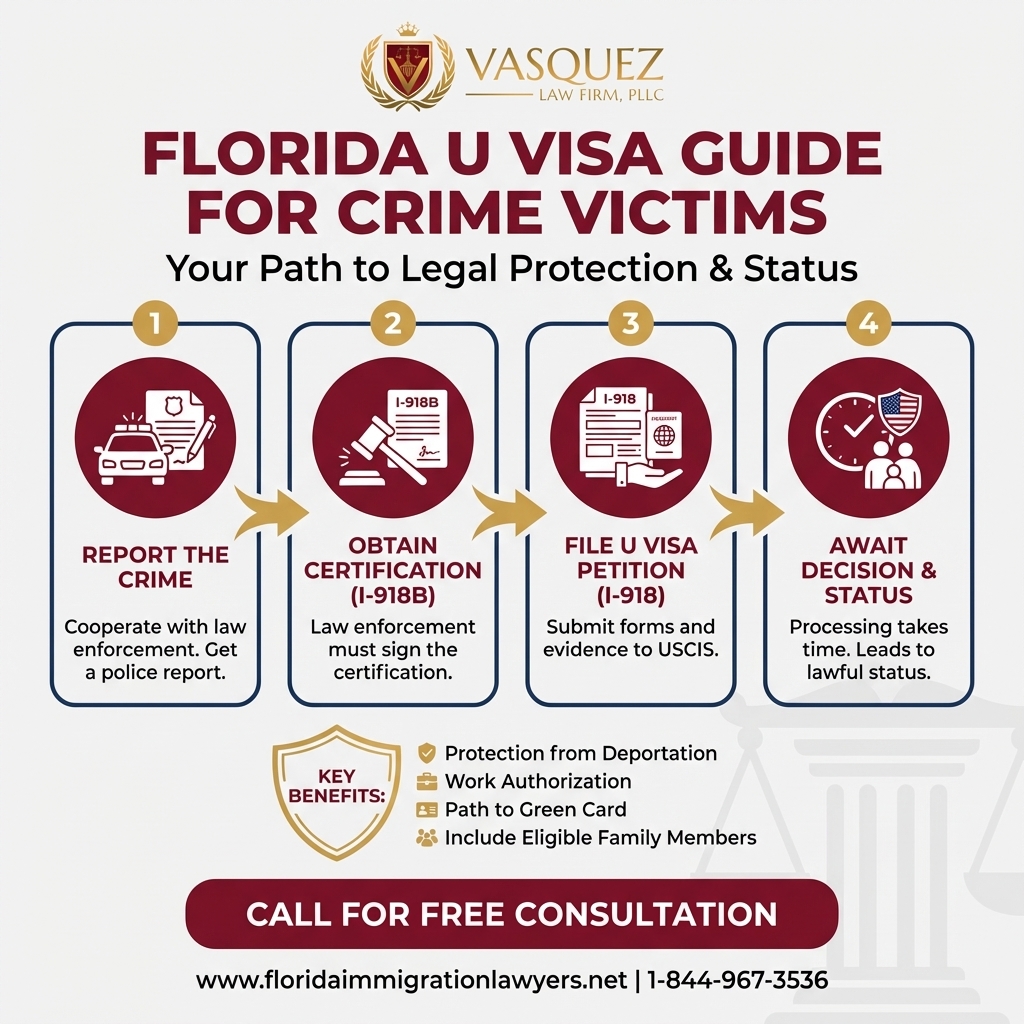
Once a U visa is granted, it typically provides nonimmigrant status for four years. During this period, U visa holders can legally reside and work in the United States. Crucially, after three years of continuous physical presence in the U.S. in U nonimmigrant status, and if they meet additional requirements, U visa holders become eligible to apply for adjustment of status to lawful permanent resident (a green card). This pathway to permanent residency offers long-term stability and is one of the most significant benefits of the U visa program.
Cost Factors and Fee Breakdown
While there is no filing fee for the U visa application itself, there may be costs associated with gathering documentation, legal assistance, and filing other related forms. It is advisable to consult with an attorney to understand potential expenses.
While the Form I-918 itself does not require a filing fee, it's important for applicants to be aware of other potential expenses associated with the U visa process. These can include fees for obtaining certified copies of police reports, medical records, and psychological evaluations. If any documents are not in English, certified translation services will be necessary, incurring additional costs. Furthermore, if you are including family members in your application, there might be separate fees for their related forms, though many of these may also be eligible for fee waivers.
One significant cost factor for many applicants is legal assistance. While not mandatory, retaining an experienced immigration attorney, such as those at Florida Immigration Lawyers, can be an invaluable investment. Attorneys assist with gathering complex documentation, drafting compelling personal statements, navigating law enforcement certification, and responding to USCIS requests. They can also advise on potential fee waivers for associated forms, such as the Form I-765 for employment authorization, which can help mitigate financial burdens. Discussing fee structures and payment plans during your free consultation with Florida Immigration Lawyers is highly recommended.
Understanding the full scope of potential costs upfront allows you to plan effectively and avoid unexpected financial strain. While the initial outlay might seem considerable, the long-term benefits of obtaining legal status, including the ability to work, live without fear, and eventually apply for a green card, far outweigh the investment. Many firms, including Florida Immigration Lawyers, offer flexible payment options to make legal representation accessible to victims in need.
Do not navigate this process alone. Contact Florida Immigration Lawyers today.
Common Mistakes to Avoid
The U visa application process is fraught with potential pitfalls that can lead to significant delays or even outright denial. Being aware of these common mistakes and proactively working to avoid them is crucial for a successful outcome. Many of these errors stem from a lack of understanding of the intricate legal requirements.
- Failing to obtain a law enforcement certification, which is crucial for application approval.
- Not providing a detailed personal statement, weakening your application.
- Submitting incomplete forms, leading to delays or denials.
- Ignoring biometric appointments, which are mandatory for processing.
- Delaying responses to USCIS Requests for Evidence.
- Misunderstanding eligibility criteria, resulting in ineligible applications.
- Not seeking legal guidance, which can improve application success.
Failing to obtain a law enforcement certification (Form I-918, Supplement B) is a critical error. Without this document, your application cannot be approved. It's essential to understand which agencies can certify, what information they need, and how to effectively communicate your request. Persistence and clear articulation of your helpfulness are often key.
Not providing a detailed and compelling personal statement weakens your application considerably. This statement is your opportunity to convey the depth of your suffering and your cooperation. A vague or brief statement fails to adequately inform USCIS about the substantial abuse you endured or the significance of your assistance to law enforcement.
Submitting incomplete forms or missing crucial supporting documents will inevitably lead to delays, as USCIS will likely issue a Request for Evidence (RFE). Incomplete applications can also be rejected outright. Double-check every form, ensure all required fields are filled, and include every piece of evidence listed in the instructions.
Ignoring biometric appointments is a serious oversight. These appointments are mandatory for identity verification and background checks. Missing them without a valid reason and without rescheduling can result in your application being considered abandoned or denied.
Delaying responses to USCIS Requests for Evidence (RFEs) or Notices of Intent to Deny (NOIDs) can be detrimental. USCIS provides strict deadlines for these responses. Failing to reply within the given timeframe, or submitting an inadequate response, can lead to the denial of your petition.
Misunderstanding eligibility criteria is a common trap. Applicants sometimes believe they qualify when their crime or level of cooperation doesn't meet the specific legal definitions. This can result in wasted time, effort, and resources on an ineligible application. Seeking expert legal advice early on can prevent this.
Not seeking legal guidance from an experienced immigration attorney is perhaps the most avoidable mistake. The U visa process is complex, and an attorney can provide invaluable assistance with eligibility assessment, document preparation, law enforcement communication, and responding to USCIS. The expertise of Florida Immigration Lawyers can significantly improve your application's success rate and alleviate stress.
By being proactive and diligent, and especially by partnering with knowledgeable legal professionals, you can navigate the U visa process with greater confidence and significantly reduce the likelihood of these common pitfalls. Your journey to safety and stability deserves the utmost care and precision.
When to Call a Lawyer
If you are unsure about your eligibility, face challenges in obtaining certification, or have a complex case, it is critical to consult with an immigration lawyer. Florida Immigration Lawyers can guide you through the process, ensuring all legal requirements are met.
Deciding when to engage legal counsel is a crucial part of the U visa journey. While some individuals might consider self-representation, the complexities of immigration law, particularly for a nuanced pathway like the U visa, often necessitate professional guidance. You should strongly consider contacting Florida Immigration Lawyers if you are unsure about whether the crime you experienced qualifies, or if your injuries meet the 'substantial abuse' threshold.
Furthermore, if you encounter difficulties in obtaining the essential law enforcement certification, an attorney can advocate on your behalf, explaining the legal requirements to the certifying agency. Cases involving a prior immigration violation, a criminal history (even minor), or a history of deportation orders are particularly complex and require expert navigation. An attorney can assess potential waivers or mitigating factors that you might not be aware of.
Even if your case seems straightforward, an attorney provides peace of mind by ensuring all documentation is meticulously prepared, all forms are correctly filled, and all deadlines are met. They can also assist with including qualifying family members in your petition and guide you through the process of applying for employment authorization and eventually, a green card. Don't hesitate to reach out to Florida Immigration Lawyers at 1-844-967-3536 for a free consultation to discuss your unique circumstances and determine how their expertise can best serve you.
About Florida Immigration Lawyers
Florida Immigration Lawyers is dedicated to providing compassionate and experienced legal services to immigrants across Florida. We specialize in U visas, asylum, deportation defense, citizenship, family immigration, and business immigration. Our team understands the unique vulnerabilities faced by crime victims and approaches each U visa case with sensitivity and determination. We are committed to securing justice and a pathway to stability for those who have bravely come forward. Call us at 1-844-967-3536 or visit our website. Available 24/7, we offer free consultations and bilingual services.
Frequently Asked Questions (FAQs)
Sources and References
- U.S. Citizenship and Immigration Services (USCIS)
- Executive Office for Immigration Review (EOIR)
- 8 U.S.C. Chapter 12 - Immigration and Nationality Act
Related services: asylum and refugee protection, asylum application process, refugee status and resettlement.
This article provides general legal information and is not intended as legal advice. Every case is unique, and outcomes depend on specific facts and circumstances. Contact an attorney for advice about your particular situation.
Contact Florida Immigration Lawyers at 1-844-967-3536 for personalized assistance. Se Habla Espanol - Estamos aqui para ayudarle.
If you need legal assistance, learn more about speak with an immigration lawyer, or call us at 1-844-967-3536 for a free consultation.
Do Not Navigate This Process Alone
Our experienced immigration attorneys are ready to fight for you. Get a free, confidential consultation today.
Se Habla Español
Frequently Asked Questions

William J. Vásquez
Founding Attorney · Vasquez Law Firm
U.S. Air Force veteran and immigration attorney with thousands of cases resolved. J.D., NCCU School of Law. AILA member. Admitted to the 4th, 5th, and 11th Circuit Courts.
Available 24/7 - Free Evaluations
Related Legal Services
Our Florida immigration attorneys can help you with deportation defense, citizenship and naturalization and family immigration services. Call today at 1-844-967-3536 for a free consultation.
Related Links
Related Topics
Free Legal Consultation
Discuss your case with our experienced attorneys. We're available 24/7.
Se Habla Español - Estamos aquí para ayudarle.
Related Articles
E-2 Visa for Florida Business Investors | VLF Florida
Learn about the E-2 investor visa for Florida business opportunities, tailored for Fort Lauderdale entrepreneurs. Discover the process, requirements, and common pitfalls. Contact Florida Immigration Lawyers for expert assistance.
Immigration Documents Checklist for Florida | VLF Florida
Navigating immigration processes in Florida requires a comprehensive checklist of documents. This guide helps you gather all necessary paperwork to ensure a successful application. Consult Florida Immigration Lawyers for personalized assistance.
Immigration Attorney West Palm Beach Guide | VLF Florida
Navigate the complexities of immigration in West Palm Beach with a trusted attorney. Learn what to expect, common pitfalls, and how to choose the right legal help.
Dual Citizenship in Florida: What You Need to Know
Explore dual citizenship in Florida, understand the process, and learn how to apply. Discover the benefits and complexities involved with having two passports and navigating immigration laws. Call Florida Immigration Lawyers for expert guidance.
