TPS Honduras Latest News 2026 in Florida Pathway
Learn about the TPS to green card pathway for Honduran immigrants in Florida. Discover eligibility requirements, processing timelines, and common mistakes to avoid. Contact Florida Immigration Lawyers for expert guidance.

- Consult legal experts for eligibility assessment
- Stay updated on the latest immigration news
- Understand the role of Florida’s USCIS offices
Introduction
For Honduran nationals residing in Homestead, Florida, under Temporary Protected Status (TPS), navigating the pathway to a green card can be a daunting process. With evolving immigration laws and new developments in 2026, understanding your options is crucial. This article provides a comprehensive overview of transitioning from TPS to a green card in Florida, highlighting key steps, potential challenges, and legal advice. Call Florida Immigration Lawyers at 1-844-967-3536 for a free consultation to explore your options.
Homestead, Florida, is home to a vibrant Honduran community, many of whom have built lives and contributed significantly to the local economy while protected by TPS. The journey from temporary status to permanent residency represents a profound step towards long-term stability and security. However, the intricacies of U.S. immigration law, particularly regarding adjustment of status for TPS holders, demand careful attention and expert guidance.
This guide aims to demystify the process, offering practical insights into eligibility requirements, necessary documentation, potential pitfalls, and the critical role of legal counsel. Given the dynamic nature of immigration policies, especially concerning TPS, staying informed and proactive is paramount for any Honduran national in Florida hoping to secure a green card. Florida Immigration Lawyers are dedicated to helping individuals like you navigate these complex pathways effectively.
What is the Current Status of TPS for Hondurans in 2026?
As of 2026, TPS for Hondurans has been a critical protection allowing many to live and work in the U.S. legally. The latest updates indicate ongoing debates about extending or terminating TPS for Hondurans. Staying informed on these developments is essential for planning any status adjustments.
Recent news highlights the precarious nature of TPS, with potential changes impacting thousands. For instance, the termination of protected status could lead to increased deportation risks, as reported by various news outlets. Understanding these dynamics is vital for Honduran TPS holders seeking green cards.
The history of TPS for Honduras dates back to 1999 following Hurricane Mitch, offering decades of protection to eligible individuals. However, this status has been subject to numerous extensions and, at times, attempts at termination, leading to significant legal battles and uncertainty. The legal landscape surrounding TPS, particularly the impact of court cases like *Ramos v. Mayorkas*, has played a crucial role in shaping the current protections and potential pathways for adjustment of status.
In 2026, the political and judicial climate continues to influence these decisions. Congress may consider legislative solutions, while administrative actions from the Department of Homeland Security (DHS) will dictate the immediate future of TPS designations. Honduran TPS holders must closely monitor official announcements from USCIS and reliable immigration news sources, as any changes can directly affect their eligibility for a green card. Proactive planning, even amidst uncertainty, is always the best approach, and consulting with Florida Immigration Lawyers can provide clarity on your specific situation.
How Can TPS Holders Adjust to a Green Card in Florida?
TPS holders may pursue a green card through adjustment of status if eligible. This process involves meeting specific criteria, such as having an eligible family member who is a U.S. citizen or permanent resident to sponsor them, or through employment-based sponsorship.
Typically, TPS holders must apply for adjustment of status through Form I-485, while ensuring they have not violated any immigration laws. Consulting with an immigration attorney to assess eligibility and navigate the complexities of the process is strongly recommended.
A critical factor for TPS holders seeking adjustment of status is the concept of "lawful admission" or "parole." Historically, many TPS holders were not considered "inspected and admitted" upon their initial entry into the U.S., which is a prerequisite for adjusting status under INA § 245(a). However, recent legal developments, particularly the settlement in *Ramos v. Mayorkas*, have provided a pathway for certain TPS beneficiaries to be considered "inspected and admitted" or "paroled" for adjustment of status purposes, even if they originally entered without inspection. This is a complex area, and the applicability depends on individual circumstances and the specific TPS designation.
The primary pathways for TPS holders to adjust status include family-based and employment-based immigration. For family-based adjustments, an eligible U.S. citizen (USC) or Lawful Permanent Resident (LPR) relative must file a Form I-130, Petition for Alien Relative. Immediate relatives of USCs (spouses, unmarried children under 21, and parents) generally do not have to wait for a visa to become available, making their path potentially faster. For other family preference categories (e.g., married children of USCs, siblings of USCs, or family members sponsored by LPRs), there is typically a waiting period based on visa bulletin availability. Employment-based pathways, such as through a job offer from a U.S. employer, also exist but often require a PERM labor certification process and specific visa categories (e.g., EB-1, EB-2, EB-3) depending on the applicant's skills and qualifications.
Regardless of the pathway, maintaining continuous residence, a clean criminal record, and demonstrating good moral character are essential. Any prior immigration violations, such as overstays, unlawful entries not covered by recent legal settlements, or deportation orders, can significantly complicate the adjustment process. This is precisely why obtaining personalized legal advice from experienced professionals like Florida Immigration Lawyers is not just recommended, but often indispensable, to ensure all requirements are met and potential obstacles are addressed proactively. Call 1-844-967-3536 for a consultation to understand your unique eligibility.
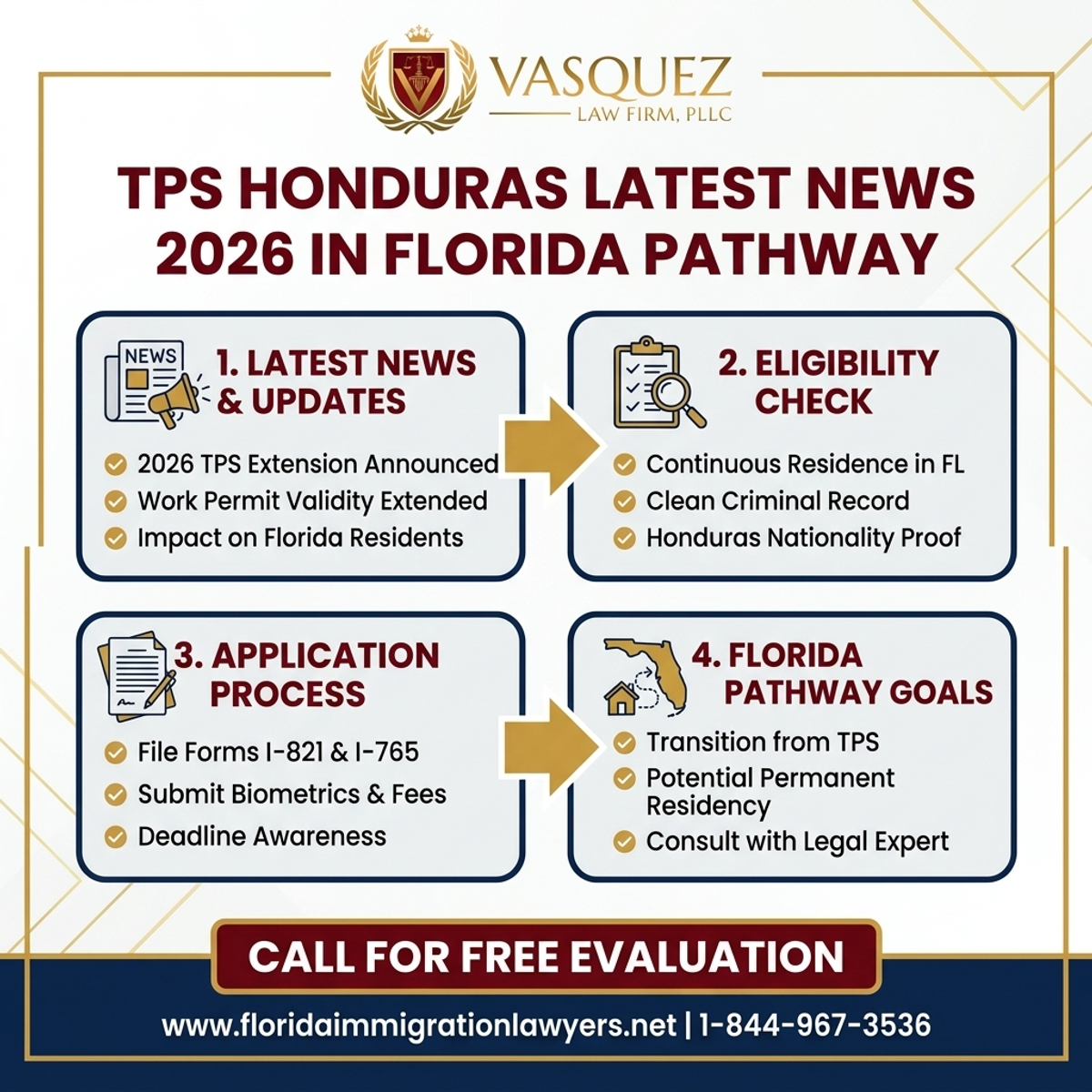
Step-by-Step Process — TPS Honduras Latest News 2026 in Florida Pathway
Document Checklist for Adjustment of Status
Preparing a comprehensive and accurate document package is crucial for a successful adjustment of status application. Any missing or incorrect documentation can lead to delays, Requests for Evidence (RFEs), or even denial. It is vital to meticulously gather and organize all required forms and supporting evidence before submission.
- Form I-485, Application to Register Permanent Residence or Adjust Status: This is the primary application form for adjusting your status to a permanent resident. Ensure all sections are completed accurately and truthfully.
- Proof of TPS status and continuous residence: Provide copies of your TPS approval notices (Form I-797), employment authorization documents (EADs), and other evidence demonstrating your continuous physical presence in the U.S. since your TPS designation.
- Medical examination report (Form I-693): This report must be completed by a USCIS-approved civil surgeon. It assesses your health and ensures you meet the medical requirements for permanent residency.
- Affidavit of Support (Form I-864) if applicable: If you are adjusting status through a family-based petition, your sponsor (the petitioner) must submit this form to demonstrate they can financially support you, preventing you from becoming a public charge.
- Identity documents (passport, birth certificate): Include copies of your valid passport, birth certificate, and any other government-issued identification.
- Employment verification letters, if applicable: If your adjustment is employment-based, or if you need to show financial stability, include letters from current and previous employers.
- Photos: Provide two passport-style photos that meet USCIS specifications.
- Police Clearances/Court Dispositions: If you have any criminal history, even minor infractions, you must provide certified copies of all arrest records and court dispositions.
Organizing these documents systematically, perhaps in a binder with tabs, can simplify the USCIS review process and demonstrate your thoroughness. Always keep copies of everything you submit for your records. Florida Immigration Lawyers can assist you in compiling this extensive checklist and ensuring every piece of documentation is correctly prepared.
Timeline and Processing Expectations
The journey from filing your application to receiving a final decision on your green card can vary significantly. While the table below provides general timeframes, individual cases can experience longer or shorter processing times based on numerous factors.
| Stage | Typical Timeframe | Notes |
|---|---|---|
| Filing Form I-485 | 6-12 months | Depends on USCIS processing times |
| Biometrics Appointment | 1-2 months post-filing | USCIS schedules appointments |
| Interview Schedule | 6-9 months post-biometrics | Interviews are held at local USCIS offices |
| Final Decision | 1-3 months after interview | Decision notice sent by mail |
Factors influencing processing times include the specific USCIS service center handling your case, the current caseload and backlog, the completeness of your application, and whether you receive a Request for Evidence (RFE). For instance, complex cases involving waivers or extensive background checks often take longer. It's also important to remember that these are typical timeframes and can fluctuate with changes in immigration policy or agency resources. You can track current processing times on the USCIS website for a more precise estimate.
Patience is a virtue throughout this process. While waiting, it's crucial to respond promptly to any USCIS requests and ensure your contact information remains updated. Consulting with Florida Immigration Lawyers can help manage expectations and provide updates on your application's progress, offering peace of mind during this often lengthy period.
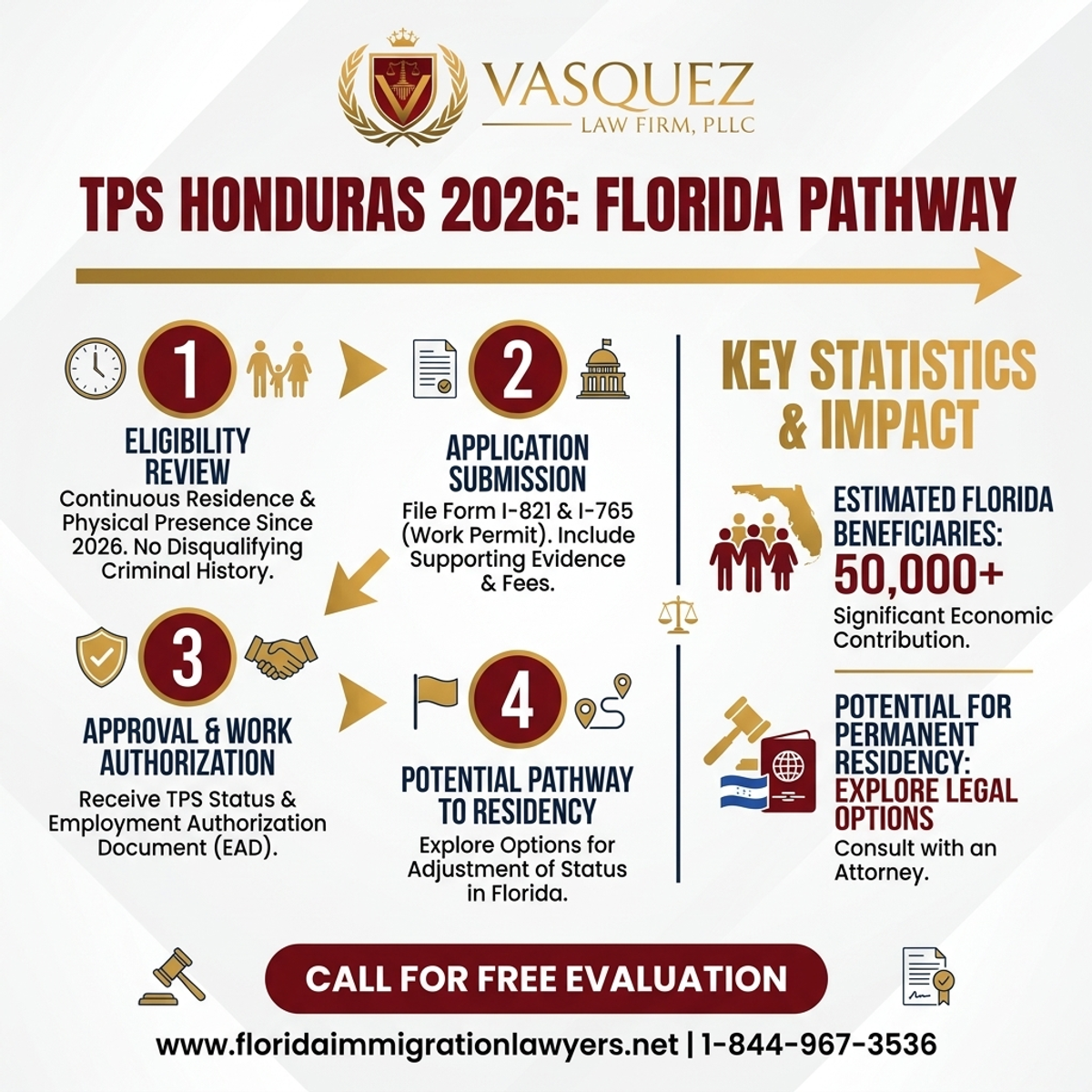
Key Statistics — TPS Honduras Latest News 2026 in Florida Pathway
Cost Factors and Fee Breakdown
The financial aspect of adjusting status to a green card is a significant consideration for many TPS holders. Understanding the various fees involved is essential for proper financial planning, as these costs can accumulate.
| Item | Typical Fee | Notes |
|---|---|---|
| Form I-485 Filing Fee | Varies | Subject to change, check USCIS |
| Biometrics Fee | Varies | Additional to filing fee |
| Medical Exam | Varies | Performed by USCIS-approved physicians |
Beyond the direct USCIS filing and biometrics fees, which are subject to periodic changes, applicants must also budget for the medical examination by a USCIS-approved civil surgeon. These costs can range from a few hundred to over a thousand dollars, depending on the physician and any required vaccinations or tests. Additionally, applicants should consider potential legal fees if they choose to hire an immigration attorney, which is highly recommended for complex cases. While legal fees represent an investment, they often save time, prevent costly errors, and increase the likelihood of a successful outcome.
It's important to check the official USCIS website for the most current fee schedule, as fees can change without prior notice. In some limited circumstances, fee waivers may be available for certain forms based on financial hardship, but eligibility criteria are strict. Thorough financial planning and understanding all potential costs upfront can help alleviate stress during the application process. Florida Immigration Lawyers can provide a clear breakdown of expected costs and discuss payment options during your consultation.
Common Mistakes to Avoid
Navigating the adjustment of status process is fraught with potential pitfalls. Avoiding common mistakes can significantly improve your chances of a smooth and successful application. Even minor errors can lead to substantial delays or outright denials, underscoring the need for meticulous attention to detail.
- Failing to maintain continuous residence: This can disqualify you from adjusting status. Ensure you have robust documentation of your physical presence in the U.S. throughout your TPS period.
- Providing incomplete documentation: Missing documents can delay the process. Always double-check the USCIS checklist and provide every requested item, including translations if necessary.
- Not updating address with USCIS: This can result in missed communications. If you move, file Form AR-11, Alien's Change of Address Card, promptly with USCIS.
- Ignoring USCIS deadlines: Late submissions can lead to application denials. Respond to RFEs or interview notices immediately and within the specified timeframe.
- Not consulting an attorney: Legal guidance ensures compliance with immigration laws. An attorney can identify potential issues and help you present the strongest possible case.
- Overstaying visas: Overstays can complicate the adjustment of status. While TPS offers protection, previous overstays can be a barrier if not properly addressed, especially if not covered by the *Ramos* settlement.
- Misrepresenting information: Intentional errors may lead to severe penalties. Always provide truthful and accurate information on all forms and during interviews.
- Failing to disclose criminal history: Even minor offenses must be disclosed. Hiding past arrests or convictions, no matter how old, can lead to charges of misrepresentation and severe immigration consequences.
- Traveling internationally without advance parole: Leaving the U.S. without proper authorization (Advance Parole) while your I-485 is pending can be considered abandoning your application and may prevent you from re-entering.
Preventing these mistakes requires careful preparation, thoroughness, and a clear understanding of immigration regulations. It is highly advisable to seek professional legal assistance to review your application package before submission. Florida Immigration Lawyers are adept at identifying and mitigating these common errors, guiding you through each step with precision.
When to Call a Lawyer
If you are unsure about your eligibility for a green card or if you face complications like overstaying your visa, it is crucial to contact an immigration attorney. Complex cases involving criminal records or prior deportations require expert legal advice. Florida Immigration Lawyers offer comprehensive services to help you navigate these challenges.
Beyond general eligibility questions, specific circumstances make legal representation indispensable. For instance, if you have a history of multiple entries into the U.S., prior deportation orders, or any criminal convictions (even minor ones), your case will likely be more complex and require a skilled attorney to assess potential waivers or relief. Similarly, if there are questions about whether you were "inspected and admitted" or "paroled" upon entry – a critical distinction for TPS holders seeking adjustment – an attorney can interpret the latest legal precedents, such as the *Ramos v. Mayorkas* settlement, and advise on your specific situation.
Furthermore, if you receive a Request for Evidence (RFE) from USCIS, a Notice of Intent to Deny (NOID), or if your case involves national security concerns, immediate legal intervention is paramount. An experienced immigration lawyer from Florida Immigration Lawyers can help you prepare compelling responses, gather necessary evidence, and represent you during interviews, significantly increasing your chances of a favorable outcome. Don't wait until problems arise; proactive consultation can prevent many issues. Call 1-844-967-3536 today for expert guidance.
About Florida Immigration Lawyers
Florida Immigration Lawyers is a dedicated firm offering comprehensive immigration services across Florida. Our experienced attorneys provide personalized guidance for a range of immigration matters, including TPS adjustments and green card applications. We are available 24/7 at 1-844-967-3536 for free consultations. Visit our website at floridaimmigrationlawyers.net to learn more.
Our team understands the unique challenges faced by the Honduran community in Florida and is committed to providing compassionate, effective, and client-centric legal representation. We pride ourselves on staying abreast of the ever-changing immigration laws and policies, ensuring our clients receive the most current and accurate advice. Whether you are beginning your journey from TPS to a green card or facing complex immigration hurdles, Florida Immigration Lawyers are here to advocate for your rights and help you achieve your American dream.
Sources and References
For the most accurate and up-to-date information regarding Temporary Protected Status and adjustment of status, it is always recommended to consult official government sources and reputable legal organizations. Relying on verified information is crucial for making informed decisions about your immigration journey.
- U.S. Citizenship and Immigration Services (USCIS)
- Executive Office for Immigration Review (EOIR)
- 8 U.S.C. Chapter 12 - Immigration and Nationality Act
- *Ramos v. Mayorkas* settlement documents and related legal analyses
Staying informed through these primary sources will help you understand the broader context of immigration laws and specific policies affecting TPS holders. However, remember that legal interpretation and application to individual cases require professional expertise.
Related services: immigration practice areas, family immigration services, citizenship and naturalization, deportation defense.
This article provides general legal information and is not intended as legal advice. Every case is unique, and outcomes depend on specific facts and circumstances. Contact an attorney for advice about your particular situation.
For more information on adjusting from TPS to a green card, contact Florida Immigration Lawyers at 1-844-967-3536. Se Habla Español - Estamos aquí para ayudarle.
If you need legal assistance, learn more about how our immigration attorneys can help, or call us at 1-844-967-3536 for a free consultation.
Do Not Navigate This Process Alone
Our experienced immigration attorneys are ready to fight for you. Get a free, confidential consultation today.
Se Habla Español
Or leave your details and we’ll call you:
Free Evaluation in 24 Hours
Or talk to us right now
AI voice assistant — available 24/7
FreeFrequently Asked Questions

William J. Vásquez
Founding Attorney · Vasquez Law Firm
U.S. Air Force veteran and immigration attorney with years of hands-on U.S. immigration experience. J.D., NCCU School of Law. AILA member. Admitted to the 4th, 5th, and 11th Circuit Courts.
Available 24/7 - Free Evaluations
Reviewed for legal accuracy by William J. Vásquez
Licensed in North Carolina; U.S. immigration is federal practice.
Related Legal Services
Our Florida immigration attorneys can help you with citizenship and naturalization, family immigration services and immigration practice areas. Call today at 1-844-967-3536 for a free consultation.
Related Links
Related Topics
Free Legal Consultation
Discuss your case with our experienced attorneys. We're available 24/7.
Se Habla Español - Estamos aquí para ayudarle.
Related Articles
K-3 Visa Timeline in Florida: What to Expect
Learn the K-3 visa timeline process in Florida, including steps, costs, and documentation. Understand your options in 2026 with guidance from Florida Immigration Lawyers.
Military Naturalization Expedited in Florida Bases
Explore military naturalization options for families at Florida bases, including parole in place benefits in Miami. Learn how to expedite your application with expert guidance from Florida Immigration Lawyers.
Finding Immigration Legal Help in North Florida
Discover how to find an immigration lawyer in Orlando offering a free consultation. Understand the services available and why choosing Florida Immigration Lawyers can make a difference in your case.
Dual Citizenship Lawyer: Your Florida Naturalization
Embarking on the path to U.S. citizenship involves a crucial naturalization interview, a step that can be daunting for many. This comprehensive guide from Florida Immigration Lawyers provides essential tips and insights for applicants across Florida, including Tampa, to confidently approach their USCIS interview in 2026. We delve into what to expect during the interview, the critical documents you'll need, and a typical timeline for the process. Understanding the role of a dual citizenship lawyer, especially for complex cases or those with specific concerns about maintaining original citizenship, is highlighted as an invaluable resource. Learn how to avoid common mistakes, prepare effectively for the English and civics tests, and recognize when professional legal assistance from Florida Immigration Lawyers can make a significant difference in your journey to becoming a U.S. citizen. Our dedicated team is ready to offer a free consultation and personalized guidance every step of the way.