TPS Honduras 2026: What Florida Immigrants Need to Know
For thousands of Honduran immigrants in Florida, the status of Temporary Protected Status (TPS) in 2026 is a critical concern. This comprehensive guide from Florida Immigration Lawyers addresses the latest updates, eligibility requirements, and the step-by-step application process for TPS Honduras 2026. We delve into USCIS processing expectations, cost factors, and vital considerations for employment authorization and travel. Learn about the ongoing legal challenges that have shaped TPS extensions and discover common mistakes to avoid. Our expert team provides essential advice on when to seek legal assistance to navigate this complex immigration landscape, ensuring you maintain your protected status and peace of mind.
Temporary Protected Status (TPS) for Honduras in 2026 remains a critical topic for thousands of Honduran immigrants in Florida. While past court orders have extended protections, the future requires careful attention to USCIS announcements and legal developments. Beneficiaries must understand eligibility, renewal processes, and the importance of timely action to maintain their status and work authorization.
- TPS for Honduras has been extended through court orders, but future validity requires vigilance.
- Eligibility hinges on continuous residence and physical presence in the U.S.
- Timely re-registration with USCIS is crucial to maintain benefits.
- Consulting an immigration lawyer Florida is vital for complex cases or updates.
- Employment Authorization Documents (EADs) are tied to TPS validity.
TPS Honduras 2026: What Florida Immigrants Need to Know
Are you a Honduran national living in Florida, concerned about the future of your Temporary Protected Status (TPS)? The year 2026 brings both hope and uncertainty for many families across Miami, Orlando, and the entire Sunshine State. Understanding the nuances of TPS Honduras 2026 is paramount to securing your legal standing and peace of mind.
The landscape of immigration law is constantly shifting, and TPS designations are no exception. For Honduran immigrants, navigating these changes requires up-to-date information and often, expert legal guidance. This comprehensive guide will walk you through the current status, eligibility, application processes, and what you need to know for TPS Honduras 2026.
At Florida Immigration Lawyers, we understand the anxieties you face. We are dedicated to providing clear, empathetic legal support to our community. For personalized advice and to discuss your unique situation, call Florida Immigration Lawyers at 1-844-967-3536 for a free consultation today.
Understanding Temporary Protected Status (TPS) for Honduras in 2026
Temporary Protected Status (TPS) provides a temporary legal status to eligible nationals of designated countries facing ongoing armed conflict, environmental disaster, or other extraordinary and temporary conditions. For Honduras, this designation has been a lifeline for decades, allowing many to live and work legally in the U.S.
The history of TPS for Honduras dates back to Hurricane Mitch in 1999. Since then, its continuation has been marked by a series of extensions and, more recently, significant legal challenges. These challenges have prolonged the status for beneficiaries even when terminations were initially announced.
As of early 2026, the validity of TPS for Honduras for existing beneficiaries has largely been maintained through court orders, such as those in the Ramos v. Mayorkas and Bhattarai v. Mayorkas litigations. These injunctions have prevented the full implementation of previous termination decisions, thus extending work authorization and protection from removal for many Honduran immigrants.
The impact of TPS on Florida's Honduran community, particularly in areas like Miami-Dade and Broward counties, is substantial. Thousands rely on this status for stability, contributing significantly to our state's economy and cultural fabric. Staying informed about the latest developments from U.S. Citizenship and Immigration Services (USCIS) is crucial.
For more detailed information on general immigration matters and how TPS fits into the broader legal framework, please visit our immigration practice area page. We are here to help you navigate these complex regulations.
Eligibility Requirements and the Application Process for TPS Honduras 2026
To be eligible for TPS Honduras 2026, beneficiaries must continue to meet several key criteria. These typically include continuous physical presence in the United States since the initial designation date and continuous residence since a specified date. Any breaks in continuous residence or physical presence, or certain criminal convictions, can jeopardize your eligibility.
The re-registration process for TPS Honduras is a critical step to maintain your protected status. Failing to re-register within the designated window can lead to the loss of your benefits. It is important to act promptly once a re-registration period is announced by USCIS.
Key Updates for TPS Honduras Extension 2026
As of 2026, the ongoing legal battles have largely dictated the extensions for TPS Honduras beneficiaries. While the Trump administration initially attempted to terminate TPS for Honduras, court injunctions have effectively maintained the status for many. This means that for now, many Honduran immigrants continue to benefit from TPS, but the situation requires constant monitoring for any new developments or court rulings regarding TPS extension 2026 news.
USCIS typically announces re-registration periods and any new effective dates well in advance. Our firm closely monitors these announcements to ensure our clients receive timely and accurate information. We can help you understand how these updates specifically apply to your case.
Florida-Specific Considerations for TPS Applicants
Florida is home to a significant Honduran population, and local USCIS field offices in Miami, Orlando, and Tampa process numerous TPS applications. Understanding local procedures and potential backlogs can be beneficial. Our team at Florida Immigration Lawyers is familiar with the intricacies of applying for immigration benefits within Florida.
We work to ensure your application is complete and accurately reflects your eligibility under current laws. Remember, even minor errors can cause delays or denials. Let us assist you in preparing a strong application.
Step-by-Step Guide for TPS Re-Registration
Re-registering for TPS requires careful attention to detail. Here is a general step-by-step guide:
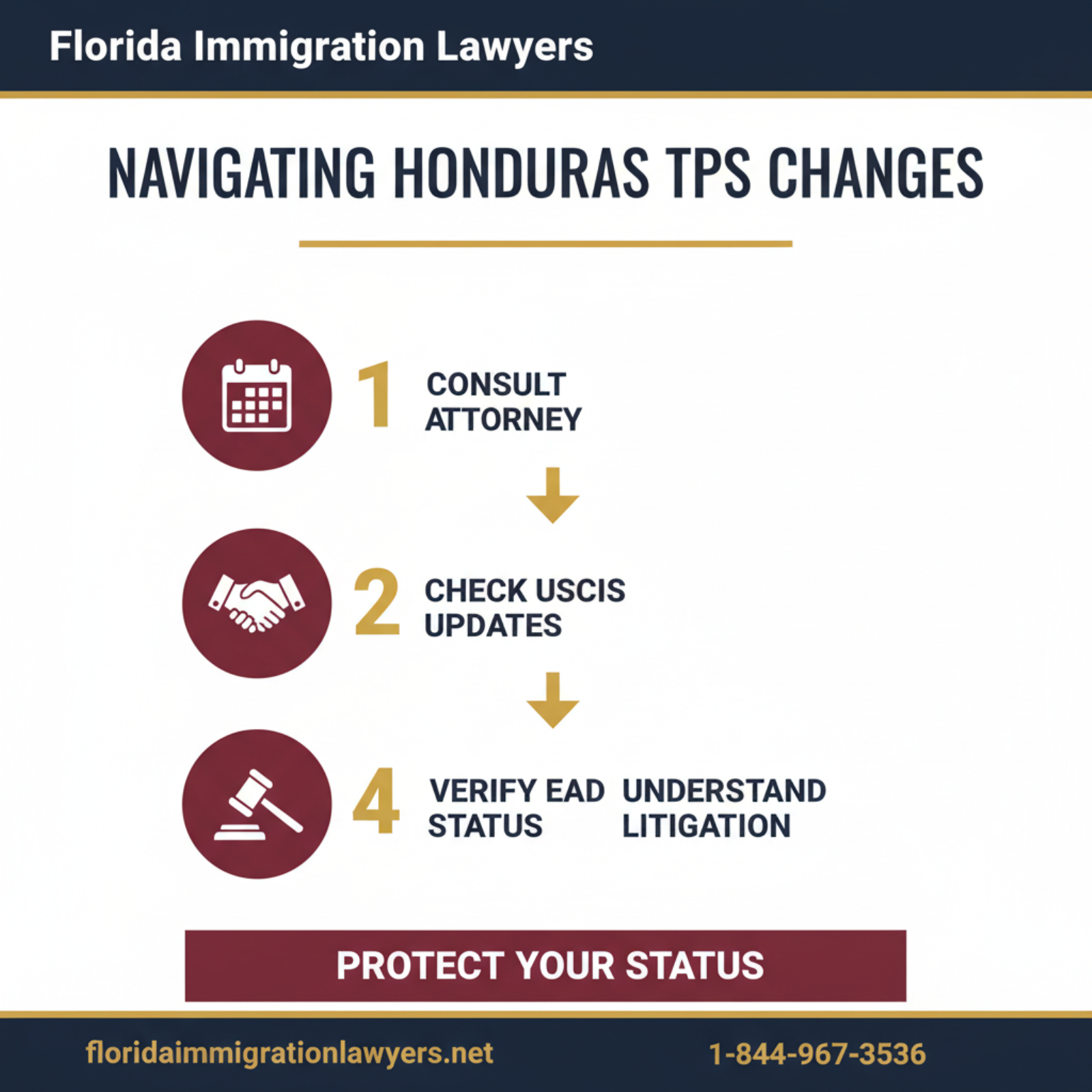
- Monitor USCIS Announcements: Stay informed about the official re-registration period and any new validity dates for TPS Honduras 2026. This information is typically published on the USCIS website.
- Complete Form I-821, Application for Temporary Protected Status: Fill out the form accurately and completely. Ensure all questions are answered truthfully and thoroughly.
- Complete Form I-765, Application for Employment Authorization: If you wish to continue or obtain employment authorization, you must file Form I-765. This form allows you to receive an Employment Authorization Document (EAD).
- Consider Form I-601, Application for Waiver of Grounds of Inadmissibility: If you have certain inadmissibility grounds, you may need to file this waiver. Discuss this with an immigration lawyer Florida to determine if it applies to your situation.
- Gather Supporting Documentation: Collect all required evidence proving your identity, nationality, continuous residence, and continuous physical presence. See the checklist below for common documents.
- Pay Applicable Fees or Apply for a Fee Waiver: You will generally need to pay filing fees for Form I-821 and Form I-765, as well as biometric services fees. If you cannot afford the fees, you may be eligible to apply for a fee waiver using Form I-912, Request for Fee Waiver.
- Submit Your Application Package: Mail your completed forms and supporting documents to the correct USCIS filing address. Keep copies of everything you submit for your records.
- Attend Biometrics Appointment: After filing, you will likely receive an appointment notice for biometrics (fingerprints, photograph, signature). Attend this appointment as scheduled.
- Respond to Requests for Evidence (RFEs): If USCIS needs more information, they will send an RFE. Respond promptly and with all requested documentation to avoid delays or denials.
- Receive Decision: USCIS will mail you a decision notice. If approved, you will receive a new EAD and confirmation of your TPS extension.
Document Checklist for TPS Re-Registration
To successfully re-register for TPS, you will need to provide various documents. While specific requirements may vary, the following are commonly requested:
- Proof of identity and nationality: Copy of your Honduran passport, birth certificate with photo identification, or national identity document.
- Proof of continuous residence in the U.S.: Rental agreements, utility bills, school records, employment records, bank statements, medical records, or affidavits from individuals who can attest to your presence.
- Proof of continuous physical presence in the U.S.: Similar documents to continuous residence, demonstrating your actual presence during the specified period.
- Two passport-style photographs.
- Any previous TPS approval notices or EADs.
- Marriage certificate and birth certificates for dependents, if applying as a family.
It is essential to provide clear, legible copies of all documents. If any documents are not in English, they must be accompanied by a certified English translation.
Navigating Timelines, Processing Expectations, and USCIS in Florida
The processing times for TPS applications and re-registrations can vary significantly. Factors such as the volume of applications, staffing levels at USCIS, and the complexity of individual cases all play a role. While USCIS strives for efficiency, delays are not uncommon.
Generally, you can check the average processing times on the USCIS website by selecting your form type (I-821, I-765) and the service center handling your application. For Florida residents, applications are often processed by the Vermont Service Center or the Texas Service Center. Keep a copy of your receipt notice, as it contains your case number for tracking.
Even with ongoing litigation, beneficiaries should anticipate re-registration periods and plan accordingly. The Department of Homeland Security (DHS) can designate or extend TPS for countries based on conditions, as outlined in Section 244 of the Immigration and Nationality Act (INA), codified at 8 U.S.C. § 1254a. It is crucial to monitor official announcements from USCIS and the Department of State (travel.state.gov) for the latest updates regarding TPS Honduras 2026 and beyond.
Cost Factors and Fee Breakdown
Applying for or re-registering for TPS involves several fees. These typically include:
- Form I-821, Application for Temporary Protected Status fee.
- Form I-765, Application for Employment Authorization fee (if requested).
- Biometric services fee.
It is important to note that fees are subject to change, and USCIS updates its fee schedule periodically. We advise checking the official USCIS website for the most current fee amounts before submitting your application. Fee waivers may be available for eligible applicants who demonstrate an inability to pay.
Employment Authorization and Travel for Honduran TPS Beneficiaries
One of the most significant benefits of TPS is the ability to obtain an Employment Authorization Document (EAD), often referred to as a work permit. This document allows Honduran immigrants to legally work in the United States, providing essential financial stability for families in Florida.
When you re-register for TPS, you should also apply for a new EAD using Form I-765. It is critical to ensure that your EAD is always current to maintain continuous employment eligibility. Employers in Florida are required to verify your authorization to work, and an expired EAD can lead to job loss or legal complications.
Travel outside the U.S. for TPS beneficiaries requires careful consideration. While TPS provides protection from removal, it does not automatically grant authorization to travel internationally. To travel and lawfully re-enter the U.S., you must apply for and receive an Advance Parole document before your departure. Traveling without Advance Parole can lead to serious immigration consequences, including denial of re-entry.
For those considering starting a business or seeking specific employment visas, understanding the interplay between TPS and other immigration avenues is complex. Our business immigration practice area can provide guidance on these matters.
Potential Challenges and the TPS Honduras Lawsuit Update
The journey for TPS Honduras beneficiaries has been heavily influenced by legal challenges. The Ramos v. Mayorkas litigation, in particular, has played a crucial role in extending TPS for Hondurans and nationals of several other countries. This lawsuit challenged the termination decisions made by the previous administration, arguing that they were unlawful.
As of 2026, the legal landscape continues to evolve. While injunctions have provided temporary relief, the long-term future of TPS for Honduras remains subject to further court decisions or legislative action. The Department of Justice (justice.gov/eoir) and other federal agencies are actively involved in these legal processes.
What the Courts Mean for Your TPS in Florida
The ongoing lawsuits mean that the termination of TPS for Honduras, Nicaragua, El Salvador, and Nepal has not taken full effect for many individuals. This has allowed beneficiaries to maintain their status and work authorization under a series of extensions. However, the exact dates and conditions are often tied to specific court orders, which can be complex to interpret.
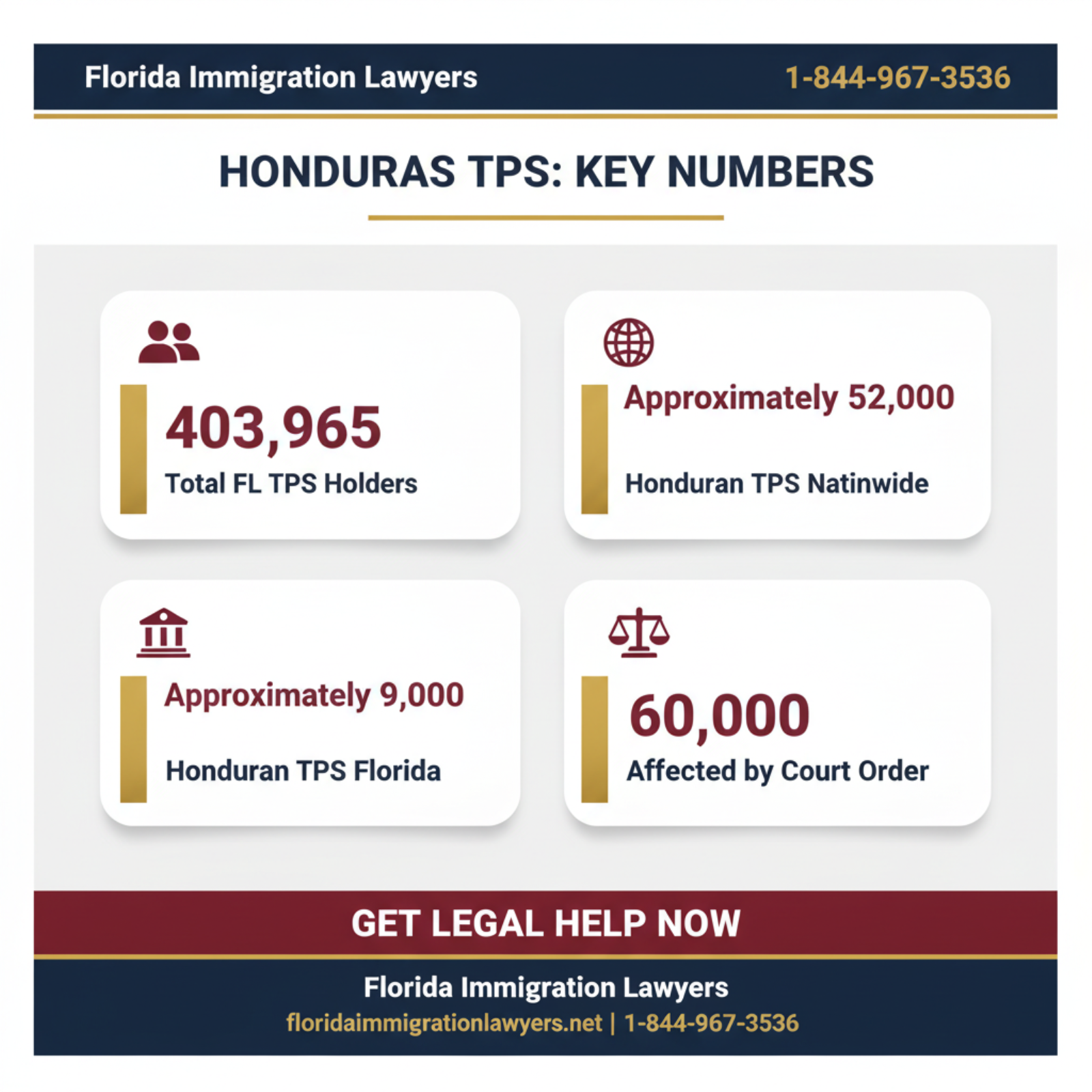
It is crucial for Honduran immigrants in Florida to stay informed about the latest court rulings and how they might impact their TPS status. Our legal team closely monitors these developments to provide accurate and timely advice to our clients. We can help you understand the implications of any TPS Honduras lawsuit update.
Do not navigate this process alone. Contact Florida Immigration Lawyers today. Our experienced attorneys can help you understand your rights and options.
Common Mistakes to Avoid in Your TPS Honduras 2026 Application
Applying for or re-registering for TPS can be a complex process, and even minor errors can lead to significant delays or denial of benefits. Avoiding these common mistakes is crucial for a successful outcome:
- Missing the Re-Registration Deadline: This is perhaps the most critical mistake. Failing to submit your application within the designated re-registration period almost always results in the loss of TPS benefits. Always mark your calendar and apply early.
- Incomplete or Inaccurate Forms: Leaving fields blank, providing incorrect information, or failing to sign forms can lead to immediate rejection or requests for evidence, prolonging the process. Double-check every entry.
- Insufficient Supporting Documentation: Not providing enough evidence to prove continuous residence or physical presence can result in a denial. Ensure you have a wide range of documents covering the entire required period.
- Failure to Disclose Criminal History: Any criminal arrests or convictions, no matter how minor, must be disclosed. Failure to do so can be considered misrepresentation and lead to serious immigration consequences, including denial and potential deportation.
- Not Responding to Requests for Evidence (RFEs): If USCIS sends an RFE, you must respond within the specified timeframe with all requested information. Ignoring an RFE will almost certainly lead to a denial.
- Traveling Without Advance Parole: Leaving the U.S. without a valid Advance Parole document will terminate your TPS status upon departure and can prevent your lawful re-entry. Always secure Advance Parole before any international travel.
- Submitting Incorrect Fees or No Fee Waiver: Incorrect payment amounts or failure to include a valid fee waiver request can cause your application to be rejected. Verify current fees on the USCIS website.
- Using Outdated Forms: USCIS frequently updates its forms. Always download the latest version from the official USCIS website to ensure you are using the correct form.
- Failing to Update Your Address: If you move, you must notify USCIS within 10 days using Form AR-11. Failure to do so can result in missed notices and critical deadlines.
- Misunderstanding Eligibility Criteria: Believing you are eligible when you do not meet all the specific requirements can lead to a wasted application and lost fees. Consult with an attorney to confirm your eligibility.
When to Call an Immigration Lawyer for TPS Honduras 2026
While some TPS re-registration cases may seem straightforward, many situations warrant the expertise of an experienced immigration lawyer. Given the complexities surrounding TPS Honduras 2026, legal counsel can be invaluable in ensuring a smooth process and protecting your rights.
You should strongly consider contacting Florida Immigration Lawyers if you:
- Have any criminal history, including minor arrests or convictions.
- Have previously been denied TPS or any other immigration benefit.
- Have questions about your continuous physical presence or continuous residence.
- Have traveled outside the U.S. without Advance Parole.
- Have received a Request for Evidence (RFE) from USCIS.
- Are unsure about which forms to file or how to complete them.
- Have concerns about potential grounds of inadmissibility.
- Wish to explore other immigration pathways alongside your TPS status.
- Are facing deportation or removal proceedings. Our deportation defense team can help.
Our attorneys at Florida Immigration Lawyers are well-versed in TPS regulations and the specific challenges faced by Honduran immigrants in Florida. We can assess your eligibility, help you gather necessary documentation, prepare your application, and represent you before USCIS. We are committed to providing diligent and compassionate representation to help you secure your future.
About Florida Immigration Lawyers
Florida Immigration Lawyers is a leading immigration law firm dedicated to serving the diverse immigrant communities across all of Florida. With years of experience and a deep understanding of U.S. immigration laws, we provide comprehensive legal services to individuals and families seeking to achieve their American dreams.
Our firm is committed to excellence, integrity, and client-focused representation. We handle a wide range of immigration matters, including family-based petitions, employment visas, asylum claims, naturalization, and deportation defense. Our team of skilled attorneys is passionate about advocating for immigrant rights and guiding clients through every step of their legal journey.
When you choose Florida Immigration Lawyers, you gain a partner who genuinely cares about your outcome. We offer personalized attention, clear communication, and strategic legal solutions tailored to your unique circumstances. Our commitment to our clients has earned us a reputation for being trusted and effective advocates.
We are available 24/7 to answer your questions and provide support. We offer free consultations to discuss your case and explore your legal options. Contact us today to learn how we can assist you. Visit our website at https://www.floridaimmigrationlawyers.net or call us at 1-844-967-3536.
Sources and References
- U.S. Citizenship and Immigration Services (USCIS)
- Executive Office for Immigration Review (EOIR)
- U.S. Department of State
- 8 U.S.C. § 1254a - Immigration and Nationality Act (INA) Section 244 (Temporary Protected Status)
- 8 CFR Part 244 - Temporary Protected Status
- USCIS Policy Manual
This article provides general legal information and is not intended as legal advice. Every case is unique, and outcomes depend on specific facts and circumstances. Contact an attorney for advice about your particular situation.
The future of your TPS status is too important to leave to chance. Let the dedicated team at Florida Immigration Lawyers protect your rights and guide you through the TPS Honduras 2026 process. We are here to help you secure your future in Florida.
Contact Florida Immigration Lawyers for a free consultation at 1-844-967-3536. Se Habla Español - Estamos aquí para ayudarle.
Frequently Asked Questions
Florida Immigration Lawyers
Legal Team
Our experienced attorneys at Florida Immigration Lawyers have been serving clients across Florida for over 20 years. We specialize in immigration, personal injury, criminal defense, workers compensation, and family law.