Immigration Rights in Florida: Know Your Legal Protections with ICE
Understanding your immigration rights in Florida is vital for anyone navigating the U.S. immigration system. This guide provides essential information on your legal protections during encounters with ICE, whether in your home or in public. Learn about your right to remain silent, refusing searches, and the importance of having legal counsel. We also cover crucial documents to prepare, common mistakes to avoid, and when to seek professional legal help. Florida Immigration Lawyers offers free consultations to ensure you are informed and protected.
Knowing your immigration rights in Florida is crucial for protecting yourself and your family. You have constitutional protections, regardless of your immigration status, including the right to remain silent and to speak with an attorney. Understanding how to interact with immigration officials like ICE and having essential documents prepared can significantly impact your situation.
- Always assert your right to remain silent if questioned by immigration officials.
- Do not open your door to ICE agents unless they have a warrant signed by a judge.
- Carry a 'Know Your Rights' card and memorize your attorney's phone number.
- Never lie or present false documents to any government official.
- Consult with an experienced immigration attorney immediately if you are detained or facing questions.
Navigating the complex landscape of immigration law can be daunting, especially when you are unsure of your legal standing. For many immigrants across Florida, including those in Kissimmee and surrounding communities, understanding your fundamental immigration rights is not just helpful-it's essential for your safety and future.
Encounters with immigration enforcement, particularly U.S. Immigration and Customs Enforcement (ICE), can be frightening and confusing. Knowing what to say, what not to say, and what actions to take can make a critical difference in the outcome of such interactions. This comprehensive guide will help you know your rights Florida residents, ensuring you are prepared and protected.
At Florida Immigration Lawyers, we are committed to empowering our community with vital information. We understand the unique challenges faced by immigrants in our state. If you have questions or need immediate assistance, do not hesitate to call Florida Immigration Lawyers at 1-844-967-3536 for a free consultation. Our team is here to help you understand your legal protections.
Understanding Your Immigration Rights in Florida
Regardless of your immigration status, certain fundamental rights are guaranteed to everyone under the U.S. Constitution. These protections apply to all individuals present in the United States, including non-citizens. Being aware of these rights is your first line of defense.
What Are My Basic Rights During ICE Encounters?
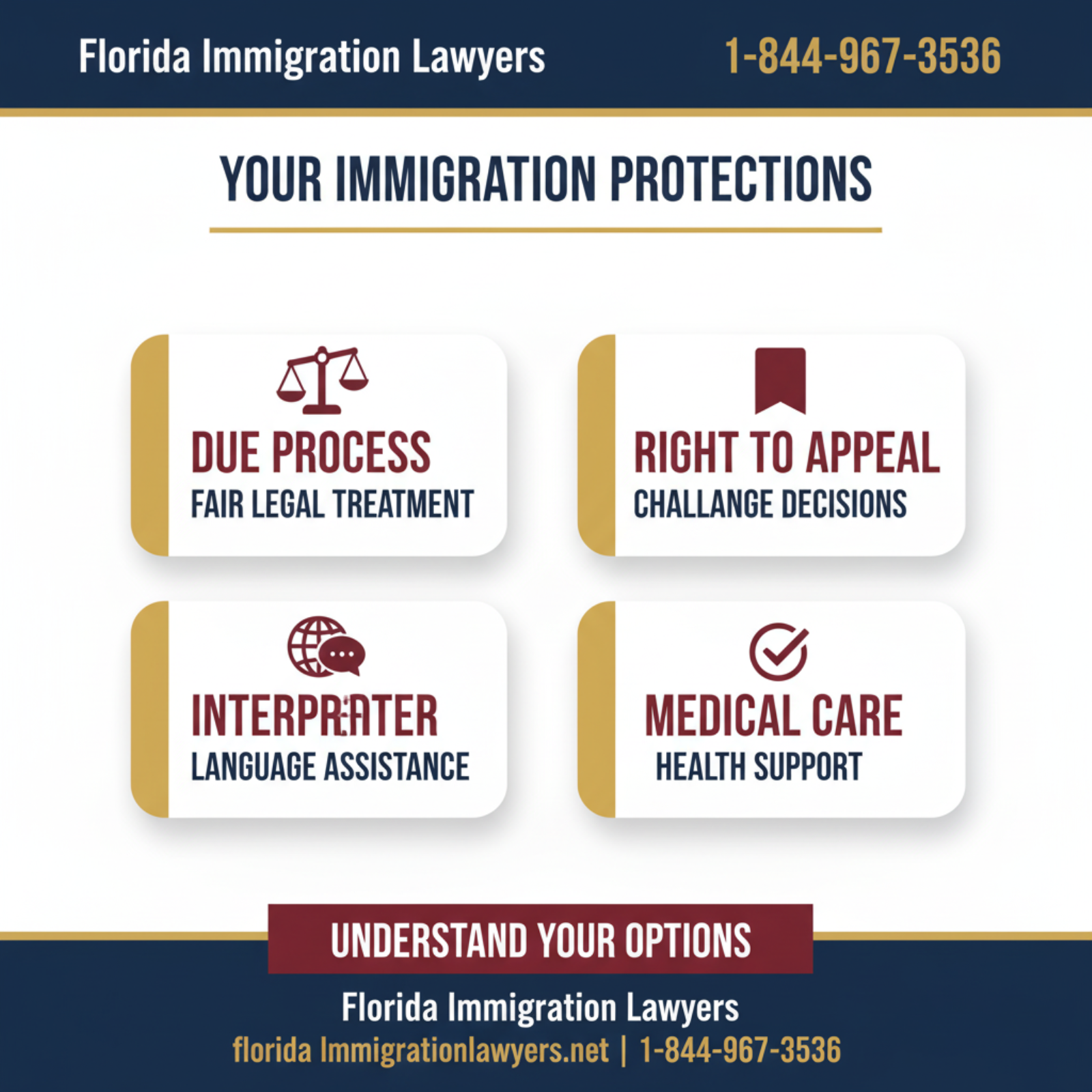
When interacting with ICE or any law enforcement, you have several key constitutional rights. These include the Fifth Amendment right to remain silent and the Fourth Amendment protection against unreasonable searches and seizures. Exercising these rights properly is vital for your protection.
You have the right to speak with an attorney before answering any questions. You also have the right to refuse to sign anything you do not understand or that you do not agree with. Remember, anything you say can be used against you in immigration proceedings.
Rights in Your Home
Your home is protected by the Fourth Amendment, which generally requires a warrant for law enforcement to enter. If ICE agents come to your door, they must have a warrant signed by a judge to enter your home without your permission. A warrant for arrest (Form I-200) or an administrative warrant (Form I-205) issued by ICE itself is generally not sufficient for entry into your home without consent or other exigent circumstances.
Do not open your door unless they present a warrant signed by a judge. Ask them to slide the warrant under the door or hold it up to a window for you to inspect. If they do not have a judicial warrant, you can keep your door closed and do not have to let them in.
Rights in Public and if Detained
In public, ICE agents do not need a warrant to question you, but you are not obligated to answer their questions. You have the right to remain silent. If you are stopped, you can ask, "Am I free to leave?" If the answer is yes, you may calmly walk away. If you are not free to leave, you are considered detained.
If detained, clearly state, "I wish to remain silent, and I want to speak with an attorney." Do not resist physically, but do not consent to any searches. You have the right to refuse to answer questions about your immigration status or country of origin.
Your Legal Protections During ICE Encounters: A Step-by-Step Guide
Knowing your immigrant legal protections is one thing, but knowing how to apply them in a stressful situation is another. Here is a practical guide for how to act during an encounter with immigration officials in Florida:
-
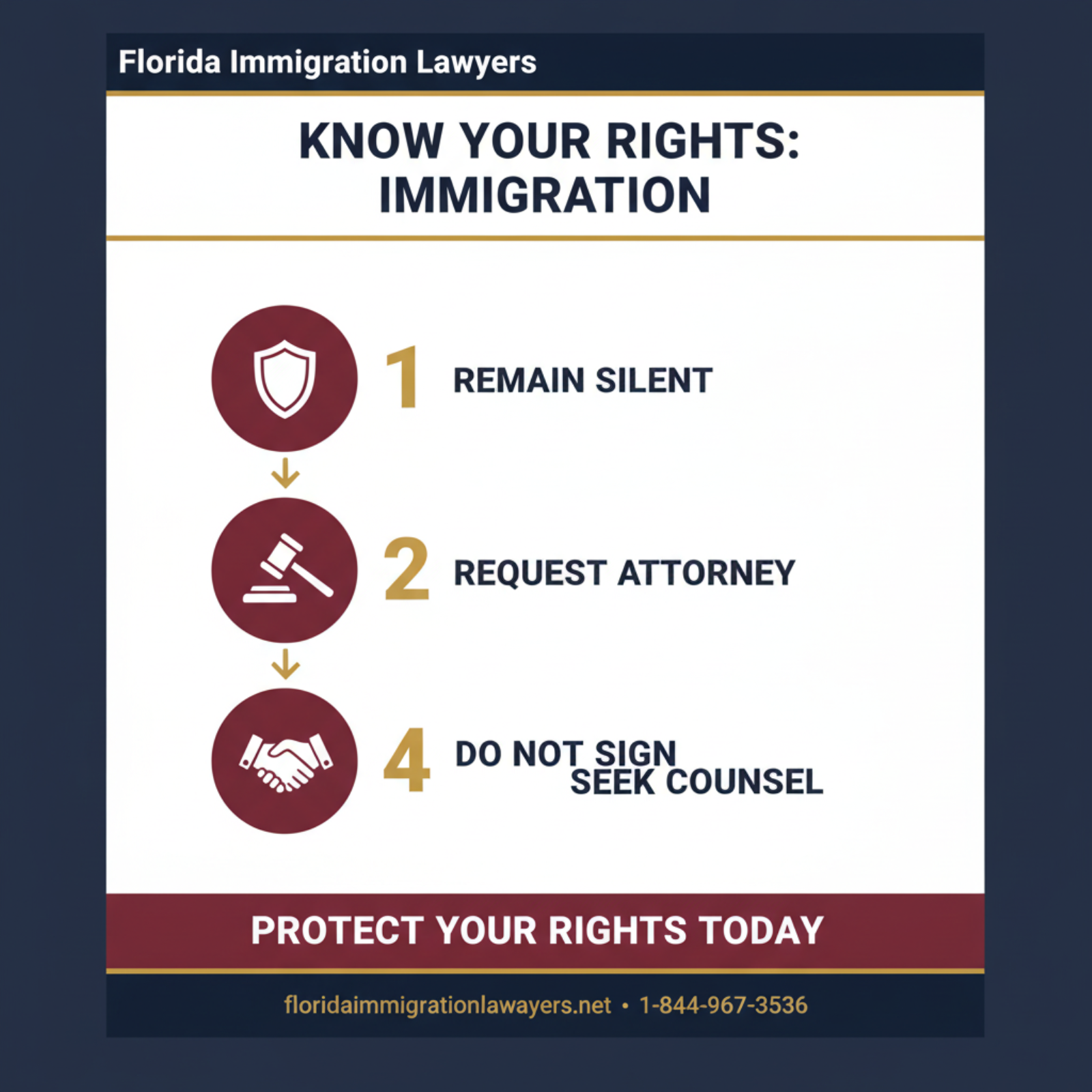
Remain Calm and Silent: If approached by ICE or any law enforcement, try to remain calm. You have the right to remain silent. You do not have to answer questions about your citizenship, immigration status, or how you entered the country. State clearly, "I want to remain silent."
-
Do Not Open Your Door Without a Judicial Warrant: If agents are at your home, ask them to slide any warrant under the door or hold it up to a window. A judicial warrant is signed by a judge and authorizes entry. An administrative warrant (Form I-200 or I-205) from ICE is generally not enough for them to enter your home without your consent. If they don't have a judicial warrant, do not open the door.
-
Do Not Consent to Searches: ICE agents may ask to search your belongings, car, or home. You have the right to refuse a search. Say clearly, "I do not consent to a search." They may still search if they have a warrant or probable cause, but do not make it easier for them by consenting.
-
Ask for an Attorney: If you are detained or arrested, immediately state, "I want to speak with an attorney." Do not sign anything without consulting your lawyer first. Under 8 U.S.C. § 1229a(b)(4), you have the right to legal representation at your own expense in removal proceedings.
-
Memorize Key Information and Carry a 'Know Your Rights' Card: Keep your attorney's phone number memorized or written down somewhere accessible. Carry a "Know Your Rights" card that asserts your rights in English and Spanish. These cards can be found through various immigrant rights organizations.
-
Document the Encounter: If possible and safe to do so, write down or record details of the encounter. Note the agents' badge numbers, vehicle descriptions, time, date, and location. This information can be crucial if you need to challenge an arrest or action taken by ICE.
Essential Documents and Information to Have Ready
Preparation is key to protecting your immigration rights. Having important documents organized and accessible can save valuable time and reduce stress during an emergency. This is particularly important for residents in areas like Kissimmee, Florida, where immigrant communities are prevalent.
Document Checklist for Immigrants in Florida
Consider preparing a "go-bag" or a secure folder with copies of these vital documents:
- Copies of your passport, birth certificate, and any immigration documents (visa, Green Card, EAD card, DACA approval).
- Contact information for your immigration attorney, family members, and trusted friends.
- Medical information for yourself and your family, including prescriptions and health insurance details.
- Children's school records and birth certificates, especially if they are U.S. citizens.
- Proof of residence in Florida (utility bills, lease agreements).
- Marriage certificates or other family relationship documents.
- A "Know Your Rights" card.
It's important to keep original documents in a safe, secure location that is not easily accessible to others, such as a safe deposit box or with a trusted family member or attorney. Only carry copies of documents with you, as originals can be lost or confiscated.
Navigating Immigration Law in Florida: Timelines and Expectations
The landscape of Florida immigration law update can be dynamic, with state and federal policies often intertwined. Understanding general timelines and what to expect in various immigration processes is important for planning your future. These processes, whether for family petitions, asylum claims, or deportation defense, can be lengthy.
Florida-Specific Considerations
Florida's unique position as a gateway state means it has a significant immigrant population and, consequently, a robust immigration court system. USCIS field offices in cities like Orlando and Miami serve the needs of Florida residents. Processing times can vary greatly depending on the type of application, the specific USCIS service center, and the current caseload. For example, some family-based petitions can take years, while naturalization applications may take several months.
Staying informed about any Florida immigration law update is crucial, as state laws can impact daily life, even if federal law governs immigration status. This includes laws related to employment, healthcare, and identification. Always consult with an immigration attorney regarding specific changes and their potential impact on your situation.
Understanding the Costs of Legal Assistance for Immigration Cases
The cost associated with immigration cases can be a significant concern for many individuals and families. These costs typically include government filing fees and attorney fees. While government fees are standardized, attorney fees can vary based on the complexity of the case, the attorney's experience, and the services required.
Cost Factors and Fee Breakdown
Government filing fees are set by agencies like USCIS (U.S. Citizenship and Immigration Services) and EOIR (Executive Office for Immigration Review). These fees are subject to change and depend on the specific form or petition being filed. For instance, an application for adjustment of status or naturalization will have different fees. Always check the official USCIS website for the most current fee schedule.
Attorney fees cover the legal services provided by your immigration lawyer. This can include consultations, preparing and filing applications, representing you in interviews or court hearings, and ongoing communication. Many firms, including Florida Immigration Lawyers, offer free initial consultations to discuss your case and provide an estimate of legal fees. We aim to provide transparent and fair pricing, often offering flexible payment plans to ease the financial burden.
Do not navigate this process alone. The complexities of immigration law require expert guidance. Contact Florida Immigration Lawyers today to ensure your immigration rights are protected. We are here to provide the support and representation you need.
Common Mistakes Immigrants Make in Florida to Avoid
Protecting your immigrant legal protections means being proactive and avoiding common pitfalls that can jeopardize your case or status. Here are significant mistakes to be aware of:
-
Lying or Providing False Information: Any misrepresentation to a government official can have severe consequences, including permanent bars from immigration benefits or even criminal charges. Always be truthful, even if it means asserting your right to remain silent.
-
Signing Documents Without Understanding Them: Never sign any document presented by an immigration official if you do not fully understand its contents or implications. You have the right to have documents translated and to consult with an attorney first.
-
Not Carrying a "Know Your Rights" Card: While not a legal requirement, having a card outlining your basic rights in English and Spanish can be invaluable. It serves as a quick reminder for you and communicates your intent to invoke your rights to officials.
-
Failing to Update Contact Information with USCIS: If you move, you must notify USCIS of your new address within 10 days using Form AR-11. Failure to do so can result in missed notices, denials, or even deportation orders if you miss a court hearing.
-
Traveling Internationally Without Legal Advice: For many non-citizens, especially those with pending applications, DACA, or certain statuses, international travel can trigger inadmissibility issues upon return. Always consult an attorney before planning foreign travel.
-
Ignoring Court Dates or USCIS Appointments: Missing a court hearing or USCIS appointment can lead to a removal order in absentia or the denial of your application without further notice. Always attend all scheduled appearances or seek legal counsel to reschedule.
-
Carrying Original Immigration Documents: While it's good to have copies, carrying original Green Cards, EADs, or passports can lead to their loss or confiscation. Keep originals in a secure place and carry only copies.
-
Discussing Your Case with Non-Attorneys: Be cautious about who you trust with your personal and immigration information. Only licensed attorneys or accredited representatives can provide legal advice. "Notarios" or immigration consultants are not authorized to give legal advice and can cause significant harm.
-
Not Seeking Legal Advice for Criminal Charges: Any arrest or criminal charge, even a minor one, can have severe immigration consequences, potentially leading to deportation. Always consult an immigration attorney immediately if you face criminal charges.
-
Failing to Understand Recent Florida Immigration Law Updates: Florida has seen significant legislative changes concerning immigration. Understanding the implications of these changes, such as SB 1718, is vital for your daily life and legal standing. Consult an attorney for clarity.
When to Seek Expert Legal Guidance from Florida Immigration Lawyers
While this guide provides general information, every immigration case is unique. There are specific scenarios where professional legal assistance is not just recommended, but often critical. Florida Immigration Lawyers are here to offer dedicated support across the state, including Kissimmee and other communities.
You should immediately contact an attorney if you or a family member:
- Are detained by ICE or any law enforcement.
- Receive a Notice to Appear in immigration court.
- Are facing deportation proceedings.
- Have been denied an immigration benefit or petition.
- Are applying for asylum or refugee status.
- Have a complex family immigration matter.
- Are seeking citizenship or naturalization.
- Have questions about business immigration or employer compliance.
- Need to understand the implications of a Florida immigration law update on your status.
Our experienced attorneys at Florida Immigration Lawyers specialize in helping individuals and families navigate the intricacies of U.S. immigration law. We can assist you with understanding your immigration rights, preparing for interviews, filing necessary documents, and representing you in court. Protecting your future is our priority.
Frequently Asked Questions About Immigration Rights in Florida
Can Florida police ask for immigration status?
Yes, under certain circumstances. While federal law enforcement like ICE primarily handles immigration enforcement, Florida state law (such as SB 1718) allows state and local law enforcement to ask about immigration status during a lawful stop, arrest, or detention. However, you still have the right to remain silent and should consult an attorney if questioned.
What are my rights if ICE comes to my home?
If ICE comes to your home, you are generally not required to open your door unless they present a warrant signed by a judge. Ask them to show the warrant through a window or slide it under the door. If they do not have a judicial warrant, you can keep your door closed and do not have to let them in without your consent.
Do I have to open my door to ICE?
No, you do not have to open your door to ICE agents unless they have a judicial warrant that specifically authorizes entry into your home. An administrative warrant (Form I-200 or I-205) issued by ICE itself is generally not sufficient for entry without your permission.
Can I be deported if I have a green card?
Yes, even lawful permanent residents (Green Card holders) can be deported if they commit certain crimes, violate immigration laws, or engage in other specified conduct. It is crucial to seek legal counsel immediately if you are a Green Card holder facing criminal charges or deportation proceedings.
What documents should I carry as an immigrant in Florida?
While you should carry copies, not originals, of important immigration documents, you are generally required to carry proof of your immigration status (e.g., Green Card, visa) if you are 18 years or older. However, you have the right to remain silent and should not offer information about your status unless required by law. Always carry a "Know Your Rights" card and your attorney's contact information.
About Florida Immigration Lawyers
Florida Immigration Lawyers is a leading law firm dedicated to providing comprehensive and compassionate legal services to immigrants across Florida. Our team of experienced attorneys understands the unique challenges faced by individuals and families navigating the complex U.S. immigration system. We are committed to upholding the immigrant legal protections of our clients.
We offer a wide range of services, including assistance with family-based visas, employment immigration, deportation defense, asylum claims, citizenship and naturalization, and general immigration matters. Our firm is known for its client-focused approach, ensuring that every individual receives personalized attention and strategic legal advice tailored to their specific situation.
Why choose Florida Immigration Lawyers? We are available 24/7 to address your urgent legal needs and offer free consultations to help you understand your options without financial obligation. Serving all of Florida, including Kissimmee, Orlando, Miami, and Tampa, our bilingual team is ready to assist you. Visit our website at https://www.floridaimmigrationlawyers.net or call us at 1-844-967-3536 to schedule your free consultation today.
Sources and References
- U.S. Citizenship and Immigration Services (USCIS)
- Executive Office for Immigration Review (EOIR)
- U.S. Immigration and Customs Enforcement (ICE)
- 8 U.S.C. Chapter 12 - Immigration and Nationality Act (INA)
- 8 CFR (Code of Federal Regulations related to immigration)
- INA Section 287 (8 U.S.C. § 1357) - Powers of immigration officers
- U.S. Constitution, Fourth and Fifth Amendments
- Florida Senate Bill 1718 (2023)
This article provides general legal information and is not intended as legal advice. Every case is unique, and outcomes depend on specific facts and circumstances. Contact an attorney for advice about your particular situation.
Protecting your immigration rights is paramount. Do not face the complexities of immigration law alone. Contact Florida Immigration Lawyers today for a free, confidential consultation. Call us at 1-844-967-3536. Se Habla Español - Estamos aquí para ayudarle.
Frequently Asked Questions
Florida Immigration Lawyers
Legal Team
Our experienced attorneys at Florida Immigration Lawyers have been serving clients across Florida for over 20 years. We specialize in immigration, personal injury, criminal defense, workers compensation, and family law.