DACA News 2026 Florida: Updates for Dreamers and Eligibility
For Dreamers in Florida, understanding the latest DACA news 2026 is vital. While new DACA applications are paused, renewals are still being processed. This guide provides essential updates on eligibility, the step-by-step renewal process, and common mistakes to avoid. Given Florida's unique enforcement climate, securing expert legal counsel is more important than ever. Florida Immigration Lawyers offers comprehensive support for DACA recipients in Hialeah and throughout the state. Learn how to protect your status and navigate these complex times with confidence. Contact us for a free consultation.
DACA, or Deferred Action for Childhood Arrivals, continues to face legal challenges in 2026, impacting Dreamers across Florida, including those in Hialeah. While new applications remain halted, renewals are still being processed. It is critical for DACA recipients to stay informed about policy changes and seek legal guidance to maintain their status and understand their rights.
- New DACA applications are generally not being accepted in 2026.
- Current DACA recipients should prioritize timely renewals to maintain protection.
- Florida's specific enforcement climate makes legal counsel essential.
- Eligibility for renewal requires continuous presence and no disqualifying criminal history.
- Consult a lawyer for personalized advice on your DACA status.
DACA News 2026 Florida: Critical Updates for Dreamers
Navigating the complexities of immigration law can be incredibly daunting, especially when policies like Deferred Action for Childhood Arrivals (DACA) are constantly evolving. For Dreamers in Florida, including our vibrant communities in Hialeah and beyond, understanding the latest DACA news 2026 is not just important-it's essential for your future.
You may be feeling uncertain about your status, wondering what the future holds for you and your family. We understand these concerns. This comprehensive guide will provide you with vital updates, clarify eligibility requirements, detail the renewal process, and highlight common pitfalls to avoid. Our goal is to empower you with the knowledge you need to protect your DACA status in Florida.
At Florida Immigration Lawyers, we are dedicated to supporting Dreamers throughout the state. We believe that informed individuals make better decisions. If you have questions about your DACA status or need assistance with your renewal, do not hesitate. Call Florida Immigration Lawyers at 1-844-967-3536 for a free consultation and let our experienced team help you navigate these challenging times.
Understanding DACA in 2026: A Florida Perspective
The Deferred Action for Childhood Arrivals (DACA) program, established in 2012, has provided critical protections to hundreds of thousands of young people who were brought to the United States as children. In 2026, the program continues to operate under significant legal scrutiny and ongoing challenges. For DACA recipients in Florida, it's crucial to understand the current landscape.
While federal courts have largely halted the processing of new DACA applications, renewals for current recipients are generally still being accepted and processed by U.S. Citizenship and Immigration Services (USCIS). This means if you already have DACA, it is paramount to renew your status diligently and on time. Any lapse could put your protections at risk.
The Evolving Legal Landscape for Dreamers
DACA's legal standing has been a rollercoaster, marked by court battles and administrative changes. In 2026, the program continues to face judicial challenges, primarily concerning its legality. These challenges create an environment of uncertainty, making it more important than ever for you to stay informed and proactive about your status.
The U.S. Fifth Circuit Court of Appeals has previously ruled DACA unlawful, but its order allowed current recipients to continue renewing their status. This ongoing legal limbo means that while renewals proceed, the long-term future of DACA remains in question. This uncertainty underscores the importance of consulting with an experienced immigration attorney who can provide up-to-date advice.
DACA's Impact on Florida Communities
Florida is home to a significant population of DACA recipients, many of whom contribute substantially to our economy and communities, including those in Hialeah, Orlando, and Miami. These individuals are your neighbors, friends, and family members. The state's unique immigration enforcement environment, influenced by policies like 287(g) agreements and operations such as 'Tidal Wave,' adds another layer of complexity for Dreamers.
Florida law enforcement agencies partnering with ICE through 287(g) agreements can have a direct impact on individuals, even those with DACA. These partnerships allow local officers to perform certain immigration enforcement functions. Understanding your rights and having legal representation is vital in such an environment, particularly if you find yourself in an encounter with law enforcement. The recent 'Operation Tidal Wave' in Florida, leading to numerous immigration arrests, highlights the heightened enforcement climate.
Who is Eligible for DACA Renewal in Florida? (2026 Updates)
While new DACA applications are generally not being accepted in 2026, existing DACA recipients in Florida can still renew their status if they meet specific criteria. Understanding these requirements is essential to ensure your renewal application is successful.
To be eligible for DACA renewal, you must generally meet the original DACA guidelines and have not departed the United States without advance parole since August 15, 2012. You must also maintain continuous residence in the United States since your last DACA approval. Furthermore, you must not have been convicted of a felony, a significant misdemeanor, or three or more other misdemeanors, and must not pose a threat to national security or public safety.
Meeting the Continuous Presence Requirement
One of the critical requirements for DACA renewal is demonstrating continuous residence in the United States. This means you must prove that you have resided in the U.S. since your last DACA approval. USCIS will scrutinize evidence such as utility bills, employment records, school transcripts, and other documents to establish your ongoing presence.
Any unauthorized departure from the United States after August 15, 2012, can render you ineligible for renewal, even if you previously had DACA. It is crucial to review your travel history carefully and consult with an attorney if you have any questions about your continuous presence.
Understanding Disqualifying Factors
Certain criminal offenses can disqualify you from DACA renewal. A felony conviction, a significant misdemeanor, or three or more non-significant misdemeanors can lead to denial. A significant misdemeanor includes offenses such as domestic violence, sexual abuse, burglary, DUI, or drug distribution, among others, typically those for which the maximum term of imprisonment is one year or less, but greater than five days.
Even minor infractions or arrests that did not lead to convictions can raise red flags with USCIS. It is always advisable to disclose all interactions with law enforcement to your attorney, regardless of how minor they may seem. Transparency helps your legal team prepare the strongest possible case for your DACA renewal.
Step-by-Step DACA Renewal Process for Florida Residents
Renewing your DACA status is a multi-step process that requires careful attention to detail and timely submission. Here is a general guide for DACA recipients in Florida:
-
Review Your Eligibility: Before beginning the renewal process, ensure you still meet all DACA eligibility criteria. This includes continuous residence, no disqualifying criminal history, and not having traveled outside the U.S. without advance parole since August 15, 2012.
-
Gather Required Documents: Collect all necessary documentation, including proof of identity, previous DACA approval notices, and evidence of continuous residence. We will detail a comprehensive document checklist in the next section.
-
Complete Forms I-821D, I-765, and I-765 Worksheet: These are the primary forms required for DACA renewal. Form I-821D is the Request for Deferred Action, Form I-765 is the Application for Employment Authorization, and the I-765 Worksheet provides additional information for your employment authorization application. Ensure all fields are accurately and completely filled out.
-
Pay the Filing Fees: Submit the required filing fees for Form I-765 and the biometrics services fee. USCIS fees are subject to change, so always check the latest fee schedule on the official USCIS website. Fee waivers are generally not available for DACA renewals.
-
Mail Your Application: Send your complete application package to the correct USCIS lockbox facility. The mailing address depends on your state of residence. For Florida residents, you typically send your application to a specific P.O. Box or street address, so verify this on the USCIS website.
-
Attend Biometrics Appointment: After USCIS accepts your application, you will receive a notice for a biometrics appointment at an Application Support Center (ASC). This appointment is mandatory for fingerprinting, photographs, and signature collection. Be sure to attend this appointment promptly.
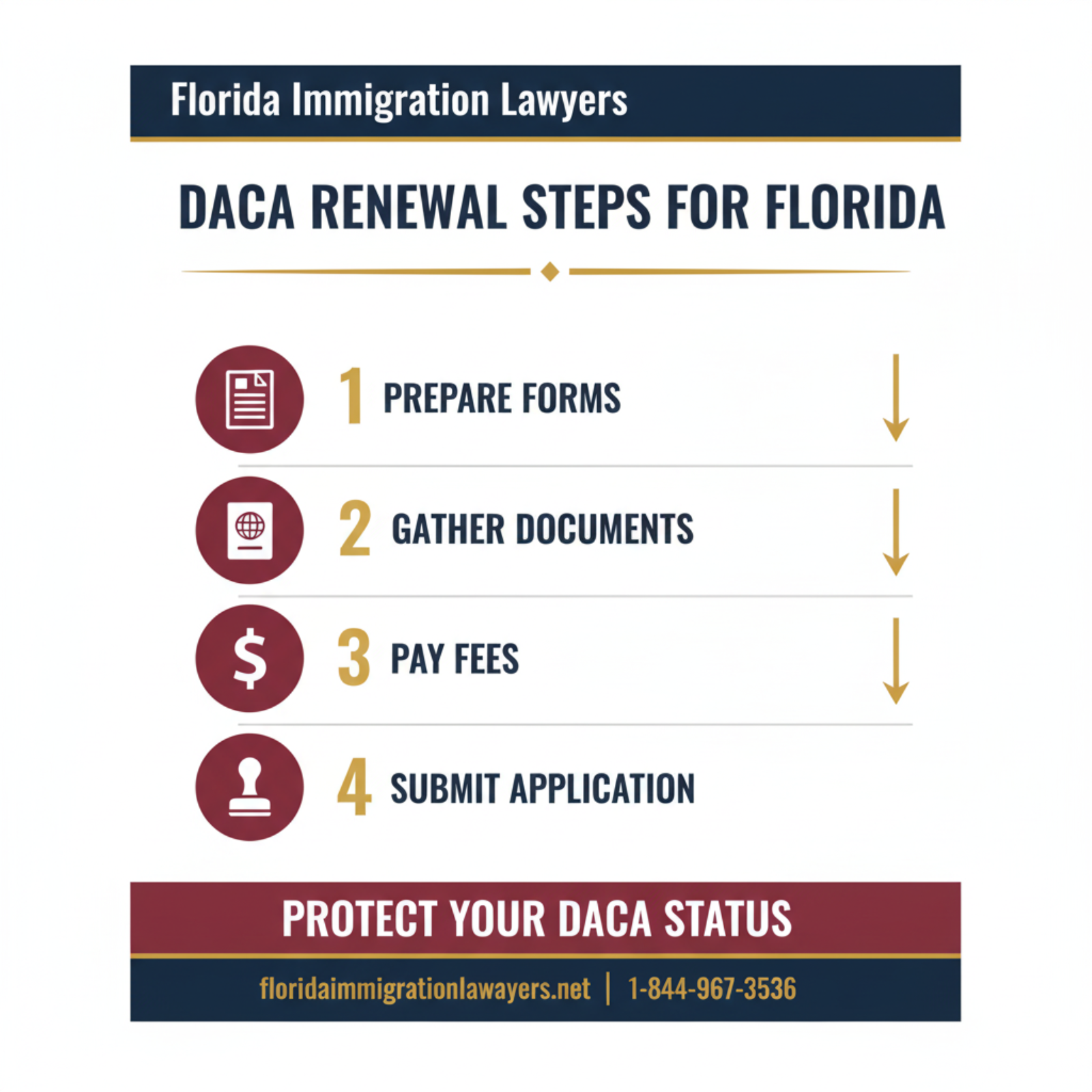
Step-by-Step Process Guide -
Await a Decision: USCIS will review your application and biometrics. You will receive a notice of approval or a Request for Evidence (RFE) if they need more information. If approved, you will receive a new Employment Authorization Document (EAD).
Gathering Required Forms and Information
Accuracy is paramount when completing your DACA renewal forms. Any errors or omissions can lead to delays or even denial. You will need to provide detailed personal information, address history, employment history, and education history. It is advisable to keep copies of all previously submitted applications for reference.
Beyond the forms themselves, ensure you have all supporting documentation ready. This includes identification, proof of entry, and evidence of continuous residence. A well-organized application package can significantly streamline the processing time.
Navigating the Biometrics Appointment
The biometrics appointment is a critical step in your DACA renewal process. You will receive an appointment notice specifying the date, time, and location of your local Application Support Center (ASC). Failure to attend this appointment without rescheduling can result in your application being considered abandoned.
At the appointment, USCIS will collect your fingerprints, photograph, and signature. Bring your appointment notice and a valid form of identification. The process is usually quick and straightforward, but it is an essential part of verifying your identity and conducting necessary background checks.
Essential Documents for Your DACA Application or Renewal
Having a comprehensive set of documents is crucial for a successful DACA renewal. Ensure you have all of these prepared before submitting your application:
- Copy of your most recent DACA approval notice (Form I-797C).
- Copy of your most recent Employment Authorization Document (EAD card, Form I-766).
- Copy of your birth certificate with translation (if not in English).
- Copy of your passport or other national identity document from your country of origin.
- Copy of your I-94 Arrival/Departure Record (if available).
- Proof of continuous residence in the U.S. since your last DACA approval (e.g., utility bills, bank statements, rental agreements, school records, employment records).
- School records (transcripts, diplomas, GED certificates).
- Medical records.
- Employment records (pay stubs, W-2 forms, letters from employers).
- Any previous travel documents, such as advance parole documents.
- Records of any encounters with law enforcement, including arrest records, court dispositions, and police reports, even if charges were dismissed or expunged.
- Marriage certificates or divorce decrees (if applicable).
- Any other documents requested by USCIS or relevant to your eligibility.
DACA Processing Timelines and Expectations in 2026
Understanding the typical processing times for DACA renewals can help manage your expectations and plan accordingly. While USCIS aims for efficiency, actual processing times can vary significantly based on various factors, including the volume of applications, staffing levels, and specific case complexities.
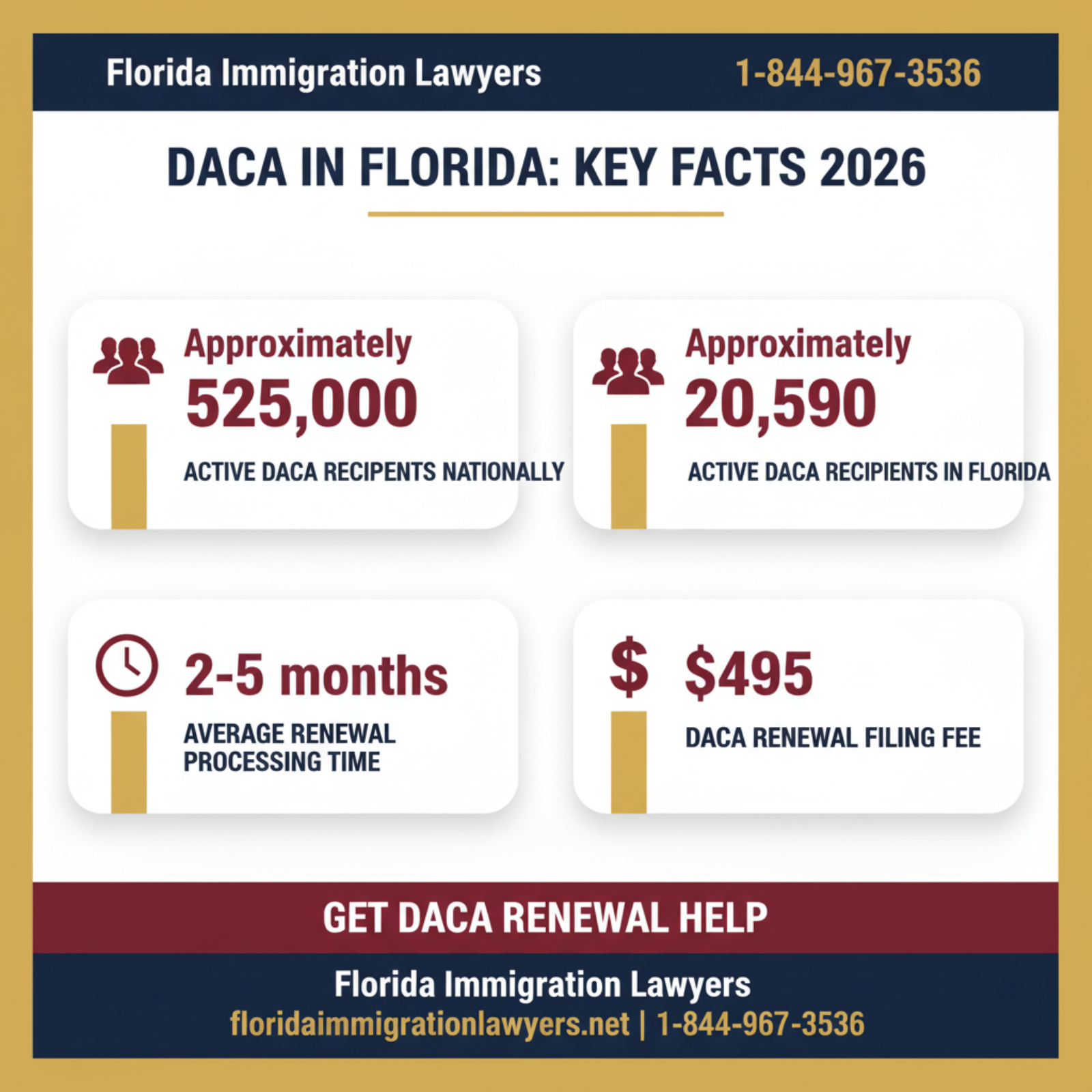
Generally, DACA renewal applications can take anywhere from 3 to 6 months to process. However, some cases may be processed faster, while others could take longer. It is highly recommended to file your renewal application approximately 120 to 150 days (4 to 5 months) before your current DACA and EAD expire. This proactive approach helps prevent a lapse in your employment authorization and protection from deportation.
You can check the current processing times for Form I-821D and Form I-765 on the USCIS website. Keep in mind that these are estimates and not guarantees. If your application takes significantly longer than the posted times, you may be able to submit an inquiry with USCIS or seek assistance from an attorney. Delays could be due to Requests for Evidence (RFEs) or issues with background checks.
Cost Factors and Fees Associated with DACA
There are several costs associated with filing a DACA renewal application. These fees are set by USCIS and are subject to change, so it is always important to verify the most current amounts on the official USCIS website before submitting your application. The primary fees include the application fee for Form I-765 and the biometrics services fee.
As of early 2026, the combined filing fee for DACA renewal typically covers both the Employment Authorization Document (EAD) application and the biometrics services. USCIS generally does not offer fee waivers for DACA applications. Therefore, you must be prepared to pay the full amount at the time of submission. Personal checks, money orders, or cashier's checks are usually accepted, made payable to the "U.S. Department of Homeland Security."
Beyond the government filing fees, you may also incur legal fees if you choose to hire an immigration attorney to assist with your DACA renewal. While these are additional costs, investing in legal counsel can provide invaluable peace of mind and significantly increase the likelihood of a successful and timely renewal. Attorneys can help ensure your application is complete, accurate, and submitted correctly, avoiding common mistakes that lead to delays or denials.
Do not navigate this process alone. Contact Florida Immigration Lawyers today. We offer experienced guidance for DACA recipients in Hialeah and throughout Florida, ensuring your application is handled with the utmost care and precision.
Common Mistakes to Avoid During Your DACA Process
Renewing your DACA status can be complex, and even minor errors can lead to significant delays or denial. Avoid these common mistakes to protect your status:
-
Failing to Renew on Time: This is perhaps the most critical mistake. USCIS recommends filing 120 to 150 days before expiration. A late renewal can result in a lapse of your work authorization and protection from deportation, potentially requiring you to file as an initial applicant, which is currently not permitted.
-
Incomplete or Inaccurate Forms: Missing information or providing incorrect details on Forms I-821D, I-765, or the I-765 Worksheet can lead to Requests for Evidence (RFEs) or outright denial. Double-check every field for accuracy.
-
Not Disclosing All Criminal History: Even minor arrests, traffic citations, or dismissed charges must be disclosed. Failing to do so can be considered misrepresentation and lead to denial or even accusations of immigration fraud. Transparency is key.
-
Traveling Without Advance Parole: If you travel outside the U.S. without an approved Form I-131 (Application for Travel Document, specifically for advance parole), you may lose your DACA eligibility and be unable to re-enter the country. This is a severe consequence.
-
Ignoring Requests for Evidence (RFEs): If USCIS sends an RFE, it means they need more information or clarification. Failing to respond fully and on time will almost certainly lead to a denial of your application.
-
Not Keeping Copies of Everything: Always keep a copy of your entire application package, including all forms, supporting documents, and proof of mailing. This record is invaluable if questions arise later.
-
Assuming Eligibility Without Verification: Do not assume you are still eligible for DACA renewal, especially if your circumstances have changed (e.g., new criminal record, extended travel). Always verify your eligibility against current guidelines.
-
Not Addressing Florida-Specific Enforcement: Given Florida's active immigration enforcement environment, including 287(g) agreements and operations like 'Tidal Wave,' it's a mistake to underestimate the need for legal counsel. An attorney can advise on rights during encounters with law enforcement.
-
Using Outdated Forms or Fee Amounts: USCIS forms and fees can change. Always download the latest versions directly from the USCIS website and verify the correct fee amount to avoid rejection of your application.
-
Submitting Incorrect Payment: Ensure your check or money order is for the exact amount and made payable to the "U.S. Department of Homeland Security." Incorrect payment will cause your application to be rejected.
When to Call a Florida Immigration Lawyer for DACA Assistance
While some DACA renewals may seem straightforward, the current legal and political climate surrounding DACA makes professional legal guidance more critical than ever. There are specific scenarios where contacting an experienced immigration lawyer, like those at Florida Immigration Lawyers, is highly recommended.
You should consider calling an attorney if you are filing for DACA renewal for the first time or if you have any changes to your personal information since your last application. If you have any criminal history, even minor infractions or arrests that were dismissed, legal counsel is essential. An attorney can assess the impact of these records on your eligibility and help you gather necessary documentation.
The Value of Experienced Legal Counsel
An immigration attorney can provide invaluable assistance throughout your DACA renewal process. They stay updated on the latest DACA news 2026 and legal challenges, ensuring your application complies with all current requirements. This expertise is particularly important in Florida, where local enforcement policies can complicate matters for Dreamers.
Lawyers can help you navigate complex situations, such as responding to a Request for Evidence (RFE) from USCIS or if you receive a Notice to Appear (NTA) in immigration court. They can also advise on potential pathways to citizenship or other forms of relief that may become available in the future, offering a broader perspective on your immigration journey.
How Florida Immigration Lawyers Can Help You
At Florida Immigration Lawyers, we offer comprehensive legal services for DACA recipients across the state, including Hialeah. Our team can assist you with preparing and filing your DACA renewal application, ensuring all forms are accurately completed and all necessary supporting documents are included. We strive to make the process as smooth and stress-free as possible for you.
We can also represent you if you encounter issues during your DACA process, such as an RFE or an interview request. Our firm is well-versed in deportation defense and can provide critical guidance if your DACA status is challenged. Your future is important to us, and we are committed to protecting your rights and helping you maintain your deferred action status.
Frequently Asked Questions About DACA in Florida
Many DACA recipients and their families in Florida have pressing questions about the program's status and implications. Here are answers to some of the most common inquiries:
Is DACA allowed in Florida?
Yes, DACA is allowed in Florida. The DACA program is a federal policy, and its protections extend to eligible individuals residing in Florida, just as they do in other states. However, the legal challenges to DACA mean that new applications are generally not being processed, while renewals are still permitted. Florida's specific state laws and enforcement environment can add layers of complexity, making legal guidance crucial for Dreamers in the state.
Will DACA be approved again?
As of 2026, DACA renewals are still being approved for eligible individuals. However, the approval of *new* DACA applications remains blocked by court orders. The long-term future of DACA, including the possibility of new applications being approved again, largely depends on ongoing legal battles and potential legislative action by Congress. There is no guarantee that DACA will be fully reinstated for new applicants without legislative reform.
How many DACA recipients live in Florida?
Florida is home to a significant population of DACA recipients. While exact numbers fluctuate, estimates typically place the number of DACA recipients in Florida in the tens of thousands. These individuals contribute significantly to Florida's economy and culture. Communities like Hialeah have a notable presence of DACA recipients and their families.
Can DACA get a license in Florida?
Yes, DACA recipients in Florida are generally eligible to apply for and obtain a driver's license or state identification card. Your Employment Authorization Document (EAD) and Social Security card, along with proof of identity and residency, are typically sufficient documentation for the Florida Department of Highway Safety and Motor Vehicles (FLHSMV) to process your application. Always check the FLHSMV website for the most current requirements.
About Florida Immigration Lawyers
Florida Immigration Lawyers is a leading immigration law firm dedicated to serving individuals and families across the entire state of Florida. With years of specialized experience, our team of compassionate and knowledgeable attorneys provides expert legal guidance on a wide range of immigration matters, from DACA renewals to complex family immigration cases and business immigration solutions. We understand the profound impact immigration issues have on your life and are committed to achieving the best possible outcomes for our clients.
Our firm prides itself on offering personalized attention and strategic advocacy. Whether you are seeking to renew your DACA, pursue asylum, defend against deportation, or navigate the path to citizenship, we are here to help. We believe in clear communication, transparent processes, and unwavering support for every client. Our attorneys are available 24/7 to address your urgent concerns and offer free consultations to discuss your specific situation.
Choose Florida Immigration Lawyers for dedicated representation that understands the unique challenges faced by immigrants in Florida. Visit our attorneys page to learn more about our team and our commitment to justice. Your journey is our priority.
Sources and References
- U.S. Citizenship and Immigration Services (USCIS) - DACA
- Executive Office for Immigration Review (EOIR)
- 8 U.S.C. § 1101 et seq. - Immigration and Nationality Act (INA)
- 8 CFR § 274a.12 - Classes of aliens authorized to work.
- 8 CFR § 236.21 - Deferred action for childhood arrivals.
- U.S. Immigration and Customs Enforcement (ICE) - 287(g) Program
- Florida Department of Highway Safety and Motor Vehicles (FLHSMV)
This article provides general legal information and is not intended as legal advice. Every case is unique, and outcomes depend on specific facts and circumstances. Contact an attorney for advice about your particular situation.
The legal landscape for DACA recipients in Florida is dynamic and complex. Staying informed and seeking professional legal assistance are your best defenses against uncertainty. If you are a DACA recipient in Florida, including Hialeah, and need help with your renewal or have questions about your status, our dedicated team is here for you.
Protect your future. Call Florida Immigration Lawyers today for a free consultation at 1-844-967-3536. Se Habla Español - Estamos aquí para ayudarle.
Frequently Asked Questions
Florida Immigration Lawyers
Legal Team
Our experienced attorneys at Florida Immigration Lawyers have been serving clients across Florida for over 20 years. We specialize in immigration, personal injury, criminal defense, workers compensation, and family law.