Green Card Renewal Florida Process 2026: Your Essential
Renewing your green card in Florida for 2026 involves navigating the USCIS Form I-90 process. This guide provides a comprehensive overview for permanent residents, detailing eligibility, step-by-step instructions, essential documents, and expected processing times. Learn about the costs involved and critical mistakes to avoid to ensure a smooth renewal. Florida Immigration Lawyers offers expert legal assistance for complex cases, ensuring your status as a permanent resident in Florida remains secure. Discover when to seek legal counsel and how our firm can support your immigration journey. Contact us for a free consultation today.

Renewing your green card in Florida typically involves filing Form I-90, Application to Replace Permanent Resident Card, with USCIS. This process ensures your continued legal permanent resident status. Key steps include verifying eligibility, gathering necessary documents, submitting your application, attending a biometrics appointment, and awaiting your new card, which can take several months.
- File Form I-90 with USCIS to renew your Permanent Resident Card.
- Gather essential documents, including your expiring green card and identification.
- Be prepared for a biometrics appointment as part of the application process.
- Processing times vary, so apply well before your current card expires.
- Consult an immigration attorney for complex cases or to ensure accurate filing.
Green Card Renewal Florida Process 2026: Your Essential Guide
Imagine your green card is nearing its expiration date, and you're wondering what steps to take next. For many permanent residents in Florida, including those in vibrant communities like Homestead, this can be a moment of anxiety. Maintaining your legal status is paramount, and understanding the green card renewal process is crucial.
As we look towards 2026, the process for renewing your Permanent Resident Card, also known as a green card, remains a vital part of upholding your immigration status in the United States. This comprehensive guide from Florida Immigration Lawyers will walk you through everything you need to know. We will cover the specific requirements, the application process for Form I-90, and what to expect here in Florida.
Our goal is to demystify the renewal journey, ensuring you feel confident and informed. Whether your card is expiring, lost, or stolen, timely action is key. Don't let uncertainty jeopardize your future in Florida. Call Florida Immigration Lawyers at 1-844-YO-PELEO for a free consultation and let our experienced team assist you.
Understanding Green Card Renewal in Florida for 2026
A green card, or Permanent Resident Card, is proof of your authorization to live and work permanently in the United States. Most green cards are valid for 10 years and must be renewed to maintain your lawful permanent resident status. Failing to renew your card can lead to significant complications, including issues with employment, travel, and even deportation defense matters.
The requirement for a green card renewal is established under federal immigration law. Specifically, 8 U.S.C. § 1304 (INA 304) mandates the issuance of a Permanent Resident Card and its replacement under certain circumstances. This ensures that the U.S. government has up-to-date records of all permanent residents.
For residents across Florida, from Miami to Orlando, and especially in areas like Homestead with a significant immigrant population, understanding this process is essential. Florida is home to over 4.5 million immigrants, many of whom are permanent residents. Our state's diverse communities rely on clear, accessible information regarding immigration procedures.
You generally need to renew your green card if it is valid for 10 years and is expiring or has already expired. You also need to replace it if your card was lost, stolen, mutilated, or destroyed. Additionally, if you never received your card, or if it contains incorrect information, replacement is necessary. Conditional permanent residents, however, typically file Form I-751 to remove conditions, not Form I-90.
This guide focuses on the renewal of the 10-year Permanent Resident Card. It's crucial to distinguish between renewal and removal of conditions, as they involve different forms and processes. For any questions about your specific situation, particularly if you are in Homestead or the surrounding Florida areas, seeking legal guidance is always recommended.
Step-by-Step Guide to the I-90 Green Card Renewal Process
The primary method for green card renewal is by filing Form I-90, Application to Replace Permanent Resident Card. This form is submitted to U.S. Citizenship and Immigration Services (USCIS). Following these steps carefully will help ensure a smooth application process.
-
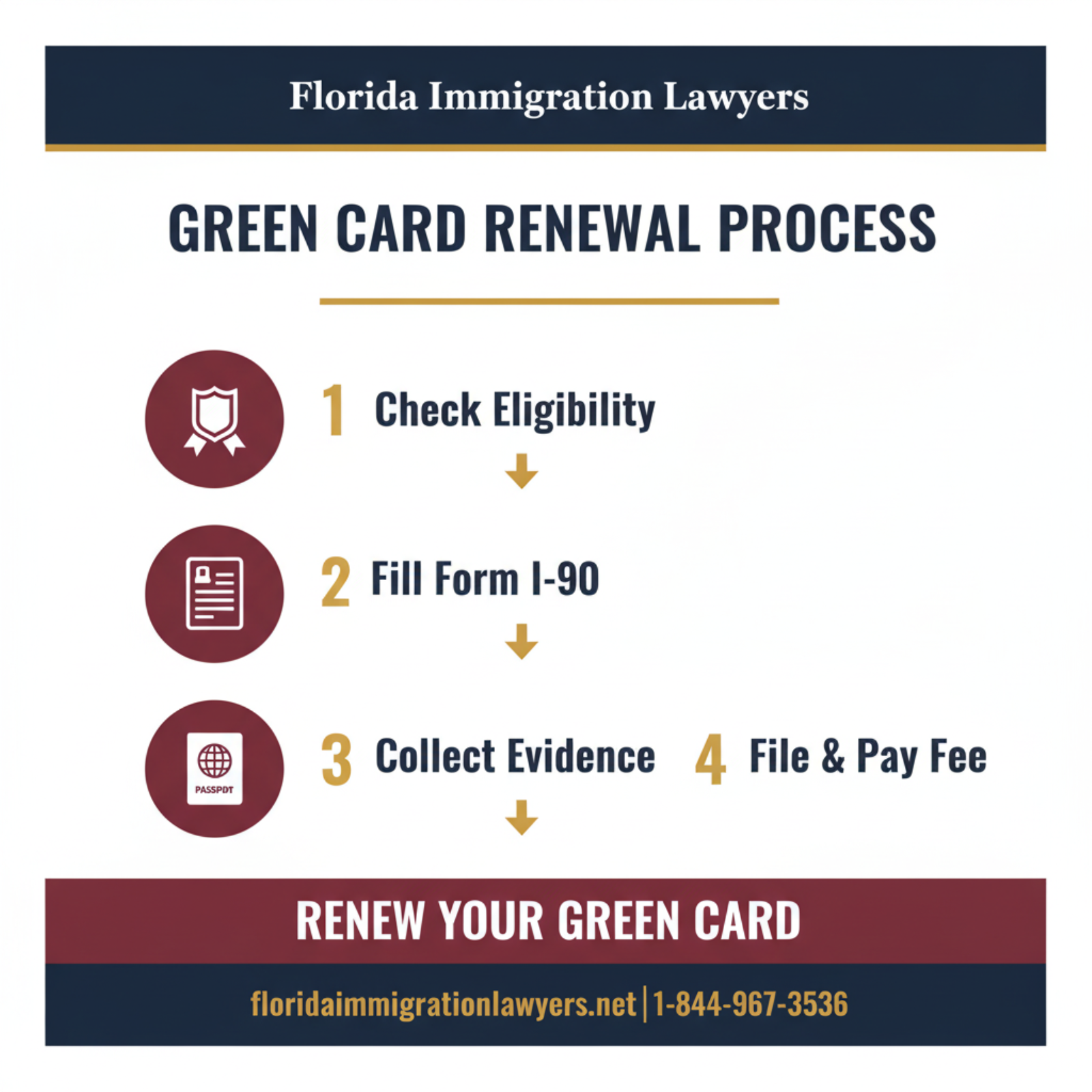
Determine Your Eligibility: Before filing, confirm you need to renew. This typically applies if your 10-year green card is expiring within six months, has already expired, or if your card was lost, stolen, or damaged. Reviewing the instructions for Form I-90 will help you understand all eligibility criteria. Conditional permanent residents should consult an attorney as their process is different.
-
Gather Required Documents: Collect all necessary supporting documentation. This usually includes a copy of your current or expired green card, government-issued identification, and potentially other documents depending on the reason for renewal. For example, if your name has changed, you will need a marriage certificate or court order.
-
Complete Form I-90: You can file Form I-90 online through the USCIS website or by mail. The USCIS website provides the most current version of Form I-90 and its instructions. Fill out the form accurately and completely, ensuring all questions are answered truthfully. Incomplete applications can lead to delays or denials.
-
Pay the Filing Fees: There is a filing fee for Form I-90, which is subject to change. You may also need to pay a biometrics services fee. USCIS provides information on current fees on their website. Fee waivers may be available for eligible applicants, so investigate this option if you qualify. Do not submit cash by mail.
-
Submit Your Application: If filing online, you will submit electronically. If filing by mail, send your completed Form I-90 and all supporting documents to the USCIS Lockbox facility specified in the form instructions. Always keep a copy of your entire application packet for your records. This is critical for tracking and future reference.
-
Receive a Receipt Notice: After USCIS receives your application, they will send you a Form I-797C, Notice of Action, acknowledging receipt. This notice will contain your case number, which you can use to track the status of your green card renewal online. This receipt typically extends the validity of your expiring card for a certain period, allowing you to continue working and traveling.
-
Attend a Biometrics Appointment: USCIS will send you an appointment notice for biometrics collection at an Application Support Center (ASC). This appointment involves having your fingerprints, photograph, and signature taken. It is a mandatory step in the renewal process, and failure to attend can cause significant delays or even lead to denial of your application.
-
Respond to Requests for Evidence (RFE) or Interview Notices: In some cases, USCIS may send an RFE if they need more information or an interview notice if they require further clarification. Respond promptly and thoroughly to any requests. An attorney can help you prepare a comprehensive response. This is less common for simple renewals but can occur.
-
Receive Your New Green Card: Once your application is approved, USCIS will mail your new Permanent Resident Card to the address on file. This card will typically be valid for 10 years. Ensure your mailing address is always up-to-date with USCIS to prevent delivery issues. You can update your address online if needed.
Essential Document Checklist for Your Green Card Renewal Application
Having all your documents prepared and organized is vital for a successful green card renewal. A complete application helps prevent delays and ensures USCIS has all the information they need to process your request. Here is a general list of documents you will likely need:
- A copy of your current Permanent Resident Card (green card), even if it is expired or mutilated.
- A copy of a government-issued identification document, such as a driver's license or state ID.
- If you are renewing due to a name change, a copy of your marriage certificate, divorce decree, or court order showing the legal name change.
- If your card was lost or stolen, provide a copy of a police report, if available, though not always strictly required.
- If you never received your original card, copies of any prior USCIS notices related to its issuance.
- Proof of payment for the I-90 filing fee and biometrics fee, unless you are applying for a fee waiver.
- Any other documents requested by USCIS in the Form I-90 instructions specific to your reason for renewal.
Always review the most current instructions for Form I-90 on the USCIS website for a precise list of required documents specific to your situation. Providing clear, legible copies of all documents is important. Do not send original documents unless specifically requested by USCIS.
Green Card Renewal Processing Times and Expectations for 2026
One of the most common questions from permanent residents in Florida is, "How long does it take to renew your green card in Florida?" The processing time for a green card renewal application (Form I-90) can vary significantly. Factors influencing this include the specific USCIS service center handling your case, the volume of applications, and the completeness of your submission.
As of early 2026, USCIS processing times for Form I-90 typically range from 6 to 18 months, or sometimes longer. It is crucial to check the USCIS website's processing times tool for the most up-to-date estimates for your service center. For many Florida residents, cases are processed by the Potomac Service Center or other centers depending on the filing address.
When you file Form I-90, you will receive a receipt notice (Form I-797C). This notice often includes an automatic extension of your expiring green card's validity, typically for 24 months. This extension allows you to continue working and traveling while your renewal application is pending. It's important to carry this notice along with your expired green card as proof of your status.
Plan to file your I-90 application at least six months before your current green card expires. This proactive approach helps to avoid any gaps in your legal status or travel capabilities. Delays can occur, so early submission provides a buffer. If your card has already expired, you should file Form I-90 as soon as possible.
While there are no specific "new requirements" to renew a green card beyond the established I-90 process, USCIS continuously updates its forms and procedures. Staying informed through the official USCIS website is key. An immigration attorney can also help you understand any changes or complexities that may arise during your green card renewal processing time.
Cost Factors and Fee Breakdown for Green Card Renewal in Florida
Understanding the financial aspects of your green card renewal is an important part of the planning process. The cost primarily involves the USCIS filing fee for Form I-90 and the biometrics services fee. These fees are set by USCIS and are subject to change, so it's essential to verify the current amounts before filing.
To answer the question, "How much does it cost to renew your green card in Florida?" you must refer to the official USCIS website or the Form I-90 instructions for the most accurate and up-to-date fees. As of 2026, the fees generally consist of a base filing fee for Form I-90 and a separate biometrics services fee. These fees are non-refundable, even if your application is denied.
For individuals who meet specific income guidelines, USCIS offers the possibility of a fee waiver. If you believe you may qualify for a fee waiver, you must submit Form I-912, Request for Fee Waiver, along with your Form I-90 application and supporting documentation. This can significantly reduce the financial burden of the renewal process.
When preparing your payment, ensure you use the correct method accepted by USCIS, such as a money order, personal check, cashier's check, or credit card using Form G-1450. Incorrect payment methods or amounts can cause your application to be rejected, leading to delays in your green card renewal.
It is important not to include any additional fees beyond those required by USCIS. While legal fees for assistance from an attorney are separate, they are an investment in ensuring your application is correctly filed and processed. Florida Immigration Lawyers offers transparent pricing for our services, helping you budget effectively for your immigration journey.
Do not navigate this process alone. Contact Florida Immigration Lawyers today. Our team is ready to provide the guidance and support you need for a successful green card renewal.
Common Mistakes to Avoid During Your Green Card Renewal
-
Filing the Wrong Form: Submitting Form I-751 (Petition to Remove Conditions on Residence) instead of Form I-90 (Application to Replace Permanent Resident Card) or vice versa. This mistake happens frequently with conditional permanent residents and leads to automatic rejection and significant delays.
-
Late Filing: Waiting until your green card has already expired or is very close to expiring. While you can still file, late filing can cause gaps in your ability to work, travel, or prove your legal status, creating unnecessary stress and complications.
-
Incomplete or Inaccurate Application: Failing to answer all questions on Form I-90 or providing incorrect information. USCIS will likely issue a Request for Evidence (RFE) or deny the application, causing substantial delays and requiring additional effort to correct.
-
Incorrect Fee Payment: Submitting the wrong fee amount, using an outdated payment method, or failing to include the biometrics fee. This will result in your application being rejected and returned to you, forcing you to restart the filing process.
-
Missing Biometrics Appointment: Not attending your scheduled biometrics appointment without proper rescheduling. Missing this crucial step can lead to the denial of your application, requiring a new filing and additional fees.
-
Not Updating Your Address with USCIS: Failing to inform USCIS of a change of address. This can cause you to miss important notices, RFEs, or even your new green card, leading to severe delays or even the loss of your application materials.
-
Sending Original Documents: Mailing original documents unless specifically requested by USCIS. You should always send clear copies and retain your originals, as USCIS may not return them, potentially causing you to lose valuable personal records.
-
Ignoring Special Circumstances: Not addressing issues like a criminal record, extended time outside the U.S., or previous immigration violations. These factors can complicate a seemingly simple renewal and may require additional legal strategy, potentially leading to denial if not properly handled.
-
Not Keeping Copies of Your Application: Failing to make and retain a complete copy of your submitted Form I-90 and all supporting documents. Without a copy, it's difficult to track your application, respond to RFEs, or re-file if necessary.
-
Assuming Automatic Renewal: Believing that your green card will automatically renew without filing Form I-90. This is a dangerous misconception; renewal is an active process that requires a formal application to USCIS.
When to Call a Lawyer for Your Green Card Renewal
While a straightforward green card renewal might seem simple, certain situations warrant the expertise of an immigration attorney. Florida Immigration Lawyers can provide invaluable assistance, ensuring your application is handled correctly and efficiently, especially if you are in Homestead or elsewhere in Florida.
You should consider contacting our firm if any of the following apply to your situation:
- Criminal Record: If you have any arrests or convictions, even minor ones, consulting an attorney is crucial. These can complicate your renewal and potentially lead to deportation defense issues.
- Extended Travel Outside the U.S.: If you have spent significant periods outside the United States since receiving your green card, it could raise questions about your intent to maintain permanent residency.
- Previous Immigration Violations or Denials: Any prior issues with USCIS, immigration applications, or denials can make your current renewal more complex. An attorney can help address these past challenges.
- Lost or Stolen Card with Other Issues: If your card was lost or stolen, and you also have other complicating factors, legal guidance can be beneficial.
- Name Change Complications: If your name has changed multiple times or if there are discrepancies in your legal documents, an attorney can help ensure consistency and proper documentation.
- Concerns About Eligibility: If you are unsure whether you are eligible to renew or if you should be filing a different form (e.g., I-751), seek legal advice immediately.
- Requests for Evidence (RFEs) or Intent to Deny: If USCIS sends an RFE or a Notice of Intent to Deny, an attorney can help you formulate a strong and timely response.
Our attorneys at Florida Immigration Lawyers are adept at navigating the complexities of immigration law. We serve clients throughout Florida, understanding the unique needs of our diverse communities. We can help you prepare your Form I-90, gather necessary documents, and represent you if any issues arise. Protecting your status as a permanent resident is our top priority.
By consulting with us, you gain peace of mind knowing that your green card renewal is in expert hands. We are committed to providing personalized and effective legal strategies for all our clients.
About Florida Immigration Lawyers
Florida Immigration Lawyers is a leading immigration law firm dedicated to serving individuals and families across the entire state of Florida. Our firm is built on a foundation of compassion, expertise, and a deep understanding of U.S. immigration law. We are committed to helping our clients achieve their immigration goals, from securing green cards to citizenship.
Our comprehensive range of services covers various immigration matters, including family-based petitions, employment visas, asylum claims, and deportation defense. We represent clients in all Florida immigration courts and USCIS field offices, providing steadfast advocacy at every stage of the process.
Why choose Florida Immigration Lawyers? Our team of dedicated attorneys brings years of experience and a client-centered approach to every case. We understand the challenges immigrants face and strive to provide clear, actionable legal advice. Your success is our mission, and we work tirelessly to achieve the best possible outcomes for you and your family.
We offer free consultations to discuss your immigration needs. Our offices are available 24/7, ensuring you can reach us when you need us most. Contact us today at 1-844-YO-PELEO or visit our website at https://www.floridaimmigrationlawyers.net to learn how we can assist you with your green card renewal or any other immigration matter.
Sources and References
- U.S. Citizenship and Immigration Services (USCIS) - Form I-90
- U.S. Citizenship and Immigration Services (USCIS) - Policy Manual
- Executive Office for Immigration Review (EOIR)
- 8 U.S.C. § 1304 - Issuance of permanent resident card
- 8 CFR § 264.5 - Application for a new Permanent Resident Card
- USCIS Check Case Processing Times
This article provides general legal information and is not intended as legal advice. Every case is unique, and outcomes depend on specific facts and circumstances. Contact an attorney for advice about your particular situation.
The journey to maintain your permanent resident status in Florida can be complex, but you don't have to face it alone. Florida Immigration Lawyers is here to provide the expert legal guidance you need for your green card renewal and all other immigration concerns. Our dedicated team is ready to assist you with personalized service and unwavering support.
Don't delay. Secure your future in Florida today. Call Florida Immigration Lawyers at 1-844-YO-PELEO for a free, confidential consultation. Se Habla Español - Estamos aquí para ayudarle.
Do Not Navigate This Process Alone
Our experienced immigration attorneys are ready to fight for you. Get a free, confidential case review today.
Se Habla Español
Or leave your details and we’ll call you:
Free Evaluation in 24 Hours
Or talk to us right now

AI voice assistant — available 24/7
FreeFrequently Asked Questions

William J. Vásquez
Founding Attorney · Vasquez Law Firm
U.S. Air Force veteran and immigration attorney with years of hands-on U.S. immigration experience. J.D., NCCU School of Law. AILA member. Admitted to the 4th, 5th, and 11th Circuit Courts.
Available 24/7 - Free Evaluations
Reviewed for legal accuracy by William J. Vásquez
Licensed in North Carolina; U.S. immigration is federal practice.
Related Legal Services
Our Florida immigration attorneys can help you with free immigration consultation, business immigration and deportation defense. Call today at 1-844-YO-PELEO for a free case review.
Related Links
Related Topics
Free Legal Case Review
Discuss your case with our experienced attorneys. We're available 24/7.
Se Habla Español - Estamos aquí para ayudarle.
Related Articles
Immigration Lawyer Orlando Free Consultation in Florida
For individuals and families in Orlando, Florida, navigating the complexities of U.S. immigration law requires expert guidance. An immigration lawyer in Orlando offers crucial support for everything from visa applications and green card processes to naturalization and deportation defense. This comprehensive guide details what a free consultation covers, providing a step-by-step overview of immigration pathways, essential document checklists, and expected timelines in 2026. We also highlight common mistakes to avoid, discuss the critical role of legal counsel in deportation and asylum cases, and explain why choosing a local Orlando immigration attorney is beneficial. Florida Immigration Lawyers is dedicated to serving the diverse community of Orlando with compassionate, effective legal solutions, ensuring you receive personalized advice and robust representation for a successful immigration journey.
Dual Citizenship Lawyer: Interview Tips in Florida
Navigating the citizenship interview process in Florida can be challenging. Learn essential tips and common pitfalls to ensure a successful naturalization process. Whether you're in Orlando or elsewhere, preparing effectively can make a significant difference. Florida Immigration Lawyers offers expert guidance and support to help you achieve your citizenship goals. Call us at 1-844-YO-PELEO for a free consultation.
Immigration Rights: Know Your Protections in Florida 2026
Understanding your immigration rights in Florida is paramount for your protection and peace of mind. This comprehensive guide details your core constitutional protections, including the right to remain silent and the right to an attorney, regardless of your immigration status. Learn essential strategies for interacting with ICE, what vital documents to carry, and a step-by-step overview of the immigration detention and removal process in Florida. We also cover common mistakes to avoid and when it's crucial to seek expert legal counsel. Florida Immigration Lawyers are dedicated to empowering you with the knowledge and support needed to navigate complex immigration challenges. Our firm offers free case reviews and serves clients across the entire state, ensuring you have access to experienced legal representation when you need it most.
EAD Advance Parole Combo Card: A Guide for Military
For military families in Florida, the EAD Advance Parole Combo Card is a pivotal document, combining work authorization and travel permission for non-citizen family members applying for a green card. This guide from Florida Immigration Lawyers explores how Parole in Place (PIP) paves the way for this card, detailing eligibility, required documents, and processing timelines. We cover the financial aspects, including potential fee waivers for military families, and highlight the critical importance of avoiding common mistakes like traveling without approved advance parole. Understanding these complex immigration benefits is crucial for maintaining family unity and stability while a loved one serves our nation. Our firm is dedicated to providing expert legal assistance to ensure a smooth and successful immigration journey for military families across Florida, from Orlando to every corner of the state. Learn how this essential card can provide peace of mind and flexibility during the adjustment of status process.