Schedule A Nurse Immigration: Florida Hospitals & EB-3 Visas
Schedule A nurse immigration offers a critical pathway for foreign-trained registered nurses to secure a U.S. green card, directly addressing Florida's severe healthcare staffing shortages. This expedited process, primarily through the EB-3 visa category, bypasses the traditional PERM labor certification, making it significantly faster for nurses to begin their careers in Florida hospitals. Learn about the step-by-step application, essential documentation, processing timelines, and associated costs. Florida Immigration Lawyers guides you through every stage, ensuring compliance and maximizing your chances of success. Discover how this vital program benefits both nurses seeking a new life and Florida's communities in need of dedicated healthcare professionals. Contact us for legal assistance.
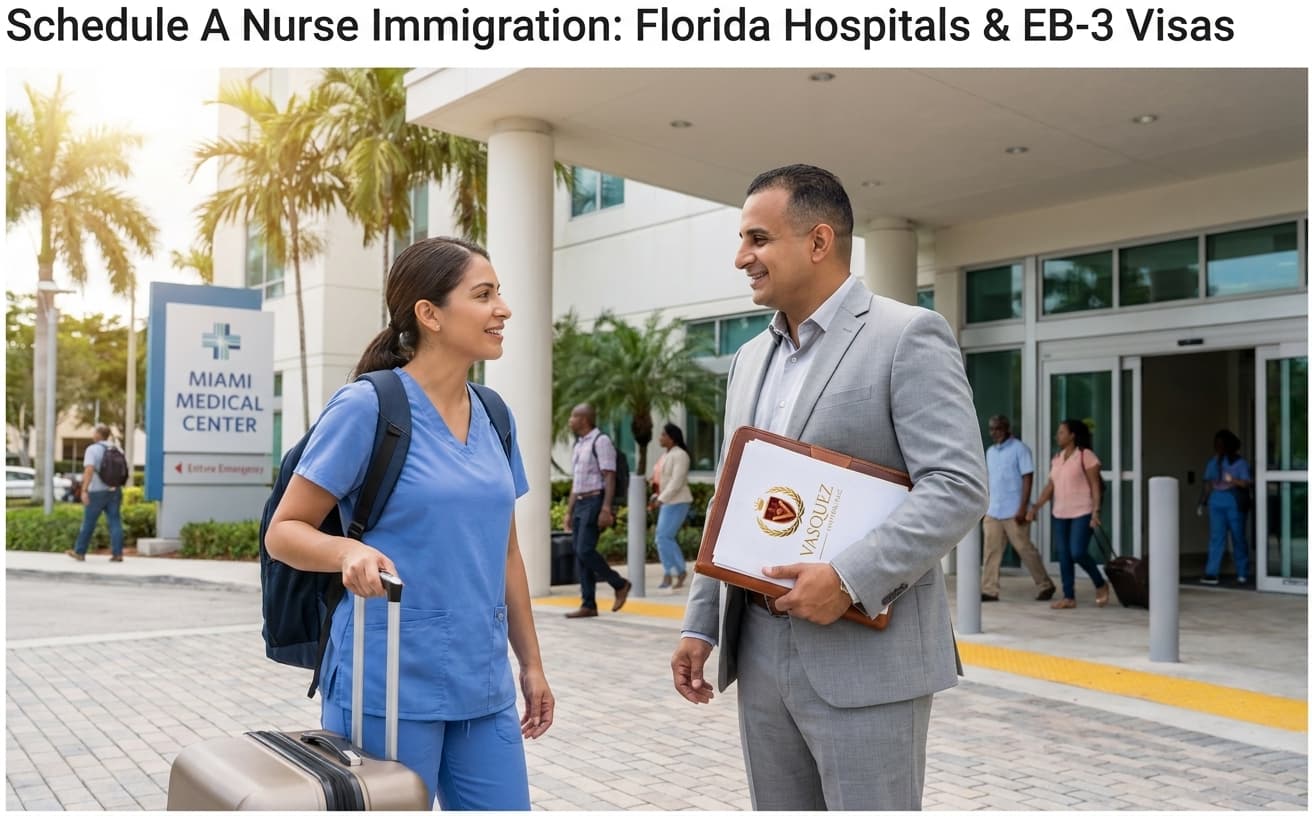
Quick Answer: Schedule A Nurse Immigration to Florida Hospitals
Schedule A nurse immigration offers a streamlined path for registered nurses to obtain a U.S. green card, bypassing the lengthy PERM labor certification process. This designation by the Department of Labor recognizes a persistent national shortage of qualified nurses, making it easier for Florida hospitals and healthcare facilities, particularly in rapidly growing areas like Jacksonville, to sponsor foreign-trained nurses under the EB-3 visa category. This process typically involves an employer filing an I-140 petition, followed by either adjustment of status within the U.S. or consular processing abroad. It is a vital pathway for addressing Florida's critical healthcare staffing needs.
- Schedule A exempts employers from PERM labor certification.
- Registered nurses are designated as Schedule A occupations.
- EB-3 immigrant visa is the primary category for Schedule A nurses.
- Florida hospitals actively seek Schedule A nurses to fill critical shortages.
- Consulting an immigration attorney is crucial for navigating this complex process.
Florida's healthcare system is renowned for its quality and innovation, yet it faces a significant challenge: a persistent shortage of skilled registered nurses. This critical demand, particularly in bustling metropolitan areas like Jacksonville and across the Sunshine State, creates unique opportunities for foreign-trained nurses seeking to build a new life and career in the United States. If you are a registered nurse considering immigration, the Schedule A nurse immigration pathway offers a direct and efficient route to obtaining a U.S. green card. This special designation recognizes the severe national shortage of nurses, allowing employers in Florida to sponsor qualified candidates without the extensive labor certification process typically required for other professions.
Navigating the complexities of U.S. immigration law can be daunting, especially when dealing with specific visa categories like the EB-3 for professionals. Understanding the requirements, procedures, and potential pitfalls is essential for a successful outcome. This comprehensive guide from Florida Immigration Lawyers will walk you through everything you need to know about Schedule A nurse immigration, focusing on how it benefits both nurses and Florida hospitals. From initial eligibility to securing your green card, we will demystify the process and highlight why legal guidance is invaluable. Do not embark on this life-changing journey alone. Call Florida Immigration Lawyers at 1-844-YO-PELEO for a free consultation and let us help you achieve your American dream.
Understanding Schedule A and EB-3 Visas for Nurses in Florida
The U.S. Department of Labor (DOL) maintains a list of occupations for which there are not sufficient U.S. workers who are able, willing, qualified, and available. These occupations are designated as "Schedule A." Registered nurses fall under this crucial designation, acknowledging the chronic shortage of nurses across the nation, including within Florida's extensive healthcare network. This special status means that employers, such as hospitals in Jacksonville, Miami, Orlando, and Tampa, do not need to undergo the lengthy and often complex PERM labor certification process. This exemption significantly accelerates the green card application timeline for foreign-trained nurses, making it an attractive option for both employers and prospective immigrant nurses.
The primary immigration category utilized for Schedule A nurses is the EB-3 visa, an employment-based third preference immigrant visa. This category is generally for skilled workers, professionals, and other workers. For registered nurses, the EB-3 visa is particularly suitable because their profession requires at least a baccalaureate degree or its equivalent, along with a valid state license. The EB-3 visa provides a direct path to permanent residency, allowing nurses to live and work in the U.S. indefinitely. This stability is a key factor for nurses seeking long-term careers and a secure future for their families in Florida. The designation of nurses under Schedule A is found in 8 CFR 204.5(k), which outlines the requirements for employers seeking to petition for foreign workers in these pre-certified occupations. Understanding this legal framework is the first step toward a successful application.
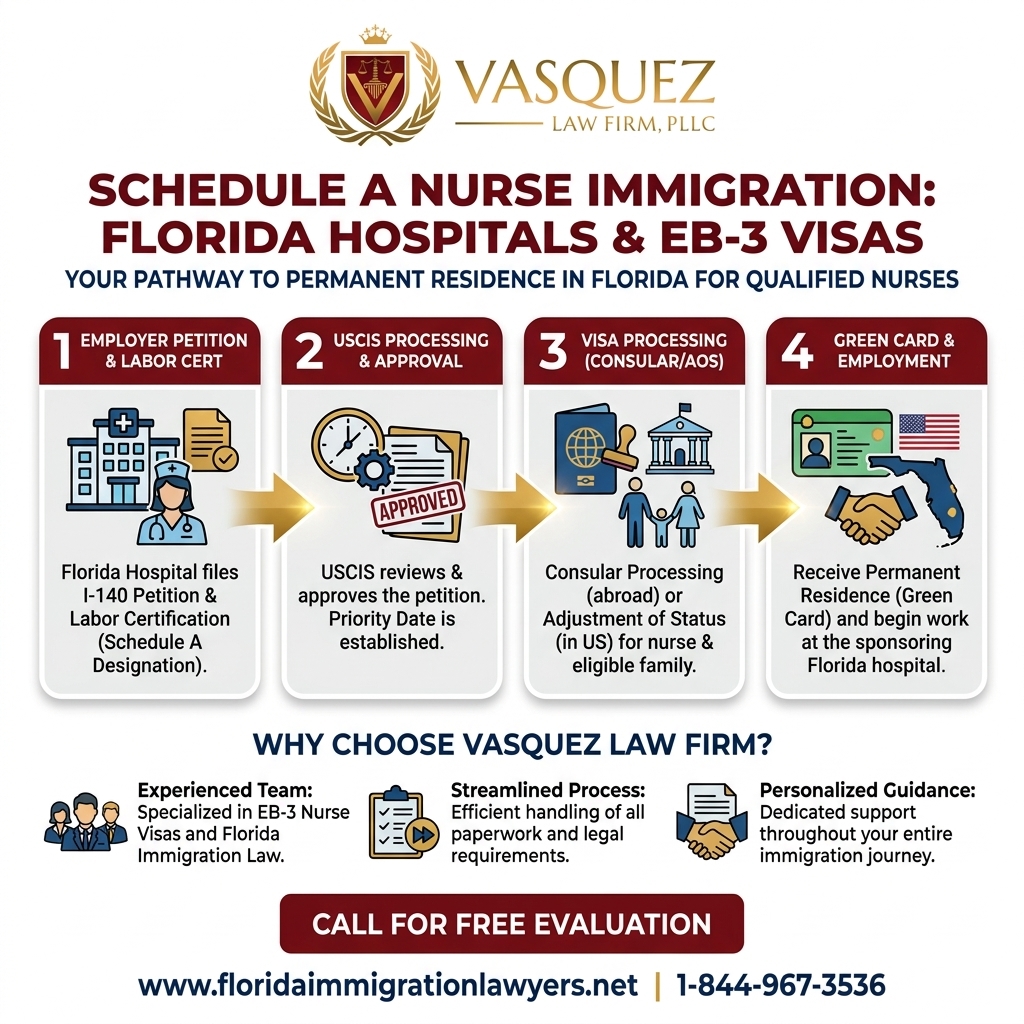
Step-by-Step Guide to Schedule A Nurse Immigration
The Schedule A nurse immigration process, while expedited, still involves several critical steps. Each stage requires meticulous attention to detail and adherence to specific U.S. Citizenship and Immigration Services (USCIS) regulations. Following this guide carefully can help you understand what to expect.
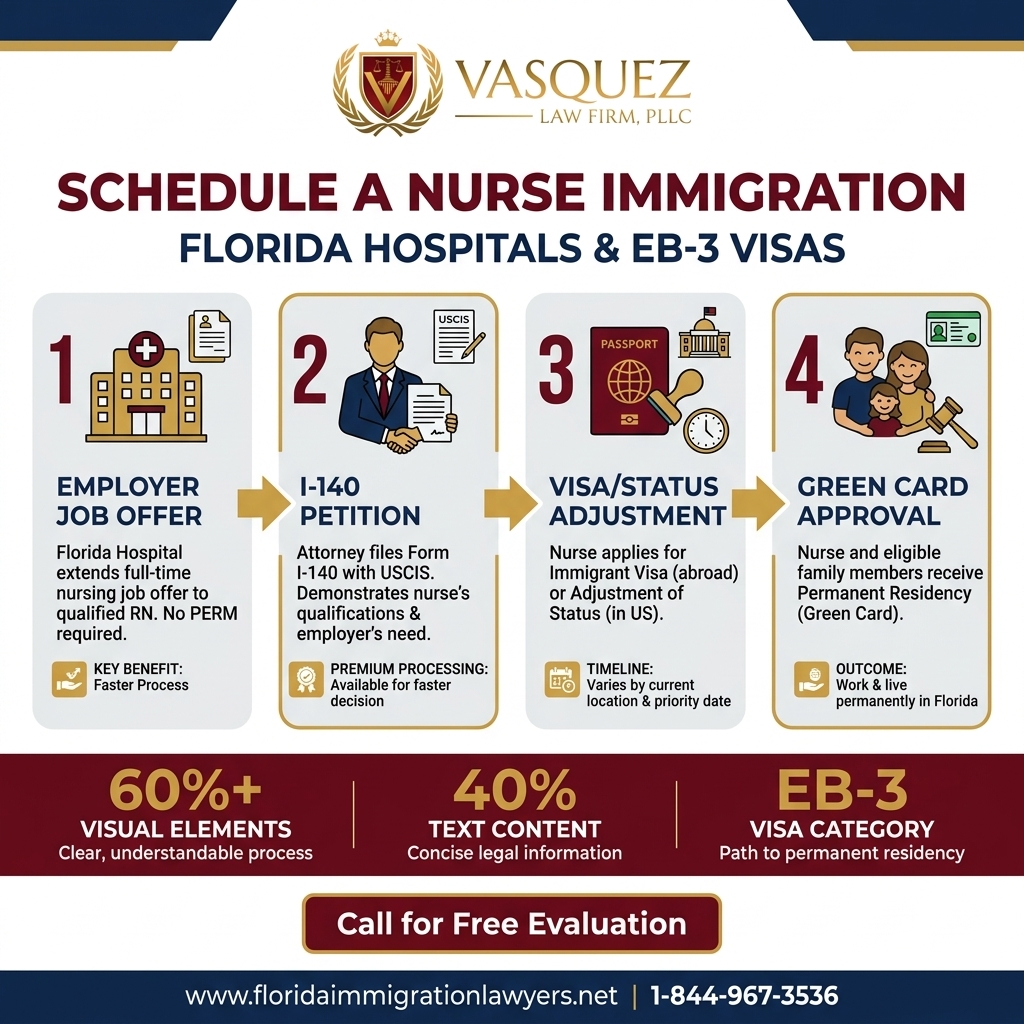
- Employer Files Form I-140, Immigrant Petition for Alien Worker: The process begins with a U.S. employer, typically a Florida hospital or healthcare facility, filing Form I-140 on behalf of the registered nurse. This petition establishes the nurse's eligibility for an EB-3 visa and the employer's intent to hire them permanently. Unlike other EB-3 petitions, a PERM labor certification is not required due to the Schedule A designation. The employer must include evidence of the nurse's qualifications, such as educational credentials, a valid nursing license, and a job offer.
- I-140 Petition Approval: Once USCIS reviews the I-140 petition and all supporting documentation, it will issue an approval notice. This approval is a crucial milestone, confirming that the nurse meets the basic eligibility criteria for an EB-3 visa under Schedule A. Processing times for I-140 petitions can vary, but premium processing is often available for an additional fee, which can significantly expedite this stage.
- National Visa Center (NVC) Processing or Adjustment of Status (I-485): After I-140 approval, the next step depends on whether the nurse is inside or outside the U.S. If the nurse is abroad, the approved petition is sent to the National Visa Center (NVC) for pre-processing of the immigrant visa application. The NVC collects required documents and fees. If the nurse is already in the U.S. on a valid nonimmigrant visa (e.g., H-1B, J-1), and an immigrant visa number is immediately available, they may be eligible to file Form I-485, Application to Register Permanent Residence or Adjust Status, with USCIS. This allows them to obtain their green card without leaving the U.S.
- Medical Examination and Interview: For both consular processing and adjustment of status, a medical examination by a USCIS-approved civil surgeon is mandatory. This ensures the applicant meets health-related admissibility standards. Following this, an interview will be scheduled. For consular processing, the interview takes place at a U.S. embassy or consulate in the nurse's home country. For adjustment of status, the interview is conducted at a local USCIS field office in Florida, such as those in Miami, Orlando, or Tampa. During the interview, an immigration officer will verify the information provided in the application and ask questions about the nurse's background and intentions.
- Visa Issuance or Green Card Approval: Upon successful completion of the interview and all background checks, the immigrant visa will be issued (for consular processing), allowing the nurse to enter the U.S. as a lawful permanent resident. For adjustment of status applicants, the green card will be mailed to their Florida address. This final step marks the culmination of the immigration journey, granting the nurse permanent residency status in the United States.
Essential Document Checklist for Schedule A Nurses
A complete and accurate submission of documents is vital for a smooth Schedule A nurse immigration process. Missing or incorrect documentation can lead to significant delays or even denial. Ensure you have all the following items ready for your application.
- Valid passport and birth certificate.
- Form I-140, Immigrant Petition for Alien Worker (filed by employer).
- Certified copies of all educational degrees and transcripts (nursing diploma, bachelor's degree, etc.).
- Official records of professional nursing licenses from all jurisdictions, including a current, unrestricted license to practice as a registered nurse in the U.S. state of intended employment (e.g., Florida).
- VisaScreen Certificate from CGFNS (Commission on Graduates of Foreign Nursing Schools). This verifies educational, licensure, and English language proficiency.
- Proof of passing the NCLEX-RN examination (National Council Licensure Examination for Registered Nurses).
- Letters of employment from previous employers, detailing job duties and duration.
- Current job offer letter from a U.S. employer, specifically a Florida hospital or healthcare facility, outlining the position, salary, and terms of employment.
- Form ETA-9089, Application for Permanent Employment Certification (though PERM is not required, this form is submitted as part of the I-140 for Schedule A occupations).
- Medical examination report (Form I-693) completed by a USCIS-approved civil surgeon.
- Police clearances from all countries resided in for more than six months since age 16.
- Marriage certificate and birth certificates for any accompanying family members (spouse and unmarried children under 21).
- Financial documents to demonstrate ability to support oneself and family (if applicable).
Timeline and Processing Expectations for Nurse Immigration
Understanding the timeline for Schedule A nurse immigration is crucial for managing expectations. While Schedule A status generally expedites the process by bypassing PERM, several factors can influence the overall duration. The journey from initial petition to green card can vary significantly based on current USCIS processing times, National Visa Center (NVC) backlogs, and the applicant's country of birth.
Typically, the Form I-140 petition processing by USCIS can take several months. However, employers often opt for premium processing, which guarantees an adjudication within 15 calendar days for an additional fee, significantly shortening this initial stage. After I-140 approval, the next major factor is visa bulletin availability. The U.S. Department of State's Visa Bulletin indicates when immigrant visas are available for various categories and countries. While Schedule A nurses are in a high-demand category, backlogs can sometimes occur for certain nationalities, potentially adding months or even years to the process. For those eligible for adjustment of status in Florida, the I-485 processing can take 12-24 months or more, including the interview at a local USCIS office. Consular processing, which involves the NVC and an interview at a U.S. embassy abroad, can also range from several months to over a year after visa availability. It is important to monitor the Visa Bulletin monthly and consult with an experienced immigration attorney for the most accurate and up-to-date timeline estimates.
Cost Factors and Fee Breakdown for Schedule A Nurses
Immigrating to the United States involves various governmental and legal fees that applicants must consider. While specific amounts can change, understanding the categories of costs will help you prepare financially for your Schedule A nurse immigration journey to Florida. These costs are typically divided into government filing fees, medical examination fees, and attorney legal fees.
Government fees include the USCIS filing fee for Form I-140, which is generally paid by the sponsoring employer. If premium processing is utilized, an additional fee is required. For nurses adjusting status in the U.S., there is a separate USCIS filing fee for Form I-485, which also covers biometrics. If consular processing is pursued, the National Visa Center (NVC) charges immigrant visa application processing fees. Beyond these, a mandatory medical examination by a USCIS-approved civil surgeon incurs its own costs, which vary by provider and location in Florida. Lastly, legal fees for an experienced immigration attorney are a significant investment. These fees cover comprehensive services, including preparing and filing all petitions, gathering documentation, communicating with USCIS and NVC, and preparing you for interviews. While these costs can seem substantial, they represent an investment in your future and a permanent career in Florida's thriving healthcare sector. Always consult with your attorney for a detailed breakdown of current fees and payment structures.
Benefits of Schedule A for Nurses and Florida Hospitals
The Schedule A designation offers substantial advantages for both foreign-trained nurses and Florida hospitals grappling with staffing shortages. For nurses, it provides a considerably faster and more direct route to obtaining a U.S. green card compared to many other employment-based immigration pathways. This expedited process means less waiting and quicker integration into the American workforce and society. It offers a clear path to permanent residency, granting stability and the freedom to pursue long-term career goals in a state with abundant opportunities. Nurses can bring their valuable skills to a dynamic healthcare environment, contribute to patient care, and enjoy a high quality of life in Florida.
For Florida hospitals and healthcare systems, particularly those in high-growth areas like Jacksonville, Miami, and Orlando, Schedule A nurse immigration is an indispensable tool for addressing critical staffing gaps. The ability to bypass the lengthy PERM labor certification process allows these facilities to recruit and retain highly qualified international nurses more efficiently. This means they can quickly fill vacant positions, maintain optimal patient-to-nurse ratios, and continue to provide excellent care to Florida's diverse and often aging population. By utilizing Schedule A, hospitals can proactively plan their workforce needs, ensuring a stable and skilled nursing staff. This benefits not only the institutions but also the communities they serve, guaranteeing access to essential healthcare services. It's a win-win scenario that supports both individual career aspirations and public health needs in Florida.
Do not navigate this complex process alone. Contact Florida Immigration Lawyers today to ensure your application is handled with precision and experience.
Employer Sponsorship in Florida: What Hospitals Need to Know
For Florida hospitals and healthcare facilities, understanding the nuances of sponsoring Schedule A nurses is crucial for effective workforce planning. Sponsoring an immigrant nurse under Schedule A involves a commitment to the foreign worker and adherence to specific federal regulations. The hospital must first establish a legitimate, permanent full-time job offer for the registered nurse position. This offer must meet prevailing wage requirements as determined by the Department of Labor, ensuring that the employment terms will not adversely affect the wages and working conditions of U.S. workers. The employer is responsible for filing the Form I-140 petition and covering certain associated costs, such as the I-140 filing fee.
Beyond the initial petition, Florida hospitals must also be prepared to support the nurse throughout the immigration process, providing necessary documentation and responding to any requests for evidence from USCIS. This includes verifying the nurse's credentials, ensuring they meet the state's licensure requirements, and maintaining open communication. The commitment extends to providing an environment where immigrant nurses can thrive professionally, assisting with orientation to the U.S. healthcare system, and supporting their integration into the community. For hospitals in areas with significant nurse shortages, such as Jacksonville and other growing Florida cities, strategic use of the Schedule A pathway is essential for maintaining operational capacity and continuing to deliver high-quality patient care. Partnering with an experienced immigration law firm like Florida Immigration Lawyers can streamline this process for hospitals, ensuring compliance and successful outcomes.
Life as an Immigrant Nurse in Florida: Licensure and Integration
Once a foreign-trained nurse successfully navigates the Schedule A immigration process and obtains their green card, the next critical step is to ensure full licensure to practice nursing in Florida. The Florida Board of Nursing oversees the licensing of registered nurses within the state. Immigrant nurses must meet specific educational and examination requirements, including passing the NCLEX-RN and demonstrating English language proficiency, usually evidenced by the VisaScreen Certificate. It is crucial to begin the Florida licensure application process well in advance, as it can be time-consuming and requires careful attention to detail. Many nurses start this process even before their green card is approved, to minimize delays in employment.
Beyond licensure, integrating into the Florida healthcare system and community is a significant aspect of life as an immigrant nurse. Florida offers a diverse and welcoming environment, with vibrant communities and a high demand for healthcare professionals. Nurses can expect to work in a fast-paced and technologically advanced setting, often serving a multicultural patient population. Continuing education and professional development are highly valued, with numerous opportunities for specialization and career advancement. Living in Florida also offers a unique lifestyle, from the beaches of Jacksonville to the cultural hubs of Miami and Orlando. While the transition may involve adjustments to a new culture and professional environment, the rewards of a stable career, excellent quality of life, and the opportunity to contribute to patient well-being in a beautiful state are immense. Florida Immigration Lawyers can also provide resources and guidance on these post-immigration steps to ensure a smooth transition.
Common Mistakes to Avoid in Schedule A Nurse Immigration
The Schedule A nurse immigration process, while streamlined, is not without its complexities. Avoiding common pitfalls is essential to prevent delays or even denial of your green card application.
- Incomplete or Inaccurate Documentation: Failing to submit all required documents, or providing incorrect information, is a frequent cause of Requests for Evidence (RFEs) and delays. USCIS requires precise and thorough submissions.
- Failure to Meet Licensure Requirements: Not having a current, unrestricted nursing license in the state of intended employment (e.g., Florida) or failing to obtain a VisaScreen Certificate can halt the process.
- Misinterpreting Visa Bulletin Dates: Misunderstanding priority dates and visa availability can lead to premature filing of adjustment of status applications, resulting in rejection or significant delays.
- Employer Errors: Mistakes made by the sponsoring employer, such as incorrect prevailing wage determinations or improper filing of Form I-140, can jeopardize the entire petition.
- Lack of English Proficiency Proof: While the VisaScreen usually covers this, failing to demonstrate required English language skills can be a stumbling block.
- Criminal or Immigration Violations: Past criminal convictions or immigration rule violations can lead to inadmissibility and denial, often requiring complex waivers.
- Ignoring Deadlines: Missing deadlines for responding to RFEs or NVC requests can result in case abandonment.
- Inadequate Preparation for Interview: Failing to thoroughly prepare for the USCIS or consular interview, leading to inconsistent answers or an inability to clearly explain your case.
- Changing Employment Without Proper Guidance: Leaving the sponsoring employer prematurely or without proper legal consultation can invalidate your green card petition.
- Not Disclosing All Previous Residences: For police clearances, failing to disclose all countries lived in for over six months since age 16 can cause issues.
When to Call a Lawyer for Your Schedule A Nurse Immigration
While the Schedule A nurse immigration pathway is designed to be more direct, the process is still inherently complex and involves intricate legal requirements. Knowing when to seek professional legal assistance can make a significant difference in the success and efficiency of your application. You should strongly consider contacting an experienced immigration attorney at Florida Immigration Lawyers immediately if you encounter any of the following scenarios:
- Your employer is unfamiliar with the Schedule A process or EB-3 visa requirements.
- You have a prior immigration history, such as previous visa denials, overstays, or complex status changes.
- You have any criminal history, even minor offenses, which could affect your admissibility.
- You are unsure about collecting and organizing the extensive documentation required for the I-140 and subsequent stages.
- You receive a Request for Evidence (RFE) from USCIS or a Notice of Intent to Deny (NOID).
- There are delays in your case beyond typical processing times, or you notice discrepancies in your application status.
- You need to understand the impact of the Visa Bulletin on your specific country of chargeability and priority date.
- You require assistance preparing for your USCIS adjustment of status interview or consular interview.
- You plan to include family members (spouse and children) in your immigration application.
- You are concerned about maintaining your current nonimmigrant status while your green card application is pending.
Florida Immigration Lawyers has extensive experience with Schedule A nurse immigration and can provide tailored guidance for your unique situation, ensuring compliance with Executive Office for Immigration Review (EOIR) and USCIS regulations. We serve clients across Florida, including Orlando, offering dedicated support every step of the way.
About Florida Immigration Lawyers
Florida Immigration Lawyers is an immigration law firm dedicated to serving individuals and families across the entire state of Florida. With a deep understanding of U.S. immigration law and a compassionate approach, we focus on helping foreign-trained nurses navigate the complexities of Schedule A nurse immigration and EB-3 visas. Our experienced attorneys are committed to providing personalized, effective legal solutions, ensuring that your journey to permanent residency in Florida is as smooth and successful as possible. We pride ourselves on our client-focused service, transparent communication, and unwavering dedication to achieving positive outcomes.
From initial consultations to comprehensive case management, we handle all aspects of your immigration application, including I-140 petitions, adjustment of status, consular processing, and responding to RFEs. We understand the unique needs of healthcare professionals and the vital role they play in our communities, especially in Florida. Our team is available 24/7 to answer your questions and provide support. We offer free consultations to discuss your specific situation and outline a clear path forward. Choose Florida Immigration Lawyers for guidance and peace of mind on your immigration journey. Visit our website at Vasquez Law Firm or call us at 1-844-YO-PELEO.
Sources and References
- U.S. Citizenship and Immigration Services (USCIS)
- Executive Office for Immigration Review (EOIR)
- U.S. Department of State - Visa Bulletin
- 8 U.S.C. Chapter 12 - Immigration and Nationality Act (INA) Section 203(b)(3) - Employment-Based Third Preference
- 8 CFR 204.5(k) - Petitions for Employment-Based Immigrants: Schedule A Occupations
- Florida Board of Nursing
- Commission on Graduates of Foreign Nursing Schools (CGFNS) International - VisaScreen Service
Related services: immigration practice areas, family immigration services, citizenship and naturalization, deportation defense.
This article provides general legal information and is not intended as legal advice. Every case is unique, and outcomes depend on specific facts and circumstances. Contact an attorney for advice about your particular situation.
Your journey to becoming a permanent resident nurse in Florida begins with informed decisions and legal representation. Do not leave your future to chance. Call Florida Immigration Lawyers today at 1-844-YO-PELEO for your free, confidential consultation. Se Habla Espanol - Estamos aqui para ayudarle.
If you need legal assistance, learn more about our immigration legal services, or call us at 1-844-YO-PELEO for a free consultation.
Do Not Navigate This Process Alone
Our experienced immigration attorneys are ready to fight for you. Get a free, confidential case review today.
Se Habla Español
Or leave your details and we’ll call you:
Free Evaluation in 24 Hours
Or talk to us right now
AI voice assistant — available 24/7
FreeFrequently Asked Questions

William J. Vásquez
Founding Attorney · Vasquez Law Firm
U.S. Air Force veteran and immigration attorney with years of hands-on U.S. immigration experience. J.D., NCCU School of Law. AILA member. Admitted to the 4th, 5th, and 11th Circuit Courts.
Available 24/7 - Free Evaluations
Reviewed for legal accuracy by William J. Vásquez
Licensed in North Carolina; U.S. immigration is federal practice.
Related Legal Services
Our Florida immigration attorneys can help you with family immigration services, immigration lawyer cost in Florida and experienced immigration attorneys. Call today at 1-844-YO-PELEO for a free case review.
Related Links
Related Topics
Free Legal Case Review
Discuss your case with our experienced attorneys. We're available 24/7.
Se Habla Español - Estamos aquí para ayudarle.
Related Articles
Certificate of Eligibility for Expungement in Florida 2026
For non-U.S. citizens in Florida, understanding how a state expungement impacts immigration status is critical. A certificate of eligibility for expungement in Florida allows a criminal record to be sealed or expunged under state law. However, federal immigration agencies often disregard such state-level relief, still considering the original criminal offense as a conviction for immigration purposes. This can have severe implications for visa applications, green card eligibility, naturalization, and even lead to deportation. This guide clarifies the Florida expungement process, its limited effect on federal immigration law, and key steps to protect your status in 2026. Learn about common mistakes, required documents, timelines, and when to seek expert legal counsel from Florida Immigration Lawyers to navigate these complex issues effectively.
Immigration Lawyer Orlando Free Consultation in Florida
For individuals and families in Orlando, Florida, navigating the complexities of U.S. immigration law requires expert guidance. An immigration lawyer in Orlando offers crucial support for everything from visa applications and green card processes to naturalization and deportation defense. This comprehensive guide details what a free consultation covers, providing a step-by-step overview of immigration pathways, essential document checklists, and expected timelines in 2026. We also highlight common mistakes to avoid, discuss the critical role of legal counsel in deportation and asylum cases, and explain why choosing a local Orlando immigration attorney is beneficial. Florida Immigration Lawyers is dedicated to serving the diverse community of Orlando with compassionate, effective legal solutions, ensuring you receive personalized advice and robust representation for a successful immigration journey.
Green Card Renewal Process in Florida: 2026 Guide
Renewing your green card in Florida is a vital process for maintaining your lawful permanent resident status. This comprehensive 2026 guide from Florida Immigration Lawyers breaks down the Form I-90 application, covering eligibility, step-by-step instructions, necessary documents, typical costs, and current processing timelines. We explain who needs to renew, what to expect at your biometrics appointment, and Florida-specific considerations for permanent residents. Learn how to avoid common mistakes that can delay your application and understand when professional legal assistance is crucial. Our expert attorneys are here to provide free case reviews and guide you through every stage, ensuring a smooth and secure renewal of your permanent resident card.
H-1B Visa for Florida Employers: Your 2026 Guide
For Florida employers looking to hire skilled foreign professionals, the H-1B visa program is a critical pathway. This comprehensive 2026 guide details the complex process, from understanding eligibility requirements for both the company and the prospective employee to navigating the annual H-1B cap and lottery system. We provide a step-by-step overview, a detailed document checklist, and transparent information on associated costs and processing timelines. Learn how to avoid common pitfalls that can lead to delays or denials, and understand when it's crucial to seek expert legal assistance. Florida Immigration Lawyers offers dedicated support to businesses throughout Central Florida, ensuring compliance and maximizing your chances of securing the talent you need. Contact us for a free case review and expert guidance on your H-1B sponsorship journey.