Advance Parole Florida: Travel with Pending Adjustment
For Florida residents with a pending adjustment of status, an advance parole document (Form I-131) is essential for international travel. Leaving the U.S. without this authorization can lead to the automatic denial of your green card application, creating significant legal hurdles. This comprehensive guide from Florida Immigration Lawyers explains the advance parole process, required documents, processing times, and crucial re-entry considerations. We highlight common mistakes to avoid and when to seek legal counsel to protect your immigration future while traveling abroad from Florida. Learn how to navigate these complexities with confidence.
An advance parole document is a critical travel authorization for individuals in Florida with a pending adjustment of status application (Form I-485). It allows you to travel internationally and re-enter the U.S. without abandoning your green card application. Applying for Form I-131, Application for Travel Document, is essential. Without it, leaving the U.S. can lead to your application's automatic denial, potentially resulting in significant immigration complications. This document provides peace of mind and legal protection for Florida residents needing to travel abroad while awaiting their permanent residency.
- Advance parole prevents I-485 abandonment during international travel.
- It is applied for using USCIS Form I-131, Application for Travel Document.
- Crucial for individuals with pending green card applications in Florida.
- Failure to obtain it before travel can lead to automatic application denial.
- Consulting an attorney is vital for complex cases or urgent travel needs.
The thought of international travel can be daunting when you have a pending adjustment of status application. Many Florida residents, from the bustling streets of Orlando to the tranquil beaches, face this dilemma. You might have urgent family matters abroad, business commitments, or simply wish to visit loved ones. However, leaving the U.S. without proper authorization can automatically terminate your green card application, leading to severe immigration consequences. This is where an advance parole document becomes indispensable.
At Florida Immigration Lawyers, we understand the anxieties and complexities involved. We help individuals throughout Florida navigate these intricate processes, ensuring their journey is as smooth and secure as possible. This comprehensive guide will explore what advance parole is, who needs it, the application process for Form I-131, and crucial considerations for those with a pending adjustment of status. Our goal is to equip you with the knowledge to make informed decisions and protect your immigration future.
Do not risk your immigration status by traveling without understanding the rules. Call Florida Immigration Lawyers at 1-844-YO-PELEO for a free consultation today. We are here to provide guidance tailored to your specific situation, helping you travel confidently.
Understanding Advance Parole for Pending Adjustment of Status in Florida
Advance parole is a permit issued by U.S. Citizenship and Immigration Services (USCIS) that allows certain non-citizens to travel outside the United States and return without jeopardizing their immigration application. Specifically, it is vital for individuals who have a pending adjustment of status application (Form I-485) to permanent residency. Without this document, departing the U.S. generally signifies an abandonment of your I-485 application, forcing you to restart the entire process, often from outside the country. This can lead to prolonged separation from family and significant delays.
Under USCIS regulations, outlined in sections like 8 CFR 212.5 and 8 U.S.C. 1182(d)(5)(A) of the Immigration and Nationality Act (INA), advance parole allows for temporary re-entry. It is not a visa; rather, it is permission to be paroled into the U.S. upon return. For Florida residents, whether you are in Miami, Orlando, or Tampa, understanding this distinction is crucial. Traveling without advance parole while your I-485 is pending could result in you being denied re-entry, even if you have valid visas or other travel documents. The purpose of advance parole is to bridge the gap between your application filing and its final approval, ensuring your continuity of status.
This document is particularly important for those who entered the U.S. without inspection or who are out of status but are now eligible to adjust their status through a family petition or employment-based petition. If you are in such a situation in Florida, advance parole offers a legal pathway to address urgent international travel needs without risking your path to a green card. It provides a layer of protection, allowing you to attend to critical personal or professional matters abroad and return to continue your journey toward permanent residency in the U.S.
The Form I-131 Application Process for Advance Parole in Florida
Applying for an advance parole travel document involves submitting Form I-131, Application for Travel Document, to USCIS. This process requires meticulous attention to detail and a thorough understanding of the requirements. For many individuals in Florida, the prospect of filling out complex government forms can be overwhelming. Ensuring every section is accurately completed and all necessary supporting documentation is included is paramount to avoid delays or denials. A single error can significantly prolong your wait time or lead to a Request for Evidence (RFE).
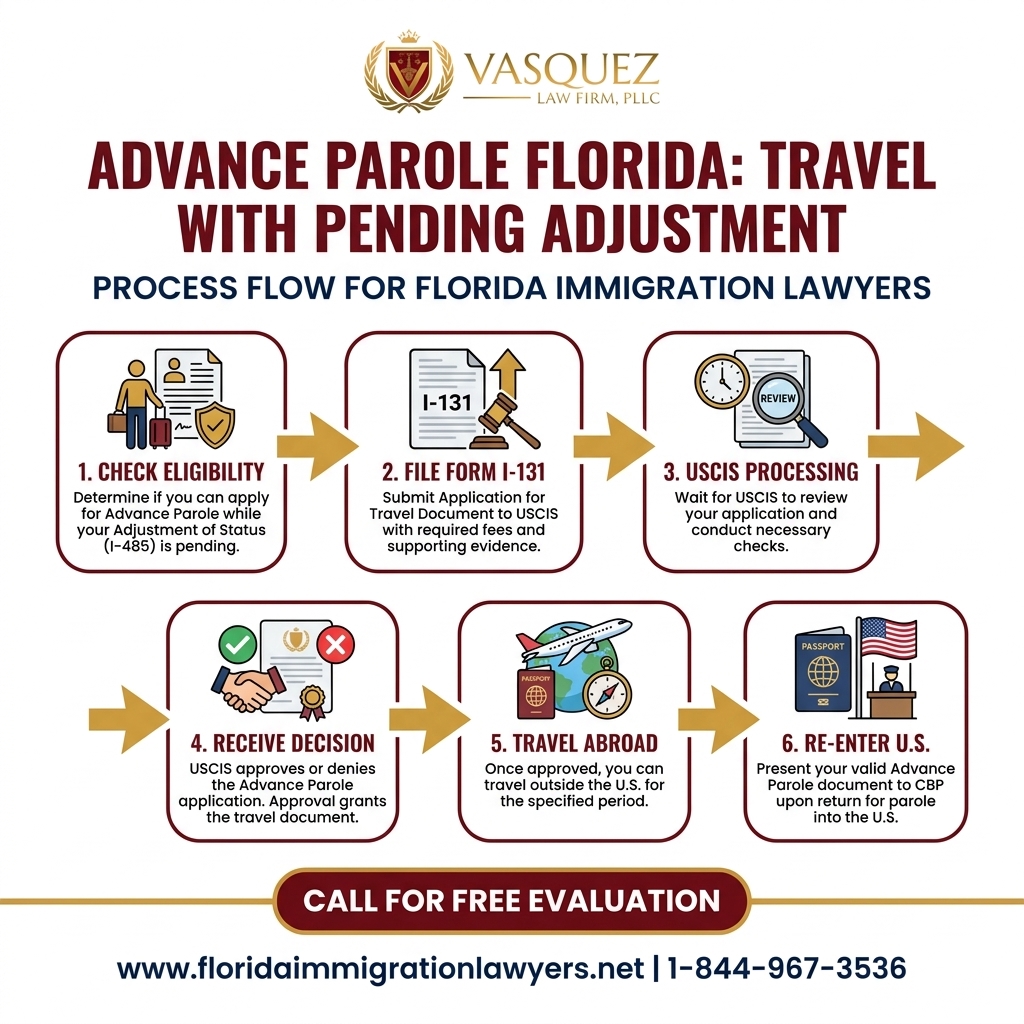
The application process typically involves several key steps. First, you must confirm your eligibility. Generally, if you have a pending adjustment of status application (Form I-485) and are not in removal proceedings, you are eligible. However, specific circumstances, such as certain criminal convictions or previous immigration violations, might affect your eligibility. Second, you gather all required supporting documents. This includes proof of your pending I-485, identification, passport photos, and evidence of the urgent need for travel, if applicable for expedited processing. Third, you complete Form I-131 itself, providing accurate personal information and details about your intended travel. USCIS has specific instructions for each line item, which must be followed precisely.
Once your application is prepared, it is filed with the appropriate USCIS Service Center, which is determined by your mailing address and the type of application. Florida residents will mail their applications to one of the designated lockbox facilities. After filing, you will receive a receipt notice (Form I-797C), confirming that USCIS has received your application. In some cases, USCIS may require you to attend a biometrics appointment at an Application Support Center (ASC) in Florida, such as the one in Orlando or Miami. This appointment is for collecting fingerprints and photographs. While an interview for advance parole is rare, it is possible, and you should be prepared to answer questions about your travel plans and immigration history. The entire process requires patience and careful adherence to all USCIS guidelines.
Essential Documents for Your Advance Parole Application in Florida
A complete and well-organized document package is crucial for a successful advance parole application in Florida. Missing documents or incorrect information can lead to delays, Requests for Evidence (RFEs), or even denial. Gathering these materials carefully is a vital step in securing your ability to travel internationally while your adjustment of status application is pending. Think of this as building a strong case for your travel authorization.
- Completed Form I-131, Application for Travel Document: Ensure all sections are filled out accurately and completely. Do not leave any fields blank; if a section does not apply, write “N/A.”
- Two Passport-Style Photographs: These must be recent, unmounted, taken within 30 days of filing, and meet specific USCIS requirements (e.g., white background, full-face view).
- Copy of Government-Issued Photo Identification: This could be your passport biographic page, driver's license (if applicable), or other national identity card.
- Copy of Your I-485 Application Receipt Notice (Form I-797C): This proves that your adjustment of status application is currently pending with USCIS.
- Proof of Identity and Nationality: A copy of your birth certificate and passport biographic page are typically required.
- Copy of Your Most Recent I-94 Arrival/Departure Record: This document shows your last lawful entry into the U.S.
- Evidence of Any Previous Advance Parole Documents (if applicable): Include copies of any prior travel documents issued to you.
- Marriage Certificate (if applicable): If applying based on a spouse's petition, include a copy of your marriage certificate.
- Birth Certificates of Children (if applicable): For family-based petitions.
- Explanation Letter and Supporting Evidence for Expedited Processing (if applicable): If you need your advance parole quickly due to an emergency (e.g., critical illness of a family member), you must provide a detailed letter explaining the urgency and supporting documents such as medical records or death certificates.
- Proof of Relationship to Petitioner (if applicable): For family-based petitions, provide documents like marriage certificates or birth certificates.
- Filing Fee: Include the correct filing fee or a fee waiver request (Form I-912) if eligible.
Advance Parole Processing Times and Validity in 2026 for Florida Applicants
One of the most common questions from individuals in Florida seeking an advance parole travel document is about processing times. USCIS processing times for Form I-131 can vary significantly based on the service center, current caseloads, and the complexity of your application. While there is no guaranteed timeline, as of 2026, typical processing can range from 6 to 12 months, or even longer. It is critical to apply well in advance of any planned international travel. Checking the USCIS website for current processing times for the specific service center handling your adjustment of status application is always recommended.
It is important to note that an advance parole document is generally valid for a specific period, typically one year from the date of issuance. Some documents may be valid for shorter or longer periods depending on the discretion of USCIS. The document may also be issued for multiple entries, meaning you can travel outside and re-enter the U.S. multiple times within its validity period. However, each re-entry is at the discretion of the Customs and Border Protection (CBP) officer at the port of entry. It is crucial to ensure your advance parole document is valid for the entire duration of your planned trip and for your re-entry date.
If your advance parole document is nearing expiration and you anticipate further international travel, you must apply for a new one. This requires filing a new Form I-131 application. You cannot renew an existing document; you must file a completely new application. USCIS does not typically expedite standard advance parole requests unless there is a severe humanitarian emergency. If you believe you qualify for expedited processing due to an urgent, unforeseen circumstance, such as a life-threatening illness of a family member, you must submit compelling evidence with your request. Our team at Florida Immigration Lawyers can help assess if your situation warrants an expedited request and assist with preparing the necessary documentation.
Navigating Re-Entry to Florida with an Advance Parole Document
Returning to Florida after international travel with an advance parole travel document is a critical phase. While the document grants you permission to seek re-entry, the final decision rests with the Customs and Border Protection (CBP) officer at your port of entry, such as Miami International Airport or Orlando International Airport. It is essential to understand that advance parole does not guarantee re-entry; it merely allows you to present yourself for inspection and parole into the U.S. This distinction is vital for all Florida residents to grasp, especially those with any past immigration issues.
Upon arrival at a U.S. port of entry, you will present your valid passport and your advance parole document to the CBP officer. You will typically be directed to secondary inspection, which is a routine procedure for individuals entering on advance parole. During secondary inspection, an officer will review your documents, verify your identity, and may ask questions about your trip, your pending adjustment of status application, and your immigration history. Be prepared to answer truthfully and concisely. It is important to remain calm and cooperative throughout this process. You should carry copies of your I-485 receipt notice and other relevant immigration documents, although they may not always be requested.
While most re-entries with advance parole are smooth, issues can arise if there are discrepancies in your application, new derogatory information has surfaced, or if the officer has concerns about your eligibility. For example, if you committed a crime while abroad, or if USCIS has issued a Notice of Intent to Deny (NOID) your I-485 application while you were away, your re-entry could be problematic. In rare cases, a CBP officer might deny your parole and initiate removal proceedings. Having legal counsel from Florida Immigration Lawyers can be invaluable if you encounter difficulties during re-entry, providing immediate assistance and protecting your rights. Always keep your legal team informed of your travel plans and potential issues.
Do not navigate this complex process alone. Contact Florida Immigration Lawyers today for personalized assistance with your advance parole application and travel plans. Call us at 1-844-YO-PELEO for a free consultation.
Cost Factors and Fee Breakdown for Advance Parole Applications
Understanding the costs associated with obtaining an advance parole travel document is an important part of planning your immigration journey in Florida. The primary cost is the filing fee charged by USCIS for Form I-131, Application for Travel Document. It is crucial to note that USCIS fees are subject to change, and it is always advisable to check the most current fee schedule on the official USCIS website or consult with an immigration attorney before filing. As of our current knowledge, if you are filing Form I-131 concurrently with Form I-485, or if your I-485 is pending and you paid the filing fee for it after July 30, 2007, there is generally no additional fee for the I-131 if you are also applying for an Employment Authorization Document (EAD).
However, if you are filing Form I-131 independently and your I-485 was filed before July 30, 2007, or if you are not concurrently filing for an EAD, there will be a separate filing fee for the I-131. This fee covers the processing of your application. Additionally, there may be a separate fee for biometrics services, which is typically included in the overall filing fee for I-485 applications but might be separate for standalone I-131 filings in certain scenarios. These government fees are non-refundable, regardless of the outcome of your application, so accurate filing is paramount.
Beyond the government filing fees, you should also consider potential legal fees if you choose to retain an immigration attorney. While not mandatory, legal representation can significantly streamline the application process, minimize errors, and address any complexities that may arise. Attorneys help with document preparation, ensure compliance with all regulations, and can advocate on your behalf with USCIS. The cost of legal services will vary depending on the complexity of your case and the attorney's fee structure. For residents across Florida, from Jacksonville to Fort Lauderdale, investing in legal guidance can often save time, reduce stress, and prevent costly mistakes in the long run, especially when dealing with a crucial document like advance parole.
Common Mistakes to Avoid with Advance Parole
Navigating the advance parole process requires precision. Even small errors can have significant consequences, potentially jeopardizing your pending adjustment of status. Be aware of these common pitfalls:
- Traveling Without Approved Advance Parole: This is the most critical mistake. If you depart the U.S. while your I-485 is pending without an approved advance parole document, USCIS will consider your I-485 application abandoned, leading to automatic denial. This can force you to restart your entire green card process.
- Assuming Advance Parole is a Visa: Advance parole is not a visa. It is a travel document that allows you to seek re-entry. It does not guarantee admission and is subject to inspection by Customs and Border Protection (CBP) officers at the port of entry.
- Filing an Incomplete Form I-131: Missing information, unsigned forms, or unattached photographs can lead to a rejection or a Request for Evidence (RFE), significantly delaying processing. Ensure every section is correctly filled out.
- Not Providing Sufficient Supporting Documentation: Failing to include all required documents, such as copies of your I-485 receipt, passport, or previous immigration documents, can cause delays.
- Misrepresenting Information: Any false statements or omissions on your application can lead to a finding of misrepresentation, which can have severe, long-term immigration consequences, including inadmissibility.
- Traveling with a Criminal Record or Immigration Violations: If you have a criminal history, previous deportations, or other immigration violations, traveling with advance parole can expose you to heightened scrutiny at the border and potential denial of re-entry or initiation of removal proceedings.
- Assuming Automatic Approval: Filing for advance parole does not guarantee approval. USCIS reviews each case individually, and certain factors can lead to denial.
- Not Checking Processing Times: Failing to apply well in advance of your planned travel can result in you not receiving the document in time, forcing you to cancel or postpone your trip.
- Overstaying the Advance Parole Validity: While advance parole allows multiple entries, you must ensure it is valid for your re-entry. Trying to re-enter with an expired document will be problematic.
- Not Responding to RFEs in Time: If USCIS sends a Request for Evidence, failing to respond promptly and thoroughly will likely lead to a denial of your application.
- Traveling with an Unsettled Immigration Court Case: If you are in removal proceedings or have an active immigration court case, advance parole may not be appropriate or safe for you. Consult with a specialized attorney immediately.
- Ignoring Expedited Processing Requirements: If you need urgent travel, simply requesting expedited processing without providing compelling evidence of a humanitarian emergency or other qualifying criteria will likely result in denial of the expedited request.
When to Call Florida Immigration Lawyers for Advance Parole Assistance
While some individuals may attempt to file Form I-131 independently, the complexities of immigration law often necessitate professional legal guidance. Florida Immigration Lawyers are here to assist you, especially when your situation presents unique challenges or you want to ensure the highest chance of success. Our experience with advance parole applications across Florida, including cases for residents in Orlando, Tampa, and Fort Myers, ensures that you receive knowledgeable and empathetic support.
You should consider contacting us if you have any doubts about your eligibility for advance parole, particularly if you have a complex immigration history, such as previous visa overstays, deportations, or criminal convictions. We can assess your specific circumstances and advise on potential risks. If you have an urgent need to travel due to a family emergency or critical business matter, we can help you prepare and submit an expedited request, clearly articulating the urgency to USCIS. Furthermore, if you have previously been denied advance parole or received a Request for Evidence (RFE), our attorneys can help analyze the issues and strategize a stronger re-application or response.
Our firm also provides crucial assistance if you are currently in removal proceedings or have any other active immigration court cases, such as those at the Miami Immigration Court. In such scenarios, traveling with advance parole can be extremely risky and may have severe repercussions on your case. We can offer advice on whether travel is advisable and how it might impact your court proceedings. We are committed to protecting your future in Florida. Do not hesitate to seek legal counsel from Florida Immigration Lawyers when navigating these critical decisions.
About Florida Immigration Lawyers
Florida Immigration Lawyers is a leading law firm dedicated to providing exceptional legal representation to immigrants across the Sunshine State. From our Orlando office, serving clients across Florida, we are committed to helping individuals and families achieve their American dream. Our team of experienced attorneys focuses on a wide range of immigration matters, including family-based petitions, employment visas, asylum, deportation defense, and citizenship applications.
We pride ourselves on our client-focused approach, offering personalized attention and strategic advice tailored to each unique case. We understand the profound impact immigration issues have on your life and your family. That's why we offer compassionate, yet aggressive advocacy, ensuring your rights are protected every step of the way. Our firm is available 24/7, providing accessible and timely support when you need it most. We offer free consultations to help you understand your options without financial obligation.
Choosing Florida Immigration Lawyers means choosing a partner who will stand by you throughout your immigration journey. We are fluent in both English and Spanish, ensuring clear communication and cultural understanding. Let us put our experience to work for you. Call us today at 1-844-YO-PELEO or visit Vasquez Law Firm to learn how we can help you achieve your immigration goals in Florida.
Sources and References
- U.S. Citizenship and Immigration Services (USCIS)
- Executive Office for Immigration Review (EOIR)
- U.S. Department of State (Travel.State.Gov)
- 8 U.S.C. Chapter 12 - Immigration and Nationality Act (INA)
- INA Section 212(d)(5) - Parole Authority
- 8 CFR 212.5 - Parole of aliens into the United States
- Form I-131, Application for Travel Document Instructions
Related services: immigration practice areas, family immigration services, citizenship and naturalization.
This article provides general legal information and is not intended as legal advice. Every case is unique, and outcomes depend on specific facts and circumstances. Contact an attorney for advice about your particular situation.
Do not risk your immigration future by traveling without proper authorization. Secure your peace of mind and your pending adjustment of status by applying for advance parole. Florida Immigration Lawyers are ready to guide you through every step. Call us for a free consultation at 1-844-YO-PELEO. Se Habla Español - Estamos aquí para ayudarle.
If you need legal assistance, learn more about learn about our immigration practice, or call us at 1-844-YO-PELEO for a free consultation.
Do Not Navigate This Process Alone
Our experienced immigration attorneys are ready to fight for you. Get a free, confidential case review today.
Se Habla Español
Or leave your details and we’ll call you:
Free Evaluation in 24 Hours
Or talk to us right now

AI voice assistant — available 24/7
FreeFrequently Asked Questions

William J. Vásquez
Founding Attorney · Vasquez Law Firm
U.S. Air Force veteran and immigration attorney with years of hands-on U.S. immigration experience. J.D., NCCU School of Law. AILA member. Admitted to the 4th, 5th, and 11th Circuit Courts.
Available 24/7 - Free Evaluations
Reviewed for legal accuracy by William J. Vásquez
Licensed in North Carolina; U.S. immigration is federal practice.
Related Legal Services
Our Florida immigration attorneys can help you with family immigration services, immigration lawyer cost in Florida and experienced immigration attorneys. Call today at 1-844-YO-PELEO for a free case review.
Related Links
Related Topics
Free Legal Case Review
Discuss your case with our experienced attorneys. We're available 24/7.
Se Habla Español - Estamos aquí para ayudarle.
Related Articles
EB-5 Investor Green Card in Florida: A 2026 Guide
Explore how to obtain an EB-5 investor green card in Florida. Learn about the investment requirements, processes, and benefits of participating in this program. Discover how Florida's economic landscape can be an ideal setting for your investment. Contact Florida Immigration Lawyers for a free case review.
Certificate of Eligibility for Expungement in Florida 2026
For non-U.S. citizens in Florida, understanding how a state expungement impacts immigration status is critical. A certificate of eligibility for expungement in Florida allows a criminal record to be sealed or expunged under state law. However, federal immigration agencies often disregard such state-level relief, still considering the original criminal offense as a conviction for immigration purposes. This can have severe implications for visa applications, green card eligibility, naturalization, and even lead to deportation. This guide clarifies the Florida expungement process, its limited effect on federal immigration law, and key steps to protect your status in 2026. Learn about common mistakes, required documents, timelines, and when to seek expert legal counsel from Florida Immigration Lawyers to navigate these complex issues effectively.
Immigration Lawyer Orlando Free Consultation in Florida
For individuals and families in Orlando, Florida, navigating the complexities of U.S. immigration law requires expert guidance. An immigration lawyer in Orlando offers crucial support for everything from visa applications and green card processes to naturalization and deportation defense. This comprehensive guide details what a free consultation covers, providing a step-by-step overview of immigration pathways, essential document checklists, and expected timelines in 2026. We also highlight common mistakes to avoid, discuss the critical role of legal counsel in deportation and asylum cases, and explain why choosing a local Orlando immigration attorney is beneficial. Florida Immigration Lawyers is dedicated to serving the diverse community of Orlando with compassionate, effective legal solutions, ensuring you receive personalized advice and robust representation for a successful immigration journey.
Immigration Interview Preparation Florida 2026 Guide
Facing an immigration interview in Florida? This comprehensive guide offers essential 2026 USCIS interview tips for green card and naturalization applicants. Learn how to meticulously prepare your documents, understand the typical timelines, and avoid common mistakes that could jeopardize your case. We cover what to expect at the Orlando USCIS Field Office, provide a detailed document checklist, and explain the various costs involved in the process. With insights into naturalization specifics and when to seek legal counsel, Florida Immigration Lawyers helps you approach your interview with confidence. Our firm is dedicated to empowering immigrants across Florida with the knowledge and support needed for a successful outcome. Get a free case review today.