Protect Yourself from Immigration Scams in Florida
Immigration scams pose a serious threat to immigrants in Florida. This guide provides essential tips for recognizing and avoiding scams, protecting your rights, and seeking legal help. Contact Florida Immigration Lawyers for a free consultation.

Protect Yourself from Immigration Scams in Florida
Florida, with its diverse population and significant immigrant communities, unfortunately, becomes a target for unscrupulous individuals and organizations preying on vulnerable individuals seeking a better life. Immigration processes are complex, often requiring extensive documentation, precise deadlines, and a deep understanding of U.S. immigration law. This complexity creates an environment ripe for exploitation by fraudsters who promise quick solutions or guaranteed results that are simply not possible. These scammers often target individuals who may not speak English fluently, are unfamiliar with the legal system, or are desperate for help, making them particularly susceptible to misleading information and false promises. Understanding these threats and knowing how to protect yourself and your loved ones is paramount. This comprehensive guide will equip you with the knowledge to identify common scams, understand the dangers, and seek legitimate legal assistance.
Understanding the Landscape of Immigration Scams in Florida
The emotional and financial toll of immigration scams can be immense, impacting not only the individual but their entire family. Scammers exploit the hopes and dreams of immigrants, leading to financial ruin, deportation, and a profound loss of trust in the legal system. In Florida, the prevalence of these scams necessitates a proactive approach to education and prevention. Immigrants often face language barriers, cultural differences, and a lack of familiarity with U.S. legal procedures, making them prime targets for those who would exploit their vulnerability. Recognizing this landscape is the first step toward building a resilient defense against fraudulent practices.
Common Types of Immigration Scams to Watch Out For
While scammers constantly evolve their tactics, several types of immigration fraud are consistently prevalent in Florida and across the nation:
1. Notario Fraud (The Most Dangerous)
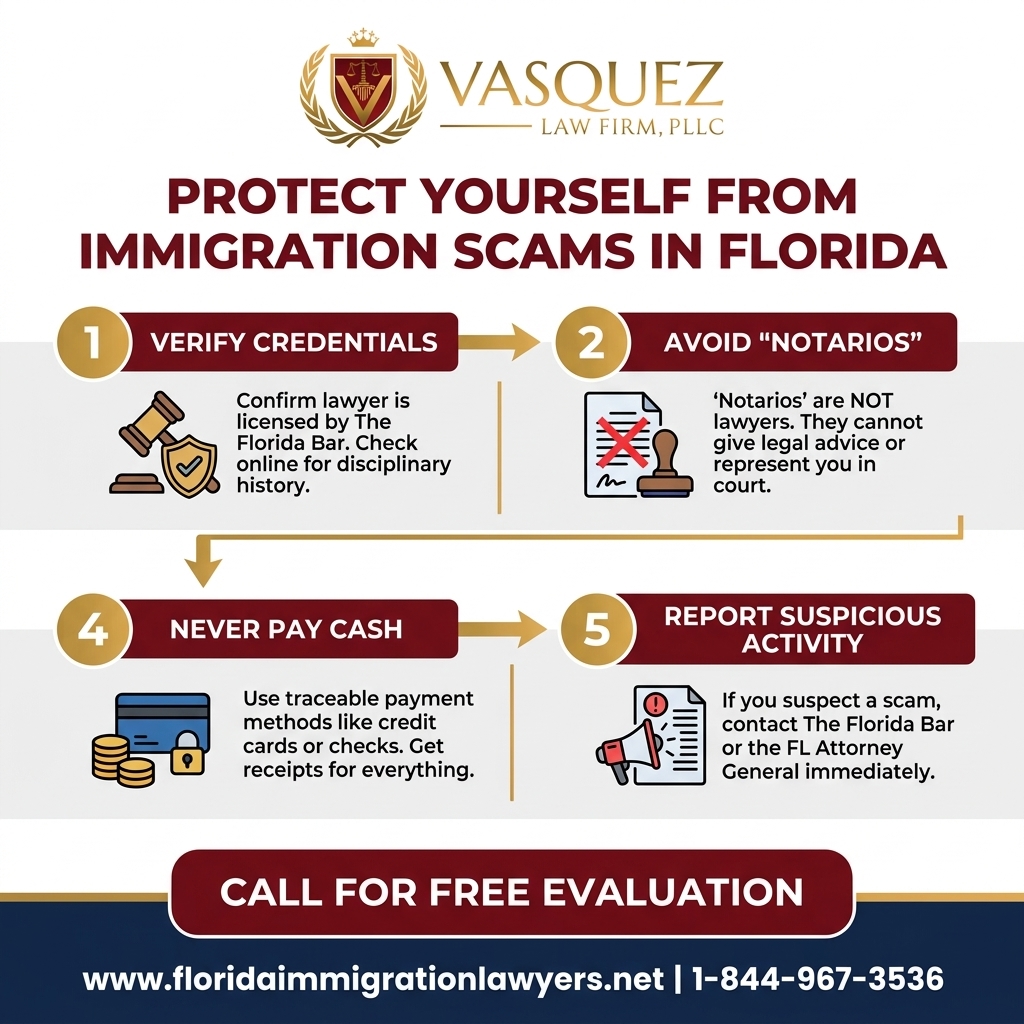
This is arguably the most pervasive and damaging scam. In many Latin American countries, a "notario público" is a highly trained legal professional, similar to an attorney. However, in the United States, a "notary public" is simply someone authorized to witness signatures, with no legal training or authority to provide legal advice on immigration matters. Fraudsters exploit this misunderstanding, presenting themselves as "notarios" and offering legal services they are not qualified to provide. They might fill out forms incorrectly, miss deadlines, or even file fraudulent applications, leading to deportation, loss of fees, and permanent bars from legal immigration. Always remember: a U.S. notary public cannot give legal advice. For legitimate legal guidance, consult a qualified attorney.
2. Fake Lawyers and Immigration Consultants
Some individuals falsely claim to be licensed attorneys or accredited representatives. They might set up impressive-looking offices, create fake websites, or use misleading titles. They often charge exorbitant fees for services they never deliver or provide incorrect advice that jeopardizes a client's immigration status. Always verify an attorney's license with the Florida Bar Association or check the accreditation of a representative with the Board of Immigration Appeals (BIA).
3. Online and Social Media Scams
The digital age has opened new avenues for scammers. They create fake government websites (often with slight misspellings or unusual domain extensions), social media profiles, or email campaigns that mimic official communications from agencies like USCIS. These scams often demand personal information or payment for "expedited processing" or "special programs" that don't exist. Be extremely cautious of unsolicited emails, texts, or calls requesting personal data or money related to your immigration case. Official government communications will rarely ask for sensitive information or payment via email or phone.
4. Marriage and Visa Fraud
This involves individuals who charge money to arrange fraudulent marriages or employment visas. While the initial promise might seem appealing, participating in such schemes is a serious federal crime with severe penalties, including fines, imprisonment, and permanent bars from ever obtaining legal status in the U.S. Always pursue legitimate pathways to immigration.
Red Flags: How to Identify a Potential Scam
Knowing what to look for can help you avoid becoming a victim. Be wary of anyone who:
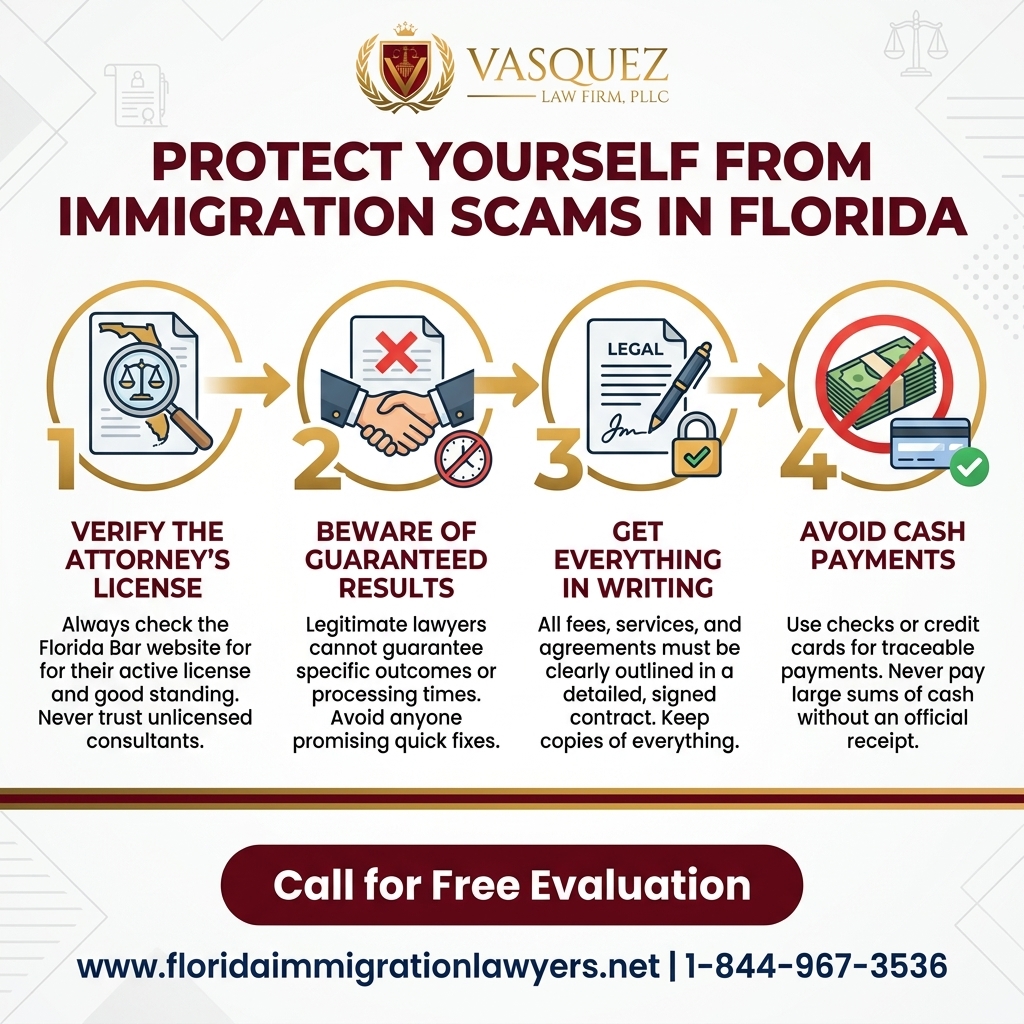
- Guarantees Results: No legitimate attorney or accredited representative can guarantee the outcome of an immigration case. The process depends on many factors, including government discretion and evolving laws.
- Demands Upfront Cash Payments: While legal fees are standard, be suspicious of anyone who insists on cash payments without receipts or avoids clear billing practices.
- Asks You to Sign Blank Forms: Never sign any document that is incomplete or that you don't fully understand.
- Refuses to Provide a Written Contract: A clear, written agreement outlining services and fees is essential for legitimate legal representation.
- Advises You to Lie: Never, under any circumstances, lie on an immigration application or during an interview. This is a serious offense that can lead to deportation and permanent bars.
- Claims to Have "Special Connections": No one has special influence with immigration officials or judges. Such claims are always fraudulent.
- Charges Exorbitant Fees for Simple Tasks: Be skeptical of unusually high fees for basic services like filling out forms.
What to Do If You Suspect a Scam or Have Been Victimized
If you encounter a suspicious offer or believe you have been a victim of immigration fraud, immediate action is crucial:
- Stop All Contact: Cease all communication with the suspected scammer. Do not respond to their calls, emails, or messages.
- Gather Evidence: Collect any documents, emails, text messages, receipts, or other evidence related to the scam. This information will be vital if you decide to report the fraud or seek legal recourse.
- Do Not Pay More Money: Do not give the scammer any more money, even if they threaten you or promise to resolve your case if you pay. This will only deepen your financial loss.
- Seek Legitimate Legal Advice: Consult with a qualified immigration attorney immediately. They can assess the damage, advise you on your legal options, and help you correct any errors made by the scammer. Our experienced immigration lawyers at Florida Immigration Lawyers are here to help you navigate these complex situations.
- Report the Scam: Reporting fraud helps protect others in the community and can lead to the prosecution of scammers.
Reporting Immigration Scams to Authorities
Reporting immigration fraud is vital for protecting your community and preventing others from falling victim. You can report scams to several agencies:
- Federal Trade Commission (FTC): The FTC collects complaints about companies, business practices, and identity theft. Visit report.ftc.gov.
- U.S. Citizenship and Immigration Services (USCIS): USCIS has a dedicated page for reporting immigration fraud. You can submit a tip online or contact the USCIS contact center. For more information, visit uscis.gov.
- Your State Attorney General's Office: Many state attorney general offices have consumer protection divisions that investigate fraud. In Florida, you can contact the Florida Attorney General's Office.
- The Florida Bar Association: If the scammer claimed to be an attorney, report them to The Florida Bar. They investigate complaints against licensed attorneys.
- Department of Justice (DOJ): The Executive Office for Immigration Review (EOIR) at the U.S. Department of Justice oversees immigration courts and has a process for filing complaints against attorneys or representatives who engage in misconduct.
Choosing Legitimate Legal Assistance
Finding trustworthy legal help is the single most important step in protecting yourself. Here’s how to ensure you're working with a legitimate professional:
- Verify Credentials: Always confirm that an attorney is licensed to practice law in Florida by checking with The Florida Bar. If you're considering an accredited representative, verify their accreditation with the Board of Immigration Appeals (BIA).
- Ask for a Written Contract: A clear, detailed contract should outline the services to be provided, the total fees, and the payment schedule. Ensure you understand all terms before signing.
- Understand the Process: A reputable attorney will explain the immigration process to you in plain language, including potential challenges, timelines, and the likelihood of success. They will manage your expectations realistically.
- Beware of "Notarios": Reiterate the danger: a U.S. notary public is NOT an attorney and cannot provide legal advice. They are not qualified to handle your immigration case.
- Seek Recommendations: Ask trusted friends, family, or community organizations for referrals. Personal recommendations can often lead you to reputable legal professionals.
At Florida Immigration Lawyers, our team of dedicated attorneys is committed to providing ethical, effective, and compassionate legal representation. We offer comprehensive services, including assistance with asylum claims and robust deportation defense, ensuring your rights are protected throughout your immigration journey. Don't hesitate to contact us for a confidential consultation.
Protecting Your Family and Future: Proactive Steps
Beyond identifying and reporting scams, taking proactive measures can significantly reduce your risk of falling victim to immigration fraud. Educating yourself and your community is a powerful defense. Here are key steps you can take to safeguard your family and secure your future:
- Stay Informed: Regularly check official government websites for the latest immigration news and policy updates. Reliable sources include U.S. Citizenship and Immigration Services (USCIS) and the U.S. Department of State. These sites offer accurate information on visa processes, application forms, and current alerts regarding scams. Avoid relying solely on social media or unofficial news sources for critical immigration information.
- Educate Your Community: Share what you learn about immigration scams with friends, family, and community members. Many scams thrive on misinformation and isolation. Hosting or attending community workshops on immigration fraud prevention can be incredibly beneficial, fostering a collective awareness and resilience against fraudsters.
- Keep Personal Documents Secure: Never give original copies of your birth certificate, passport, or other vital documents to anyone unless it's a legitimate government agency or your trusted attorney. Always keep secure copies for your records and be wary of anyone who demands your originals.
- Be Skeptical of Unsolicited Offers: If someone contacts you out of the blue offering "guaranteed" immigration services or a "special program," it's almost certainly a scam. Legitimate legal professionals typically don't solicit clients in this manner, and government agencies do not offer secret or exclusive pathways.
- Understand Fees and Receipts: Always demand a detailed receipt for any money paid. Understand the fee structure upfront and question any hidden or unexplained charges. Transparency is a hallmark of legitimate services, and a reputable attorney will provide clear billing.
- Avoid Public Wi-Fi for Sensitive Information: When accessing or submitting immigration forms or personal data online, ensure you are using a secure, private internet connection to prevent data interception. Public Wi-Fi networks are often unsecured and vulnerable to cyber threats.
- Consult Early and Often: If you have any doubts or questions about your immigration status or a process, consult with a qualified immigration attorney before taking any irreversible steps. Early consultation can prevent costly mistakes and protect your future from potential fraud or missteps.
By taking these proactive steps, you not only safeguard yourself but also contribute to building a more resilient and informed immigrant community in Florida, making it harder for fraudsters to succeed. Remember, your future and your family's well-being are too important to leave to chance or the hands of an unqualified individual.
Conclusion
Immigration scams pose a serious threat to individuals and families seeking to build a new life in Florida. By understanding the common types of fraud, recognizing red flags, and knowing where to seek legitimate assistance, you can protect yourself and your loved ones from devastating consequences. Always verify credentials, demand transparency, and never hesitate to report suspicious activity. If you need reliable, ethical, and experienced legal guidance for your immigration journey, do not hesitate to reach out to our team. We are here to provide the support and expertise you deserve. Contact Florida Immigration Lawyers today for a consultation and take the first step towards securing your future safely and legally.
Do Not Navigate This Process Alone
Our experienced immigration attorneys are ready to fight for you. Get a free, confidential consultation today.
Se Habla Español
Frequently Asked Questions
Florida Immigration Lawyers
Immigration Attorney | Founder, Vasquez Law Firm
U.S. Air Force veteran and immigration attorney with thousands of cases resolved. J.D., NCCU School of Law. AILA member. Admitted to the 4th, 5th, and 11th Circuit Courts.
Available 24/7 - Free Evaluations
Related Legal Services
Our Florida immigration attorneys can help you with citizenship and naturalization, family immigration services and immigration practice areas. Call today at 1-844-967-3536 for a free consultation.
Related Links
Related Topics
Free Legal Consultation
Discuss your case with our experienced attorneys. We're available 24/7.
Se Habla Español - Estamos aquí para ayudarle.
Related Articles
Immigration Services in Kissimmee Florida | VLF Florida
Explore immigration services in Kissimmee, Florida, and learn about the comprehensive support available for individuals and families. Discover how Florida Immigration Lawyers can assist you with a free consultation.
Immigration Services Port St Lucie & Treasure Coast 2026
Seeking expert immigration services in Port St Lucie, the Treasure Coast, or anywhere in Florida? Florida Immigration Lawyers provides comprehensive legal assistance for family visas, employment petitions, naturalization, asylum, and deportation defense. With the U.S. immigration system constantly changing, having experienced legal counsel is crucial for navigating complex procedures and achieving a successful outcome. Our dedicated team serves clients in Kissimmee and across the Treasure Coast, offering personalized guidance and free consultations. Learn how we can help you with your immigration journey in 2026, ensuring compliance with all federal regulations and local requirements. Contact us today to discuss your unique situation.
DACA Work Permit Florida: Your 2026 Guide to Employment
For DACA recipients in Florida, understanding the 2026 process for obtaining or renewing a work permit (EAD) is crucial for employment and stability. This comprehensive guide covers eligibility criteria, step-by-step application procedures, essential documents, and expected timelines. Learn how to avoid common mistakes and when to seek legal assistance to ensure a successful application. Florida Immigration Lawyers provides expert guidance for DACA recipients across the state, including Orlando, helping you navigate the complex legal landscape with confidence. Contact us for a free consultation to protect your deferred action and work authorization.
Understanding the Asylum One-Year Deadline in Florida
Learn about the asylum one-year filing deadline in Florida and how it can affect your eligibility. Understand the exceptions and get expert legal assistance from Florida Immigration Lawyers.
