2026 Winter Olympics Ice Hockey Immigration Florida: Your Guide
For athletes, coaches, and support staff involved in 2026 Winter Olympics ice hockey, understanding immigration to Florida is crucial. This guide covers essential visa categories like P-1 for internationally recognized athletes and O-1 for extraordinary ability, detailing the step-by-step application process from petition filing with USCIS to consular interviews. Learn about the required documentation, potential timelines, and cost factors involved. We highlight common mistakes to avoid, such as choosing the wrong visa or submitting incomplete paperwork, which can lead to significant delays or denials. Florida Immigration Lawyers offers expert guidance for your 2026 Winter Olympics ice hockey immigration needs, ensuring a smooth process for your training or professional activities in Florida. Contact us for a free consultation to protect your Olympic dreams.
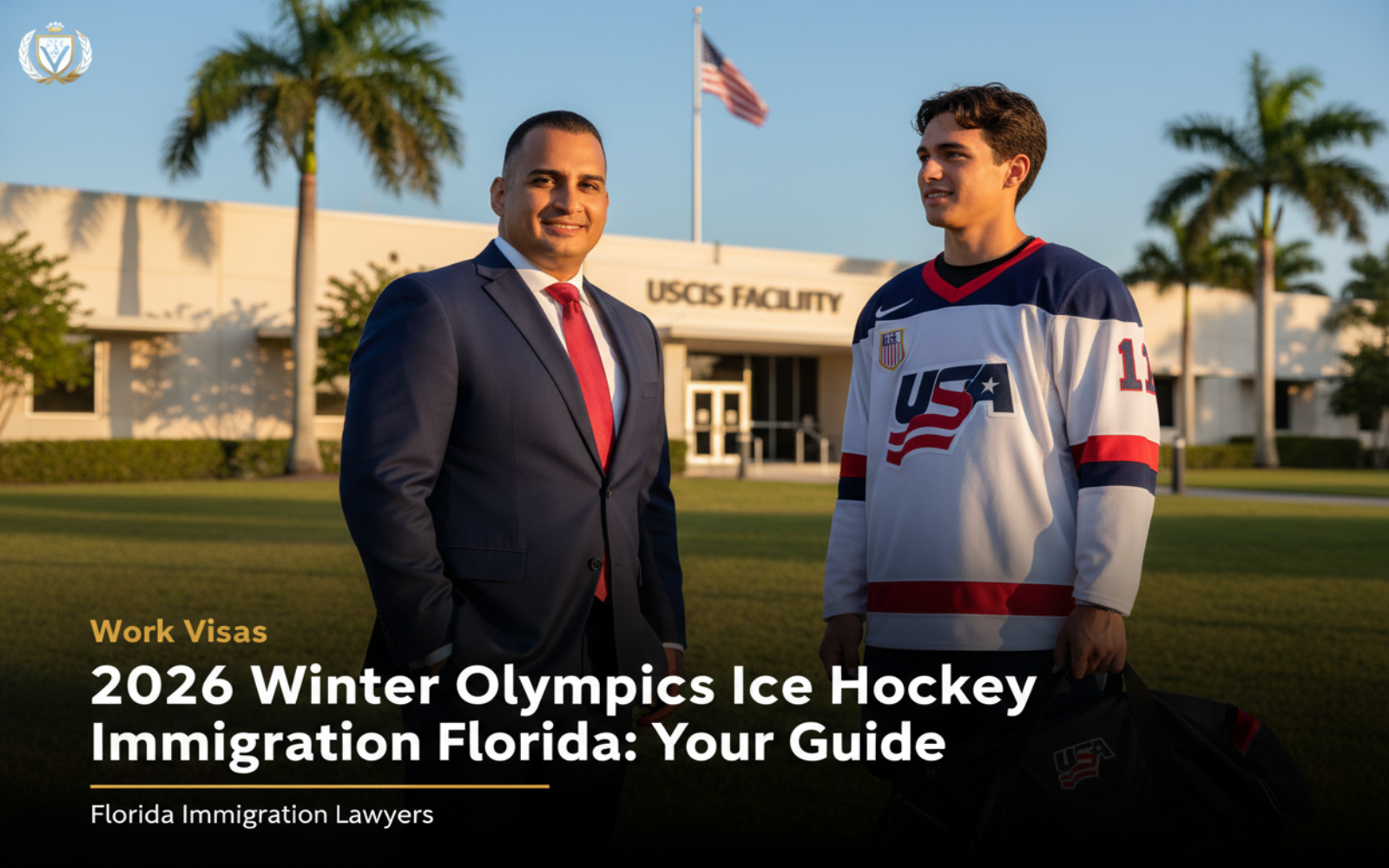
Athletes, coaches, and support staff for the 2026 Winter Olympics ice hockey events intending to train or reside in Florida require specific visas. Understanding the P-1, O-1, and other relevant temporary worker categories is crucial for legal entry and stay in the U.S. and Florida. Proper legal guidance ensures compliance with complex immigration laws.
- Key Visa Types: P-1 (Athletes), O-1 (Extraordinary Ability), B-1 (Business Visitor).
- Application Process: Involves petitions to USCIS and consular processing.
- Required Documents: Passports, forms, evidence of international recognition, contracts.
- Legal Assistance: Essential for navigating complex requirements and avoiding common pitfalls.
- Florida Relevance: The state serves as a significant training and preparation hub for international sports professionals.
The dream of competing in the 2026 Winter Olympics is shared by countless athletes worldwide. For many, Florida offers unparalleled training facilities and a vibrant sports culture, making it a critical hub for preparation, even for winter sports like ice hockey. If you are an athlete, coach, or essential support staff member involved with 2026 Winter Olympics ice hockey immigration Florida, understanding your immigration options is paramount.
Navigating the complex landscape of U.S. immigration law can be daunting, especially when your career and Olympic aspirations are on the line. This comprehensive guide will illuminate the pathways available for international sports professionals seeking to come to Florida for activities related to the 2026 Winter Olympics ice hockey events. We will cover visa categories, application steps, required documentation, and common challenges.
Do not let immigration hurdles jeopardize your Olympic journey. For personalized guidance and expert representation, call Florida Immigration Lawyers at 1-844-967-3536 for a free consultation. Our experienced team is ready to assist you.
Understanding Immigration for 2026 Winter Olympics Ice Hockey Professionals in Florida
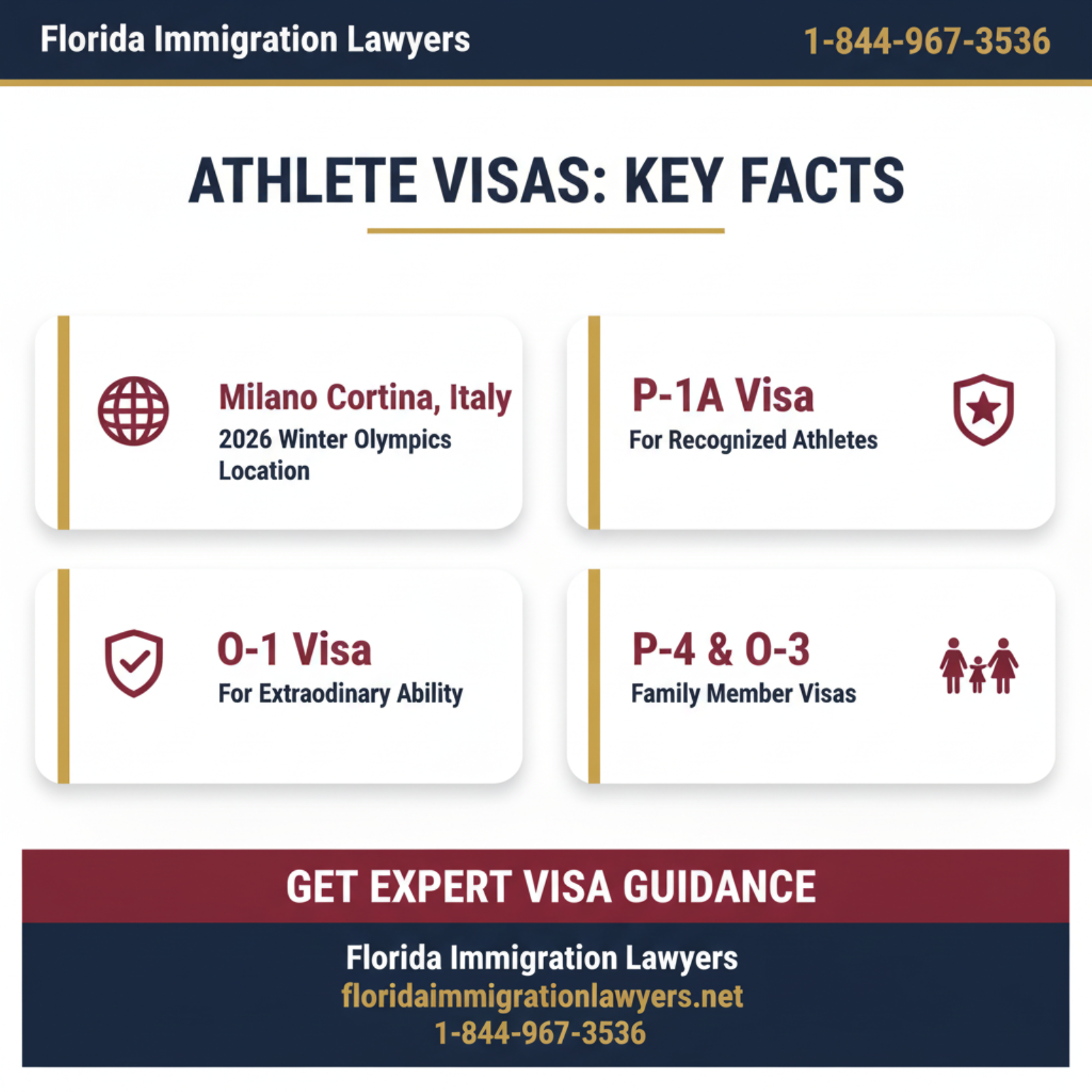
Florida, renowned for its sunny climate and world-class sports infrastructure, plays a surprising yet significant role for international athletes. While the 2026 Winter Olympics ice hockey events will take place in Milano Cortina, Italy, many national teams and individual athletes choose Florida for year-round training, conditioning, and exhibition games. This makes the state a key location for understanding sports-related immigration.
For those involved in 2026 Winter Olympics ice hockey immigration Florida, securing the correct visa is the first crucial step. The U.S. immigration system offers several nonimmigrant visa categories tailored for athletes and support personnel. Choosing the appropriate visa depends on the nature of your involvement, your qualifications, and the duration of your stay.
Key Visa Categories for Athletes and Support Staff
Understanding the specific requirements for each visa category is vital. A misstep here can lead to significant delays or even denial of your application. Florida Immigration Lawyers can help assess your unique situation to determine the best path forward.
- P-1 Visa (Internationally Recognized Athletes, Teams, or Entertainment Groups): This is the most common visa for athletes coming to the U.S. to compete in specific athletic competitions or to perform with a team. To qualify for a P-1 visa, you must be coming to the U.S. temporarily to perform at a specific athletic competition as an individual or part of a group or team. You must have an internationally recognized level of performance.
- O-1 Visa (Individuals with Extraordinary Ability or Achievement): The O-1 visa is for individuals who possess extraordinary ability in the sciences, arts, education, business, or athletics, or who have a demonstrated record of extraordinary achievement in the motion picture or television industry. This visa is typically for top-tier athletes or coaches who have sustained national or international acclaim.
- B-1 Visa (Business Visitor): In some limited circumstances, athletes or support staff may enter on a B-1 visa if they are participating in amateur competitions for which they will receive no salary or prize money (other than expenses), or if they are attending short-term business meetings related to their athletic career. This is generally not suitable for professional athletes or extended stays.
- H-2B Visa (Temporary Non-Agricultural Workers): This visa may be applicable for certain essential support personnel, such as specialized trainers or equipment managers, who are coming to the U.S. for a temporary period to perform non-agricultural labor or services where there are not enough U.S. workers who are able, willing, qualified, and available.
Each of these categories has distinct criteria and application processes. For instance, P-1 and O-1 visas generally require an employer or sponsor to file a petition on your behalf with U.S. Citizenship and Immigration Services (USCIS). Learn more about these options on our business immigration page.
Step-by-Step Guide to Securing Your Immigration Status for the 2026 Winter Olympics
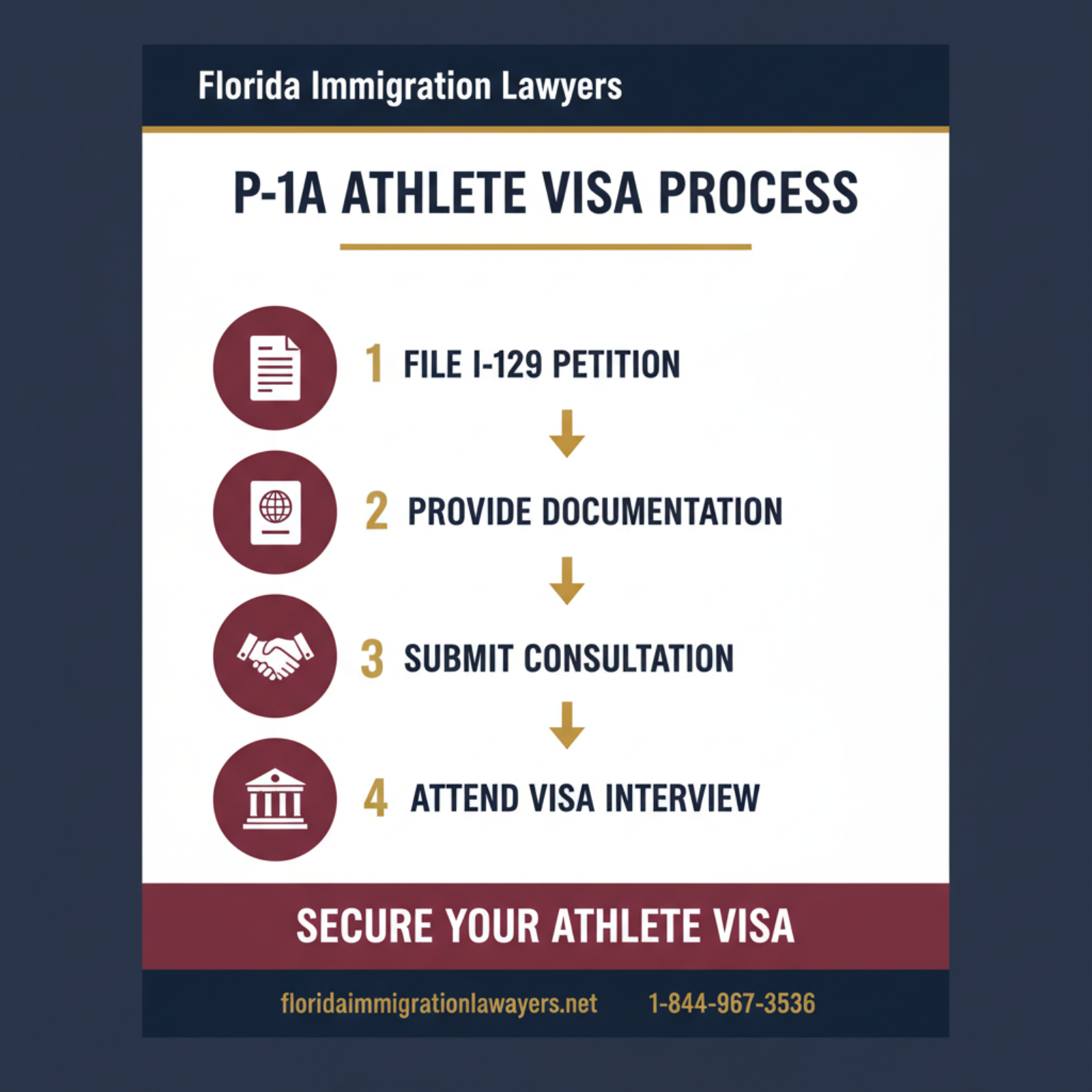
The process of obtaining an appropriate visa for 2026 Winter Olympics ice hockey immigration Florida can be intricate. Following a structured approach is critical to success. Here is a general step-by-step guide for most athlete-related visas:
-
Determine the Appropriate Visa Category: Work with an experienced immigration attorney to evaluate your qualifications and the nature of your activities in Florida. This initial assessment is crucial for selecting the correct visa, such as a P-1 or O-1, to align with your Olympic aspirations.
-
Identify a U.S. Sponsoring Organization or Employer: For most work-related visas (P-1, O-1, H-2B), a U.S. employer, agent, or organization must file a petition on your behalf. This could be a professional sports team, a training facility, or an agent representing you in the U.S.
-
Gather Required Documentation and Evidence: Collect all necessary personal documents, professional credentials, and evidence of your international recognition or extraordinary ability. This includes contracts, competition schedules, awards, media coverage, and letters of recommendation. Thorough preparation at this stage is vital.
-
File Form I-129, Petition for a Nonimmigrant Worker, with USCIS: Your U.S. sponsor will file Form I-129 along with all supporting documentation and the appropriate filing fees. USCIS will review the petition to determine if you meet the eligibility requirements for the requested visa category. This process is governed by sections of the Immigration and Nationality Act (INA), such as 8 U.S.C. § 1101(a)(15)(P) for P visas and 8 CFR 214.2(p).
-
Wait for Petition Approval: Once USCIS approves your I-129 petition, they will send an I-797 Approval Notice. This notice is essential for the next step of the process. Premium processing may be available for an additional fee to expedite the USCIS review.
-
Complete the DS-160 Online Nonimmigrant Visa Application: After petition approval, you will need to complete the DS-160 form electronically. This is the application for the nonimmigrant visa stamp itself. You will also need to pay the visa application fee.
-
Schedule and Attend a Visa Interview at a U.S. Embassy or Consulate: Most applicants will need to attend an interview in their home country or country of residence. During the interview, a consular officer will review your application, documents, and ask questions to determine your eligibility and intent. Be prepared to clearly articulate your purpose of visit and ties to your home country.
-
Receive Your Visa and Enter the U.S.: If the interview is successful, your passport will be stamped with the appropriate visa. Upon arrival at a U.S. port of entry, a Customs and Border Protection (CBP) officer will review your documents and grant you admission for a specific period. It is crucial to maintain your nonimmigrant status throughout your stay in Florida.
Essential Document Checklist for Olympic-Related Visas
A meticulous approach to documentation is crucial for a successful visa application for 2026 Winter Olympics ice hockey immigration Florida. Missing or incorrect documents can lead to delays or even denial. This checklist outlines common requirements, but your specific case may demand additional items.
- Valid Passport: Must be valid for at least six months beyond your intended period of stay in the U.S.
- Nonimmigrant Visa Application (Form DS-160): Confirmation page and barcode.
- Visa Application Fee Payment Receipt: Proof of payment for the DS-160.
- Photographs: U.S. visa-compliant photos.
- Form I-797, Approval Notice: From USCIS, confirming the approval of your I-129 petition.
- Letter of Invitation/Contract: From the U.S. sponsoring organization, team, or agent, detailing the nature, duration, and terms of your engagement in Florida.
- Evidence of International Recognition (P-1 Visa): Documentation proving your high level of achievement in ice hockey, such as:
- Participation in major international competitions.
- Significant awards or honors.
- Media articles or publications about your achievements.
- Letters from recognized experts in the field.
- Evidence of Extraordinary Ability (O-1 Visa): More stringent criteria, including:
- Receipt of a major internationally recognized award (e.g., Olympic medal, World Championship).
- Documentation of nationally or internationally recognized prizes or awards.
- Membership in associations that require outstanding achievement.
- Published material in professional journals or major media.
- High salary or other remuneration for services.
- Itinerary of Activities: Detailed schedule of your training, competitions, or performances in Florida and other U.S. locations.
- Curriculum Vitae (CV) or Resume: Outlining your athletic and professional background.
- Proof of Intent to Depart the U.S.: Evidence of strong ties to your home country, such as property ownership, family commitments, or job offers abroad, demonstrating you intend to return after your temporary stay.
- Family Documents (if applicable): Marriage certificates, birth certificates for spouses or children applying for derivative visas (P-4, O-3).
For more detailed information on general immigration requirements, you can visit our immigration practice area page.
Timeline and Processing Expectations for Sports Visas in Florida
Understanding the potential timeline for your visa application is crucial for planning your involvement with 2026 Winter Olympics ice hockey immigration Florida. Immigration processing times can vary significantly based on several factors, including the specific visa category, the USCIS service center handling the petition, and the caseload at the U.S. embassy or consulate where you apply.
USCIS Petition Processing
For I-129 petitions (P-1, O-1, H-2B), regular processing can take anywhere from a few months to over a year. USCIS provides estimated processing times on its website, which are regularly updated. These are only estimates and are subject to change. For up-to-date information, always refer to the official USCIS processing times page.
Premium Processing: For an additional fee, many I-129 petitions are eligible for premium processing. This service guarantees a USCIS response (approval, denial, Request for Evidence, or Notice of Intent to Deny) within 15 calendar days. This option is highly recommended for athletes and support staff with tight schedules related to the 2026 Winter Olympics.
Consular Processing and Interview Wait Times
After USCIS approves the I-129 petition, the case is sent to the National Visa Center (NVC), which then forwards it to the U.S. embassy or consulate in your home country. The wait times for scheduling a visa interview can vary widely by location, from a few days to several months. Some embassies may have expedited appointment options for urgent cases, but these are granted at the discretion of the consular section.
It is advisable to check the specific wait times for interviews at the embassy or consulate where you plan to apply. You can find this information on the U.S. Department of State's Visa Wait Times page.
Given the 2026 event date, starting your immigration process well in advance is critical. Procrastination can lead to missed opportunities, especially for key personnel involved in the 2026 Winter Olympics ice hockey immigration Florida preparation.
Cost Factors and Fee Breakdown for Immigration Applications
Understanding the financial aspects of your immigration journey for 2026 Winter Olympics ice hockey immigration Florida is an important part of the planning process. There are several fees associated with applying for U.S. visas, which can vary depending on the specific visa category and services requested. It is important to note that these fees are subject to change by government agencies, and specific amounts are not provided here.
Government Filing Fees
- USCIS Petition Filing Fees: For forms like the I-129 (Petition for a Nonimmigrant Worker), there is a base filing fee. This fee is paid to USCIS when the petition is submitted by your U.S. sponsor or employer.
- Premium Processing Fee: If you opt for expedited processing of your I-129 petition, an additional fee is required for the premium processing service. This ensures a faster response from USCIS.
- Visa Application Processing Fee (MRV Fee): This fee is paid to the U.S. Department of State for processing your DS-160 nonimmigrant visa application. It is typically paid before your consular interview.
- Biometrics Fee: In some cases, applicants may be required to attend a biometrics appointment, which may incur a separate fee.
These government fees are mandatory and non-refundable, regardless of the outcome of your application. Always verify the most current fee schedule on the official USCIS and Department of State websites.
Legal Fees for Attorney Services
Hiring an experienced immigration attorney, like those at Florida Immigration Lawyers, is a critical investment. Legal fees cover the comprehensive services provided by your attorney, which typically include:
- Initial consultation and case assessment.
- Guidance on selecting the most appropriate visa category.
- Assistance with gathering and organizing all required documentation.
- Preparation and filing of the I-129 petition with USCIS.
- Drafting support letters and statements.
- Responding to Requests for Evidence (RFEs) from USCIS.
- Preparation for the consular interview.
- Ongoing communication and case management.
The cost of legal services will depend on the complexity of your case, the specific visa sought, and the amount of work involved. A clear fee agreement will be established at the outset of your representation. Investing in legal expertise can save you time, stress, and potential costly mistakes, ensuring your application for 2026 Winter Olympics ice hockey immigration Florida is as strong as possible.
Do not navigate this process alone. The stakes are too high for your Olympic dreams. Contact Florida Immigration Lawyers today for expert assistance with your immigration needs. We are here to provide the guidance and support you deserve.
Common Mistakes to Avoid During Your Immigration Journey to Florida
The U.S. immigration system is notoriously complex. Even minor errors can lead to significant delays, denials, or even long-term bars from entry. For those involved with 2026 Winter Olympics ice hockey immigration Florida, avoiding these common mistakes is paramount:
-
Choosing the Wrong Visa Category: Applying for a visa that doesn't fit your specific activities or qualifications can lead to an outright denial. For example, trying to enter on a B-1 visitor visa for professional competition is usually inappropriate. Consequence: Wasted time and money, and potential ineligibility for future applications.
-
Incomplete or Inaccurate Documentation: Submitting an application with missing forms, outdated information, or errors is a frequent cause of Requests for Evidence (RFEs) or denials. Consequence: Significant delays, increased costs, and ultimately, rejection.
-
Missing Deadlines: Immigration applications often have strict deadlines for submission or responses to RFEs. Failing to meet these can result in the termination of your application or even jeopardize your legal status. Consequence: Loss of eligibility, deportation proceedings if already in the U.S.
-
Misrepresenting Information: Providing false or misleading information on your application, even unintentionally, can be considered visa fraud. Consequence: Permanent ineligibility for U.S. visas and entry, and potential criminal penalties.
-
Failing to Prove Extraordinary Ability or International Recognition: For P-1 or O-1 visas, robust evidence is required to demonstrate your qualifications. Generic letters or insufficient proof will not suffice. Consequence: Denial of the petition, preventing you from obtaining the visa.
-
Overstaying a Visa: Remaining in the U.S. beyond your authorized period of stay, even by a single day, can have severe consequences, including unlawful presence. Consequence: Automatic invalidation of your visa, bars from future U.S. entry, and potential deportation proceedings.
-
Ignoring Changes in Immigration Law: Immigration laws and policies are subject to frequent changes. Relying on outdated information can lead to non-compliance. Consequence: Application issues, legal violations.
-
Traveling Without Proper Authorization: Attempting to enter the U.S. without the correct visa or while an application is pending can lead to denial of entry at the border. Consequence: Being turned away at the port of entry, blacklisting for future travel.
-
Not Understanding Employer Responsibilities: If you are a sponsoring organization or team, failing to meet your obligations can result in penalties. Consequence: Fines, legal action, reputational damage.
-
Attempting to Self-Petition Complex Cases: While some simple immigration matters can be handled independently, complex athlete visas often require nuanced legal arguments and extensive documentation. Consequence: High risk of errors, delays, and denial, often costing more in the long run.
-
Poor Interview Preparation: A consular interview is a critical step. Being unprepared to answer questions clearly and confidently can lead to visa denial. Consequence: Visa refusal, requiring a new application process.
-
Failing to Seek Legal Counsel: Navigating these complexities without professional legal guidance is perhaps the biggest mistake. An attorney ensures compliance, identifies potential issues, and strengthens your case. Consequence: Increased risk of critical errors and unfavorable outcomes.
When to Call a Florida Immigration Lawyer for 2026 Winter Olympics Ice Hockey Matters
While this guide provides general information, every immigration case is unique. The intricacies of sports visas, especially for high-profile events like the 2026 Winter Olympics, demand specialized legal knowledge. Knowing when to seek professional legal assistance can make all the difference for your 2026 Winter Olympics ice hockey immigration Florida journey.
Specific Scenarios Requiring Legal Help:
- Complex Case Scenarios: If your situation involves unique circumstances, such as a prior visa denial, criminal history, or a need for an expedited process, an attorney is essential.
- Choosing the Right Visa: Deciding between a P-1, O-1, or other categories can be confusing. A lawyer will assess your qualifications and goals to recommend the most appropriate visa.
- Sponsorship by Organizations: If you are a sports organization, team, or agent sponsoring an international athlete, an attorney can ensure compliance with all employer responsibilities and help navigate the petition process.
- Responding to RFEs: If USCIS issues a Request for Evidence, a lawyer can help you provide a comprehensive and timely response to avoid denial.
- Consular Interview Preparation: An attorney can prepare you for your visa interview, ensuring you understand potential questions and how to present your case effectively.
- Bringing Family Members: If you plan to bring your spouse or children, a lawyer can assist with the derivative visa applications (family immigration).
- Previous Immigration Issues: Any past overstays, visa denials, or other immigration violations necessitate legal counsel to address potential admissibility issues.
Warning Signs and Red Flags:
- You feel overwhelmed by the paperwork and legal jargon.
- You are unsure if you meet the eligibility criteria for any specific visa.
- You have a tight deadline for your application related to the 2026 Winter Olympics schedule.
- You receive communication from USCIS or a U.S. embassy that you do not fully understand.
- You are concerned about potential issues during your visa interview.
Florida Immigration Lawyers has a proven track record of assisting athletes, coaches, and support staff with their U.S. immigration needs. Our team understands the nuances of sports immigration and the importance of timely, accurate applications. We are well-versed in handling complex cases, including asylum and citizenship matters, and providing robust deportation defense if unforeseen issues arise. Visit our attorneys page to learn more about our team, or contact us directly.
About Florida Immigration Lawyers
Florida Immigration Lawyers is a leading immigration law firm dedicated to serving individuals, families, and businesses across the entire state of Florida. With a deep understanding of U.S. immigration law and a commitment to our clients, we provide comprehensive legal services tailored to meet diverse immigration needs. Our firm is proud to be a beacon of hope and guidance for those navigating the complexities of the U.S. immigration system, including individuals involved in international sporting events like the 2026 Winter Olympics ice hockey immigration Florida.
Our Services: We offer a wide range of immigration services, including family-based immigration, employment-based visas, deportation defense, asylum applications, naturalization and citizenship, and investor visas. Our expertise extends to temporary visas for athletes and professionals, ensuring that your Olympic dreams or related professional endeavors in Florida are supported by sound legal strategy.
Why Choose Us: Our dedicated team of attorneys brings extensive experience, a client-first approach, and a track record of successful outcomes. We understand the unique challenges faced by immigrants and strive to provide empathetic, efficient, and effective legal representation. We are committed to keeping you informed at every step, offering transparent communication and honest assessments of your case.
Contact Us: We are available 24/7 to address your urgent immigration concerns. We offer free consultations to help you understand your options and develop a strategic plan. Let Florida Immigration Lawyers be your trusted partner in achieving your immigration goals in Florida.
Phone: 1-844-967-3536
Website: https://www.floridaimmigrationlawyers.net
Serving: All of Florida
Sources and References
- U.S. Citizenship and Immigration Services (USCIS)
- U.S. Department of State - Bureau of Consular Affairs
- Executive Office for Immigration Review (EOIR)
- 8 U.S.C. Chapter 12 - Immigration and Nationality Act (INA)
- 8 CFR Part 214 - Nonimmigrant Classes
- USCIS Policy Manual - Volume 2: Nonimmigrants
This article provides general legal information and is not intended as legal advice. Every case is unique, and outcomes depend on specific facts and circumstances. Contact an attorney for advice about your particular situation. Immigration laws are subject to change, and it is crucial to consult with a qualified legal professional for the most current and accurate guidance.
Your journey to Florida for 2026 Winter Olympics ice hockey immigration Florida related activities deserves the best legal support. Do not leave your future to chance. Our dedicated team at Florida Immigration Lawyers is ready to provide the expert guidance you need to navigate the complexities of U.S. immigration law successfully.
Call us today at 1-844-967-3536 for a free, confidential consultation. Se Habla Español - Estamos aquí para ayudarle.
Frequently Asked Questions
Florida Immigration Lawyers
Legal Team
Our experienced attorneys at Florida Immigration Lawyers have been serving clients across Florida for over 20 years. We specialize in immigration, personal injury, criminal defense, workers compensation, and family law.