TPS Honduras 2026: Navigating Your Florida Immigration Status
As 2026 unfolds, Honduran nationals in Florida holding Temporary Protected Status (TPS) face continued uncertainty due to ongoing federal litigation. This comprehensive guide from Florida Immigration Lawyers explores the current status of TPS Honduras, detailing the complex renewal process, essential documentation, and expected timelines. We address common concerns, including eligibility, the impact of past termination announcements, and the critical need for re-registration. With a focus on Florida-specific challenges and opportunities, this article provides actionable advice for maintaining your protected status. Learn how to avoid common mistakes and when to seek expert legal counsel to navigate this evolving immigration landscape successfully. Our firm is dedicated to supporting the Honduran community across Florida.
Temporary Protected Status (TPS) for Honduras remains a complex issue as of 2026, with its future subject to ongoing legal challenges and potential policy changes. Honduran beneficiaries in Florida must stay informed about renewal deadlines and eligibility requirements to maintain their protected status. Proactive legal guidance is crucial to navigate these uncertainties effectively.
- The status of TPS Honduras in 2026 is still evolving due to court litigation.
- Beneficiaries must prepare for potential renewal applications to maintain protection.
- Eligibility for TPS requires continuous residence and physical presence in the U.S.
- Seeking expert legal advice from an immigration lawyer is highly recommended.
- Florida residents with TPS Honduras need to pay close attention to official USCIS announcements.
TPS Honduras 2026: Navigating Your Florida Immigration Status
For many Honduran nationals residing in Florida, the year 2026 brings renewed questions and concerns about their Temporary Protected Status (TPS). The legal landscape surrounding TPS has been in flux for years, creating uncertainty for thousands of individuals who have built lives and contributed to communities across our state, from Hollywood to Miami and beyond.
Understanding your immigration status, potential renewal requirements, and the latest legal developments is paramount. This comprehensive guide from Florida Immigration Lawyers aims to provide clarity on TPS Honduras 2026, helping you navigate this critical period with confidence.
We understand the anxiety and stress that come with immigration uncertainty. Our goal is to empower you with accurate information and expert legal support. If you have questions or need personalized guidance regarding your TPS, do not hesitate. Call Florida Immigration Lawyers at 1-844-967-3536 for a free consultation.
Understanding Temporary Protected Status (TPS) for Honduras in 2026
Temporary Protected Status (TPS) is a humanitarian immigration benefit granted by the United States government to eligible nationals of designated countries. This designation is typically made when conditions in a country temporarily prevent its nationals from returning safely, or when the country is unable to handle the return of its nationals adequately.
These conditions can include ongoing armed conflict, environmental disaster, or other extraordinary and temporary circumstances. TPS provides work authorization and protection from deportation for eligible individuals.
The Evolving Legal Landscape for Honduran TPS Holders
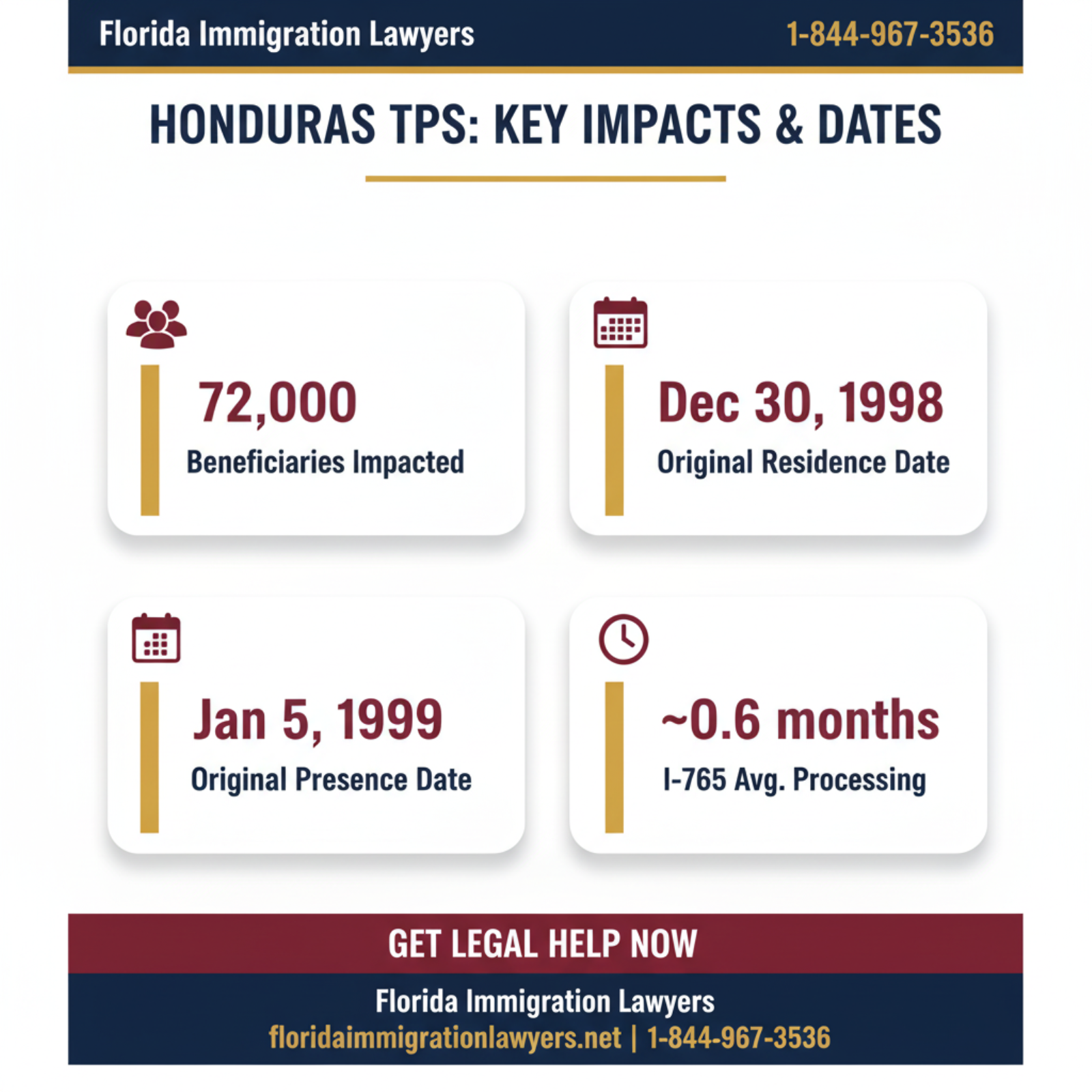
Honduras was first designated for TPS in January 1999 following Hurricane Mitch. Since then, the status has been extended numerous times. However, the Trump administration announced the termination of TPS for Honduras, effective January 5, 2020, with a delayed effective date due to ongoing litigation.
As of March 2026, the termination of TPS for Honduras, along with several other countries, remains enjoined by federal court orders. This means that while the termination was announced, it has not yet gone into effect for most beneficiaries. The legal challenges, particularly the Ramos v. Mayorkas (formerly Ramos v. Nielsen) lawsuit, have played a critical role in preserving TPS for many Hondurans.
The outcome of these lawsuits will ultimately determine the long-term future of TPS for Honduras. This ongoing litigation means that beneficiaries continue to maintain their status and work authorization under a series of extensions and re-registration periods, which are announced by USCIS. It is crucial to stay updated with official announcements from the Department of Homeland Security (DHS) and U.S. Citizenship and Immigration Services (USCIS).
Many individuals ask, "Will TPS for Honduras be extended in 2026?" The answer depends on the resolution of the legal challenges and any new designations by the current administration. While no new extension has been definitively announced for *beyond* the current court-ordered protections, beneficiaries are typically allowed to maintain their status and re-register until the litigation is resolved. It is not uncommon for extensions to be granted in six or eighteen-month increments as legal proceedings continue.
Regarding the question, "Did Trump cancel TPS for Honduras?" The Trump administration did announce the termination of TPS for Honduras. However, federal court injunctions have prevented this termination from taking full effect for many beneficiaries, leading to the current state of uncertainty and extensions. The legal battle continues to shape the reality for Honduran TPS holders.
Why TPS Matters to Florida Communities
Florida is home to a significant population of Honduran TPS beneficiaries, many of whom have resided in the state for decades. These individuals are deeply integrated into Florida's economy and social fabric, working in various sectors and raising families.
In cities like Hollywood, Orlando, and Miami, Honduran TPS holders contribute substantially to local businesses and communities. The potential termination of TPS would have a profound impact, potentially leading to family separations and economic disruption across the state. The stability provided by TPS allows these individuals to contribute fully to Florida's vibrant culture and economy.
For more information on the broader immigration landscape and how it affects Florida residents, please visit our immigration practice area page.
Navigating Your TPS Honduras 2026 Renewal Process: A Step-by-Step Guide
Even with ongoing litigation, TPS beneficiaries are generally required to re-register during designated periods to maintain their status. Failing to re-register can put your protection at risk. This guide outlines the typical steps involved in the TPS renewal process.
-
Stay Informed Through Official Channels: Regularly check the official USCIS website and announcements from the Department of Homeland Security. These are the primary sources for information on re-registration periods, deadlines, and any changes to the TPS designation for Honduras.
Relying on unofficial sources can lead to misinformation and missed deadlines. We recommend setting up alerts for USCIS news releases.
-
Determine Your Eligibility: To re-register for TPS, you must continue to meet the initial eligibility requirements. This includes maintaining continuous physical presence in the U.S. and continuous residence since the initial designation. You must also not have been convicted of certain crimes or be deemed inadmissible under specific grounds.
Any changes in your criminal history or immigration record should be carefully reviewed with an attorney.
-
Gather Required Documents: Begin collecting all necessary documentation well in advance of the re-registration period. This includes proof of your identity, nationality, continuous residence, and continuous physical presence in the United States. We will detail these documents in the next section.
Having all documents ready will streamline your application process.
-
Complete Forms I-821 and I-765: You will typically need to file Form I-821, Application for Temporary Protected Status, and Form I-765, Application for Employment Authorization. Both forms must be completed accurately and truthfully.
Ensure all questions are answered, and pay close attention to instructions to avoid delays.
-
File Your Application: Submit your completed forms and all supporting documentation to the correct USCIS filing address. The filing address can vary, so always check the latest USCIS instructions for Form I-821. Include the appropriate fees or a fee waiver request.
It is advisable to send your application via certified mail with a return receipt to confirm delivery.
-
Attend Biometrics Appointment: After filing, USCIS will typically send you an appointment notice for biometrics collection. This involves providing fingerprints, a photograph, and a signature. Ensure you attend this appointment as scheduled.
Missing your biometrics appointment without rescheduling can lead to delays or even denial of your application.
-
Await Decision: Once USCIS has processed your application and biometrics, they will issue a decision. This can take several months. During this time, you may receive requests for additional evidence (RFE) if more information is needed.
Continue to monitor your case status online using the receipt number provided by USCIS.
Key Deadlines and Filing Periods
Due to the ongoing litigation, USCIS has periodically extended the validity of TPS-related documentation for Honduran beneficiaries. These extensions are usually announced via Federal Register notices. It is critical to adhere to the announced re-registration periods, which are generally 60 days long.
Missing a re-registration deadline without good cause can result in the loss of your TPS. Always consult the most recent Federal Register notice or the USCIS TPS Honduras webpage for the exact dates applicable to your situation in 2026. Proactive planning is key to maintaining your protected status.
Essential Document Checklist for TPS Honduras 2026 Applicants
A complete and accurate application package is vital for successful TPS re-registration. Here is a general list of documents you will typically need to provide. Remember to submit copies, not originals, unless specifically requested by USCIS.
- Proof of Identity and Nationality:
- Copy of your birth certificate from Honduras
- Copy of your Honduran passport (if available)
- Copy of any identity document with your photograph and/or fingerprint issued by your country of origin (e.g., national identity card)
- Proof of Entry into the United States (if available):
- Copy of Form I-94, Arrival/Departure Record
- Copy of any passport pages with admission stamps
- Proof of Continuous Residence in the U.S. since the initial designation date:
- Copies of rent receipts, utility bills, or leases
- Copies of employment records (pay stubs, W-2 forms, letters from employers)
- Copies of school records (transcripts, report cards) for yourself or your children
- Copies of medical records or hospital records
- Copies of sworn affidavits from individuals who can attest to your residence
- Proof of Continuous Physical Presence in the U.S. since the initial designation date:
- Similar documents to continuous residence, showing your physical presence in the U.S. on specific dates
- Copies of previous TPS-related documents:
- Previous Form I-797, Approval Notices for TPS
- Previous Employment Authorization Documents (EADs)
- Two passport-style photographs
- Any court dispositions or police records for any arrests or convictions (even if charges were dropped)
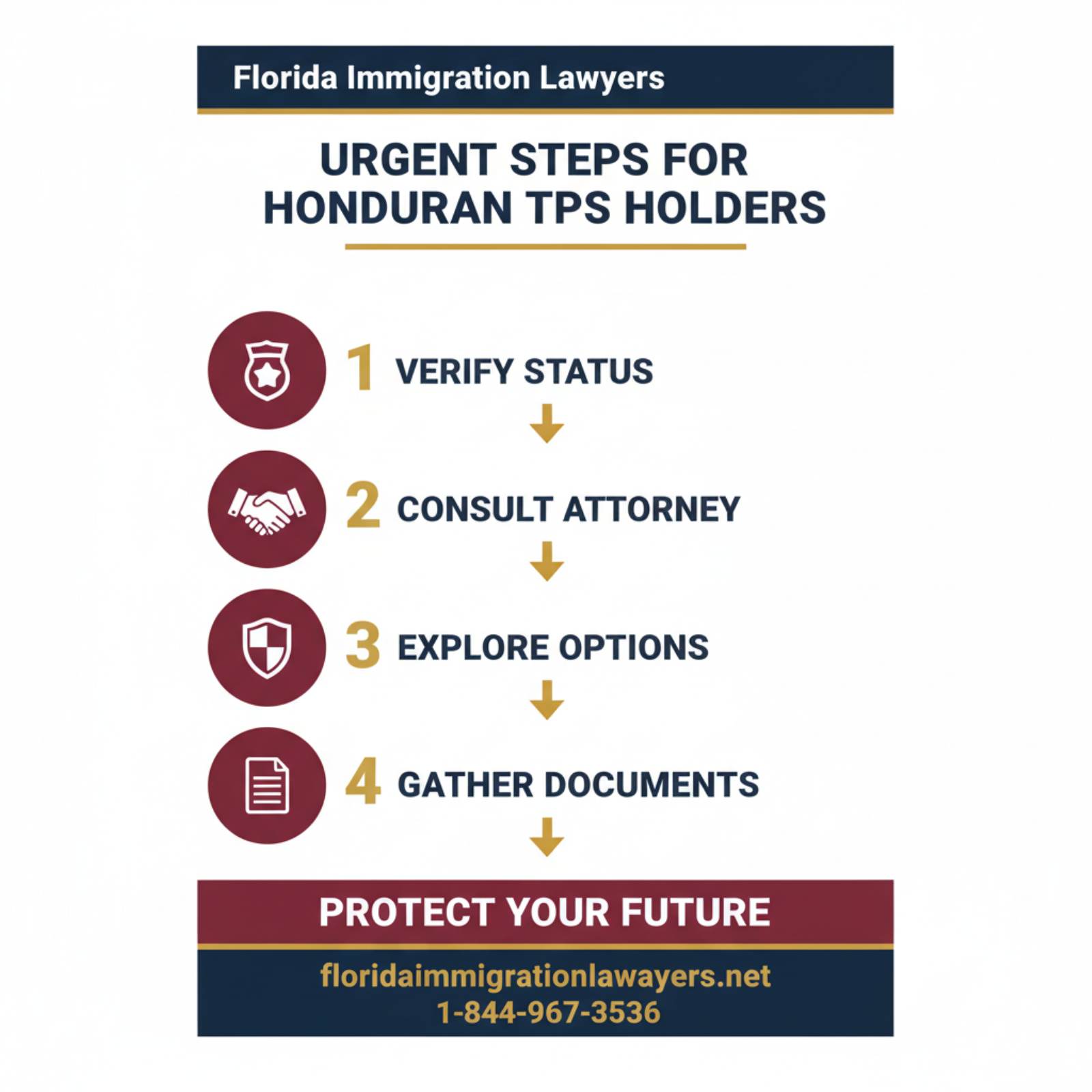
Organizing these documents thoroughly will help prevent requests for evidence and application delays. If you have any doubts about which documents are necessary, consult with an experienced immigration attorney.
TPS Honduras 2026 Timeline and Processing Expectations in Florida
The timeline for TPS Honduras 2026 applications is heavily influenced by the ongoing litigation and USCIS processing backlogs. While USCIS aims to process applications efficiently, actual processing times can vary significantly.
Typically, after you submit your application, you will receive a receipt notice within a few weeks. The biometrics appointment usually follows within 1-3 months. The issuance of a new Employment Authorization Document (EAD) and the final decision on your TPS re-registration can take anywhere from 6 to 18 months, or even longer in complex cases.
Due to the court injunctions, USCIS has been issuing extensions of TPS validity and EADs for Honduran beneficiaries. These extensions ensure that individuals maintain their protected status and work authorization while the legal process unfolds. For residents in Florida, applications are processed through various USCIS service centers, and local field offices like those in Miami, Orlando, and Tampa may handle interviews or specific requests, though TPS re-registration is generally processed centrally.
Many TPS holders wonder, "Will TPS end in 2026?" As of March 2026, the termination remains enjoined by federal court orders. While the ultimate outcome of the litigation is uncertain, beneficiaries currently retain their TPS status and work authorization under the court-ordered protections. This means that if you continue to re-register as required, your TPS is unlikely to end abruptly in 2026 unless the court injunctions are lifted and a new, immediate termination date is set and announced by DHS.
It's important to monitor official USCIS announcements for any updates regarding the status of the injunctions and the TPS designation for Honduras. Your attorney at Florida Immigration Lawyers can help you stay informed and prepared for any changes. For details on other forms of protection, explore our asylum practice area page.
Understanding Cost Factors and Fees for TPS Honduras 2026
Applying for or re-registering for TPS involves several potential costs. It's important to budget for these expenses to ensure a smooth application process.
The primary fees associated with TPS re-registration typically include:
- Form I-821 Filing Fee: This fee is generally required for the Application for Temporary Protected Status.
- Form I-765 Filing Fee: This fee is for the Application for Employment Authorization Document (EAD).
- Biometrics Services Fee: A separate fee is usually required for the collection of your fingerprints and photograph.
USCIS fees are subject to change, and specific amounts are not listed here to ensure accuracy. Always check the most current USCIS fee schedule on their official website (uscis.gov/fees). It's important to note that fee waivers may be available for eligible applicants who demonstrate an inability to pay. You would typically submit Form I-912, Request for Fee Waiver, with your application.
Beyond government filing fees, you should also consider potential legal fees if you choose to hire an attorney. While not mandatory, legal representation can significantly enhance your chances of a successful application, especially given the complex and evolving nature of TPS Honduras 2026. An attorney can help prepare your application, gather documentation, respond to RFEs, and represent you in any necessary proceedings.
Do not let concerns about legal fees deter you from seeking professional help. Many firms, including Florida Immigration Lawyers, offer free initial consultations to discuss your case and outline potential costs. We strive to make our services accessible to the Florida community.
Do not navigate this process alone. Contact Florida Immigration Lawyers today.
Common Mistakes to Avoid with TPS Honduras 2026
Navigating the TPS renewal process can be challenging, and even small errors can lead to significant delays or even denial. Be vigilant and avoid these common pitfalls:
-
Missing Re-registration Deadlines: This is perhaps the most critical mistake. Failing to file your re-registration application within the designated USCIS window, even by a single day, can result in the loss of your TPS. Always mark your calendar and aim to file well in advance.
The consequences can include loss of work authorization and initiation of removal proceedings.
-
Submitting Incomplete or Inaccurate Applications: Any missing information, unanswered questions, or inconsistencies on Forms I-821 and I-765 can lead to a Request for Evidence (RFE) or outright denial. Double-check every section carefully.
This will delay your application significantly and could jeopardize your status.
-
Failing to Disclose Criminal History: Even minor arrests or convictions, regardless of their outcome, must be disclosed to USCIS. Failure to do so is considered misrepresentation and can lead to severe immigration consequences.
Always provide full and truthful information, ideally with legal counsel.
-
Not Maintaining Continuous Residence and Physical Presence: TPS requires you to have maintained continuous residence and continuous physical presence in the U.S. since the initial designation date. Extended absences from the U.S. without proper authorization (e.g., advance parole) can disqualify you.
Keep meticulous records of your time in the U.S. and any travel.
-
Assuming Automatic Extensions: While USCIS often extends the validity of TPS-related documents during litigation, these are not always automatic or perpetual. You must actively re-register when required and verify the validity dates of your EAD and I-797 notices.
Relying on assumptions can lead to an expired work permit or loss of status.
-
Not Seeking Legal Advice for Complex Cases: If you have any criminal history, prior immigration violations, or doubts about your eligibility, attempting to navigate the process alone can be risky. An attorney can identify potential issues and help you address them.
Professional legal guidance is invaluable in preventing costly errors.
-
Providing Inconsistent Information: Ensure that all information provided in your current TPS application aligns with previous applications or other immigration filings. Discrepancies can raise red flags with USCIS.
Consistency is key to establishing credibility with immigration authorities.
-
Not Updating Your Address with USCIS: If you move, you must notify USCIS of your new address within 10 days using Form AR-11, Alien's Change of Address Card. Failing to do so can result in missed notices, RFEs, or appointment letters.
This could lead to your application being denied without your knowledge.
-
Traveling Internationally Without Advance Parole: Leaving the U.S. without first obtaining advance parole (Form I-131) can lead to your TPS application being considered abandoned and may prevent your re-entry into the U.S.
Always consult an attorney before making any international travel plans.
When to Call a Lawyer for TPS Honduras 2026
Given the complexity and fluid nature of TPS Honduras 2026, consulting an experienced immigration attorney is often the best course of action. While some cases may seem straightforward, even minor issues can derail an application. Here are specific scenarios where legal assistance from Florida Immigration Lawyers is highly recommended:
- Uncertainty About Eligibility: If you are unsure whether you meet all the criteria for TPS, especially regarding continuous residence, physical presence, or inadmissibility grounds.
- Prior Denials or Immigration Issues: If you have had any previous immigration applications denied, or if you have any past immigration violations or deportation orders.
- Criminal Record: Any history of arrests, charges, or convictions, no matter how minor, requires careful legal review to determine its impact on your TPS eligibility.
- Complex Family Situations: If you have family members who are also applying for TPS or other immigration benefits, or if you have dependents who may be affected.
- Difficulty Gathering Documents: If you are struggling to obtain necessary documentation to prove your identity, nationality, or residence.
- Receiving a Request for Evidence (RFE) or Notice of Intent to Deny (NOID): These notices from USCIS indicate that there are issues with your application that need to be addressed promptly and correctly.
- Facing Deportation or Removal Proceedings: If you are already in removal proceedings, an attorney can help ensure your TPS application is properly presented in conjunction with your defense strategy. Learn more on our deportation defense page.
- Need for Comprehensive Guidance: If you simply want peace of mind that your application is correctly prepared and filed, and that you are fully aware of all your options and obligations.
Florida Immigration Lawyers has extensive experience helping individuals across Florida, including Hollywood, navigate complex TPS issues. We stay abreast of all legal developments and provide personalized, strategic advice to protect your future.
About Florida Immigration Lawyers
Florida Immigration Lawyers is a leading immigration law firm dedicated to serving individuals and families throughout Florida. Our compassionate and highly skilled attorneys are committed to providing exceptional legal representation across a wide range of immigration matters.
We understand the unique challenges faced by immigrants in Florida and are passionate about defending your rights and helping you achieve your immigration goals. From family-based petitions to complex deportation defense cases, we are your trusted legal partners.
Our services include family immigration, business immigration, asylum claims, citizenship applications, and defense against deportation. We pride ourselves on clear communication, strategic advocacy, and unwavering support for our clients.
Choose Florida Immigration Lawyers for our deep understanding of immigration law, our client-centered approach, and our proven track record of success. We offer free consultations and are available 24/7 to address your urgent legal needs.
Visit our website at https://www.floridaimmigrationlawyers.net or call us directly at 1-844-967-3536 to schedule your free consultation. We serve all of Florida and are ready to assist you.
Sources and References
- U.S. Citizenship and Immigration Services (USCIS) - TPS Honduras Information
- Executive Office for Immigration Review (EOIR) - Immigration Courts
- 8 U.S.C. Chapter 12 - Immigration and Nationality Act (INA)
- INA Section 244 (8 U.S.C. § 1254a) - Temporary Protected Status
- 8 CFR Part 244 - Regulations pertaining to Temporary Protected Status
- Federal Register - Official Public Notices
This article provides general legal information and is not intended as legal advice. Every case is unique, and outcomes depend on specific facts and circumstances. Contact an attorney for advice about your particular situation.
The future of your TPS Honduras 2026 status is too important to leave to chance. Let Florida Immigration Lawyers provide the expert guidance and representation you deserve. Our team is ready to assist you through every step of the process, ensuring your application is strong and complete.
Contact Florida Immigration Lawyers today at 1-844-967-3536 for a free consultation. Se Habla Español - Estamos aquí para ayudarle.
Florida Immigration Lawyers
Legal Team
Our experienced attorneys at Florida Immigration Lawyers have been serving clients across Florida for over 20 years. We specialize in immigration, personal injury, criminal defense, workers compensation, and family law.