Green Card Holders Issued New Warning: Florida...
If you're a green card holder in Florida, recent warnings and evolving state laws in 2026 demand your attention. This comprehensive guide from Florida Immigration Lawyers clarifies the implications of these developments for your permanent resident status. Learn about your rights, essential documents, common mistakes to avoid, and when to seek legal counsel to protect your future. We cover navigating enforcement, USCIS updates, and cost factors, with a focus on St. Petersburg and Florida-specific contexts. Don't face these challenges alone; understand how to safeguard your residency. Contact us for expert assistance and a free consultation.

Green card holders issued new warning for Florida in 2026 signals heightened scrutiny and potential changes in how federal and state authorities interact with lawful permanent residents. While federal law governs immigration, local enforcement partnerships and state-level initiatives can create complex challenges. Understanding your rights and responsibilities is crucial to protect your status.
- Always carry your valid green card (Form I-551) as proof of status.
- Do not sign any documents you do not understand without legal counsel.
- Know that state laws cannot override federal immigration protections.
- Consult an immigration attorney immediately if detained or questioned.
- Stay informed about changes in Florida immigration law and enforcement.
Green Card Holders Issued New Warning: Florida Immigration Update 2026
Florida's dynamic legal landscape continues to evolve, bringing new considerations for lawful permanent residents. If you are a green card holder in Florida, you may have recently heard about a "new warning" or increased concerns regarding immigration enforcement. This article aims to clarify what these developments mean for your status and your life in the Sunshine State.
At Florida Immigration Lawyers, we understand the anxiety and uncertainty that these warnings can create for you and your family. Our firm is dedicated to providing clear, empathetic legal guidance to immigrants across Florida, including St. Petersburg and surrounding communities. We want to ensure you are well-informed and prepared for any challenges.
Understanding your rights and obligations as a green card holder is more important than ever. We are here to help you navigate these complex issues with confidence. Call Florida Immigration Lawyers at 1-844-967-3536 for a free consultation to discuss your specific situation and learn how we can protect your interests.
Understanding the "New Warning" for Green Card Holders in Florida
The "new warning" for green card holders in Florida in 2026 refers to a combination of factors. These include recent state legislative actions, increased federal-state immigration enforcement partnerships, and general advisories from immigrant rights organizations. These developments, while not changing federal immigration law, can significantly impact the daily lives of permanent residents.
Florida has seen a rise in state-level efforts concerning immigration, such as laws that impose penalties related to undocumented individuals. While these laws primarily target those without legal status, they can create an atmosphere of heightened enforcement that affects everyone in the immigrant community, including green card holders. It is vital to distinguish between state and federal authority.
Federal immigration law, primarily the Immigration and Nationality Act (INA), governs who can become a lawful permanent resident and the conditions for maintaining that status. State laws, even those with immigration implications, cannot supersede federal statutes regarding green card validity or federal deportation proceedings. However, state laws can influence interactions with local law enforcement, who may then coordinate with federal agencies like ICE.
What Constitutes Lawful Permanent Resident Status?
As a lawful permanent resident (LPR), you hold a green card, officially known as Form I-551. This document grants you the right to live and work permanently in the United States. Your green card is proof of your status and is essential for travel, employment, and proving your legal residency.
Maintaining your LPR status requires adherence to specific rules. These include not committing certain crimes, not abandoning your U.S. residency, and renewing your green card when it expires. Understanding these conditions is fundamental to protecting your hard-earned status. Our firm can provide clarity on these requirements.
Recent Developments in Florida Immigration Law 2026
In recent years, Florida has implemented laws that significantly impact immigration enforcement within the state. For example, some legislation has expanded the ability of state and local law enforcement to cooperate with federal immigration authorities. This has led to programs like 287(g) agreements, which empower local officers to perform certain immigration functions.
These state-level initiatives, coupled with federal operations such as "Operation Tidal Wave," have intensified immigration enforcement efforts across Florida. While these operations often target individuals without legal status, they can create an environment where green card holders may face increased scrutiny or be mistakenly questioned. It is crucial to understand your rights during these encounters.
The warnings issued by civil rights groups often advise immigrants, including green card holders, to exercise extreme caution. These advisories highlight the potential for increased questioning or detention by law enforcement, even if you possess valid documentation. Such warnings underscore the importance of being prepared and knowing how to respond.
Navigating Immigration Enforcement in Florida: A Step-by-Step Guide for Green Card Holders
Facing immigration enforcement can be intimidating, especially with the increased focus in Florida. Knowing the correct steps to take can protect your rights and your green card status. Here is a guide to help you navigate potential encounters.
-
Always Carry Your Green Card: As a lawful permanent resident, you are required by law to carry proof of your status. Your valid Form I-551, the green card, is this proof. Failure to carry it can lead to detention and questioning, even if your status is legal.
Keep your green card secure and readily accessible, but do not hand it over unless specifically requested by an immigration officer. If requested, present it calmly and clearly. (Refer to 8 CFR Part 264 for requirements on carrying proof of status).
-
Know Your Rights: You have constitutional rights regardless of your immigration status. You have the right to remain silent, the right to speak with an attorney, and the right to refuse searches without a warrant. Do not lie or present false documents.
If an officer asks to search your property or home, you can refuse unless they have a warrant signed by a judge. If they claim to have a warrant, ask to see it and ensure it is signed and specifies your address. Remember, you do not have to open your door to immigration agents unless they have a warrant signed by a judge.
-
Remain Calm and Be Respectful: While asserting your rights, maintain a calm and respectful demeanor. Avoid arguing or obstructing officers. Your cooperation in a non-verbal manner (e.g., presenting documents) is different from waiving your rights.
Clearly state that you wish to remain silent and want to speak with your attorney. You can say, "I am a lawful permanent resident. I wish to remain silent and want to speak with my lawyer." This is your right and should be respected.
-
Do Not Sign Anything You Do Not Understand: Never sign any document presented by an immigration officer without fully understanding its contents. If you are unsure, state that you need to consult with an attorney first. Signing certain documents could waive your rights or lead to voluntary departure.
This is particularly critical if documents are in English and you are not fluent. Always request an interpreter if needed. An attorney can explain the implications of any document before you put your signature on it.
-
Document Everything: If possible and safe to do so, document the encounter. Note the officers' badge numbers, agency, time, date, and location. If there are witnesses, get their contact information. This information can be vital if you need to challenge an action or file a complaint.
This documentation can be invaluable for your legal team. Even brief notes about the duration and nature of the interaction can be helpful. Your records can support your version of events.
-
Contact an Immigration Attorney Immediately: If you are detained, questioned, or believe your rights have been violated, contact Florida Immigration Lawyers as soon as possible. Our experienced team can provide immediate assistance and legal representation.
Do not wait to seek legal advice. Early intervention by an attorney can often prevent more serious consequences, including deportation defense proceedings. We are here to advocate for your rights.
Essential Documents for Green Card Holders in Florida
Proper documentation is your first line of defense as a green card holder in Florida. Ensuring you have the correct and up-to-date documents can prevent many issues during interactions with law enforcement or immigration officials.
Document Checklist for Lawful Permanent Residents
- Valid Green Card (Form I-551): This is your primary proof of lawful permanent resident status. Ensure it is not expired. If it is nearing expiration, apply for renewal well in advance.
- State-Issued ID or Driver's License: While not proof of immigration status, it is important for daily life in Florida and for identification purposes.
- Passport from Your Country of Origin: If you plan to travel internationally, your passport is essential. Ensure it has sufficient validity for your travel plans.
- Reentry Permit (Form I-131) if Traveling for Extended Periods: If you plan to be outside the U.S. for more than one year, you generally need a reentry permit to avoid issues with abandoning your residency. Consult with an attorney if you anticipate long international travel.
- Proof of Address: Utility bills, lease agreements, or bank statements can help establish your residency in Florida, though they are not typically required for immigration status proof.
- Marriage Certificate/Birth Certificates (if applicable): If your green card was obtained through family-based immigration, having copies of these documents can be useful for family matters, but not typically for routine status checks.
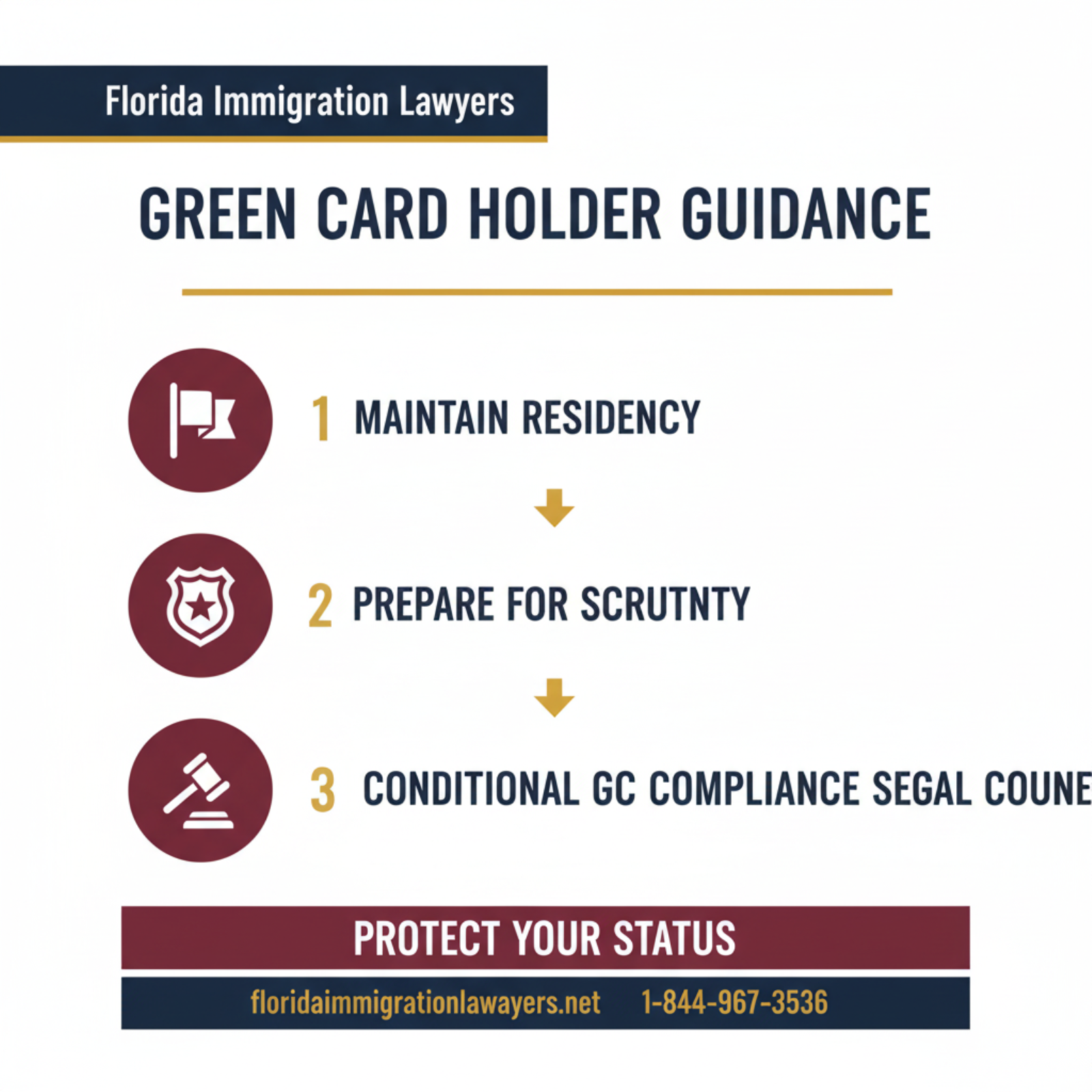
Always keep original documents in a safe place. Carry copies of your green card and other important documents, but be prepared to present the original green card if requested by an immigration officer. Digital copies on your phone are generally not sufficient as primary proof of status.
What to Expect: Timelines and Processing for Green Card Holders
Understanding processing times for various immigration applications is crucial for green card holders, especially when applying for renewals or U.S. citizenship. USCIS processing times can vary significantly based on the type of form and the service center handling your case.
Green Card Renewal Timelines (Form I-90)
If your green card is expiring, you must file Form I-90, Application to Replace Permanent Resident Card. USCIS recommends filing this application six months before your card expires. Processing times for I-90 can range from several months to over a year. During this period, you will typically receive an extension notice that, when presented with your expired green card, serves as temporary proof of status.
You can check current processing times on the USCIS website. It is important to monitor these times and plan accordingly. Delays can occur, so proactive filing is always the best approach. Our team at Florida Immigration Lawyers can assist with renewal applications and monitor your case.
Naturalization Application Timelines (Form N-400)
Many green card holders eventually seek to become U.S. citizens. The naturalization process involves filing Form N-400, Application for Naturalization. Eligibility typically requires five years as an LPR (three years if married to a U.S. citizen), among other requirements.
Processing for N-400 applications, including interviews and oath ceremonies, can take anywhere from 8 to 24 months, or even longer in some jurisdictions. St. Petersburg residents typically process through the Tampa Field Office. Staying informed about your case status is vital throughout this process. We can help you prepare for your naturalization interview and ensure all requirements are met.
Understanding the Costs Associated with Green Card Status in Florida
Maintaining or adjusting your green card status involves various fees. These costs are set by federal agencies like USCIS and are subject to change. It is important to budget for these expenses to avoid delays in your application process.
USCIS Filing Fees and Biometrics
USCIS charges fees for most immigration forms, including green card renewals (Form I-90) and naturalization applications (Form N-400). These fees cover the cost of processing your application. Additionally, a separate biometrics fee is often required for identity verification and background checks. These fees are non-refundable, regardless of the outcome of your application.
Always verify the most current fee amounts directly on the USCIS website or consult with an immigration attorney. Attempting to pay an incorrect fee can lead to your application being rejected and returned, causing significant delays.
Potential Legal Fees and Administrative Costs
While you can file many immigration forms yourself, retaining an experienced immigration attorney can significantly ease the process and increase your chances of success. Legal fees cover the attorney's expertise, preparation of complex documents, representation in interviews, and ongoing communication with USCIS.
Beyond USCIS fees and legal costs, you might incur other administrative expenses. These could include fees for obtaining certified copies of documents, translation services for foreign-language documents, or travel expenses for interviews. Our firm provides transparent fee structures and can help you understand all potential costs upfront.
Do not navigate this process alone. The complexities of Florida immigration law and federal regulations require expert guidance. Contact Florida Immigration Lawyers today to ensure your rights are protected and your applications are handled correctly. We offer comprehensive support to green card holders across Florida.
Common Mistakes Green Card Holders Must Avoid in Florida
Even as a lawful permanent resident, certain actions or omissions can jeopardize your green card status. With the "new warning" and increased scrutiny in Florida, avoiding these common pitfalls is more critical than ever.
- Failing to Carry Your Green Card: You are legally required to carry your valid Form I-551. Not having it can lead to detention, questioning, and potential accusations of being an undocumented immigrant, even if your status is legal. This can be a significant inconvenience and a source of stress.
- Committing Certain Crimes: Convictions for certain criminal offenses, particularly aggravated felonies or crimes involving moral turpitude, can make green card holders deportable. Even minor offenses can sometimes have severe immigration consequences. Always consult an immigration attorney before pleading guilty to any crime. (See INA § 237, 8 U.S.C. § 1227, for grounds of deportability).
- Abandoning Your U.S. Residency: Spending too much time outside the United States can be interpreted as abandoning your permanent resident status. Generally, absences of six months to one year may raise questions, and absences over one year typically require a reentry permit. Without proper planning, you could be denied reentry.
- Providing False Information to Immigration Officials: Lying or misrepresenting facts on immigration forms or during interviews can lead to accusations of fraud. This can result in denial of benefits, loss of green card status, and even a permanent bar from the U.S. Always be truthful and accurate.
- Not Renewing Your Green Card: An expired green card does not mean you lose your LPR status, but it is not valid for identification, employment, or travel. Failure to renew can lead to problems proving your status and potential delays in future applications like naturalization. File for renewal proactively.
- Voting in Federal Elections: Only U.S. citizens are eligible to vote in federal, state, and most local elections. Registering to vote or actually voting as a non-citizen, even mistakenly, can have severe immigration consequences, including deportation.
- Failing to Update Your Address with USCIS: You are required to inform USCIS of any change of address within 10 days of moving. Failure to do so can result in missed notices, court dates, and potentially adverse decisions on your case. Use Form AR-11 to update your address.
- Ignoring Notices from USCIS or ICE: Do not ignore any mail or communication from immigration authorities. These notices often contain critical information, deadlines, or requests for evidence. Ignoring them can lead to automatic denials, deportation orders, or missed opportunities to defend your case.
- Traveling Without Proper Documentation: While green card holders can travel internationally, specific rules apply. Ensure your green card is valid and consider a reentry permit for long trips. Travel advisories, even for state-specific issues, should also be considered.
- Assuming State Laws Override Federal Protections: While Florida has its own immigration-related laws, these cannot negate your federal protections as an LPR. However, state laws can increase interactions with local law enforcement, who might then involve federal agencies. Always understand the distinction.
When to Seek Legal Counsel from Florida Immigration Lawyers
Navigating the complexities of immigration law, especially with new warnings and evolving state policies in Florida, often requires professional legal assistance. Our firm is prepared to help you in various scenarios.
You should contact Florida Immigration Lawyers if you:
- Are detained or questioned by ICE or local law enforcement regarding your immigration status, even if you have a green card.
- Receive a Notice to Appear (NTA) in immigration court, signaling the start of deportation defense proceedings.
- Have a criminal record, even a minor one, and are concerned about its impact on your green card or future citizenship application.
- Are planning extended international travel and need guidance on reentry permits or potential abandonment of residency issues.
- Need to renew your green card or apply for naturalization and want to ensure your application is accurate and complete.
- Are seeking to bring family members to the U.S. through family immigration petitions and need expert guidance.
- Are experiencing delays or complications with your USCIS application or petition.
- Have received a denial for an immigration benefit and wish to explore options for appeal or reconsideration.
- Are unsure about how recent Florida laws or federal enforcement actions specifically affect your status as a green card holder.
Our attorneys specialize in a wide range of immigration matters, including asylum, business immigration, and general immigration law. We serve clients throughout Florida, including St. Petersburg, Tampa, Orlando, and Miami. We are committed to protecting your rights and helping you achieve your immigration goals.
About Florida Immigration Lawyers
Florida Immigration Lawyers is a leading law firm dedicated to serving the diverse immigration needs of individuals and families across the entire state of Florida. With years of specialized experience, our team of compassionate and knowledgeable attorneys provides unparalleled legal representation in all areas of immigration law.
Our firm understands the profound impact immigration matters have on our clients' lives. We offer a comprehensive suite of services, from family-based visas and employment immigration to deportation defense and citizenship applications. We are committed to guiding you through every step of your immigration journey with integrity and expertise.
Why choose Florida Immigration Lawyers? We pride ourselves on our client-focused approach, our deep understanding of complex immigration regulations, and our unwavering dedication to achieving the best possible outcomes for our clients. Our attorneys are available 24/7 to address your urgent concerns and offer free, confidential consultations.
For trusted legal advice and dedicated representation, contact Florida Immigration Lawyers at 1-844-967-3536 or visit our website at https://www.floridaimmigrationlawyers.net. We are here to champion your rights and provide the support you need.
Sources and References
- U.S. Citizenship and Immigration Services (USCIS)
- Executive Office for Immigration Review (EOIR)
- U.S. Immigration and Customs Enforcement (ICE)
- 8 U.S.C. Chapter 12 - Immigration and Nationality Act (INA)
- INA § 237 - Deportable Aliens (8 U.S.C. § 1227)
- 8 CFR Part 264 - Documentary Requirements: Nonimmigrants; Waivers; Admission of Certain Inadmissible Aliens; Parole
- USCIS Policy Manual
This article provides general legal information and is not intended as legal advice. Every case is unique, and outcomes depend on specific facts and circumstances. Contact an attorney for advice about your particular situation.
The landscape of immigration law in Florida is constantly shifting, and staying informed is your best defense. If you are a green card holder facing concerns or questions due to recent warnings or enforcement actions, do not hesitate to seek professional legal guidance. Our team at Florida Immigration Lawyers is ready to assist you.
Protect your future. Call Florida Immigration Lawyers today at 1-844-967-3536 for a free consultation. Se Habla Español - Estamos aquí para ayudarle.
Do Not Navigate This Process Alone
Our experienced immigration attorneys are ready to fight for you. Get a free, confidential consultation today.
Se Habla Español
Frequently Asked Questions
Florida Immigration Lawyers
Immigration Attorney | Founder, Vasquez Law Firm
U.S. Air Force veteran and immigration attorney with thousands of cases resolved. J.D., NCCU School of Law. AILA member. Admitted to the 4th, 5th, and 11th Circuit Courts.
Available 24/7 - Free Evaluations
Related Legal Services
Our Florida immigration attorneys can help you with experienced immigration attorneys, business immigration and asylum protection. Call today at 1-844-967-3536 for a free consultation.
Related Links
Related Topics
Free Legal Consultation
Discuss your case with our experienced attorneys. We're available 24/7.
Se Habla Español - Estamos aquí para ayudarle.
Related Articles
F-1 Reinstatement Process for Students in Florida | VLF Florida
Learn about the F-1 reinstatement process for students in Florida who have fallen out of status. Discover necessary steps, common pitfalls, and when to seek legal help. Call Florida Immigration Lawyers for a free consultation.
Immigration Lawyer in Hialeah: Your Guide | VLF Florida
Looking for an immigration lawyer in Hialeah, Florida? Discover how to choose the right legal expert to navigate your immigration journey. Call Florida Immigration Lawyers at 1-844-967-3536 for a free consultation.
Credible Fear Interview Preparation in Florida | VLF Florida
Prepare for your credible fear interview in Florida with expert guidance. Learn what to expect and how to enhance your chances of success. Call Florida Immigration Lawyers for a free consultation today.
DACA Renewal Guide for Florida Dreamers 2026 | VLF Florida
Learn how to renew your DACA in Florida for 2026. This comprehensive guide covers eligibility, document preparation, and processing timelines. Contact Florida Immigration Lawyers for assistance.
