Immigration Backlog Solutions Florida: Navigating USCIS Delays in 2026
The immigration backlog in Florida is causing significant delays for visa, green card, and citizenship applications, affecting countless individuals and families across the state, including St. Petersburg. Understanding the reasons behind these prolonged USCIS processing times and knowing what proactive steps to take is crucial. This guide offers practical solutions, from regularly checking your case status and meticulously preparing documents to responding promptly to RFEs and considering legal remedies like mandamus lawsuits. Florida Immigration Lawyers provides expert guidance to help you navigate these complexities and mitigate the impact of the backlog. We cover essential document checklists, cost factors, common mistakes to avoid, and when to seek legal counsel, ensuring you are well-informed and supported throughout your immigration journey in 2026. Contact us for a free consultation to discuss your specific situation.
The immigration backlog in Florida refers to the significant delays in processing immigration applications by USCIS and immigration courts. Solutions involve meticulously preparing applications, actively monitoring case status, seeking legal counsel for complex situations, and understanding available remedies like mandamus actions. Proactive engagement and expert guidance can help mitigate the impact of these prolonged processing times.
- Always submit complete and accurate application packages.
- Regularly check your case status online through USCIS tools.
- Respond promptly and thoroughly to all Requests for Evidence (RFEs).
- Consider legal avenues like mandamus lawsuits for extreme, unwarranted delays.
- Consult with an experienced Florida immigration lawyer to strategize your approach.
Immigration Backlog Solutions Florida: Navigating USCIS Delays in 2026
Are you an immigrant in Florida, perhaps in St. Petersburg or a surrounding area, anxiously awaiting a decision on your visa, green card, or citizenship application? You are not alone. Many individuals and families across the Sunshine State are grappling with the persistent and often frustrating immigration backlog that has become a significant challenge for the U.S. immigration system, particularly in 2026.
The extensive immigration backlog means that what should be a straightforward process can stretch into months or even years, impacting lives, careers, and family reunification plans. Understanding why these delays occur and what proactive steps you can take is crucial. This comprehensive guide will explore the causes of the immigration backlog, offer practical solutions for navigating USCIS delays, and explain how Florida Immigration Lawyers can help you.
Navigating the complexities of the immigration system during times of significant backlog requires patience, diligence, and often, expert legal guidance. We understand the stress and uncertainty these delays can cause for you and your family. If you are experiencing prolonged processing times, do not hesitate to seek professional help. Call Florida Immigration Lawyers at 1-844-967-3536 for a free consultation to discuss your specific situation and potential strategies.
Understanding the Immigration Backlog in Florida
The immigration backlog refers to the accumulation of pending immigration applications and cases awaiting adjudication by U.S. Citizenship and Immigration Services (USCIS) and the Executive Office for Immigration Review (EOIR), which oversees immigration courts. This issue is not new, but it has intensified significantly in recent years, reaching critical levels in 2026.
Several factors contribute to the current immigration backlog. These include a surge in new applications, staffing shortages within USCIS and immigration courts, technological limitations, and policy changes that introduce additional layers of review. The COVID-19 pandemic also had a lasting impact, slowing down operations and exacerbating existing delays.
In Florida, the impact of the immigration backlog is particularly pronounced. Cities like Miami, Orlando, and St. Petersburg are home to large immigrant populations, leading to a high volume of cases in local USCIS field offices and immigration courts. For instance, the Miami Immigration Court consistently ranks among the busiest in the nation, reflecting the statewide challenge. This means individuals seeking various forms of relief, from asylum to family-based visas, face longer waits.
The legal framework governing these processes, such as the Immigration and Nationality Act (INA), found in 8 U.S.C. Chapter 12, sets out the general requirements and procedures. However, the administrative processes for implementing these laws often struggle to keep pace with demand, leading to the current backlog. Understanding these underlying issues is the first step toward finding effective immigration backlog solutions Florida.
Navigating USCIS Delays: A Step-by-Step Guide for Florida Residents
When your immigration application is caught in the immigration backlog, knowing what steps you can take is empowering. While you cannot directly control USCIS processing times, you can proactively manage your case and advocate for its timely adjudication.
-
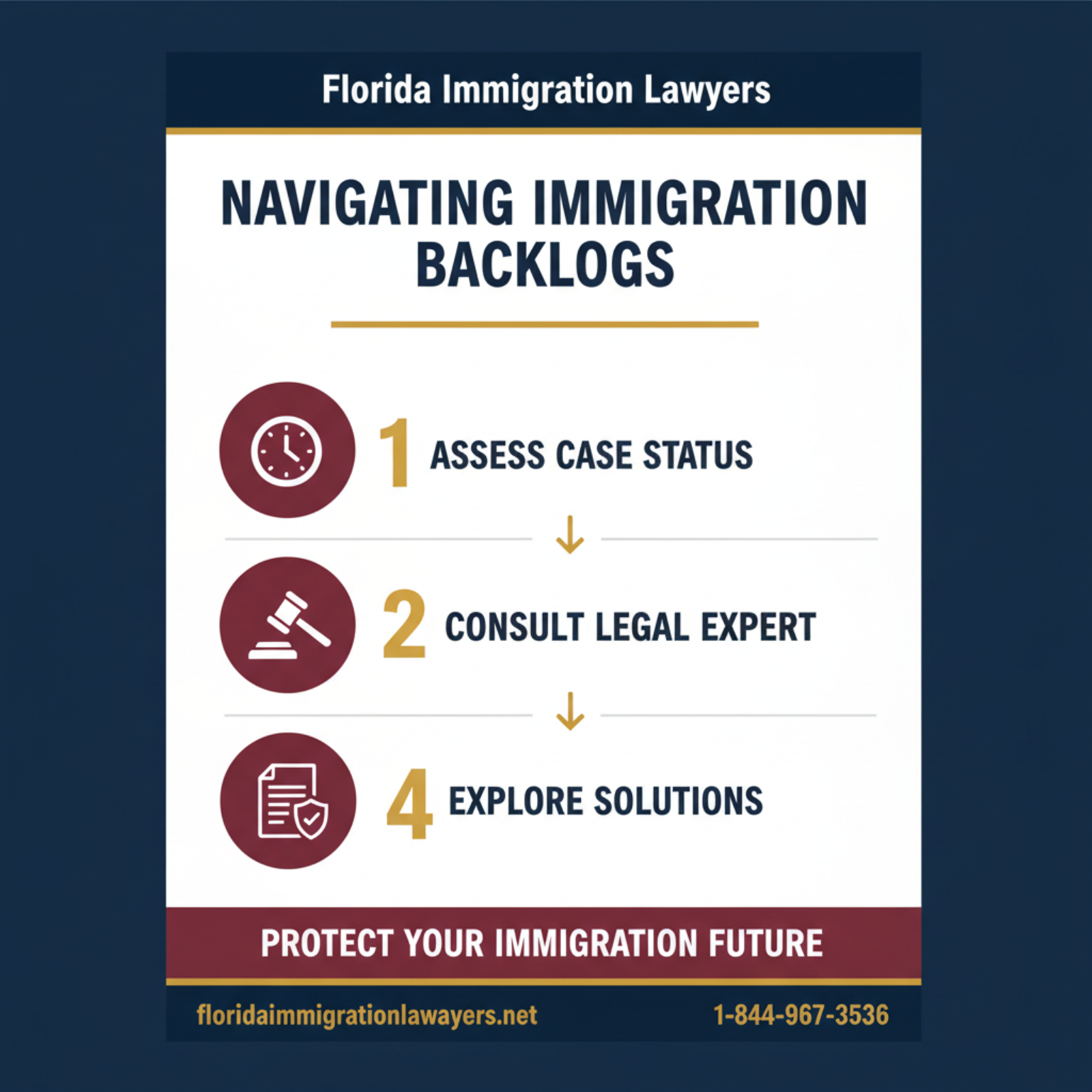
Check Your Case Status Regularly: Utilize the USCIS online Case Status tool. You will need your receipt number, which can be found on the notice sent after filing your application. This tool provides updates on your application's progress and helps you identify if it is still within normal processing times or if it has fallen behind. Checking frequently helps you stay informed.
-
Respond Promptly to Requests for Evidence (RFEs) or Notices of Intent to Deny (NOIDs): If USCIS sends you an RFE or NOID, it means they need more information or intend to deny your application. These notices typically come with strict deadlines. Gather all requested documents and submit them accurately and on time to avoid further delays or a denial. A comprehensive and clear response is vital.
-
Submit an Outside Normal Processing Times Inquiry: If your case has been pending longer than the posted processing times for your specific form and service center, you can submit an online inquiry to USCIS. This action can sometimes prompt a review of your case. Be sure to wait until your case is genuinely outside the normal range before submitting this inquiry, as premature inquiries may not be addressed.
-
Contact a USCIS Contact Center Representative: For more specific questions or if the online tools are not sufficient, you can call the USCIS Contact Center. Be prepared with your case information and a clear understanding of your inquiry. While they cannot always provide specific adjudication timelines, they can offer general information and sometimes escalate inquiries.
-
Consider a Congressional Inquiry: If your case faces extreme and unexplained delays, your local U.S. Representative or Senator can often assist by making an inquiry on your behalf. Their office can reach out to USCIS directly to request an update or intervention. This can be particularly effective for cases in Florida, as congressional offices are often familiar with local immigration issues.
-
Explore a Mandamus Lawsuit (as a last resort): In situations of egregious and unlawful delay, where USCIS has failed to act on an application for an unreasonable amount of time, you may be eligible to file a Writ of Mandamus in federal court. This lawsuit compels the government to perform its duty and adjudicate your case. This is a complex legal strategy and requires experienced legal counsel, such as our team at Florida Immigration Lawyers, to pursue. We can assess if this is a viable option for your specific situation. Learn more about complex immigration matters at our immigration practice area page.
Essential Document Checklist for Expedited Processing
One of the most effective ways to prevent your application from contributing to the immigration backlog is to submit a complete and meticulously organized application package from the outset. Incomplete applications are a primary cause of Requests for Evidence (RFEs), which inevitably lead to delays. While the specific documents vary by application type, here is a general checklist of essential items you should typically prepare:
- All Required Forms: Ensure every form is correctly filled out, signed, and dated. Double-check that all fields are answered, even if with "N/A" where appropriate.
- Proof of Identity and Nationality: Valid passports, birth certificates (with certified translations if not in English), national ID cards.
- Proof of Lawful Entry and Status (if applicable): I-94 arrival/departure record, previous visa stamps, approval notices.
- Biographic Documentation: Original or certified copies of birth certificates, marriage certificates, divorce decrees, and death certificates (for spouses/parents).
- Financial Documentation: Affidavits of Support (Form I-864), tax returns, employment letters, pay stubs, bank statements to prove financial stability.
- Medical Examination Report: Form I-693 completed by a USCIS-approved civil surgeon, sealed in an envelope.
- Police Clearances/Criminal Records: As required by your country of origin and any countries you have resided in for extended periods.
- Photographs: Recent passport-style photographs meeting USCIS specifications.
- Translations: Any document not in English must be accompanied by a certified English translation.
- Supporting Evidence: Any additional documents relevant to your specific case, such as proof of relationship for family-based petitions, educational degrees for employment-based visas, or evidence for asylum claims. For family immigration, ensuring all relationship proofs are robust is key; visit our family immigration page for more insights.
Immigration Processing Times and Expectations in 2026
Understanding current processing times is essential for managing your expectations and planning your future. USCIS provides an online tool that allows you to check the estimated processing times for various forms at different service centers and field offices. These times are estimates and can fluctuate based on caseload, staffing, and policy changes.
In 2026, many application types, especially those for family-based green cards and certain employment-based visas, continue to experience significant delays. Some applications may take several months, while others, particularly those requiring extensive background checks or interviews, could extend beyond a year or more. For example, processing times at the Tampa Field Office, which serves much of the St. Petersburg area, can vary significantly depending on the application type.
Factors that can influence your specific processing timeline include the type of petition you filed, the specific USCIS service center handling your case, your country of origin (due to visa bulletin availability), and how quickly you respond to any USCIS requests. It is important to remember that the posted processing times are for cases that are adjudicated within that timeframe, not a guarantee that your case will be completed within that period. Always refer to the official USCIS website for the most current information: USCIS Processing Times.
Cost Factors and Fee Breakdown for Immigration Applications
The financial aspect of immigration is a significant consideration for many applicants in Florida. Understanding the potential costs involved can help you prepare and avoid unexpected financial burdens. It is important to note that USCIS filing fees are subject to change, so always verify the current fees on the official USCIS website before submitting your application.
Generally, immigration application costs can be categorized into several areas:
- USCIS Filing Fees: These are the fees charged by USCIS for processing various forms, such as Form I-130 (Petition for Alien Relative), Form I-485 (Application to Register Permanent Residence or Adjust Status), Form N-400 (Application for Naturalization), and many others. Each form has its own specific fee.
- Biometrics Fees: Many applications require a biometrics appointment for fingerprinting and photographs, which often incurs a separate fee. This fee covers the cost of background checks and identity verification.
- Medical Examination Fees: Applicants for adjustment of status typically need a medical examination by a USCIS-approved civil surgeon. The cost of this examination is paid directly to the civil surgeon and can vary significantly.
- Attorney Fees: Retaining an experienced immigration attorney, like those at Florida Immigration Lawyers, involves legal fees. While an upfront cost, legal representation can save you time, prevent costly mistakes, and increase your chances of a successful outcome, especially with the current immigration backlog.
- Translation and Document Procurement Fees: If you need to obtain original documents from abroad or have documents translated into English, there will be associated costs.
We strongly advise checking the USCIS Fees page for the most up-to-date information on filing fees. Budgeting for these costs is an important part of your immigration journey.
Do not navigate this process alone. The complexities of the immigration system, especially with the current immigration backlog, demand expert attention. Contact Florida Immigration Lawyers today to ensure your application is handled correctly and efficiently.
Common Mistakes to Avoid When Facing Immigration Backlogs
Navigating the immigration system, particularly with the current immigration backlog, is fraught with potential pitfalls. Avoiding common mistakes can significantly improve your chances of a smoother process and prevent further delays or even denials. Here are crucial errors to steer clear of:
-
Submitting Incomplete or Incorrect Applications: This is perhaps the most frequent cause of delays. Missing signatures, unanswered questions, or omitted evidence will almost certainly result in an RFE or outright denial, sending you further back in the queue.
-
Failing to Respond to RFEs or NOIDs on Time: Ignoring or delaying your response to official USCIS requests can lead to the denial of your application without further consideration. Always adhere strictly to deadlines.
-
Not Keeping Your Address Updated with USCIS: If USCIS cannot reach you, you might miss critical notices, RFEs, or interview appointments. File Form AR-11, Alien's Change of Address Card, promptly every time you move.
-
Misrepresenting Information or Providing False Documents: Any attempt to deceive USCIS is a serious offense that can lead to immediate denial, a permanent bar from future immigration benefits, and even criminal charges. Honesty and accuracy are paramount.
-
Applying for the Wrong Visa Category: Understanding your eligibility for specific visa types is crucial. Applying for a category for which you do not qualify will waste time and money, and lead to an inevitable denial.
-
Ignoring Legal Advice or Attempting to Self-Represent in Complex Cases: While some simple cases might be manageable, complex situations, especially those involving past legal issues, deportation, or asylum claims, require professional legal expertise. Attempting to handle these yourself often leads to irreversible errors. For deportation defense, specialized counsel is critical; see our deportation defense page.
-
Not Keeping Copies of Everything: Always retain copies of all submitted applications, supporting documents, and correspondence with USCIS. This paper trail is invaluable if issues arise or documents are lost.
-
Failing to Prepare for Interviews: If an interview is required, not preparing adequately can lead to miscommunications or an inability to provide necessary information, potentially delaying or jeopardizing your case.
-
Missing Deadlines for Renewals or Extensions: For those already in a temporary status, failing to file for renewals or extensions before your current status expires can lead to serious immigration consequences, including unlawful presence.
-
Assuming Silence from USCIS Means Approval: A lack of communication from USCIS typically means your case is still pending, not that it has been approved. Always monitor your status and take action if it goes outside normal processing times.
When to Call a Florida Immigration Lawyer
While some aspects of managing the immigration backlog can be handled independently, many situations warrant the immediate attention and expertise of a qualified immigration attorney. Florida Immigration Lawyers are here to provide the guidance you need, especially when facing complex challenges.
Consider contacting us if:
- Your Case is Experiencing Extreme or Unexplained Delays: If your application is significantly outside normal processing times and USCIS inquiries have not yielded results, a lawyer can explore advanced strategies like a mandamus lawsuit.
- You Receive a Request for Evidence (RFE) or Notice of Intent to Deny (NOID): Responding correctly to these notices is critical. An attorney can help you gather the right evidence and craft a compelling legal argument.
- Your Case Involves Complex Legal Issues: This includes past immigration violations, criminal history, previous denials, or complex family situations. These cases often require detailed legal analysis and strategic planning.
- You Are Facing Deportation or Removal Proceedings: If you receive a Notice to Appear (NTA), it is imperative to seek legal counsel immediately. Our team specializes in deportation defense and can protect your rights.
- You Are Applying for Asylum or Refugee Status: Asylum cases are highly sensitive and require strong legal representation to present your claim effectively. Visit our asylum practice area page for more information.
- You Need Assistance with Business or Employment-Based Immigration: These cases often involve intricate regulations and substantial documentation. Our expertise in business immigration can streamline your process.
- You Have Been Denied an Immigration Benefit: A denial is not always the final answer. An attorney can help you understand the reasons for the denial and explore options for appeal or refiling.
- You Need Assistance with Citizenship and Naturalization: The process to become a U.S. citizen can be complex, especially with any potential issues in your immigration history. Our attorneys can guide you through the citizenship process.
We serve clients across Florida, including St. Petersburg, Miami, Orlando, and beyond. Do not let the immigration backlog or complex legal requirements overwhelm you. Our experienced attorneys are ready to help. Contact us for guidance tailored to your unique circumstances.
About Florida Immigration Lawyers
Florida Immigration Lawyers is a leading law firm dedicated to providing comprehensive and compassionate immigration legal services to individuals and families throughout Florida. With a deep understanding of U.S. immigration law and its ever-evolving landscape, we are committed to helping our clients achieve their immigration goals.
Our experienced team offers a wide range of services, including family-based immigration, employment visas, deportation defense, asylum claims, naturalization, and assistance with complex USCIS and court matters. We pride ourselves on offering personalized attention, strategic advice, and zealous advocacy for every client.
We understand the profound impact immigration matters have on your life. That is why we are available 24/7 to answer your questions and provide support. We offer free consultations to discuss your case and outline the best path forward. Choose Florida Immigration Lawyers for dedicated representation that puts your needs first.
Phone: 1-844-967-3536
Website: https://www.floridaimmigrationlawyers.net
Serving all of Florida | Free Consultations | Available 24/7
Sources and References
- U.S. Citizenship and Immigration Services (USCIS)
- Executive Office for Immigration Review (EOIR)
- U.S. Department of State - Bureau of Consular Affairs
- 8 U.S.C. Chapter 12 - Immigration and Nationality Act (INA)
- 8 CFR (Code of Federal Regulations) - Immigration Regulations
- USCIS Policy Manual
This article provides general legal information and is not intended as legal advice. Every case is unique, and outcomes depend on specific facts and circumstances. Contact an attorney for advice about your particular situation.
People Also Ask (FAQ)
Here are answers to some frequently asked questions regarding immigration in Florida:
What to do if ICE stops you in Florida?
If U.S. Immigration and Customs Enforcement (ICE) stops you in Florida, you have certain rights. You have the right to remain silent and do not have to answer questions about your immigration status. Do not open your door to an ICE agent unless they have a warrant signed by a judge. You also have the right to speak with an attorney. Do not sign anything without consulting a lawyer. If you are detained, ask to speak with an attorney immediately. It is crucial to know your rights and to exercise them responsibly.
Which city in Florida has the most immigrants?
Miami, Florida, consistently ranks as the city with the largest immigrant population in Florida and one of the largest in the United States. Its diverse cultural landscape is a testament to the significant number of immigrants who have made it their home. Other cities like Orlando, Tampa, and St. Petersburg also have substantial and growing immigrant communities.
Why is USCIS so slow right now?
USCIS processing times are slow for a combination of reasons. These include a significant increase in application filings, particularly in recent years, coupled with staffing shortages within the agency. Budget constraints, the lingering effects of the COVID-19 pandemic on operations, and complex new policy implementations also contribute to the extensive immigration backlog. These factors create a challenging environment for timely adjudication of cases.
What is the 30-60 days rule in immigration?
The 30/60-day rule, while not a formal legal rule, is an informal guideline used by consular officers and immigration officials to assess intent. It suggests that if an individual engages in certain activities (like marrying a U.S. citizen or filing for adjustment of status) within 30 or 60 days of entering the U.S. on a non-immigrant visa, it might indicate misrepresentation of their original intent to visit temporarily. If such activities occur after 60 days but before 90 days, it creates a rebuttable presumption of misrepresentation. After 90 days, the presumption of misrepresentation typically diminishes. This informal rule is considered when evaluating potential visa fraud.
The immigration backlog can be daunting, but you do not have to face it alone. Florida Immigration Lawyers are here to provide expert legal assistance and support through every step of your immigration journey. We are dedicated to finding effective immigration backlog solutions Florida for our clients.
Call Florida Immigration Lawyers at 1-844-967-3536 today for a free, confidential consultation. Se Habla Español - Estamos aquí para ayudarle.
Frequently Asked Questions
Florida Immigration Lawyers
Legal Team
Our experienced attorneys at Florida Immigration Lawyers have been serving clients across Florida for over 20 years. We specialize in immigration, personal injury, criminal defense, workers compensation, and family law.