TPS to Green Card Florida: Your Definitive Guide to Permanent Residency
Florida TPS holders: Navigate your path to a Green Card. Understand eligibility, adjustment of status, advance parole, and legal strategies. Secure your future with expert immigration lawyers. Get a free consultation.
Navigating the complex landscape of U.S. immigration law can be daunting, especially for those seeking to transition from Temporary Protected Status (TPS) to permanent residency. In Florida, many individuals granted TPS are now exploring their options for a Green Card, a crucial step towards securing their long-term future in the United States. This comprehensive guide will walk you through the essential steps, eligibility requirements, and legal considerations for TPS holders in Florida aiming for a Green Card.
Understanding Temporary Protected Status (TPS) in Florida
Temporary Protected Status (TPS) is a temporary immigration benefit granted by the U.S. government to eligible nationals of certain countries designated by the Secretary of Homeland Security. These designations are typically made due to conditions in the country that temporarily prevent its nationals from returning safely, such as armed conflict, environmental disaster, or other extraordinary and temporary conditions. While TPS provides temporary relief from deportation and work authorization, it does not automatically lead to permanent residency.
Florida is home to a significant population of individuals from countries currently designated for TPS, including but not limited to Haiti, Venezuela, Nicaragua, El Salvador, and Honduras. For these individuals, TPS offers a vital lifeline, protecting them from removal and allowing them to work legally in the U.S. However, the temporary nature of TPS means that beneficiaries must constantly monitor their status and re-register periodically. This inherent uncertainty often drives TPS holders to seek a more permanent solution: a Green Card. Understanding the specifics of your TPS designation and its implications for future immigration pathways is the first critical step. For more detailed information on various immigration pathways, visit our immigration practice area page.
The Evolving Landscape: TPS and the Path to a Green Card
For many TPS holders, the pathway to a Green Card (permanent residency) often involves the process of "Adjustment of Status." This allows eligible individuals already present in the U.S. to apply for lawful permanent resident status without having to leave the country. However, the eligibility for adjustment of status for TPS holders has been a subject of evolving legal interpretation, particularly concerning the "lawful admission" requirement.
Historically, a significant hurdle for TPS holders seeking adjustment of status was the requirement of "lawful admission" or "parole" into the United States. The Supreme Court's decision in Sanchez v. Mayorkas clarified that merely having TPS does not constitute an "admission" for adjustment of status purposes if the individual originally entered the U.S. without inspection. This ruling initially created significant challenges for many TPS holders who entered the U.S. unlawfully.
However, subsequent policy changes and specific circuit court rulings have provided alternative pathways for some TPS holders. Crucially, if a TPS holder travels outside the U.S. with an Advance Parole document (Form I-131) and is lawfully paroled back into the United States, this parole can satisfy the "lawful admission" requirement for adjustment of status, even if their initial entry was without inspection. This development has opened doors for many who previously had no direct path to a Green Card. It is critical for TPS holders in Florida to understand their specific entry history and any subsequent travel with advance parole, as this will significantly impact their eligibility for adjustment of status. The nuances of these legal interpretations underscore the importance of expert legal advice.
Key Eligibility Requirements for TPS Holders Seeking Adjustment of Status
Beyond the general requirements for adjustment of status, TPS holders face specific considerations. Meeting these criteria is paramount for a successful application.
Lawful Entry or Parole
As discussed, the manner of your entry into the U.S. is perhaps the most critical factor. If you entered lawfully (e.g., with a visa) or if you traveled outside the U.S. with an Advance Parole document while on TPS and were lawfully paroled back in, you generally satisfy the "lawful admission" requirement. This distinction is vital, and careful documentation of your entry and any subsequent travel is essential. Without a lawful entry or parole, adjustment of status within the U.S. is typically not possible, though other avenues like consular processing might exist, albeit with different risks.
Continuous Physical Presence and Good Moral Character
Applicants for adjustment of status must demonstrate continuous physical presence in the U.S. (though brief, casual, and innocent departures generally do not break this) and prove they are of good moral character. Good moral character is a broad concept, and certain criminal convictions, false testimony, or other negative behaviors can be bars to establishing it. It's crucial to disclose any past issues to your attorney, as even minor infractions could impact your eligibility. Understanding the specific requirements for good moral character is essential for a successful application.
Admissibility Requirements
To adjust status, you must also be admissible to the United States. This means you must not be subject to any grounds of inadmissibility, which can include certain health-related issues, criminal convictions, security concerns, prior immigration violations, or public charge concerns. If you are found inadmissible, you may be able to apply for a waiver (Form I-601), but waivers are not available for all grounds of inadmissibility and require a showing of extreme hardship to a qualifying relative. Navigating inadmissibility issues is complex and often requires the expertise of an attorney, especially if you have a history that could lead to deportation defense proceedings.
The Adjustment of Status Process: A Step-by-Step Guide for TPS Holders
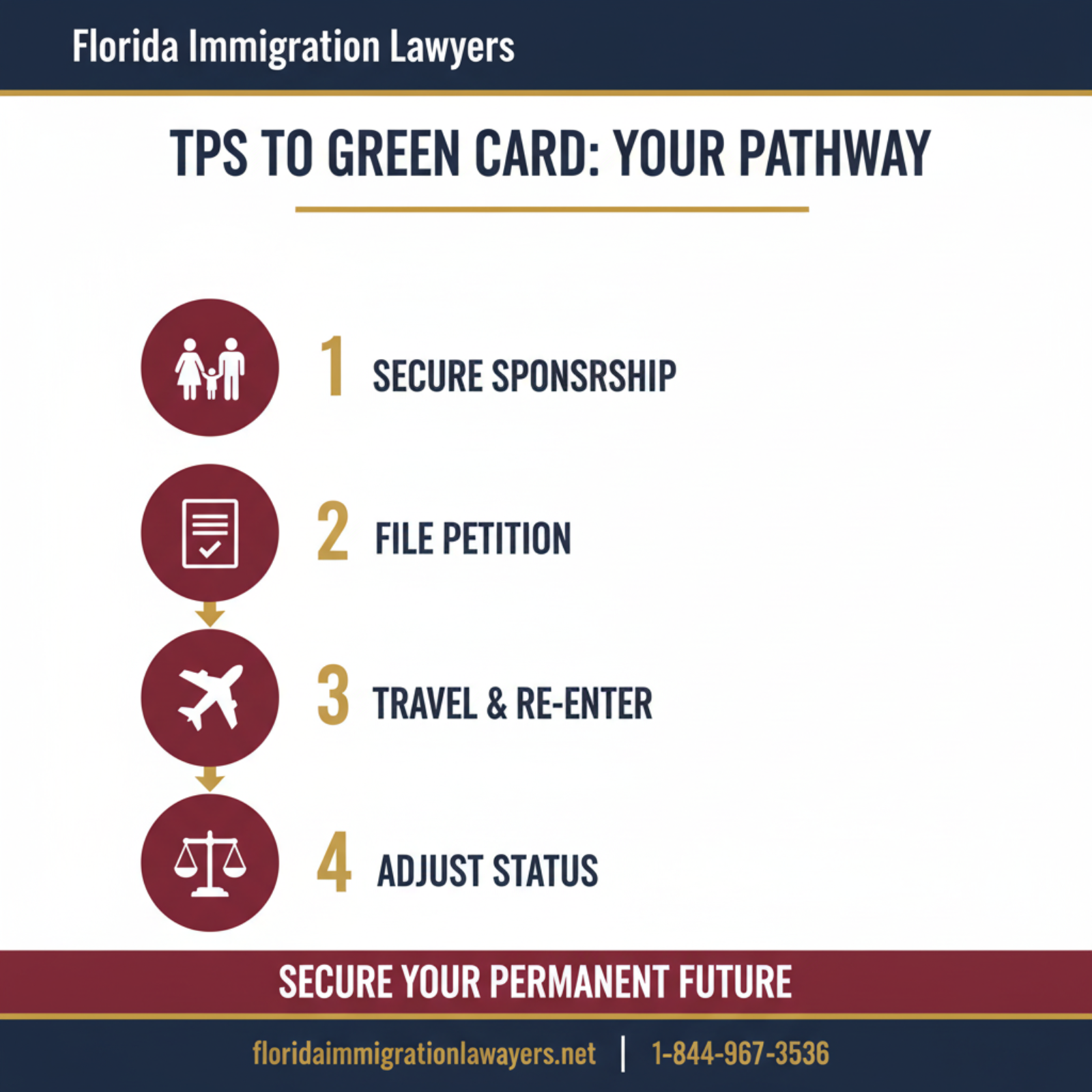
Once you've determined your eligibility, the adjustment of status process involves several key stages. Each step requires meticulous attention to detail and accurate documentation.
Preparing Your Application Package (Form I-485)
The core of your application is Form I-485, Application to Register Permanent Residence or Adjust Status. This form must be filed with a substantial amount of supporting documentation. This typically includes: your birth certificate, marriage certificate (if applicable), proof of your TPS status, evidence of lawful entry or parole, financial support documents (such as Form I-864, Affidavit of Support, if applicable), medical examination results (Form I-693), photographs, and any necessary waivers. You will also likely file Form I-765 for employment authorization and Form I-131 for advance parole concurrently. Ensuring all forms are correctly filled out and all required documents are included is critical to avoid delays or requests for evidence (RFEs). You can find official forms and instructions on the USCIS website.
Biometrics Appointment and Interview
After filing your application, you will receive a notice for a biometrics appointment at a local Application Support Center (ASC). Here, your fingerprints, photograph, and signature will be collected for background checks. Following this, many applicants will be scheduled for an interview with a USCIS officer. The interview is an opportunity for the officer to verify the information in your application, ask questions about your eligibility, and confirm your identity and intentions. It's important to be prepared, honest, and bring all original documents to your interview.
Responding to Requests for Evidence (RFEs) and Notices of Intent to Deny (NOIDs)
During the process, USCIS may issue a Request for Evidence (RFE) if they need additional documents or clarification on your application. A Notice of Intent to Deny (NOID) is more serious, indicating that USCIS intends to deny your application unless you provide compelling evidence to overcome their concerns. Both require timely and comprehensive responses. Failing to respond adequately or on time can lead to a denial of your application. An experienced attorney can help you understand and respond effectively to these critical notices.
Potential Challenges and How to Overcome Them
The journey from TPS to Green Card is rarely without its obstacles. Being aware of potential challenges and having a strategy to address them is key to success.
Changes in Immigration Policy
Immigration law and policy are constantly evolving. New court decisions, administrative directives, or legislative changes can impact eligibility or process requirements. Staying informed, or more practically, having an attorney who stays informed, is crucial. For instance, changes to TPS designations for specific countries or new interpretations of "lawful admission" can directly affect your case. The Department of Justice also provides updates on immigration court decisions and policies that can be relevant, available on justice.gov.
Issues with Criminal History or Prior Immigration Violations
Any criminal history, no matter how minor it seems, or past immigration violations (such as previous deportations, misrepresentations, or overstays) can create significant hurdles. These issues can lead to grounds of inadmissibility or bars to good moral character. It is vital to be completely transparent with your attorney about any such history. Often, these issues can be addressed through waivers or specific legal arguments, but only if they are known and handled proactively. In some cases, these issues might even lead to asylum claims becoming relevant or requiring robust deportation defense.
Denial of Adjustment of Status and What Happens Next
If your adjustment of status application is denied, it can have serious consequences. Depending on your immigration history and current status, a denial could lead to the initiation of removal (deportation) proceedings. It is essential to understand your options following a denial, which may include appealing the decision, refiling the application (if circumstances change or new evidence emerges), or exploring other immigration pathways. This is a critical juncture where expert legal counsel is indispensable.
Why Expert Legal Guidance is Crucial for Your TPS to Green Card Journey in Florida
The path from TPS to a Green Card is intricate, laden with legal complexities, evolving policies, and potential pitfalls. Attempting to navigate this journey alone can lead to costly errors, delays, or even denial.
An experienced immigration attorney can provide invaluable assistance by:
- Assessing Your Eligibility: Thoroughly reviewing your immigration history, entry method, and any prior travel to determine the most viable pathway to a Green Card.
- Preparing a Meticulous Application: Ensuring all forms are correctly completed, all required documents are gathered, and the application package is robust and error-free.
- Navigating Legal Nuances: Understanding the latest court decisions, USCIS policies, and circuit court precedents that can impact your case, such as the specifics of advance parole and lawful admission.
- Preparing for Interviews: Helping you understand what to expect during your USCIS interview and preparing you to answer questions confidently and accurately.
- Addressing Challenges: Proactively identifying and addressing potential issues like inadmissibility grounds, criminal history, or prior immigration violations, and preparing necessary waivers or legal arguments.
- Responding to USCIS: Crafting timely and effective responses to Requests for Evidence (RFEs) or Notices of Intent to Deny (NOIDs).
- Advocating for You: Representing your interests throughout the process, from initial filing to interview, and if necessary, in appeal or removal proceedings.
The dedicated legal team at Florida Immigration Lawyers understands the unique challenges faced by TPS holders in Florida. We are committed to providing personalized, compassionate, and effective legal representation to help you achieve your dream of permanent residency. Don't leave your future to chance. Contact us today for a free, confidential consultation to discuss your TPS to Green Card options and take the first confident step towards securing your future in the United States.
Frequently Asked Questions
Florida Immigration Lawyers
Legal Team
Our experienced attorneys at Florida Immigration Lawyers have been serving clients across Florida for over 20 years. We specialize in immigration, personal injury, criminal defense, workers compensation, and family law.