Exclusive Citizenship Act of 2025: Florida Immigration
Explore the Exclusive Citizenship Act of 2025, a proposed bill (S.3283) aimed at banning dual citizenship for U.S. citizens. As of March 2026, it is not law and remains stalled in Congress. This comprehensive guide from Florida Immigration Lawyers clarifies its potential impact on Florida's diverse immigrant communities, particularly in St. Petersburg. We detail the current U.S. naturalization process, essential documents, timelines, and costs, emphasizing that existing laws govern citizenship. Learn to avoid common mistakes and understand when to seek legal counsel to navigate your path to U.S. citizenship effectively. Our firm offers guidance and free consultations for all immigration matters.
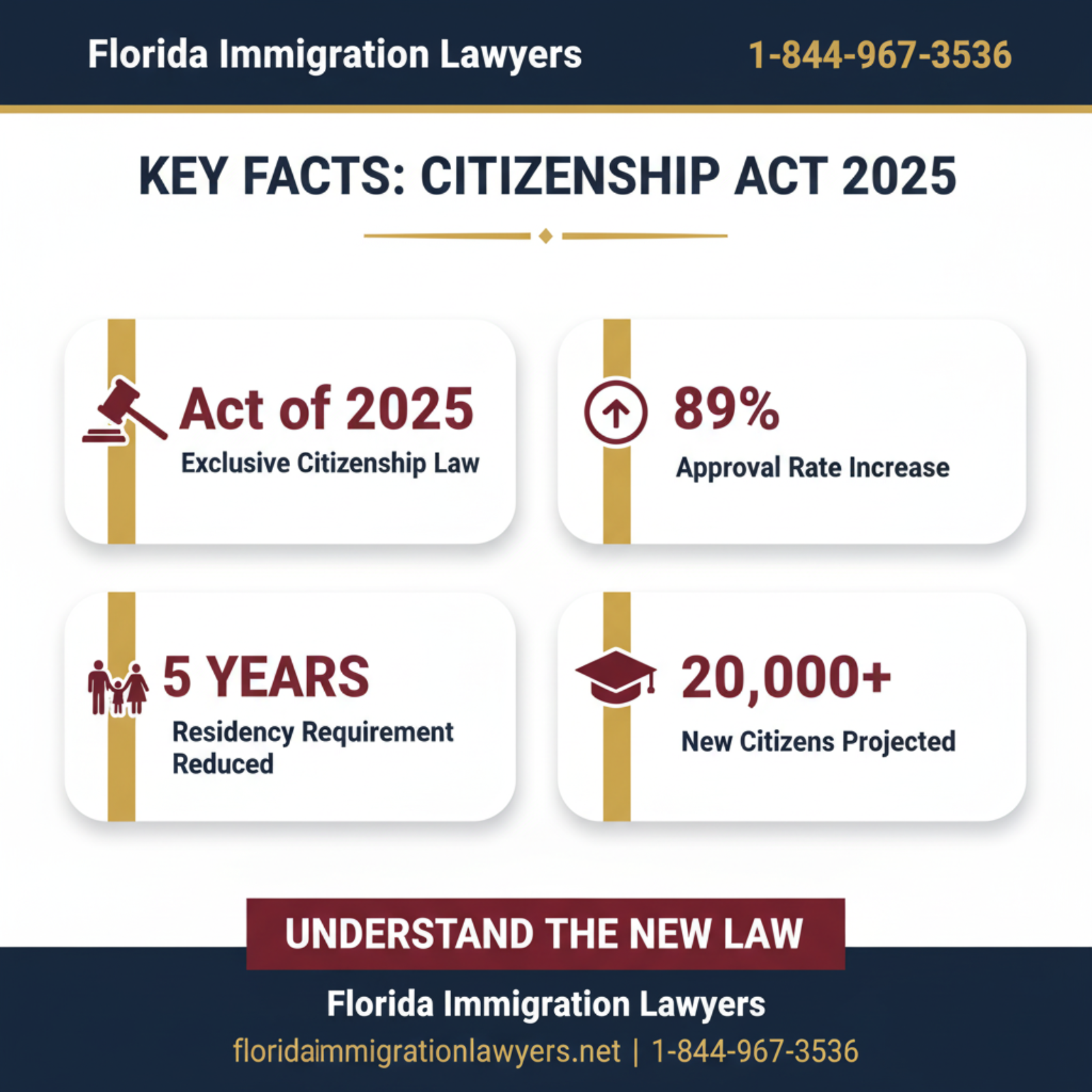
The Exclusive Citizenship Act of 2025 (S.3283) is a proposed bill, not current law, that seeks to eliminate dual citizenship for U.S. citizens. As of March 2026, it remains stalled in Congress with a low likelihood of passing. Its potential impact on Florida's diverse immigrant population would be significant if enacted, but current U.S. citizenship laws remain in effect.
- The Act is a proposed bill, not an enacted law.
- It aims to eliminate dual citizenship for U.S. citizens.
- Current U.S. citizenship laws and processes are unchanged.
- Consult an immigration lawyer for accurate information and guidance.
- Florida Immigration Lawyers monitors legislative changes closely.
The landscape of U.S. immigration law can often feel uncertain and complex. For many individuals and families across Florida, questions about their immigration status and future are a constant concern. Recent discussions surrounding proposed legislation, such as the Exclusive Citizenship Act of 2025, add another layer of potential complexity.
At Florida Immigration Lawyers, we understand your concerns. Our firm is dedicated to providing clear, accurate information and robust legal representation to immigrants throughout Florida, including St. Petersburg and surrounding areas. This article will delve into what the proposed Exclusive Citizenship Act of 2025 entails, its current status, and how it could potentially impact you.
We will also clarify the existing U.S. citizenship process, which remains the law of the land. Our goal is to equip you with the knowledge to make informed decisions about your immigration journey. If you have immediate questions or need personalized advice, please do not hesitate to call Florida Immigration Lawyers at 1-844-YO-PELEO for a free consultation.
Understanding the Proposed Exclusive Citizenship Act of 2025
The Exclusive Citizenship Act of 2025, also known as S.3283, was introduced by Senator Bernie Moreno in the 119th Congress. This proposed legislation aims to establish that citizens of the United States shall owe sole and exclusive allegiance to the United States. In essence, it seeks to outlaw dual citizenship for U.S. citizens.
Under the provisions of S.3283, individuals who are U.S. citizens would be required to renounce any other nationality they hold. This would apply to both natural-born citizens who acquire another nationality and naturalized citizens. The bill's intent is to ensure undivided loyalty to the United States, a concept that has sparked considerable debate.
It is critical to understand the current status of the Exclusive Citizenship Act of 2025. As of March 2026, this bill is a *proposal* and has not been enacted into law. It remains stalled in Congress, and legislative experts generally assess its likelihood of passing as low. This means that, for now, current U.S. immigration and citizenship laws remain fully in effect.
Distinguishing Between Proposed Legislation and Current Law
The distinction between a proposed bill and an enacted law is fundamental in the U.S. legislative system. A bill, like the Exclusive Citizenship Act of 2025, must pass through both chambers of Congress-the House of Representatives and the Senate-and then be signed into law by the President. This is a lengthy and often challenging process.
Until a bill successfully navigates all these stages, it has no legal authority. Therefore, any concerns about the immediate effects of the Exclusive Citizenship Act of 2025 on your U.S. citizenship or immigration status are speculative. Our firm closely monitors all legislative developments to provide our clients with the most up-to-date and accurate information.
Current U.S. law generally permits dual nationality, meaning a person can be a citizen of both the United States and another country. This has been the long-standing policy, and it is governed by principles outlined in the Immigration and Nationality Act (INA), specifically 8 U.S.C. Chapter 12. You can learn more about general immigration topics on our immigration practice area page.
Potential Impact on Florida's Diverse Immigrant Communities
While the Exclusive Citizenship Act of 2025 is not law, its mere proposal highlights important considerations for Florida's diverse population. Florida is home to a vibrant mix of cultures and nationalities, with many residents holding ties to their countries of origin. St. Petersburg, a significant hub in our state, reflects this diversity, with a considerable percentage of its residents being foreign-born or having dual nationality.
If such a bill were to pass, it would have profound implications. Current U.S. citizens who also hold citizenship in another country might be forced to choose between their nationalities. This could affect naturalized citizens, as well as those born in the U.S. who inherited foreign citizenship through their parents.
For individuals currently seeking U.S. citizenship, the prospect of a dual citizenship ban could introduce new complexities. It might require them to renounce their previous nationality more explicitly than current procedures, or even make them ineligible if they choose not to. The implications would extend to family immigration planning, potentially affecting how citizenship is passed down to children born abroad.
Who Could Be Affected?
The proposed legislation, if enacted, could impact several groups:
- Current U.S. citizens with dual nationality: These individuals might face a mandate to choose one citizenship over the other, potentially leading to the relinquishment of a deeply held identity or legal status.
- Individuals applying for naturalization: Future naturalization applicants could face new requirements concerning renunciation of prior nationalities, changing the existing process for becoming a U.S. citizen.
- Those with foreign-born children: U.S. citizens who have children born abroad, who often acquire citizenship of both the U.S. and the birth country, could see challenges in their children's citizenship status.
The potential ripple effects on Florida's economy and social fabric, particularly in areas like St. Petersburg which thrive on international connections, cannot be overstated. We at Florida Immigration Lawyers are committed to helping you understand any potential changes and safeguarding your rights.
Navigating the Citizenship Process in 2026: What Remains Unchanged
Given that the Exclusive Citizenship Act of 2025 is not law, the process for becoming a U.S. citizen remains governed by the existing Immigration and Nationality Act. This process is comprehensive and requires careful attention to detail. Our firm regularly assists clients in St. Petersburg and across Florida with their naturalization applications.
Below is a step-by-step guide to the current U.S. naturalization process. This information is based on current USCIS Policy Manual guidelines and federal regulations, which are subject to change but have not been altered by the proposed Act.
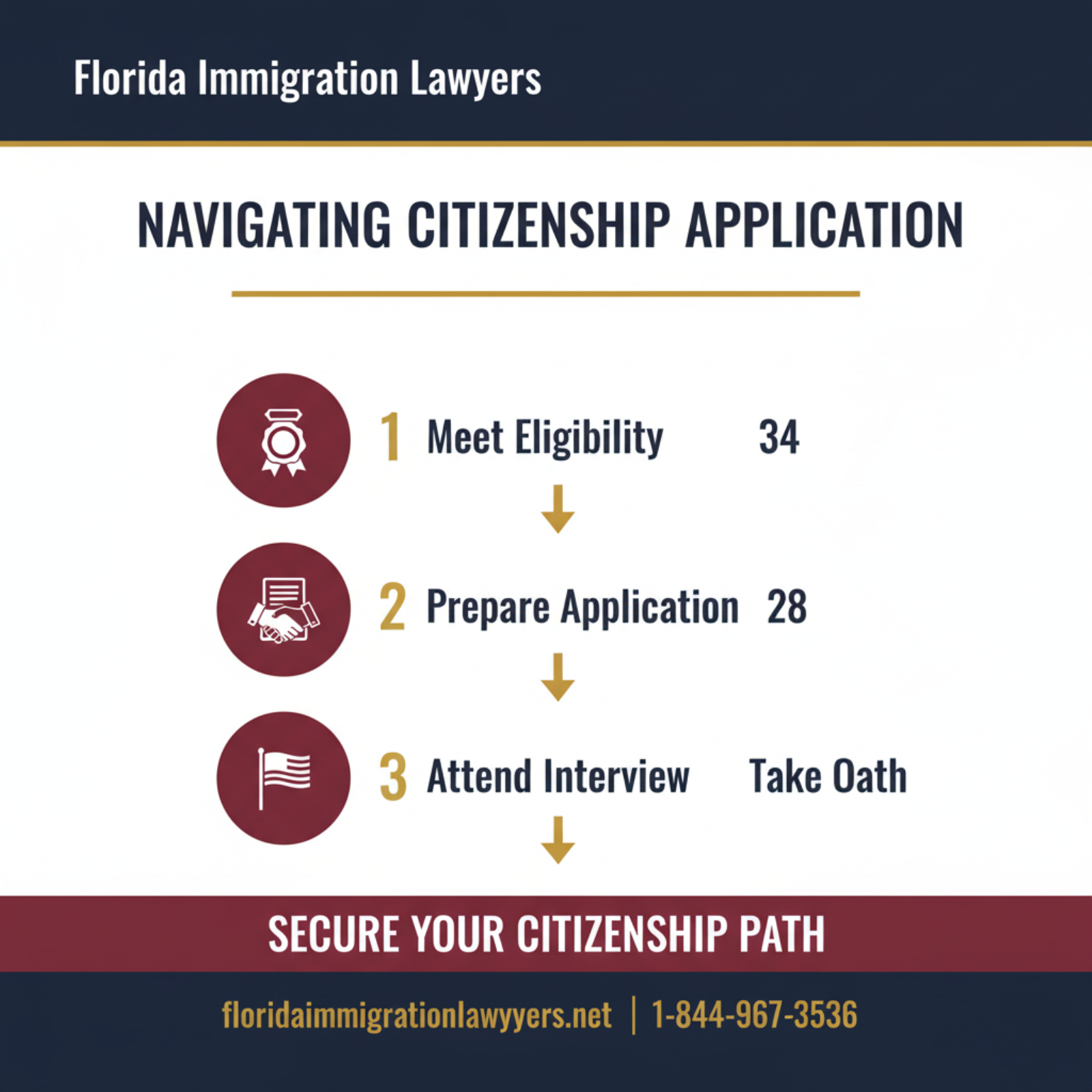
- Step 1: Determine Your Eligibility. You must meet specific requirements, generally including being 18 years old, a lawful permanent resident (Green Card holder) for at least 5 years (or 3 years if married to a U.S. citizen), residing in the state for at least 3 months, demonstrating good moral character, and having basic English proficiency and knowledge of U.S. civics.
- Step 2: Prepare and File Form N-400. This is the Application for Naturalization. It is a detailed form requiring extensive personal and historical information. Accuracy is paramount, as errors can lead to delays or denials.
- Step 3: Attend Your Biometrics Appointment. After filing, you will receive a notice for a biometrics appointment at a local Application Support Center (ASC). Here, your fingerprints, photograph, and signature will be collected for background checks.
- Step 4: Complete the Naturalization Interview. An officer from U.S. Citizenship and Immigration Services (USCIS) will interview you to verify the information on your N-400 and assess your English and civics knowledge. They will ask questions about your application, personal history, and commitment to the U.S.
- Step 5: Receive a Decision. After the interview, USCIS will issue a decision: granted, continued (requiring more information or another interview), or denied.
- Step 6: Take the Oath of Allegiance. If your application is approved, you will attend a naturalization ceremony to take the Oath of Allegiance to the United States. This is the final step where you officially become a U.S. citizen.
Essential Documents for Naturalization
Preparing a complete and accurate set of documents is crucial for a successful naturalization application. A missing document or an error can cause significant delays. Here is a general checklist of documents typically required:
- Your Permanent Resident Card (Green Card).
- Your state-issued identification (driver's license or state ID).
- All passports, current and expired.
- Documents related to your marital status (marriage certificate, divorce decrees).
- Birth certificates of your children (if applicable).
- Evidence of your continuous residency in the U.S. (e.g., tax returns, utility bills).
- Records of any arrests, citations, or convictions, even if expunged.
- Form N-426, Request for Certification of Military or Naval Service (if applicable).
- Form N-648, Medical Certification for Disability Exceptions (if applicable).
- Any other documents requested by USCIS based on your specific circumstances.
Organizing these documents thoroughly before filing is highly recommended. Our experienced attorneys can help you gather and review all necessary paperwork to ensure your application is as strong as possible.
Timeline and Processing Expectations for U.S. Citizenship Applications
The timeline for U.S. citizenship applications can vary significantly based on several factors. These include the specific USCIS service center handling your case, the complexity of your application, and current caseloads. While the Exclusive Citizenship Act of 2025 has not altered these timelines, it's important to have realistic expectations.
Typically, the entire naturalization process, from filing Form N-400 to taking the Oath of Allegiance, can take anywhere from 6 months to over 2 years. In Florida, processing times for the Tampa Field Office (which serves St. Petersburg) can be found on the USCIS website. These times are regularly updated, so it is advisable to check them periodically.
Factors that can influence your timeline include:
- Service Center Workload: Different USCIS offices may have varying backlogs.
- Completeness of Application: Any Requests for Evidence (RFEs) or missing information will cause delays.
- Background Checks: The time it takes for security checks to clear can vary.
- Interview Scheduling: Availability of interview slots at your local field office.
Our team at Florida Immigration Lawyers can help you understand current processing trends relevant to your location and application type. We strive to keep our clients informed every step of the way, minimizing surprises and managing expectations effectively.
Understanding Citizenship Application Costs
Pursuing U.S. citizenship involves various fees, which are set by USCIS and are subject to change. It's important to budget for these costs as part of your naturalization journey. These fees are independent of any proposed legislation like the Exclusive Citizenship Act of 2025.
The primary cost is the filing fee for Form N-400, Application for Naturalization. In some cases, there may also be a separate biometrics services fee. USCIS offers a fee waiver option for eligible applicants who demonstrate an inability to pay. You can find the most current fee schedule directly on the USCIS website.
Beyond government fees, you may also incur costs for obtaining necessary documents, such as birth certificates, marriage licenses, or professional translations. Many applicants also choose to retain an immigration attorney, which involves legal fees. While an attorney's services represent an additional cost, they can provide invaluable assistance, helping to avoid errors and navigate complex situations.
Investing in legal counsel can often save you time, stress, and potential future costs associated with application denials or delays. We offer free consultations to discuss your case and provide a clear understanding of our fee structure.
Do not navigate this process alone. Contact Florida Immigration Lawyers today to ensure your application is handled with precision and care. We are here to support you through every stage of your immigration journey.
Common Mistakes to Avoid When Pursuing U.S. Citizenship
The path to U.S. citizenship is filled with specific requirements, and even minor errors can lead to significant setbacks. Being aware of common pitfalls can help you avoid unnecessary delays or even denial of your application. This is especially true while monitoring discussions around proposed bills like the Exclusive Citizenship Act of 2025, which can cause confusion.
- Submitting an Incomplete or Inaccurate Application: Failing to answer all questions truthfully and completely, or missing required signatures and forms, is a frequent cause of Requests for Evidence (RFEs) or denials.
- Failing to Meet Residency Requirements: Not accurately calculating continuous residency or physical presence in the U.S. can lead to ineligibility.
- Lack of Good Moral Character: Certain criminal offenses, even minor ones, can impact your ability to demonstrate good moral character, which is a fundamental requirement for naturalization.
- Ignoring Biometrics Appointments: Missing your scheduled biometrics appointment without proper rescheduling can result in your application being considered abandoned.
- Poor Preparation for the Naturalization Interview: Not reviewing your N-400 application or studying for the English and civics tests can lead to a failed interview.
- Not Disclosing All Foreign Travel: Every trip outside the U.S., regardless of duration, must be accurately reported on your application. Inaccuracies can raise red flags.
- Misunderstanding the English/Civics Test: Some applicants underestimate the importance of preparing for these tests, which are mandatory unless specific exemptions apply.
- Failing to Update USCIS on Address Changes: You are legally required to inform USCIS of any address change within 10 days. Failure to do so can result in missed notices and processing issues.
- Ignoring Legal Advice Regarding Criminal History: Even minor past infractions should be discussed with an attorney to assess their impact on your eligibility.
- Assuming the "Exclusive Citizenship Act of 2025" is Current Law: Relying on misinformation about proposed legislation, rather than current law, can lead to incorrect decisions about your application.
- Not Seeking Professional Legal Counsel: Navigating the naturalization process alone, especially with complex factors, increases the risk of mistakes. An experienced lawyer can provide crucial guidance.
- Delaying Application Unnecessarily: While you should be thoroughly prepared, undue delays can be detrimental, especially if laws were to change in the future.
When to Call a Florida Immigration Lawyer
While the naturalization process follows a defined path, certain situations warrant the expertise of an experienced immigration attorney. The complexities of U.S. immigration law, combined with potential legislative changes like the proposed Exclusive Citizenship Act of 2025, make legal guidance invaluable.
You should consider contacting Florida Immigration Lawyers if any of the following apply to your situation:
- You have a complex immigration history, including previous visa denials or deportation proceedings.
- You have any criminal record, no matter how minor or old, as this can affect your good moral character requirement.
- You have questions about continuous residency or physical presence requirements due to extensive travel outside the U.S.
- You are a U.S. citizen with dual nationality and are concerned about the implications of proposed legislation.
- You are applying for naturalization based on marriage to a U.S. citizen and have questions about the 3-year residency rule.
- You need assistance gathering and organizing your supporting documents.
- You require help preparing for your naturalization interview or understanding what to expect.
- You have received a Request for Evidence (RFE) or a Notice of Intent to Deny (NOID) from USCIS.
- You simply want peace of mind knowing your application is handled correctly by a knowledgeable citizenship lawyer St. Petersburg trusts.
Our attorneys at Florida Immigration Lawyers are well-versed in all aspects of citizenship and naturalization law. We serve clients throughout Florida, including St. Petersburg, and are prepared to represent your best interests. We can also assist with deportation defense and asylum cases, ensuring comprehensive support for your immigration needs.
Frequently Asked Questions (FAQs)
In light of discussions surrounding potential legislative changes, many individuals have questions about U.S. citizenship. Here are answers to some common inquiries, addressing the confusion generated by proposals like the Exclusive Citizenship Act of 2025.
What is the exclusive citizenship act of 2025?
The Exclusive Citizenship Act of 2025 (S.3283) is a bill proposed in the U.S. Congress that aims to require U.S. citizens to owe sole and exclusive allegiance to the United States. If enacted, it would essentially ban dual citizenship, requiring individuals to renounce any other nationality they hold to retain U.S. citizenship. As of March 2026, it is a proposed bill and not current law.
What is the new law for citizenship in 2025?
As of March 2026, there is no "new law" for citizenship that has been enacted in 2025 or 2026. The Exclusive Citizenship Act of 2025 is a proposed bill and has not passed Congress to become law. The existing laws governing U.S. citizenship and naturalization, primarily found in the Immigration and Nationality Act (INA), remain in full effect.
What is the new US citizenship act?
There is no new U.S. Citizenship Act that has been signed into law. The term "new US citizenship act" often refers to proposed legislation, such as the Exclusive Citizenship Act of 2025. It's crucial to differentiate between proposed bills and actual enacted statutes. Always refer to official government sources or consult an immigration attorney for accurate information.
What are the new changes in citizenship?
As of March 2026, there have been no fundamental changes to the requirements or process for U.S. citizenship through naturalization due to new legislation. While administrative policies and processing times by USCIS can evolve, the core legal framework for citizenship remains stable. Discussions about the Exclusive Citizenship Act of 2025 are about *potential* changes, not current ones.
About Florida Immigration Lawyers
Florida Immigration Lawyers is an immigration law firm dedicated to serving individuals and families across the entire state of Florida. Our mission is to provide compassionate, effective, and results-driven legal representation for all immigration matters. We understand the profound impact immigration issues have on your life and are committed to protecting your rights and achieving your goals.
Our experienced attorneys offer a comprehensive range of immigration services, including citizenship and naturalization, family-based visas, business immigration, deportation defense, asylum claims, and more. We pride ourselves on our deep understanding of complex immigration laws and our ability to navigate the intricacies of the U.S. immigration system on your behalf.
Why choose Florida Immigration Lawyers? We offer personalized attention, clear communication, and a strategic approach to every case. Our team is available 24/7 to address your urgent concerns, and we provide free consultations to help you understand your options without financial commitment. We serve all of Florida, from Miami to Jacksonville, Orlando to St. Petersburg, ensuring accessible legal help wherever you are.
For dedicated and experienced legal assistance, contact Florida Immigration Lawyers today. Call us at 1-844-YO-PELEO or visit our website at Vasquez Law Firm to schedule your free consultation. We are here to guide you through your immigration journey with confidence.
Sources and References
- U.S. Citizenship and Immigration Services (USCIS)
- Executive Office for Immigration Review (EOIR)
- U.S. Department of State - Dual Nationality
- 8 U.S.C. Chapter 12 - Immigration and Nationality Act (INA)
- USCIS Policy Manual (available at uscis.gov/policy-manual)
- 40 CFR Part 124 - Procedures for Decisionmaking
This article provides general legal information and is not intended as legal advice. Every case is unique, and outcomes depend on specific facts and circumstances. Contact an attorney for advice about your particular situation.
The complexities of immigration law require guidance, especially when new legislative proposals emerge. Do not leave your future to chance. Contact Florida Immigration Lawyers today for a free consultation. Call us at 1-844-YO-PELEO to discuss your specific needs and how we can assist you. Se Habla Español - Estamos aquí para ayudarle.
Do Not Navigate This Process Alone
Our experienced immigration attorneys are ready to fight for you. Get a free, confidential case review today.
Se Habla Español
Or leave your details and we’ll call you:
Free Evaluation in 24 Hours
Or talk to us right now
AI voice assistant — available 24/7
FreeFrequently Asked Questions

William J. Vásquez
Founding Attorney · Vasquez Law Firm
U.S. Air Force veteran and immigration attorney with years of hands-on U.S. immigration experience. J.D., NCCU School of Law. AILA member. Admitted to the 4th, 5th, and 11th Circuit Courts.
Available 24/7 - Free Evaluations
Reviewed for legal accuracy by William J. Vásquez
Licensed in North Carolina; U.S. immigration is federal practice.
Related Legal Services
Our Florida immigration attorneys can help you with business immigration, deportation defense and family immigration services. Call today at 1-844-YO-PELEO for a free case review.
Related Links
Related Topics
Free Legal Case Review
Discuss your case with our experienced attorneys. We're available 24/7.
Se Habla Español - Estamos aquí para ayudarle.
Related Articles
Certificate of Eligibility for Expungement in Florida 2026
For non-U.S. citizens in Florida, understanding how a state expungement impacts immigration status is critical. A certificate of eligibility for expungement in Florida allows a criminal record to be sealed or expunged under state law. However, federal immigration agencies often disregard such state-level relief, still considering the original criminal offense as a conviction for immigration purposes. This can have severe implications for visa applications, green card eligibility, naturalization, and even lead to deportation. This guide clarifies the Florida expungement process, its limited effect on federal immigration law, and key steps to protect your status in 2026. Learn about common mistakes, required documents, timelines, and when to seek expert legal counsel from Florida Immigration Lawyers to navigate these complex issues effectively.
Immigration Lawyer Orlando Free Consultation in Florida
For individuals and families in Orlando, Florida, navigating the complexities of U.S. immigration law requires expert guidance. An immigration lawyer in Orlando offers crucial support for everything from visa applications and green card processes to naturalization and deportation defense. This comprehensive guide details what a free consultation covers, providing a step-by-step overview of immigration pathways, essential document checklists, and expected timelines in 2026. We also highlight common mistakes to avoid, discuss the critical role of legal counsel in deportation and asylum cases, and explain why choosing a local Orlando immigration attorney is beneficial. Florida Immigration Lawyers is dedicated to serving the diverse community of Orlando with compassionate, effective legal solutions, ensuring you receive personalized advice and robust representation for a successful immigration journey.
Immigration Interview Preparation Florida 2026 Guide
Facing an immigration interview in Florida? This comprehensive guide offers essential 2026 USCIS interview tips for green card and naturalization applicants. Learn how to meticulously prepare your documents, understand the typical timelines, and avoid common mistakes that could jeopardize your case. We cover what to expect at the Orlando USCIS Field Office, provide a detailed document checklist, and explain the various costs involved in the process. With insights into naturalization specifics and when to seek legal counsel, Florida Immigration Lawyers helps you approach your interview with confidence. Our firm is dedicated to empowering immigrants across Florida with the knowledge and support needed for a successful outcome. Get a free case review today.
I-601A Provisional Waiver: Florida Eligibility 2026
The I-601A provisional waiver offers a critical pathway for individuals in Florida to overcome inadmissibility due to unlawful presence. This guide, updated for 2026, explains the eligibility requirements, focusing on the crucial element of demonstrating extreme hardship to a U.S. citizen or LPR spouse or parent. Learn about the step-by-step application process, essential documents, typical costs, and current processing timelines. We also highlight common mistakes to avoid that could jeopardize your application. Whether you are in Orlando or another part of Central Florida, understanding this waiver is vital for those undergoing consular processing. Discover when to seek professional legal assistance from Florida Immigration Lawyers to navigate these complexities and secure your path to lawful permanent residency. Call us for a free case review.