TPS Florida Eligible Countries 2026 | FL Immigration Lawyers
Explore Temporary Protected Status (TPS) eligibility for Florida in 2026, focusing on countries facing turmoil and how to apply. Contact Florida Immigration Lawyers for personalized assistance.

- Eligibility is based on country designation.
- TPS allows work authorization and protection from deportation.
- Applicants must meet specific criteria and deadlines.
Living in Pembroke Pines, Florida, offers a unique blend of cultural diversity and opportunity. For many immigrants, understanding Temporary Protected Status (TPS) can be a critical step towards security and stability. This article explores the countries eligible for TPS in 2026, the application process, and how our firm can assist you. Call Florida Immigration Lawyers at 1-844-YO-PELEO for a free consultation.
What is Temporary Protected Status (TPS)?
Temporary Protected Status (TPS) is a form of humanitarian relief provided to individuals from countries experiencing ongoing armed conflict, environmental disasters, or other extraordinary conditions. As of 2026, TPS offers eligible individuals the ability to live and work in the U.S. without fear of deportation.
TPS is not a path to permanent residency or citizenship, but it does provide temporary protection and work authorization. To qualify, applicants must be from a designated country and meet specific residency and filing requirements.
The designation of a country for TPS is a significant decision made by the Secretary of Homeland Security, based on specific statutory criteria. These criteria include situations where there is an ongoing armed conflict posing a serious threat to personal safety, an environmental disaster (such as an earthquake, hurricane, or epidemic) resulting in a substantial, but temporary, disruption of living conditions, or other extraordinary and temporary conditions that prevent nationals from safely returning to their home country. This status is a crucial lifeline for many, allowing them to rebuild their lives in safety while conditions in their home country hopefully improve.
Beyond protection from removal and the ability to work legally, TPS also offers the benefit of travel authorization for urgent humanitarian reasons or other specific purposes, provided USCIS grants it. This temporary relief is a cornerstone of humanitarian immigration policy, designed to offer stability during times of crisis. It's vital for applicants to understand that while TPS offers significant protections, it requires periodic re-registration to maintain status, underscoring its temporary nature. Consulting with experienced professionals like Florida Immigration Lawyers can ensure you fully comprehend the scope and limitations of TPS.
How to Apply for TPS in 2026?
To apply for TPS, you must submit Form I-821, Application for Temporary Protected Status, to the U.S. Citizenship and Immigration Services (USCIS). Here are the steps:
- Determine Eligibility: Confirm your country is designated for TPS in 2026.
- Prepare Documentation: Gather evidence of your identity, nationality, and continuous residence in the U.S.
- Complete Form I-821: Fill out the application form accurately and completely.
- Submit Application: Send your application to the appropriate USCIS lockbox address.
- Attend Biometrics Appointment: Participate in a scheduled appointment for fingerprinting and photos.
Processing times can vary, and it's essential to apply as soon as possible to avoid missing deadlines.
Determining your eligibility involves more than just your country of origin; you must also demonstrate continuous physical presence and continuous residence in the U.S. since the designated dates. This often requires meticulous record-keeping and a thorough understanding of USCIS requirements. For instance, even a brief trip outside the U.S. after the designation date could impact your eligibility unless specific exceptions apply. This is where the expertise of Florida Immigration Lawyers can be invaluable, helping you assess your individual circumstances against complex immigration laws.
The meticulous preparation of documentation cannot be overstated. USCIS requires robust evidence to prove your identity, nationality, and especially your continuous presence and residence. This might include a combination of passports, birth certificates, school records, medical bills, utility statements, employment records, and tax documents. Any gaps or inconsistencies in your documentation could lead to delays or even a denial. Once your application is submitted, you will receive a receipt notice, and then typically a notice for a biometrics appointment, which is mandatory for background and security checks. Missing this appointment without rescheduling can lead to your application being abandoned, so prompt attention to all USCIS notices is critical.
Which Countries Are Eligible for TPS in 2026?
As of 2026, several countries remain designated for TPS due to ongoing conflicts or disasters. Eligibility may change, so it's crucial to stay informed through official sources like USCIS and the State Department.
- Venezuela: Due to political instability and economic collapse.
- Honduras: Following severe weather events and ongoing violence.
- Syria: Ongoing civil war and humanitarian crisis.
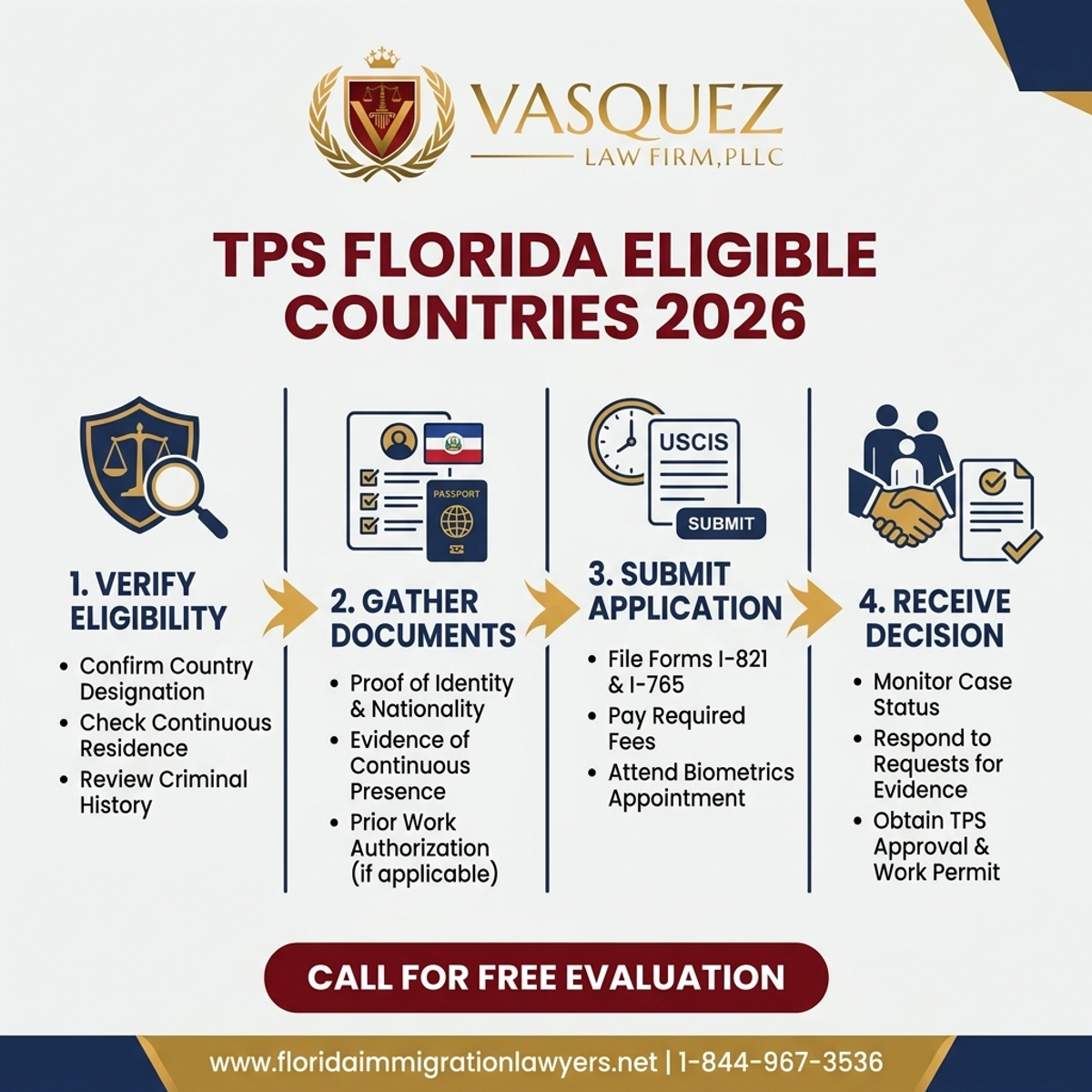
Step-by-Step Process — TPS Florida Eligible Countries 2026
These designations are subject to change based on the evolving situation in each country.
The Secretary of Homeland Security continually monitors conditions in designated countries to determine whether to extend, redesignate, or terminate TPS. An extension allows current beneficiaries to maintain their status, while a redesignation opens the door for additional nationals who arrived after the initial designation to apply. Conversely, a termination means that conditions in the country have improved sufficiently for its nationals to return safely, ending the TPS protection. These decisions are made after careful review of country conditions, often in consultation with the Department of State.
For instance, Venezuela's designation reflects a severe humanitarian crisis, widespread political instability, and a collapsing economy that makes safe return virtually impossible for its citizens. Honduras, on the other hand, has faced devastating natural disasters like hurricanes, compounded by persistent violence and insecurity, justifying its TPS status. Syria's long-standing civil war and the resulting humanitarian catastrophe continue to warrant its designation. It is crucial for individuals from these countries to understand that while TPS provides critical relief, they must stay informed about any potential changes to their country's designation, as these can significantly impact their legal status in the U.Florida Immigration Lawyers can provide timely updates and guidance on these evolving designations.
Documentation Checklist for TPS Application
- Proof of identity and nationality (e.g., passport, birth certificate).
- Evidence of continuous residence in the U.S. since the TPS designation date.
- Proof of physical presence in the U.S. at the time of application.
- Completed and signed Form I-821.
- Biometrics fee and evidence of fee waiver (if applicable).
When preparing your documentation, ensure all foreign-language documents are accompanied by a certified English translation. For proof of identity and nationality, a valid passport is ideal, but if unavailable, a birth certificate with photo identification, or national identity card from your home country, may be accepted. If you lack primary evidence, secondary evidence such as affidavits from individuals who can attest to your identity and nationality may be considered. Providing clear, legible copies of all documents is essential, and keeping originals safe.
Proving continuous residence and physical presence is critical. This often requires a collection of documents over the specified period, such as rental agreements, utility bills, school transcripts, employment records (pay stubs, W-2s), medical records, bank statements, and tax returns. The more comprehensive your evidence, the stronger your case. If you have any gaps in your documentation, or if your situation is complex, consulting with Florida Immigration Lawyers can help you strategize the best way to present your evidence to USCIS.
Processing Timeline for TPS Applications
| Stage | Typical Timeframe | Notes |
|---|---|---|
| Application Submission | 1-3 months | Initial review by USCIS |
| Biometrics Appointment | 1-2 months | Fingerprinting and photos |
| Decision Notification | 6-12 months | Approval or denial letter |
Processing times can vary based on workload and other factors. Stay updated on your application's status through USCIS.
It's important to understand that the typical timeframes provided are estimates and can fluctuate significantly based on USCIS's current workload, policy changes, and the complexity of individual cases. Factors such as whether a Request for Evidence (RFE) is issued can extend the processing period. An RFE means USCIS requires more information or clarification regarding your application, and responding promptly and thoroughly is crucial. You can monitor the status of your application online using the receipt number provided by USCIS, or by contacting USCIS directly.
While waiting for a decision, it's essential to keep your address updated with USCIS if you move, as all official communications will be sent to your address on file. If your application is pending for an unusually long time, or if you encounter any issues, seeking assistance from Florida Immigration Lawyers can help you understand the next steps, including how to inquire about delays or respond to any USCIS requests effectively. Patience is key, but proactive monitoring and legal guidance can alleviate much of the stress associated with the waiting period.
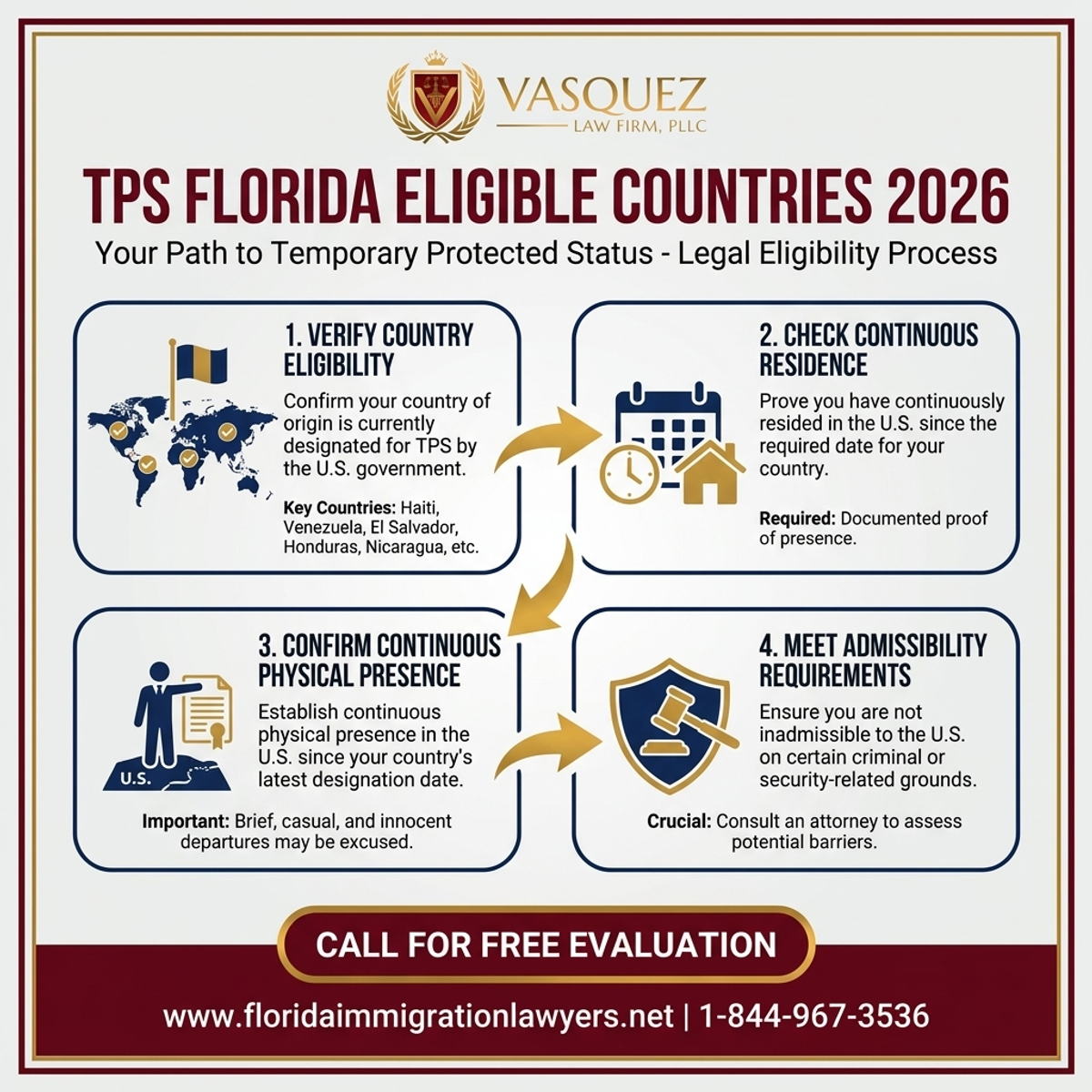
Key Statistics — TPS Florida Eligible Countries 2026
Cost Factors and Fee Breakdown for TPS
| Item | Typical Fee | Notes |
|---|---|---|
| Form I-821 Filing Fee | Varies | Check USCIS for current fees |
| Biometrics Fee | Varies | Fingerprinting service fee |
| Legal Assistance (Optional) | Varies | Consultation and application assistance |
Please note that fees are subject to change, and it's important to verify current fees on the USCIS website.
The fees associated with a TPS application can be a concern for many. USCIS fees for Form I-821 (Application for Temporary Protected Status) and the biometrics services fee are mandatory unless a fee waiver is granted. It's crucial to always check the most current fee schedule on the USCIS website or consult with an immigration attorney, as these fees can change without prior notice. Incorrect fee payment is a common reason for applications being rejected or delayed.
For individuals facing financial hardship, USCIS offers the possibility of a fee waiver by filing Form I-912, Request for Fee Waiver. Eligibility for a fee waiver is typically based on receiving a means-tested benefit, having an income below 150% of the Federal Poverty Guidelines, or demonstrating financial hardship. While legal assistance is an additional cost, the value of having an experienced attorney from Florida Immigration Lawyers guide you through the complex application process, ensure accuracy, and help navigate potential fee waiver requests, can significantly improve your chances of a successful outcome and prevent costly mistakes.
Do not navigate this process alone. Contact Florida Immigration Lawyers today.
Common Mistakes to Avoid When Applying for TPS
- Missing Application Deadlines: Failing to submit your application on time can result in denial.
- Incomplete Forms: Ensure all sections of the form are filled out correctly to avoid delays.
- Inadequate Documentation: Provide thorough evidence of identity, nationality, and U.S. residence.
- Ignoring Biometrics Appointment: Missing this step can halt your application.
- Incorrect Fee Payment: Pay the correct fees to prevent processing issues.
- Failure to Report Address Changes: Keep USCIS updated with your current address.
- Submitting False Information: Providing inaccurate information can lead to denial and legal consequences.
- Not Consulting an Attorney: Legal advice can help navigate complex applications.
When to Call a Lawyer for TPS Issues
Complex situations or uncertainties about eligibility are strong indicators that you should seek legal help. Whether it's gathering the right documentation or understanding recent changes in TPS policy, an attorney can provide clarity and support. If you're facing removal proceedings or have missed application deadlines, contact Florida Immigration Lawyers for guidance.
There are many specific scenarios where legal counsel becomes indispensable. For instance, if you have any prior arrests or criminal convictions, even minor ones, these could render you ineligible for TPS, and an attorney can assess the impact and advise on potential waivers or defense strategies. Similarly, if you have a complicated immigration history, such as previous visa overstays, prior deportations, or multiple entries into the U.S., these factors require careful legal analysis to ensure your TPS application is not jeopardized.
Furthermore, if you are struggling to gather sufficient evidence to prove continuous residence or physical presence, or if your documents have inconsistencies, an attorney can help you identify alternative forms of evidence or prepare affidavits to support your claim. Even for re-registration, changes in personal circumstances or evolving USCIS policies can create new challenges. Don't hesitate to reach out to Florida Immigration Lawyers at 1-844-YO-PELEO for a free consultation. Their expertise can provide peace of mind and significantly increase the likelihood of a successful TPS application, protecting your future in Florida.
About Florida Immigration Lawyers
At Florida Immigration Lawyers, we offer comprehensive immigration services throughout Florida, including Pembroke Pines. Our dedicated attorneys focus on TPS, asylum, deportation defense, and more. With a commitment to personalized service and bilingual support, we are here to help you navigate the complexities of immigration law. Call us at 1-844-YO-PELEO or visit our website at floridaimmigrationlawyers.net for a free consultation.
Our firm prides itself on a deep understanding of the ever-changing landscape of U.S. immigration law, providing strategic advice tailored to each client's unique situation. Beyond TPS, our practice areas extend to family-based petitions, employment visas, citizenship and naturalization, and appeals, ensuring a full spectrum of support for your immigration journey. We understand that navigating the immigration system can be daunting, and our goal is to simplify the process, offering clear communication and steadfast advocacy every step of the way.
From our Orlando office, serving communities across Florida, we are committed to being accessible and responsive to our clients' needs. Our team of experienced attorneys and support staff are fluent in both English and Spanish, ensuring that language is never a barrier to receiving high-quality legal representation. When you choose Florida Immigration Lawyers, you're not just hiring an attorney; you're gaining a dedicated partner committed to achieving the strongest possible outcome for your immigration case. Reach out today at 1-844-YO-PELEO to experience the difference personalized and legal guidance can make.
Sources and References
- U.S. Citizenship and Immigration Services (USCIS)
- State Department
- 8 U.S.C. Chapter 12 - Immigration and Nationality Act
Related services: immigration practice areas, family immigration services, citizenship and naturalization.
This article provides general legal information and is not intended as legal advice. Every case is unique, and outcomes depend on specific facts and circumstances. Contact an attorney for advice about your particular situation.
For guidance and personalized assistance, reach out to Florida Immigration Lawyers. Call 1-844-YO-PELEO today. Se Habla Espanol - Estamos aqui para ayudarle.
If you need legal assistance, learn more about our immigration law practice, or call us at 1-844-YO-PELEO for a free consultation.
Do Not Navigate This Process Alone
Our experienced immigration attorneys are ready to fight for you. Get a free, confidential case review today.
Se Habla Español
Or leave your details and we’ll call you:
Free Evaluation in 24 Hours
Or talk to us right now
AI voice assistant — available 24/7
FreeFrequently Asked Questions

William J. Vásquez
Founding Attorney · Vasquez Law Firm
U.S. Air Force veteran and immigration attorney with years of hands-on U.S. immigration experience. J.D., NCCU School of Law. AILA member. Admitted to the 4th, 5th, and 11th Circuit Courts.
Available 24/7 - Free Evaluations
Reviewed for legal accuracy by William J. Vásquez
Licensed in North Carolina; U.S. immigration is federal practice.
Related Legal Services
Our Florida immigration attorneys can help you with immigration lawyer cost in Florida, experienced immigration attorneys and asylum protection. Call today at 1-844-YO-PELEO for a free case review.
Related Links
Related Topics
Free Legal Case Review
Discuss your case with our experienced attorneys. We're available 24/7.
Se Habla Español - Estamos aquí para ayudarle.
Related Articles
EAD Advance Parole Combo Card in Florida: What You Need
An EAD advance parole combo card allows individuals with pending adjustment applications to both work and travel abroad without jeopardizing their green card application. Learn how to apply in Florida, what documents you need, and common mistakes to avoid.
PERM Labor Certification in Florida: A 2026 Guide
Learn all about the PERM labor certification process in Florida, essential for employers sponsoring green card applicants. Understand the steps, document requirements, and common mistakes to avoid in this 2026 guide.
Dual Citizenship Lawyer in Florida: What You Need to Know
For Florida residents, the concept of dual citizenship, or holding two passports, offers a compelling blend of opportunities and challenges. While the U.S. generally permits dual nationality, the path to achieving this status requires a meticulous understanding of both U.S. immigration laws and the citizenship policies of your country of origin. This guide explores the definition of dual citizenship, the detailed step-by-step process for U.S. naturalization, and the significant benefits and potential pitfalls involved. We cover essential documentation, typical timelines, and cost considerations for 2026, providing crucial insights for anyone in Orlando, Miami, or across Florida considering this important legal step. Learn about common mistakes to avoid and understand when to seek professional legal counsel to navigate this complex process successfully. Florida Immigration Lawyers is here to provide expert, bilingual support for your dual citizenship journey.
Immigration Lawyer Orlando Free Consultation in Florida
For individuals and families in Orlando, Florida, navigating the complexities of U.S. immigration law requires expert guidance. An immigration lawyer in Orlando offers crucial support for everything from visa applications and green card processes to naturalization and deportation defense. This comprehensive guide details what a free consultation covers, providing a step-by-step overview of immigration pathways, essential document checklists, and expected timelines in 2026. We also highlight common mistakes to avoid, discuss the critical role of legal counsel in deportation and asylum cases, and explain why choosing a local Orlando immigration attorney is beneficial. Florida Immigration Lawyers is dedicated to serving the diverse community of Orlando with compassionate, effective legal solutions, ensuring you receive personalized advice and robust representation for a successful immigration journey.