Removal Conditional Green Card in Florida: Key Steps
Learn about the process of removing conditions from your green card in Florida. This guide covers Form I-751, necessary documents, and common mistakes. Contact Florida Immigration Lawyers for expert assistance.

- Filing Form I-751 with USCIS
- Providing evidence of a bona fide marriage
- Understanding the 90-day filing window
- Attending a potential USCIS interview
Introduction
Living in Florida with a conditional green card presents unique challenges, especially as the two-year expiration date approaches. Immigrants in Kissimmee and beyond must navigate the process of removing these conditions to secure their path to permanent residency. This article covers the essential steps for removing conditions from a marriage-based green card, focusing on the I-751 form and requirements. Call Florida Immigration Lawyers at 1-844-967-3536 for a free consultation.
The journey from conditional resident to permanent resident is a critical juncture for many immigrant families. The conditional green card, valid for only two years, serves as a probationary period, during which the U.S. government assesses the legitimacy of the marriage that formed the basis of the immigration petition. For individuals and families who have built their lives in Florida, from the vibrant communities of Miami to the growing cities like Kissimmee, ensuring a smooth transition to permanent residency is paramount for stability and future planning.
Understanding the intricacies of Form I-751 and the supporting documentation required is not merely a bureaucratic task; it's a vital step towards securing your future in the United States. This process, while seemingly straightforward, often involves detailed evidence gathering and adherence to strict deadlines, making expert guidance invaluable. Florida Immigration Lawyers is dedicated to helping individuals throughout the state navigate these complex requirements, ensuring that every applicant has the best possible chance for success.
What is a Conditional Green Card?
A conditional green card is issued to individuals who have been married to a U.S. citizen for less than two years at the time of their application. This card is valid for two years, during which the marriage's authenticity is under evaluation. As of 2026, the U.S. Citizenship and Immigration Services (USCIS) requires the couple to jointly file Form I-751 to remove these conditions and establish a permanent resident status.
Failing to remove these conditions before the expiry can lead to the loss of residency status and potential deportation. The process is crucial for those in Florida, particularly in areas with substantial immigrant communities like Kissimmee.
The primary purpose of the conditional green card system is to deter marriage fraud. USCIS aims to ensure that the marriage is legitimate and entered into in good faith, not solely for immigration benefits. This two-year period allows the government to re-evaluate the marital relationship, requiring couples to demonstrate through substantial evidence that their union is genuine and ongoing. This rigorous scrutiny underscores the importance of meticulously preparing your I-751 petition.
It's important to distinguish between a conditional green card and a permanent green card. While both grant you the right to live and work in the U.S., the conditional status is temporary and carries the obligation to file Form I-751. Once the conditions are removed, you will receive a 10-year permanent resident card, which offers greater long-term security and is a significant step towards potential U.S. citizenship. For many, this transition represents the culmination of years of effort and a secure future in Florida.
How to File Form I-751 for Conditional Green Card Removal?
To remove the conditions on your green card, you must file Form I-751. This form should be submitted within 90 days before the expiration of your conditional green card. This specific filing window is critical; submitting too early or too late can lead to significant delays or even rejection, jeopardizing your immigration status. The goal is to provide USCIS with a comprehensive and compelling case that your marriage is bona fide and continues to thrive.
The process demands attention to detail and thorough preparation. Each step is designed to demonstrate the authenticity of your marital union. For residents across Florida, from Jacksonville to Naples, understanding these requirements is key. Here’s a more detailed look at each stage:
- Gather Required Documentation: This is arguably the most crucial step. Beyond basic joint accounts and leases, consider a wide array of evidence that paints a complete picture of your shared life. This includes utility bills in both names, joint credit card statements, health and life insurance policies naming each other as beneficiaries, shared travel itineraries, and even letters from friends and family attesting to your relationship. The more robust and varied your evidence, the stronger your case.
- Complete Form I-751: Accuracy is paramount. Every question on Form I-751 must be answered truthfully and completely. Any inconsistencies with previous immigration applications or supporting documents can raise red flags and lead to further scrutiny, including an interview. If a question doesn't apply, mark it as "N/A." If you're unsure about any section, it's wise to consult with an experienced professional like Florida Immigration Lawyers to avoid critical errors.
- Submit Filing Fee: The filing fee for Form I-751 can change, so always verify the current amount directly on the USCIS website or by calling their customer service. You typically pay by check, money order, or credit card using Form G-1450. Ensure the payment is correct and properly submitted to prevent your application from being returned. Note that a separate biometrics fee is also usually required.
- Mail Your Application: USCIS has specific mailing addresses based on your state of residence and the type of form. For Florida residents, this usually means sending it to a designated USCIS Lockbox facility. Always use a trackable mailing service (e.g., USPS Certified Mail with return receipt, FedEx, UPS) so you have proof of delivery. Organize your documents neatly with tabs and a cover letter to make it easy for the USCIS officer to review.
- Attend Biometrics Appointment: After filing, you will receive an appointment notice (Form I-797C) for a biometrics appointment at an Application Support Center (ASC). This appointment is mandatory. During this visit, your fingerprints, photograph, and signature will be collected for background checks. Missing this appointment without rescheduling can lead to delays or even denial of your petition. Be sure to bring the appointment notice and a valid photo ID.
Successfully navigating these steps requires diligence and a clear understanding of USCIS expectations. A well-prepared application significantly increases your chances of a swift and favorable outcome, allowing you to move forward with confidence towards permanent residency.
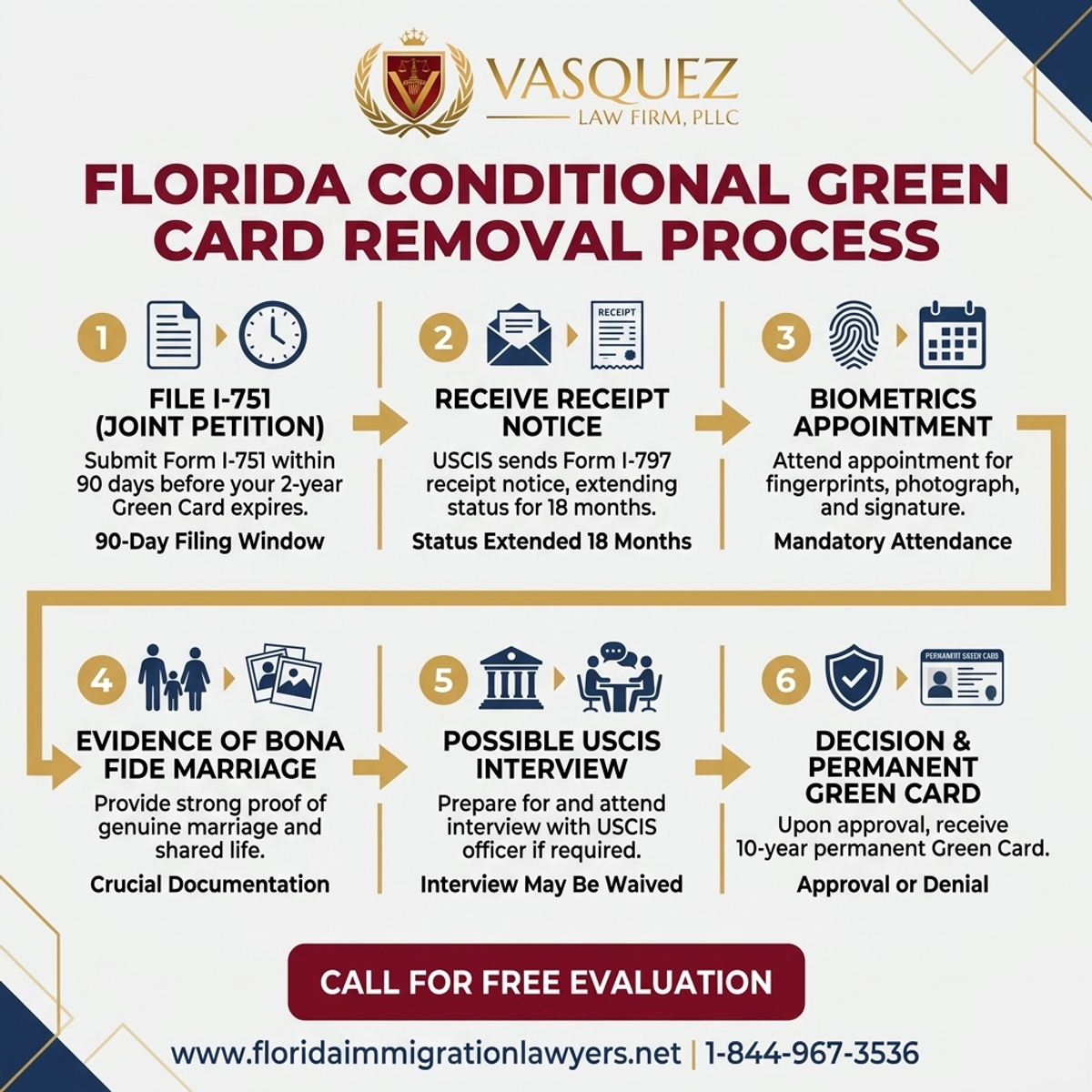
Step-by-Step Process — Removal Conditional Green Card in Florida: Key Steps
Document Checklist for I-751 Filing
A robust collection of evidence is the bedrock of a successful I-751 petition. USCIS seeks tangible proof that your marriage is not merely a legal arrangement but a genuine, ongoing life partnership. The more comprehensive and diverse your documentation, the stronger your case will be. Here's a breakdown of essential documents and why they are critical:
- Completed Form I-751: Ensure every section is filled accurately and completely. Any blank spaces or inconsistent information can raise questions.
- Copy of conditional green card: Include clear, legible copies of both the front and back of your conditional green card. This verifies your current immigration status and helps USCIS identify your existing record.
- Marriage certificate copy: This foundational document proves the legal existence of your marriage. Always include a certified copy, not just a plain photocopy, if possible, or be prepared to provide one if requested.
- Joint financial documents (bank statements, tax returns): This category is paramount. Include statements from joint checking and savings accounts, joint credit card statements, and joint federal and state tax returns (transcripts are often preferred by USCIS). Also, consider utility bills, mortgage statements, or lease agreements in both names. These documents demonstrate financial commingling and shared responsibilities, which are strong indicators of a bona fide marriage.
- Photographs of the couple together: Provide a selection of photos from different periods of your marriage, showing you with family, friends, and during significant life events (holidays, vacations, celebrations). Date and briefly caption each photo to provide context. Avoid submitting hundreds; a well-curated selection of 15-20 meaningful photos is usually sufficient.
- Children’s birth certificates (if applicable): If you have children born during the marriage, their birth certificates listing both spouses as parents are incredibly strong evidence of a shared life and family unit. This is often considered one of the most compelling forms of evidence.
- Sworn affidavits from friends and family: These are letters from individuals who know both you and your spouse, attesting to the legitimacy and ongoing nature of your marriage. Affidavits should be notarized, include the affiant's full name, address, and phone number, and describe how they know the couple and why they believe the marriage is genuine.
Beyond this core list, consider supplemental evidence such as joint health insurance policies, life insurance policies naming each other as beneficiaries, wills or estate plans, car titles, shared memberships (gym, club), travel itineraries, and even correspondence (emails, cards) addressed to both of you. The key is to present a holistic view of your life together, leaving no doubt about the authenticity of your marital bond. Florida Immigration Lawyers can help you organize and present your evidence effectively.
Timeline and Processing Expectations
Understanding the processing timeline for Form I-751 is essential for managing expectations and planning your future. While the table below provides typical timeframes, it's crucial to remember that these are estimates, and actual processing times can fluctuate significantly based on various factors, including the volume of applications, the specific USCIS service center handling your case, and the complexity of your individual petition.
| Stage | Typical Timeframe | Notes |
|---|---|---|
| Form I-751 Filing | 90 days before expiration | Begin gathering documents early to ensure a complete and timely submission. This critical window prevents status lapse. |
| Receipt Notice (I-797C) | 2-4 weeks | USCIS will send a receipt notice, which extends your conditional resident status for a specified period (often 18-24 months) while your petition is pending. Keep this notice safe as proof of your extended status. |
| Biometrics Appointment | 4-8 weeks after receipt | An appointment notice will be sent for your fingerprinting and photo. Attend promptly; failure to do so can delay your case. |
| Interview (if required) | 6-12 months after filing | Not all cases require interviews. USCIS may waive the interview if they are satisfied with the evidence provided. However, be prepared for one, especially if there are any questions about your documentation or marriage. |
| Decision | 12-18 months, or longer | Processing times vary widely. You will receive a written decision by mail. If approved, you will get your 10-year permanent green card. |
During this waiting period, it's important to keep your address updated with USCIS and respond promptly to any Requests for Evidence (RFEs). The receipt notice (Form I-797C) serves as proof of your continued legal status and allows you to work and travel internationally. If your case experiences unusual delays or you receive an RFE, contacting Florida Immigration Lawyers can provide clarity and strategic assistance to keep your application on track. Patience is key, but so is vigilance in monitoring your case status online.
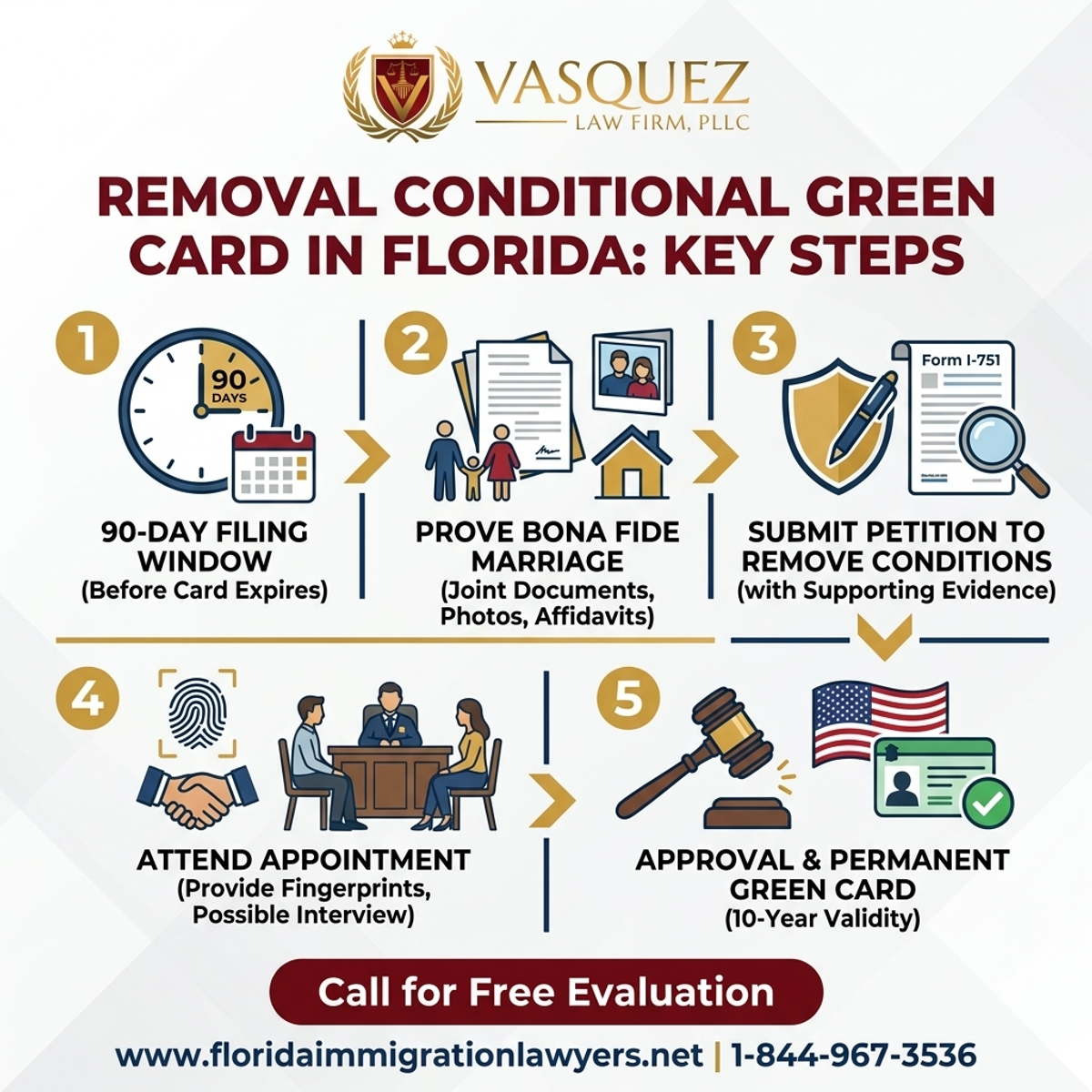
Key Statistics — Removal Conditional Green Card in Florida: Key Steps
Cost Factors and Fee Breakdown
Understanding the financial aspects of filing Form I-751 is an important part of your preparation. USCIS fees are subject to change, sometimes without extensive prior notice, making it crucial to verify the most current amounts directly on the official USCIS website before submitting your application. Incorrect fees are a common reason for application rejection and delays.
| Item | Typical Fee | Notes |
|---|---|---|
| Form I-751 Filing Fee | Check USCIS website | Fees subject to change. Ensure you use the exact amount and method of payment specified by USCIS. |
| Biometrics Fee | Check USCIS website | Typically required for all applicants. This fee covers the cost of collecting your fingerprints and photographs for background checks. |
Beyond the standard USCIS fees, applicants should also budget for potential additional costs. These might include fees for obtaining certified copies of documents (like birth or marriage certificates), translation services for any non-English documents, postage for mailing your application (especially if using a trackable service), and potentially legal fees if you choose to hire an immigration attorney. While not mandatory, investing in legal guidance from professionals like Florida Immigration Lawyers can often save time, reduce stress, and prevent costly mistakes in the long run, especially for complex cases. Do not navigate this process alone. Contact Florida Immigration Lawyers today.
Common Mistakes to Avoid
Navigating the I-751 process can be challenging, and even minor errors can lead to significant delays or even denial of your petition. Being aware of common pitfalls can help you avoid them and ensure a smoother path to permanent residency. Here are critical mistakes to watch out for:
- Missing the 90-Day Filing Window: This is one of the most critical deadlines. Filing your Form I-751 outside the 90-day window before your conditional green card expires can lead to your application being rejected or even the initiation of removal proceedings. In rare, extenuating circumstances, USCIS may accept a late filing, but it requires a compelling explanation and strong supporting evidence.
- Insufficient Evidence: This is the most frequent reason for RFEs or denials. Merely submitting a marriage certificate and a few photos is rarely enough. You must provide a broad range of documents demonstrating a shared life and financial intermingling. USCIS wants to see proof of commingled finances, shared property, joint responsibilities, and social integration.
- Incorrect Form Submission: USCIS frequently updates its forms. Always download the latest version of Form I-751 directly from the USCIS website. Using an outdated form will result in rejection and necessitate refiling, causing significant delays.
-
Sources and References
- U.S. Citizenship and Immigration Services (USCIS)
- Executive Office for Immigration Review (EOIR)
- U.S. Department of State - Bureau of Consular Affairs
- Immigration and Nationality Act (INA), 8 U.S.C. Chapter 12
Do Not Navigate This Process Alone
Our experienced immigration attorneys are ready to fight for you. Get a free, confidential consultation today.
Se Habla Español
Or leave your details and we’ll call you:
Free Evaluation in 24 Hours
Or talk to us right now

AI voice assistant — available 24/7
FreeFrequently Asked Questions

William J. Vásquez
Founding Attorney · Vasquez Law Firm
U.S. Air Force veteran and immigration attorney with years of hands-on U.S. immigration experience. J.D., NCCU School of Law. AILA member. Admitted to the 4th, 5th, and 11th Circuit Courts.
Available 24/7 - Free Evaluations
Reviewed for legal accuracy by William J. Vásquez
Licensed in North Carolina; U.S. immigration is federal practice.
Related Legal Services
Our Florida immigration attorneys can help you with immigration practice areas, free immigration consultation and experienced immigration attorneys. Call today at 1-844-967-3536 for a free consultation.
Related Links
Related Topics
Free Legal Consultation
Discuss your case with our experienced attorneys. We're available 24/7.
Se Habla Español - Estamos aquí para ayudarle.
Related Articles
Immigration Lawyer Orlando Free Consultation 2026
Discover how to find an immigration lawyer in Orlando offering a free consultation. Understand the services available and why choosing Florida Immigration Lawyers can make a difference in your case.
Military Naturalization Expedited in Florida Bases
Explore military naturalization options for families at Florida bases, including parole in place benefits in Miami. Learn how to expedite your application with expert guidance from Florida Immigration Lawyers.
K-3 Visa Timeline in Florida: What to Expect
Learn the K-3 visa timeline process in Florida, including steps, costs, and documentation. Understand your options in 2026 with guidance from Florida Immigration Lawyers.
H-1B Fraud Prevention Detection Fee 2026: Florida Impact
The H-1B Fraud Prevention and Detection Fee for 2026 is a critical aspect of U.S. immigration compliance for employers. This fee supports efforts to combat fraud, a serious issue that can lead to inadmissibility for individuals. For those in Florida facing a finding of fraud or misrepresentation, an I-601 waiver offers a pathway to overcome inadmissibility by demonstrating extreme hardship to a qualifying U.S. citizen or LPR relative. This article provides a detailed guide to understanding the H-1B fee, the definition and consequences of immigration fraud, the eligibility requirements and step-by-step process for an I-601 waiver, including document checklists, typical costs, and processing times. We also highlight common mistakes to avoid and when to seek professional legal assistance from Florida Immigration Lawyers to navigate these complex challenges successfully.