Refugee Resettlement in Florida: Key Steps
Explore the steps for refugee resettlement in Florida, focusing on Naples. Learn about the UNHCR process, necessary documents, and common mistakes to avoid. Contact Florida Immigration Lawyers for expert guidance.

Florida has long been a beacon of hope for individuals seeking refuge from persecution and violence in their home countries. The process of refugee resettlement in the Sunshine State is multifaceted, involving various government agencies, non-profit organizations, and legal frameworks designed to provide a safe haven and a path to a new life. Understanding the key steps involved is crucial for both refugees and those who wish to support them. Florida's diverse communities and established support networks make it a significant destination for individuals rebuilding their lives, offering not just physical safety but also opportunities for cultural integration and economic independence. The journey, while challenging, is supported by a robust system aimed at fostering successful transitions.
Understanding Refugee Status and Asylum
Before delving into resettlement, it's important to differentiate between refugees and asylees. A refugee is generally someone who applies for protection from outside the U.S., while an asylee applies from within the U.S. or at a port of entry. Both seek protection based on a well-founded fear of persecution. The United Nations High Commissioner for Refugees (UNHCR) plays a significant role in identifying and referring refugees for resettlement. For those already in the U.S. seeking protection, understanding asylum law is paramount.
The core of both refugee and asylum claims lies in demonstrating a "well-founded fear of persecution" based on one of five protected grounds: race, religion, nationality, political opinion, or membership in a particular social group. This fear must be objectively reasonable and subjectively held, meaning there is a credible threat of harm and the individual genuinely fears it. Persecution can take many forms, including threats to life or freedom, arbitrary detention, torture, or severe discrimination. Navigating these complex legal definitions requires a deep understanding of U.S. and international law, often making legal counsel indispensable.
While the UNHCR identifies and processes refugees abroad, asylum seekers in the U.S. must apply directly to U.S. Citizenship and Immigration Services (USCIS) or, in some cases, through the immigration court system. This distinction means that refugees typically arrive in the U.S. with their status already determined, whereas asylees must prove their case while already on U.S. soil, potentially facing detention or deportation proceedings if their claim is denied. Regardless of the pathway, the goal is the same: to provide protection to those who cannot safely return to their home countries. Our Florida Immigration Lawyers are adept at handling both refugee resettlement and asylum claims, providing expert guidance through every stage of the process.
If you or a loved one needs assistance with refugee resettlement or any immigration matter in Florida, don't hesitate to contact our Florida Immigration Lawyers at 1-844-967-3536 for a confidential consultation.
The Resettlement Process: Key Stages
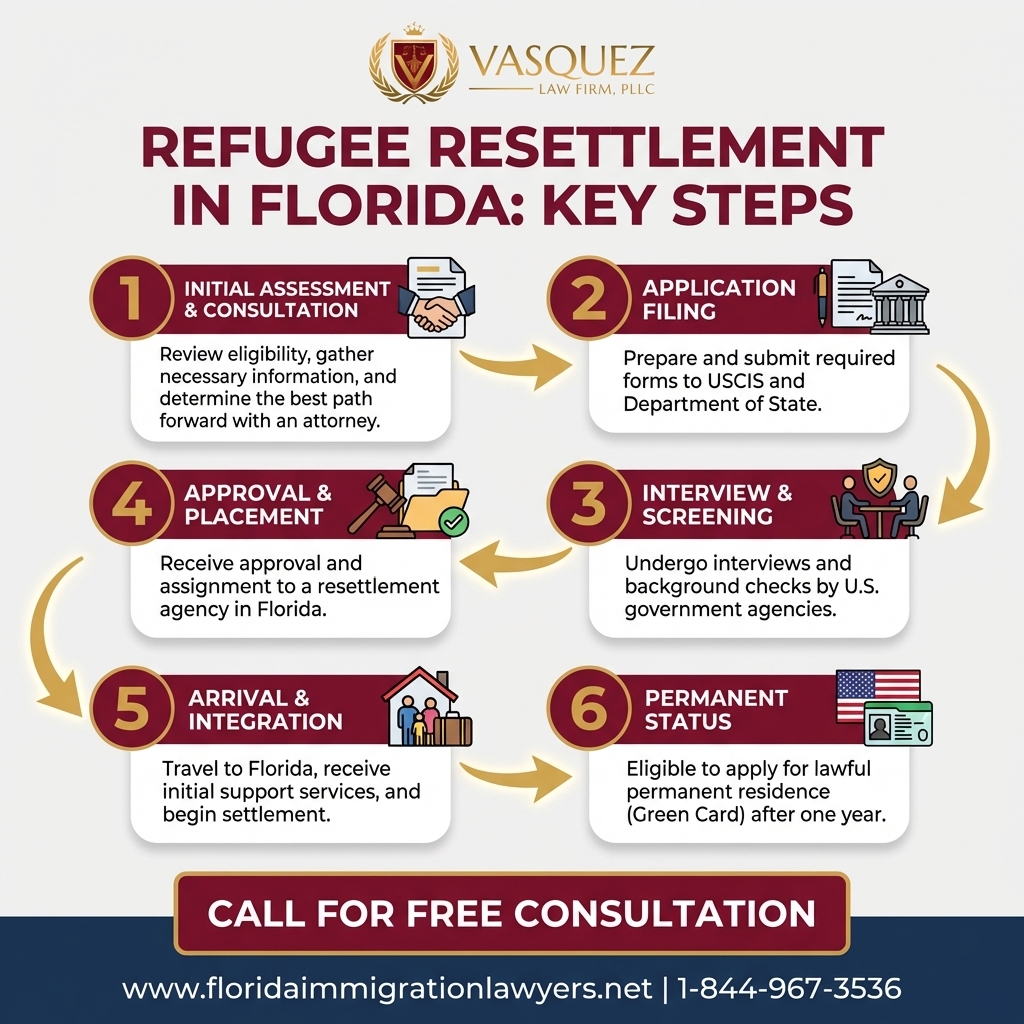
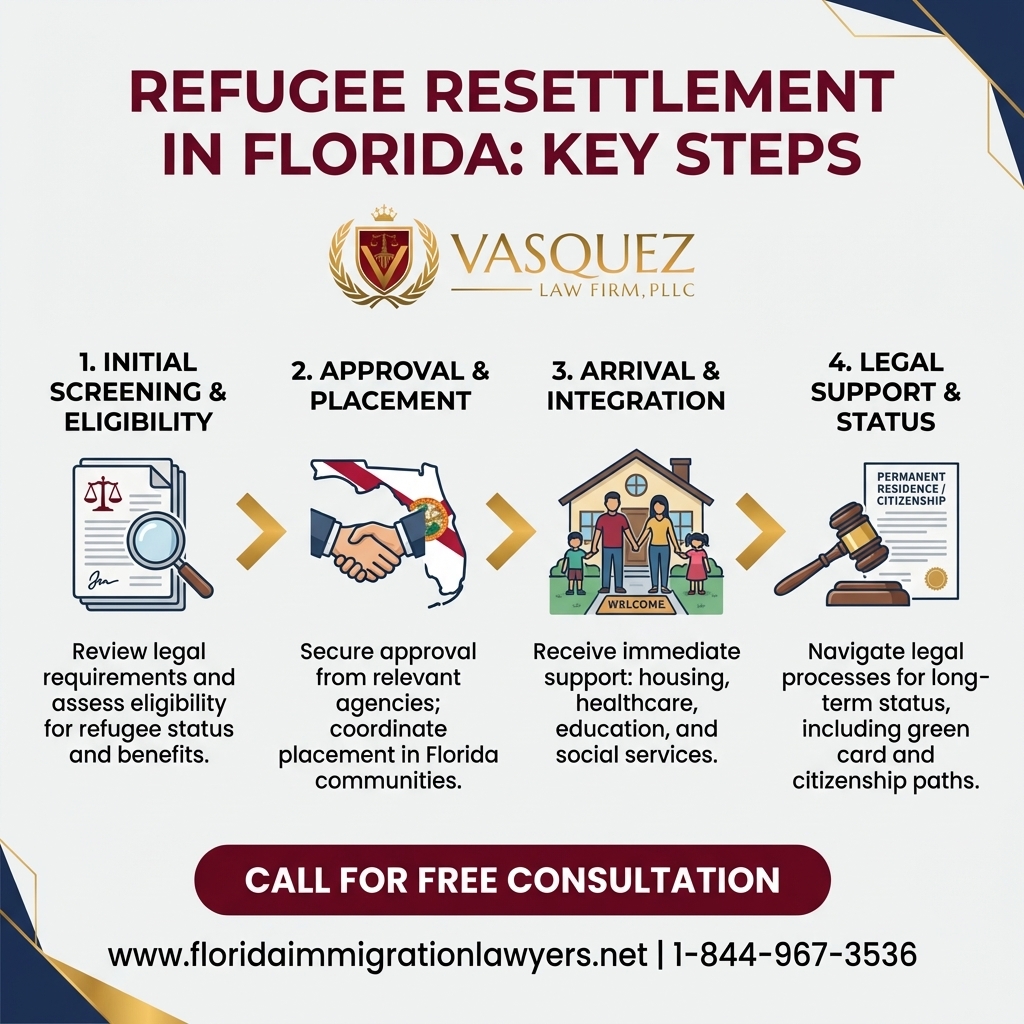
1. Referral and Vetting
The journey typically begins with a referral from the UNHCR or a U.S. Embassy. Potential refugees undergo extensive vetting, including interviews, background checks, and medical screenings. This rigorous process is managed by various U.S. government agencies, including the Department of Homeland Security and the Department of State. More information on these processes can often be found on official government websites like USCIS.gov.
The vetting process is incredibly thorough and can take several years. It involves multiple layers of security checks conducted by various U.S. intelligence and law enforcement agencies, including the FBI, Department of Homeland Security, and the Department of Defense. Refugees undergo multiple in-person interviews to establish their credibility and the veracity of their claims of persecution. These interviews are crucial for verifying their stories, assessing their needs, and ensuring they meet all eligibility criteria for resettlement. For instance, a refugee from a conflict zone might have several interviews over a period of years, each building on the last, to confirm their identity and the details of their persecution.
Medical screenings are also a critical component, ensuring that refugees receive necessary vaccinations and treatment for any health conditions before their journey to the U.S. This not only protects the health of the refugees but also public health within the United States. Furthermore, cultural orientation sessions are often provided overseas to prepare refugees for life in the U.S., covering topics such as American laws, customs, and expectations. This comprehensive preparation aims to facilitate a smoother transition and integration into their new communities, laying the groundwork for their future success in Florida.
2. Assignment to a Resettlement Agency
Once approved, refugees are assigned to one of nine national resettlement agencies, which then partner with local affiliates in states like Florida. These agencies are responsible for providing initial support upon arrival.
The nine national agencies, such as the International Rescue Committee (IRC), Church World Service (CWS), Lutheran Immigration and Refugee Service (LIRS), and the U.S. Conference of Catholic Bishops (USCCB), work closely with the U.S. Department of State to coordinate arrivals. The assignment process considers several factors, including whether the refugee has family members already in the U.S., the availability of suitable housing, and the capacity of local agencies to provide specialized services. For example, a refugee with specific medical needs might be assigned to a city with particular healthcare resources, or a family with children might be placed in a community with strong school systems and family support programs.
In Florida, several local affiliate offices operate across major cities, including Miami, Orlando, Jacksonville, and Tampa. These local agencies play a pivotal role in preparing for the refugee's arrival, securing initial housing, and coordinating essential services. They act as the primary point of contact and support for refugees during their critical first months, ensuring that the transition from their home country to a new life in Florida is as seamless and supportive as possible. This network of dedicated organizations is a cornerstone of the successful resettlement efforts in the Sunshine State.
3. Arrival in Florida and Initial Support
Upon arrival, refugees receive immediate assistance with housing, food, clothing, and cultural orientation. Local agencies help them enroll children in school, access healthcare, and begin the process of finding employment. This initial period is critical for integration into the community.
The first few days and weeks are incredibly intense for newly arrived refugees. Resettlement agencies meet them at the airport, transport them to pre-arranged housing—often temporary apartments—and provide initial financial assistance through the Reception and Placement (R&P) program to cover basic necessities. They assist with applying for Social Security cards, registering for public benefits such as Medicaid and SNAP (food assistance), and providing basic household items. Cultural orientation sessions are intensified during this period, covering practical aspects of daily life in the U.S., from public transportation and banking to understanding U.S. laws and emergency services. For instance, a newly arrived family might receive guidance on how to use a local bus system, open a bank account, or understand school registration procedures for their children.
Beyond immediate needs, local agencies focus heavily on long-term integration. This includes enrolling children in schools, connecting adults with English as a Second Language (ESL) classes, and facilitating access to physical and mental healthcare services, which are crucial given the trauma many refugees have experienced. Employment services are also a priority, helping refugees with job readiness training, resume building, and connecting them with local employers. The goal is to empower refugees to become self-sufficient members of their new Florida communities as quickly as possible, fostering independence and dignity. Our Florida Immigration Lawyers understand these foundational challenges and can offer advice on legal matters that arise during this crucial integration phase.
4. Path to Permanent Residency and Citizenship
Within one year of arrival, refugees are eligible to apply for lawful permanent resident (green card) status. After five years as a permanent resident, they may be eligible to apply for U.S. citizenship. Navigating these complexities requires expert legal guidance. Our Florida Immigration Lawyers are here to help with every step. Call us today at 1-844-967-3536.
Applying for a green card (Form I-485, Application to Register Permanent Residence or Adjust Status) is a critical milestone for refugees. This application must be filed within one year of their arrival or the date their refugee status was granted. It requires extensive documentation, including medical examinations, biographical information, and security checks. Obtaining permanent residency provides refugees with greater stability, allowing them to travel more freely, work without restrictions, and access a wider range of public services. It's a crucial step towards fully establishing their lives in Florida, offering a sense of permanence and security that many have longed for.
After holding green card status for five years (or three years if married to a U.S. citizen), refugees become eligible to apply for naturalization (Form N-400, Application for Naturalization). This process involves demonstrating good moral character, passing an English language test, and a civics test that covers U.S. history and government. Becoming a U.S. citizen grants full rights and responsibilities, including the right to vote, hold public office, and obtain a U.S. passport. This final step in the immigration journey represents the ultimate integration into American society. Throughout these complex applications, having experienced legal counsel from our Florida Immigration Lawyers can prevent costly errors and ensure a smooth transition to citizenship, securing their future in Florida.
Challenges and Legal Assistance
While the resettlement process is designed to be supportive, refugees often face numerous challenges, including language barriers, cultural adjustment, trauma, and economic hardship. Legal challenges can also arise, particularly concerning family reunification, status adjustment, or even deportation defense if their status is ever questioned. Understanding the legal landscape, often involving regulations from the Department of Justice, accessible via Justice.gov, is crucial.
The journey to rebuild a life in a new country is rarely without obstacles. Language barriers can impede access to education, employment, and essential services, making daily tasks incredibly difficult. Cultural differences, from social norms to educational systems, require significant adaptation and can lead to feelings of isolation or misunderstanding. Many refugees arrive having experienced profound trauma, including war, persecution, and loss, which can manifest as mental health challenges requiring specialized support that may not be readily available or culturally appropriate. Economic hardship is also common, as refugees often struggle to find employment commensurate with their skills or experience, facing issues like credential recognition and underemployment.
Beyond these social and economic hurdles, legal complexities frequently emerge. Family reunification, for instance, is a deeply important but often challenging process, requiring the filing of specific petitions (like Form I-730, Refugee/Asylee Relative Petition) and navigating lengthy processing times and strict eligibility criteria. Errors in applications for permanent residency or citizenship can lead to delays or denials, jeopardizing a refugee's future. In some unfortunate cases, refugees may even face deportation proceedings if their status is questioned due to new information or misunderstandings. Having knowledgeable legal representation is not just beneficial; it is often essential to protect their rights and ensure their continued safety and stability in Florida. Our Florida Immigration Lawyers are equipped to handle these intricate legal matters, providing dedicated advocacy and guidance.
Having experienced legal counsel can make a significant difference. Our attorneys specialize in immigration law and are dedicated to assisting refugees and their families throughout Florida. We can help with applications, appeals, and provide representation in complex cases. For information on visa bulletins and other travel-related matters, resources like Travel.State.Gov are also valuable. We understand the nuances of refugee law and the unique challenges faced by those seeking a new home. From preparing compelling applications for green cards and naturalization to representing clients in immigration court, our firm is committed to providing comprehensive legal support. We strive to demystify the legal process, ensuring refugees understand their rights and obligations every step of the way. If you are a refugee in Florida needing legal assistance, remember that our team is here to provide the expert advice and representation you deserve. Call us at 1-844-967-3536 for a confidential consultation.
Conclusion
Refugee resettlement in Florida is a testament to the state's welcoming spirit and commitment to humanitarian aid. While the process is structured, it is also deeply personal and often challenging. Ensuring access to proper legal representation is key to a successful transition and integration into American society.
The journey of a refugee is one of immense courage and resilience. Florida, with its diverse communities and dedicated support networks, offers a vital opportunity for these individuals to rebuild their lives in safety and dignity. However, the path is fraught with administrative hurdles and legal complexities that can be overwhelming without expert guidance. From the initial stages of understanding their status to the final steps of achieving U.S. citizenship, legal assistance is a critical component of successful integration. Our firm is proud to stand with refugees, offering the legal expertise necessary to navigate this life-changing process.
For comprehensive support and dedicated advocacy, reach out to our experienced Florida Immigration Lawyers. We are committed to assisting refugees and immigrants throughout Florida. Contact us at 1-844-967-3536 to discuss your case and learn how we can help you achieve stability and security in your new home.
Do Not Navigate This Process Alone
Our experienced immigration attorneys are ready to fight for you. Get a free, confidential consultation today.
Se Habla Español
Frequently Asked Questions

William J. Vásquez
Founding Attorney · Vasquez Law Firm
U.S. Air Force veteran and immigration attorney with thousands of cases resolved. J.D., NCCU School of Law. AILA member. Admitted to the 4th, 5th, and 11th Circuit Courts.
Available 24/7 - Free Evaluations
Related Legal Services
Our Florida immigration attorneys can help you with citizenship and naturalization, family immigration services and immigration practice areas. Call today at 1-844-967-3536 for a free consultation.
Related Links
Related Topics
Free Legal Consultation
Discuss your case with our experienced attorneys. We're available 24/7.
Se Habla Español - Estamos aquí para ayudarle.
Related Articles
E-2 Visa for Florida Business Investors | VLF Florida
Learn about the E-2 investor visa for Florida business opportunities, tailored for Fort Lauderdale entrepreneurs. Discover the process, requirements, and common pitfalls. Contact Florida Immigration Lawyers for expert assistance.
Immigration Documents Checklist for Florida | VLF Florida
Navigating immigration processes in Florida requires a comprehensive checklist of documents. This guide helps you gather all necessary paperwork to ensure a successful application. Consult Florida Immigration Lawyers for personalized assistance.
Immigration Attorney West Palm Beach Guide | VLF Florida
Navigate the complexities of immigration in West Palm Beach with a trusted attorney. Learn what to expect, common pitfalls, and how to choose the right legal help.
Dual Citizenship in Florida: What You Need to Know
Explore dual citizenship in Florida, understand the process, and learn how to apply. Discover the benefits and complexities involved with having two passports and navigating immigration laws. Call Florida Immigration Lawyers for expert guidance.