Public Charge Rule for Florida Immigrants
Explore the impact of the public charge rule on Florida immigrants. Learn about the criteria, necessary documents, and common mistakes to avoid. Contact Florida Immigration Lawyers for a free consultation.

- The rule impacts green card applications.
- Not all benefits are considered.
- Legal advice is crucial for navigating this rule.
- St. Petersburg immigrants should be aware of local resources.
Introduction
If you're an immigrant living in St. Petersburg, Florida, understanding the public charge rule is crucial for your immigration journey. This rule can affect your eligibility for a green card or visa based on your use of certain public benefits. In this article, we will explore the public charge rule, its implications, and how it affects immigrants in Florida. Call Florida Immigration Lawyers at 1-844-967-3536 for a free consultation.
The public charge rule has a long and complex history in U.S. immigration law, dating back to the Immigration Act of 1882. While its core principle – preventing immigrants from becoming primarily dependent on the government – has remained, its application and interpretation have evolved significantly over time. For immigrants residing in vibrant communities like St. Petersburg, Florida, understanding the nuances of this rule is not just a legal formality but a critical step in securing their future in the United States. The rule’s impact extends beyond initial visa applications, potentially affecting adjustments of status, green card renewals, and even naturalization pathways. Navigating these complexities requires accurate information and often, expert legal guidance.
The state of Florida, with its diverse immigrant population and bustling urban centers, presents unique challenges and considerations for those impacted by the public charge rule. Local resources and legal professionals in areas like St. Petersburg are vital in helping individuals understand how federal policies translate to their specific circumstances. This article aims to demystify the public charge rule, providing a comprehensive overview of its criteria, implications, and practical steps for compliance. We will delve into what benefits are considered, who might be exempt, and the critical role of legal counsel from firms like Florida Immigration Lawyers in safeguarding your immigration journey.
Understanding the Public Charge Rule
The public charge rule is a longstanding immigration policy used to determine whether an immigrant might rely on public benefits. In Florida, this rule is particularly relevant for those residing in urban areas like St. Petersburg.
The public charge rule, codified in Section 212(a)(4) of the Immigration and Nationality Act (INA), mandates that an individual seeking admission to the U.S. or adjustment of status must demonstrate they are not likely to become a "public charge." This determination is made based on a "totality of circumstances" test, which evaluates various factors to predict an applicant's self-sufficiency. These factors include age, health, family status, assets, resources, financial status, education, and skills. The intent is to ensure that immigrants can support themselves and their families without relying primarily on specific government assistance programs.
It's crucial to distinguish between benefits that are considered and those that are not. Generally, cash assistance for income maintenance (like Supplemental Security Income (SSI) and Temporary Assistance for Needy Families (TANF)) and long-term institutional care at government expense (like nursing homes) are heavily weighted against an applicant. Certain non-cash benefits, such as the Supplemental Nutrition Assistance Program (SNAP, formerly food stamps) and most forms of Medicaid (with some exceptions like emergency medical care), were previously considered under a stricter 2019 rule, but the current policy reverts to a more lenient interpretation, focusing primarily on cash benefits and long-term institutionalization.
However, many widely used benefits are not considered in a public charge determination. These include emergency medical care, disaster relief, WIC (Special Supplemental Nutrition Program for Women, Infants, and Children), CHIP (Children's Health Insurance Program), school-based services (like free and reduced school lunches), foster care and adoption assistance, student loans, and housing assistance that is not cash-based. Furthermore, receiving non-cash benefits by a child or other family member does not automatically count against the applicant unless the applicant is the direct recipient. Understanding these distinctions is vital for immigrants in St. Petersburg and across Florida to avoid unnecessary fear or self-denial of essential services. Florida Immigration Lawyers can provide clarity on which benefits may impact your case.
Step-by-Step Guide to Navigating the Public Charge Rule
- Understand the Criteria: The rule considers age, health, income, education, and skills.
- Gather Necessary Documentation: You'll need proof of income, health insurance, and any benefits received.
- Consult with an Immigration Attorney: Legal guidance can help you navigate the complexities of this rule.
- Submit Your Application: Ensure all forms are completed accurately.
- Prepare for Interviews: If required, be ready to discuss your financial situation and benefits usage.
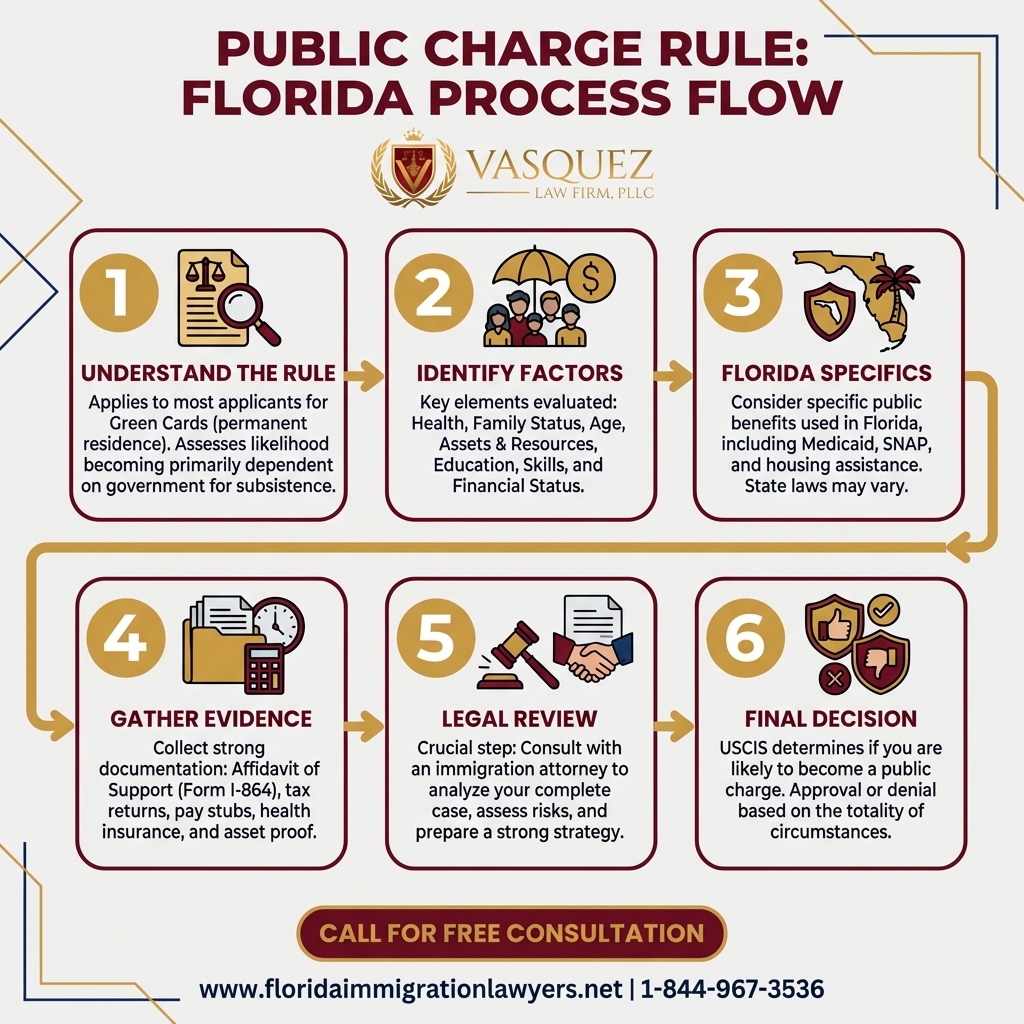
Navigating the public charge rule can seem daunting, but a structured approach can help.
- Understand the Criteria: Beyond the basic factors of age, health, income, education, and skills, delve into how USCIS assesses each. For example, a strong educational background or in-demand skills can offset concerns about lower income. A comprehensive medical examination will assess your health, and any pre-existing conditions need to be disclosed and managed. Your family size and dependents also play a role, as they influence your financial obligations and resource needs.
- Gather Necessary Documentation: This step is paramount. Beyond proof of income (pay stubs, tax returns, employment verification letters), you'll need comprehensive health insurance documentation, academic transcripts, professional licenses, and any certifications demonstrating your skills. If you have received any public benefits, gather precise records of the type, duration, and amount. It's also wise to include evidence of assets, such as bank statements, property deeds, or investments, and liabilities like debts, to present a full financial picture.
- Consult with an Immigration Attorney: This is perhaps the most critical step. The intricacies of the public charge rule, especially with its evolving interpretations, make legal guidance indispensable. An experienced attorney, such as those at Florida Immigration Lawyers, can assess your specific situation, identify potential red flags, and help you strategize to present the strongest possible case. They can also assist in preparing an Affidavit of Support (Form I-864) if needed, which is a legally binding contract where a sponsor agrees to support the immigrant.
- Submit Your Application: Accuracy and completeness are non-negotiable. Any missing information or errors can lead to Requests for Evidence (RFEs) or even denial, significantly prolonging your processing time. Ensure all forms are current versions, signed correctly, and accompanied by all required supporting documents, properly translated if necessary. Double-check all personal details, dates, and addresses.
- Prepare for Interviews: If an interview is required, be ready to discuss your financial situation, employment history, education, and any history of public benefits usage in detail. Be honest and prepared to provide additional explanations or documentation if requested. An attorney can help you practice and anticipate questions, ensuring you feel confident and prepared. They can also represent you during the interview, providing an additional layer of support and expertise.
Documents Required
- Proof of income and employment
- Health insurance documentation
- Educational certificates
- Records of public benefits received
- Identification documents
Thorough documentation is the cornerstone of a successful immigration application under the public charge rule.
- Proof of income and employment: This includes recent pay stubs (at least six months), employment verification letters from current and past employers, tax returns (federal and state for the last three years), W-2s, 1099s, and bank statements showing consistent income. If self-employed, provide business licenses, financial statements, and tax filings.
- Health insurance documentation: Provide proof of current health insurance coverage, including policy details, coverage dates, and the names of covered individuals. If you don't have insurance, evidence of financial ability to obtain it or pay for medical care is crucial.
- Educational certificates: Diplomas, degrees, transcripts, vocational training certificates, and professional licenses demonstrate your skills and potential for self-sufficiency.
- Records of public benefits received: If you or a family member have received benefits, meticulously gather records detailing the type of benefit, the dates received, and the amount. This transparency, coupled with an explanation of why the benefits were necessary and how you are now self-sufficient, can be crucial.
- Identification documents: Passport, birth certificate, marriage certificate, and any previous visa or immigration documents.
- Affidavit of Support (Form I-864): If a U.S. citizen or lawful permanent resident is sponsoring you, this legally binding document demonstrates their commitment to financially support you, mitigating public charge concerns. The sponsor must meet specific income requirements, typically 125% of the federal poverty guidelines, and provide their own financial documentation.
- Proof of Assets and Liabilities: Include bank statements, investment portfolios, property deeds, and details of any significant debts (mortgages, student loans, credit card debt). This provides a holistic view of your financial standing.
Timeline and Processing Expectations
Typically, processing times for applications affected by the public charge rule can vary. Expect delays due to policy changes and the need for additional documentation.
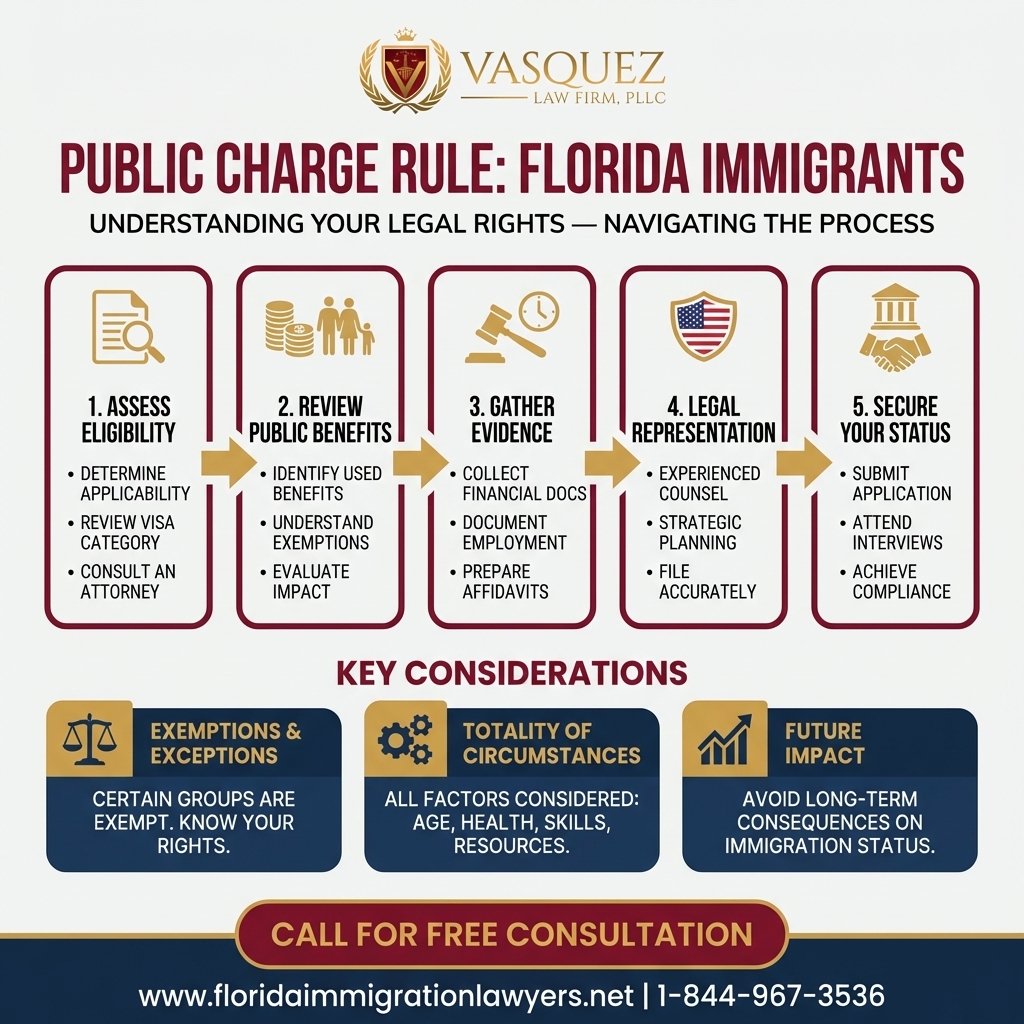
Processing times for immigration applications, particularly those involving public charge considerations, are highly variable and can be influenced by several factors. These include the specific USCIS service center or field office handling your case, the volume of applications, and any changes in immigration policy or administrative priorities. While USCIS provides estimated processing times online, it's essential to view these as general guidelines rather than guaranteed schedules.
Expect potential delays if your application is incomplete, if you fail to provide sufficient evidence, or if you receive a Request for Evidence (RFE). Responding promptly and thoroughly to an RFE is critical to avoid further delays or even denial. In some cases, interviews may be scheduled, adding another layer to the timeline. It’s also important to remember that the public charge rule has seen several policy shifts in recent years, which can temporarily impact processing as USCIS adapts its procedures. Staying informed and preparing meticulously can help streamline your process. For personalized insights into potential timelines for your specific case, consulting with Florida Immigration Lawyers can be invaluable.
Cost Factors and Fee Breakdown
While filing fees change frequently, the cost of preparing your application, including legal fees and document preparation, should be considered. It's advisable to budget for these expenses.
Understanding the financial commitment involved in an immigration application is vital for proper planning. Beyond the standard USCIS filing fees, which are subject to change and vary by application type, several other significant costs should be factored into your budget.
- USCIS Filing Fees: These are mandatory and non-refundable. For example, an Application to Adjust Status (Form I-485) can be over $1,000, and this doesn't include fees for related forms like work authorization or travel permits.
- Medical Examination Fees: All adjustment of status applicants are required to undergo a medical examination performed by a USCIS-approved civil surgeon. These exams can range from a few hundred to over a thousand dollars, depending on the provider and any required vaccinations or additional tests.
- Legal Fees: Engaging an experienced immigration attorney, like those at Florida Immigration Lawyers, is a significant investment but often proves invaluable. Legal fees cover professional advice, document preparation, representation, and strategic guidance throughout the complex process. While costs vary, a free consultation can help you understand the scope of services and associated fees.
- Translation and Notarization Fees: If any of your supporting documents are not in English, they must be translated by a certified translator, and sometimes notarized. These services incur additional costs per page or document.
- Travel Costs: You may need to travel for biometrics appointments, interviews, or to gather documents, which can involve transportation and accommodation expenses, especially for those in remote parts of Florida.
- Miscellaneous Costs: This can include passport photos, mailing fees, and fees for obtaining official records (e.g., birth certificates, police clearances).
Budgeting for these expenses upfront can help alleviate financial stress during your immigration journey. In certain situations, applicants with very low incomes may be eligible for fee waivers for some USCIS forms; an attorney can help determine eligibility.
Do not navigate this process alone. Contact Florida Immigration Lawyers today.
Common Mistakes to Avoid
- Not Consulting an Attorney: Failing to seek legal advice can lead to application errors.
- Incorrect Documentation: Providing outdated or incorrect documents may delay processing.
- Misunderstanding Benefit Impacts: Not all benefits affect your application.
- Ignoring Deadlines: Missing application deadlines can result in denial.
- Underestimating Financial Requirements: Ensure you meet the income criteria.
- Failing to Update Information: Keep your application updated with any changes in circumstances.
- Overlooking Local Resources: Utilize local immigrant support services in St. Petersburg.
Avoiding common pitfalls can significantly improve your chances of a smooth application process.
- Not Consulting an Attorney: The public charge rule's nuances are complex. For instance, an immigrant in St. Petersburg might mistakenly believe that using WIC benefits for their child will negatively impact their green card application, leading them to forgo essential nutrition. An attorney can clarify that WIC is generally not considered, preventing unnecessary hardship and ensuring accurate application.
- Incorrect Documentation: Submitting an expired passport, an uncertified translation, or a tax return from five years ago when the last three are required can cause immediate delays. A common scenario is providing only a summary of medical history instead of the full civil surgeon report, leading to an RFE.
- Misunderstanding Benefit Impacts: Many immigrants, fearing the public charge rule, avoid all government assistance, even those explicitly exempted, like emergency medical care or disaster relief. This self-denial can have severe consequences for their health and well-being. Knowing which benefits are safe to use is crucial.
- Ignoring Deadlines: Missing a deadline for an RFE response or an interview can lead to application denial, requiring you to start the entire process over and incur additional fees and delays.
- Underestimating Financial Requirements: Simply stating you are employed isn't enough. You must provide robust evidence that your income meets or exceeds the federal poverty guidelines, especially if you have dependents. Failing to provide a strong Affidavit of Support (Form I-864) from a qualified sponsor is a frequent mistake.
- Failing to Update Information: If your address, employment, or marital status changes during the application process, failing to inform USCIS can result in missed communications or an outdated application, potentially leading to adverse decisions.
- Overlooking Local Resources: St. Petersburg and surrounding areas in Florida offer various immigrant support services, from language classes to community legal aid. Neglecting these resources means missing out on valuable assistance that could strengthen your application or help you integrate more effectively. Florida Immigration Lawyers can also connect you with relevant community support.
When to Call a Lawyer
If you are unsure about your status under the public charge rule or have received public benefits, legal guidance is essential. Florida Immigration Lawyers can help assess your situation and guide you through your application.
While some immigration processes appear straightforward, the public charge rule introduces significant complexities that often necessitate professional legal advice. You should contact an attorney immediately if you:
- Have a history of receiving public benefits, even if you believe they are exempt, as the specific circumstances of receipt can be complex.
- Have received a Request for Evidence (RFE) from USCIS related to public charge concerns, as a precise and well-supported response is critical.
- Are unsure if your income or your sponsor's income meets the federal poverty guidelines, or if your financial situation is otherwise marginal.
- Have a complex family situation, such as dependents with specific medical needs or a large household.
- Have any prior immigration violations, criminal history, or other factors that might complicate your overall admissibility.
- Are preparing for an interview and want to ensure you are fully prepared to address any public charge questions.
- Are considering withdrawing from benefits due to fear of the rule and need clarification on which benefits are safe.
Florida Immigration Lawyers offers free consultations, making it easy to get an initial assessment of your situation without financial commitment. Don't risk your immigration future by navigating these intricate rules alone. Call us at 1-844-967-3536 for expert guidance.
About Florida Immigration Lawyers
Florida Immigration Lawyers is dedicated to providing comprehensive immigration services across Florida. Our experienced attorneys offer personalized guidance for all your immigration needs. Contact us at 1-844-967-3536 or visit our website at floridaimmigrationlawyers.net. We are available 24/7 and offer free consultations.
Sources and References
- U.S. Citizenship and Immigration Services (USCIS)
- Executive Office for Immigration Review (EOIR)
- 8 U.S.C. Chapter 12 - Immigration and Nationality Act
Related services: immigration practice areas, family immigration services, citizenship and naturalization.
This article provides general legal information and is not intended as legal advice. Every case is unique, and outcomes depend on specific facts and circumstances. Contact an attorney for advice about your particular situation.
Contact us at 1-844-967-3536 for a free consultation. Se Habla Español - Estamos aquí para ayudarle.
If you need legal assistance, learn more about experienced immigration attorneys in Orlando, or call us at 1-844-967-3536 for a free consultation.
Do Not Navigate This Process Alone
Our experienced immigration attorneys are ready to fight for you. Get a free, confidential consultation today.
Se Habla Español
Frequently Asked Questions

William J. Vásquez
Founding Attorney · Vasquez Law Firm
U.S. Air Force veteran and immigration attorney with thousands of cases resolved. J.D., NCCU School of Law. AILA member. Admitted to the 4th, 5th, and 11th Circuit Courts.
Available 24/7 - Free Evaluations
Related Legal Services
Our Florida immigration attorneys can help you with free immigration consultation, experienced immigration attorneys and business immigration. Call today at 1-844-967-3536 for a free consultation.
Related Links
Related Topics
Free Legal Consultation
Discuss your case with our experienced attorneys. We're available 24/7.
Se Habla Español - Estamos aquí para ayudarle.
Related Articles
Citizenship Application Delay in Florida: What to Know
Facing citizenship application delays in Florida? Discover the key reasons behind N-400 processing backlogs in 2026 and learn how to navigate them effectively. Whether you're in Homestead or elsewhere in Florida, our guide provides actionable insights and tips to help manage your citizenship journey. Contact Florida Immigration Lawyers for personalized support.
F-1 Reinstatement Student Visa Process in Florida | VLF Florida
F-1 reinstatement allows students in Coral Springs, Florida, to regain their student visa status if they have fallen out of status. This comprehensive guide covers eligibility, application steps, and common pitfalls, ensuring you are well-prepared. Contact Florida Immigration Lawyers at 1-844-967-3536 for a free consultation.
U Visa for Crime Victims in Florida: Key Insights | VLF Florida
Discover how the U Visa offers critical immigration relief for crime victims in Florida. Learn about eligibility, application steps, and why professional guidance is crucial. Call Florida Immigration Lawyers for expert assistance.
Find an Immigration Lawyer in Cape Coral | VLF Florida
Navigating immigration in Cape Coral and Southwest Florida requires expert guidance. Learn how to choose the right lawyer and understand local immigration processes. Contact Florida Immigration Lawyers for personalized assistance.