Naturalization Ceremony ICE Concerns in Florida: Your Guide
The naturalization ceremony is a momentous occasion, but for many in Florida, concerns about ICE presence can create anxiety. This comprehensive guide addresses these fears, clarifies official policies, and outlines the step-by-step process to U.S. citizenship. Learn about eligibility, required documents, processing timelines, and cost factors. We also cover common mistakes to avoid and highlight when expert legal counsel from Florida Immigration Lawyers is essential. Understand your rights and navigate your path to citizenship with confidence and peace of mind.
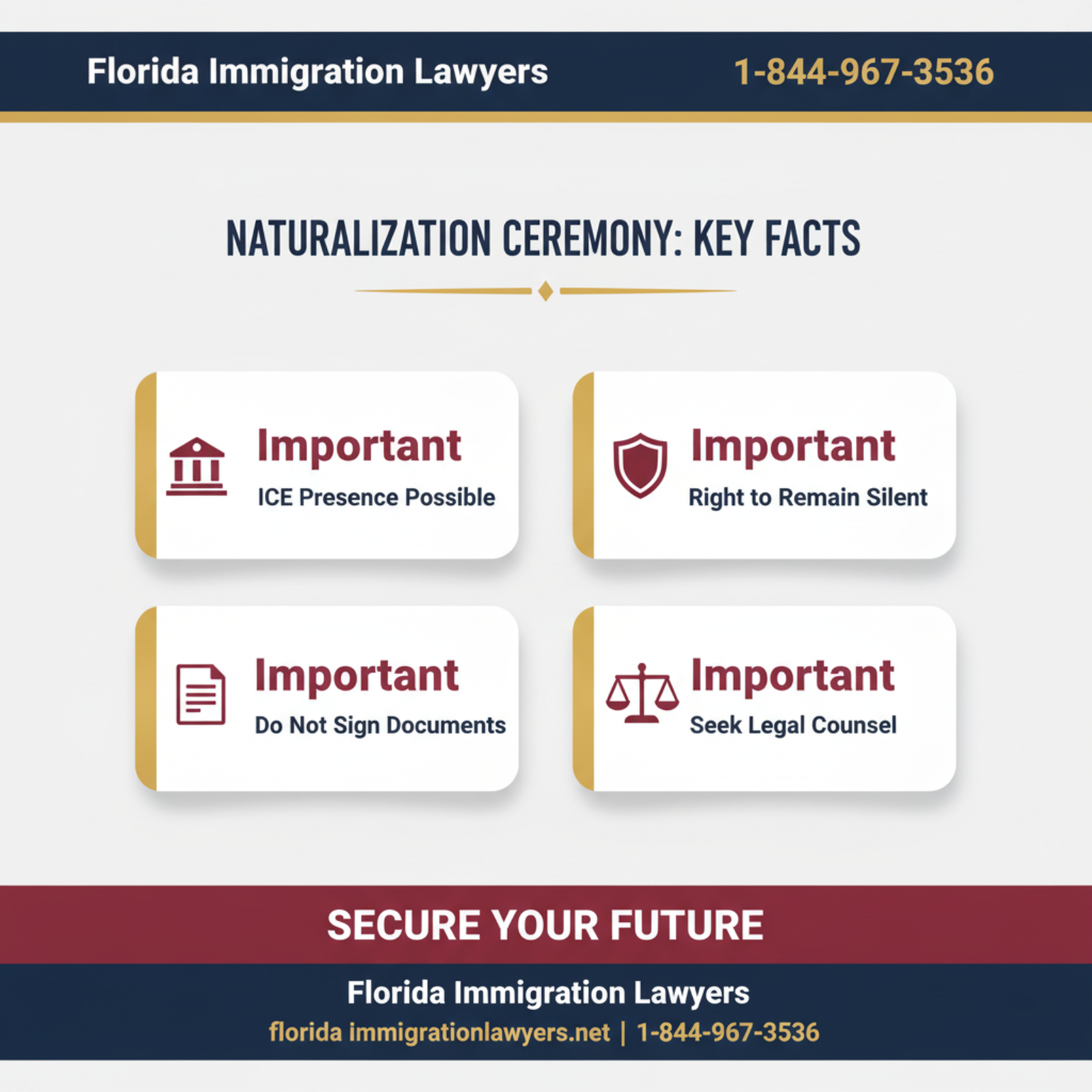
While rare, concerns about Immigration and Customs Enforcement (ICE) at naturalization ceremonies are understandable for many in Florida. Generally, ICE policy exempts individuals attending or leaving these ceremonies from enforcement actions. New citizens are protected, but non-citizens accompanying them may still face risks. Knowing your rights and having legal representation is crucial to navigate any potential issues.
- ICE policy generally exempts naturalization ceremonies from enforcement.
- New citizens are typically protected from ICE actions at their ceremony.
- Non-citizens attending with you might still face risks.
- Always consult an experienced Florida immigration lawyer to understand your specific situation.
- Knowing your legal rights is essential for peace of mind.
The journey to U.S. citizenship culminates in a powerful moment: the naturalization ceremony. It is a day filled with pride, hope, and the promise of a new beginning. However, for many aspiring citizens and their families in Florida, particularly in diverse communities like Kissimmee, this joyous occasion can be clouded by anxieties, specifically regarding the presence of Immigration and Customs Enforcement (ICE).
You may be wondering if ICE conducts operations at these ceremonies, or if your family members attending with you are safe. These concerns are valid, and understanding your rights and the current policies is paramount. This comprehensive guide from Florida Immigration Lawyers aims to clarify these issues, provide peace of mind, and offer actionable advice for your naturalization journey.
We will delve into the legal framework, address common misconceptions, and provide a clear roadmap to help you achieve your dream of citizenship in Florida. Do not let fear overshadow this significant milestone. Call Florida Immigration Lawyers at 1-844-967-3536 for a free consultation today to discuss your naturalization process and any concerns you may have.
Understanding Naturalization Ceremony ICE Concerns in Florida
For many years, the idea of ICE presence at naturalization ceremonies has been a source of significant worry for immigrants across the nation, including here in Florida. The thought of being detained or having family members apprehended on such an important day is understandably distressing. It is crucial to separate fact from rumor when addressing these sensitive concerns.
Generally, U.S. Citizenship and Immigration Services (USCIS) and ICE have policies that aim to ensure naturalization ceremonies are safe and celebratory events. USCIS policy states that enforcement actions at or near these ceremonies should be avoided to promote public trust and encourage eligible individuals to pursue citizenship. This policy helps alleviate some of the immediate fears surrounding the event itself.
However, this general policy does not mean there are no exceptions or that all individuals are entirely immune. While new citizens are protected once they take the Oath of Allegiance, the situation for non-citizen family members or attendees can be more complex. Understanding these nuances is vital for anyone in Florida navigating this process.
In Florida, with its large immigrant population, USCIS field offices in cities like Orlando, Miami, and Tampa regularly host naturalization ceremonies. While these events are typically solemn and celebratory, the overall climate of immigration enforcement can still create apprehension. Our firm understands these local concerns and is here to provide specific guidance for your situation in Kissimmee and throughout Florida.
It is important to remember that ICE's primary mission involves enforcing immigration laws, and while they generally avoid sensitive locations like naturalization ceremonies, they do have broad authority. This is why understanding your rights and the current legal landscape regarding immigration detention legality is so important. Consulting with an attorney can help you assess any potential risks for yourself or your family members.
Your Path to Citizenship: A Step-by-Step Guide
The naturalization process is a structured journey with several key stages. Understanding each step can help alleviate anxiety and ensure you are well-prepared. Here is a typical overview of the path to becoming a U.S. citizen in Florida:
- Determine Eligibility: You must meet specific requirements, including age (18+), continuous residence and physical presence in the U.S. (typically 3 or 5 years as a lawful permanent resident), good moral character, English language proficiency, and knowledge of U.S. history and government. You must also be willing to take the Oath of Allegiance to the United States, as outlined in INA Section 337.
- Prepare and File Form N-400: The Application for Naturalization, Form N-400, is the cornerstone of your application. It requires detailed information about your residence, employment, family, and personal history. Accuracy and completeness are critical at this stage.
- Attend Biometrics Appointment: After filing, you will receive an appointment notice for a biometrics screening. This involves fingerprinting, photographs, and a signature, which are used for background and security checks.
- Attend the Naturalization Interview: A USCIS officer will interview you to verify the information on your N-400, test your English proficiency (reading, writing, speaking), and assess your knowledge of U.S. civics. This is a crucial step where your eligibility is thoroughly reviewed.
- Receive a Decision: Following your interview, USCIS will issue a decision. This could be an approval, a continuance (request for more information), or a denial.
- Take the Oath of Allegiance: If approved, you will receive a notice for your Oath of Allegiance ceremony. This is the final step where you officially become a U.S. citizen. You will surrender your Permanent Resident Card (Green Card) at this ceremony.
Each step requires careful attention to detail and adherence to USCIS guidelines. Navigating this complex process, especially if you have unique circumstances, can be challenging. For personalized guidance on your journey to citizenship, consider visiting our Citizenship practice area page.
Essential Documents for Your Naturalization Journey
A well-organized application package is vital for a smooth naturalization process. While the specific documents you need may vary based on your individual circumstances, here is a general checklist of items commonly required:
- Your Permanent Resident Card (Green Card)
- Your state-issued identification (driver's license or state ID card)
- All passports you have held during the continuous residence period
- Marriage certificate (if applicable)
- Divorce decrees (if applicable)
- Birth certificates of your children (if applicable)
- Proof of payment of child support or alimony (if applicable)
- Tax returns for the last five years (or three years if applying based on marriage to a U.S. citizen)
- Records of any arrests, citations, or criminal charges, even if expunged or dismissed
- Court disposition documents for any traffic infractions resulting in an arrest or fine of $500 or more
- Travel records, including dates of all trips outside the U.S. since becoming a lawful permanent resident
- Proof of selective service registration (for males aged 18-26)
- Any USCIS correspondence related to your previous immigration applications
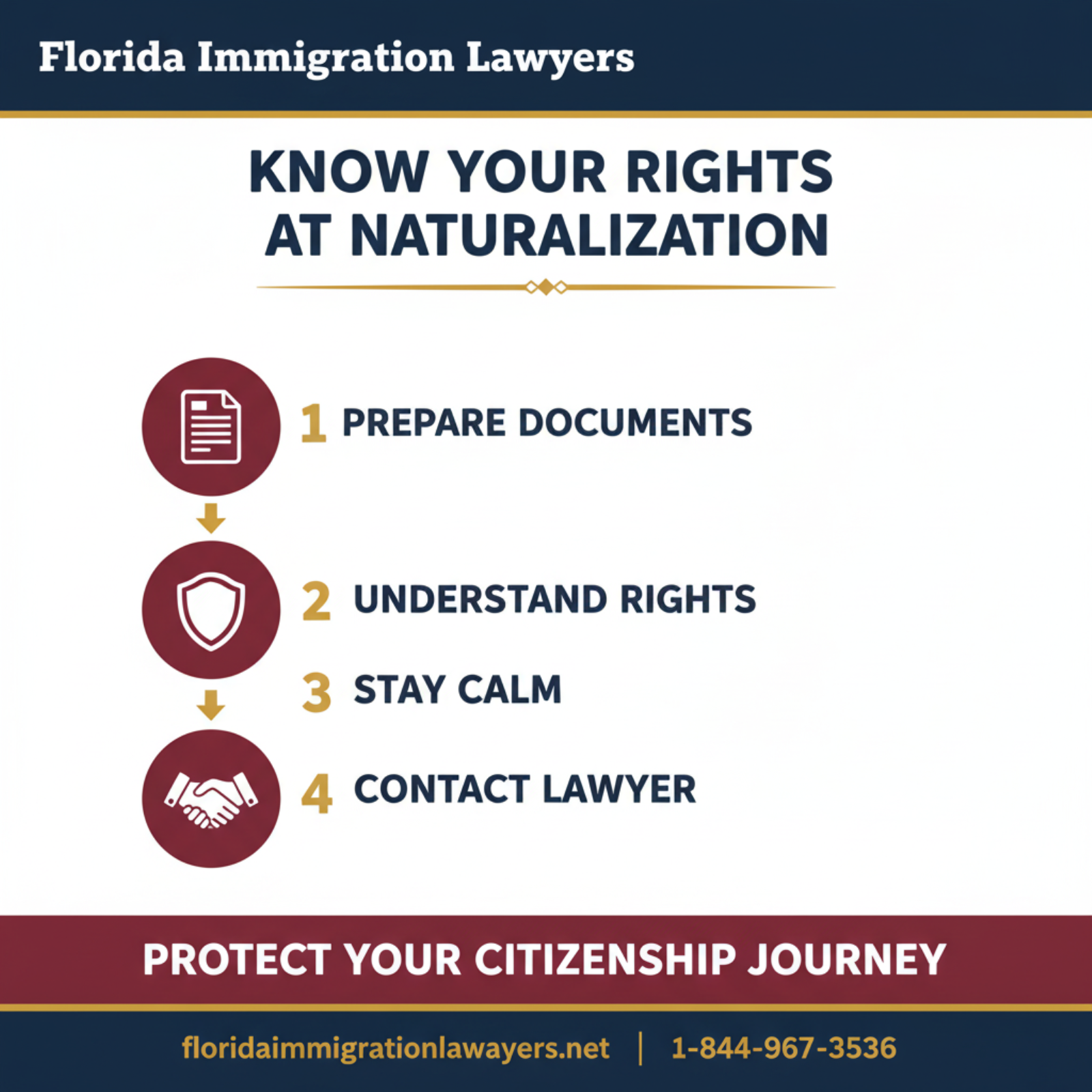
Gathering these documents can be time-consuming, and errors or omissions can lead to significant delays or even denial. It is always wise to keep organized copies of everything you submit. A Florida immigration lawyer can help you compile a complete and accurate document package, ensuring you meet all requirements for your N-400 application.
Naturalization Timeline and Processing Expectations in Florida
The time it takes to process a naturalization application can vary significantly based on several factors, including the specific USCIS field office handling your case and the complexity of your application. In Florida, processing times for naturalization applications can fluctuate.
Generally, from the time you submit your Form N-400 until you take the Oath of Allegiance, the process can range from 8 months to over 2 years. You can check the current estimated processing times for the USCIS field office relevant to your Florida address (e.g., Orlando, Miami, Tampa) on the USCIS website. Simply input your form type and field office to get an estimate.
Factors that can influence your timeline include:
- USCIS Workload: High volumes of applications can lead to longer wait times.
- Application Accuracy: Errors or missing documents will cause delays as USCIS requests additional information.
- Background Checks: Extensive background checks, especially if you have a common name or a complex history, can extend the process.
- Interview Backlogs: Scheduling interviews can sometimes take longer due to staffing or facility availability.
- Response to Requests for Evidence (RFEs): If USCIS sends an RFE, your prompt and thorough response is critical to avoid further delays.
It is important to manage your expectations and be patient throughout the process. While you wait, avoid making any significant life changes (like extensive international travel or committing crimes) that could jeopardize your good moral character requirement. If you are a Florida green card applicant concerned about potential delays, our attorneys can help you monitor your case and address any issues promptly.
Cost Factors and Fee Breakdown for Naturalization
Pursuing U.S. citizenship involves various costs that you should factor into your planning. These primarily include government filing fees and potential legal fees if you choose to hire an attorney.
USCIS Filing Fees
The main cost is the fee for filing Form N-400, the Application for Naturalization. This fee generally includes the biometrics services fee. It is important to note that these fees are subject to change, so always check the most current fee schedule on the official USCIS website for Form N-400 before filing.
Fee Waivers
USCIS offers fee waivers for certain applicants who demonstrate an inability to pay. If your income is below a certain poverty guideline, or if you receive certain public benefits, you may be eligible to apply for a fee waiver using Form I-912, Request for Fee Waiver. This can significantly reduce your financial burden.
Legal Fees
Hiring an experienced immigration attorney, like those at Florida Immigration Lawyers, is an investment in your future. Legal fees cover services such as preparing your application, reviewing documents, accompanying you to your interview, and addressing any complex issues that may arise. While not mandatory, legal representation can significantly increase your chances of a successful outcome and provide invaluable peace of mind.
Ancillary Costs
You might also incur costs for obtaining necessary documents, such as birth certificates, marriage licenses, or criminal records. Translation services for documents not in English, and travel expenses for appointments, are other potential costs. These should be considered when budgeting for your naturalization journey.
Understanding these financial aspects upfront is crucial. While the government fees are standard, legal fees vary depending on the complexity of your case and the services required. We offer transparent fee structures and can discuss payment options during your free consultation.
Do not navigate this complex and often intimidating naturalization process alone. The stakes are too high to leave anything to chance, especially with potential ICE immigration detainer concerns. Contact Florida Immigration Lawyers today to ensure your application is strong and your rights are protected every step of the way.
Common Mistakes to Avoid During Your Naturalization Process
The naturalization process is detailed and requires precision. Avoiding common pitfalls can significantly improve your chances of a smooth and successful outcome. Here are some mistakes that applicants often make:
- Providing Incomplete or Inaccurate Information: Any false statements or omissions on your N-400 application can lead to delays, denials, or even accusations of fraud. Always be truthful and thorough.
- Failing to Disclose Criminal History: Even minor offenses or arrests that were dismissed must be disclosed. USCIS has access to your full criminal record, and hiding information will be detrimental to your case.
- Not Meeting Residence Requirements: Failing to maintain continuous residence or physical presence in the U.S. for the required period can lead to denial. Extensive or frequent travel outside the U.S. can interrupt your continuous residence.
- Lack of Good Moral Character: Certain criminal convictions or actions can disqualify you from establishing good moral character, a statutory requirement for naturalization. Examples include serious felonies, aggravated felonies, or a pattern of minor offenses.
- Missing Deadlines or Appointments: Failing to respond to Requests for Evidence (RFEs) or missing your biometrics or interview appointments can result in your application being considered abandoned or denied.
- Poor English Language Skills or Civics Knowledge: The interview includes tests on your ability to speak, read, and write English, and your knowledge of U.S. history and government. Inadequate preparation for these tests is a common reason for denial.
- Not Updating Address Changes: If you move, you must inform USCIS within 10 days using Form AR-11. Failing to do so can cause you to miss important notices and appointments.
- Traveling Extensively After Filing: While generally allowed, long trips abroad after filing your N-400 can raise questions about your intent to reside permanently in the U.S. and potentially impact your continuous residence.
- Waving Your Right to Legal Counsel: Attending your interview without legal representation, especially if you have a complex case, means you might miss opportunities to present your case effectively or accidentally make statements that could harm your application.
- Assuming All Family Members Are Safe: While new citizens are protected, non-citizen family members accompanying you to the ceremony are not. If they have immigration issues, their presence at a USCIS or federal building could expose them to risk.
These mistakes can have severe consequences, including denial of your application or even initiation of removal proceedings. For naturalized citizens, deportation is rare but possible if citizenship was obtained through fraud or if certain serious crimes are committed after naturalization. This underscores the importance of thorough preparation and expert legal advice from Florida Immigration Lawyers.
When to Call a Florida Immigration Lawyer
While many naturalization applications are straightforward, certain circumstances warrant the expertise of an immigration attorney. Engaging legal counsel can make a significant difference in the outcome of your case and provide immense peace of mind. You should strongly consider contacting Florida Immigration Lawyers if any of the following apply to your situation:
- You Have a Criminal Record: Even minor arrests or charges can complicate your application. An attorney can assess the impact of your record on your good moral character requirement and help prepare your defense.
- You Have a Complex Immigration History: This includes previous visa denials, deportations, or periods of unlawful presence.
- You Have Had Long Absences from the U.S.: Extended travel outside the U.S. can affect your continuous residence requirement. A lawyer can help determine if you have maintained eligibility.
- You Are Concerned About ICE Presence: If you or your family members have specific concerns about ICE enforcement, especially at your naturalization ceremony or other USCIS appointments, an attorney can advise you on your rights and potential risks.
- You Have Received a Request for Evidence (RFE) or Notice of Intent to Deny (NOID): These notices indicate that USCIS has questions or concerns about your application. A lawyer can help you prepare a comprehensive and persuasive response.
- You Have a Medical Condition Requiring an Exception: If you need an exception to the English or civics requirements due to a medical condition, an attorney can help ensure your Form N-648, Medical Certification for Disability Exceptions, is properly submitted.
- You Need Assistance with the Interview: While attorneys cannot answer questions for you during the interview, they can prepare you thoroughly, clarify procedures, and intervene if the USCIS officer oversteps boundaries or asks inappropriate questions.
- You Reside in Kissimmee or Other Florida Areas with Unique Concerns: Local knowledge of USCIS offices and immigration court procedures in Florida can be invaluable.
Florida Immigration Lawyers has extensive experience assisting individuals throughout Florida, including Kissimmee, in successfully navigating the naturalization process. Our team is dedicated to protecting your rights and ensuring you achieve your dream of U.S. citizenship. We offer comprehensive services, from initial application preparation to representation at interviews and addressing complex legal challenges. Visit our contact page or our attorneys page to learn more about how we can help.
Frequently Asked Questions (FAQs) About Naturalization and ICE
Here are answers to common questions regarding naturalization and potential naturalization ceremony ice concerns:
- Is ICE arresting naturalized citizens?
No, ICE generally does not arrest naturalized citizens. Once you become a U.S. citizen, you are protected from deportation. However, in rare and extreme cases, if it is proven that citizenship was obtained through fraud or misrepresentation, the government could initiate denaturalization proceedings, which is a very complex legal process. - Do naturalized citizens need to worry about deportation?
Generally, no. As a U.S. citizen, you cannot be deported. The only exception is if your citizenship was obtained illegally, such as through fraud or material misrepresentation, which could lead to denaturalization. This is a rare and difficult process for the government to prove. - Can I sue ICE for detaining me as a citizen?
Yes, if you are a U.S. citizen and are unlawfully detained by ICE, you may have legal recourse. This could involve filing a writ of habeas corpus to challenge your detention and potentially pursuing a civil lawsuit for damages. It is crucial to immediately assert your citizenship and seek legal representation if this occurs. - What is the 3-3-3 rule for naturalization?
There is no official "3-3-3 rule" for naturalization. This phrase likely refers to a misunderstanding of the good moral character requirement. For most applicants, USCIS looks at your good moral character for the past 5 years (or 3 years if married to a U.S. citizen). The "3-3-3" might be a misinterpretation of these timeframes or other specific requirements related to criminal history or continuous residence. Always refer to official USCIS guidelines or consult an attorney for accurate information. - What if my non-citizen family member accompanies me to the ceremony? Are they safe from ICE?
While USCIS offices and federal courthouses where ceremonies are held are generally considered "sensitive locations" where ICE enforcement is discouraged, this policy primarily protects the applicant. Non-citizen family members, especially those with prior immigration violations or outstanding orders of removal, could still face risks if encountered by ICE. It is safest for family members with complex immigration situations to consult with an attorney before attending. - Can ICE stop me on my way to or from the naturalization ceremony?
While ICE policy generally avoids enforcement actions at sensitive locations, this protection is strongest at the immediate location of the ceremony. Commuting to or from the ceremony in public spaces is not explicitly covered by the sensitive locations policy. However, ICE typically focuses on specific targets rather than random stops. If you have concerns, consult with an attorney.
Florida Immigration Lawyers is a leading law firm dedicated to providing exceptional immigration legal services across the entire state of Florida. With years of combined experience, our compassionate and knowledgeable attorneys understand the complexities and emotional toll that immigration matters can bring. We are committed to guiding you through every step of your legal journey, offering personalized and strategic advice tailored to your unique situation.
We specialize in a broad range of immigration practice areas, including family-based immigration, business immigration, deportation defense, asylum, and citizenship and naturalization. Our firm prides itself on its unwavering commitment to our clients, ensuring their rights are protected and their voices are heard.
Why Choose Florida Immigration Lawyers?
- Expertise: Our attorneys possess deep knowledge of U.S. immigration law and stay updated on all policy changes.
- Client-Centered Approach: We prioritize your needs, providing empathetic and accessible legal support.
- Bilingual Services: Se Habla Español. Our team is fully equipped to assist both English and Spanish-speaking clients.
- Statewide Reach: We serve clients across all of Florida, from Kissimmee to Miami, Tampa to Jacksonville.
- Accessibility: We are available 24/7 to address your urgent concerns.
Your immigration journey is our priority. Let us be your trusted legal partner. Visit our website at https://www.floridaimmigrationlawyers.net or call us directly at 1-844-967-3536 for a free consultation.
Sources and References
- U.S. Citizenship and Immigration Services (USCIS)
- USCIS Form N-400, Application for Naturalization
- USCIS Check Processing Times
- Executive Office for Immigration Review (EOIR)
- U.S. Department of State - Travel.State.Gov
- 8 U.S.C. Chapter 12 - Immigration and Nationality Act (INA)
- INA Section 316 - Requirements for Naturalization
- INA Section 337 - Oath of Allegiance
- 8 CFR Part 316 - General Requirements for Naturalization
This article provides general legal information and is not intended as legal advice. Every case is unique, and outcomes depend on specific facts and circumstances. Contact an attorney for advice about your particular situation. Immigration laws are subject to change, and this content may not reflect the most current legal developments.
Do not let concerns about ICE or the complexities of the naturalization process prevent you from achieving your dream of U.S. citizenship. The experienced attorneys at Florida Immigration Lawyers are here to provide the guidance and representation you need. We are dedicated to making your journey as smooth and stress-free as possible.
Contact Florida Immigration Lawyers today for a free, confidential consultation. Call us at 1-844-967-3536. Se Habla Español - Estamos aquí para ayudarle.
Frequently Asked Questions
Florida Immigration Lawyers
Legal Team
Our experienced attorneys at Florida Immigration Lawyers have been serving clients across Florida for over 20 years. We specialize in immigration, personal injury, criminal defense, workers compensation, and family law.