L-1 Visa Intracompany Transfers in Florida
Learn about the L-1 visa process for intracompany transfers in Florida. Our guide covers eligibility, documentation, timeline, and common pitfalls. Contact Florida Immigration Lawyers for a free consultation.
L-1 Visa Intracompany Transfers in Florida | VLF Florida
The L-1 visa category is a critical tool for international businesses looking to transfer key employees to their U.S. operations. Specifically designed for intracompany transferees, the L-1 visa allows multinational companies to move executives, managers, and employees with specialized knowledge to their U.S. branches, subsidiaries, affiliates, or parent companies. For businesses eyeing the vibrant economy and strategic location of Florida, understanding the nuances of the L-1 visa process is paramount. At VLF Florida, our experienced immigration lawyers focus on guiding companies and individuals through the complexities of L-1 visa applications, ensuring a smooth transition for your most valuable assets.
Understanding the L-1 Visa: L-1A vs. L-1B
The L-1 visa category is divided into two primary classifications, each catering to different types of employees within a multinational organization:
L-1A Visa: Executives and Managers
The L-1A visa is designated for executives and managers who are being transferred to the U.S. to work in a managerial or executive capacity. To qualify, the employee must have been employed abroad in a qualifying managerial or executive position for at least one continuous year within the three years preceding their application. The U.S. position must also be managerial or executive. An executive generally directs the management of the organization or a major component, establishes goals and policies, and exercises wide latitude in discretionary decision-making. A manager supervises other supervisory, professional, or managerial employees, or manages an essential function, department, or subdivision of the organization. L-1A visas are initially granted for up to three years, with extensions possible for a maximum stay of seven years. A significant advantage of the L-1A visa is its potential pathway to permanent residency through the EB-1C multinational executive or manager green card category, offering a relatively streamlined route for long-term settlement in the U.S.
L-1B Visa: Specialized Knowledge Professionals
The L-1B visa is for employees who possess "specialized knowledge" essential to the employer's U.S. operations. Specialized knowledge refers to an advanced level of expertise in the employer's product, service, research, equipment, techniques, management, or other interests and its application in international markets, or an advanced level of knowledge or expertise in the organization's processes and procedures. Similar to the L-1A, the employee must have been employed abroad in a qualifying capacity for at least one continuous year within the three years prior to filing the petition. L-1B visas are initially granted for up to three years, with extensions possible for a maximum stay of five years. Demonstrating specialized knowledge can sometimes be more challenging than proving managerial or executive capacity, requiring detailed documentation and clear articulation of the employee's unique contributions to the company.
Eligibility Requirements for L-1 Visas
Both the petitioning U.S. employer and the beneficiary employee must meet specific criteria for an L-1 visa to be approved.
Employer Requirements
- Qualifying Relationship: The U.S. employer must have a qualifying relationship with a foreign company (parent, subsidiary, affiliate, or branch office). This means one entity must own, directly or indirectly, more than half of the other entity, or both entities must be owned by the same third party.
- Doing Business: Both the U.S. and foreign entities must be actively "doing business" (regular, systematic, and continuous provision of goods and/or services) in the U.S. and at least one other country during the entire period of the beneficiary's stay in the U.S. as an L-1 nonimmigrant.
- New Offices: For new U.S. offices, additional requirements apply, including demonstrating the financial viability of the U.S. operation and a clear plan for staffing and growth.
Employee Requirements
- Prior Employment: The employee must have been employed abroad by the qualifying foreign entity for at least one continuous year within the three years immediately preceding the filing of the L-1 petition.
- Qualifying Capacity: The employee must have been employed in a managerial, executive, or specialized knowledge capacity abroad, and must be coming to the U.S. to fill a similar qualifying capacity.
- Intention to Depart: Although the L-1 visa is a "dual intent" visa (meaning the applicant can simultaneously intend to apply for permanent residency), applicants must still demonstrate nonimmigrant intent at the time of their initial visa application.
The L-1 Visa Application Process
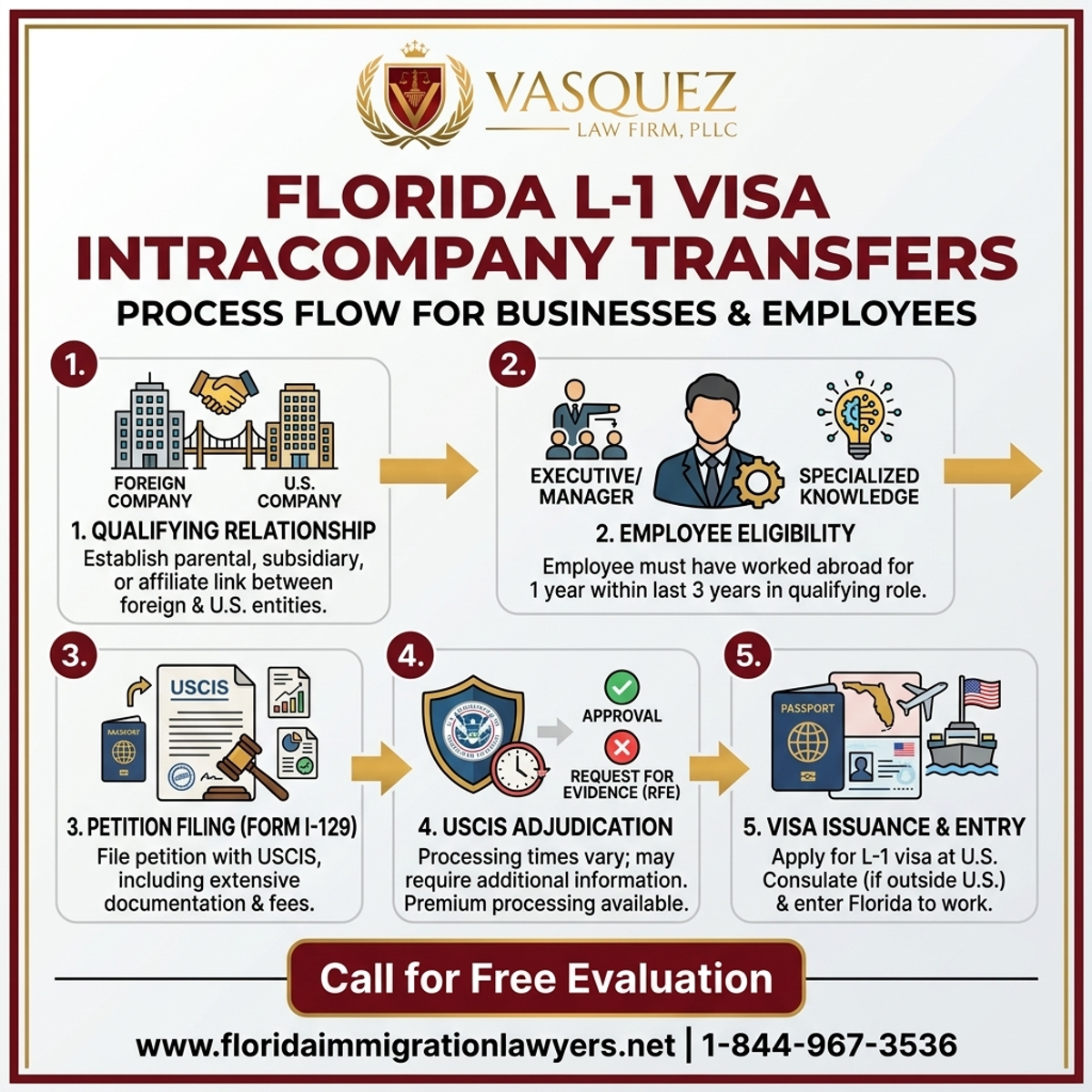
Navigating the L-1 visa application process requires meticulous preparation and adherence to specific legal guidelines. Here's a general overview of the steps involved:
Step 1: Filing Form I-129, Petition for a Nonimmigrant Worker
The U.S. employer initiates the process by filing Form I-129, Petition for a Nonimmigrant Worker, with U.S. Citizenship and Immigration Services (USCIS). This petition must include extensive documentation proving the qualifying relationship between the U.S. and foreign entities, the employee's eligibility, and the nature of the proposed U.S. employment. For companies that frequently transfer employees, a "blanket petition" may be an option, allowing for streamlined processing of multiple L-1 applications.
Step 2: USCIS Adjudication
USCIS reviews the petition and supporting evidence. This stage can involve Requests for Evidence (RFEs) if USCIS requires additional information or clarification. Premium processing is available for an additional fee, guaranteeing a decision within 15 calendar days.
Step-by-Step Process — L-1 Visa Intracompany Transfers in Florida | VLF Florida
Step 3: Consular Processing or Adjustment of Status
- Consular Processing: If the beneficiary is outside the U.S., once the I-129 petition is approved, they will apply for an L-1 visa stamp at a U.S. embassy or consulate in their home country. This involves completing the DS-160 online application, paying fees, and attending an interview.
- Adjustment of Status: If the beneficiary is already in the U.S. in a valid nonimmigrant status, they may be eligible to apply for an Adjustment of Status (Form I-485) concurrently with or after the I-129 approval, allowing them to change their status to L-1 without leaving the country.
Step 4: Visa Issuance and Entry to the U.S.
Upon approval, the L-1 visa is stamped in the beneficiary's passport, allowing them to enter the U.S. in L-1 status. For those adjusting status, the approval notice serves as proof of their new L-1 status.
Benefits and Advantages of the L-1 Visa
The L-1 visa offers several compelling benefits for multinational companies and their employees:
- Facilitates Global Talent Mobility: Enables companies to transfer critical talent and institutional knowledge across borders, maintaining operational continuity and competitive advantage.
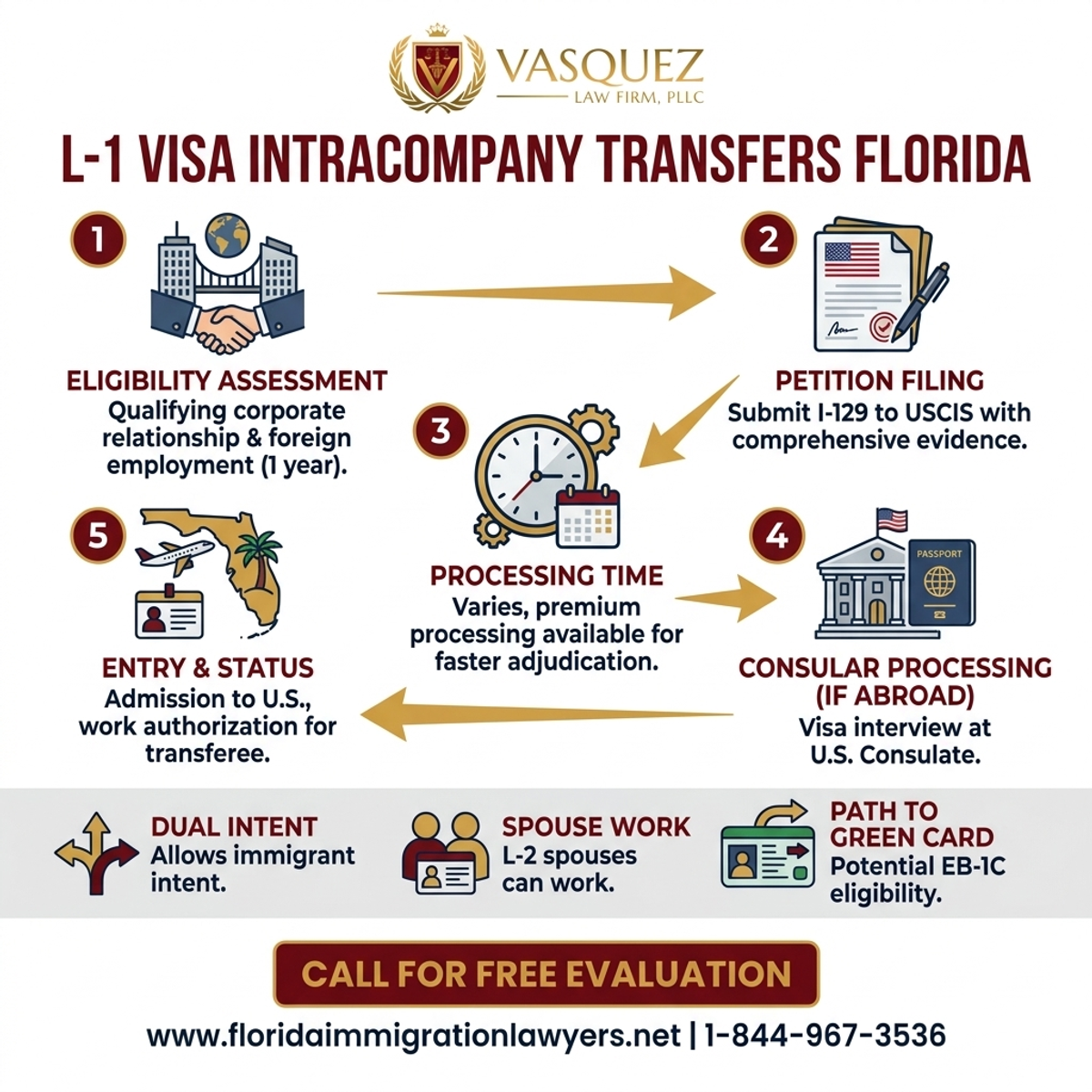
- Dual Intent: Unlike many other nonimmigrant visas, the L-1 visa is a "dual intent" visa, meaning beneficiaries can pursue permanent residency (a green card) without jeopardizing their L-1 status. This is particularly advantageous for L-1A holders who often qualify for the EB-1C category.
- Family Inclusion: Spouses and unmarried children under 21 years of age are eligible for L-2 dependent visas. L-2 spouses can apply for work authorization (EAD), providing flexibility for families.
- No Quota Limitations: Unlike the H-1B visa, the L-1 visa is not subject to annual numerical caps, making it a more reliable option for talent transfer.
- Path to Green Card: As mentioned, the L-1A visa provides a direct path to the EB-1C multinational executive or manager green card, which often has shorter processing times compared to other employment-based green card categories.
Challenges and Common Pitfalls
Despite its advantages, the L-1 visa process can present challenges:
- Proving "Specialized Knowledge": For L-1B petitions, clearly demonstrating that an employee possesses truly specialized and proprietary knowledge can be difficult and often leads to RFEs.
- "New Office" Petitions: Establishing a new U.S. office requires robust business plans, financial projections, and proof of sufficient physical premises and staffing, which USCIS scrutinizes heavily.
- Maintaining Qualifying Relationship: The U.S. and foreign entities must maintain their qualifying relationship throughout the L-1 visa holder's stay. Any changes in corporate structure must be carefully managed.
- Managerial/Executive Capacity: For L-1A, merely having a title is not enough; the petition must clearly demonstrate the employee's actual duties are primarily managerial or executive, not operational.
- Compliance: Employers must ensure ongoing compliance with immigration regulations, including maintaining records and notifying USCIS of any material changes. Failure to comply can lead to denial of extensions or even deportation proceedings.
Key Statistics — L-1 Visa Intracompany Transfers in Florida | VLF Florida
Florida: A Strategic Hub for L-1 Intracompany Transfers
Florida's dynamic economy, strategic geographic location, and diverse business landscape make it an increasingly attractive destination for multinational companies establishing or expanding their U.S. operations. The state boasts a robust infrastructure, including major international airports and seaports, facilitating global trade and logistics. Key industries such as tourism, aerospace, aviation, manufacturing, finance, and technology are thriving, creating fertile ground for international businesses. For companies utilizing the L-1 visa, Florida offers access to a skilled, multilingual workforce and a business-friendly environment. Major metropolitan areas like Miami, Orlando, Tampa, and Jacksonville serve as international gateways, drawing significant foreign direct investment. Miami, in particular, stands out as a crucial hub for Latin American and European businesses, making it an ideal location for companies looking to bridge operations between continents. The state's favorable tax policies and quality of life also contribute to its appeal for relocating executives and their families. Our firm, VLF Florida, is deeply integrated into this vibrant business community, providing localized insights and support for L-1 visa applicants navigating the specific requirements and opportunities within the state. We understand the local economic drivers and how they intersect with federal immigration policy, offering tailored advice that considers both your global business objectives and your specific needs within Florida. Whether you are establishing a new branch or transferring key personnel to an existing operation, Florida presents unique advantages that, when combined with legal guidance, can significantly enhance your strategic growth in the U.S.
Maintaining L-1 Status and Extensions
Once an L-1 visa is approved, beneficiaries must adhere to the terms of their status. This includes working only for the petitioning employer and in the approved capacity. L-1 visas are not indefinite; they have maximum stay limits (seven years for L-1A, five years for L-1B). If an employee needs to continue working in the U.S. beyond the initial approval period, the employer must file an extension petition (Form I-129) before the current status expires. Extension petitions require demonstrating continued eligibility and that the U.S. and foreign entities maintain their qualifying relationship and are actively doing business. It's crucial to begin the extension process well in advance to avoid any gaps in employment authorization.
Transitioning from L-1 to Permanent Residency
One of the most significant advantages of the L-1 visa, especially the L-1A category, is its potential as a pathway to U.S. permanent residency. L-1A visa holders are often eligible for the EB-1C Immigrant Visa for Multinational Executives and Managers. This category allows U.S. employers to petition for permanent residency for their L-1A executives and managers without the need for a PERM Labor Certification, which is often a lengthy and complex process required for many other employment-based green card categories. The requirements for EB-1C largely mirror those of the L-1A, focusing on the qualifying relationship between the companies and the employee's managerial or executive capacity. For L-1B holders, transitioning to permanent residency typically involves other employment-based categories, such as the EB-2 (for professionals with advanced degrees or exceptional ability) or EB-3 (for skilled workers, professionals, or other workers), which may require a PERM Labor Certification. Our attorneys at VLF Florida can assess your specific situation and guide you through the most appropriate green card pathway, whether it's EB-1C or another suitable option.
Why Choose VLF Florida for Your L-1 Visa Needs?
The L-1 visa process is intricate, demanding a deep understanding of immigration law, corporate structures, and U.S. business regulations. At VLF Florida, our dedicated team of immigration attorneys offers comprehensive legal services to both multinational corporations and individual transferees. We provide personalized guidance through every step, from initial eligibility assessment and petition preparation to responding to RFEs and preparing for consular interviews. Our experience ensures that your application is meticulously prepared, maximizing your chances of approval and minimizing potential delays. We are committed to helping businesses thrive in Florida by facilitating the smooth transfer of their essential talent.
Contact Us Today for Expert L-1 Visa Assistance
Navigating the complexities of L-1 intracompany transfers in Florida requires legal guidance. Whether you are a multinational corporation planning to expand your footprint in the U.S. or an executive or manager preparing for a transfer, VLF Florida is here to help. Our team is well-versed in the latest immigration policies and procedures, ensuring that your application is handled with precision and care. Don't let the intricacies of immigration law deter your business growth. Contact VLF Florida today for a consultation and let us help you achieve your L-1 visa objectives.
Sources and References
- U.S. Citizenship and Immigration Services (USCIS)
- Executive Office for Immigration Review (EOIR)
- U.S. Department of State - Bureau of Consular Affairs
- Immigration and Nationality Act (INA), 8 U.S.C. Chapter 12
Do Not Navigate This Process Alone
Our experienced immigration attorneys are ready to fight for you. Get a free, confidential case review today.
Se Habla Español
Or leave your details and we’ll call you:
Free Evaluation in 24 Hours
Or talk to us right now

AI voice assistant — available 24/7
FreeFrequently Asked Questions

William J. Vásquez
Founding Attorney · Vasquez Law Firm
U.S. Air Force veteran and immigration attorney with years of hands-on U.S. immigration experience. J.D., NCCU School of Law. AILA member. Admitted to the 4th, 5th, and 11th Circuit Courts.
Available 24/7 - Free Evaluations
Reviewed for legal accuracy by William J. Vásquez
Licensed in North Carolina; U.S. immigration is federal practice.
Related Legal Services
Our Florida immigration attorneys can help you with asylum protection, citizenship and naturalization and immigration practice areas. Call today at 1-844-YO-PELEO for a free case review.
Related Links
Related Topics
Free Legal Case Review
Discuss your case with our experienced attorneys. We're available 24/7.
Se Habla Español - Estamos aquí para ayudarle.
Related Articles
Immigration Lawyer Orlando Free Consultation in Florida
For individuals and families in Orlando, Florida, navigating the complexities of U.S. immigration law requires expert guidance. An immigration lawyer in Orlando offers crucial support for everything from visa applications and green card processes to naturalization and deportation defense. This comprehensive guide details what a free consultation covers, providing a step-by-step overview of immigration pathways, essential document checklists, and expected timelines in 2026. We also highlight common mistakes to avoid, discuss the critical role of legal counsel in deportation and asylum cases, and explain why choosing a local Orlando immigration attorney is beneficial. Florida Immigration Lawyers is dedicated to serving the diverse community of Orlando with compassionate, effective legal solutions, ensuring you receive personalized advice and robust representation for a successful immigration journey.
EAD Advance Parole Combo Card in Florida 2026
For individuals with a pending Form I-485, Application to Register Permanent Residence or Adjust Status, the EAD Advance Parole Combo Card is an essential document. This single card combines the authorization to work legally in the U.S. (Employment Authorization Document - EAD) with permission to travel internationally and re-enter without abandoning your green card application (Advance Parole). This guide from Florida Immigration Lawyers provides a comprehensive overview for applicants in Florida in 2026, covering eligibility, the step-by-step application process, required documents, expected processing times, and associated costs. We also highlight common mistakes to avoid and when to seek legal counsel to ensure a smooth and successful immigration journey. Understanding this vital card is key to maintaining stability while awaiting your permanent residency approval.
Vasquez Law Firm: U Visa Certification for Florida Crime
For crime victims in Florida, understanding U visa certification is crucial for obtaining legal protection and status. This comprehensive guide, updated for 2026, explains the U visa process, from securing the vital I-918 Supplement B from Florida law enforcement agencies to filing your petition with USCIS. Learn about eligibility criteria, the specific documents required, and what to expect regarding processing timelines, including the Bona Fide Determination (BFD) and the annual visa cap. We also cover potential costs, fee waivers, and common pitfalls to avoid. If you are a crime victim in Orlando or anywhere in Florida, knowing your rights and the steps to take is essential. Discover how expert legal assistance can navigate the challenges, ensuring your application is complete and compelling. Florida Immigration Lawyers are dedicated to providing compassionate, knowledgeable support for your U visa journey.
Applying for Citizenship with Father's Family Petition
Applying for U.S. citizenship after a father's family petition requires navigating a multi-stage immigration process. This journey typically begins with the approved Form I-130, which establishes the family relationship, leading to lawful permanent residency (a green card). After a statutory period of 3 to 5 years as a green card holder, individuals become eligible to apply for naturalization, the final step to U.S. citizenship. This comprehensive guide from Florida Immigration Lawyers details the eligibility requirements, step-by-step application procedures, associated costs, and common pitfalls to avoid for those pursuing citizenship in Florida in 2026. Understanding the nuances of continuous residence, physical presence, and good moral character is crucial. Our firm provides expert legal assistance for family-based immigration and naturalization cases throughout Florida, ensuring your application is meticulously prepared and effectively presented. Secure your future with experienced legal guidance.