Protect Yourself from Immigration Scams in Florida
Immigration scams are a growing concern in Florida, especially in areas like Kissimmee. Learn how to protect yourself and seek legitimate help from licensed attorneys. Call Florida Immigration Lawyers for a free consultation.

- Verify credentials of service providers.
- Be wary of notario fraud.
- Consult licensed immigration attorneys.
- Report scams to authorities.
Introduction
In recent years, Florida has seen a rise in immigration scams, particularly in areas like Kissimmee. These scams prey on vulnerable individuals, offering false promises and risking their immigration status. Understanding these scams is crucial for protection. This article will guide you through common scams, legal protections, and how to seek legitimate help. Call Florida Immigration Lawyers at 1-844-967-3536 for a free consultation and ensure your rights are protected.
The Sunshine State, with its diverse and growing immigrant communities, unfortunately, becomes a fertile ground for unscrupulous individuals looking to exploit those seeking a better life. These fraudulent schemes not only lead to significant financial losses for victims but can also jeopardize their immigration cases, sometimes resulting in deportation or bars from future legal immigration pathways. The emotional distress and fear caused by these scams can be profound, making it even harder for victims to come forward and seek justice.
Our goal at Florida Immigration Lawyers is to empower immigrants with the knowledge and resources necessary to identify and avoid these predatory practices. By understanding the tactics scammers use and knowing where to turn for genuine assistance, you can safeguard your future and your family's well-being. This guide is designed to be a comprehensive resource, offering practical advice and highlighting the critical role of licensed legal professionals in navigating the complexities of U.S. immigration law.
Understanding Common Immigration Scams
Immigration scams come in various forms, with notario fraud being one of the most prevalent in Florida. Scammers often pose as immigration consultants or notarios, offering services they are not qualified to provide. They may promise expedited processes or guaranteed outcomes, which are false claims. Florida law requires that only licensed attorneys and accredited representatives can offer legal advice on immigration matters.
Another common scam involves fake websites mimicking official government sites, asking for personal information or payments. Always ensure you're on legitimate sites like USCIS.
One of the most insidious forms of fraud is "notario fraud." In many Latin American countries, a "notario publico" is a highly trained legal professional, often equivalent to an attorney. However, in the United States, a "notary public" merely verifies signatures on documents and cannot provide legal advice or services. Scammers exploit this cultural difference, presenting themselves as "notarios" to gain the trust of immigrants and then charge exorbitant fees for services they are neither qualified nor legally permitted to provide. These unqualified individuals often fill out forms incorrectly, leading to denials, delays, and even deportation proceedings for their unsuspecting clients.
Beyond notario fraud, immigrants in Florida must also be vigilant against sophisticated phone and email scams. Fraudsters often impersonate USCIS or IRS officials, threatening arrest or deportation if immediate payment or personal information is not provided. They might demand payment via gift cards, wire transfers, or cryptocurrency, which are untraceable forms of payment. Remember, legitimate government agencies will never demand immediate payment over the phone, threaten deportation, or ask for payment in unusual forms. Always verify the caller's identity by calling back official numbers found on government websites, not numbers provided by the caller.
Other prevalent scams include those promising "guaranteed" visas or green cards through fraudulent marriages, non-existent job offers, or investment schemes. These schemes are designed to extract money and sensitive personal information, often leaving victims with no legal recourse and potentially facing criminal charges for immigration fraud. It's crucial to understand that there are no "guarantees" in immigration processes, and any promise of expedited or certain outcomes should be a major red flag. If an offer seems too good to be true, it almost certainly is. For reliable advice and protection against these deceptive practices, contact Florida Immigration Lawyers at 1-844-967-3536.
Real-Life Example
Maria, an immigrant from Kissimmee, was approached by a scammer posing as a notario. She was promised a quick path to citizenship for a large fee. After paying, she discovered the notario was unlicensed, leaving her without legal recourse and in financial distress.
Step-by-Step Guide to Avoiding Scams
Protecting yourself from immigration fraud requires vigilance and a proactive approach. By following these essential steps, you can significantly reduce your risk of falling victim to scams and ensure your immigration journey is handled legitimately and safely.
- Research and Verify: Always verify credentials before engaging with an immigration service provider. Check for licenses or accreditations. For attorneys, you can check with the Florida Bar Association. For accredited representatives, verify their status with the Department of Justice's Executive Office for Immigration Review (EOIR). Never rely solely on business cards or verbal assurances.
- Beware of Unrealistic Promises: Be cautious of anyone guaranteeing specific immigration outcomes or expedited services, as these are often false promises. Immigration law is complex and outcomes are never guaranteed. Any individual or organization promising a "sure thing" or claiming to have "special connections" with immigration officials is likely a scammer.
- Use Official Channels: Only use official government websites for applications and information, such as USCIS. Be wary of websites that look official but have slight misspellings in the URL or ask for unusual payment methods. Always cross-reference information with trusted sources like Florida Immigration Lawyers.
- Consult a Licensed Attorney: Before making any decisions, consult with a licensed immigration attorney to confirm the legitimacy of the advice and services offered. A consultation with a reputable law firm like Florida Immigration Lawyers can provide invaluable clarity and peace of mind, ensuring you receive accurate and legally sound guidance.
- Report Suspicious Activity: If you suspect a scam, report it to the Federal Trade Commission (FTC) at reportfraud.ftc.gov, the USCIS tip line, or local authorities for investigation. Reporting helps protect others in the community and allows authorities to take action against fraudsters.
Implementing these steps diligently can serve as your first line of defense against immigration fraud. Remember, your immigration status and financial well-being are too important to leave to chance. When in doubt, always seek professional advice from trusted legal experts like Florida Immigration Lawyers.
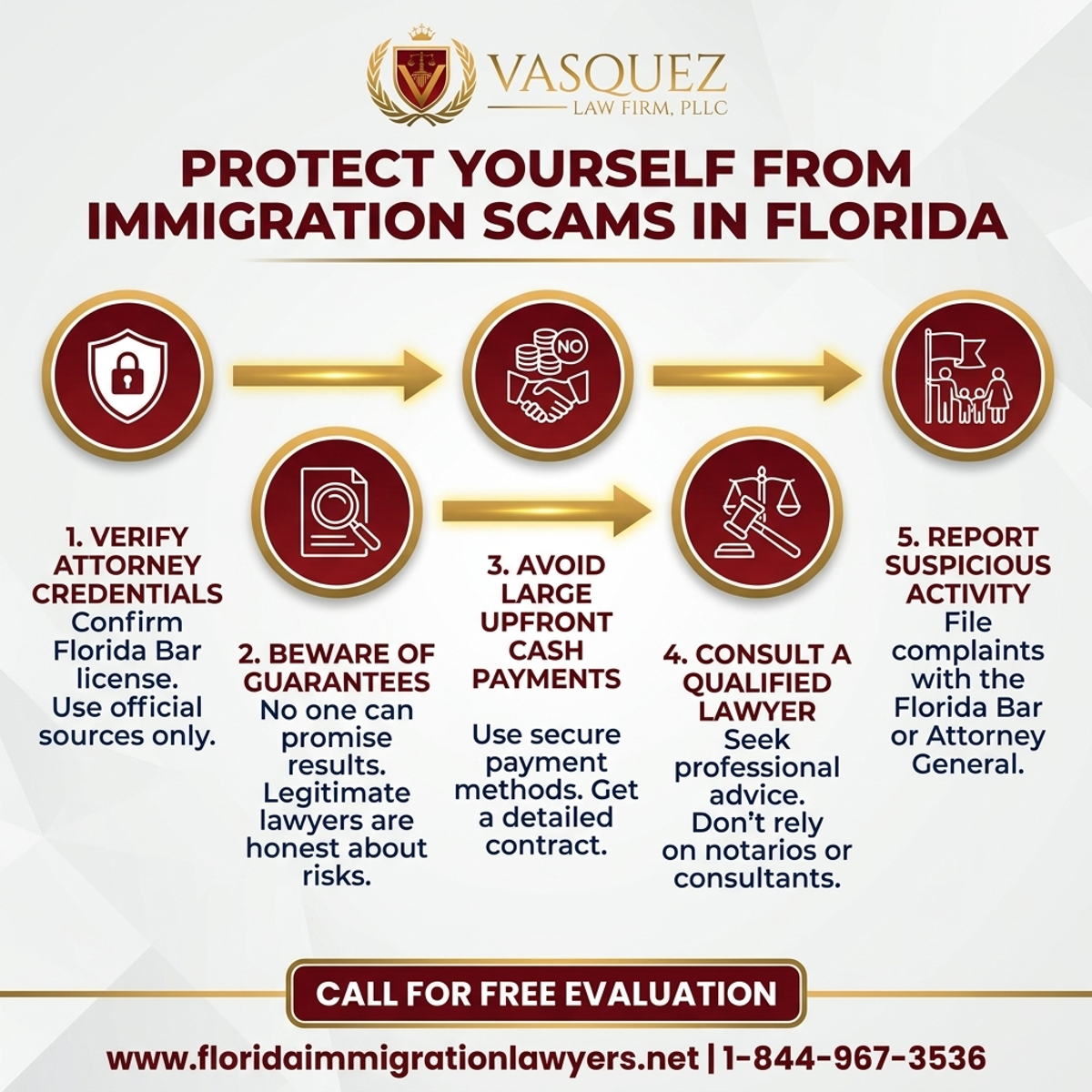
Step-by-Step Process — Protect Yourself from Immigration Scams in Florida
Document Checklist for Protecting Yourself
Maintaining thorough documentation is a critical aspect of protecting yourself from immigration scams and ensuring accountability. Should any issues arise, having a comprehensive record of your interactions and transactions can be invaluable for legal recourse or reporting fraudulent activity.
- Verification of attorney or representative's credentials: Keep records of their bar license number, EOIR accreditation, and any other relevant certifications.
- Copies of all communications and documents exchanged: This includes emails, letters, contracts, and any forms submitted on your behalf. Ensure you have a copy of everything you sign.
- Receipts of any payments made: Always insist on a detailed receipt for every payment, regardless of the amount. Traceable payment methods like checks or credit cards are preferable over cash.
- Official government forms and confirmations: Keep copies of all filed applications, receipt notices from USCIS, appointment letters, and any correspondence from official agencies.
- Contact details of legitimate references or past clients: While not always available, if you've been referred or have spoken to past clients, keep their contact information as part of your due diligence.
By diligently compiling and organizing these documents, you create a robust paper trail that can serve as evidence if you ever need to challenge fraudulent claims or prove your case to authorities. This proactive approach to documentation is a cornerstone of smart immigration planning and protection.
Timeline and Processing Expectations
Understanding the typical timeline for immigration processes is vital. Most legitimate processes, such as obtaining a green card or citizenship, take several months to years. Be wary of anyone promising rapid procedures, as these claims are typically unfounded. The U.S. Citizenship and Immigration Services (USCIS) provides estimated processing times on their website, which can offer a realistic expectation.
For example, the naturalization process can range from 8 to 14 months, depending on various factors including location and
Sources and References
- U.S. Citizenship and Immigration Services (USCIS)
- Executive Office for Immigration Review (EOIR)
- U.S. Department of State - Bureau of Consular Affairs
- Immigration and Nationality Act (INA), 8 U.S.C. Chapter 12
Do Not Navigate This Process Alone
Our experienced immigration attorneys are ready to fight for you. Get a free, confidential consultation today.
Se Habla Español
Frequently Asked Questions
Florida Immigration Lawyers
Immigration Attorney | Founder, Vasquez Law Firm
U.S. Air Force veteran and immigration attorney with thousands of cases resolved. J.D., NCCU School of Law. AILA member. Admitted to the 4th, 5th, and 11th Circuit Courts.
Available 24/7 - Free Evaluations
Related Legal Services
Our Florida immigration attorneys can help you with citizenship and naturalization, family immigration services and immigration practice areas. Call today at 1-844-967-3536 for a free consultation.
Related Links
Related Topics
Free Legal Consultation
Discuss your case with our experienced attorneys. We're available 24/7.
Se Habla Español - Estamos aquí para ayudarle.
Related Articles
Immigration Services Kissimmee Florida | Expert Legal Help
For residents of Kissimmee, Osceola County, and communities across Florida, including the vibrant Puerto Rican population, understanding the complex world of immigration services is essential. This guide from Florida Immigration Lawyers covers family petitions, employment visas, asylum, naturalization, and crucial deportation defense strategies. We provide a step-by-step overview of common processes, essential document checklists, and insights into processing timelines and costs. Learn about common mistakes to avoid and when to seek professional legal help. Our firm offers comprehensive, compassionate, and expert legal representation to help you achieve your immigration goals in Florida. We serve clients throughout the state, ensuring personalized attention and effective strategies for every unique case.
Immigration Appeal BIA Process in Florida | VLF Florida
Facing an immigration appeal in Florida can be challenging. Learn about the BIA process, common mistakes, and when to seek legal help. Contact Florida Immigration Lawyers for guidance.
F-1 Reinstatement Process for Students in Florida | VLF Florida
Explore the F-1 reinstatement process for students in Florida. Learn how to regain legal status and avoid common pitfalls with guidance from Florida Immigration Lawyers. Call 1-844-967-3536 for a free consultation.
U Visa for Crime Victims in Florida: What You Need to Know
Discover how the U visa can offer immigration relief to crime victims in Florida. Learn about eligibility, the application process, and how to avoid common mistakes. Contact Florida Immigration Lawyers for guidance.
