Immigration Bond Hearing Florida: Secure Release from...
If you or a loved one is facing an immigration bond hearing in Florida, understanding the process is crucial for securing release from ICE detention. This guide from Florida Immigration Lawyers covers eligibility, the step-by-step hearing process, essential documents, and common mistakes to avoid. Learn how an Immigration Judge determines bond amounts based on factors like flight risk and community ties. We emphasize the importance of legal representation to navigate the complexities of immigration law and advocate for a fair bond. Contact us for a free consultation to protect your rights and pursue release.

An immigration bond hearing in Florida determines if a detained individual can be released from U.S. Immigration and Customs Enforcement (ICE) custody by posting a bond. An Immigration Judge assesses factors like flight risk and danger to the community. Securing a bond allows you to pursue your immigration case outside of detention, often improving your chances of a favorable outcome. Legal representation is crucial for success.
- An Immigration Judge sets bond amounts.
- Factors include flight risk and public safety.
- Bond allows release from ICE detention in Florida.
- Legal counsel significantly improves outcomes.
- The process varies, but typically involves a formal hearing.
Finding yourself or a loved one in immigration detention can be an incredibly stressful and confusing experience. The thought of navigating complex legal procedures while in custody, especially in a foreign country, can feel overwhelming. In Florida, if you are detained by U.S. Immigration and Customs Enforcement (ICE), understanding your rights and the possibility of an immigration bond hearing is paramount.
This comprehensive guide from Florida Immigration Lawyers will walk you through everything you need to know about immigration bond hearings in Florida, from eligibility and the hearing process to common mistakes and what to expect. Our goal is to empower you with information and demonstrate how experienced legal counsel can make a critical difference in securing release. Do not face this challenge alone. Call Florida Immigration Lawyers at 1-844-967-3536 for a free consultation and let us help you understand your options.
Understanding the Immigration Bond Process in Florida
An immigration bond is essentially a form of bail for individuals held in immigration detention. It allows for temporary release from ICE custody while an individual's immigration case proceeds through the legal system. The primary purpose of a bond is to ensure that the individual will appear for all future court hearings and will not pose a danger to the community.
In Florida, like elsewhere in the U.S., eligibility for an immigration bond and the bond amount itself are determined by an Immigration Judge during a formal hearing. Not everyone is eligible for a bond. Individuals deemed mandatory detainees-those with certain criminal convictions or specific immigration violations-may not be eligible for bond. Understanding these distinctions is critical.
Who is Eligible for an Immigration Bond?
Generally, non-citizens who are not subject to mandatory detention under INA § 236(c) (8 U.S.C. § 1226(c)) may be eligible for an immigration bond. This includes many individuals facing removal proceedings. The Immigration Judge has discretion in these cases to determine if a bond should be set and for how much. They consider various factors to make this determination.
Factors an Immigration Judge considers include ties to the community, employment history, family responsibilities, criminal record, and previous immigration history. The judge's decision aims to balance the individual's liberty with the government's interest in ensuring court appearances and public safety. Your legal team will present a strong case highlighting positive factors.
The Role of ICE and Immigration Courts in Florida
When an individual is detained in Florida, ICE typically makes an initial custody determination. They may set an administrative bond, or they may choose to detain the individual without bond. If ICE denies bond or sets a bond amount that is too high, the detained individual has the right to request an ICE bond hearing before an Immigration Judge.
Immigration Courts in Florida, such as those in Orlando, Miami, and Bradenton (serving the Tampa area), are part of the Executive Office for Immigration Review (EOIR) under the Department of Justice. These courts handle removal proceedings and bond hearings. An Immigration Judge, not a criminal court judge, presides over these hearings, making decisions based on immigration law and precedent.
Step-by-Step Guide to the Immigration Bond Hearing Process in Florida
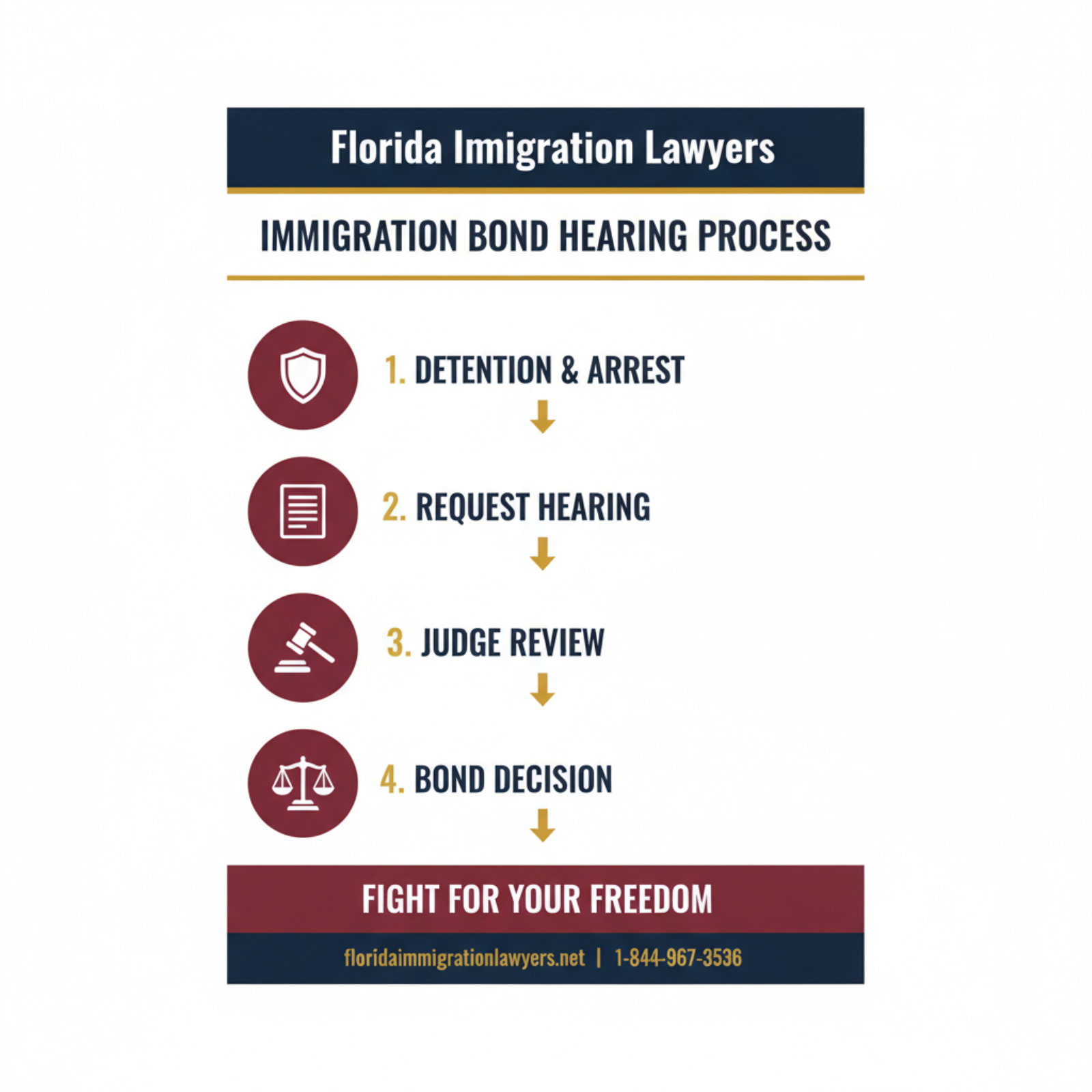
Navigating the legal landscape of an immigration bond hearing requires a clear understanding of each stage. Here is a typical step-by-step process for individuals detained in Florida:
-
Detention by ICE: An individual is taken into custody by ICE, often after an encounter with law enforcement or during an immigration enforcement action. They are typically transferred to an immigration detention facility in Florida, such as the Krome Service Processing Center or Baker County Detention Center.
At this point, ICE will decide whether to release the individual on their own recognizance, set an administrative bond, or hold them without bond. This initial decision is often made quickly.
-
Requesting a Bond Hearing: If ICE does not set a bond or sets one that is too high, the detained individual or their attorney can request a bond hearing. This request is filed with the Immigration Court having jurisdiction over the detention facility in Florida.
The request must be made in writing, typically on Form EOIR-28 (Notice of Appearance as Attorney or Representative) if represented, or by a simple letter from the detainee. This formally initiates the bond hearing process.
-
Preparation for the Hearing: This is a crucial stage. Your attorney will gather evidence to present to the Immigration Judge. This includes documentation of community ties, employment, family responsibilities, lack of criminal history, and any other factors that demonstrate you are not a flight risk or a danger to the community.
Witnesses, such as family members or employers, may be prepared to testify about your character and ties to Florida. A strong presentation of evidence is key to a favorable outcome.
-
The Immigration Bond Hearing: The hearing takes place before an Immigration Judge. The ICE attorney will argue against bond or for a high bond amount, while your attorney will argue for release on bond or a lower bond amount. The judge will listen to arguments, review evidence, and question both sides.
The burden of proof is generally on the detained individual to show that they are not a flight risk or a danger. The judge's decision is based on the totality of the circumstances presented in court.
-
Judge's Decision: The Immigration Judge will issue a decision, either granting bond, denying bond, or setting a specific bond amount. If a bond is granted, the judge will specify the amount and any conditions for release. Bond amounts can vary significantly, often ranging from a few thousand dollars to tens of thousands.
If the bond is set, it can be paid by a family member or friend at an ICE bond acceptance office. Once paid, the individual is processed for release from detention.
-
Release from Detention: After the bond is posted and processed, the individual is released from ICE custody. They are then required to attend all scheduled immigration court hearings. Failure to appear can result in bond forfeiture and a final order of removal.
Release on bond allows you to work closely with your attorney to prepare your defense while living at home. This can significantly reduce stress and improve access to resources needed for your case.
Essential Document Checklist for an Immigration Bond Hearing
Having the right documents is vital for presenting a strong case at an immigration bond hearing. Your attorney will guide you, but preparing these documents can expedite the process:
- Proof of identity and nationality (passport, birth certificate).
- Proof of residence in Florida (utility bills, lease agreements, property deeds).
- Letters of support from family, friends, employers, or community leaders.
- Proof of employment or business ownership (pay stubs, tax returns, employer letters).
- Proof of family ties in the U.S. (birth certificates of U.S. citizen children, marriage certificates).
- Medical records if there are health concerns requiring care outside detention.
- Evidence of financial stability (bank statements, property ownership).
- Any evidence of rehabilitation if there is a criminal history (certificates from programs, letters).
- Proof of enrollment in school or vocational training.
- Immigration documents (I-94, previous visa petitions, court notices).
Timeline and Processing Expectations for Florida Immigration Bond Hearings
The timeline for an immigration bond hearing in Florida can vary significantly depending on the court's caseload, the detention facility, and whether an attorney is involved. Generally, once a bond hearing is requested, it may take anywhere from a few days to several weeks to be scheduled.
After the hearing, if bond is granted, the actual release process can take 24-72 hours once the bond is paid. This includes administrative processing by ICE. It is important to remember that these are general estimates, and individual circumstances can affect the timeline. Working with an attorney can often help expedite the scheduling of your hearing and ensure all paperwork is filed correctly and promptly.
Cost Factors and Fee Breakdown for Immigration Bond Cases
Understanding the financial aspects of an immigration bond case is important for families in Florida. The costs typically involve two main components: the bond amount itself and legal fees.
Immigration Bond Amount
The Immigration Judge sets the bond amount. This amount can range from a statutory minimum (currently $1,500) to tens of thousands of dollars, depending on the individual's specific circumstances. Factors influencing the bond amount include the judge's assessment of flight risk, potential danger to the community, criminal history, and ties to the U.S. The bond is returned once the immigration case is concluded and all court appearances are met.
Legal Fees
Hiring an experienced immigration attorney is a significant investment but often crucial for securing a favorable outcome. Legal fees cover the attorney's time for preparing the bond request, gathering evidence, representing you at the hearing, and advising you throughout the process. These fees vary based on the complexity of the case, the attorney's experience, and the amount of work required. A free consultation with Florida Immigration Lawyers can help you understand the potential legal costs involved.
Do not navigate this process alone. Contact Florida Immigration Lawyers today for expert guidance and support through your immigration bond hearing in Florida. We are here to help you or your loved one pursue release.
Common Mistakes to Avoid in Immigration Bond Hearings
Making mistakes during an immigration bond hearing can have severe consequences, potentially leading to denial of bond or a higher bond amount. Be aware of these common pitfalls:
-
Failing to Request a Hearing Promptly: Delays in requesting a bond hearing can mean prolonged detention. The sooner a request is made, the sooner a judge can review the case. Every day in detention is a day lost with family and work.
-
Lack of Preparation and Documentation: Appearing before a judge without sufficient evidence of community ties, employment, and good character significantly weakens your case. Judges rely on tangible proof to make their decisions.
-
Misrepresenting Facts or Lying: Providing false information to the court, whether intentionally or unintentionally, can severely damage your credibility. It may lead to a bond denial and negatively impact future immigration proceedings.
-
Not Understanding Eligibility: Some individuals are subject to mandatory detention and are not eligible for bond. Pursuing a bond hearing when ineligible wastes time and resources. An attorney can quickly assess eligibility.
-
Failing to Emphasize Positive Factors: Not highlighting strong community ties, family responsibilities, employment, and lack of criminal history can lead to a judge seeing you as a flight risk or danger. Your attorney's role is to present these points effectively.
-
Attempting to Self-Represent: Immigration law is complex. Without legal training, you may miss critical legal arguments, procedural requirements, or ways to challenge the government's case. Self-representation often leads to unfavorable outcomes.
-
Not Having a Plan for Release: Judges want to know you have a stable place to live and support system upon release. Lacking a clear plan can raise concerns about flight risk, even if other factors are positive.
When to Call a Lawyer for Your Immigration Bond Hearing
The immigration bond hearing process is intricate and fraught with legal complexities. While some individuals may attempt to navigate it alone, the benefits of professional legal representation are undeniable. You should call Florida Immigration Lawyers immediately if:
- You or a loved one has been detained by ICE in Florida.
- ICE has denied bond or set an unreasonably high bond amount.
- You are unsure if you are eligible for an immigration bond.
- You have a criminal history that might complicate your bond eligibility.
- You need help gathering the necessary documents and preparing a strong case.
- You want to ensure your rights are protected throughout the detention and hearing process.
- You are facing a Rod bond hearing or a DHS inadmissibility bond hearing, which have specific legal nuances.
Our experienced attorneys at Florida Immigration Lawyers specialize in deportation defense and immigration bond cases. We understand the specific procedures of Florida's immigration courts, including those serving the Tampa area. We will work tirelessly to present the strongest possible case for your release, advocating for a fair bond amount or release on your own recognizance. Let us be your steadfast allies in this challenging time.
About Florida Immigration Lawyers
Florida Immigration Lawyers is a leading law firm dedicated to providing exceptional immigration legal services across all of Florida. With years of experience and a deep understanding of U.S. immigration law, our firm is committed to protecting the rights and interests of immigrants and their families. We handle a wide range of immigration matters, including asylum claims, citizenship applications, family-based petitions, business immigration solutions, and vigorous deportation defense.
We pride ourselves on our client-focused approach, offering personalized attention and strategic legal advice tailored to each unique situation. Our team is available 24/7 to address urgent needs and provide peace of mind. We offer free consultations to discuss your case and outline the best path forward. Choose Florida Immigration Lawyers for compassionate, skilled, and effective legal representation. Visit our website at https://www.floridaimmigrationlawyers.net or call us at 1-844-967-3536.
Sources and References
- U.S. Citizenship and Immigration Services (USCIS)
- Executive Office for Immigration Review (EOIR)
- U.S. Immigration and Customs Enforcement (ICE)
- 8 U.S.C. Chapter 12 - Immigration and Nationality Act (INA) § 236(a), § 236(c)
- 8 CFR § 1003.19 - Proceedings Before Immigration Judges: Bond Proceedings
- Matter of Guerra, 24 I&N Dec. 37 (BIA 2006)
This article provides general legal information and is not intended as legal advice. Every case is unique, and outcomes depend on specific facts and circumstances. Contact an attorney for advice about your particular situation.
Do not let the fear of immigration detention or a complex legal process deter you from seeking justice. Florida Immigration Lawyers are here to provide the expert legal guidance and representation you need. Our team is ready to fight for your rights and help you secure release. Call us today at 1-844-967-3536 for a free consultation. Se Habla Español - Estamos aquí para ayudarle.
Do Not Navigate This Process Alone
Our experienced immigration attorneys are ready to fight for you. Get a free, confidential consultation today.
Se Habla Español
Frequently Asked Questions
Florida Immigration Lawyers
Immigration Attorney | Founder, Vasquez Law Firm
U.S. Air Force veteran and immigration attorney with thousands of cases resolved. J.D., NCCU School of Law. AILA member. Admitted to the 4th, 5th, and 11th Circuit Courts.
Available 24/7 - Free Evaluations
Related Legal Services
Our Florida immigration attorneys can help you with free immigration consultation, experienced immigration attorneys and business immigration. Call today at 1-844-967-3536 for a free consultation.
Related Links
Related Topics
Free Legal Consultation
Discuss your case with our experienced attorneys. We're available 24/7.
Se Habla Español - Estamos aquí para ayudarle.
Related Articles
Stokes Interview: Navigating Marriage Fraud in Florida
A Stokes interview is a specialized, separate interview conducted by USCIS when there are suspicions of marriage fraud in a green card application. This rigorous process involves individual questioning of spouses, focusing on inconsistencies in their testimonies to determine the authenticity of their marital bond. For couples in Florida, navigating this high-stakes interview requires meticulous preparation, extensive documentation, and often the strategic guidance of an experienced immigration lawyer. Understanding the process, preparing for detailed questions, and presenting a strong case are crucial for overcoming marriage fraud allegations and securing your immigration future. Florida Immigration Lawyers stands ready to assist you.
Immigration Attorney Gainesville: North Florida Legal Help
For those in Gainesville, Alachua County, and throughout North Florida, navigating U.S. immigration law requires expert guidance. An experienced immigration attorney can simplify complex processes, from family-based petitions and employment visas to critical asylum claims and deportation defense. This comprehensive guide outlines the essential services provided by an immigration attorney, details necessary documentation, clarifies processing timelines, and discusses associated costs. We also highlight common mistakes to avoid and crucial scenarios where legal counsel is indispensable. Florida Immigration Lawyers serves all of Florida, including Gainesville and St. Petersburg, providing dedicated legal support to help you achieve your immigration goals. Contact us for a free consultation to discuss your specific needs.
Military Naturalization Expedited at Florida Bases
Explore expedited military naturalization processes for service members at Florida bases like MacDill. Learn about eligibility, steps, and common mistakes. Contact Florida Immigration Lawyers for a free consultation.
Protect Yourself from Immigration Scams in Florida
Learn how to protect against immigration scams in Florida, focusing on St. Petersburg. This guide covers identifying scams, verifying credentials, and getting legal help. Call Florida Immigration Lawyers at 1-844-967-3536 for assistance.
