Immigration Bond Hearing in Florida
Facing an immigration bond hearing in Florida? Learn about the process, necessary documents, common mistakes, and when to seek legal help. Florida Immigration Lawyers can assist you.

Immigration Bond Hearing in Florida: Your Comprehensive Guide
Facing detention by U.S. Immigration and Customs Enforcement (ICE) can be a terrifying and disorienting experience, especially when you or a loved one are held in an immigration detention center in Florida. The prospect of an immigration bond hearing offers a ray of hope – a chance to be released from custody while your immigration case proceeds. However, navigating this complex legal process requires a deep understanding of the law, the factors immigration judges consider, and the strategic presentation of your case. This guide provides an in-depth look at immigration bond hearings in Florida, empowering you with the knowledge needed to approach this critical stage with confidence.
What is an Immigration Bond Hearing?
An immigration bond hearing is a legal proceeding before an Immigration Judge (IJ) where the judge determines whether a detained individual can be released from ICE custody on payment of a bond. The primary purpose of a bond is to ensure the individual will appear for all future immigration court hearings and will not pose a danger to the community or a flight risk. Unlike criminal bail, an immigration bond is not a punishment but a guarantee of appearance. The judge has the discretion to set a bond amount, deny bond, or release an individual on their own recognizance without a bond.
Who is Eligible for a Bond?
Not everyone detained by ICE is eligible for an immigration bond. Eligibility largely depends on the individual's immigration history, criminal record, and the specific grounds for their detention. Generally, individuals who are subject to mandatory detention under certain provisions of the Immigration and Nationality Act (INA) are not eligible for a bond hearing. This often includes individuals with certain criminal convictions, those deemed a security risk, or those arriving without proper documentation under specific circumstances. For others, particularly those held under discretionary detention, an immigration judge has the authority to grant a bond. Understanding your eligibility is the first crucial step, and it often requires an expert review of your Notice to Appear (NTA) and immigration records. If you or a loved one are facing deportation defense, determining bond eligibility is often one of the first critical steps.
Factors Affecting Bond Amount
When an immigration judge determines bond eligibility and amount, they consider a range of factors to assess whether the individual is a flight risk or a danger to the community. These factors are not exhaustive and can vary based on the specifics of each case. Key considerations include:
- Ties to the Community: Evidence of strong ties to the U.S. – such as family members (especially U.S. citizens or lawful permanent residents), property ownership, employment history, and community involvement – can demonstrate that an individual is unlikely to flee.
- Length of Residence in the U.S.: A longer period of continuous residence in the U.S. can weigh favorably, suggesting deeper roots.
- Employment History: Stable employment indicates a commitment to remaining in the U.S. and financial responsibility.
- Criminal History: Any past criminal convictions, particularly those involving violence or serious offenses, can significantly impact bond eligibility and amount, often leading to higher bonds or bond denial.
- Immigration History: Prior violations of immigration law, such as previous deportations or failures to appear in court, will be scrutinized.
- Financial Resources: The ability to pay a bond is also considered, though the judge aims to set a bond that is reasonable yet sufficient to ensure appearance.
- Eligibility for Relief from Removal: If an individual appears to have a strong case for obtaining a form of relief from deportation, it may influence the judge to grant a lower bond or no bond at all, as it suggests they have a strong incentive to remain and pursue their case.
Presenting compelling evidence for each of these factors is paramount. An experienced immigration attorney can help gather and present this evidence effectively, advocating for the lowest possible bond or release without bond.
The Bond Hearing Process
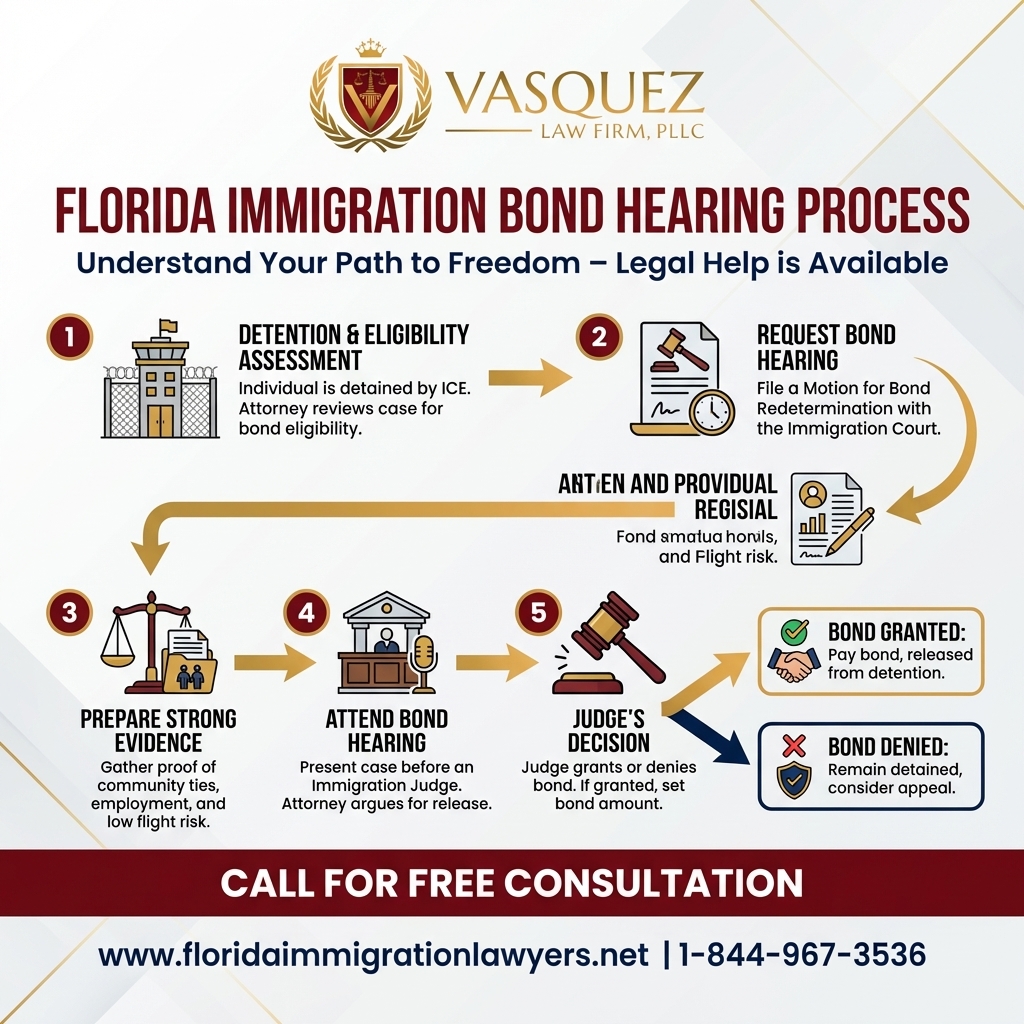
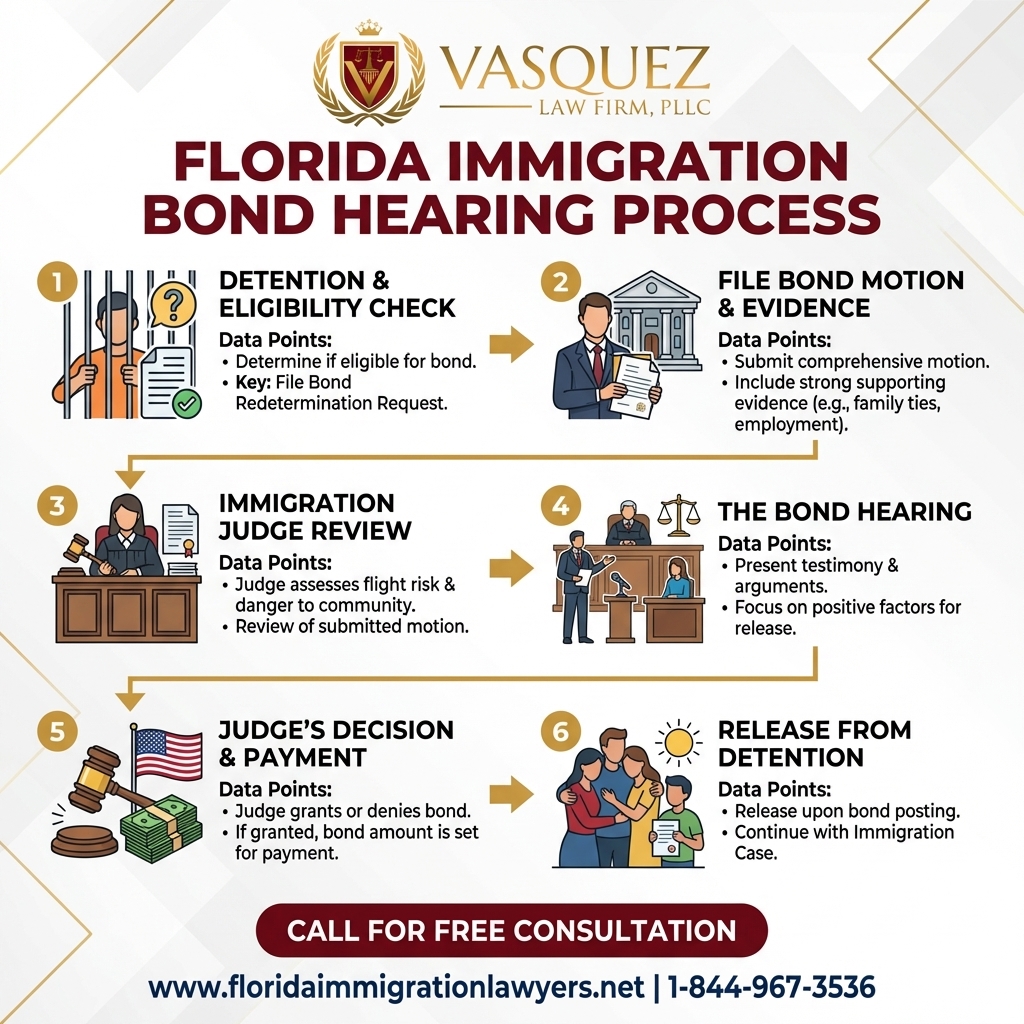
The bond hearing process typically begins after an individual has been detained by ICE and issued a Notice to Appear (NTA), which outlines the reasons for their detention and initiation of removal proceedings. The detained individual or their family can request a bond hearing, or one may be scheduled automatically. These hearings are usually held at the immigration court nearest to the detention facility.
Preparing for Your Hearing
Preparation is key to a successful bond hearing. This involves gathering a comprehensive set of documents and evidence to demonstrate strong ties to the community and a lack of flight risk or danger. Essential documents may include:
- Proof of identity and nationality.
- Marriage certificates, birth certificates of U.S. citizen children, and other family relationship documents.
- Letters of support from family, friends, employers, and community leaders.
- Proof of employment, pay stubs, and tax returns.
- Property deeds, rental agreements, and utility bills.
- Medical records, especially if there are health concerns that would make detention particularly difficult.
- Any evidence of a potential claim for relief from removal.
It is also crucial to identify potential witnesses who can testify on your behalf, such as family members, employers, or community leaders, to speak to your character and ties to the community. An attorney will help you prepare your testimony and coach witnesses.
What Happens During the Hearing?
During the bond hearing, the detained individual (or their attorney) will present arguments and evidence to the Immigration Judge. The ICE attorney will also present their arguments, often advocating for a higher bond or no bond, citing factors such as prior immigration violations or criminal history. The judge will listen to both sides, review the submitted evidence, and then make a decision. The individual has the right to be represented by an attorney, and legal counsel can significantly impact the outcome by:
- Presenting legal arguments for bond eligibility.
- Cross-examining the ICE attorney's witnesses or challenging their evidence.
- Introducing favorable evidence and witness testimony.
- Negotiating with the ICE attorney for a consensual bond amount.
The judge's decision is usually given at the end of the hearing, though sometimes it may be reserved for a later date. If a bond is granted, the judge will specify the amount and any conditions of release.
After the Bond Hearing
Once a bond has been set by the Immigration Judge, the next steps involve paying the bond and understanding the conditions of release. It's important to act quickly and accurately to secure the release of the detained individual.
Paying the Bond
Immigration bonds must be paid to the Department of Homeland Security (DHS) at an authorized ICE ERO (Enforcement and Removal Operations) field office. The bond can be paid by a U.S. citizen or lawful permanent resident, often referred to as the 'obligor,' who is financially responsible for ensuring the detained individual appears at all future court dates. The bond must be paid in full, typically by money order or cashier's check. Personal checks or credit cards are generally not accepted. It's crucial to obtain and keep all receipts and documentation related to the bond payment, as these will be necessary for bond cancellation and refund once the immigration case concludes. There are different types of bonds, including:
- Delivery Bond: The most common type, ensuring the individual appears for all scheduled hearings.
- Voluntary Departure Bond: Ensures the individual departs the U.S. by a specified date if granted voluntary departure.
- Order of Supervision Bond: Used when an individual is released under an order of supervision, requiring them to report periodically to ICE.
Conditions of Release
Release on bond is not unconditional freedom. The Immigration Judge or ICE may impose specific conditions that the individual must adhere to. These conditions typically include:
- Attending all scheduled immigration court hearings.
- Reporting regularly to an ICE officer.
- Notifying ICE of any change of address.
- Not committing any new crimes.
Failure to comply with any of these conditions can result in the bond being revoked, the individual being re-detained, and the bond money being forfeited. It is absolutely critical to understand and strictly follow all conditions of release to avoid further complications in the immigration process. Your attorney will ensure you are fully aware of all obligations.
Beyond the Bond: What Happens After Release and Future Immigration Paths
Securing release through an immigration bond is a significant victory, but it is just one step in a potentially long and complex immigration journey. Release from detention does not mean your immigration case is over; it simply means you can pursue your case from outside of custody. The period following release is crucial for preparing and presenting your defense against removal. This is where the real work of building your case begins, often involving extensive legal strategy and evidence gathering.
Navigating Your Immigration Case Post-Bond
Once released, the focus immediately shifts to your ongoing immigration proceedings. You will have a Notice to Appear (NTA) that outlines the charges against you and specifies your initial court date, known as a Master Calendar Hearing. At this hearing, you will formally respond to the charges and inform the judge of your intent to seek relief from removal. Subsequent hearings, including Individual Hearings, will involve presenting evidence, calling witnesses, and making legal arguments. This entire process can be lengthy, often spanning months or even years, depending on the complexity of the case and court backlogs. It is vital to stay organized, communicate regularly with your attorney, and attend every scheduled court date. Missing a hearing can lead to an order of deportation in absentia, which is extremely difficult to reverse. For comprehensive guidance on all aspects of your immigration journey, consulting with an expert in immigration law is essential.
Potential Outcomes and Pathways
The ultimate goal after a bond hearing is to successfully resolve your immigration case, ideally by obtaining a form of relief that allows you to remain lawfully in the U.S. There are various avenues for relief from removal, each with specific eligibility requirements:
- Cancellation of Removal: For certain non-permanent residents who have been in the U.S. for a long time, have good moral character, and whose removal would cause extreme and unusual hardship to a qualifying U.S. citizen or LPR family member.
- Adjustment of Status: If you are eligible for a green card through a family petition or employment, you may be able to adjust your status while in removal proceedings.
- Asylum or Withholding of Removal: If you fear persecution in your home country, you may be able to seek protection.
- Temporary Protected Status (TPS): For individuals from certain countries experiencing armed conflict or natural disaster.
- U Visa/T Visa: For victims of certain crimes or human trafficking who cooperate with law enforcement.
Each of these pathways requires a robust application and presentation of evidence, often necessitating expert legal guidance.
Asylum Claims and Bond Hearings
For individuals seeking asylum, the bond hearing can be particularly complex. While asylum seekers are generally eligible for bond, the judge will consider the strength of the asylum claim as part of the overall assessment of flight risk and danger. A credible fear finding by an asylum officer can be a positive factor in a bond determination. However, even with a bond, the asylum case itself must be diligently pursued. An asylum claim involves demonstrating a well-founded fear of persecution based on race, religion, nationality, political opinion, or membership in a particular social group. This requires detailed testimony and corroborating evidence. Navigating the intricacies of asylum law while simultaneously managing bond obligations demands specialized legal expertise.
Deportation Defense Strategies
Whether or not you have an asylum claim, the core of your post-bond legal strategy will revolve around deportation defense. This involves identifying all possible forms of relief, preparing the necessary applications, gathering supporting documentation, and presenting your case persuasively to the Immigration Judge. A skilled attorney will analyze your unique circumstances, identify the most viable defense strategies, and guide you through every step of the removal proceedings. This can include challenging the charges on your NTA, arguing for prosecutorial discretion, or appealing an unfavorable decision. Effective deportation defense is a dynamic process that requires continuous engagement and strategic adjustments.
The Critical Role of Legal Representation
Throughout the entire immigration process, from the initial detention and bond hearing to the final resolution of your removal proceedings, the importance of experienced legal representation cannot be overstated. An immigration attorney provides invaluable assistance by:
- Assessing bond eligibility and advocating for the lowest possible bond.
- Preparing comprehensive bond packages with supporting evidence.
- Representing you in court and presenting compelling legal arguments.
- Identifying all potential forms of relief from removal.
- Preparing and filing complex immigration applications.
- Representing you at all Master Calendar and Individual Hearings.
- Advising on compliance with bond conditions and reporting requirements.
- Appealing unfavorable decisions.
Without legal counsel, individuals often face significantly higher bonds, prolonged detention, and a much greater risk of deportation. An attorney acts as your advocate, ensuring your rights are protected and your voice is heard in a system that can be overwhelming and intimidating.
Navigating an immigration bond hearing in Florida, and the subsequent immigration court proceedings, is a challenging endeavor that requires expert legal guidance. The decisions made at each stage can have profound, life-altering consequences. If you or a loved one are facing detention and removal proceedings, do not attempt to navigate this complex system alone. Seeking immediate legal assistance from a qualified immigration attorney is the most crucial step you can take to protect your rights and pursue the best possible outcome for your future. Our dedicated team of attorneys is here to provide the compassionate and effective representation you need. Contact us today for a consultation to discuss your specific situation and explore your legal options.
Do Not Navigate This Process Alone
Our experienced immigration attorneys are ready to fight for you. Get a free, confidential consultation today.
Se Habla Español
Frequently Asked Questions

William J. Vásquez
Founding Attorney · Vasquez Law Firm
U.S. Air Force veteran and immigration attorney with thousands of cases resolved. J.D., NCCU School of Law. AILA member. Admitted to the 4th, 5th, and 11th Circuit Courts.
Available 24/7 - Free Evaluations
Related Legal Services
Our Florida immigration attorneys can help you with free immigration consultation, experienced immigration attorneys and business immigration. Call today at 1-844-967-3536 for a free consultation.
Related Links
Related Topics
Free Legal Consultation
Discuss your case with our experienced attorneys. We're available 24/7.
Se Habla Español - Estamos aquí para ayudarle.
Related Articles
E-2 Visa for Florida Business Investors | VLF Florida
Learn about the E-2 investor visa for Florida business opportunities, tailored for Fort Lauderdale entrepreneurs. Discover the process, requirements, and common pitfalls. Contact Florida Immigration Lawyers for expert assistance.
Immigration Documents Checklist for Florida | VLF Florida
Navigating immigration processes in Florida requires a comprehensive checklist of documents. This guide helps you gather all necessary paperwork to ensure a successful application. Consult Florida Immigration Lawyers for personalized assistance.
Immigration Attorney West Palm Beach Guide | VLF Florida
Navigate the complexities of immigration in West Palm Beach with a trusted attorney. Learn what to expect, common pitfalls, and how to choose the right legal help.
Dual Citizenship in Florida: What You Need to Know
Explore dual citizenship in Florida, understand the process, and learn how to apply. Discover the benefits and complexities involved with having two passports and navigating immigration laws. Call Florida Immigration Lawyers for expert guidance.