Immigration Bond Hearing Florida: Get Released from ICE Detention
Facing an immigration bond hearing in Florida can be daunting, especially for families in Kissimmee, Orlando, and Miami. This comprehensive guide demystifies the process, explaining what an immigration bond hearing entails, who is eligible, and the crucial steps to take. We detail the essential documents required, outline timelines and cost factors, and highlight common mistakes to avoid. Discover why experienced legal representation from Florida Immigration Lawyers is vital to navigate this complex system and secure release from ICE detention. Understand your rights and learn how to present a strong case for bond.

An immigration bond hearing in Florida is a crucial legal proceeding where an Immigration Judge determines if a detained individual can be released from ICE custody upon posting a bond. The judge assesses factors like flight risk and danger to the community. Securing a bond allows individuals to reunite with family and prepare their defense while outside detention. This process is complex and often requires experienced legal guidance to present a strong case for release.
- An immigration bond hearing determines eligibility for release from ICE detention.
- Immigration Judges consider flight risk and public safety when setting bond amounts.
- Strong ties to Florida, a clean record, and family support are key factors.
- Legal representation significantly improves the chances of a favorable bond decision.
Finding out a loved one has been detained by U.S. Immigration and Customs Enforcement (ICE) in Florida can be an incredibly stressful and frightening experience. The immediate concern is often how to secure their release. For many, the path to freedom begins with an immigration bond hearing in Florida.
Understanding this process is vital for families in Kissimmee, Orlando, Miami, and across the Sunshine State. A bond hearing offers a chance for an Immigration Judge to review a detained individual's case and determine if they can be released from custody by paying a set amount of money. This article will guide you through the intricacies of immigration bond hearings, eligibility criteria, the step-by-step process, necessary documentation, and crucial legal considerations.
Navigating the complex immigration system requires knowledge and strategic action. Do not face this challenge alone. Call Florida Immigration Lawyers at 1-844-967-3536 for a free consultation. Our dedicated team is here to help you understand your options and fight for your loved one's release.
Understanding the Immigration Bond Hearing Process in Florida
An immigration bond hearing is a formal proceeding before an Immigration Judge (IJ) from the Executive Office for Immigration Review (EOIR). Its primary purpose is to determine whether an individual detained by ICE is eligible for release on bond and, if so, what the appropriate bond amount should be. The judge's decision hinges on several factors, mainly whether the individual poses a flight risk or a danger to the community.
It is important to distinguish between two types of bonds: an ICE bond and an Immigration Judge bond. ICE has the initial authority to set a bond amount upon detention. However, if ICE denies bond or sets an amount that is deemed too high, the detained individual has the right to request a bond hearing before an Immigration Judge. In Florida, these hearings typically occur at immigration courts located in Orlando, Miami, or Pompano Beach, depending on where the individual is detained.
During the hearing, the Immigration Judge will review evidence and hear arguments from both the detained individual's attorney and the government's attorney. The burden of proof generally lies with the detained individual to show they are not a flight risk or a danger. This process is governed by specific regulations, including provisions found in 8 U.S.C. § 1226(a) and 8 CFR § 1236.1, which outline the framework for detention and release decisions. Understanding these legal underpinnings is crucial for anyone involved in an immigration bond hearing in Florida.
For more information on the federal courts and the Executive Office for Immigration Review, you can visit the official EOIR website.
Eligibility Factors for an Immigration Bond in Florida
Not everyone detained by ICE is eligible for an immigration bond. Eligibility is a critical first step. Generally, individuals who are subject to mandatory detention under certain provisions of the Immigration and Nationality Act (INA), such as those with specific criminal convictions or certain national security concerns, may not be eligible for a bond hearing. However, many other detained immigrants are eligible to seek release.
For those who are eligible, Immigration Judges consider a range of factors when deciding whether to grant a bond and what the amount should be. These factors are designed to assess the individual's likelihood of appearing for future court dates (flight risk) and their potential threat to public safety. Key considerations often include the nature and seriousness of any past criminal history, the length of residence in the United States, and the presence of family ties in Florida or elsewhere in the U.S.
Other important factors include a history of employment, property ownership, community involvement, and any prior immigration violations. For example, a person with deep roots in Kissimmee, a stable job in Orlando, and U.S. citizen family members will generally present a stronger case for bond than someone with no ties and a history of missed court appearances. The judge also considers the manner of entry into the U.S. and any pending immigration applications, such as asylum or green card petitions. It is essential to present a comprehensive picture of the individual's character and connections to the community during the immigration bond hearing in Florida.
Step-by-Step Guide to Navigating an Immigration Bond Hearing in Florida
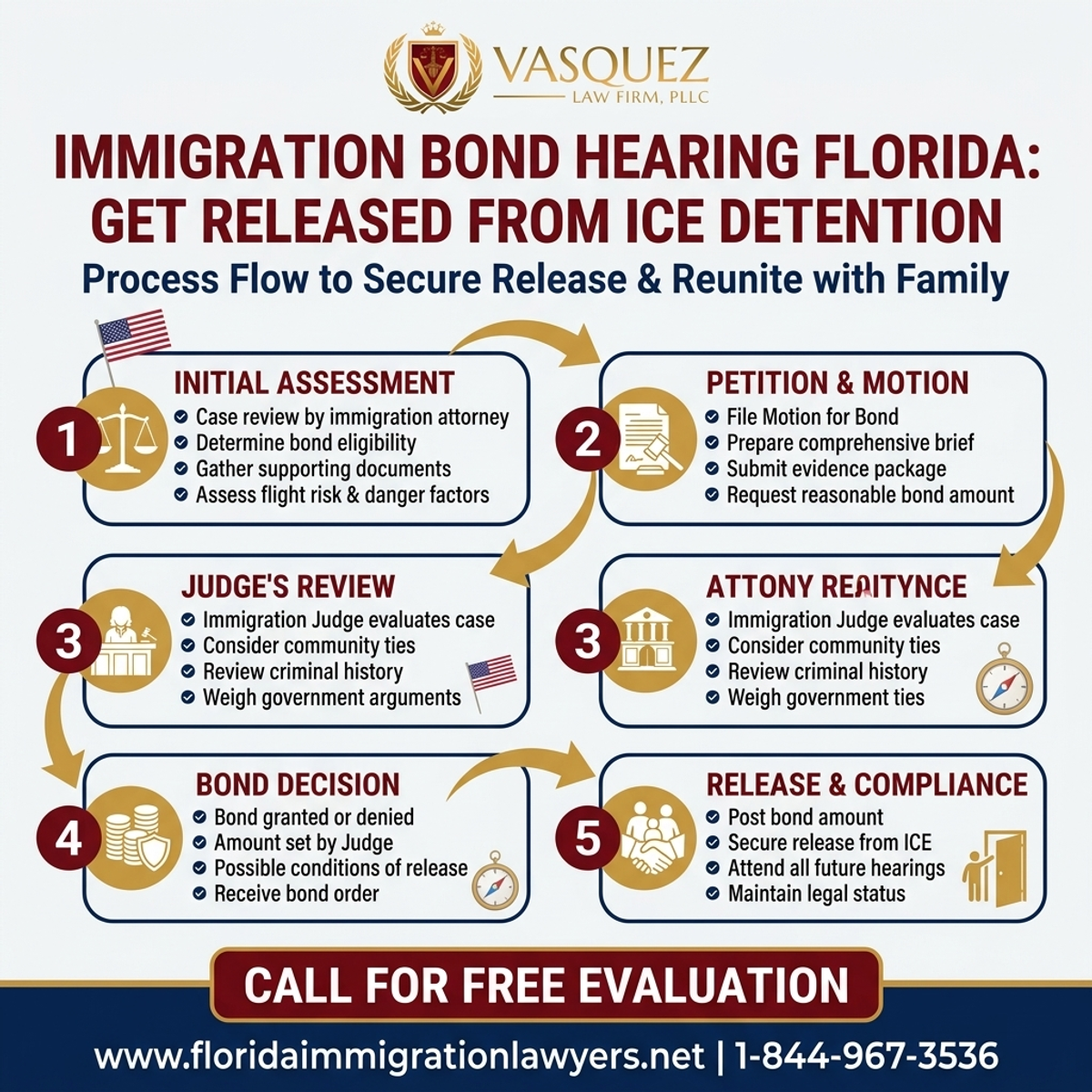
The process of securing an immigration bond can be intricate, but understanding each step can help alleviate some of the uncertainty. Here is a general guide to navigating an immigration bond hearing in Florida:
-
Initial Detention and Notice to Appear (NTA): When an individual is detained by ICE, they are typically issued a Notice to Appear (Form I-862). This document initiates removal proceedings and outlines the reasons why the government believes the individual should be deported. It also serves as notification of their first hearing before an Immigration Judge.
-
ICE Custody Determination: Following detention, ICE generally conducts an initial custody review. They may decide to release the individual on their own recognizance (without bond), set an administrative bond, or deny bond altogether. This initial decision is often made quickly and without extensive review of all mitigating factors.
-
Requesting an Immigration Bond Hearing: If ICE denies bond or sets an amount that is considered excessive, the detained individual or their attorney can formally request a bond hearing before an Immigration Judge. This request is usually made orally at the master calendar hearing or through a written motion. It is a fundamental right for eligible individuals.
-
Preparing for the Hearing: This is a critical stage. It involves gathering all relevant documents and evidence, identifying potential witnesses, and preparing arguments demonstrating that the individual is neither a flight risk nor a danger to the community. A lawyer will help strategize and organize this information effectively.
Step-by-Step Process — Immigration Bond Hearing Florida: Get Released from ICE Detention
-
Attending the Hearing: At the bond hearing, the Immigration Judge will hear arguments from both the detained individual's attorney and the government's attorney. The judge will review the evidence presented, consider the factors discussed previously, and then make a decision regarding bond eligibility and amount. The hearing typically takes place in an immigration court in Florida, such as the Orlando Immigration Court.
-
Posting the Bond and Release: If the judge grants a bond, the specified amount must be paid to ICE. This payment can be made by certified check or money order at an authorized ICE facility. Once the bond is posted and processed, the individual will be released from detention. The bond is a promise that the individual will appear for all future court dates.
What to Expect: The timeline for requesting and scheduling a bond hearing can vary. In Florida, it might take several weeks to a few months for a hearing to be scheduled after the initial request, depending on court dockets. Once a bond is granted and posted, release typically occurs within 24-72 hours, though this can sometimes be delayed by administrative processing.
Essential Documents and Evidence for Your Immigration Bond Hearing
Presenting compelling evidence is paramount to a successful immigration bond hearing in Florida. The goal is to demonstrate strong ties to the community, a reliable character, and no risk of flight or danger. Gathering these documents proactively can significantly strengthen your case.
Here is a list of essential documents and evidence that are typically helpful:
- Proof of Identity and Nationality: Passport, birth certificate, national ID card.
- Proof of Residence in Florida: Lease agreements, utility bills in the individual's name, property deeds (especially in Kissimmee or surrounding areas).
- Family Ties in the U.S.: Birth certificates of U.S. citizen children, marriage certificates to U.S. citizens or lawful permanent residents, affidavits of support from family members.
- Employment History: Letters from employers, pay stubs, tax returns, proof of business ownership.
- Financial Records: Bank statements, proof of assets, evidence of financial stability.
- Community Involvement: Letters of support from community leaders, religious figures, or friends vouching for the individual's character and commitment to the community.
- Medical Records: If the individual has significant health issues that would be better managed outside of detention.
- Criminal History Records (if applicable): Court dispositions, proof of rehabilitation, character references, especially if past issues are minor or old.
- Immigration History: Copies of previous visa applications, USCIS receipts, or any other immigration documents. This can be obtained from the USCIS website if you have access to their online tools.
- School Records: For children attending school in Florida, showing their dependence on the detained parent.
Organizing these documents clearly and concisely for the Immigration Judge is a key role of an experienced immigration attorney. They can help identify which documents are most persuasive and how to present them effectively.
Timeline, Processing Expectations, and Cost Factors for Immigration Bonds
Understanding the timelines, processing expectations, and associated costs is crucial when preparing for an immigration bond hearing in Florida. The entire process, from detention to potential release, can be emotionally and financially demanding.
Timeline and Processing Expectations
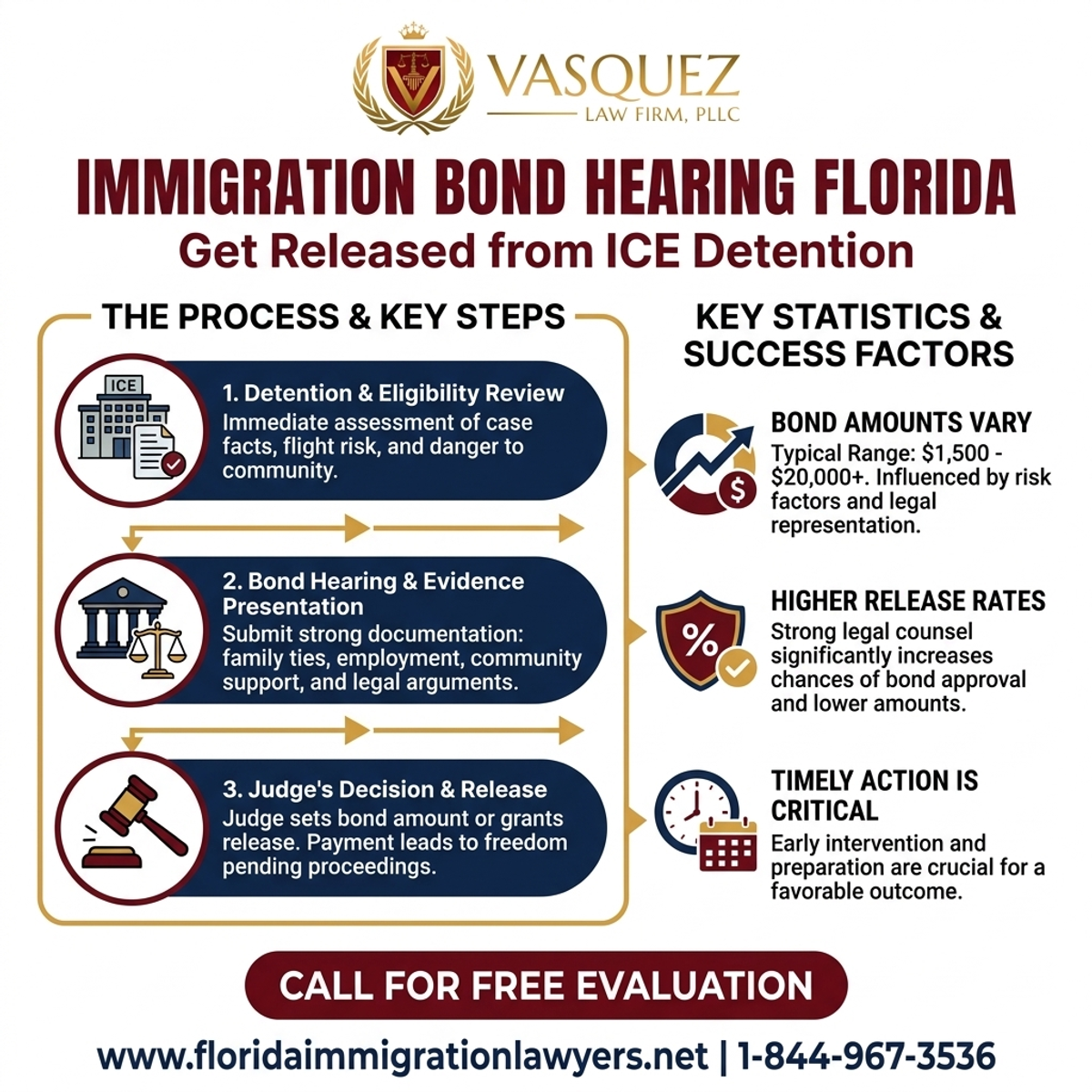
The journey from detention to a bond hearing is not always swift. After an individual is detained, ICE may take a few days to a few weeks to make an initial bond determination. If an Immigration Judge bond hearing is requested, it can take several weeks to a few months for the hearing to be scheduled, depending on the caseload of the specific immigration court in Florida (e.g., Orlando or Miami). Once a bond is granted by the judge, the actual process of posting the bond and securing release typically takes 24 to 72 hours, although administrative delays can sometimes extend this timeframe.
After the bond is posted, the individual is released with the understanding that they must appear for all future court dates. Failure to appear will result in the forfeiture of the bond money and potentially a new warrant for arrest. The bond is a guarantee of appearance, not a payment for freedom.
Key Statistics — Immigration Bond Hearing Florida: Get Released from ICE Detention
Cost Factors and Fee Breakdown
The cost of an immigration bond itself can vary significantly. Immigration Judges have broad discretion in setting bond amounts, generally ranging from $1,500 to $25,000 or even higher in more complex cases. Factors influencing the bond amount include the individual's flight risk, criminal history, and ties to the community. There are no standard fees, as each case is assessed individually. The bond amount is set to ensure the individual's appearance in court and is not a penalty.
Beyond the bond amount, other significant costs include legal fees for an attorney. An experienced immigration lawyer will charge for their services in preparing for and representing the individual at the bond hearing. These fees can vary based on the complexity of the case, the attorney's experience, and the amount of work involved. Additional costs might include fees for obtaining documents, translations, and travel expenses for witnesses. While these costs can be substantial, investing in legal representation often increases the likelihood of a successful outcome and can ultimately save money by avoiding prolonged detention.
The Role of a Qualified Florida Immigration Lawyer
Facing an immigration bond hearing in Florida without legal representation can significantly diminish your chances of a favorable outcome. The immigration system is notoriously complex, with intricate laws, regulations, and procedural requirements. An experienced Florida immigration lawyer serves as an invaluable advocate, guiding you through every step of the process and fighting tirelessly for your rights.
A qualified attorney will first assess eligibility for a bond hearing, determining if the individual is subject to mandatory detention or if they qualify for release. They will then help prepare a robust case, meticulously gathering all necessary documents and evidence, such as proof of strong ties to the Florida community, employment history, and family relationships. This often involves obtaining letters of support from employers, community leaders, and family members in Kissimmee, Orlando, or other parts of Florida.
During the hearing, your attorney will present a compelling argument to the Immigration Judge, highlighting why the individual is not a flight risk or a danger to the community. They will challenge any government claims and address any past issues, such as minor criminal infractions, to mitigate their impact. Furthermore, a lawyer can help negotiate with ICE attorneys, potentially leading to an agreed-upon bond amount or even release on recognizance. Beyond bond hearings, our firm also specializes in areas like deportation defense, asylum applications, and family immigration petitions, offering comprehensive legal support throughout your immigration journey.
Common Mistakes to Avoid in an Immigration Bond Hearing
Navigating an immigration bond hearing can be fraught with pitfalls. Avoiding these common mistakes can significantly improve your chances of a successful outcome:
-
Not Requesting a Hearing Promptly: Delaying the request for an Immigration Judge bond hearing can mean prolonged detention. Time is of the essence, and swift action can make a difference.
-
Attending Without Legal Counsel: Representing yourself in immigration court, especially in a bond hearing, is extremely difficult. The government has experienced attorneys, and you should too.
-
Failing to Gather Sufficient Evidence: A weak case with inadequate documentation of community ties, employment, or family support will likely result in a high bond or denial.
-
Providing Inconsistent Information: Any discrepancies in your statements or documents can damage your credibility with the Immigration Judge and government attorney.
-
Not Understanding Eligibility Criteria: Some individuals are subject to mandatory detention. Attempting to pursue a bond hearing when ineligible wastes time and resources.
-
Missing Court Dates After Release: If released on bond, failure to appear for any future court proceedings will lead to bond forfeiture and likely a new arrest warrant.
-
Discussing Your Case with ICE Without a Lawyer: Anything you say to ICE can be used against you. Always assert your right to remain silent and request an attorney.
-
Not Disclosing Criminal History: Attempting to hide or downplay past criminal convictions, even minor ones, will severely harm your credibility and case.
-
Failing to Highlight Strong Ties to Florida: Emphasizing your connections to Kissimmee, Orlando, or other Florida communities is crucial to demonstrate you are not a flight risk.
-
Believing a Bond is Guaranteed: A bond hearing is not a guarantee of release. The judge makes a discretionary decision based on the evidence presented and legal standards.
-
Not Preparing a Credible Witness: Having a reliable witness, often a family member or employer, testify about your character and ties to the community can be very impactful.
-
Not Understanding the Bond Payment Process: Knowing where and how to pay the bond, and the acceptable payment methods, is essential for timely release after a favorable decision.
When to Call a Lawyer for Your Immigration Bond Hearing in Florida
The moment you or a loved one is detained by ICE in Florida, it is time to call an experienced immigration lawyer. Early intervention by legal counsel can be critical in protecting rights and navigating the complex detention and bond process. Do not wait until a bond hearing is scheduled; proactive legal assistance can make a significant difference.
You should immediately contact Florida Immigration Lawyers if ICE has detained you or a family member, especially if an initial bond has been denied or set at an unreasonably high amount. If the detained individual has any past criminal history, no matter how minor, legal representation is even more crucial to address potential mandatory detention issues or to mitigate the impact of such history. Furthermore, if there are any complexities in the immigration history, such as prior deportations, asylum claims, or multiple entries, a lawyer's expertise is indispensable.
Our firm can help assess eligibility for bond, prepare and file the necessary motions, gather compelling evidence, and represent the detained individual vigorously before the Immigration Judge in Florida. We understand the specific nuances of immigration courts in Orlando, Miami, and Pompano Beach. Whether it's a matter of deportation defense, seeking asylum, or securing release, our team is committed to providing comprehensive legal support. Call us for a free consultation to discuss your specific situation.
About Florida Immigration Lawyers
Florida Immigration Lawyers is a leading immigration law firm dedicated to serving individuals and families across the entire state of Florida. With a deep understanding of U.S. immigration law and a compassionate approach, we provide exceptional legal representation for a wide range of immigration matters. Our experienced attorneys are committed to protecting your rights and achieving the best possible outcomes for your case.
We offer comprehensive services including general immigration assistance, asylum claims, deportation defense, citizenship applications, family-based immigration, and business immigration. We understand the unique challenges faced by immigrants in Florida, including those in Kissimmee and surrounding communities. Our firm is available 24/7 to provide immediate assistance and offers free consultations to help you understand your legal options.
Choose Florida Immigration Lawyers for dedicated, client-focused legal support. We pride ourselves on clear communication, strategic advocacy, and a commitment to justice. Visit our attorneys page to learn more about our team, or contact us directly through our website at www.floridaimmigrationlawyers.net. For immediate assistance, call us anytime at 1-844-967-3536.
Sources and References
- U.S. Citizenship and Immigration Services (USCIS)
- Executive Office for Immigration Review (EOIR)
- U.S. Department of State
- 8 U.S.C. § 1226(a) - Detention and Release of Aliens
- 8 CFR § 1236.1 - Bond and custody review
Related services: immigration waivers, humanitarian protection programs, DACA renewal and applications, temporary protected status (TPS).
This article provides general legal information and is not intended as legal advice. Every case is unique, and outcomes depend on specific facts and circumstances. Contact an attorney for advice about your particular situation.
If you or a loved one is facing an immigration bond hearing in Florida, do not delay. Your freedom and future are too important. Contact Florida Immigration Lawyers today for a free, confidential consultation. Our compassionate and skilled legal team is ready to assist you. Call us now at 1-844-967-3536. Se Habla Espanol - Estamos aqui para ayudarle.
Do Not Navigate This Process Alone
Our experienced immigration attorneys are ready to fight for you. Get a free, confidential consultation today.
Se Habla Español
Or leave your details and we’ll call you:
Free Evaluation in 24 Hours
Or talk to us right now

AI voice assistant — available 24/7
FreeFrequently Asked Questions

William J. Vásquez
Founding Attorney · Vasquez Law Firm
U.S. Air Force veteran and immigration attorney with years of hands-on U.S. immigration experience. J.D., NCCU School of Law. AILA member. Admitted to the 4th, 5th, and 11th Circuit Courts.
Available 24/7 - Free Evaluations
Reviewed for legal accuracy by William J. Vásquez
Licensed in North Carolina; U.S. immigration is federal practice.
Related Legal Services
Our Florida immigration attorneys can help you with family immigration services, immigration practice areas and free immigration consultation. Call today at 1-844-967-3536 for a free consultation.
Related Links
Related Topics
Free Legal Consultation
Discuss your case with our experienced attorneys. We're available 24/7.
Se Habla Español - Estamos aquí para ayudarle.
Related Articles
Stem OPT Immigration Lawyer: 2026 Florida Guide
For F-1 students in Florida, the STEM OPT extension offers a vital 24-month work authorization after their initial OPT. This guide, updated for 2026, covers eligibility, the step-by-step application process, required documents, and critical timelines. Graduates from Florida universities in STEM fields must navigate strict USCIS regulations, including the E-Verify employer requirement. Learn how to avoid common mistakes and when to seek professional legal assistance from a dedicated stem OPT immigration lawyer to ensure a successful application and continued career growth in the U.S. Florida Immigration Lawyers offers expert guidance for students across the state.
Dual Citizenship Lawyer: Navigating Delays in Florida
Facing citizenship delays in Florida can be challenging, but understanding the process and knowing your options is key. Learn how a dual citizenship lawyer can assist you in navigating N-400 processing and USCIS backlogs in Hialeah.
"ina § 208(a)(2)" One-Year Filing Deadline: Florida Asylum
Discover the importance of the "ina § 208(a)(2)" one-year filing deadline for asylum seekers in Florida. Learn about the steps, documents needed, and common mistakes to avoid in your asylum application process.
DV-2027 Registration Period: Your Green Card Lottery Guide
The DV-2027 Diversity Visa (DV) lottery offers a unique pathway to permanent residency for individuals from countries with historically low immigration rates to the U.S. Expected to open in Fall 2025, the registration period requires strict adherence to eligibility criteria, including country of birth and specific education or work experience. This guide from Florida Immigration Lawyers covers the step-by-step application process, essential documents, critical timelines, and associated costs. We highlight common mistakes to avoid and explain when legal counsel is indispensable, especially for residents in Florida. Understanding the nuances of the green card lottery is vital for a successful application. Contact us for expert guidance on your DV-2027 journey.