Immediate Relative Petition Tampa: Your 2026 Florida Guide
Securing a green card for your immediate relatives in Florida requires navigating a precise legal process. This 2026 guide focuses on the immediate relative petition, a pathway for U.S. citizens to sponsor spouses, unmarried children under 21, and parents. Unlike other categories, immediate relatives are exempt from visa quotas, potentially offering a faster route to permanent residency. From understanding eligibility criteria and filing Form I-130 to managing documentation and knowing what to expect in terms of processing times and costs, this article provides essential insights. We also highlight common mistakes to avoid and when legal counsel, particularly from Florida Immigration Lawyers in areas like Tampa or Pembroke Pines, becomes indispensable. Learn how to effectively unite your family and build a secure future in the United States.

An immediate relative petition in Florida allows U.S. citizens to sponsor their closest family members-spouses, unmarried children under 21, and parents-for a green card. This process, primarily initiated by filing Form I-130, Petition for Alien Relative, with USCIS, does not involve numerical visa limitations, often leading to a faster path to permanent residency compared to other family-based categories. As of 2026, understanding the specific eligibility criteria, required documentation, and processing nuances, especially in areas like Tampa or Pembroke Pines, is crucial for a successful application. Expert legal guidance can significantly streamline this complex journey.
- Immediate relatives include spouses, unmarried children under 21, and parents of U.S. citizens.
- The process begins with Form I-130 filed by the U.S. citizen petitioner.
- There are no annual visa quotas for immediate relatives, potentially speeding up the process.
- Specific documentation and strict eligibility must be met for approval.
- Seeking assistance from an experienced Florida immigration lawyer is highly recommended.
Navigating Your Immediate Relative Petition in Florida: A 2026 Guide
For many families across Florida, from the vibrant streets of Tampa to the growing communities of Pembroke Pines, the dream of uniting with loved ones permanently is a powerful motivator. If you are a U.S. citizen hoping to bring your spouse, unmarried child under 21, or parent to live lawfully in the United States, an immediate relative petition is often the most direct path. This process, governed by the U.S. Citizenship and Immigration Services (USCIS), prioritizes the closest family members of U.S. citizens, offering a unique avenue to permanent residency, or a green card, without the long wait times faced by other family categories.
As of 2026, the landscape of immigration law continues to evolve, making it more important than ever to understand the precise steps, requirements, and potential pitfalls involved in sponsoring an immediate relative. This comprehensive guide will walk you through everything you need to know, from eligibility and documentation to processing times and common mistakes, with a special focus on the experience for Florida residents. Don't navigate this crucial journey alone; secure your family's future with informed decisions and dedicated support. Call Florida Immigration Lawyers at 1-844-967-3536 for a free consultation and let us help you achieve your immigration goals.
What is an immediate relative petition in Florida?
An immediate relative petition is a specific category within U.S. immigration law designed to allow U.S. citizens to sponsor their closest family members for a green card. As defined by Section 201(b)(2)(A)(i) of the Immigration and Nationality Act (INA), immediate relatives include the spouse of a U.S. citizen, the unmarried child under 21 years of age of a U.S. citizen, and the parent of a U.S. citizen (provided the U.S. citizen petitioner is at least 21 years old). Unlike other family-based immigration categories, immediate relatives are exempt from numerical visa limitations, meaning there is no annual cap on the number of visas issued. This critical distinction typically results in a much faster path to obtaining lawful permanent residency.
For individuals residing in Florida, whether in Tampa, Miami, Orlando, or Pembroke Pines, the process follows federal guidelines, but local USCIS field offices and specific regional considerations can influence the experience. The primary step involves the U.S. citizen filing Form I-130, Petition for Alien Relative, with USCIS. This form establishes the qualifying relationship between the petitioner and the beneficiary. Once the I-130 is approved, the beneficiary can then apply for a green card either through Adjustment of Status if they are already in the U.S. and eligible, or through Consular Processing if they are abroad. Understanding these initial definitions and their implications is foundational to successfully navigating the immigration system in Florida.
Who is eligible for an immediate relative green card in 2026?
As of 2026, eligibility for an immediate relative green card is strictly defined by U.S. immigration law and hinges on the relationship to a U.S. citizen. To qualify as an immediate relative, the beneficiary must be one of the following: the spouse of a U.S. citizen, an unmarried child under 21 years of age of a U.S. citizen, or the parent of a U.S. citizen, provided the U.S. citizen is at least 21 years old. There are no other categories that fall under the immediate relative classification, which means siblings, married children, or children over 21 are not considered immediate relatives and fall into other, often quota-limited, family preference categories.
Beyond the relationship itself, both the U.S. citizen petitioner and the foreign national beneficiary must meet specific criteria. The U.S. citizen must demonstrate their citizenship, typically with a birth certificate, naturalization certificate, or U.S. passport. The relationship must be legitimate and proven with documentation such as marriage certificates, birth certificates, and divorce decrees from previous marriages if applicable. For spouses, the marriage must be bona fide, meaning entered into for love and companionship, not solely for immigration benefits. For parents and children, the biological or legal parent-child relationship must be established. Any previous immigration violations, criminal history, or issues of inadmissibility for the beneficiary can complicate or even bar eligibility, making a thorough review of their background essential.
How do I file Form I-130 for an immediate relative in Pembroke Pines?
Filing Form I-130 for an immediate relative in Pembroke Pines, or anywhere in Florida, involves a structured process to establish the qualifying family relationship. The U.S. citizen petitioner begins by accurately completing Form I-130, Petition for Alien Relative, ensuring all sections are filled out truthfully and completely. This form serves as the foundation for the entire immediate relative petition, asking for detailed information about both the petitioner and the beneficiary, as well as the nature of their relationship. Once the form is prepared, it must be accompanied by all necessary supporting documentation to prove U.S. citizenship and the bona fide relationship, such as birth certificates, marriage certificates, and evidence of shared life for spouses.
After gathering all documents and completing the form, the petitioner must pay the required filing fee. As of 2026, USCIS fees are subject to change, so always check the official USCIS website for the most current fee schedule. The completed Form I-130, along with all supporting documents and the fee, is then mailed to the appropriate USCIS Lockbox facility. The specific mailing address depends on where you live and the type of petition you are filing. For Florida residents, this typically means mailing to a designated USCIS Lockbox in a different state. It is crucial to follow the precise filing instructions provided on the USCIS website to avoid delays or rejections. Once USCIS receives the petition, they will issue a receipt notice, marking the official start of the processing timeline.
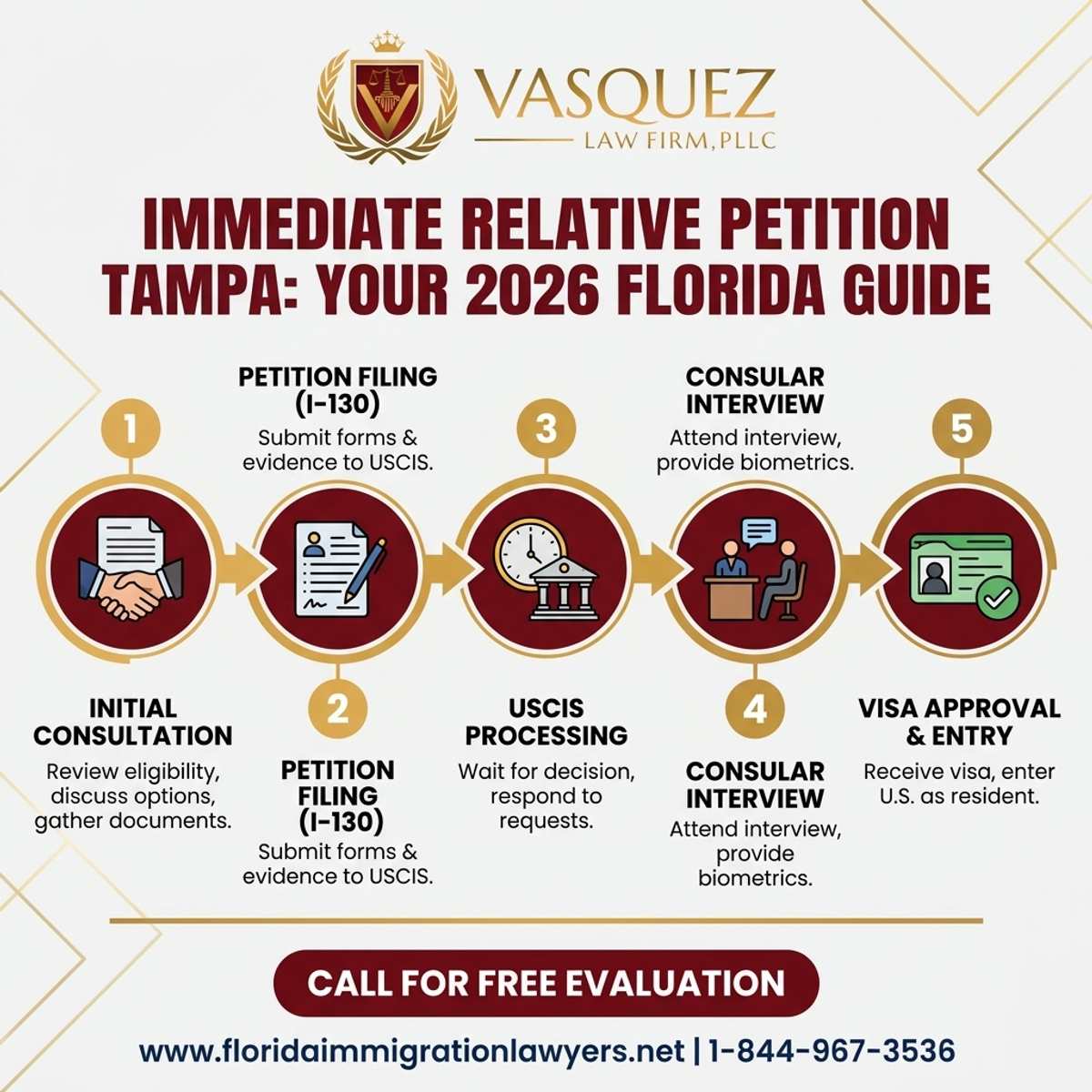
Step-by-Step Guide to the Immediate Relative Petition Process
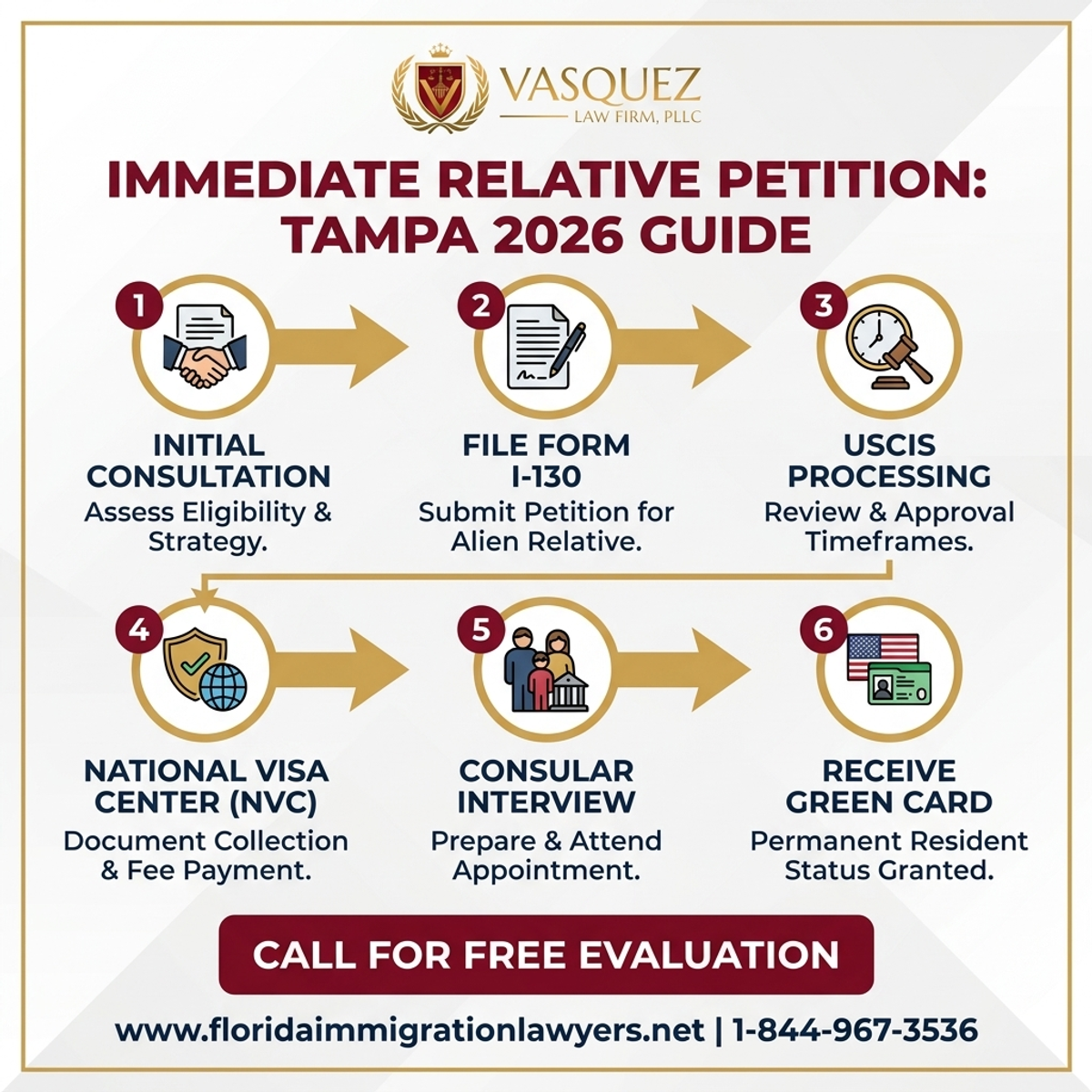
Navigating the immediate relative petition process can feel overwhelming, but breaking it down into clear steps helps. This guide outlines the typical journey for families in Florida:
- Establish Eligibility: First, confirm that the relationship between the U.S. citizen and the foreign national truly qualifies as an immediate relative (spouse, unmarried child under 21, or parent). Ensure the U.S. citizen is at least 21 to sponsor a parent. This foundational step prevents wasted time and resources on ineligible petitions.
- Gather Required Documents: Collect all necessary evidence to prove U.S. citizenship (e.g., birth certificate, passport, naturalization certificate) and the qualifying relationship (e.g., marriage certificate, birth certificate, divorce decrees, joint financial documents, photos, affidavits). Incomplete documentation is a leading cause of delays.
- File Form I-130, Petition for Alien Relative: The U.S. citizen petitioner completes and signs Form I-130, attaches all supporting documents, and pays the filing fee. Mail the package to the appropriate USCIS Lockbox facility. It is critical to use the exact mailing address specified by USCIS for your specific filing location to avoid misdelivery.
- USCIS Processing of Form I-130: USCIS will send a receipt notice (Form I-797C, Notice of Action) confirming they received your petition. They will then review the petition and supporting evidence to determine if the relationship is legitimate and if the petitioner is eligible to sponsor. This stage may involve requests for additional evidence (RFE).
-
I-130 Approval and Next Steps: If approved, USCIS sends an I-797 approval notice. At this point, the process diverges based on whether the beneficiary is inside or outside the U.S.
- If the beneficiary is already in the U.S. (Adjustment of Status): If the beneficiary entered legally and maintains their status, and no bars to adjustment apply, they can file Form I-485, Application to Register Permanent Residence or Adjust Status, concurrently with or after the I-130 approval. This is often filed with Forms I-765 (Employment Authorization) and I-131 (Advance Parole).
- If the beneficiary is outside the U.S. (Consular Processing): The approved I-130 is sent to the National Visa Center (NVC). The NVC will then instruct the beneficiary to pay fees, submit additional documents (Form DS-260, Affidavit of Support), and undergo a medical exam and interview at a U.S. Embassy or Consulate in their home country.
- Interview: For Adjustment of Status, an interview will typically be scheduled at a local USCIS field office, such as the one in Tampa or Miami. For Consular Processing, the interview takes place at the U.S. Embassy or Consulate abroad. During the interview, immigration officials will verify the information provided and assess the legitimacy of the relationship.
- Decision and Green Card Issuance: After a successful interview and final background checks, the application will be approved. For Adjustment of Status, the green card will be mailed. For Consular Processing, the visa will be issued, allowing the beneficiary to enter the U.S. as a lawful permanent resident, and the green card will be mailed shortly after entry.
Document Checklist for Immediate Relative Petitions
A complete and accurate submission of documents is critical for the success of your immediate relative petition. Missing or incorrect documents can lead to significant delays or even denial. Always provide certified copies of original documents unless USCIS specifically requests the original. If any document is not in English, it must be accompanied by a complete English translation certified by a competent translator.
Step-by-Step Process — Immediate Relative Petition Tampa: Your 2026 Florida Guide
- Proof of U.S. Citizenship of Petitioner:
- Copy of U.S. birth certificate
- Copy of U.S. passport
- Copy of Certificate of Naturalization (Form N-550 or N-570)
- Copy of Certificate of Citizenship (Form N-560 or N-561)
- Proof of Relationship:
- For Spouses: Copy of marriage certificate, copies of divorce decrees or death certificates for any previous marriages of either spouse, and extensive evidence of a bona fide marriage (joint bank accounts, utility bills, leases, photos, affidavits from friends/family, birth certificates of shared children).
- For Children: Copy of the child's birth certificate showing the U.S. citizen as a parent. If child was born out of wedlock and petitioner is father, proof of legitimation or bona fide parent-child relationship.
- For Parents: Copy of the U.S. citizen's birth certificate showing the beneficiary as a parent. If U.S. citizen was born out of wedlock and beneficiary is father, proof of legitimation or bona fide parent-child relationship.
- Petitioner's Financial Support Documents:
- Form I-864, Affidavit of Support (for subsequent stages, not I-130 filing).
- Tax returns, W-2s, pay stubs, and employment verification letters.
- Beneficiary's Documents (for Adjustment of Status or Consular Processing):
- Copy of birth certificate
- Copy of passport biographical page
- Copies of all previous visas and I-94 arrival/departure records
- Police clearances from all countries resided in since age 16 (for consular processing)
- Medical examination results (completed by a USCIS-approved civil surgeon)
- Photographs: Passport-style photos for both petitioner and beneficiary, as specified by USCIS.
What are the processing times for immediate relative petitions in 2026?
As of 2026, the processing times for immediate relative petitions can vary significantly based on several factors, including the specific USCIS service center handling the Form I-130 petition, the completeness of the application, and the current USCIS workload. Unlike other family preference categories, immediate relatives do not face visa backlogs due to annual quotas, which generally makes their path to a green card quicker once the I-130 is approved. However, the initial I-130 processing can still take several months to over a year. After I-130 approval, the subsequent step-whether Adjustment of Status in the U.S. or Consular Processing abroad-adds its own timeline.
For Adjustment of Status cases filed in Florida, after the I-130 is approved (or filed concurrently), the I-485 application for a green card typically involves biometric appointments, potential requests for evidence, and an interview at a local USCIS field office, such as the one in Tampa, Miami, or Orlando. These steps can add another 8 to 18 months, or even longer in complex cases. For Consular Processing, after I-130 approval and NVC processing, the interview scheduling at a U.S. Embassy or Consulate abroad depends on the specific country's consulate workload, which can range from a few months to over a year. Always check the USCIS Processing Times tool on their website for the most up-to-date estimates for your specific form and filing location.
| Stage | Typical Timeframe (As of 2026) | Notes |
|---|---|---|
| Form I-130 Processing | 8-15 months | Varies by USCIS service center; check USCIS website for current estimates. |
| National Visa Center (NVC) Processing (Consular Processing) | 2-6 months | After I-130 approval, NVC collects documents and fees before forwarding to consulate. |
| Consular Interview Scheduling | 3-12 months (or longer) | Highly dependent on the workload of the specific U.S. Embassy/Consulate abroad. |
| Adjustment of Status (Form I-485) Processing (within U.S.) | 8-18 months | Includes biometrics, interview at a local USCIS field office (e.g., Tampa, Miami), and final decision. |
| Work Permit (EAD) & Travel Permit (Advance Parole) (filed with I-485) | 4-10 months | Often issued while I-485 is pending, allowing beneficiary to work and travel. |
What are the costs associated with an immediate relative petition?
The costs associated with an immediate relative petition involve various fees paid to USCIS and potentially other government agencies. As of 2026, these fees are subject to change, and it is crucial to consult the official USCIS website for the most current fee schedule before filing. The primary fee is for filing Form I-130, Petition for Alien Relative. This fee is paid at the beginning of the process. If the beneficiary is adjusting status within the U.S., there will be additional fees for Form I-485, Application to Register Permanent Residence or Adjust Status, which often includes the biometric services fee and sometimes the fees for employment authorization (Form I-765) and travel authorization (Form I-131) if filed concurrently.
For beneficiaries undergoing Consular Processing abroad, instead of the I-485 fee, there will be a visa application processing fee paid to the Department of State and an Affidavit of Support fee. Additionally, all beneficiaries, whether adjusting status or consular processing, will need to undergo a mandatory medical examination by a USCIS-approved civil surgeon or panel physician. The cost of this exam is paid directly to the medical provider and can vary significantly. Other potential costs include translation fees for non-English documents, fees for obtaining birth or marriage certificates, and crucially, attorney fees for legal representation. While not mandatory, legal counsel can be a significant investment to ensure accuracy and avoid costly mistakes, especially for families in Florida seeking to navigate the process effectively.
| Item | Typical Fee (As of 2026) | Notes |
|---|---|---|
| Form I-130, Petition for Alien Relative | ~$535 - $625 | Paid by the U.S. citizen petitioner to USCIS. Check current fees. |
| Form I-485, Application to Adjust Status (includes biometrics) | ~$1,225 - $1,440 | Paid by beneficiary if adjusting status in the U.S. Includes EAD/AP if filed concurrently. |
| Immigrant Visa Application Processing Fee (DS-260) | ~$325 | Paid by beneficiary to the Department of State for consular processing. |
| Affidavit of Support Fee | ~$120 | Paid to the National Visa Center (NVC) for consular processing. |
| Medical Examination | ~$200 - $500+ | Paid directly to the civil surgeon/panel physician; varies by provider and location in Florida. |
| USCIS Immigrant Fee | ~$220 | Paid after visa approval for consular processing, before green card issuance. |
| Attorney Fees | Varies widely | Depends on complexity of case and firm. Essential for proper guidance. |
| Document Translation/Preparation | Varies | Costs for certified translations of non-English documents and obtaining vital records. |
Key Statistics — Immediate Relative Petition Tampa: Your 2026 Florida Guide
Do not navigate this complex process alone. The stakes are high, and even minor errors can lead to significant delays or denials. Contact Florida Immigration Lawyers today for expert guidance and peace of mind. Our team is ready to assist you.
Common Mistakes to Avoid in Immediate Relative Petitions
Navigating the immediate relative petition process can be intricate, and even seemingly small errors can lead to significant delays, requests for evidence (RFEs), or even outright denials. Avoiding these common mistakes is crucial for a smooth application process, especially for families in Florida.
- Filing an Incomplete Form I-130: Failing to fill out every required field on Form I-130, or omitting signatures, is a common reason for USCIS to reject or return a petition. This forces you to restart, delaying the process by weeks or months. Ensure all sections are completed accurately and signed by the petitioner.
- Insufficient Proof of Relationship: For spousal petitions, merely providing a marriage certificate is often not enough. USCIS requires extensive evidence of a bona fide marriage, such as joint bank accounts, leases, utility bills, insurance policies, photos, and affidavits. Lack of comprehensive proof can lead to an RFE or interview scrutiny.
- Incorrect Filing Fees: USCIS fees change periodically. Submitting an incorrect fee amount will result in the rejection of your petition. Always check the USCIS website for the most current fees immediately before mailing your application. This simple oversight causes unnecessary delays.
- Failure to Provide Certified Translations: Any document not in English, such as a foreign birth or marriage certificate, must be accompanied by a complete and certified English translation. Without this, USCIS cannot process your documents, leading to delays or rejections.
- Not Disclosing All Marriages or Divorces: Both the petitioner and beneficiary must disclose all prior marriages and provide proof of termination (divorce decrees or death certificates). Failure to do so can raise red flags about the legitimacy of the current marriage and lead to fraud accusations.
- Beneficiary's Inadmissibility Issues: Not addressing potential issues of inadmissibility (e.g., criminal history, past immigration violations, certain health conditions) upfront can lead to denial. Many inadmissibility grounds can be waived, but only if properly identified and addressed with a waiver application.
- Missing the Affidavit of Support (Form I-864): While not filed with the initial I-130, the I-864 is critical for the green card stage. The petitioner must meet specific income thresholds or find a qualified joint sponsor. Failure to submit a properly completed I-864 or meet financial requirements will halt the process.
- Not Updating USCIS of Address Changes: If either the petitioner or beneficiary moves, USCIS must be notified within 10 days using Form AR-11. Failure to do so can result in missed notices, interview appointments, or RFEs, leading to significant problems and delays.
- Providing Inconsistent Information: Any discrepancies between information provided on the I-130, I-485, or during interviews can raise suspicion. Ensure all forms and statements are consistent and truthful. Inconsistencies can lead to intense scrutiny or even fraud investigations.
- Ignoring RFEs or NOIDs: If USCIS sends a Request for Evidence (RFE) or a Notice of Intent to Deny (NOID), it is critical to respond fully and within the specified deadline. Ignoring these notices will almost certainly lead to a denial of the petition.
- Not Preparing for the Interview: Many petitioners and beneficiaries underestimate the importance of the interview. Both parties should be prepared to answer questions about their relationship and immigration history truthfully and consistently. Lack of preparation can undermine the legitimacy of the petition.
When to Call a Lawyer for Your Immediate Relative Petition
While the immediate relative petition process may seem straightforward on the surface, its complexities often necessitate professional legal guidance. You should strongly consider contacting an experienced immigration lawyer, especially Florida Immigration Lawyers, if any of the following scenarios apply to your situation. An attorney can help you navigate the intricacies of U.S. immigration law, ensuring your application is accurate and complete, and mitigating potential risks.
You should call a lawyer if the beneficiary has any past immigration violations, such as overstaying a visa, unlawful entry, or previous deportations. These issues can trigger grounds of inadmissibility that require waivers, a highly complex process best handled by legal experts. Similarly, if either the petitioner or beneficiary has a criminal record, even minor offenses, it could impact eligibility and require careful legal analysis. Furthermore, if you have had previous immigration petitions denied or revoked, or if there are any doubts about the legitimacy of your marriage or relationship (e.g., a significant age difference, cultural differences, or a short marriage), a lawyer can help prepare a strong case and gather robust evidence to satisfy USCIS requirements. For those in Pembroke Pines, Tampa, or anywhere in Florida, our attorneys at Florida Immigration Lawyers understand the local USCIS procedures and can provide tailored advice. Don't risk your family's future; seek professional assistance.
About Florida Immigration Lawyers
Florida Immigration Lawyers is a leading law firm dedicated to providing comprehensive immigration solutions to individuals and families across the entire state of Florida. With a deep understanding of U.S. immigration law and a compassionate approach, our experienced attorneys are committed to helping you achieve your immigration goals, from family-based petitions and green card applications to asylum claims and deportation defense. We pride ourselves on offering personalized legal strategies tailored to each client's unique circumstances.
Our firm serves clients in all Florida communities, including Pembroke Pines, Tampa, Miami, Orlando, and Jacksonville. We understand the challenges and anxieties that often accompany immigration processes, and we are here to provide clear guidance and unwavering support every step of the way. We offer free consultations to discuss your case and are available 24/7 to answer your questions. Choose Florida Immigration Lawyers for dedicated advocacy and expert legal representation. Visit our website at www.floridaimmigrationlawyers.net or call us directly at 1-844-967-3536 to learn how we can assist you.
Sources and References
- U.S. Citizenship and Immigration Services (USCIS)
- U.S. Department of State (travel.state.gov)
- Executive Office for Immigration Review (EOIR)
- 8 U.S.C. Chapter 12 - Immigration and Nationality Act (INA) Section 201(b)(2)(A)(i)
- 8 CFR Part 204 - Petitions for Alien Relatives
- USCIS Policy Manual
Related services: family petition process, family-based green cards, fiancé visa (K-1).
This article provides general legal information and is not intended as legal advice. Every case is unique, and outcomes depend on specific facts and circumstances. Contact an attorney for advice about your particular situation.
Don't leave your family's future to chance. Take the first step towards securing permanent residency for your loved ones. Contact Florida Immigration Lawyers today for a free, confidential consultation. Our experienced team is ready to provide the legal support you need. Call us at 1-844-967-3536. Se Habla Espanol - Estamos aqui para ayudarle.
If you need legal assistance, learn more about how our family immigration attorneys can help, or call us at 1-844-967-3536 for a free consultation.
Do Not Navigate This Process Alone
Our experienced immigration attorneys are ready to fight for you. Get a free, confidential consultation today.
Se Habla Español
Or leave your details and we’ll call you:
Free Evaluation in 24 Hours
Or talk to us right now
AI voice assistant — available 24/7
FreeFrequently Asked Questions

William J. Vásquez
Founding Attorney · Vasquez Law Firm
U.S. Air Force veteran and immigration attorney with years of hands-on U.S. immigration experience. J.D., NCCU School of Law. AILA member. Admitted to the 4th, 5th, and 11th Circuit Courts.
Available 24/7 - Free Evaluations
Reviewed for legal accuracy by William J. Vásquez
Licensed in North Carolina; U.S. immigration is federal practice.
Related Legal Services
Our Florida immigration attorneys can help you with experienced immigration attorneys, business immigration and asylum protection. Call today at 1-844-967-3536 for a free consultation.
Related Links
Related Topics
Free Legal Consultation
Discuss your case with our experienced attorneys. We're available 24/7.
Se Habla Español - Estamos aquí para ayudarle.
Related Articles
Immigration Lawyer Orlando Free Consultation 2026
Discover how to find an immigration lawyer in Orlando offering a free consultation. Understand the services available and why choosing Florida Immigration Lawyers can make a difference in your case.
Military Naturalization Expedited in Florida Bases
Explore military naturalization options for families at Florida bases, including parole in place benefits in Miami. Learn how to expedite your application with expert guidance from Florida Immigration Lawyers.
K-3 Visa Timeline in Florida: What to Expect
Learn the K-3 visa timeline process in Florida, including steps, costs, and documentation. Understand your options in 2026 with guidance from Florida Immigration Lawyers.
Adjustment of Status Gulfport FL: 2026 Green Card Guide
For foreign nationals in Gulfport, FL, and across Florida, adjusting status offers a path to a green card without leaving the U.S. This comprehensive 2026 guide details eligibility, the I-485 application process, required documents, typical timelines, and associated costs. Learn about family-based and employment-based adjustments, waivers for inadmissibility, and life while your application is pending. Avoid common mistakes and understand when to seek expert legal counsel. Florida Immigration Lawyers provides compassionate guidance for your journey to permanent residency.