Immediate Relative Petition Florida: A Comprehensive Guide
Learn about the Immediate Relative Petition in Florida, a crucial step for U.S. citizens to sponsor family members. This guide covers eligibility, documentation, and timelines to help you navigate the process successfully.
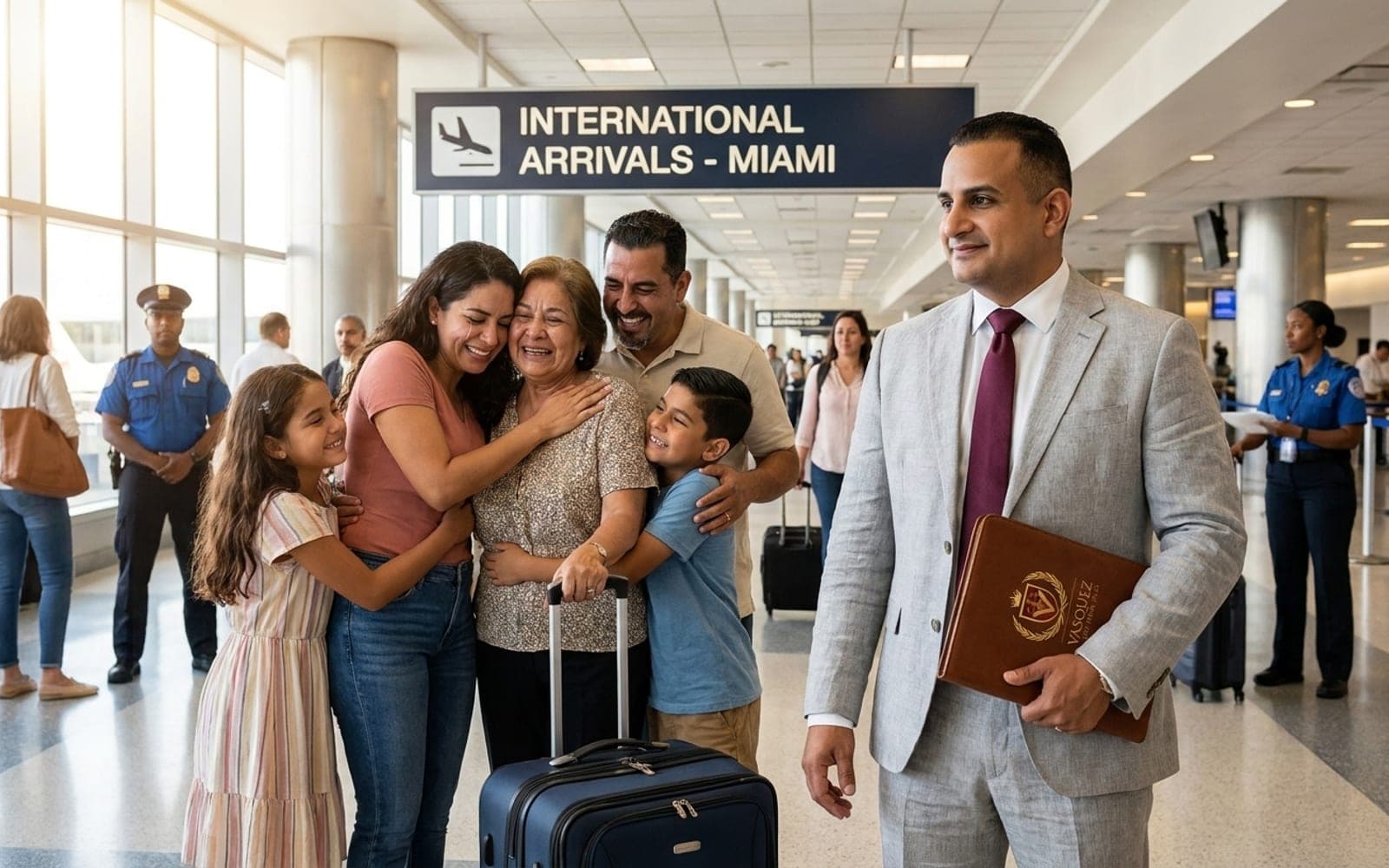
An Immediate Relative Petition in Florida is a vital process for U.S. citizens seeking to sponsor close family members for a green card. The process involves filing an I-130 form with U.S. Citizenship and Immigration Services (USCIS). Key aspects include eligibility, required documents, and understanding processing timelines. Navigating this process correctly is crucial for success.
- Immediate relatives include spouses, parents, and unmarried children under 21.
- Filing the I-130 form is the first step.
- Processing times can vary, but a well-prepared application helps.
Introduction
Imagine reuniting with your loved ones in the beautiful city of Hollywood, Florida. For many, this dream starts with the Immediate Relative Petition, a crucial step in the family immigration process. This article provides a thorough guide to help you understand and navigate the complexities of the I-130 petition process. You'll learn about the eligibility requirements, documentation, and common pitfalls to avoid. Call Florida Immigration Lawyers at 1-844-967-3536 for a free consultation to ensure your case is handled with care.
Understanding the Immediate Relative Petition
The Immediate Relative Petition is a pathway for U.S. citizens to bring their close family members to the United States. This category, under the Immigration and Nationality Act (INA), includes spouses, unmarried children under 21, and parents of U.S. citizens. Unlike other family categories, there are no annual quotas, which generally means shorter wait times.
In Florida, particularly areas like Hollywood, the demand for family immigration services is high due to the state's diverse population. The process begins with filing Form I-130 with USCIS, a critical step to establishing the qualifying relationship. Understanding the nuances of this form can significantly impact the success of your petition.
Step-by-Step Guide to Filing an I-130
- Prepare Your Documents: Gather evidence of your U.S. citizenship and proof of your relationship with the beneficiary, such as marriage certificates or birth certificates.
- Complete Form I-130: Carefully fill out the form, ensuring all information is accurate and complete.
- Submit the Application: Mail the completed form along with the supporting documents to the USCIS lockbox facility as instructed.
- Receive Confirmation: USCIS will send a receipt notice, which includes your case number for tracking purposes.
- Attend the Interview: If required, you and your relative may need to attend an interview at a local USCIS office, often in nearby cities like Miami or Fort Lauderdale.
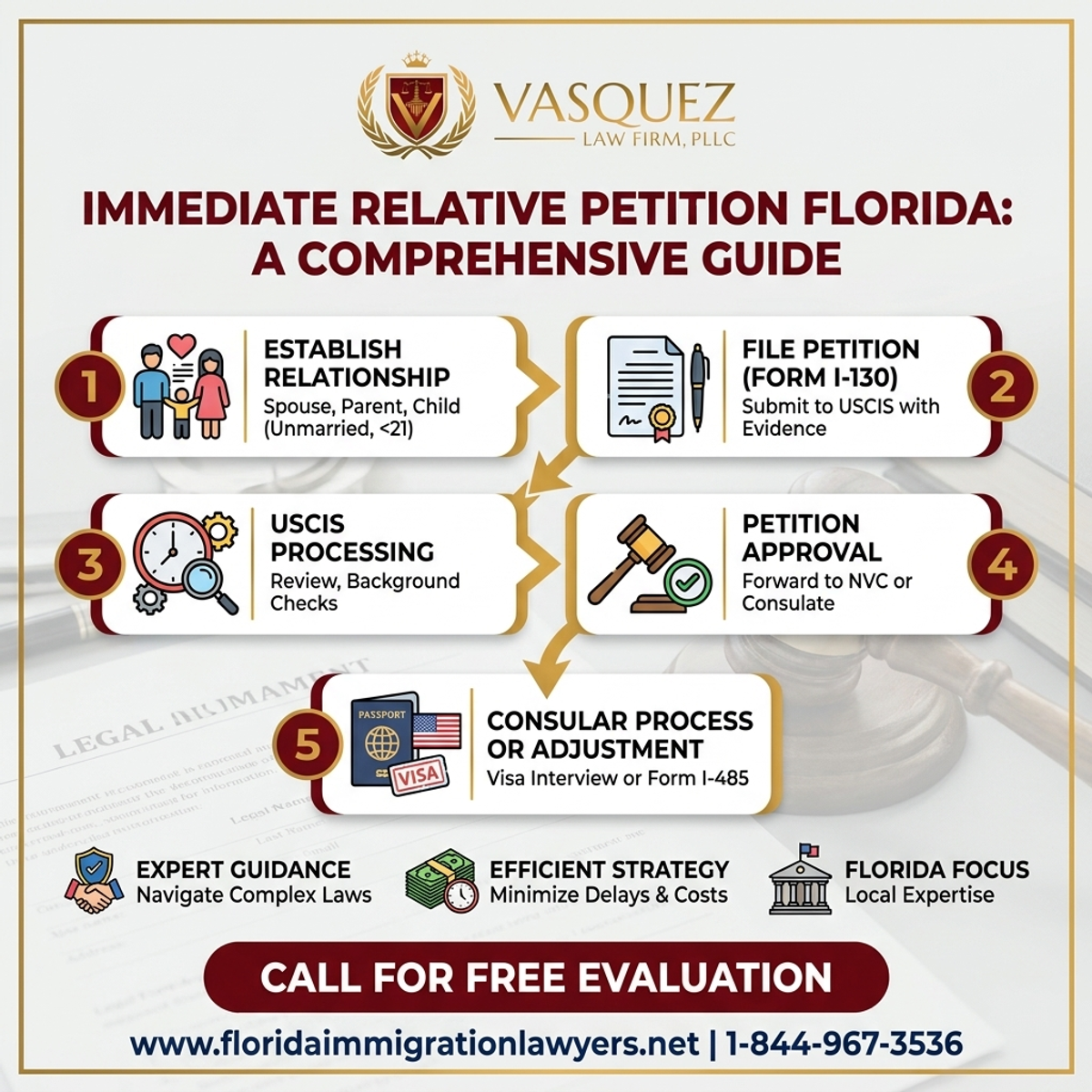
Step-by-Step Process — Immediate Relative Petition Florida: A Comprehensive Guide
Document Checklist for I-130 Petition
- Proof of U.S. citizenship (e.g., passport, birth certificate)
- Proof of relationship (e.g., marriage certificate, birth certificate)
- Photographs of the petitioner and beneficiary
- Any previous legal documents if applicable (e.g., divorce decrees)
- Filing fee receipt
Timeline and Processing Expectations
The processing time for an Immediate Relative Petition can vary, but typically ranges from 7 to 12 months. Factors influencing the timeline include the service center's workload and the completeness of your application. It's crucial to monitor your case status through the USCIS website using your receipt number.
Given recent changes in immigration policies and Supreme Court rulings, staying informed about potential impacts on processing times is essential. The Hollywood USCIS office's local processing trends can also provide insights.
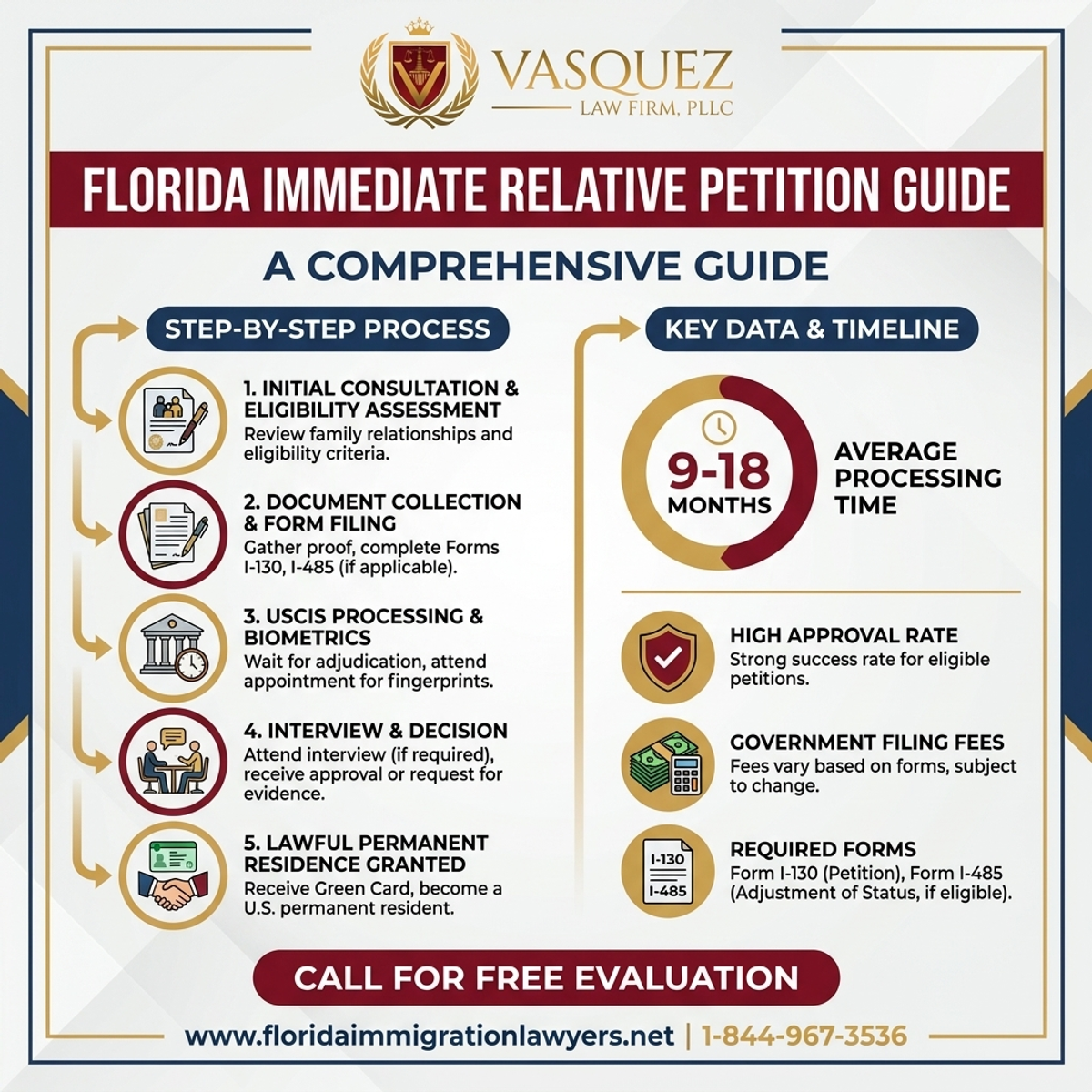
Key Statistics — Immediate Relative Petition Florida: A Comprehensive Guide
Cost Factors and Fee Breakdown
While the filing fee for Form I-130 is a fixed amount, additional costs may arise. These can include fees for obtaining documents, translation services, and potential legal assistance. Budgeting for these expenses is advisable to avoid delays.
Consulting with an immigration attorney can help you understand potential costs and streamline the process, ensuring compliance with all requirements.
Do not navigate this process alone. Contact Florida Immigration Lawyers today.
Common Mistakes to Avoid
- Incorrect Form Completion: Errors can lead to delays or denials. Double-check all entries before submission.
- Insufficient Documentation: Failing to provide adequate proof of relationship can result in a denial.
- Missing Deadlines: Not responding to USCIS requests in a timely manner can harm your case.
- Failure to Update USCIS: Not informing USCIS of address changes might lead to missed notifications.
- Ignoring Legal Advice: Attempting the process without professional guidance can result in costly mistakes.
- Overlooking Translation Needs: All non-English documents must be translated, a requirement often missed.
- Not Keeping Copies: Always keep copies of submitted forms and correspondence for your records.
When to Call a Lawyer
Engaging an immigration lawyer is advisable if you encounter complex issues, such as previous denials or inadmissibility concerns. Legal professionals can provide tailored advice and represent you in interactions with USCIS.
Florida Immigration Lawyers offer comprehensive services to guide you through every step of the process, ensuring you meet all legal requirements and deadlines.
About Florida Immigration Lawyers
Florida Immigration Lawyers are dedicated to providing top-tier immigration services across the state. Whether you need assistance with family immigration, deportation defense, or business immigration, our experienced team is here to help. Our firm offers 24/7 availability and free consultations, ensuring that your immigration needs are met with professionalism and care. Call us at 1-844-967-3536 or visit our website.
Sources and References
- U.S. Citizenship and Immigration Services (USCIS)
- Executive Office for Immigration Review (EOIR)
- 8 U.S.C. Chapter 12 - Immigration and Nationality Act
- State Department
Related services: family petition process, family-based green cards, fiancé visa (K-1), marriage-based immigration.
This article provides general legal information and is not intended as legal advice. Every case is unique, and outcomes depend on specific facts and circumstances. Contact an attorney for advice about your particular situation.
For personalized assistance, contact Florida Immigration Lawyers at 1-844-967-3536. Se Habla Español - Estamos aquí para ayudarle.
If you need legal assistance, learn more about family immigration consultation, or call us at 1-844-967-3536 for a free consultation.
Do Not Navigate This Process Alone
Our experienced immigration attorneys are ready to fight for you. Get a free, confidential consultation today.
Se Habla Español
Or leave your details and we’ll call you:
Free Evaluation in 24 Hours
Or talk to us right now
AI voice assistant — available 24/7
FreeFrequently Asked Questions

William J. Vásquez
Founding Attorney · Vasquez Law Firm
U.S. Air Force veteran and immigration attorney with years of hands-on U.S. immigration experience. J.D., NCCU School of Law. AILA member. Admitted to the 4th, 5th, and 11th Circuit Courts.
Available 24/7 - Free Evaluations
Reviewed for legal accuracy by William J. Vásquez
Licensed in North Carolina; U.S. immigration is federal practice.
Related Legal Services
Our Florida immigration attorneys can help you with citizenship and naturalization, family immigration services and immigration practice areas. Call today at 1-844-967-3536 for a free consultation.
Related Links
Related Topics
Free Legal Consultation
Discuss your case with our experienced attorneys. We're available 24/7.
Se Habla Español - Estamos aquí para ayudarle.
Related Articles
Stem OPT Immigration Lawyer: 2026 Florida Guide
For F-1 students in Florida, the STEM OPT extension offers a vital 24-month work authorization after their initial OPT. This guide, updated for 2026, covers eligibility, the step-by-step application process, required documents, and critical timelines. Graduates from Florida universities in STEM fields must navigate strict USCIS regulations, including the E-Verify employer requirement. Learn how to avoid common mistakes and when to seek professional legal assistance from a dedicated stem OPT immigration lawyer to ensure a successful application and continued career growth in the U.S. Florida Immigration Lawyers offers expert guidance for students across the state.
Dual Citizenship Lawyer: Navigating Delays in Florida
Facing citizenship delays in Florida can be challenging, but understanding the process and knowing your options is key. Learn how a dual citizenship lawyer can assist you in navigating N-400 processing and USCIS backlogs in Hialeah.
"ina § 208(a)(2)" One-Year Filing Deadline: Florida Asylum
Discover the importance of the "ina § 208(a)(2)" one-year filing deadline for asylum seekers in Florida. Learn about the steps, documents needed, and common mistakes to avoid in your asylum application process.
DV-2027 Registration Period: Your Green Card Lottery Guide
The DV-2027 Diversity Visa (DV) lottery offers a unique pathway to permanent residency for individuals from countries with historically low immigration rates to the U.S. Expected to open in Fall 2025, the registration period requires strict adherence to eligibility criteria, including country of birth and specific education or work experience. This guide from Florida Immigration Lawyers covers the step-by-step application process, essential documents, critical timelines, and associated costs. We highlight common mistakes to avoid and explain when legal counsel is indispensable, especially for residents in Florida. Understanding the nuances of the green card lottery is vital for a successful application. Contact us for expert guidance on your DV-2027 journey.