I-360 Widow Self-Petition in Florida: A Guide
If you're a widow or widower of a U.S. citizen in Florida, you may be eligible to self-petition for a green card using Form I-360. Learn about the process, requirements, and how Florida Immigration Lawyers can assist you.
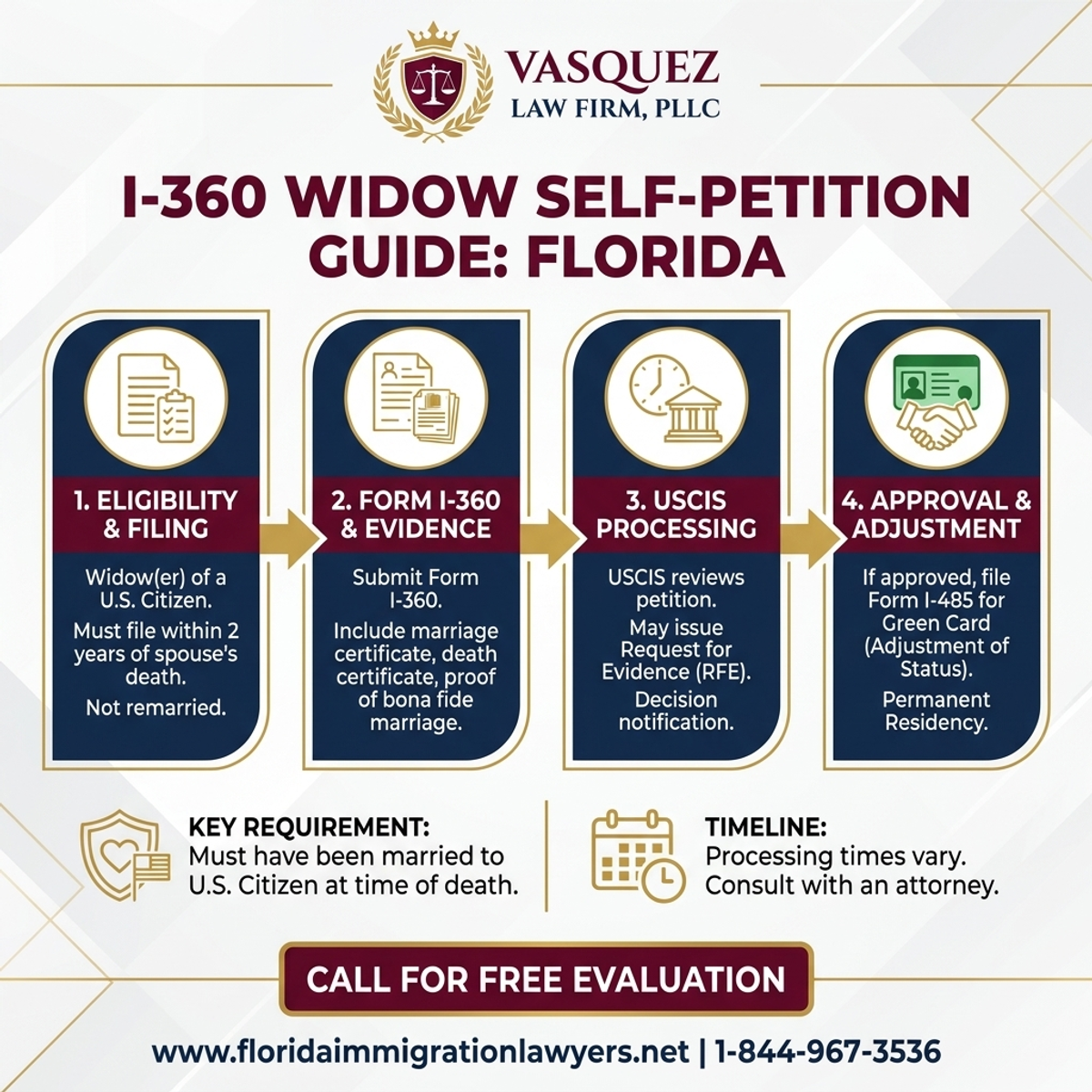
- I-360 petition must be filed within two years of your spouse's death.
- You must have been married to the deceased U.S. citizen at the time of their death.
- Filing allows for possible adjustment of status if you meet other eligibility criteria.
Introduction
Losing a spouse is a devastating experience, and if your partner was a U.S. citizen, you might be facing not only emotional but also immigration challenges. The I-360 widow self-petition offers a path forward for widows and widowers in Florida, allowing them to seek lawful permanent residence independently. In this article, we will guide you through the process, requirements, and potential pitfalls of the I-360 petition. Call Florida Immigration Lawyers at 1-844-YO-PELEO for a free consultation.
Understanding the I-360 Widow Self-Petition
The I-360 petition is a critical option for widows and widowers of U.S. citizens, enabling them to pursue a green card without needing a family sponsor. This petition is part of the Immigration and Nationality Act (INA) and is particularly relevant to residents of Florida, including those in Orlando and surrounding areas. The petition must be filed within two years of the citizen spouse’s death, and there are specific eligibility requirements that must be met.
Eligibility Requirements
To qualify for the I-360 widow self-petition, you must have been legally married to your deceased U.S. citizen spouse at the time of their death. Additionally, you should not have remarried before obtaining lawful permanent residence. It is also essential to demonstrate that the marriage was in good faith and not solely for immigration benefits. The petition can include unmarried children under 21.
Required Documentation
- Marriage certificate
- Death certificate of the deceased spouse
- Proof of the U.S. citizenship of the deceased spouse
- Evidence of a bona fide marriage
- Any applicable divorce decrees
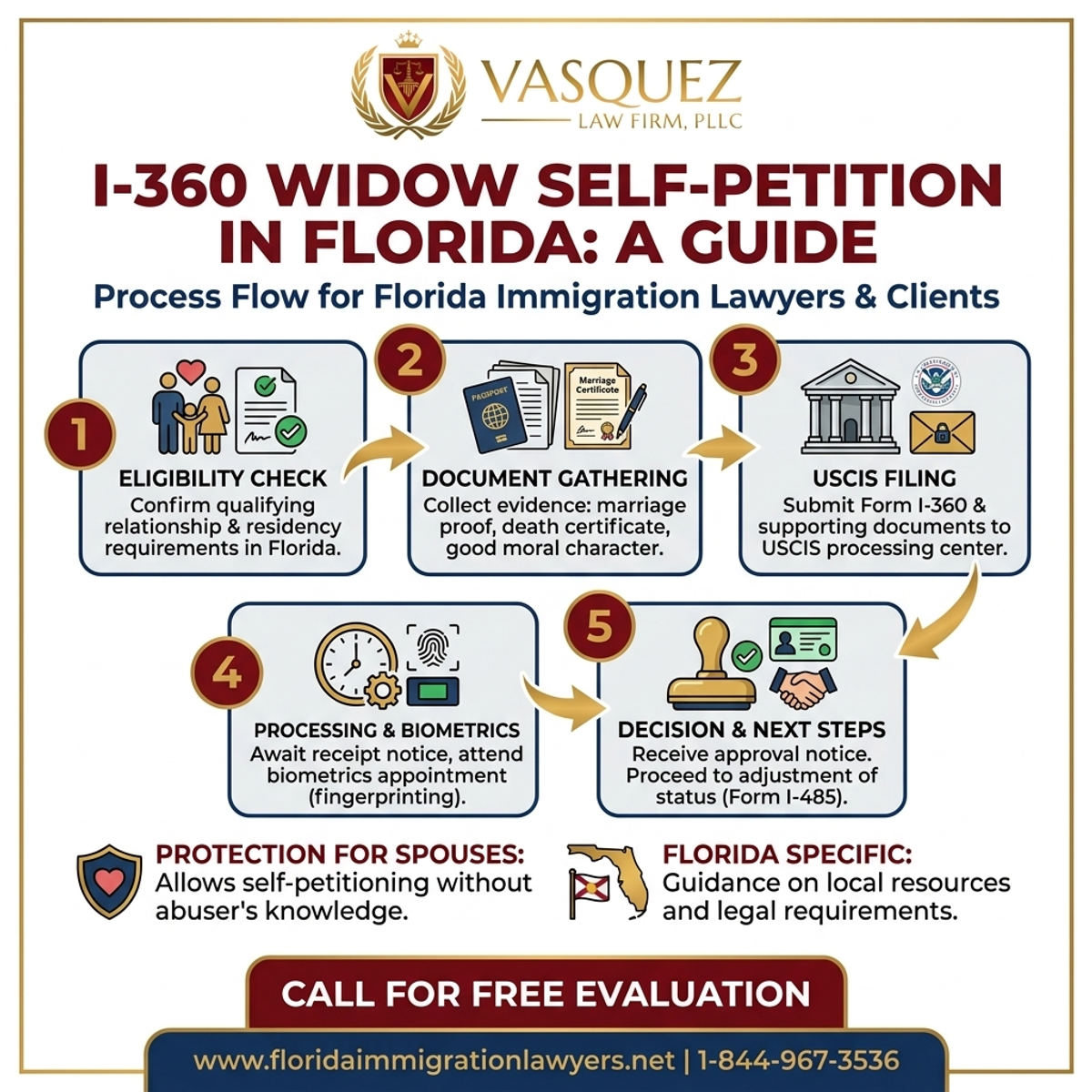
Step-by-Step Process — I-360 Widow Self-Petition in Florida: A Guide
Step-by-Step Application Process
- Complete Form I-360 and gather supporting documents.
- File the form with the USCIS and pay the necessary fees (check current fees on USCIS).
- Wait for a receipt notice from USCIS confirming your application.
- Prepare for biometrics appointment if required.
- Monitor the case status online or through your attorney.
- Respond promptly to any Requests for Evidence (RFE) from USCIS.
Processing Times and Expectations
The processing time for an I-360 petition can vary based on several factors, including the workload of the local USCIS office in Florida. On average, you can expect the process to take several months. Stay informed by checking the latest updates on processing times on the USCIS website.
Key Statistics — I-360 Widow Self-Petition in Florida: A Guide
Cost Considerations
The costs associated with filing an I-360 petition include the application fee and potential legal fees if you choose to hire an attorney. While the filing fee is set by USCIS, legal fees can vary based on the complexity of your case and the services provided by your attorney. It’s advisable to discuss these costs upfront with your legal representative.
Do not navigate this process alone. Contact Florida Immigration Lawyers today.
Common Mistakes to Avoid
- Filing after the two-year deadline: This can result in automatic denial.
- Inadequate documentation of marriage: Lack of evidence can lead to RFEs or denial.
- Ignoring USCIS notices: Not responding to RFEs can stall or end your application process.
- Filing incorrect forms: Ensure you use the correct version of Form I-360.
- Not checking USCIS processing times: This could lead to missed deadlines.
- Misunderstanding eligibility: Ensure you meet all criteria before applying.
- Attempting without legal assistance: Complex cases benefit from advice.
When to Call a Lawyer
Consulting with an immigration lawyer is crucial if you encounter complex issues with your I-360 petition. Scenarios such as remarriage, missing documents, or previous immigration violations can complicate your case. Florida Immigration Lawyers can provide guidance tailored to your situation, helping you navigate the legal landscape effectively.
About Florida Immigration Lawyers
Florida Immigration Lawyers are dedicated to providing comprehensive immigration services throughout Florida. Whether you're dealing with family immigration, citizenship, deportation defense, or business immigration, our experienced team is here to help. Call us at 1-844-YO-PELEO or visit our website at floridaimmigrationlawyers.net. We are available 24/7 and offer free consultations.
Sources and References
- U.S. Citizenship and Immigration Services (USCIS)
- Executive Office for Immigration Review (EOIR)
- 8 U.S.C. Chapter 12 - Immigration and Nationality Act
Related services: family petition process, family-based green cards, fiancé visa (K-1).
This article provides general legal information and is not intended as legal advice. Every case is unique, and outcomes depend on specific facts and circumstances. Contact an attorney for advice about your particular situation.
Se Habla Espanol - Estamos aqui para ayudarle.
If you need legal assistance, learn more about how our family immigration attorneys can help, or call us at 1-844-YO-PELEO for a free consultation.
Do Not Navigate This Process Alone
Our experienced immigration attorneys are ready to fight for you. Get a free, confidential case review today.
Se Habla Español
Or leave your details and we’ll call you:
Free Evaluation in 24 Hours
Or talk to us right now

AI voice assistant — available 24/7
FreeFrequently Asked Questions

William J. Vásquez
Founding Attorney · Vasquez Law Firm
U.S. Air Force veteran and immigration attorney with years of hands-on U.S. immigration experience. J.D., NCCU School of Law. AILA member. Admitted to the 4th, 5th, and 11th Circuit Courts.
Available 24/7 - Free Evaluations
Reviewed for legal accuracy by William J. Vásquez
Licensed in North Carolina; U.S. immigration is federal practice.
Related Legal Services
Our Florida immigration attorneys can help you with business immigration, deportation defense and family immigration services. Call today at 1-844-YO-PELEO for a free case review.
Related Links
Related Topics
Free Legal Case Review
Discuss your case with our experienced attorneys. We're available 24/7.
Se Habla Español - Estamos aquí para ayudarle.
Related Articles
EAD Advance Parole Combo Card in Florida: What You Need
An EAD advance parole combo card allows individuals with pending adjustment applications to both work and travel abroad without jeopardizing their green card application. Learn how to apply in Florida, what documents you need, and common mistakes to avoid.
PERM Labor Certification in Florida: A 2026 Guide
Learn all about the PERM labor certification process in Florida, essential for employers sponsoring green card applicants. Understand the steps, document requirements, and common mistakes to avoid in this 2026 guide.
Dual Citizenship Lawyer in Florida: What You Need to Know
For Florida residents, the concept of dual citizenship, or holding two passports, offers a compelling blend of opportunities and challenges. While the U.S. generally permits dual nationality, the path to achieving this status requires a meticulous understanding of both U.S. immigration laws and the citizenship policies of your country of origin. This guide explores the definition of dual citizenship, the detailed step-by-step process for U.S. naturalization, and the significant benefits and potential pitfalls involved. We cover essential documentation, typical timelines, and cost considerations for 2026, providing crucial insights for anyone in Orlando, Miami, or across Florida considering this important legal step. Learn about common mistakes to avoid and understand when to seek professional legal counsel to navigate this complex process successfully. Florida Immigration Lawyers is here to provide expert, bilingual support for your dual citizenship journey.
Immigration Lawyer Orlando Free Consultation in Florida
For individuals and families in Orlando, Florida, navigating the complexities of U.S. immigration law requires expert guidance. An immigration lawyer in Orlando offers crucial support for everything from visa applications and green card processes to naturalization and deportation defense. This comprehensive guide details what a free consultation covers, providing a step-by-step overview of immigration pathways, essential document checklists, and expected timelines in 2026. We also highlight common mistakes to avoid, discuss the critical role of legal counsel in deportation and asylum cases, and explain why choosing a local Orlando immigration attorney is beneficial. Florida Immigration Lawyers is dedicated to serving the diverse community of Orlando with compassionate, effective legal solutions, ensuring you receive personalized advice and robust representation for a successful immigration journey.