Fraud Waiver Immigration in Florida: A Guide
Discover how a fraud waiver can help you overcome immigration challenges in Florida. Learn about the I-601 waiver process, requirements, and common pitfalls. Call Florida Immigration Lawyers at 1-844-967-3536 for a free consultation.

- Essential for overcoming fraud-related inadmissibility.
- Requires proof of extreme hardship to a U.S. relative.
- Involves a detailed application process.
- Consultation with an immigration lawyer is advisable.
Introduction
Imagine being on the brink of achieving the American dream in Naples, Florida, only to face the daunting challenge of inadmissibility due to past misrepresentation. This is where a fraud waiver becomes crucial. In this article, we cover the intricacies of the I-601 waiver, helping you understand the process, requirements, and common pitfalls. Call Florida Immigration Lawyers at 1-844-967-3536 for a free consultation.
The journey to legal residency in the United States is often complex, but few obstacles are as formidable as a finding of inadmissibility due to fraud or willful misrepresentation of a material fact. This determination can halt your immigration process, leaving you and your family in a state of uncertainty and distress. For many, the I-601 waiver offers a beacon of hope, providing a legal pathway to overcome this significant hurdle and continue pursuing your American dream.
Understanding the nuances of the I-601 waiver is not just about filling out forms; it's about building a compelling case that demonstrates profound impact and hardship. This guide will delve deeper into each aspect, offering practical advice and insights to help you navigate this challenging but often successful process. With the right strategy and expert legal support from Florida Immigration Lawyers, overcoming fraud-related inadmissibility is a tangible goal.
Understanding Fraud Waivers
Fraud waivers are vital for immigrants who have been deemed inadmissible due to fraud or misrepresentation. Under U.S. immigration law, specifically outlined in the Immigration and Nationality Act (INA), certain individuals are barred from entering the U.S. if they have committed fraud to obtain immigration benefits. The I-601 waiver provides a pathway for these individuals to rectify their status, provided they can demonstrate extreme hardship to a qualifying U.S. relative.
Specifically, inadmissibility for fraud or willful misrepresentation falls under INA Section 212(a)(6)(C)(i). This section states that any alien who, by fraud or willfully misrepresenting a material fact, seeks to procure (or has sought to procure or has procured) a visa, other documentation, or admission into the United States or other benefit provided under this Act is inadmissible. This broad definition encompasses a range of actions, from providing false information on a visa application to entering into a sham marriage or presenting forged documents.
The I-601 waiver, also known as the Application for Waiver of Grounds of Inadmissibility, is the primary mechanism for overcoming this specific ground of inadmissibility. To be eligible, the applicant must demonstrate that their U.S. citizen or lawful permanent resident (LPR) spouse, parent, or sometimes child (depending on the specific circumstances) would suffer "extreme hardship" if the applicant were denied admission to the U.S. This is a high legal standard, requiring more than just the normal difficulties associated with family separation.
Demonstrating "extreme hardship" involves presenting a comprehensive case that illustrates the profound and unusual suffering your qualifying relative would endure. This can include severe medical conditions requiring the applicant's care, significant financial dependency, psychological distress, educational disruption for children, or the inability of the U.S. relative to relocate to the applicant's home country due to safety concerns or lack of essential services. Each case is evaluated on its unique "totality of the circumstances," making a detailed and well-supported argument absolutely essential.
Step-by-Step Guide to Applying for a Fraud Waiver
- Determine Eligibility: Assess if you meet the criteria for a waiver, focusing on the hardship your U.S. relative would face.
- Gather Supporting Documents: Collect evidence like medical records, financial statements, and personal affidavits to support your case.
- Prepare Form I-601: Accurately complete the I-601 form, addressing all sections meticulously.
- Submit the Application: File your application with the USCIS, ensuring all documents are included.
- Await Decision: Monitor your application's status and respond promptly to any USCIS requests.
Let's elaborate on each step to ensure a thorough understanding of the process:
1. Determine Eligibility:
Before embarking on the I-601 waiver journey, it's paramount to confirm your eligibility. This primarily revolves around two key factors: the specific ground of inadmissibility you are trying to waive (fraud or misrepresentation under INA 212(a)(6)(C)(i)) and the existence of a qualifying U.S. relative. Your qualifying relative must be a U.S. citizen or Lawful Permanent Resident (LPR) spouse or parent. In some very specific cases, a U.S. citizen or LPR child may also qualify, but this is less common for fraud waivers. The extreme hardship must be proven for this qualifying relative, not for the applicant directly. For instance, if a U.S. citizen spouse relies on your income for critical medical treatments, that would be a strong indicator of hardship.
2. Gather Supporting Documents:
This phase is critical, as the strength of your waiver application heavily relies on the quality and quantity of your evidence. You will need to collect a wide array of documents, including, but not limited to: proof of your relationship to the qualifying U.S. relative (marriage certificates, birth certificates), comprehensive medical records detailing any illnesses or conditions of the qualifying relative, financial statements demonstrating dependency or severe financial impact, psychological evaluations from licensed professionals, school records if children are affected, and country condition reports if relocation is impossible. Each document should clearly and directly support your claim of extreme hardship. For example, a detailed letter from a U.S. employer explaining the financial impact on the U.S. relative if you cannot return can be highly persuasive.
3. Prepare Form I-601:
Completing Form I-601, Application for Waiver of Grounds of Inadmissibility, requires meticulous attention to detail. Every section must be filled out accurately and truthfully. Any inconsistencies or omissions can lead to delays or denial. It's crucial to clearly state the specific ground of inadmissibility you are seeking to waive and provide a compelling written statement explaining why the waiver should be granted. This statement, often referred to as a "hardship letter," should articulate the extreme hardship your qualifying relative would face, drawing directly from the supporting documents you’ve gathered. Working with Florida Immigration Lawyers can ensure this form is prepared flawlessly, addressing all legal requirements and presenting your case effectively.
4. Submit the Application:
Once your I-601 form is complete and all supporting documents are meticulously organized, the application must be filed with the appropriate USCIS Service Center. The filing location often depends on whether you are applying from within the U.S. (adjustment of status) or abroad (consular processing). Ensure that you include the correct filing fee and that all documents are properly paginated and indexed. It is highly recommended to make a complete copy of your entire submission for your records before mailing it. This safeguards against loss and provides a reference for any future inquiries from USCIS.
5. Await Decision:
After submission, your application will undergo review by USCIS. The waiting period can be lengthy, and patience is essential. During this time, USCIS may issue a Request for Evidence (RFE) if they require additional information or clarification. Responding to an RFE promptly and comprehensively is crucial to avoid denial. In some cases, an interview may be required. Regularly monitoring your application status online through the USCIS website is advisable. If you receive an RFE or an interview notice, immediately consult with Florida Immigration Lawyers to prepare an effective response and strategy.
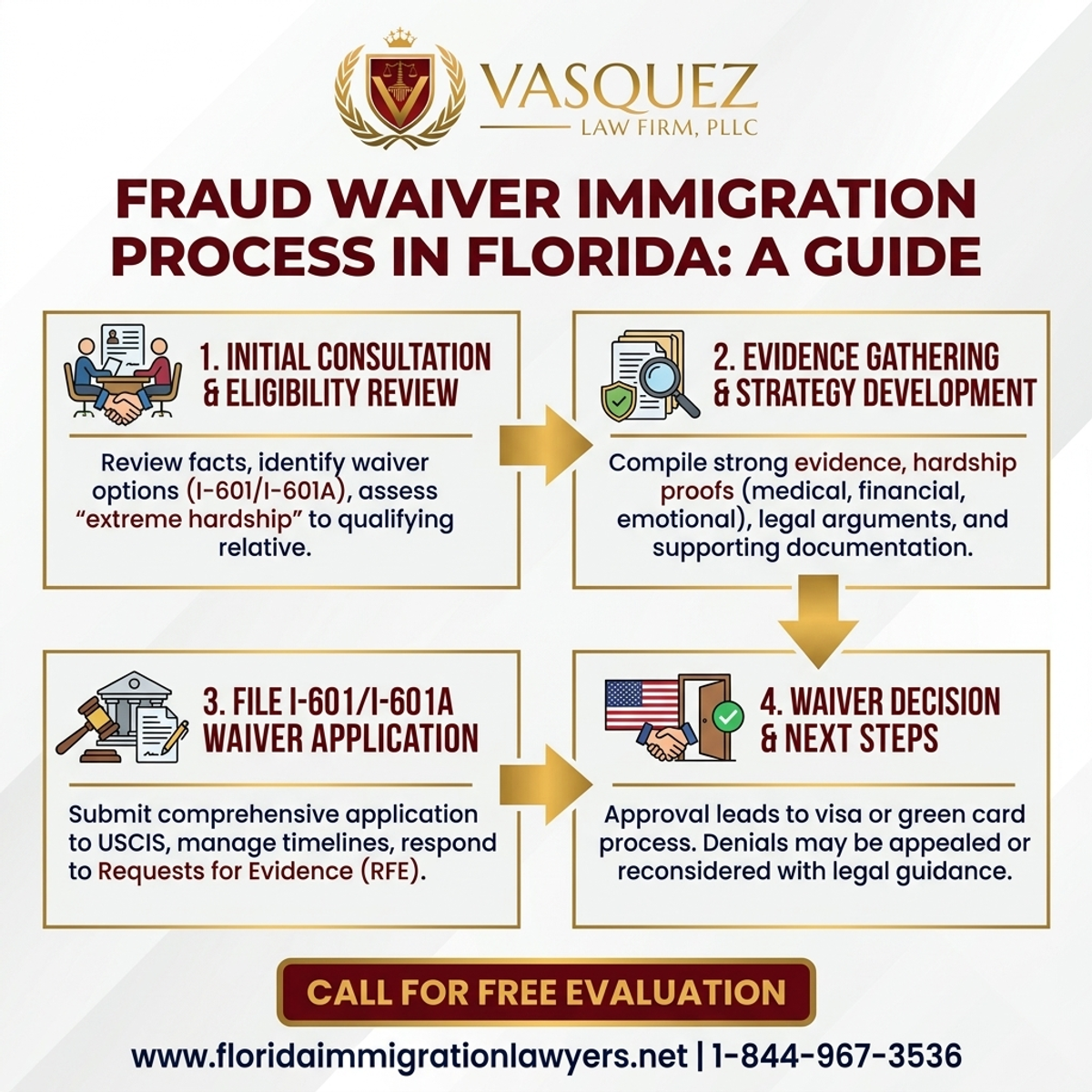
Step-by-Step Process — Fraud Waiver Immigration in Florida: A Guide
Document Checklist for I-601 Waiver
The success of your I-601 waiver hinges on the strength and thoroughness of your supporting documentation. Each piece of evidence contributes to building a compelling narrative of extreme hardship, making it crucial to gather and present these items meticulously. A well-organized and clearly articulated application package can significantly influence the USCIS officer's decision.
- Completed Form I-601
- Proof of Relationship to U.S. Relative (e.g., marriage certificate, birth certificates)
- Evidence of Extreme Hardship (e.g., medical records, psychological evaluations, letters from doctors/therapists)
- Affidavits from Family and Friends (detailing emotional, financial, or physical reliance on the applicant)
- Medical and Financial Records (e.g., tax returns, bank statements, employment letters, bills, insurance documents)
- Country Condition Reports (if the qualifying relative would face hardship by relocating abroad)
- Educational Records (if children's education would be severely disrupted)
- Proof of Applicant's Rehabilitation (e.g., letters of good character, community involvement, if applicable)
Remember, merely listing these documents is insufficient; each piece of evidence must be accompanied by a clear explanation of how it demonstrates extreme hardship to your qualifying U.S. relative. Organizing your documents with cover sheets, tabs, and a detailed table of contents will make it easier for USCIS to review your case, reducing the likelihood of RFEs and delays. Florida Immigration Lawyers can help you compile and present this critical documentation effectively.
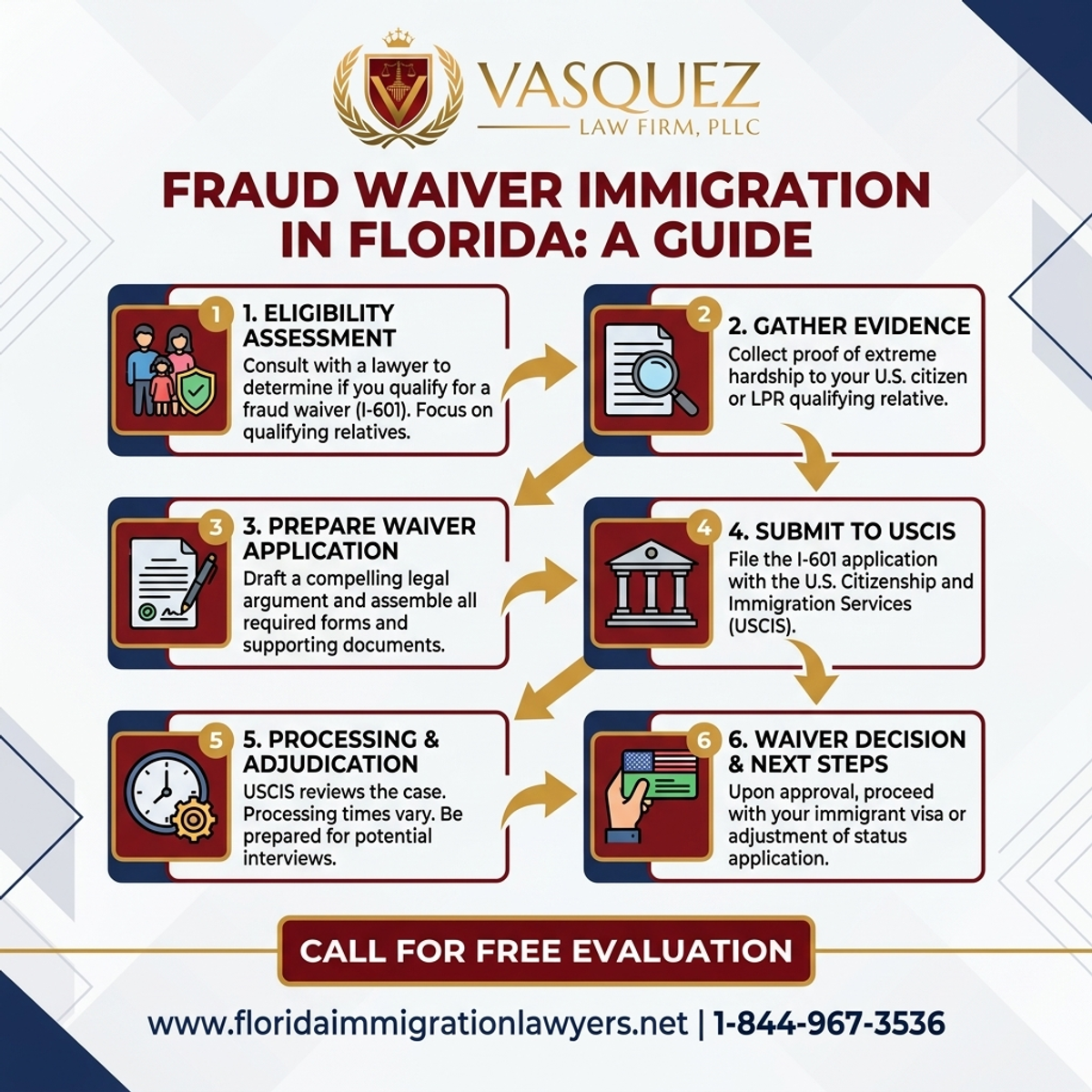
Key Statistics — Fraud Waiver Immigration in Florida: A Guide
Timeline and Processing Expectations
The processing time for an I-601 waiver can vary significantly, typically ranging from several months to over a year. Factors influencing this include the complexity of your case and the workload at the USCIS office handling your application. It is crucial to submit a complete and well-documented application to avoid delays.
Several factors can impact the processing timeline for your I-601 waiver. These include the specific USCIS service center where your application is filed, the volume of cases they are currently handling, the completeness and clarity of your initial submission, and whether an RFE is issued. Complex cases involving multiple grounds of inadmissibility or extensive evidence may naturally take longer to adjudicate. While online processing times provided by USCIS can offer a general estimate, they are not guarantees and can change frequently.
Managing expectations during the waiting period is essential. It's a time that can be filled with anxiety, but maintaining open communication with your legal team and promptly responding to any USCIS correspondence is crucial. While you cannot directly expedite the processing unless there are extreme humanitarian circumstances, ensuring your application is flawless from the outset is the best way to minimize potential delays. Florida Immigration Lawyers can provide realistic timelines and keep you informed of any developments in your case, offering peace of mind during this critical phase.
Cost Factors and Fee Breakdown
While the filing fee for the I-601 waiver is subject to change, applicants should be prepared for additional costs related to gathering necessary documentation and potential legal fees. Working with an immigration attorney can streamline the process and potentially reduce costs associated with errors or omissions in your application.
Beyond the primary USCIS filing fee for Form I-601, which can be substantial and is non-refundable, applicants should budget for a range of other expenses. These often include fees for obtaining certified copies of documents (birth certificates, marriage licenses, court records), translation services for any non-English documents, medical examination fees (if required as part of the overall immigration process), and postal or courier charges for secure submission of your application. In some instances, expert evaluations, such as psychological assessments or financial analyses, may be necessary to strengthen your extreme hardship claim, incurring additional costs.
Perhaps the most significant additional cost, but often the most valuable investment, is legal representation. Immigration attorneys, like those at Florida Immigration Lawyers, charge fees for their expertise in preparing, reviewing, and submitting your I-601 waiver application. These fees can vary based on the complexity of your case and the firm's experience. While it may seem like an added expense, the cost of legal guidance often pales in comparison to the potential financial and emotional cost of a denied application due to errors or a poorly presented case. Many firms offer flexible payment plans, making expert assistance accessible. Do not navigate this process alone. Contact Florida Immigration Lawyers today at 1-844-967-3536 for a free consultation.
Frequently Asked Questions About Fraud Waivers
Navigating the I-601 waiver process often brings forth numerous questions. Below, we address some common concerns, providing practical advice to help you understand this complex journey.
When to Call a Lawyer
If you are facing a fraud-related inadmissibility issue, consulting with an immigration attorney is vital. Legal help is crucial if you have a complicated immigration history, need assistance demonstrating hardship, or find the application process overwhelming. Florida Immigration Lawyers offer expertise and guidance to navigate these challenges effectively.
Beyond the general complexities, specific scenarios make legal intervention not just advisable, but essential. These include situations where you have multiple grounds of inadmissibility, a prior denial of an immigration benefit, a criminal history alongside the fraud allegation, or if you fear deportation or removal. An attorney can also be invaluable if there are language barriers, if you need assistance obtaining expert witness affidavits (e.g., from psychologists or financial analysts), or if the evidence for extreme hardship is not immediately obvious or requires nuanced interpretation.
An experienced immigration lawyer from Florida Immigration Lawyers will not only help you understand the intricate legal requirements but also develop a robust strategy tailored to your unique circumstances. They can meticulously prepare your application, gather compelling evidence, draft persuasive legal arguments, and represent you in communications with USCIS or in immigration court. Their expertise significantly enhances your chances of a successful outcome, transforming a daunting challenge into a manageable path toward your immigration goals. Call 1-844-967-3536 for a free consultation.
About Florida Immigration Lawyers
Florida Immigration Lawyers is a trusted firm dedicated to assisting individuals with their immigration needs. We offer comprehensive services, including fraud waiver applications, and boast a team of experienced attorneys ready to help. Our office is available 24/7 to provide free consultations. Call us at 1-844-967-3536 or visit our website today. We serve all of Florida, including Naples and surrounding areas. Our commitment to client success and personalized approach ensures that each case receives the attention and strategic planning it deserves, guiding you through every step of your immigration journey with confidence.
Sources and References
- U.S. Citizenship and Immigration Services (USCIS)
- Executive Office for Immigration Review (EOIR)
- 8 U.S.C. Chapter 12 - Immigration and Nationality Act
Related services: immigration practice areas, family immigration services, citizenship and naturalization, deportation defense.
This article provides general legal information and is not intended as legal advice. Every case is unique, and outcomes depend
Do Not Navigate This Process Alone
Our experienced immigration attorneys are ready to fight for you. Get a free, confidential consultation today.
Se Habla Español
Or leave your details and we’ll call you:
Free Evaluation in 24 Hours
Or talk to us right now

AI voice assistant — available 24/7
FreeFrequently Asked Questions

William J. Vásquez
Founding Attorney · Vasquez Law Firm
U.S. Air Force veteran and immigration attorney with years of hands-on U.S. immigration experience. J.D., NCCU School of Law. AILA member. Admitted to the 4th, 5th, and 11th Circuit Courts.
Available 24/7 - Free Evaluations
Reviewed for legal accuracy by William J. Vásquez
Licensed in North Carolina; U.S. immigration is federal practice.
Related Legal Services
Our Florida immigration attorneys can help you with deportation defense, citizenship and naturalization and family immigration services. Call today at 1-844-967-3536 for a free consultation.
Related Links
Related Topics
Free Legal Consultation
Discuss your case with our experienced attorneys. We're available 24/7.
Se Habla Español - Estamos aquí para ayudarle.
Related Articles
Immediate Relative Petition Tampa: A Florida Guide for 2026
Navigating an immediate relative petition in Tampa, Florida, offers U.S. citizens a direct path to sponsor spouses, unmarried children under 21, and parents for a Green Card. This comprehensive guide, updated for 2026, details the Form I-130 process, eligibility requirements, necessary documentation, and typical timelines. Unlike other family-based categories, immediate relatives are exempt from annual visa quotas, potentially speeding up their journey to permanent residency. However, the process is intricate, demanding precise form completion, thorough evidence of a bona fide relationship, and adherence to strict legal guidelines. We cover common pitfalls to avoid, such as incomplete forms or insufficient financial sponsorship, which can lead to significant delays or denials. Understanding when to seek expert legal assistance is crucial, especially for cases involving complex relationship dynamics, prior immigration violations, or criminal histories. Florida Immigration Lawyers provides dedicated support to families in Gainesville, Tampa, and across Florida, ensuring a smooth and successful application process. We offer free consultations to help you understand your options and navigate the complexities of U.S. immigration law.
Withholding of Removal: Your 2026 Florida Defense Guide
For those in Florida facing the threat of deportation, understanding withholding of removal and Convention Against Torture (CAT) protections is crucial. This comprehensive guide from Florida Immigration Lawyers explains eligibility, the complex process in immigration court, required documentation, and what to expect as of 2026. Learn about the high burden of proof, statutory bars, and the critical differences between these forms of relief. We cover the typical timeline for cases in Florida courts, associated costs, and common mistakes to avoid. With skilled legal representation, you can build a strong defense against removal and fight for your right to safety. Discover how our attorneys can assist you in navigating the intricacies of immigration law in Florida, from initial filings to appeals, ensuring your case is handled with expertise and compassion.
Parole in Place for Military Families Miami: A 2026 Guide
Explore how parole in place helps military families stay together in Miami. Understand the eligibility, process, and common mistakes to avoid. Contact Florida Immigration Lawyers for expert guidance.
eb2 niw lawyer florida: Navigating the NIW Process in 2026
For highly skilled professionals in Florida, the EB-2 National Interest Waiver (NIW) offers a direct path to a green card without employer sponsorship. This comprehensive guide for 2026 details the eligibility criteria, the step-by-step application process, expected processing times, and associated costs. Learn how to demonstrate substantial merit and national importance under the Matter of Dhanasar test, avoid common pitfalls, and understand when to seek expert legal counsel. Florida Immigration Lawyers specializes in assisting innovators, researchers, and entrepreneurs across Florida, including Pembroke Pines, to successfully navigate the complex NIW petition process and achieve permanent residency.