Florida Truck Driver Fatigue and HOS Violations | VLF Florid
Discover the impact of truck driver fatigue and HOS violations in Florida. Learn how Florida Immigration Lawyers can assist you with legal challenges related to Hours of Service compliance.

- HOS rules limit driving hours to reduce fatigue.
- EDLs are mandatory for tracking compliance.
- Violations can lead to penalties and accidents.
Introduction
Every year, thousands of truck drivers navigate the busy roads of Tallahassee and the greater Florida area. Many of these drivers face the challenge of adhering to Hours of Service (HOS) regulations designed to combat truck driver fatigue. With strict rules in place, even minor oversights can lead to HOS violations, impacting safety and legal standing.
The Sunshine State's extensive highway network, including major arteries like I-75, I-95, and I-10, sees a constant flow of commercial traffic. This high volume, combined with Florida's unique weather patterns and tourist traffic, amplifies the risks associated with fatigued driving. Ensuring truck drivers are well-rested isn't just a regulatory requirement; it's a critical component of public safety for everyone on the road.
In this article, we explore the intricacies of HOS regulations, the importance of Electronic Logging Devices (ELDs), and how Florida Immigration Lawyers can assist truck drivers facing legal challenges related to fatigue and compliance. Understanding these regulations is not only about avoiding penalties but also about protecting lives and livelihoods. Call Florida Immigration Lawyers at 1-844-967-3536 for a free consultation.
Understanding Hours of Service Regulations
The Federal Motor Carrier Safety Administration (FMCSA) enforces HOS regulations to ensure that truck drivers have adequate rest between shifts. These rules are vital for preventing fatigue-related accidents, which are a significant risk factor on Florida's highways.
HOS regulations generally include:
- Maximum 11 hours of driving following 10 consecutive off-duty hours.
- A mandatory 30-minute break after 8 hours of driving.
- A 60/70-hour limit over 7/8 consecutive days.
These limits are carefully calculated to prevent cumulative fatigue, which can impair a driver's judgment, reaction time, and overall ability to operate a heavy vehicle safely. For instance, the 10-hour off-duty rule is designed to provide sufficient time for restorative sleep, not just a short break. The 30-minute break after 8 hours of driving is crucial for mental and physical rejuvenation, helping drivers stay alert during longer shifts.
Beyond driving time, HOS regulations also account for 'on-duty, not driving' time, which includes activities like loading, unloading, inspections, and paperwork. This time also counts towards the 60/70-hour weekly limits, emphasizing that all work-related activities contribute to a driver's overall fatigue level. Both federal and Florida-specific laws aim to enhance road safety. Violations can lead to severe penalties, including fines and suspension of driving privileges, and can even escalate to criminal charges if an accident results from negligence.
The Florida Highway Patrol (FHP) and other state law enforcement agencies are vigilant in enforcing these rules, conducting roadside inspections and audits. Drivers operating commercial vehicles in Florida must be fully aware of how these regulations apply to their specific driving scenarios, as misinterpretation or oversight can lead to significant legal and financial repercussions. Consulting with experienced legal professionals like Florida Immigration Lawyers can provide clarity and guidance on these complex rules.
The Role of Electronic Logging Devices (ELDs)
Electronic Logging Devices (ELDs) are critical tools in ensuring compliance with HOS regulations. These devices automatically record driving time, making it easier to track and manage hours accurately.
In Florida, the implementation of ELDs has streamlined the monitoring process, reducing the risk of manual errors and intentional logbook tampering. ELDs provide:
- Automatic, accurate tracking of driving hours.
- Real-time data for fleet management.
- Ease of audit for compliance checks.
The FMCSA's ELD mandate, fully implemented in 2017, replaced paper logbooks for most commercial truck drivers. This technological shift aimed to create a more reliable and tamper-proof record of a driver's hours, providing a clearer picture of their compliance status. ELDs connect to the vehicle's engine and automatically record driving activity, making it difficult for drivers to falsify their hours or accidentally miscalculate their available driving time.
For truck drivers, understanding how to properly operate and troubleshoot their ELD is paramount. Regular calibration, ensuring proper data connectivity, and knowing how to handle a malfunction are essential skills. During a roadside inspection, law enforcement officers will typically request to view the ELD data, which can be transmitted electronically or displayed on the device. Any discrepancies or evidence of tampering can immediately lead to an HOS violation. If you encounter issues with your ELD or face a violation due to a device malfunction, seeking immediate legal advice from Florida Immigration Lawyers can help protect your rights.
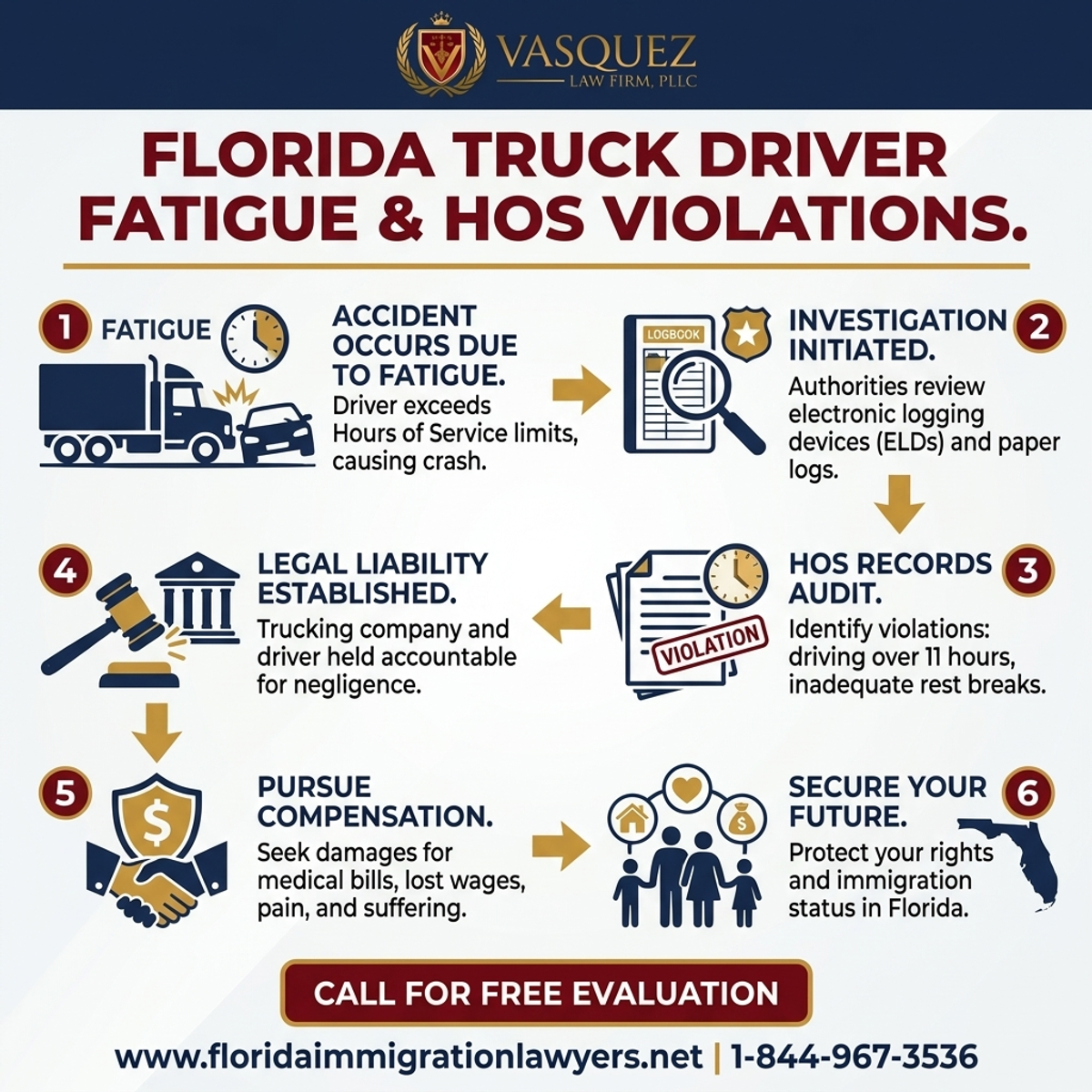
Step-by-Step Process — Florida Truck Driver Fatigue and HOS Violations
Document Checklist for Compliance
Staying compliant requires proper documentation. Truck drivers should always have:
- A functioning ELD device.
- Updated driver's log.
- Vehicle inspection reports.
- Proof of insurance and registration.
Keeping these documents organized and accessible can help avoid unnecessary penalties during inspections.
Beyond the primary documents, drivers should also carry their Commercial Driver's License (CDL), a medical examiner's certificate, and any specific endorsements required for their cargo (e.g., hazardous materials). Maintaining a clean and legible record of pre-trip and post-trip vehicle inspections is also critical, as these demonstrate a commitment to safety and compliance with vehicle maintenance standards, which can indirectly impact HOS compliance by preventing unexpected breakdowns that disrupt schedules.
It's advisable to have both digital and physical copies of essential documents where appropriate. While ELDs handle most logbook duties, having backup paper logs for emergencies or malfunctions is a good practice. Furthermore, understanding where each document should be presented during an inspection can expedite the process and prevent misunderstandings with law enforcement. Proper document management is a simple yet effective way to demonstrate professionalism and adherence to regulations, potentially mitigating minor issues before they escalate into serious violations.
Timeline and Processing Expectations
When a violation occurs, the timeline for resolution can vary. Typically, drivers can expect:
- Immediate notification of the violation.
- Review and correction period (usually within 7 days).
- Compliance check by authorities.
- Potential penalties or suspension notice.
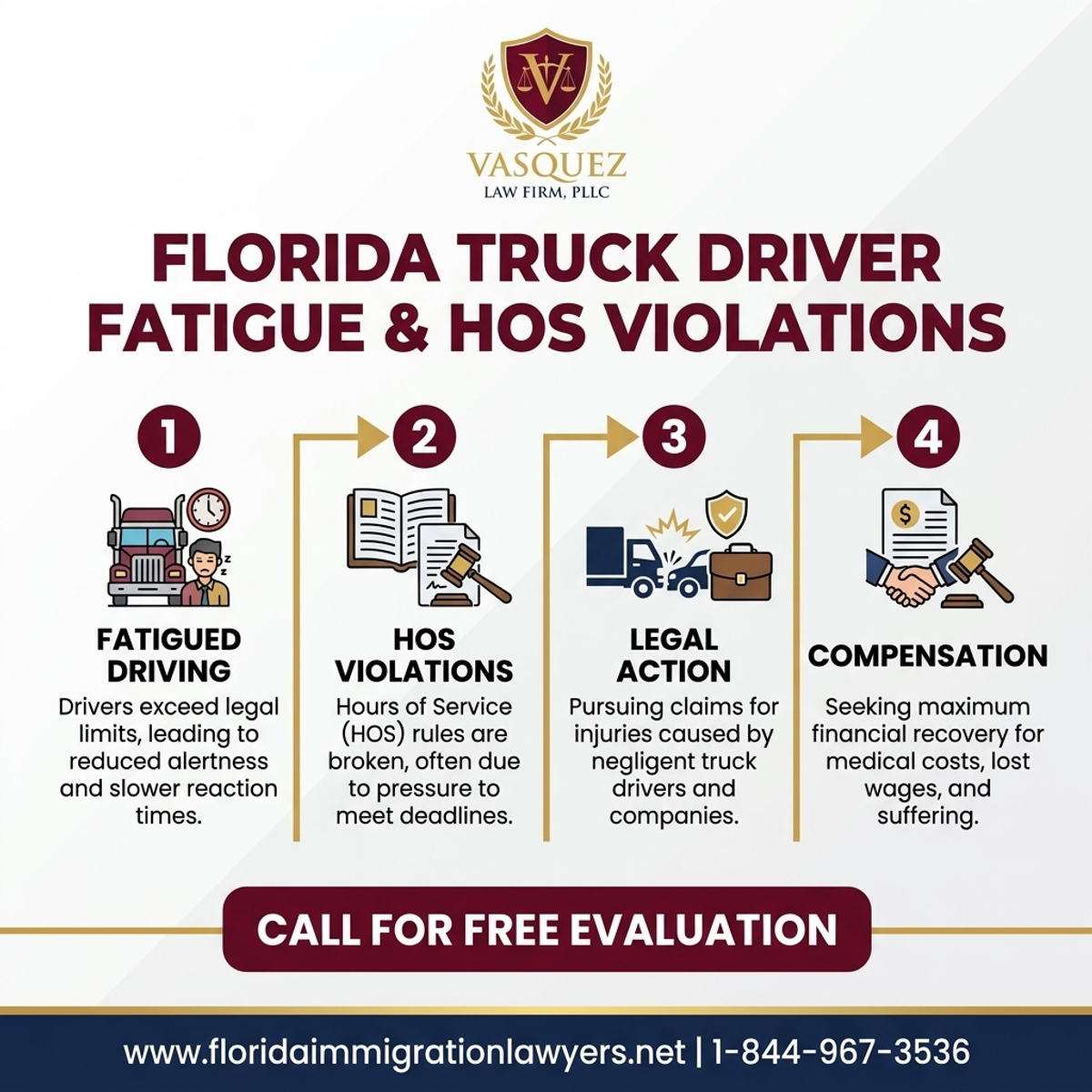
Key Statistics — Florida Truck Driver Fatigue and HOS Violations
Florida has a robust system in place to handle these cases efficiently, often involving local courts in Tallahassee for appeals or hearings.
Upon receiving a violation notice, drivers typically have a limited window, often seven calendar days, to review the alleged infraction and submit any corrections or mitigating evidence. This period is critical, as it's the primary opportunity to rectify minor errors or present a defense. Failure to respond or provide accurate information within this timeframe can lead to automatic acceptance of the violation and subsequent penalties. It's during this initial review that consulting with Florida Immigration Lawyers can be immensely beneficial, as they can help analyze the evidence and strategize the best course of action.
Should a driver decide to challenge a violation, the case may proceed to an administrative hearing or even a local court, depending on the severity and nature of the offense. This process involves presenting arguments, evidence, and potentially calling witnesses. The outcome can range from reduced fines to complete dismissal of the charges. Navigating these legal proceedings without expert representation can be daunting, highlighting the value of having a knowledgeable attorney by your side to protect your interests and CDL.
Cost Factors and Fee Breakdown
Costs associated with HOS violations can vary significantly based on the severity and frequency of infractions. Typical expenses include:
- Fines ranging from hundreds to thousands.
- Increased insurance premiums.
- Legal fees if challenged in court.
Engaging a knowledgeable attorney can help mitigate these costs by providing expert guidance through the legal process. Do not navigate this process alone. Contact Florida Immigration Lawyers today.
A single HOS violation can result in fines that quickly add up, often starting in the hundreds of dollars for minor infractions and escalating significantly for repeat offenses or severe breaches. Beyond direct fines, drivers and their carriers may face increased insurance premiums, which can impact profitability and employment opportunities. Furthermore, violations can lead to out-of-service orders, meaning the driver cannot operate their vehicle until the issue is resolved, resulting in lost income and potential delays for cargo.
The long-term impact of HOS violations can be even more substantial. A history of non-compliance can negatively affect a driver's Commercial Driver's License (CDL) record, making it harder to secure future employment or maintain a good standing with current employers. In cases where an HOS violation contributes to an accident, the legal and financial ramifications can be catastrophic, involving personal injury claims, property damage, and even criminal charges. Proactive legal counsel from Florida Immigration Lawyers can help drivers understand these potential costs and work towards minimizing their impact.
Common Mistakes to Avoid
- Ignoring ELD alerts: This can lead to unintentional violations. Always pay attention to warnings about approaching HOS limits and plan your stops accordingly.
- Failing to take mandatory breaks: Results in non-compliance and fines. Ensure you take your full 30-minute break after 8 hours of driving, and log it correctly.
- Incorrect log entries: Manual errors can be costly. Even minor mistakes in duty status changes or location entries can be flagged during an audit. Double-check all entries.
- Overloading vehicles: Increases risk of accidents and penalties. Always adhere to weight limits, as overloading can compromise vehicle safety and lead to additional violations.
- Neglecting vehicle maintenance: Leads to safety hazards and violations. Regular pre-trip and post-trip inspections are crucial to identify and address mechanical issues before they become a problem.
- Misunderstanding HOS rules: Lack of knowledge doesn't excuse violations. Stay updated on FMCSA regulations and seek clarification if unsure about specific rules.
- Driving under fatigue: Compromises safety and legal standing. Prioritize rest and never push yourself beyond safe driving limits, regardless of schedule pressures.
- Not seeking legal advice: Failing to consult an attorney can worsen situations. When facing serious violations, legal counsel can provide crucial guidance and representation.
Frequently Asked Questions (FAQs)
What is the difference between federal and Florida HOS regulations?
While Florida largely adopts federal FMCSA HOS regulations, state-specific nuances can exist, particularly concerning intrastate commerce (driving solely within Florida). Federal rules primarily govern interstate commerce. It's crucial for drivers to be aware of any Florida-specific amendments or interpretations, especially regarding agricultural exemptions or local delivery rules, to ensure full compliance. Always check the latest Florida statutes and FDOT guidelines for clarity.
Can I challenge an ELD violation?
Yes, you can challenge an ELD violation. If you believe the violation was issued in error, due to an ELD malfunction, or if you have mitigating circumstances, you have the right to appeal. Gathering evidence such as maintenance records for the ELD, witness statements, or other proof of compliance is vital. Florida Immigration Lawyers can help you navigate the appeals process and present a strong case.
How do HOS violations affect my CDL?
HOS violations can significantly impact your Commercial Driver's License (CDL). Repeated or severe violations can lead to points on your driving record, fines, and even suspension or revocation of your CDL. This can severely hinder your ability to work as a truck driver. Protecting your CDL is paramount, and legal assistance can be crucial in mitigating the long-term consequences of HOS infractions.
What if my ELD malfunctions?
If your ELD malfunctions, federal regulations require you to switch to paper logs for up to eight days or until the device is repaired or replaced. You must notify your motor carrier within 24 hours. Document the malfunction thoroughly, including dates, times, and steps taken to resolve it. Failure to follow proper procedure during a malfunction can lead to additional violations, so prompt action and accurate record-keeping are essential.
Are there any HOS exemptions for specific types of drivers?
Yes, certain exemptions exist, such as for agricultural operations, utility service vehicle drivers, and those operating within a 150 air-mile radius for short-haul operations, provided they meet specific criteria. There are also exemptions during emergencies. However, these exemptions are often narrowly defined and require strict adherence to their conditions. Drivers should never assume an exemption applies without verifying the specific requirements, as misapplication can lead to violations.
When to Call a Lawyer
Truck drivers should consider legal assistance when facing repeated HOS violations, significant fines, or potential license suspension. Legal guidance is essential in:
- Understanding complex HOS regulations.
- Challenging unjust penalties.
- Navigating Florida's legal system effectively.
Beyond routine violations, legal counsel becomes critical if an HOS infraction is linked to a serious truck accident, especially if injuries or fatalities are involved. In such high-stakes scenarios, you could face criminal charges, civil lawsuits, and severe penalties that threaten your freedom and career. Having an experienced attorney from Florida Immigration Lawyers who understands both federal trucking laws and state personal injury statutes can make a profound difference in protecting your rights and future. Don't wait until the situation escalates; early intervention can often lead to more favorable outcomes.
Florida Immigration Lawyers offer comprehensive support, helping protect your rights and livelihood. Their expertise extends to ensuring that your case is handled with the utmost care and professionalism, whether it's an administrative appeal or a court hearing. Contact them today for peace of mind and robust legal representation.
About Florida Immigration Lawyers
Florida Immigration Lawyers are dedicated to providing expert legal services in personal injury and immigration law. Located in Orlando and Kissimmee, we serve all of Florida, including Tallahassee, with 24/7 availability and free consultations. Our experienced team is ready to assist you with any legal challenges you face.
Our commitment extends to advocating for the rights of truck drivers throughout Florida. We understand the unique pressures and complex regulations faced by commercial drivers and are prepared to offer robust defense and guidance for HOS violations, accident-related issues, and other legal challenges that impact your ability to work and live in the U.S. Trust our team to provide the clear, effective legal strategies you need.
Phone: 1-844-967-3536
Website: https://www.floridaimmigrationlawyers.net
Sources and References
- U.S. Citizenship and Immigration Services (USCIS)
- Executive Office for Immigration Review (EOIR)
- 8 U.S.C. Chapter 12 - Immigration and Nationality Act
- Federal Motor Carrier Safety Administration (FMCSA) - Hours of Service (HOS) Regulations
- Florida Department of Transportation (FDOT)
Related services: Florida truck accident attorney, auto accident claims, wrongful death from truck collision, personal injury attorney Harold Estrada-Rodriguez.
This article provides general legal information and is not intended as legal advice. Every case is unique, and outcomes depend on specific facts and circumstances. Contact an attorney for advice about your particular situation.
Reviewed By
This article was reviewed for Florida legal accuracy by Harold Estrada-Rodriguez, Florida Bar No. 1041171, the attorney responsible for personal injury matters at Vasquez Law Firm. Personal injury representation in Florida only. No recovery, no fee.
Final CTA
Secure your future by understanding your rights and responsibilities on the road. For personalized legal advice and assistance, call Florida Immigration Lawyers at 1-844-967-3536. Se Habla Español - Estamos aquí para ayudarle.
If you need legal assistance, learn more about Florida personal injury case review, or call us at 1-844-967-3536 for a free consultation.
Do Not Navigate This Process Alone
Our experienced immigration attorneys are ready to fight for you. Get a free, confidential consultation today.
Se Habla Español
Frequently Asked Questions
Florida Immigration Lawyers
Immigration Attorney | Founder, Vasquez Law Firm
U.S. Air Force veteran and immigration attorney with thousands of cases resolved. J.D., NCCU School of Law. AILA member. Admitted to the 4th, 5th, and 11th Circuit Courts.
Available 24/7 - Free Evaluations
Related Legal Services
Our Florida immigration attorneys can help you with Florida car accident claims, slip-and-fall premises liability and Florida wrongful death claims. Call today at 1-844-967-3536 for a free consultation.
Related Links
Related Topics
Free Legal Consultation
Discuss your case with our experienced attorneys. We're available 24/7.
Se Habla Español - Estamos aquí para ayudarle.
Related Articles
Florida Pedestrian Accident: Crosswalk Rights and Damages
If you've been hit by a car in a Florida crosswalk, understanding your rights and potential claims for damages is crucial. Learn about driver fault, your legal options, and how Florida Immigration Lawyers can assist you in seeking justice and compensation. Contact us today for a free consultation.
Florida Statute of Limitations: Understanding the Two-Year PI
Understanding Florida's two-year statute of limitations for personal injury claims is essential for protecting your legal rights. Discover how the law impacts your ability to seek justice and what steps to take following an accident in Kissimmee. Call Florida Immigration Lawyers today for a free consultation.
Florida Wrongful Death Survivor Damages Explained | VLF Florida
Learn about Florida's wrongful death statutes, specifically §§768.16-768.21, which outline compensation for survivors. Call for a free consultation.
Understanding Florida's PIP No-Fault Medical Benefits
Discover how Florida's PIP no-fault insurance works to cover medical expenses following an auto accident. Learn the steps to file a claim, common mistakes to avoid, and when to seek legal help. Call Florida Immigration Lawyers at 1-844-967-3536 for a free consultation.
