Florida Rear-End Collision: Whiplash & Herniated Disc Claims
Rear-end collisions in Florida often result in whiplash and herniated discs, leading to significant pain and medical expenses. Understanding your rights and the claims process is crucial for securing compensation. Key points include the importance of medical documentation, Florida's no-fault insurance laws, and the role of comparative negligence in claims.

Florida Rear-End Collision: Whiplash & Herniated Disc Claims
Rear-end collisions are among the most common types of car accidents in Florida, often leading to a range of injuries from minor to severe. While they might seem straightforward, the aftermath can be complex, especially when dealing with injuries like whiplash and herniated discs. These injuries, though sometimes initially subtle, can have profound and lasting impacts on a victim's health, quality of life, and financial stability. Navigating the legal and insurance landscape in Florida after such an accident requires a deep understanding of state laws, medical documentation, and negotiation tactics. This comprehensive guide will delve into the specifics of whiplash and herniated disc claims resulting from rear-end collisions in Florida, equipping you with the knowledge needed to protect your rights and pursue the compensation you deserve. Understanding the nuances of these injuries, the state's no-fault system, and the critical steps to take immediately following an accident is paramount for a successful claim.
Understanding Rear-End Collisions in Florida
Rear-end collisions typically occur when one vehicle strikes the vehicle directly in front of it. While often perceived as minor fender-benders, they can generate significant force, particularly at higher speeds, leading to serious injuries. In Florida, the driver who rear-ends another vehicle is often presumed to be at fault due to the state's traffic laws requiring drivers to maintain a safe following distance. However, this presumption is not absolute, and there can be exceptions. Factors such as distracted driving (texting, talking on the phone), aggressive driving (tailgating), sudden stops, inclement weather, or even mechanical failures can contribute to these accidents. Florida Statute § 316.0895, for instance, mandates that drivers not follow another vehicle more closely than is reasonable and prudent, having due regard for the speed of such vehicles and the traffic upon, and the condition of, the highway. Establishing fault is a critical first step in any personal injury claim, as it directly impacts who is liable for damages. Understanding the common causes and legal presumptions surrounding rear-end accidents is vital for building a strong case and ensuring that accountability is correctly assigned.
Whiplash Injuries: Symptoms and Impact
Whiplash is a common neck injury resulting from the sudden, forceful, back-and-forth movement of the head, similar to the cracking of a whip. This motion can strain the muscles, ligaments, and tendons in the neck and upper back. While often associated with rear-end collisions, whiplash can also occur in other types of impacts. Symptoms can manifest immediately or develop over several days or even weeks, making early diagnosis challenging. Common symptoms include neck pain and stiffness, headaches (often starting at the base of the skull), dizziness, blurred vision, fatigue, shoulder pain, and even tingling or numbness in the arms. In more severe cases, whiplash can lead to chronic pain, cognitive issues such as memory problems or difficulty concentrating, and psychological distress. Diagnosing whiplash primarily relies on a physical examination and a detailed account of the accident and symptoms, as X-rays typically won't show soft tissue damage. However, imaging tests like MRIs may be used to rule out other conditions or identify more severe injuries. The subjective nature of whiplash symptoms often makes these claims challenging without thorough medical documentation and consistent treatment. It’s crucial to seek immediate medical attention and follow all recommended treatments to establish a clear link between the accident and your injury, bolstering your claim for compensation.
Herniated Discs: A More Serious Consequence
While whiplash affects the soft tissues, a herniated disc is a more severe spinal injury that can occur in a rear-end collision. Your spine is made up of vertebrae cushioned by discs, which act as shock absorbers. A herniated disc, sometimes called a slipped or ruptured disc, occurs when the soft, jelly-like center (nucleus pulposus) pushes through a tear in the tougher, outer ring (annulus fibrosus). This can happen due to the immense force and compression exerted on the spine during a violent impact. Herniated discs can occur in the cervical (neck), thoracic (mid-back), or lumbar (lower back) regions, with cervical and lumbar herniations being most common in car accidents. Symptoms vary depending on the location and severity of the herniation, but often include sharp, radiating pain, numbness, tingling, muscle weakness, and loss of reflexes in the affected limb. For example, a cervical herniation might cause pain radiating down the arm, while a lumbar herniation could lead to sciatica, with pain extending down the leg. Diagnosis typically involves a physical examination, neurological tests, and imaging studies such as an MRI, which provides detailed images of soft tissues. Treatment options range from conservative approaches like physical therapy, pain medication, and epidural injections to surgical intervention in severe cases where nerve compression is significant or symptoms are debilitating. The long-term impact of a herniated disc can be life-altering, potentially leading to chronic pain, disability, and a significant reduction in quality of life, making comprehensive compensation critical for victims.
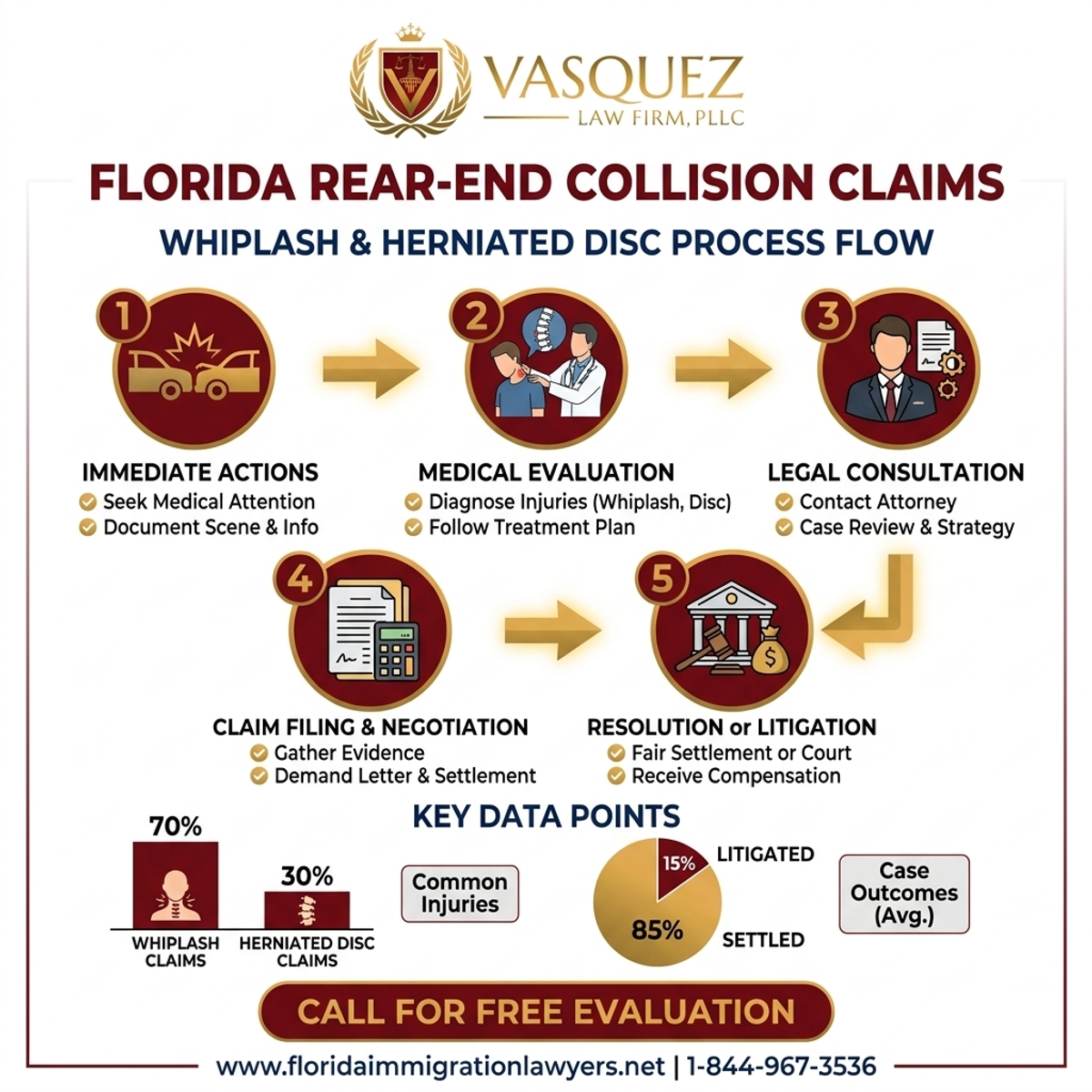
Step-by-Step Process — Florida Rear-End Collision: Whiplash & Herniated Disc Claims
Florida's No-Fault System and PIP
Florida operates under a “no-fault” car insurance system, which means that after an accident, your own Personal Injury Protection (PIP) insurance typically covers your initial medical expenses and lost wages, regardless of who was at fault. Every driver in Florida is required to carry a minimum of $10,000 in PIP coverage. This coverage generally pays 80% of your reasonable and necessary medical expenses and 60% of your lost wages, up to your policy limit. However, there are crucial limitations to Florida's no-fault system. To utilize your PIP benefits, you must seek initial medical treatment within 14 days of the accident. Furthermore, PIP only covers up to $2,500 for non-emergency medical conditions. For full $10,000 coverage, a medical professional must determine that you have an “emergency medical condition” (EMC). If your injuries, such as severe whiplash or a herniated disc, exceed your PIP coverage, or if you wish to claim compensation for pain and suffering, you must meet Florida's “serious injury threshold.” This threshold requires that you have sustained a permanent injury within a reasonable degree of medical probability, significant and permanent loss of a bodily function, permanent scarring or disfigurement, or death. Meeting this threshold allows you to step outside the no-fault system and pursue a bodily injury claim against the at-fault driver for all damages, including medical bills, lost wages, and non-economic damages like pain and suffering. Understanding these rules is vital for ensuring you receive the full scope of benefits and compensation available after an accident.
The Role of Expert Witnesses in Whiplash and Herniated Disc Cases
In cases involving whiplash and herniated discs, especially when injuries are severe or contested by insurance companies, the testimony of expert witnesses can be absolutely critical. These professionals provide specialized knowledge and opinions that help to clarify complex medical and technical aspects of a case for judges and juries. Medical experts, such as orthopedic surgeons, neurologists, or pain management specialists, are often called upon to explain the nature and extent of the plaintiff's injuries, the causal link between the accident and those injuries, the necessity of past and future medical treatments, and the long-term prognosis. Their detailed reports and testimony can substantiate the severity of whiplash symptoms, which can sometimes be dismissed as subjective, or clearly illustrate the debilitating impact of a herniated disc. Beyond medical professionals, accident reconstructionists may be employed to analyze the physics of the collision, demonstrating the forces involved and how they could have caused specific injuries, thereby strengthening the causation argument. Vocational rehabilitation experts can assess the impact of the injuries on the victim's ability to work and earn a living, providing crucial evidence for lost wages and diminished earning capacity claims. Economic experts might then quantify these losses, projecting future financial damages. The strategic use of these expert witnesses can significantly bolster the credibility of your claim, counteract defense arguments, and ultimately lead to a more favorable outcome in negotiations or at trial. Their objective insights transform complex medical and scientific data into understandable evidence, proving the true extent of your suffering and losses.
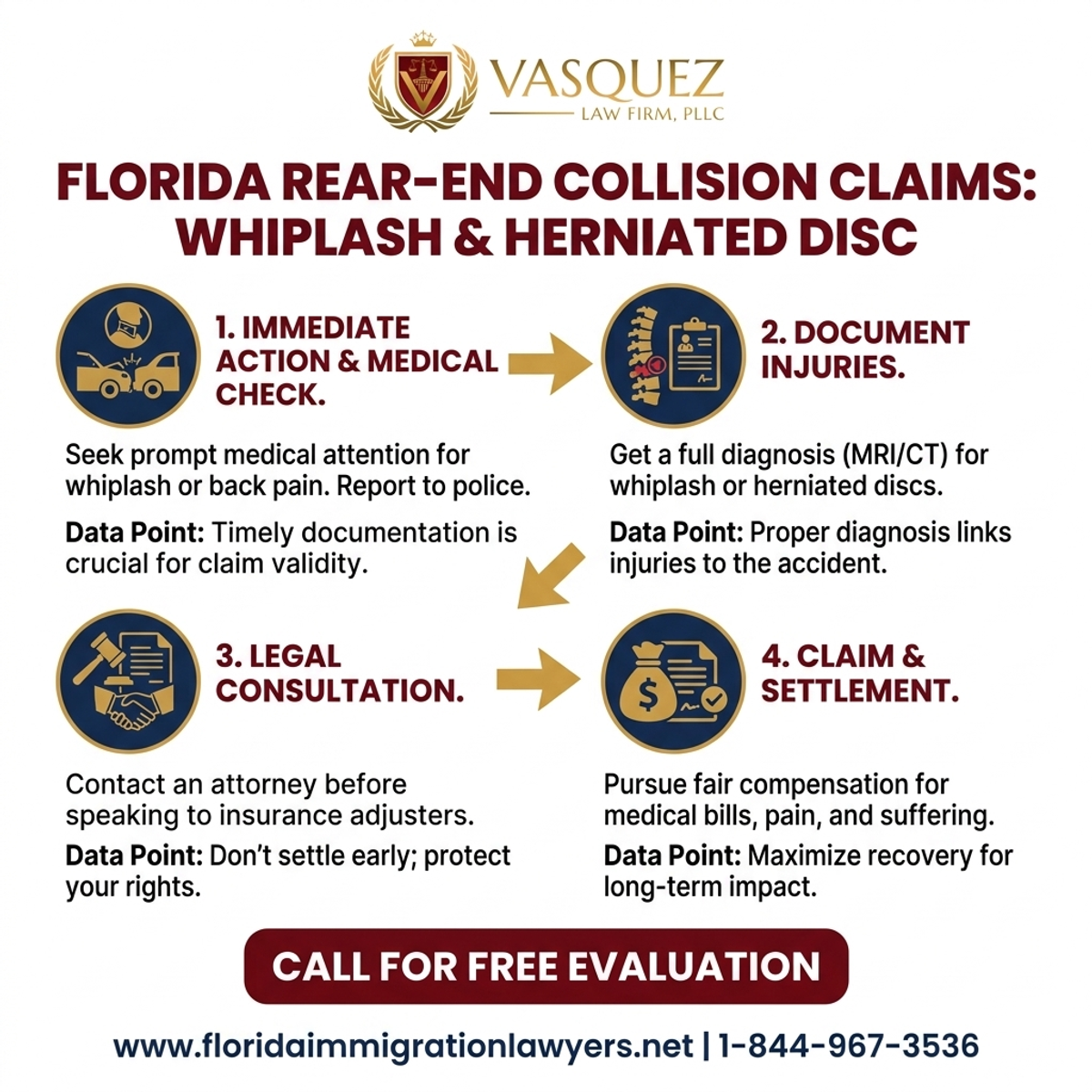
Key Statistics — Florida Rear-End Collision: Whiplash & Herniated Disc Claims
Proving Negligence and Damages
To secure compensation beyond your PIP coverage for whiplash or a herniated disc in Florida, you must prove that the other driver was negligent and that their negligence directly caused your injuries and damages. Proving negligence involves demonstrating that the at-fault driver owed you a duty of care (e.g., to drive safely), breached that duty (e.g., by tailgating or distracted driving), and that this breach directly led to your accident and injuries. Key evidence for proving negligence includes police reports, witness statements, photographs or videos of the accident scene and vehicle damage, and traffic camera footage. Once negligence is established, you must then prove the extent of your damages. Damages are categorized into two main types: economic and non-economic. Economic damages are quantifiable financial losses, including past and future medical expenses (hospital bills, doctor visits, physical therapy, medication, surgery), lost wages (both current and future earning capacity), property damage, and out-of-pocket expenses related to the accident. Non-economic damages are more subjective and compensate for intangible losses, such as pain and suffering, mental anguish, emotional distress, loss of enjoyment of life, and loss of consortium. Documenting all aspects of your injuries, treatment, and how your life has been affected is crucial. This includes maintaining meticulous medical records, therapy notes, prescription receipts, employment records, and a personal journal detailing your pain levels and daily struggles. A skilled attorney will gather and present this evidence compellingly to ensure all your losses are accounted for in your claim.
Steps to Take After a Rear-End Accident
The actions you take immediately following a rear-end collision can significantly impact the success of your injury claim. First and foremost, ensure your safety and the safety of others. Move your vehicle to a safe location if possible, and turn on your hazard lights. Call 911 immediately to report the accident to the police and request medical assistance if anyone is injured. Even if you feel fine, it's crucial to be checked by paramedics at the scene or to seek medical attention promptly, as whiplash and herniated disc symptoms can be delayed. While waiting for authorities, gather as much evidence as you can: take photos and videos of the accident scene, vehicle damage, road conditions, and any visible injuries. Exchange contact and insurance information with all parties involved, but avoid discussing fault or making statements that could be misconstrued. Obtain contact information from any witnesses. Do not admit fault or apologize for the accident. Once you've left the scene, notify your insurance company of the accident, but be cautious about giving recorded statements without first consulting with an attorney. Most importantly, follow through with all medical appointments and treatments recommended by your doctors. Consistent medical documentation is the backbone of any personal injury claim. These immediate steps lay the groundwork for a strong legal case and protect your health and financial future.
Seeking Legal Counsel and Comprehensive Support
After a rear-end collision resulting in whiplash or a herniated disc, navigating the complexities of insurance claims, medical bills, and legal procedures can be overwhelming. Engaging an experienced personal injury attorney is one of the most critical steps you can take. A knowledgeable attorney will protect your rights, handle all communications with insurance companies, investigate your accident thoroughly, gather essential evidence, and build a robust case on your behalf. They will ensure you meet all deadlines, accurately assess the full value of your claim, and fight for the maximum compensation you deserve, whether through negotiation or litigation. Our experienced attorneys are dedicated to guiding you through every step of this challenging process, allowing you to focus on your recovery. While your immediate concern might be a car accident claim, it's worth noting that a full-service legal firm often provides expertise across a broad spectrum of legal challenges. For instance, our firm also assists clients with complex immigration matters, including pursuing asylum claims and providing robust deportation defense. This breadth of knowledge ensures that whatever legal hurdle you face, you have a trusted partner.
Navigating Insurance Companies
Dealing with insurance companies after a car accident, especially when serious injuries like whiplash or herniated discs are involved, can be one of the most frustrating aspects of the recovery process. Insurance adjusters are trained professionals whose primary goal is to minimize the payout from their company. They may employ various tactics to achieve this, such as offering a quick, lowball settlement before you fully understand the extent of your injuries, pressuring you into giving recorded statements that could be used against you, or questioning the severity and causation of your injuries. They might argue that your whiplash is minor or that your herniated disc is a pre-existing condition, even without medical evidence. It is crucial to remember that anything you say to an insurance adjuster can be used to devalue or deny your claim. Therefore, it is highly advisable to avoid giving recorded statements or signing any documents without first consulting with your attorney. Your lawyer will act as a buffer between you and the insurance company, handling all communications and negotiations. They understand the tactics adjusters use and can counter them effectively, ensuring that your rights are protected and that you do not inadvertently jeopardize your claim. With an attorney advocating for you, you can focus on your recovery while they work to secure a fair and just settlement that truly reflects the full scope of your damages.
Rear-end collisions in Florida can lead to debilitating whiplash and herniated disc injuries, transforming lives in an instant. Understanding Florida's no-fault system, the intricacies of proving negligence, and the full scope of damages available is crucial for victims seeking justice. From the immediate aftermath of the accident to navigating complex legal and insurance processes, every step you take matters. Don't face this challenging journey alone. Protecting your rights and securing fair compensation requires the guidance of an experienced personal injury attorney who understands the nuances of these claims. If you or a loved one has suffered a whiplash or herniated disc injury in a Florida rear-end collision, don't hesitate to contact us today for a free consultation. Let us help you focus on your recovery while we fight for the compensation you deserve.
Sources and References
- U.S. Citizenship and Immigration Services (USCIS)
- Executive Office for Immigration Review (EOIR)
- U.S. Department of State - Bureau of Consular Affairs
- Immigration and Nationality Act (INA), 8 U.S.C. Chapter 12
Do Not Navigate This Process Alone
Our experienced immigration attorneys are ready to fight for you. Get a free, confidential consultation today.
Se Habla Español
Frequently Asked Questions
Florida Immigration Lawyers
Immigration Attorney | Founder, Vasquez Law Firm
U.S. Air Force veteran and immigration attorney with thousands of cases resolved. J.D., NCCU School of Law. AILA member. Admitted to the 4th, 5th, and 11th Circuit Courts.
Available 24/7 - Free Evaluations
Related Legal Services
Our Florida immigration attorneys can help you with Florida wrongful death claims, Florida personal injury attorney Harold Estrada-Rodriguez and free personal injury consultation. Call today at 1-844-967-3536 for a free consultation.
Related Links
Related Topics
Free Legal Consultation
Discuss your case with our experienced attorneys. We're available 24/7.
Se Habla Español - Estamos aquí para ayudarle.
Related Articles
Truck Accident on I-4? Florida 18-Wheeler Crash Claims
Injured in a Florida 18-wheeler crash on I-4? Our Orlando & Kissimmee personal injury lawyers handle complex truck accident cases. Learn your rights. Contact
How Florida PIP No-Fault Medical Benefits Work | VLF Florida
Discover how Florida's PIP no-fault insurance system works to protect you after an auto accident. From understanding medical benefits to avoiding common mistakes, this guide offers essential information for navigating PIP claims. Call Florida Immigration Lawyers at 1-844-967-3536 for a free consultation.
Florida Car Accident: Navigating the 14-Day PIP Rule
After a car accident in Florida, understanding the 14-day PIP rule is crucial. This guide explains the steps to take, ensuring you receive necessary medical treatment and compensation. Call Florida Immigration Lawyers for a free consultation.
What to Do After Florida Car Crash 14-Day PIP Rule
After a car accident in Florida, it’s crucial to act within the 14-day PIP rule. Learn the steps to take for medical and legal protection. Call Florida Immigration Lawyers at 1-844-967-3536 for a free consultation.