Immigration Policy News Florida 2026: What Immigrants...
Stay ahead of Florida's immigration policy news for 2026. This comprehensive guide from Florida Immigration Lawyers breaks down the latest federal and state changes, offering a step-by-step approach to understanding their impact on you and your family in Fort Lauderdale and across Florida. Learn about essential documents, processing timelines, and common mistakes to avoid. With potential new Florida immigration laws on the horizon, proactive legal counsel is more vital than ever. Discover how our dedicated attorneys can help you navigate these complexities, protect your rights, and secure your future in the U.S. Contact us for a free consultation.

Florida's immigration policy landscape in 2026 is expected to continue evolving, with potential impacts on residents across the state, including Fort Lauderdale. Federal legislation and state-level initiatives may introduce new requirements for immigrants, affect enforcement priorities, and alter pathways to legal status. Staying informed and seeking expert legal guidance is crucial to protect your rights and navigate these complex changes effectively.
- Stay Informed: Monitor official sources like USCIS and reputable legal news.
- Assess Impact: Understand how new policies might affect your specific immigration status.
- Gather Documents: Keep all personal and immigration-related paperwork current and organized.
- Seek Counsel: Consult an experienced immigration attorney for personalized advice.
- Know Your Rights: Be aware of your legal protections under U.S. and Florida law.
Are you an immigrant living in Florida, perhaps in Fort Lauderdale, feeling uncertain about the future? The constant shifts in immigration policy news can be overwhelming, leaving you wondering how new laws and regulations might affect your life, your family, and your ability to live and work in the Sunshine State.
At Florida Immigration Lawyers, we understand these concerns deeply. Our goal with this comprehensive guide is to help you navigate the complexities of Florida's evolving immigration landscape in 2026. We will break down key policy updates, explain potential impacts, and outline crucial steps you can take to protect your interests.
Understanding these changes is not just about compliance; it's about securing your future. We are here to provide clarity and steadfast support. Call Florida Immigration Lawyers at 1-844-967-3536 for a free consultation today and let us help you understand your options.
Understanding Florida's Evolving Immigration Policy News in 2026
The year 2026 brings continued scrutiny and potential changes to immigration laws at both federal and state levels, significantly impacting Florida residents. Our state has often been at the forefront of immigration debates, leading to specific policies that can create unique challenges and opportunities for immigrants.
Federal legislative discussions, alongside state-level initiatives, are expected to shape the immigration environment. These efforts often focus on border security, workforce regulations, and the allocation of resources for enforcement. Immigrants in areas like Fort Lauderdale need to pay close attention to these developments.
For instance, state laws in Florida may impose stricter requirements on employers regarding worker verification or increase penalties for certain immigration-related offenses. These state actions often operate within the framework of federal law, such as the Immigration and Nationality Act (INA), found in 8 U.S.C. § 1101 et seq.
Staying informed about the latest immigration news today is essential. The interplay between federal mandates and Florida's specific legislative actions creates a dynamic and sometimes unpredictable environment. We are committed to keeping our clients updated on significant developments.
Key Federal and State Developments Affecting Florida
In 2026, federal agencies like USCIS continue to implement new directives that influence visa processing, asylum claims, and naturalization. Any changes to the USCIS Policy Manual or new regulations published in the Code of Federal Regulations (CFR) can have immediate effects on applicants.
Simultaneously, Florida's legislature may propose or enact bills that address issues such as migrant labor, sanctuary city policies (or lack thereof), and funding for state-level immigration enforcement. These state laws can sometimes complicate or contradict federal guidelines, leading to legal challenges and uncertainty for individuals.
For example, a state law might increase penalties for transporting undocumented individuals, even if the federal government has different enforcement priorities. Such measures require careful legal interpretation to ensure compliance and protect individual rights. This is where expert legal counsel becomes invaluable.
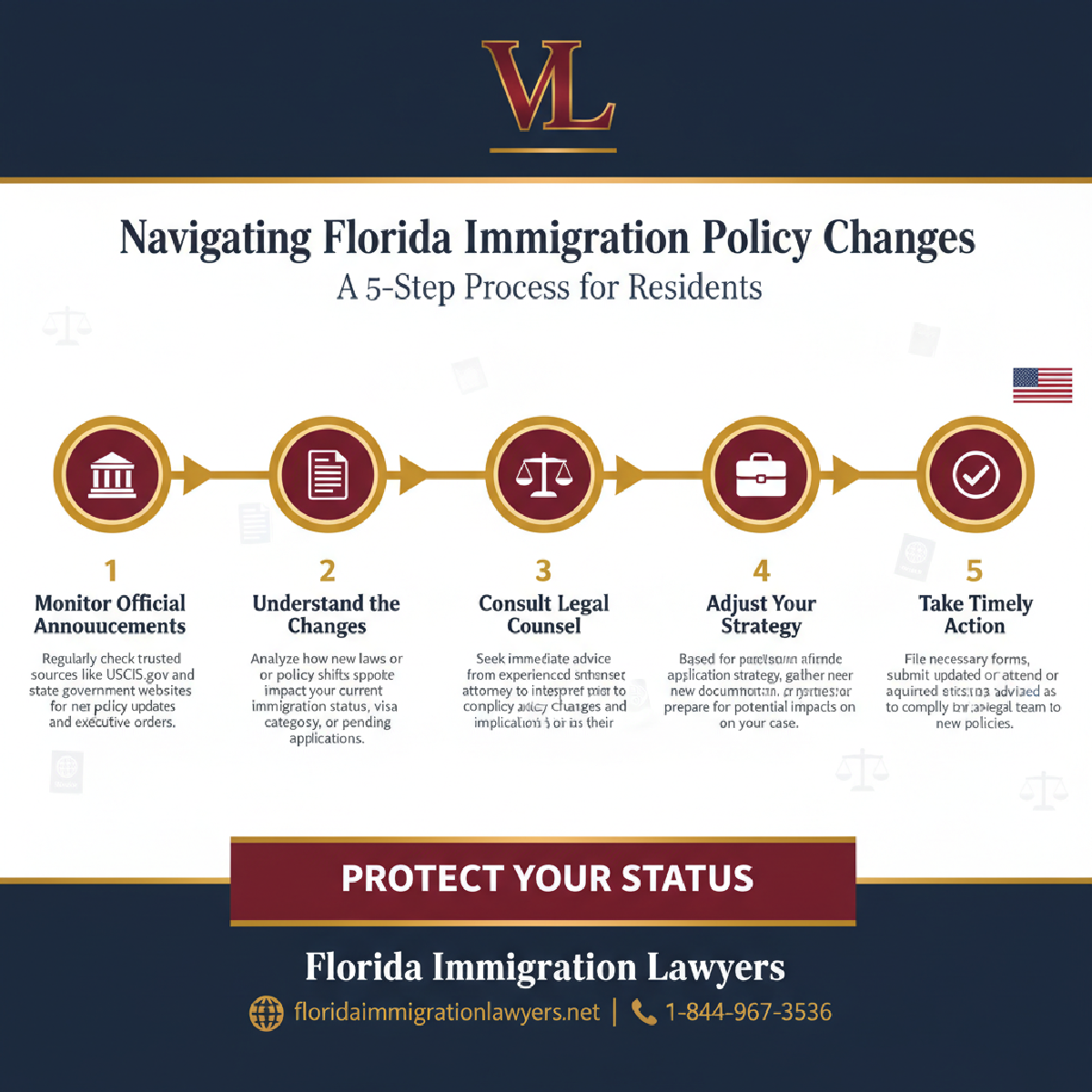
Navigating New Immigration Laws: A Step-by-Step Guide for Florida Residents
When new immigration policy news emerges, it can feel daunting to understand its direct impact. This step-by-step guide is designed to help Florida residents, including those in Fort Lauderdale, proactively navigate potential changes and protect their immigration standing.
-
Stay Vigilantly Informed from Official Sources: Make it a priority to follow official government websites and reputable legal news outlets. Rely on sources like USCIS.gov, Justice.gov, and trusted legal firms like Florida Immigration Lawyers for accurate information. Avoid rumors or unverified social media posts.
Understanding the nuances of any new immigration bill passed today, or pending legislation, is critical. We regularly analyze these updates to provide our clients with the most current advice.
-
Assess Your Current Immigration Status and Eligibility: Carefully review your existing immigration status, including any visas, green cards, or pending applications. Understand the specific requirements and expiration dates relevant to your situation.
Any changes in immigration reform news could alter eligibility criteria for various benefits or introduce new grounds for inadmissibility or deportability. Knowing your current standing is the first step in assessing potential impacts.
-
Organize and Update All Essential Documents: Proactively gather and organize all your critical immigration and personal documents. This includes passports, birth certificates, marriage licenses, financial records, and any official correspondence from USCIS or other government agencies.
Having these documents readily accessible and up-to-date will be crucial if you need to apply for new benefits, respond to inquiries, or defend against adverse actions. Create digital and physical copies for safekeeping.
-
Seek Professional Legal Counsel Immediately: Do not attempt to interpret complex new laws or policies on your own. Consult with an experienced immigration attorney who specializes in Florida and federal immigration law. They can provide personalized advice based on your unique circumstances.
An attorney can help you understand the latest immigration news today, identify potential risks, and develop a strategic plan. This proactive approach can prevent costly mistakes and safeguard your future.
-
Prepare for Potential Enforcement Changes: Be aware that shifts in policy can sometimes lead to increased enforcement actions. Understand your rights if you are approached by immigration officials, which typically include the right to remain silent and to speak with an attorney.
Familiarize yourself with local resources and support networks in Florida. Knowing what to do in an enforcement scenario can make a significant difference in protecting your legal rights and ensuring due process.
Essential Document Checklist for Immigration Policy Changes in Florida
As immigration policy news continues to evolve, having your documents in order is paramount. A comprehensive and organized set of documents can be the difference between a smooth process and significant delays or denials. Here is a checklist of essential documents you should have ready, especially if you reside in Florida:
- ✓ Valid Passport(s) and Travel Documents
- ✓ Birth Certificates (for yourself and all family members)
- ✓ Marriage Certificate(s) and Divorce Decrees (if applicable)
- ✓ Original Green Card (Form I-551) or Visa Stamps
- ✓ Employment Authorization Documents (EAD, Form I-766)
- ✓ Social Security Card
- ✓ Driver's License or State ID (Florida specific, if available)
- ✓ Proof of Residence in Florida (utility bills, lease agreements, property deeds)
- ✓ Educational Diplomas, Transcripts, and Professional Certifications
- ✓ Financial Records (bank statements, tax returns, pay stubs)
- ✓ Medical Examination Records and Vaccination Records
- ✓ Police Clearances or Criminal Record Certificates (from all countries lived in)
- ✓ Any Correspondence from USCIS, Immigration Court (EOIR), or other government agencies
- ✓ Copies of all previously filed immigration applications and petitions
Ensure that all foreign-language documents are accompanied by certified English translations. Keeping both original and copies of all documents in a secure, accessible location is highly recommended. This proactive organization is a critical step in preparing for any new Florida immigration laws 2026 may bring.
Immigration Processing Timelines and Expectations in Florida (2026)
The processing times for immigration applications and petitions can vary significantly, influenced by federal policy changes, USCIS workload, and the specific type of application. In 2026, immigrants in Florida should be prepared for potential adjustments to these timelines.
USCIS processing times, which can be checked on their official website, are estimates and not guarantees. Factors like an increase in filings, new security protocols, or resource reallocations due to new immigration reform news can cause delays. For applicants in Florida, this means patience and proactive follow-up are key.
For example, a Form I-485, Application to Register Permanent Residence or Adjust Status, filed at the Miami or Orlando USCIS Field Office may have different processing durations compared to other regions. You can check estimated processing times directly on USCIS.gov.
Impact of Latest Immigration News Today on Processing
Any significant latest immigration news today, particularly concerning enforcement or eligibility criteria, can cause a ripple effect on processing times. Agencies may need to re-evaluate cases, issue Requests for Evidence (RFEs), or adjust interview schedules.
Immigration courts in Florida, such as those in Miami or Orlando, also face varying backlogs for deportation defense cases and asylum claims. New policies might increase the number of cases entering the system, further extending wait times for hearings and decisions.
Regularly consulting with Florida Immigration Lawyers can help you understand realistic expectations for your case. We monitor USCIS news today and other official updates to provide the most current information regarding processing trends and potential delays in Florida.
Understanding Immigration Costs and Legal Fees in Florida
Navigating the immigration process involves various costs, including government filing fees and legal expenses. Understanding these financial aspects is crucial for planning and ensuring a smooth application process, especially with potential changes in immigration policy news for 2026.
USCIS charges fees for most applications and petitions, such as those for green cards, visas, or citizenship. These fees are subject to change, and it is always important to verify the current amounts directly on the USCIS website or through an attorney. Some individuals may be eligible for fee waivers based on income.
Beyond government fees, legal representation constitutes a significant investment. Florida Immigration Lawyers offers transparent fee structures, explaining all costs upfront. Our fees reflect the complexity of immigration law, the time required for case preparation, and our commitment to providing high-quality legal services.
Breakdown of Potential Cost Factors
Typical cost factors include application filing fees, biometric services fees, medical examination fees, and translation costs. For certain visa categories, there may also be affidavit of support fees or other specific charges.
Legal fees vary depending on the type of case (e.g., family immigration, business immigration, citizenship, or deportation defense). An experienced attorney can often save you money in the long run by preventing errors that lead to denials, appeals, or re-filings.
Investing in skilled legal counsel is an investment in your future. It provides peace of mind and significantly increases the likelihood of a successful outcome. We offer free consultations to discuss your case and provide a clear understanding of potential costs.
Do not navigate this process alone. The complexities of immigration policy news in Florida can be overwhelming, and mistakes can have severe consequences. Contact Florida Immigration Lawyers today to ensure your case is handled with expertise and care.
Common Mistakes to Avoid with Florida Immigration Policy Changes
The ever-changing landscape of immigration policy news can lead to common pitfalls. Avoiding these mistakes is crucial for anyone navigating the immigration system in Florida, especially in light of potential new Florida immigration laws 2026 may bring.
-
Ignoring Policy Updates: Failing to stay informed about the latest immigration news today can mean missing critical deadlines or eligibility changes. This oversight can lead to missed opportunities or even adverse actions against your status.
Consequence: Missing application windows, submitting outdated forms, or unknowingly violating new regulations.
-
Not Seeking Legal Advice: Attempting to handle complex immigration matters without an attorney is a common and risky mistake. Immigration law is intricate, and self-representation often leads to errors.
Consequence: Misinterpreting laws, submitting incomplete or incorrect applications, or failing to present a strong case, potentially leading to denials or deportation proceedings.
-
Providing Incorrect or Inconsistent Information: Any inaccuracies or discrepancies in your applications or interviews can raise red flags with USCIS or immigration courts. Even unintentional errors can be viewed as misrepresentation.
Consequence: Delays, Requests for Evidence (RFEs), denials, or accusations of fraud, which can have long-lasting negative impacts on your immigration record.
-
Missing Deadlines: Immigration processes are strict with deadlines. Failing to file documents or respond to requests within the specified timeframe can result in the automatic denial of your application.
Consequence: Loss of application fees, need to re-file, or even loss of eligibility for certain benefits.
-
Traveling Without Proper Documentation or Advice: Traveling internationally or even domestically within the U.S. without understanding how it affects your immigration status can be dangerous, especially with new enforcement policies.
Consequence: Being denied re-entry, facing secondary inspection, or even being placed in deportation defense proceedings.
-
Overlooking State-Specific Requirements: While federal law governs immigration, Florida may have specific requirements or implications, particularly for employment or public services. Ignoring these can lead to local legal issues.
Consequence: Fines, loss of employment, or other penalties under state law.
-
Relying on Unofficial Sources: Getting advice from friends, family, or non-attorneys who claim to know about USCIS news today is unreliable. Immigration law is highly specialized and constantly changing.
Consequence: Receiving inaccurate information that leads to critical errors in your application or legal strategy.
-
Failing to Keep Copies of All Documents: It is essential to keep a complete copy of every document you submit to USCIS or other agencies, along with proof of mailing or delivery.
Consequence: Inability to prove submission if original documents are lost, or difficulty in preparing for interviews or appeals without a full record.
-
Assuming Old Rules Still Apply: Immigration reform news can quickly render previous guidelines obsolete. What was true last year may not be true in 2026.
Consequence: Basing your application or actions on outdated information, leading to certain denial or complications.
-
Not Preparing for Interviews: Many immigration processes require an interview. Appearing unprepared, without necessary documents or understanding of your case, can be detrimental.
Consequence: Delays, RFEs, or denial of your application due to a poor interview performance.
When to Call a Lawyer: Expert Guidance for Florida Immigration Matters
Given the complexities of immigration policy news and the potential for new Florida immigration laws 2026, knowing when to seek legal counsel is critical. While some simple applications might seem straightforward, even minor errors can have significant, long-term consequences.
You should always consider contacting an immigration attorney if your situation involves any complexity. This includes if you have a criminal record, previous immigration violations, or have been denied a visa or benefit in the past. These factors significantly complicate any application.
Furthermore, if you are facing deportation proceedings, have received a Notice to Appear (NTA), or are seeking asylum or refugee status, immediate legal representation is vital. The stakes are incredibly high in these situations, and an experienced attorney can be your strongest advocate.
Florida Immigration Lawyers specializes in a wide range of immigration services. Whether you need assistance with family-based petitions, employment visas, naturalization, or navigating the implications of the latest USCIS news today, our team is here to help. We serve clients across Florida, including Fort Lauderdale, Miami, Orlando, and Tampa.
We provide comprehensive support, from initial consultations to representation in immigration court. Our attorneys stay abreast of all immigration policy news, ensuring that our advice is always current and tailored to your specific needs. Don't leave your future to chance.
Frequently Asked Questions About Florida Immigration Policy News
What is the latest immigration news today in Florida?
The latest immigration news today in Florida often involves a dynamic interplay between federal enforcement priorities and state-level legislative actions. In 2026, we anticipate continued discussions around border security, E-Verify mandates for employers, and potential changes to state resources allocated for immigration services or enforcement. These developments can affect everything from visa processing to the rights of undocumented workers. It is crucial to monitor official government announcements and consult with legal experts like Florida Immigration Lawyers for specific, up-to-date information relevant to your situation.
How will new immigration policy news affect me in Fort Lauderdale?
New immigration policy news can affect residents of Fort Lauderdale in several ways. State-level policies might impact your employment eligibility, access to certain state services, or even your daily interactions within the community. Federal changes, especially regarding visa categories or enforcement, could directly influence your ability to adjust status, renew a visa, or face deportation. For example, if you are an essential worker, new policies on labor or worker verification could directly impact your job. Understanding these local impacts requires careful review of both federal and Florida-specific regulations, which our attorneys can help you with.
What are the recent USCIS news updates today?
USCIS news updates today typically cover changes to forms, filing fees, processing times, policy manual updates, and new guidelines for various immigration benefits. In 2026, USCIS may introduce new digital filing options, adjust interview protocols, or modify eligibility requirements for certain petitions. These updates are critical because they directly dictate how you apply for benefits like green cards, work permits, or naturalization. We recommend regularly checking the official USCIS website and subscribing to alerts, or consulting with us, to ensure you are always working with the most current information and procedures.
Is there a new immigration bill passed today in Florida?
While a specific new immigration bill passed today is unlikely without prior public discussion, legislative sessions in Florida frequently introduce bills related to immigration. These bills often aim to strengthen state-level enforcement, regulate migrant labor, or impact state benefits for non-citizens. It is important to distinguish between proposed legislation and enacted laws. A bill must pass both legislative chambers and be signed by the Governor to become law. Florida Immigration Lawyers actively monitors the state legislature for any significant immigration reform news that could become law in 2026, providing timely updates to our clients.
Where can I find reliable immigration reform news for 2026?
For reliable immigration reform news for 2026, you should prioritize official government sources and reputable legal news organizations. Key sources include the official websites of USCIS, the Executive Office for Immigration Review (EOIR) under Justice.gov, and the U.S. Department of State. Legal journals and well-established immigration law firms like Florida Immigration Lawyers also provide expert analysis and updates. Avoid social media rumors or unverified news outlets. We pride ourselves on providing accurate, timely, and actionable immigration policy news to our community.
How do Florida's state immigration laws interact with federal policies?
Florida's state immigration laws often interact with federal policies in complex ways. While federal law, primarily the Immigration and Nationality Act (INA), governs most aspects of immigration, states can enact laws that affect immigrants within their borders. These state laws might cover areas such as driver's licenses, public benefits, employment verification, or local law enforcement's cooperation with federal immigration authorities. Sometimes, state laws can be challenged in court if they are deemed to conflict with federal supremacy. Understanding this intricate relationship is crucial, and our attorneys can clarify how these layers of law apply to your specific situation.
What should I do if I receive a Notice to Appear (NTA) in Florida?
If you receive a Notice to Appear (NTA) in Florida, it means the government has initiated deportation proceedings against you. This is a serious legal matter, and your immediate action is to contact an experienced immigration attorney. Do not ignore the NTA or miss your court date. An attorney can review the charges against you, identify potential defenses or forms of relief (like asylum or cancellation of removal), and represent you in immigration court. Florida Immigration Lawyers has extensive experience defending individuals in immigration courts across Florida, including those in Miami and Orlando.
Can Florida Immigration Lawyers help with green card applications under new policies?
Yes, Florida Immigration Lawyers can absolutely help with green card applications, even under new or evolving immigration policies. Our team stays current with all USCIS news today and any changes to the INA or CFR that affect eligibility and application procedures. We guide clients through the entire process, from determining eligibility for family-based or employment-based green cards to preparing and filing all necessary forms, gathering supporting documentation, and preparing for interviews. Our goal is to ensure your application is strong and compliant with the latest regulations, maximizing your chances of success.
What are the typical processing times for immigration cases in Florida?
Typical processing times for immigration cases in Florida vary widely depending on the specific application, the USCIS field office or service center handling it, and the overall volume of submissions. While USCIS provides estimated processing times on their website, these are subject to change due to policy shifts, budget allocations, and staffing levels. For example, a green card application (Form I-485) processed at the Hialeah or Fort Myers field offices might differ from those handled in Jacksonville. Our attorneys monitor these trends closely and can provide you with a more personalized estimate based on your case type and the latest USCIS news today.
About Florida Immigration Lawyers
Florida Immigration Lawyers is a leading immigration law firm dedicated to serving individuals and families across the entire state of Florida. With years of experience and a deep understanding of complex immigration laws, we are committed to providing compassionate, effective, and results-driven legal representation.
We specialize in a comprehensive range of immigration services, including family-based immigration, employment visas, asylum, deportation defense, citizenship, and more. Our attorneys are fluent in multiple languages, ensuring clear communication and culturally appropriate legal advice for our diverse clientele.
Why choose us? We offer free consultations, are available 24/7 to address urgent concerns, and possess an unparalleled dedication to our clients' success. We understand the unique challenges faced by immigrants in Florida, including those in Fort Lauderdale, and we are here to be your trusted legal partner.
Visit our website at https://www.floridaimmigrationlawyers.net or call us directly at 1-844-967-3536 to schedule your free consultation. Let us put our expertise to work for you.
This article is for general informational purposes only and does not constitute legal advice. Immigration laws change frequently. For advice specific to your situation, please consult with a qualified immigration attorney.
Understanding the latest immigration policy news is crucial for your future in Florida. Do not face these challenges alone. Our experienced team at Florida Immigration Lawyers is ready to provide the guidance and representation you need. Call us now at 1-844-967-3536 for a free, confidential consultation and take the first step towards securing your peace of mind.
Do Not Navigate This Process Alone
Our experienced immigration attorneys are ready to fight for you. Get a free, confidential consultation today.
Se Habla Español
Frequently Asked Questions
Florida Immigration Lawyers
Immigration Attorney | Founder, Vasquez Law Firm
U.S. Air Force veteran and immigration attorney with thousands of cases resolved. J.D., NCCU School of Law. AILA member. Admitted to the 4th, 5th, and 11th Circuit Courts.
Available 24/7 - Free Evaluations
Related Legal Services
Our Florida immigration attorneys can help you with free immigration consultation, experienced immigration attorneys and business immigration. Call today at 1-844-967-3536 for a free consultation.
Related Links
Related Topics
Free Legal Consultation
Discuss your case with our experienced attorneys. We're available 24/7.
Se Habla Español - Estamos aquí para ayudarle.
Related Articles
Stokes Interview: Navigating Marriage Fraud in Florida
A Stokes interview is a specialized, separate interview conducted by USCIS when there are suspicions of marriage fraud in a green card application. This rigorous process involves individual questioning of spouses, focusing on inconsistencies in their testimonies to determine the authenticity of their marital bond. For couples in Florida, navigating this high-stakes interview requires meticulous preparation, extensive documentation, and often the strategic guidance of an experienced immigration lawyer. Understanding the process, preparing for detailed questions, and presenting a strong case are crucial for overcoming marriage fraud allegations and securing your immigration future. Florida Immigration Lawyers stands ready to assist you.
Immigration Attorney Gainesville: North Florida Legal Help
For those in Gainesville, Alachua County, and throughout North Florida, navigating U.S. immigration law requires expert guidance. An experienced immigration attorney can simplify complex processes, from family-based petitions and employment visas to critical asylum claims and deportation defense. This comprehensive guide outlines the essential services provided by an immigration attorney, details necessary documentation, clarifies processing timelines, and discusses associated costs. We also highlight common mistakes to avoid and crucial scenarios where legal counsel is indispensable. Florida Immigration Lawyers serves all of Florida, including Gainesville and St. Petersburg, providing dedicated legal support to help you achieve your immigration goals. Contact us for a free consultation to discuss your specific needs.
Military Naturalization Expedited at Florida Bases
Explore expedited military naturalization processes for service members at Florida bases like MacDill. Learn about eligibility, steps, and common mistakes. Contact Florida Immigration Lawyers for a free consultation.
Protect Yourself from Immigration Scams in Florida
Learn how to protect against immigration scams in Florida, focusing on St. Petersburg. This guide covers identifying scams, verifying credentials, and getting legal help. Call Florida Immigration Lawyers at 1-844-967-3536 for assistance.