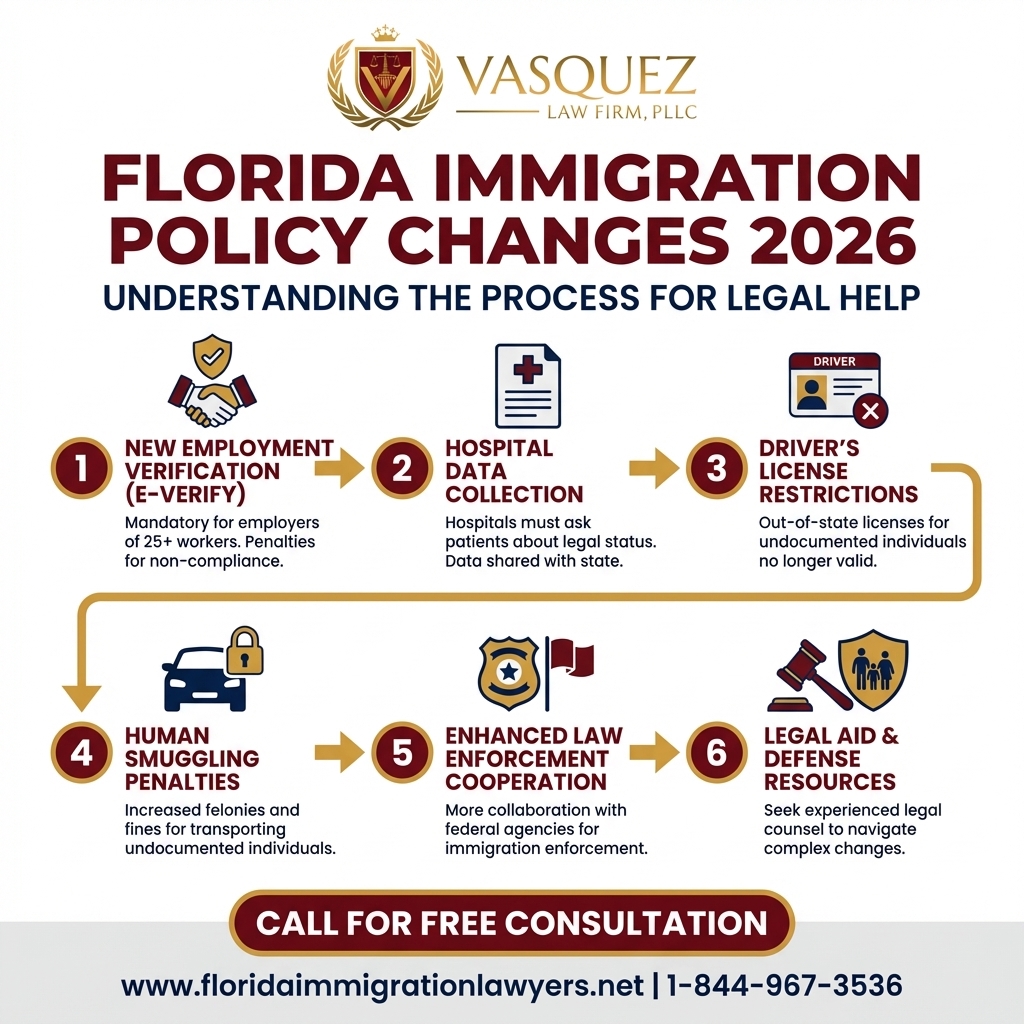
Florida Immigration Policy Changes 2026
Explore the 2026 immigration policy changes in Florida and how they impact Homestead residents. Learn about new eligibility criteria, document requirements, and more.

Florida's 2026 immigration policy changes aim to address reform needs. Key points include:
- Updated eligibility criteria
- New processing timelines
- Increased focus on family unity
- Enhanced documentation requirements
Introduction
Imagine living in Homestead, Florida, and hearing about the 2026 immigration policy changes. These updates can significantly impact your life and future plans. This article covers everything you need to know about the new rules and how they affect you.
Florida, a state known for its diverse population and vibrant communities, has long been a destination for immigrants seeking new opportunities and a better life. The upcoming 2026 immigration policy changes are not just administrative adjustments; they represent a significant shift in how the state approaches immigration, aiming to better integrate newcomers while addressing current societal and economic needs. Understanding these reforms is crucial for anyone whose life might be touched by them, from long-term residents to prospective immigrants.
Navigating the complexities of immigration law can be daunting, especially when new policies are introduced. These changes will influence various aspects of immigration, from application processes to eligibility for benefits and services. It is essential to stay informed and proactive to ensure a smooth transition and successful outcome. This comprehensive guide will break down the key components of the 2026 policies, offering clarity and practical advice to help you prepare for what lies ahead.
Call Florida Immigration Lawyers at 1-844-967-3536 for a free consultation.
Overview of 2026 Immigration Policy Changes
The 2026 immigration policy changes in Florida are part of a broader immigration reform effort. These changes seek to streamline processes and enhance the integration of immigrants into Florida's communities.
This sweeping reform package is designed to modernize existing immigration frameworks, many of which have been in place for decades and struggle to keep pace with contemporary global migration patterns and economic realities. The overarching goal is to create a more efficient, equitable, and secure immigration system that benefits both immigrants and the state of Florida. This involves not only updating legal statutes but also investing in technology and resources to support the new policies.
The reforms are expected to touch upon various facets of immigration, including family-sponsored visas, employment-based immigration, asylum procedures, and potentially even pathways to naturalization. Policymakers have emphasized a dual focus: ensuring national security while upholding humanitarian values and recognizing the invaluable contributions immigrants make to Florida's economy and culture. As such, these changes are a response to a complex interplay of economic, social, and political factors, aiming to strike a balance that serves the interests of all stakeholders.
New Eligibility Criteria
The new policies emphasize family unity and economic contributions. Applicants must meet updated criteria based on these priorities.
Regarding family unity, the 2026 policies are expected to prioritize certain familial relationships, potentially expanding definitions or accelerating processing for immediate relatives such as spouses, minor children, and parents of U.S. citizens and lawful permanent residents. This emphasis aims to reduce family separation and foster stronger community ties. Applicants may need to provide more robust evidence of genuine family relationships, including detailed birth certificates, marriage licenses, and extensive photographic evidence or affidavits from third parties, to meet these updated criteria.
For economic contributions, the reforms are likely to favor immigrants who can demonstrate a positive impact on Florida's economy. This could include individuals with specialized skills in high-demand sectors like healthcare, technology, or agriculture, as well as entrepreneurs willing to invest in new or existing businesses within the state. Criteria might include minimum investment amounts, job creation requirements, or proof of advanced degrees and professional certifications. These changes reflect a strategic effort to attract talent and capital that can drive economic growth and innovation across Florida.
Impact on Homestead and Surrounding Areas
Homestead, a vibrant community with a significant immigrant population, will see notable impacts. The changes will affect local businesses and community services.
In Homestead, a city deeply intertwined with its diverse immigrant communities, the policy shifts will have a ripple effect across various sectors. Local businesses, particularly those in agriculture, hospitality, and construction, heavily rely on immigrant labor. These businesses may face adjustments in their workforce planning, recruitment strategies, and compliance procedures. Conversely, new policies designed to attract skilled workers or investors could stimulate economic development, bringing new businesses and job opportunities to the area. Businesses should consult with Florida Immigration Lawyers to understand how these changes might impact their hiring practices and employee base.
Community services, including schools, healthcare facilities, and social support programs, will also experience significant changes. An increased focus on family unity might lead to more stable family units, potentially benefiting school enrollment and student performance. However, changes in eligibility for certain public benefits could strain existing resources or require new programs to support vulnerable populations. Local government and non-profit organizations in Homestead will need to adapt quickly to provide necessary support and information to their communities, ensuring that residents understand their rights and responsibilities under the new policies.
Step-by-Step Guide to Navigating Policy Changes
- Understand the New Criteria: Review the updated eligibility requirements on the USCIS website. It's not enough to just skim the headlines; delve into the specifics of each category, paying close attention to any changes in age limits, relationship definitions, or financial thresholds. The USCIS website is the primary source for official information, but supplemental guidance from reputable legal sources like Florida Immigration Lawyers can provide crucial context and interpretation.
- Gather Necessary Documentation: Collect all required documents as per the updated checklist. This often includes original birth certificates, marriage licenses, passports, financial records, and medical examination results. Ensure all documents are current, accurately translated into English by a certified translator if necessary, and properly notarized where required. Incomplete documentation is one of the leading causes of application delays and denials.
- Consult with a Lawyer: Seek legal advice to ensure compliance with new rules. An experienced immigration attorney, such as those at Florida Immigration Lawyers, can assess your specific situation, clarify complex legal jargon, identify potential challenges, and help you strategize the best approach. They can also represent you throughout the process, providing invaluable peace of mind. Call 1-844-967-3536 for expert guidance.
- Submit Your Application: Follow the new application submission process precisely. This may involve new forms, online portals, or specific mailing instructions. Double-check all entries for accuracy and completeness before submission. Keep copies of everything you submit, along with proof of mailing or electronic submission, for your records.
- Prepare for Interviews: Understand the interview process and expectations. Many immigration processes require an interview with a USCIS officer. Prepare by reviewing your application, understanding the types of questions you might be asked, and practicing your responses. Be honest, consistent, and respectful. A lawyer can often accompany you to these interviews or provide thorough preparation sessions.
Document Checklist
- Proof of identity: This typically includes a valid passport, national ID card, birth certificate, or other government-issued identification. Ensure these documents are unexpired and reflect your current legal name.
- Employment records: Provide pay stubs, W-2 forms, tax returns, employment verification letters, and any relevant professional licenses or certifications. For self-employed individuals, business registration documents and financial statements are crucial.
- Family relationship documents: Depending on your application, this may include marriage certificates, birth certificates for children, divorce decrees, and adoption papers. The goal is to clearly establish the legal relationship you claim.
- Financial statements: Bank statements, asset declarations, and affidavits of support (Form I-864) from sponsors are often required to demonstrate financial stability and ensure you will not become a public charge.
- Residency proof: Utility bills, lease agreements, property deeds, and school enrollment records can serve as evidence of your physical residence in Florida or the U.S. for the required period.
- Medical examination results: A report from a USCIS-approved civil surgeon is mandatory for most green card applicants, certifying that you are free from communicable diseases of public health significance and have received required vaccinations.
- Police clearance certificates: Depending on your country of origin and prior residences, you may need to provide certificates from police authorities confirming your criminal record (or lack thereof).
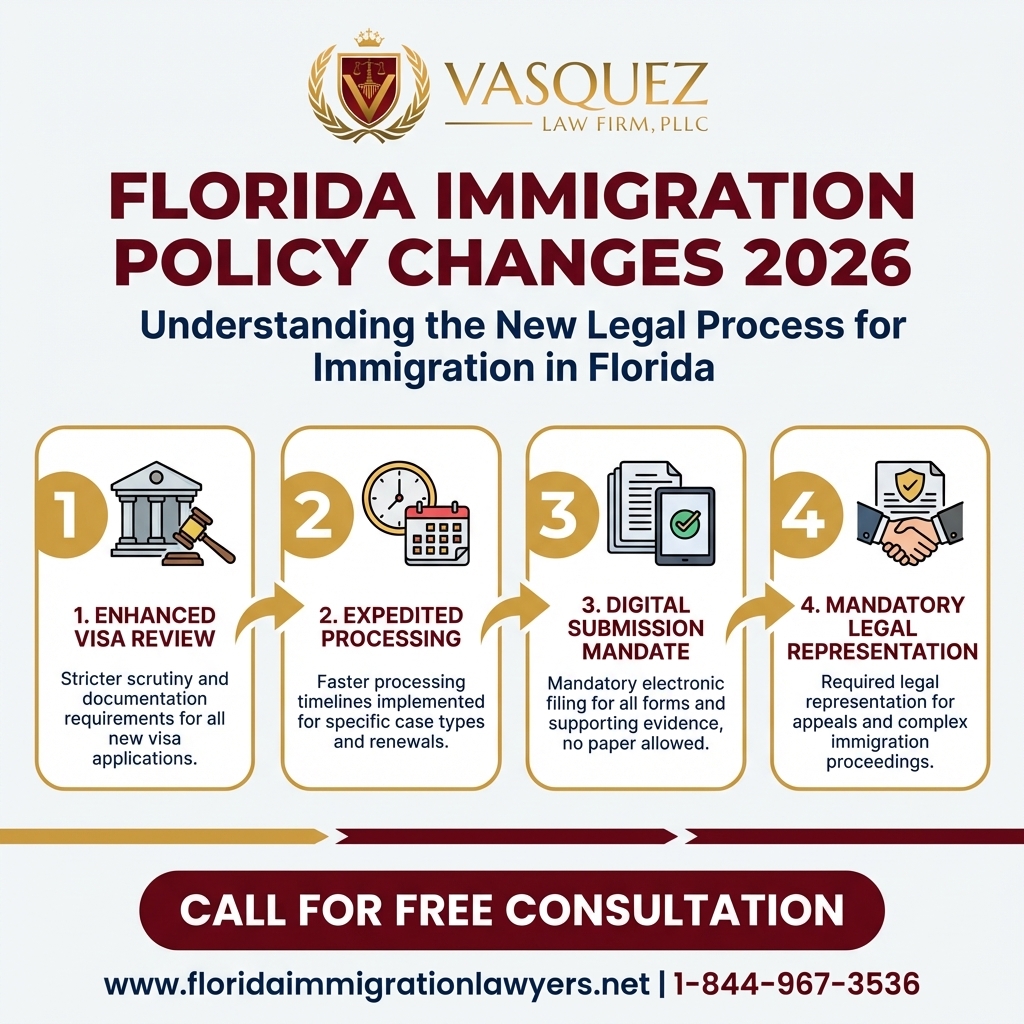
Timeline and Processing Expectations
Typically, processing times may vary based on individual circumstances. The new policies aim to reduce wait times and improve efficiency.
While the 2026 reforms are designed to streamline processes, actual timelines can still fluctuate significantly due to factors like the volume of applications, the complexity of individual cases, the accuracy of submitted documentation, and the availability of government resources. For example, a straightforward family petition with all documents in order might be processed faster than a complex asylum case requiring extensive review and multiple interviews. Applicants should regularly check the USCIS website for estimated processing times for their specific application type and service center.
The push for improved efficiency under the new policies includes potential investments in digital processing systems, increased staffing at USCIS and other relevant agencies, and clearer guidelines for adjudicators. These measures are intended to reduce the current backlogs that plague many immigration categories. However, it is always wise to anticipate potential delays and plan accordingly, especially if your immigration status affects employment or travel. Consulting with Florida Immigration Lawyers can provide more personalized insights into what to expect for your unique situation and help you prepare for any contingencies.
Cost Factors and Fee Breakdown
While specific fees can fluctuate, applicants should budget for application costs, legal fees, and potential additional expenses related to documentation.
Understanding the financial commitment is a critical part of the immigration process. The primary costs include USCIS filing fees, which vary significantly by application type (e.g., Form I-130 Petition for Alien Relative, Form I-485 Application to Register Permanent Residence). There are also biometric service fees for fingerprinting and background checks. Beyond government fees, applicants often incur costs for mandatory medical examinations conducted by USCIS-approved civil surgeons, which can range from a few hundred to over a thousand dollars depending on the provider and required vaccinations.
Additional expenses can include translation services for foreign-language documents, postage for certified mail, and travel costs for interviews or appointments. Legal fees for retaining an experienced immigration attorney, like those at Florida Immigration Lawyers, represent a significant but invaluable investment. While these fees can seem substantial, legal representation helps ensure accuracy, compliance, and a higher chance of success, potentially saving money and stress in the long run by avoiding costly mistakes or delays. Some applicants may qualify for fee waivers based on income, so it's worth exploring this option if applicable. Always discuss a clear fee structure with your attorney upfront.
Do not navigate this process alone. Contact Florida Immigration Lawyers today.
Common Mistakes to Avoid
- Ignoring New Eligibility Criteria: Overlooking updated requirements can lead to application denial. Forgetting to check the latest guidelines or assuming old rules still apply is a critical error. Always cross-reference your situation with the most current USCIS publications.
- Incomplete Documentation: Missing documents can delay the process. Submitting an application without all required evidence will result in a Request for Evidence (RFE) or even a denial, prolonging your wait time and potentially incurring additional costs. Create a checklist and meticulously verify every item.
- Missing Deadlines: Failing to meet deadlines can result in application rejection. Immigration processes are strict with submission windows and response times. Mark all critical dates on your calendar and submit documents well in advance to avoid last-minute issues.
- Not Seeking Legal Advice: Professional guidance is crucial under new rules. Attempting to navigate complex immigration laws without an attorney can lead to critical errors, misinterpretations, and missed opportunities. Florida Immigration Lawyers offer the expertise needed to avoid these pitfalls.
- Providing Inaccurate Information: Incorrect details can jeopardize your case. Any false statements, whether intentional or accidental, can lead to accusations of fraud, severe penalties, and even a permanent bar from future immigration benefits. Always be truthful and thorough.
- Overlooking Local Impacts: Understanding community-specific effects is essential. While federal policies apply nationwide, local implementation and resource availability can vary. Be aware of how changes might affect services or opportunities in your specific Florida community, like Homestead.
- Not Preparing for Interviews: Lack of preparation can affect your application's outcome. Interviews are a crucial part of the process where officers verify information. Being nervous or unprepared can lead to inconsistencies or misunderstandings that negatively impact your case. Practice with a lawyer or trusted advisor.
- Failing to Update Contact Information: Moving without notifying USCIS can result in missed notices and critical correspondence. Always ensure your address is current with USCIS by filing Form AR-11, Alien's Change of Address Card, within 10 days of moving.
When to Call a Lawyer
Consider calling a lawyer if you face complex immigration challenges, need to clarify new rules, or experience legal issues. Florida Immigration Lawyers offer comprehensive services to help you navigate these changes.
You should absolutely contact an immigration attorney when your case involves any complexities such as prior denials, criminal history, deportation proceedings, or if you are unsure about which visa category applies to you under the new 2026 policies. Furthermore, if you receive a Request for Evidence (RFE) or a Notice of Intent to Deny (NOID), professional legal assistance is critical to formulate a strong response. Even for seemingly straightforward cases, the peace of mind and assurance of compliance provided by an expert from Florida Immigration Lawyers can be invaluable. Don't hesitate to call 1-844-967-3536 for a free consultation at any stage of your immigration journey.
About Florida Immigration Lawyers
Florida Immigration Lawyers is committed to providing expert legal services across Florida. Our dedicated team assists with immigration, asylum, deportation defense, and more. Call us at 1-844-967-3536 or visit our website. Available 24/7 with free consultations.
Our firm understands the profound impact immigration decisions have on individuals and families. We pride ourselves on offering compassionate, culturally sensitive, and highly effective legal representation. With years of experience navigating the ever-changing landscape of U.S. immigration law, our attorneys are uniquely positioned to guide you through the 2026 policy changes, ensuring your application is meticulously prepared and strategically presented. We are dedicated to advocating for your rights and helping you achieve your immigration goals, whether it's obtaining a green card, securing a work visa, or defending against deportation.
Sources and References
- U.S. Citizenship and Immigration Services (USCIS)
- Executive Office for Immigration Review (EOIR)
- 8 U.S.C. Chapter 12 - Immigration and Nationality Act
Related services: immigration practice areas, family immigration services, citizenship and naturalization.
This article provides general legal information and is not intended as legal advice. Every case is unique, and outcomes depend on specific facts and circumstances. Contact an attorney for advice about your particular situation.
Final Call to Action
Take charge of your immigration journey. The 2026 policy changes are significant, but with the right guidance, you can navigate them successfully. Don't leave your future to chance. Call Florida Immigration Lawyers at 1-844-967-3536 for a free consultation. Our team is ready to provide the expert legal support you need, ensuring you understand every step and maximize your chances of a favorable outcome. Se Habla Español - Estamos aquí para ayudarle.
If you need legal assistance, learn more about our immigration law practice, or call us at 1-844-967-3536 for a free consultation.
Do Not Navigate This Process Alone
Our experienced immigration attorneys are ready to fight for you. Get a free, confidential consultation today.
Se Habla Español
Or leave your details and we’ll call you:
Free Evaluation in 24 Hours
Or talk to us right now
AI voice assistant — available 24/7
FreeFrequently Asked Questions

William J. Vásquez
Founding Attorney · Vasquez Law Firm
U.S. Air Force veteran and immigration attorney with years of hands-on U.S. immigration experience. J.D., NCCU School of Law. AILA member. Admitted to the 4th, 5th, and 11th Circuit Courts.
Available 24/7 - Free Evaluations
Reviewed for legal accuracy by William J. Vásquez
Licensed in North Carolina; U.S. immigration is federal practice.
Related Legal Services
Our Florida immigration attorneys can help you with immigration practice areas, free immigration consultation and experienced immigration attorneys. Call today at 1-844-967-3536 for a free consultation.
Related Links
Related Topics
Free Legal Consultation
Discuss your case with our experienced attorneys. We're available 24/7.
Se Habla Español - Estamos aquí para ayudarle.
Related Articles
Immigration Lawyer Orlando Free Consultation in Florida
For individuals and families in Orlando, Florida, navigating the complexities of U.S. immigration law requires expert guidance. An immigration lawyer in Orlando offers crucial support for everything from visa applications and green card processes to naturalization and deportation defense. This comprehensive guide details what a free consultation covers, providing a step-by-step overview of immigration pathways, essential document checklists, and expected timelines in 2026. We also highlight common mistakes to avoid, discuss the critical role of legal counsel in deportation and asylum cases, and explain why choosing a local Orlando immigration attorney is beneficial. Florida Immigration Lawyers is dedicated to serving the diverse community of Orlando with compassionate, effective legal solutions, ensuring you receive personalized advice and robust representation for a successful immigration journey.
Voluntary Departure vs. Deportation in Florida 2026
Navigating immigration challenges in Florida, particularly the distinction between voluntary departure and deportation, is critical for non-citizens. Voluntary departure offers a chance to leave the U.S. without a formal deportation order, potentially easing future re-entry. It requires strict eligibility, including good moral character and financial means to depart, typically within 60-120 days. In contrast, deportation results in severe re-entry bars, often for 5, 10, or 20 years. This guide explores the process, documentation, costs, and critical mistakes to avoid, emphasizing the importance of timely departure and legal counsel. Florida Immigration Lawyers provides expert guidance for individuals in Orlando, Miami, and across the state, offering free case reviews to help protect your immigration future. Understanding these differences is paramount to making informed decisions and avoiding irreversible consequences.
How to Choose an Immigration Lawyer in Florida 2026
Selecting the right immigration lawyer in Florida is a critical decision that can profoundly impact your future. With complex regulations and varying case types, finding an attorney who specializes in your specific needs, possesses a strong reputation, and communicates transparently is paramount. This guide from Florida Immigration Lawyers provides actionable steps, from verifying credentials with the Florida Bar and understanding fee structures to recognizing common pitfalls like 'notario' scams. Learn how to effectively vet potential legal counsel, prepare necessary documents, and set realistic expectations for your immigration journey in 2026. Empower yourself to make an informed choice and secure expert legal representation for your family, business, or defense immigration needs in Orlando and across Florida.
VAWA Immigration Lawyer: Your 2026 Guide in Florida
For individuals in Florida experiencing domestic abuse from a U.S. citizen or lawful permanent resident, VAWA (Violence Against Women Act) immigration relief offers a confidential pathway to a green card. This article, updated for 2026, provides a comprehensive guide to understanding VAWA self-petitioning, including eligibility criteria, the step-by-step application process, essential documentation, and expected timelines. Learn about the crucial role of a VAWA immigration lawyer in navigating complex requirements, ensuring confidentiality, and protecting your rights throughout the process. We cover common mistakes to avoid and highlight when to seek expert legal counsel to secure your safety and immigration status in Florida. Florida Immigration Lawyers offers free case reviews and compassionate support.