Fiance Visa K-1 Process in Florida 2026
Learn the step-by-step process of obtaining a K-1 fiancé visa in Florida. Discover eligibility requirements, timelines, and common pitfalls to avoid. Call Florida Immigration Lawyers at 1-844-967-3536 for expert assistance.

Fiance Visa K-1 Process in Florida 2026 | VLF Florida
Navigating the U.S. immigration system can be a complex and often daunting journey, especially when you're trying to bring your loved one to Florida. For U.S. citizens who wish to marry their foreign fiancée in the United States, the K-1 Fiance Visa is the primary pathway. This visa allows your fiancée to enter the U.S. for the specific purpose of marrying you within 90 days of their arrival. If you're a Florida resident looking to start this process in 2026, understanding each step is crucial for a smooth and successful outcome. At VLF Florida, we specialize in guiding individuals and families through the intricacies of immigration law, ensuring your journey is as stress-free as possible.
Understanding the K-1 Fiance Visa
The K-1 Fiance Visa is a non-immigrant visa that grants a foreign citizen permission to travel to the United States to marry their U.S. citizen petitioner. Once married, the foreign spouse can then apply for Adjustment of Status (AOS) to become a lawful permanent resident (Green Card holder). This visa is specifically designed for couples who intend to marry, rather than those who are already married (for which the IR-1/CR-1 spousal visa is appropriate).
Eligibility Requirements for the K-1 Visa
Both the U.S. citizen petitioner and the foreign fiancée (beneficiary) must meet specific criteria to be eligible for the K-1 visa:
- U.S. Citizen Petitioner: The petitioner must be a U.S. citizen. Lawful Permanent Residents (Green Card holders) cannot petition for a K-1 visa.
- Intent to Marry: Both parties must have a genuine intent to marry each other within 90 days of the foreign fiancée's entry into the U.S.
- Legally Free to Marry: Both individuals must be legally free to marry, meaning any previous marriages must have been legally terminated (divorce, annulment, or death of a spouse).
- Meeting in Person: The couple must have met in person at least once within the two years immediately preceding the filing of the petition. There are very limited exceptions to this rule, such as extreme hardship to the U.S. citizen petitioner or if meeting would violate strict and long-established cultural or social customs of the foreign fiancée's culture.
- Financial Support: The U.S. citizen petitioner must be able to financially support their fiancée and demonstrate they meet the income requirements (125% of the poverty guidelines).
Step-by-Step K-1 Visa Process in Florida for 2026
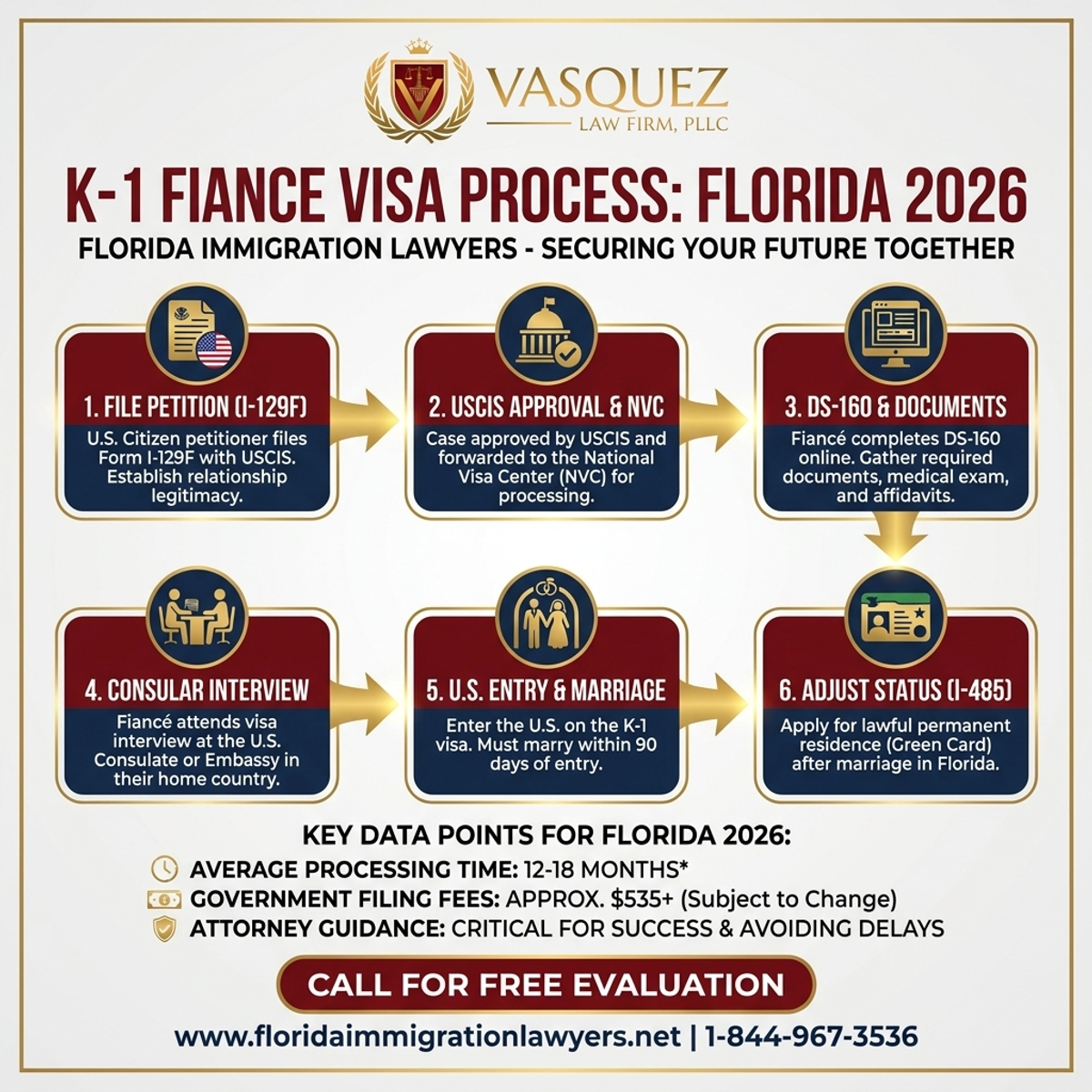
The K-1 visa process involves several stages, primarily handled by U.S. Citizenship and Immigration Services (USCIS) and the Department of State (DOS) through its embassies and consulates abroad. Here's a detailed breakdown:
Phase 1: Filing Form I-129F, Petition for Alien Fiance(e)
The journey begins when the U.S. citizen petitioner files Form I-129F, Petition for Alien Fiance(e), with USCIS. This form establishes the eligibility of both parties and the bona fide nature of their relationship.
- Who Files: Only the U.S. citizen files this petition.
- Required Documents: You'll need to submit a comprehensive package of supporting documents, including proof of U.S. citizenship, evidence of your relationship (photos, communication records, travel itineraries, affidavits from friends/family), evidence of intent to marry, proof of meeting in person, and documentation of any previous marriage terminations.
- Where to File: The petition is filed with the USCIS lockbox facility that serves your jurisdiction. For Florida residents, this typically means mailing it to the Dallas or Phoenix lockbox, depending on the courier used.
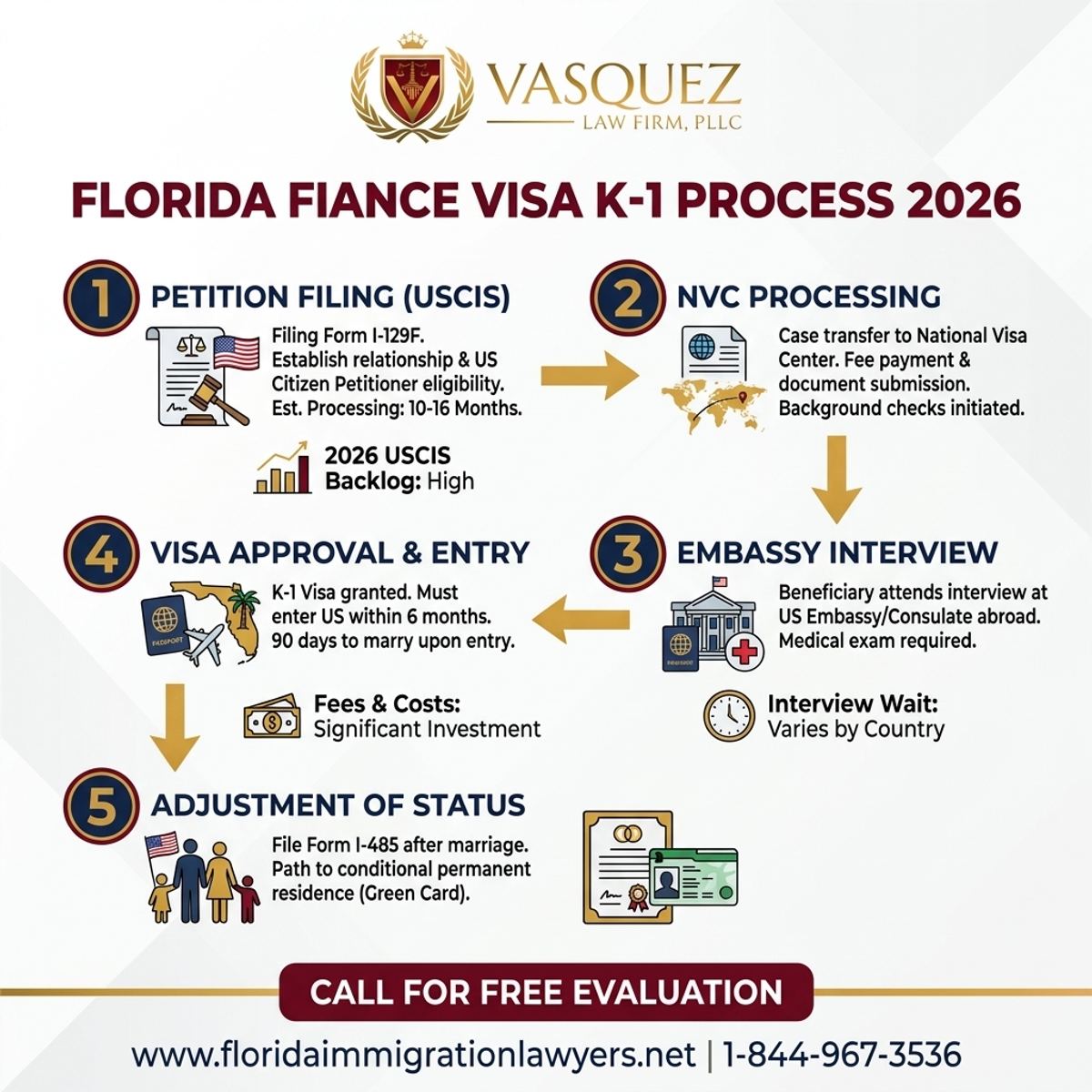
- Processing Times: USCIS processing times can vary significantly, often ranging from several months to over a year. It's essential to check the USCIS website for current processing times.
Once USCIS receives your petition, they will send a Form I-797C, Notice of Action, confirming receipt. After adjudication, if approved, USCIS will send an I-797 Approval Notice. This approval signifies that USCIS believes your relationship is genuine and you meet the initial eligibility requirements.
Phase 2: National Visa Center (NVC) Processing
Upon approval of Form I-129F, USCIS forwards the petition to the National Visa Center (NVC). The NVC acts as a liaison between USCIS and the U.S. Embassy or Consulate abroad where your fiancée will have their interview. The NVC will assign a case number and forward the petition to the appropriate embassy or consulate.
Phase 3: Consular Processing at U.S. Embassy/Consulate Abroad
This phase involves the foreign fiancée completing several steps in their home country:
- DS-160 Form: The fiancée must complete and submit Form DS-160, Online Nonimmigrant Visa Application. This form collects detailed biographical and background information.
- Medical Examination: A mandatory medical examination must be conducted by an authorized panel physician in the fiancée's country. This ensures they meet the health-related admissibility requirements.
- Gathering Documents: The fiancée must collect all necessary civil documents, such as birth certificates, police certificates from all countries lived in, marriage termination documents (if applicable), and evidence of financial support (Form I-134, Affidavit of Support, from the U.S. citizen petitioner).
- Interview Preparation: Preparing for the interview is crucial. This includes reviewing all submitted documents, understanding the K-1 visa process, and being ready to answer questions about the relationship.
- Visa Interview: The fiancée will attend an interview at the U.S. Embassy or Consulate. A consular officer will review their application, documents, and ask questions to determine eligibility and the bona fide nature of the relationship.
If the interview is successful, the K-1 visa will be issued. The visa is typically valid for six months, allowing a single entry into the United States.
Phase 4: Entry to the U.S. and Adjustment of Status
Once the K-1 visa is issued, your fiancée can travel to the U.S. Upon arrival, they will be admitted for 90 days. During this 90-day period, you and your fiancée must marry. Failure to marry within this timeframe will result in your fiancée losing their legal status and potentially facing deportation.
After marriage, the foreign spouse can apply for Adjustment of Status (AOS) to become a Lawful Permanent Resident. This involves filing Form I-485, Application to Register Permanent Residence or Adjust Status, along with supporting documents like Form I-864 (Affidavit of Support), medical examination results, and evidence of the marriage. An interview with USCIS may be required for the AOS application. Successfully navigating the AOS process is the final step towards obtaining a Green Card, and it's an area where expert immigration legal assistance can be invaluable.
Common Challenges and How to Overcome Them
While the K-1 visa process seems straightforward on paper, many couples encounter significant hurdles. Being aware of these potential challenges and preparing for them can greatly improve your chances of success.
Evidence of a Bona Fide Relationship
One of the most common reasons for delays or denials is insufficient evidence of a genuine relationship. USCIS and consular officers are trained to identify fraudulent marriages. To overcome this, provide a robust portfolio of evidence:
- Photos: Include dated photos of you together with family and friends, at various locations, and over time.
- Communication: Provide extensive chat logs, emails, call records, and video call screenshots. Highlight key conversations.
- Travel Itineraries: Show proof of your visits to each other, including flight tickets, hotel bookings, and passport stamps.
- Joint Finances (if applicable): While not always possible before marriage, any shared financial dealings (e.g., gifts, shared travel expenses) can be helpful.
- Affidavits: Statements from friends and family who can attest to the legitimacy of your relationship.
The more compelling and consistent your evidence, the stronger your case will be. Remember, quality often trumps quantity, but a good balance is ideal.
Financial Requirements (Affidavit of Support)
The U.S. citizen petitioner must demonstrate the ability to financially support their fiancée to prevent them from becoming a public charge. This is done through Form I-134, Affidavit of Support, for the K-1 stage, and Form I-864 for the Adjustment of Status stage. The petitioner's income must meet at least 125% of the federal poverty guidelines for their household size. If the petitioner's income is insufficient, a joint sponsor may be required. This can add complexity, so understanding the income requirements and potential need for a joint sponsor early on is critical.
Criminal Records and Inadmissibility Issues
Certain criminal convictions, health issues, or past immigration violations can render a foreign fiancée 'inadmissible' to the U.S. This is a serious challenge that often requires a waiver of inadmissibility. Common grounds for inadmissibility include:
- Criminal offenses (e.g., drug-related crimes, crimes involving moral turpitude).
- Certain communicable diseases.
- Past immigration fraud or misrepresentation.
- Overstaying a previous visa.
Step-by-Step Process — Fiance Visa K-1 Process in Florida 2026 | VLF Florida
If your fiancée has any such issues, it is imperative to seek legal counsel immediately. An experienced attorney can assess the situation, determine if a waiver is available, and help prepare the necessary applications. Failing to disclose or properly address inadmissibility can lead to denial and even future bans from the U.S. In some severe cases, issues like these can even lead to deportation defense being necessary down the line, highlighting the importance of addressing them proactively.
Delays and Requests for Evidence (RFEs)
Immigration processes are rarely linear. Delays are common due to high caseloads, administrative processing, or unforeseen circumstances. USCIS may also issue a Request for Evidence (RFE) if they determine that your initial submission lacks sufficient documentation or clarity. Responding to an RFE promptly and thoroughly is crucial. A poorly prepared response can lead to further delays or even a denial. Maintaining organized records and anticipating potential RFEs can help mitigate these challenges.
Navigating the Consular Interview
The visa interview is often the most nerve-wracking part for the foreign fiancée. Consular officers are looking for consistency in information and genuine intent. Tips for success include:
- Be Honest and Consistent: Ensure all information provided in the DS-160 and during the interview aligns with your petition.
- Bring All Documents: Have all original documents and their copies organized and ready.
- Understand Your Relationship: Be prepared to discuss how you met, your relationship timeline, future plans, and details about your U.S. citizen fiancé.
- Dress Appropriately: Present yourself professionally.
While the K-1 visa focuses on marriage, there are also situations where individuals may be seeking protection. If your fiancée has fears of returning to their home country due to persecution, it's important to understand that the K-1 visa is not designed for asylum. However, if such concerns exist, it's crucial to consult with an attorney about potential avenues for asylum or other forms of protection, though this would typically be a separate process.
Why Choose VLF Florida for Your K-1 Visa Journey?
The K-1 visa process is intricate, with numerous forms, strict deadlines, and specific requirements. Making a mistake can lead to significant delays, denials, or even long-term immigration consequences. Having experienced legal counsel by your side can make all the difference.
At VLF Florida, our dedicated immigration attorneys possess a deep understanding of U.S. immigration law, including the nuances of the K-1 visa process specifically for Florida residents. We offer:
- Personalized Guidance: We provide tailored advice based on your unique circumstances, ensuring all eligibility requirements are met and all necessary documentation is meticulously prepared.
- Expertise in Complex Cases: Whether you're dealing with previous immigration issues, criminal records, or simply need help navigating the voluminous paperwork, we have the experience to handle complex situations.
- Peace of Mind: We handle the legal heavy lifting, allowing you to focus on your relationship and planning your future together in Florida.
- Local Knowledge: Our familiarity with local USCIS field offices and Florida-specific considerations can be a significant advantage.
Don't leave your future to chance. The journey to bringing your fiancée to Florida is a significant one, and having a knowledgeable legal partner can ensure a smoother path to permanent residency. We are committed to helping you reunite with your loved one and build your life together in the United States.
Contact VLF Florida Today
If you're a U.S. citizen in Florida considering the K-1 Fiance Visa process for 2026, or if you've already started and encountered challenges, we invite you to reach out to VLF Florida. Our team is ready to provide the expert legal assistance you need. Contact us today for a consultation to discuss your specific situation and learn how we can help you achieve your immigration goals. Let us help you navigate the complexities and bring your fiancée home to Florida.
Key Statistics — Fiance Visa K-1 Process in Florida 2026 | VLF Florida
Sources and References
- U.S. Citizenship and Immigration Services (USCIS)
- Executive Office for Immigration Review (EOIR)
- U.S. Department of State - Bureau of Consular Affairs
- Immigration and Nationality Act (INA), 8 U.S.C. Chapter 12
Do Not Navigate This Process Alone
Our experienced immigration attorneys are ready to fight for you. Get a free, confidential consultation today.
Se Habla Español
Frequently Asked Questions

William J. Vásquez
Founding Attorney · Vasquez Law Firm
U.S. Air Force veteran and immigration attorney with thousands of cases resolved. J.D., NCCU School of Law. AILA member. Admitted to the 4th, 5th, and 11th Circuit Courts.
Available 24/7 - Free Evaluations
Related Legal Services
Our Florida immigration attorneys can help you with deportation defense, citizenship and naturalization and family immigration services. Call today at 1-844-967-3536 for a free consultation.
Related Links
Related Topics
Free Legal Consultation
Discuss your case with our experienced attorneys. We're available 24/7.
Se Habla Español - Estamos aquí para ayudarle.
Related Articles
Biometrics Appointment in Florida: What to Expect in 2026
Navigating a biometrics appointment in Florida is crucial for your USCIS process. Learn what to expect, how to prepare, and common pitfalls to avoid. Florida Immigration Lawyers are here to help with personalized guidance and support.
Withholding of Removal Explained: Florida Defense in 2026
For those in Florida facing deportation and fearing persecution or torture in their home country, understanding withholding of removal is critical. This form of protection prevents removal to a dangerous country, though it differs significantly from asylum in its eligibility criteria and benefits. It requires proving a "more likely than not" chance of persecution based on protected grounds or torture, a higher standard than asylum's "well-founded fear." While withholding of removal does not lead to a Green Card, it offers mandatory protection if the stringent criteria are met, even for some individuals barred from asylum. The process involves complex legal proceedings before an immigration judge, often in Miami or Orlando immigration courts. A comprehensive application, detailed testimony, and robust supporting evidence, including country conditions reports and affidavits, are essential. Given the high stakes and intricate legal requirements, securing the expertise of a Florida immigration lawyer is paramount to building a strong defense and navigating the path to safety.
US Visa Policy Changes July 2026: What Students in Florida
As of July 2026, international students in Florida seeking a change of status to an F-1 student visa must prepare for potential adjustments to U.S. visa policies. This comprehensive guide from Florida Immigration Lawyers explores the anticipated policy changes, detailing their potential impact on application requirements, processing times, and eligibility criteria. We provide a step-by-step overview of the change of status process, including a document checklist, expected timelines, and cost considerations. Understanding these complexities and avoiding common mistakes is crucial for a successful application. With potential changes approaching, proactive planning and expert legal guidance are more important than ever. Our firm is dedicated to helping students in Tampa and across Florida navigate these challenges, offering tailored advice and robust representation. Learn how to protect your academic future and ensure a smooth transition to F-1 student status.
Dual Citizenship Lawyer: Your 2026 Guide to Naturalization
Achieving U.S. citizenship is a profound milestone, but the path to naturalization, especially with dual citizenship in mind, is fraught with legal intricacies and a critical interview process. This comprehensive guide from Florida Immigration Lawyers demystifies the journey, offering essential citizenship interview tips and highlighting the invaluable role of a dual citizenship lawyer. We cover eligibility, document preparation, timelines, and common pitfalls, all tailored for Florida residents in areas like Pembroke Pines. Discover how expert legal counsel can prepare you for your naturalization interview, address dual nationality concerns, and ensure a smooth, successful application. From initial assessment to interview representation, we provide the support needed to navigate USCIS requirements confidently. Call Florida Immigration Lawyers for a free consultation to start your journey.