Family Petition Immigration Lawyer Miami: Florida Guide
Dreaming of reuniting your family in Florida? The family petition process, starting with Form I-130, is the crucial first step. This guide covers eligibility, step-by-step filing, essential documents, and navigating complex timelines for a family visa. Learn about the costs involved and the critical role an immigration lawyer plays in Miami, Jacksonville, and across Florida. Avoid common mistakes and understand when to seek legal counsel to ensure a smooth journey towards a green card. Florida Immigration Lawyers offers expert guidance for your family's future, providing free consultations and unwavering support.

A family petition, primarily through Form I-130, Petition for Alien Relative, is the fundamental first step for a U.S. citizen or lawful permanent resident (LPR) to help eligible family members immigrate to the United States. This process is complex, involving strict eligibility criteria, extensive documentation, and varying processing times depending on the relationship category and the beneficiary's location. Securing a family visa through an I-130 petition can reunite families, offering a path to a green card. Given the intricate legal requirements and potential pitfalls, seeking guidance from an experienced immigration lawyer in Miami or anywhere in Florida is crucial for a successful outcome.
- U.S. citizens and LPRs can petition for specific relatives.
- The I-130 form establishes a valid family relationship.
- Processing times vary significantly based on family preference categories.
- Accurate documentation and adherence to guidelines are paramount.
- An immigration attorney provides vital legal support, especially in complex cases.
The dream of uniting your family in the Sunshine State is a powerful motivator for many in Florida. Whether you are in Miami, Jacksonville, Orlando, or Tampa, helping a loved one immigrate to the United States is a journey filled with hope, but also with significant legal complexities. The family petition process, initiated by filing Form I-130, Petition for Alien Relative, is the cornerstone of family-based immigration. It's the first critical step towards securing a family visa and ultimately, a green card for your spouse, child, parent, or sibling.
Navigating the intricate web of U.S. immigration laws requires meticulous attention to detail and a deep understanding of federal regulations. From determining eligibility to gathering extensive documentation and preparing for interviews, each phase presents its own set of challenges. A single mistake or oversight can lead to delays, denials, or even more severe consequences. This guide will demystify the family petition process, highlight common pitfalls, and emphasize why securing an experienced immigration lawyer in Miami or throughout Florida is not just beneficial, but often essential for a smooth and successful journey.
Do not embark on this life-changing process without expert guidance. For personalized assistance and to ensure your family's future in Florida, call Florida Immigration Lawyers at 1-844-967-3536 for a free consultation. We are here to help you navigate every step.
Understanding the Family Petition Process in Florida
The family petition process is the primary pathway for U.S. citizens and lawful permanent residents (LPRs) to sponsor certain family members for immigration to the United States. At its core, this process involves demonstrating a valid family relationship to U.S. Citizenship and Immigration Services (USCIS). The journey begins with the filing of Form I-130, Petition for Alien Relative, which is the foundational document that establishes this relationship, as outlined in Section 204 of the Immigration and Nationality Act (INA), 8 U.S.C. § 1154.
Eligibility to file a family petition depends on your immigration status and the specific relationship you share with the beneficiary. U.S. citizens can petition for a broader range of relatives, including spouses, unmarried children under 21, married children of any age, adult sons and daughters, and siblings. Lawful permanent residents, however, are limited to petitioning only for spouses and unmarried children of any age. Understanding these categories is crucial because they directly impact visa availability and processing times.
The INA distinguishes between "immediate relatives" and "family preference categories." Immediate relatives of U.S. citizens—spouses, unmarried children under 21, and parents (if the U.S. citizen is 21 or older)—do not face annual visa quotas, meaning visas are always immediately available upon petition approval. This often translates to faster processing. Conversely, family preference categories, which include adult children, married children, and siblings of U.S. citizens, as well as spouses and unmarried children of LPRs, are subject to annual numerical limits. This can lead to significant waiting periods, sometimes spanning several years, as visas become available according to the priority date established by the I-130 filing. For families in Florida's diverse communities, from the bustling streets of Miami to the growing neighborhoods of Jacksonville, understanding these distinctions is the first step toward strategic planning for family reunification.
Immediate Relatives vs. Family Preference Categories
The distinction between immediate relatives and family preference categories is perhaps the most critical aspect of the family petition process. For immediate relatives, once USCIS approves the I-130 petition, the beneficiary can usually proceed directly to the next step, either applying for a green card through adjustment of status if they are already in the U.S. or through consular processing if they are abroad. This streamlined path offers a significant advantage for families hoping to reunite quickly.
For preference categories, however, the approved I-130 petition signifies only the first hurdle cleared. The beneficiary must then wait for a visa number to become available based on their "priority date," which is the date USCIS received the I-130 petition. The Department of State's monthly Visa Bulletin (travel.state.gov) provides updates on which priority dates are current for each category and country. This waiting period can be lengthy, especially for certain nationalities and preference categories, making long-term planning essential. An experienced immigration lawyer can help you understand your specific category, estimate potential waiting times, and prepare for the subsequent stages, ensuring you are well-informed throughout this often-protracted process.
Step-by-Step Guide to Filing an I-130 Family Petition
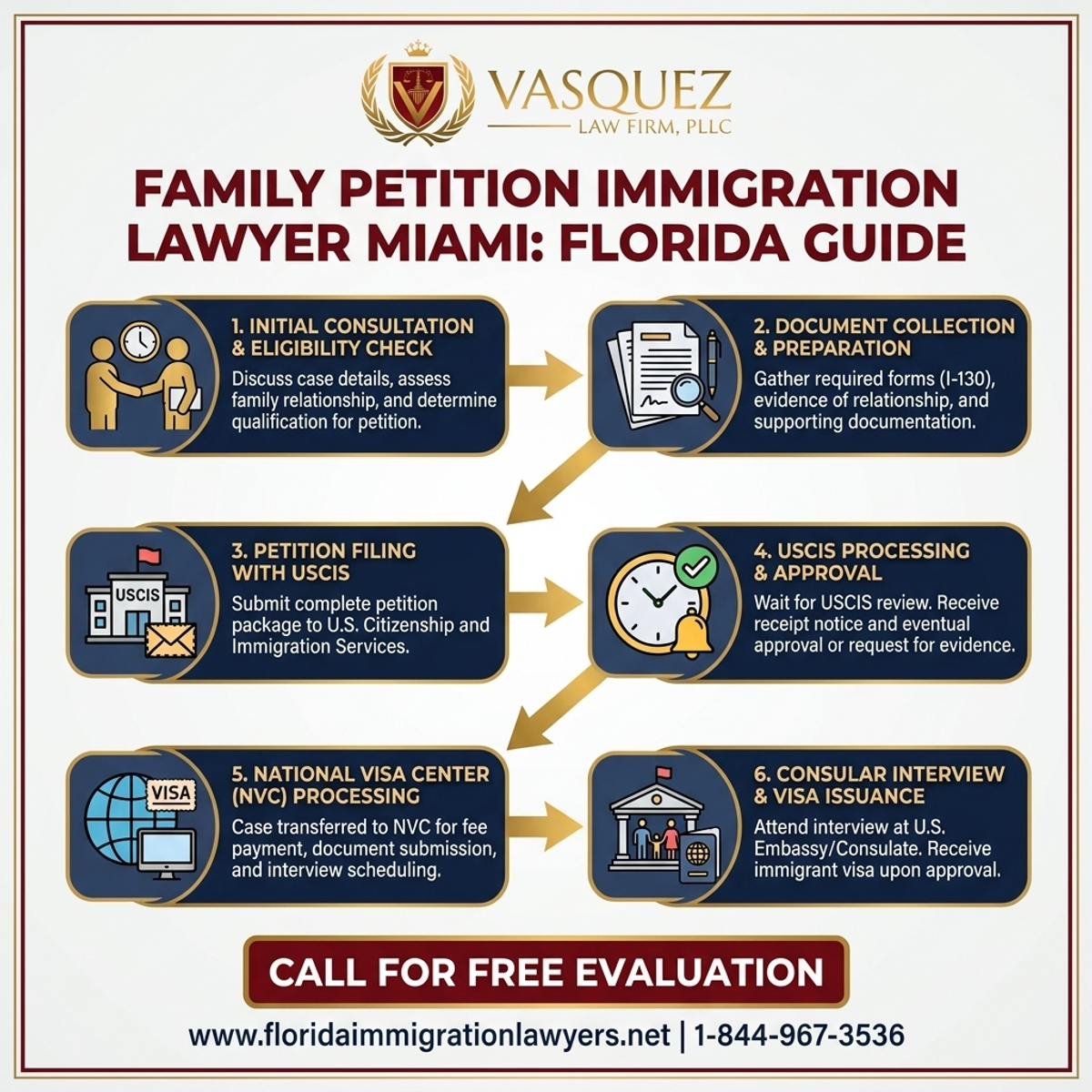
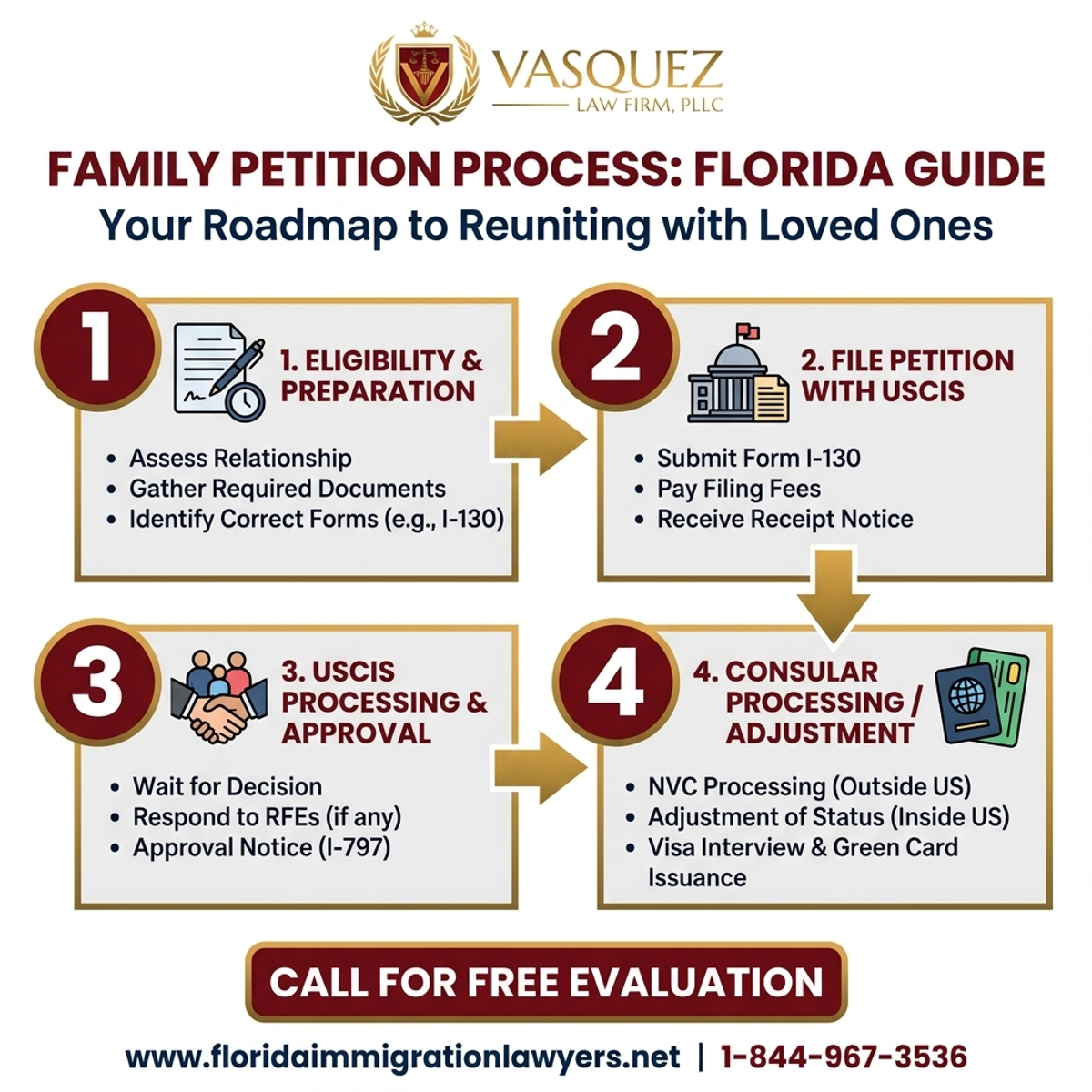
Filing a family petition is a multi-step process that demands precision and thoroughness. Each stage has specific requirements, and understanding them is crucial for a successful outcome. Here is a general outline of the process, which can vary slightly depending on your unique circumstances and whether the beneficiary is inside or outside the U.S.
-
Step 1: Determine Eligibility and Gather Initial Information. Before filing, the U.S. citizen or LPR petitioner must confirm their eligibility to sponsor the specific family member. This involves verifying your status and the nature of the relationship. For example, a U.S. citizen can petition for a parent, but only if the citizen is at least 21 years old. Begin collecting basic information about both the petitioner and the beneficiary, including full legal names, dates of birth, places of birth, and current addresses. This initial data will form the foundation of your Form I-130.
-
Step 2: Complete and File Form I-130, Petition for Alien Relative. This is the core document of the family petition process. It must be filled out completely and accurately. USCIS provides detailed instructions, but the form itself can be complex. You will need to provide information about yourself (the petitioner) and your relative (the beneficiary), as well as details about your relationship. Along with the form, you must submit supporting documentation to prove your U.S. citizenship or LPR status and the bona fide nature of your family relationship. For example, a U.S. citizen petitioning for a spouse will need to include their birth certificate or naturalization certificate, and a marriage certificate. All documents not in English must be accompanied by certified translations.
-
Step 3: USCIS Processing and Approval. Once USCIS receives your I-130 petition and the filing fee, they will send a receipt notice (Form I-797C, Notice of Action). This notice includes your priority date, which is especially important for family preference categories. USCIS will then review your petition and supporting documents. They may issue a Request for Evidence (RFE) if they need more information or clarification. It is vital to respond to RFEs promptly and comprehensively. If approved, USCIS will send an approval notice (Form I-797, Notice of Action). The processing time for I-130 petitions can vary significantly based on the USCIS service center and the relationship category, often ranging from several months to over a year.
-
Step 4: Visa Processing (Consular Processing or Adjustment of Status). After I-130 approval, the next step depends on whether the beneficiary is inside or outside the United States. If the beneficiary is abroad, their case moves to the National Visa Center (NVC) for "consular processing." The NVC collects additional documents, including the Affidavit of Support (Form I-864), and schedules an interview at a U.S. embassy or consulate in the beneficiary's home country. If the beneficiary is lawfully present in the U.S. and an immigrant visa is immediately available (typically for immediate relatives), they may be eligible to "adjust status" by filing Form I-485, Application to Register Permanent Residence or Adjust Status, with USCIS. This often involves a medical examination and an interview at a local USCIS field office, such as the one in Miami or Jacksonville.
-
Step 5: Interview and Final Decision. Both consular processing and adjustment of status generally culminate in an interview. During the interview, an immigration officer will review all submitted documents and ask questions to confirm the information provided and verify the authenticity of the relationship. For family-based petitions, the purpose of the interview is often to ensure the marriage or family relationship is bona fide and not entered into solely for immigration purposes. Following a successful interview and review, the beneficiary's visa or green card application will typically be approved. If approved through consular processing, the beneficiary will receive an immigrant visa stamp in their passport to enter the U.S. as a lawful permanent resident. If approved through adjustment of status, the green card will be mailed to their address.
Essential Documents for Your Family Petition
The success of your family petition hinges on the thoroughness and accuracy of your documentation. Submitting an incomplete or poorly supported petition is one of the quickest ways to invite delays or even a denial. While the specific list of required documents can vary slightly based on the relationship and individual circumstances, the following are generally essential for any I-130 filing:
- Proof of Petitioner's U.S. Citizenship or Lawful Permanent Resident (LPR) Status:
- U.S. Birth Certificate (for U.S. citizens)
- U.S. Passport (for U.S. citizens)
- Certificate of Naturalization (for naturalized U.S. citizens)
- Form I-551, Permanent Resident Card (Green Card) (for LPRs)
- Proof of Relationship to the Beneficiary:
- For Spouses: Marriage certificate, joint financial statements, utility bills, lease agreements, photos, affidavits from friends/family, birth certificates of joint children.
- For Children: Beneficiary's birth certificate showing names of both parents. If petitioning for a stepchild, marriage certificate of the U.S. citizen/LPR parent to the stepchild's biological parent.
- For Parents: Petitioner's birth certificate showing names of both parents. If the petitioner is a U.S. citizen, they must be at least 21 years old.
- For Siblings: Birth certificates of both petitioner and beneficiary, showing at least one common parent. If applicable, marriage certificates or divorce decrees showing name changes.
- Proof of Termination of Previous Marriages (if applicable):
- Divorce decrees, annulment decrees, or death certificates for any previous marriages of both the petitioner and the beneficiary.
- Photographs:
- Passport-style photos of both the petitioner and the beneficiary, meeting USCIS specifications.
- Form G-325A, Biographic Information (if required):
- Though often incorporated into other forms now, ensure you check current USCIS requirements.
- Form I-864, Affidavit of Support (later stage):
- This form is required to show the petitioner can financially support the beneficiary and prevent them from becoming a public charge. It requires extensive financial documentation, including tax returns, W-2s, and employment verification letters.
Step-by-Step Process — Family Petition Immigration Lawyer Miami: Florida Guide
- Medical Examination (later stage for Adjustment of Status/Consular Processing):
- Beneficiaries must undergo a medical examination by a USCIS-approved civil surgeon or a panel physician abroad.
- Biometrics Appointment (later stage for Adjustment of Status):
- Required for fingerprinting and background checks.
- Certified Translations:
- Any document not in English must be accompanied by a complete and accurate English translation, certified by the translator.
Collecting these documents can be time-consuming and challenging, especially when dealing with foreign records. An experienced immigration lawyer in Miami or elsewhere in Florida can help you identify all necessary documents, organize them correctly, and ensure they meet USCIS standards, significantly reducing the risk of RFEs or denials. This is particularly important for families in Florida, where diverse backgrounds often mean dealing with documents from various countries and legal systems.
Navigating Family Petition Timelines and Processing Expectations
One of the most common questions for individuals pursuing a family petition is "How long will it take?" The answer, unfortunately, is rarely simple and depends on several factors, primarily the relationship category, the country of origin, and the current workload of USCIS and the National Visa Center (NVC) or the specific U.S. embassy/consulate. Understanding these timelines is crucial for managing expectations and planning your family's future in Florida.
As discussed, immediate relatives of U.S. citizens (spouses, unmarried children under 21, and parents) generally experience the fastest processing times because they are not subject to annual visa quotas. Once the I-130 is approved, they can usually proceed directly to the next stage, either adjustment of status in the U.S. or consular processing abroad. Even for immediate relatives, the I-130 processing can take several months to over a year at USCIS service centers. You can check current USCIS processing times on their official website (uscis.gov/processing-times).
For family preference categories, the waiting period can be significantly longer due to annual visa limits. These categories include: F1 (Unmarried Sons and Daughters of U.S. Citizens), F2A (Spouses and Children of LPRs), F2B (Unmarried Sons and Daughters of LPRs), F3 (Married Sons and Daughters of U.S. Citizens), and F4 (Brothers and Sisters of U.S. Citizens). The wait time for a visa to become available is dictated by the Visa Bulletin, published monthly by the Department of State (travel.state.gov). This bulletin indicates which "priority dates" are current for each preference category and country. For some categories and countries, particularly Mexico, the Philippines, India, and China, the wait can extend to many years, or even decades, due to high demand and backlogs. For example, a sibling petition (F4 category) for a U.S. citizen from the Philippines could easily have a waiting period of over 15-20 years.
In 2026, the immigration landscape continues to be dynamic. While new policies or increased USCIS resources could potentially alleviate some backlogs, the overall trend has been towards longer processing times in recent years. Factors such as government shutdowns, increased scrutiny, and a surge in applications can all contribute to delays. For applicants in Florida, dealing with USCIS field offices in Miami, Orlando, or Tampa, local processing times may vary slightly, but federal processing centers handle the bulk of I-130 approvals. It is essential to remain patient, keep all contact information updated with USCIS, and consult with your immigration lawyer if your case experiences unusual delays or requires an inquiry.
Costs Associated with a Family Petition in Florida
The financial aspect of a family petition is a significant consideration for many families in Florida. It's important to budget for various fees and potential expenses throughout the immigration process. While specific amounts for government fees are subject to change and should always be verified on the official USCIS website, here's a breakdown of the typical costs involved:
-
USCIS Filing Fees: The primary government fee is for filing Form I-130, Petition for Alien Relative. If the beneficiary is adjusting status in the U.S., additional fees will be incurred for Form I-485, Application to Register Permanent Residence or Adjust Status, and biometric services. Other forms, such as Form I-765 for employment authorization or Form I-131 for advance parole (travel document), may also have associated fees if filed concurrently.
-
Medical Examination Fees: Beneficiaries are required to undergo a medical examination by a USCIS-approved civil surgeon (if adjusting status in the U.S.) or a panel physician (if consular processing abroad). The cost of this exam is paid directly to the physician and can vary, typically ranging from a few hundred dollars to over a thousand, depending on the required vaccinations and tests.
-
Translation and Document Procurement Costs: If any supporting documents are not in English, they must be translated by a certified translator. These translation services incur costs. Additionally, obtaining original birth certificates, marriage certificates, or other vital records from foreign governments may also involve fees.
-
Attorney Fees: Retaining an experienced immigration lawyer in Miami or elsewhere in Florida is an investment in the success and efficiency of your case. Attorney fees vary based on the complexity of the case, the services required, and the law firm's fee structure. While it's an additional cost, legal counsel can save you significant time, stress, and potential financial losses from errors or denials. Many firms, including Florida Immigration Lawyers, offer transparent fee structures and payment plans.
Key Statistics — Family Petition Immigration Lawyer Miami: Florida Guide
-
Travel Expenses: For beneficiaries undergoing consular processing, travel to the U.S. embassy or consulate for the interview, and eventually travel to the United States, will be a significant expense. Even for adjustment of status, travel to USCIS field offices for interviews (e.g., Miami, Orlando, or Tampa) or to biometrics appointments may be necessary.
It's crucial to plan for these costs well in advance. USCIS fees are non-refundable, even if your petition is denied, underscoring the importance of submitting a strong, error-free application from the outset. While some waivers for certain fees may be available for low-income individuals, eligibility is strict. Consulting with an immigration attorney can provide a clear understanding of all anticipated costs, allowing you to budget effectively for your family's journey to Florida.
The Critical Role of a Florida Immigration Lawyer in Family Petitions
While the concept of a family petition seems straightforward—a U.S. citizen or LPR sponsoring a family member—the reality of the process is anything but simple. The complexities of immigration law, coupled with the high stakes of family reunification, make the guidance of an experienced immigration lawyer in Miami or across Florida invaluable. Florida Immigration Lawyers are dedicated to helping families navigate these intricate pathways with confidence and clarity.
One of the primary roles of an immigration attorney is to ensure your eligibility and select the correct family preference category. Misclassifying a relationship or overlooking crucial eligibility criteria can lead to immediate denials and wasted filing fees. Your lawyer will meticulously review your family history and immigration status to determine the most advantageous path forward. They will also assist in the exhaustive process of document preparation and review, ensuring that every form is accurately completed, every question answered truthfully, and every piece of supporting evidence meets USCIS standards. This includes helping you gather hard-to-obtain foreign documents and ensuring all translations are properly certified.
Furthermore, an attorney provides crucial support when challenges arise. If USCIS issues a Request for Evidence (RFE), your lawyer will help you craft a comprehensive and timely response, addressing all concerns raised by the agency. They will also prepare you thoroughly for interviews, whether at a USCIS field office in Jacksonville or a U.S. consulate abroad. This preparation often involves mock interviews, explaining typical questions, and advising on appropriate conduct, which can significantly boost your confidence and chances of success. In cases involving complex issues such as prior deportations, criminal history, or past immigration violations, an attorney can assess eligibility for waivers (such as I-601 or I-212) and guide you through these additional, highly complex processes.
In Florida, our firm possesses local knowledge of the USCIS field offices in Miami, Orlando, and Tampa, as well as the Executive Office for Immigration Review (EOIR) courts (justice.gov/eoir) in Miami and Orlando. This local insight can be beneficial for understanding regional processing nuances and effectively representing your interests. Ultimately, an immigration lawyer acts as your advocate, protecting your rights and diligently working to reunite your family. They provide peace of mind, allowing you to focus on your family while they handle the legal intricacies.
Do not navigate this process alone. Contact Florida Immigration Lawyers today for expert guidance and unwavering support.
Common Mistakes to Avoid in Your Family Petition
The family petition process is rife with potential pitfalls that can jeopardize your application. Avoiding these common mistakes is crucial for a smooth and successful outcome. Even minor errors can lead to significant delays, Requests for Evidence (RFEs), or outright denials, forcing you to restart the process and incur additional costs.
-
Incorrectly Identifying Relationship Category: One of the most fundamental mistakes is incorrectly determining if the beneficiary qualifies as an "immediate relative" or falls into a "family preference category." This error can lead to filing the wrong forms, unnecessary delays, or even a denial if the relationship does not meet the legal definitions for the chosen category. For instance, an LPR cannot petition for a parent, only a U.S. citizen can.
-
Incomplete or Inaccurate Forms: Failing to fill out Form I-130 and all supplementary forms completely and accurately is a frequent cause of RFEs. Every question must be answered, and all information must be consistent with supporting documents. Omitting information or providing conflicting details can raise red flags for USCIS and prolong processing.
-
Insufficient Evidence of Bona Fide Relationship: For spouse petitions, merely submitting a marriage certificate is often not enough. USCIS requires extensive evidence to prove the marriage is legitimate and not entered into solely for immigration purposes. Lack of joint financial documents, shared residences, or photos together can lead to intense scrutiny and potential denial.
-
Failing to Disclose Criminal History or Prior Immigration Issues: Attempting to hide past criminal convictions, prior deportations, or other immigration violations is a grave mistake. USCIS conducts thorough background checks, and such omissions will almost certainly be discovered, leading to severe consequences, including findings of misrepresentation and permanent bars from the U.S.
-
Missing Deadlines: Immigration processes are time-sensitive. Failing to respond to RFEs, notices of intent to deny, or interview requests by the specified deadline can result in the abandonment or denial of your petition. It is imperative to track all correspondence from USCIS and respond promptly.
-
Not Understanding the Affidavit of Support Requirements: The Form I-864 Affidavit of Support is a legally binding contract where the petitioner agrees to financially support the beneficiary. Many petitioners underestimate the income requirements or fail to provide sufficient financial documentation, leading to denials. Incorrectly completing this form can significantly delay the green card process.
-
Using Unauthorized "Notarios" or Immigration Consultants: In Florida, especially in areas like Miami, there are individuals who falsely claim to be authorized to provide legal immigration advice. These "notarios" or consultants are often unqualified and can cause irreparable harm to your case through incorrect advice or fraudulent filings. Only licensed attorneys or accredited representatives should be consulted for legal immigration matters.
-
Failing to Update Address Changes: If you or the beneficiary move during the lengthy processing period, you must inform USCIS of your new address within 10 days using Form AR-11. Failure to do so can result in missed notices, RFEs, or even a denial if USCIS cannot communicate with you.
Avoiding these common errors requires careful attention and often professional legal guidance. An experienced immigration lawyer in Miami can help you proactively identify and mitigate these risks, ensuring your family petition has the best possible chance of approval.
When to Call a Florida Immigration Lawyer
While some straightforward family petition cases might seem manageable, the truth is that the vast majority benefit immensely from professional legal assistance. There are specific scenarios where consulting a Florida immigration lawyer becomes not just helpful, but absolutely essential to protect your family's future and ensure a successful outcome. Florida Immigration Lawyers are here to provide expert guidance when you encounter any of the following situations:
-
Complex Family Relationships: If your family structure involves step-parents, adopted children, prior marriages, or other non-traditional arrangements, navigating the required documentation and proving the relationship can be exceptionally challenging. An attorney can help establish the validity of these relationships under U.S. immigration law.
-
Prior Immigration Violations or Criminal History: Any past immigration violations (e.g., overstays, unlawful entry, prior deportations) or criminal convictions (even minor ones) for either the petitioner or the beneficiary can trigger complex issues of inadmissibility. Your lawyer can assess the impact of these issues, determine if waivers are available, and meticulously prepare your case to overcome these obstacles.
-
Receipt of a Request for Evidence (RFE) or Notice of Intent to Deny (NOID): If USCIS sends an RFE, it means they require more information or clarification. A NOID indicates that USCIS intends to deny your petition. Both require a precise and comprehensive legal response within a strict deadline. An attorney can help you understand the specific issues, gather the necessary evidence, and craft a compelling response.
-
Significant Delays in Processing: While delays are common, unusually long processing times, especially without clear communication from USCIS, may warrant an inquiry. An attorney can follow up with USCIS on your behalf, investigate the cause of the delay, and explore potential remedies.
-
Concerns About Financial Sponsorship (Affidavit of Support): If the petitioner's income does not meet the required poverty guidelines, or if there are other complexities with the Affidavit of Support (Form I-864), an attorney can help explore options like a joint sponsor or alternative evidence to meet the financial requirements.
-
Fear of Deportation for the Beneficiary: If the beneficiary is currently in the U.S. and is at risk of deportation, or if they have an upcoming immigration court hearing (e.g., in Miami or Orlando), it is critical to seek immediate legal counsel. A lawyer can assess if the family petition can be used as a defense against removal and represent the beneficiary in court.
-
Any Uncertainty or Anxiety: The immigration process is emotionally taxing. If you feel overwhelmed, confused, or simply want the peace of mind that comes with professional guidance, it's always the right time to consult an attorney. We can explain the process, clarify your options, and provide a clear roadmap for your family's immigration journey in Florida.
About Florida Immigration Lawyers
Florida Immigration Lawyers is a leading law firm dedicated to serving individuals and families across the entire state of Florida. With a deep understanding of U.S. immigration law and a commitment to our clients, we provide comprehensive legal services tailored to your unique needs. Our experienced attorneys specialize in a wide range of immigration matters, including family petitions, family immigration, deportation defense, asylum, citizenship, and business immigration. We pride ourselves on offering compassionate, client-focused representation, guiding you through every step of the complex legal process.
Our firm understands the profound impact immigration decisions have on families. We are passionate about helping our clients achieve their dreams of living and working legally in the United States. Whether you are in Jacksonville, Miami, Orlando, or any other city in Florida, our team is readily available to assist you. We offer free consultations to discuss your case, assess your options, and develop a strategic plan. With Florida Immigration Lawyers, you gain a dedicated advocate who will fight for your rights and work tirelessly to achieve the best possible outcome for your family. Visit our attorneys page to learn more about our team and our commitment to excellence.
Sources and References
- U.S. Citizenship and Immigration Services (USCIS)
- Executive Office for Immigration Review (EOIR)
- U.S. Department of State - Visa Bulletin
- 8 U.S.C. Chapter 12 - Immigration and Nationality Act (INA)
- INA Section 201 (8 U.S.C. § 1151) - Numerical Limitations
- INA Section 204 (8 U.S.C. § 1154) - Petition for Alien Relative
- 8 CFR Part 204 - Petitions, Applications, and Other Forms
Related services: family-based green cards, fiancé visa (K-1), marriage-based immigration.
This article provides general legal information and is not intended as legal advice. Every case is unique, and outcomes depend on specific facts and circumstances. Contact an attorney for advice about your particular situation.
Your family's future in Florida is too important to leave to chance. Let the experienced team at Florida Immigration Lawyers guide you through the family petition process with expertise and care. We are available 24/7 to answer your questions and provide the legal support you need. Call us today for a free consultation at 1-844-967-3536. Se Habla Espanol - Estamos aqui para ayudarle.
Do Not Navigate This Process Alone
Our experienced immigration attorneys are ready to fight for you. Get a free, confidential consultation today.
Se Habla Español
Frequently Asked Questions
Florida Immigration Lawyers
Immigration Attorney | Founder, Vasquez Law Firm
U.S. Air Force veteran and immigration attorney with thousands of cases resolved. J.D., NCCU School of Law. AILA member. Admitted to the 4th, 5th, and 11th Circuit Courts.
Available 24/7 - Free Evaluations
Related Legal Services
Our Florida immigration attorneys can help you with asylum protection, deportation defense and citizenship and naturalization. Call today at 1-844-967-3536 for a free consultation.
Related Links
Related Topics
Free Legal Consultation
Discuss your case with our experienced attorneys. We're available 24/7.
Se Habla Español - Estamos aquí para ayudarle.
Related Articles
Immigration Lawyer Fort Lauderdale: Your Florida Guide 2026
Navigating immigration law in Fort Lauderdale, Broward County, and across Florida requires expert legal guidance. This comprehensive guide from Florida Immigration Lawyers explores key pathways like family-based visas, employment opportunities, and critical deportation defense strategies. Learn about essential documents, processing timelines, and common mistakes to avoid. Our experienced immigration lawyers provide personalized support, helping you understand the complex federal laws and local procedures, including those at the Miami Immigration Court and the Oakland Park USCIS Field Office. Protect your rights and ensure a smoother process by securing professional legal assistance for your immigration goals in 2026. Contact us for a free consultation.
Fraud Waiver Immigration Florida: Navigating I-601
Facing inadmissibility due to misrepresentation or fraud in Florida? The I-601 fraud waiver offers a path to overcome these challenges and secure your immigration future. This comprehensive guide from Florida Immigration Lawyers explains eligibility, the crucial 'extreme hardship' requirement, the detailed application process, and essential documentation. We delve into processing times, costs, and specific considerations for applicants in Fort Lauderdale and across Florida. Learn how to avoid common mistakes and when expert legal counsel is indispensable to build a strong, persuasive case for your I-601 waiver. Discover how our dedicated attorneys can help you navigate these complex legal waters with confidence and aim for a successful outcome.
Protect Against Immigration Scams in Florida | VLF Florida
Learn how to protect yourself from immigration scams in Florida. Whether you're in St. Petersburg or elsewhere, this guide will help you identify and avoid common pitfalls. Call Florida Immigration Lawyers for assistance.
Asylum Interview Preparation in Florida: Key Steps
Prepare for your asylum interview in Florida with our comprehensive guide. Learn about the process, gather necessary documents, and consult with experienced attorneys to enhance your chances of success. Contact Florida Immigration Lawyers for a free consultation.