Expungement Effects on Immigration in Florida
Explore the effects of expungement on immigration status in Florida. Learn how sealed records can impact your immigration proceedings and what steps to take. Contact Florida Immigration Lawyers for guidance.
Expungement in Florida can significantly impact your immigration status. While expunged records are generally inaccessible to the public, they might still affect your immigration proceedings. Key points include:
- Expunged records may still be reviewed by immigration authorities.
- Sealed records might influence visa applications and renewals.
- Consulting with an immigration attorney is crucial for understanding potential consequences.
Introduction
For many immigrants in Orlando, Florida, past criminal records can complicate their path to legal status. Expungement offers a way to clear your record, but what does it mean for your immigration status? This article delves into how expungement affects immigration proceedings and what steps you can take to protect yourself. Call Florida Immigration Lawyers at 1-844-YO-PELEO for a free consultation to discuss your specific situation.
Understanding Expungement in Florida
Expungement is a legal process that removes certain offenses from your criminal record. In Florida, expunged records are not completely erased but are sealed from public view. This can be beneficial in many areas of life, including employment and housing. However, when it comes to immigration, the stakes are different. Federal immigration authorities may still access expunged records, potentially affecting your immigration status.
According to the USCIS, immigration applications can be influenced by past criminal records, even if expunged. Understanding the complexities of these laws is crucial for anyone navigating the immigration system in Florida.
Step-by-Step Guide to Expungement
- Eligibility Check: Determine if your offense qualifies for expungement under Florida law. Not all crimes are eligible, and certain criteria must be met.
- Application Process: File a petition for expungement with the court. This involves submitting fingerprints, a certificate of eligibility, and other required documents.
- Court Hearing: Attend a court hearing where a judge will decide whether to grant the expungement.
- Record Sealing: If approved, your record will be sealed, meaning it is not accessible to the public but may still be available to certain government agencies, including immigration authorities.
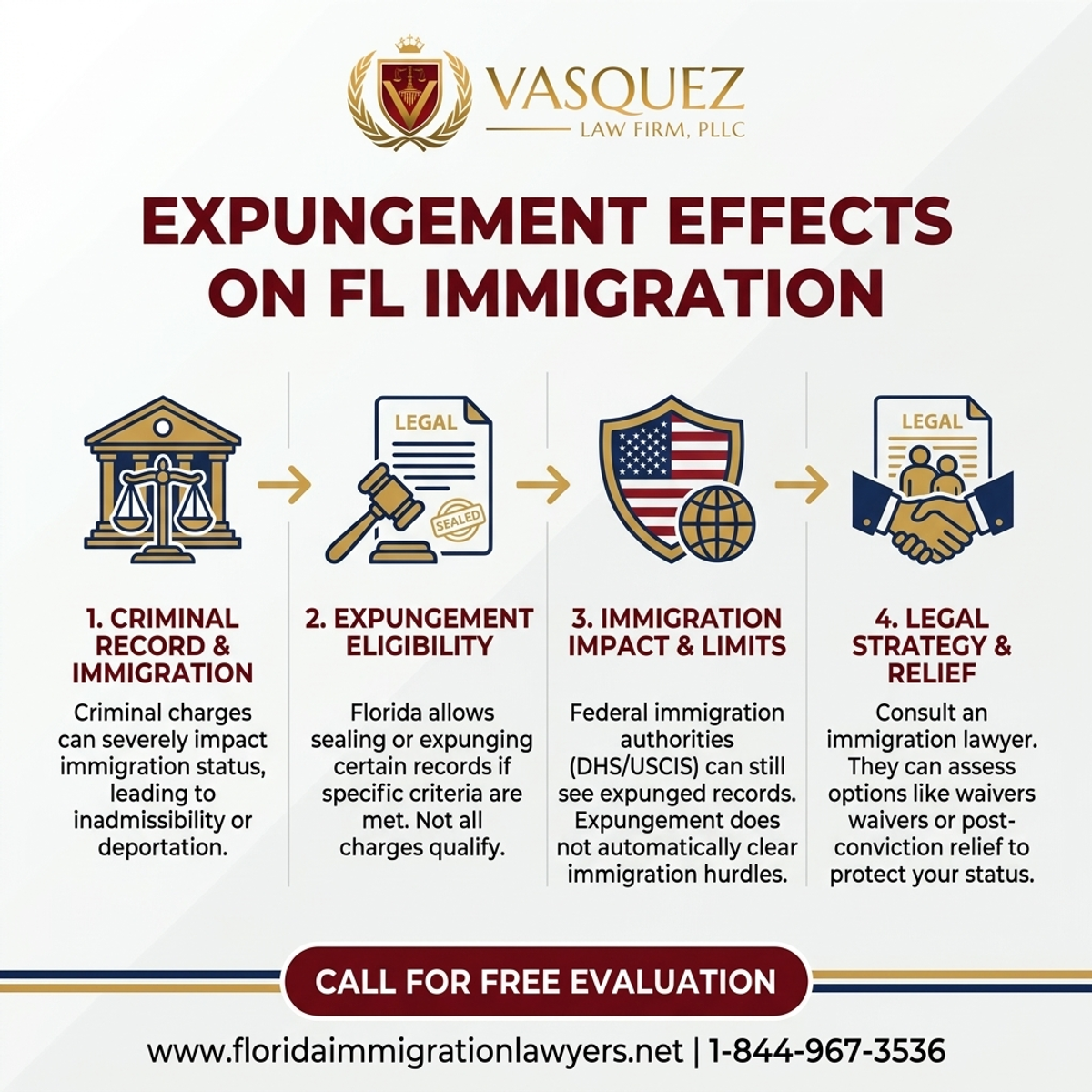
Step-by-Step Process — Expungement Effects on Immigration in Florida
Document Checklist for Expungement
- Fingerprint card
- Certificate of eligibility from the Florida Department of Law Enforcement
- Petition for expungement
- Supporting legal documents
- Personal identification
Timeline and Processing Expectations
The expungement process in Florida can take several months. From obtaining a certificate of eligibility to court approval, each step requires careful attention to detail. Generally, it can take up to six months for the entire process to be completed. During this time, it's critical to stay informed about your case's progress, especially if you have pending immigration applications.
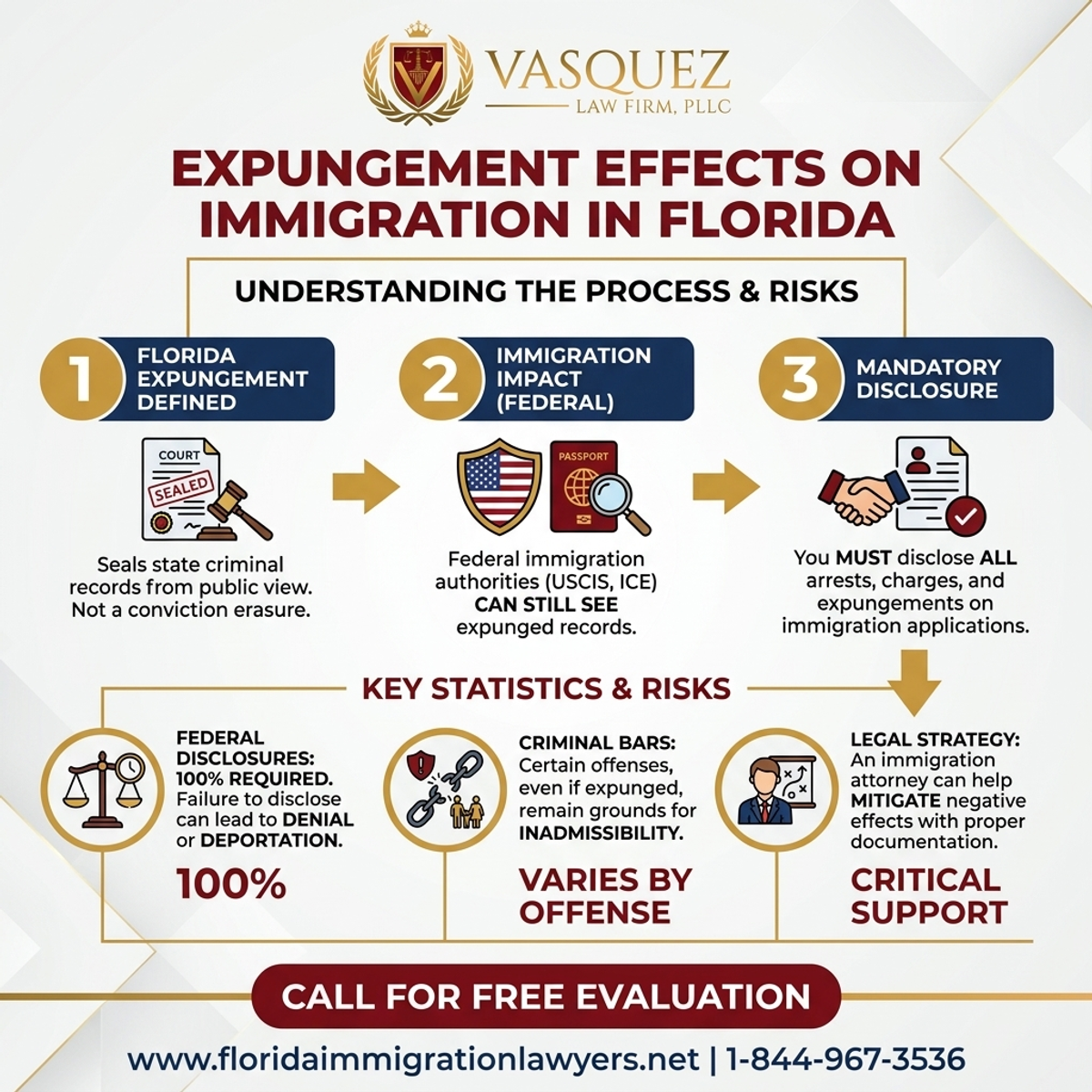
Key Statistics — Expungement Effects on Immigration in Florida
Cost Factors and Fee Breakdown
The costs associated with expungement in Florida vary based on legal fees, court costs, and additional expenses for required documentation. It's important to budget for these costs and discuss them with your attorney to understand the total financial commitment. Legal representation can help navigate the complexities of the process and ensure that all paperwork is correctly filed.
Common Mistakes to Avoid
- Not Understanding Eligibility: Attempting to expunge a non-eligible offense can waste time and resources.
- Incorrect Paperwork: Filing inaccurate documents can result in delays or denials of your petition.
- Missing Deadlines: Failing to meet court deadlines can jeopardize your expungement process.
- Ignoring Immigration Consequences: Assuming expungement erases all risks in immigration proceedings is a common misconception.
- Not Consulting an Attorney: Legal guidance is crucial for a successful expungement and to understand its impact on immigration.
- Incomplete Documentation: Submitting incomplete paperwork can lead to rejection of your expungement petition.
- Overlooking Court Requirements: Each court may have specific requirements that must be met, and failing to adhere to them can delay your case.
When to Call a Lawyer
If you're facing immigration proceedings or have concerns about how a criminal record could affect your status, it's crucial to seek legal advice. An experienced immigration attorney can provide guidance on expungement and its implications for your immigration case. Florida Immigration Lawyers offer comprehensive services to assist you through this complex process. Don't hesitate to contact us at 1-844-YO-PELEO for advice and a free consultation.
About Florida Immigration Lawyers
At Florida Immigration Lawyers, we focus on providing legal services for all immigration-related matters. Our team is dedicated to helping clients navigate the complexities of immigration law with personalized attention and comprehensive support. Whether you're dealing with family immigration, deportation defense, or business immigration, we're here to help. Call us at 1-844-YO-PELEO or visit our website. We offer free consultations and are available 24/7 to serve you across Florida.
Sources and References
- U.S. Citizenship and Immigration Services (USCIS)
- Executive Office for Immigration Review (EOIR)
- 8 U.S.C. Chapter 12 - Immigration and Nationality Act
Related services: immigration practice areas, family immigration services.
This article provides general legal information and is not intended as legal advice. Every case is unique, and outcomes depend on specific facts and circumstances. Contact an attorney for advice about your particular situation.
Se Habla Español - Estamos aquí para ayudarle. For more information, call us at 1-844-YO-PELEO. We offer free consultations and are ready to assist you with your immigration needs.
If you need legal assistance, learn more about how our immigration attorneys can help, or call us at 1-844-YO-PELEO for a free consultation.
Do Not Navigate This Process Alone
Our experienced immigration attorneys are ready to fight for you. Get a free, confidential case review today.
Se Habla Español
Or leave your details and we’ll call you:
Free Evaluation in 24 Hours
Or talk to us right now

AI voice assistant — available 24/7
FreeFrequently Asked Questions

William J. Vásquez
Founding Attorney · Vasquez Law Firm
U.S. Air Force veteran and immigration attorney with years of hands-on U.S. immigration experience. J.D., NCCU School of Law. AILA member. Admitted to the 4th, 5th, and 11th Circuit Courts.
Available 24/7 - Free Evaluations
Reviewed for legal accuracy by William J. Vásquez
Licensed in North Carolina; U.S. immigration is federal practice.
Related Legal Services
Our Florida immigration attorneys can help you with free immigration consultation, business immigration and deportation defense. Call today at 1-844-YO-PELEO for a free case review.
Related Links
Related Topics
Free Legal Case Review
Discuss your case with our experienced attorneys. We're available 24/7.
Se Habla Español - Estamos aquí para ayudarle.
Related Articles
Immigration Lawyer Orlando Free Consultation in Florida
For individuals and families in Orlando, Florida, navigating the complexities of U.S. immigration law requires expert guidance. An immigration lawyer in Orlando offers crucial support for everything from visa applications and green card processes to naturalization and deportation defense. This comprehensive guide details what a free consultation covers, providing a step-by-step overview of immigration pathways, essential document checklists, and expected timelines in 2026. We also highlight common mistakes to avoid, discuss the critical role of legal counsel in deportation and asylum cases, and explain why choosing a local Orlando immigration attorney is beneficial. Florida Immigration Lawyers is dedicated to serving the diverse community of Orlando with compassionate, effective legal solutions, ensuring you receive personalized advice and robust representation for a successful immigration journey.
EAD Advance Parole Combo Card in Florida 2026
For individuals with a pending Form I-485, Application to Register Permanent Residence or Adjust Status, the EAD Advance Parole Combo Card is an essential document. This single card combines the authorization to work legally in the U.S. (Employment Authorization Document - EAD) with permission to travel internationally and re-enter without abandoning your green card application (Advance Parole). This guide from Florida Immigration Lawyers provides a comprehensive overview for applicants in Florida in 2026, covering eligibility, the step-by-step application process, required documents, expected processing times, and associated costs. We also highlight common mistakes to avoid and when to seek legal counsel to ensure a smooth and successful immigration journey. Understanding this vital card is key to maintaining stability while awaiting your permanent residency approval.
Immigration Rights: Know Your Legal Protections in Florida
Navigating immigration law in Florida requires a thorough understanding of your legal rights, especially when facing potential interactions with ICE. This guide from Florida Immigration Lawyers provides crucial information on constitutional protections, what to do during an ICE encounter, and the steps involved in the deportation process. Learn about your right to remain silent, the importance of legal counsel, and how to prepare essential documents. We also cover common mistakes to avoid, timelines for immigration court, and the costs associated with legal representation. Empower yourself with knowledge and ensure your family's safety by understanding your legal standing in Florida. Our firm offers dedicated support and free case reviews for residents across the state.
Child Status Protection Act: Navigating Aging Out in Florida
The Child Status Protection Act (CSPA) is crucial for families in Florida dealing with children aging out of immigration eligibility. Learn how CSPA protects derivative beneficiaries and the steps to apply for protection. Contact Florida Immigration Lawyers for expert assistance.