EB-5 Investor Green Card in Florida: Key Insights | VLF Flor
Explore how the EB-5 investor green card program can help you start a new life in Florida. Learn about the benefits, processes, and common pitfalls of this investment immigration path. Call 1-844-967-3536 for expert guidance.

- Minimum investment requirements.
- Regional center benefits.
- Homestead, Florida opportunities.
- Processing timelines and expectations.
- Common pitfalls to avoid.
Introduction
Imagine starting a new life in the vibrant state of Florida, known for its beautiful landscapes and thriving business environment. The Sunshine State offers a unique blend of economic opportunity, cultural diversity, and an enviable quality of life, making it an attractive destination for investors worldwide. The EB-5 investor green card offers a unique opportunity for foreign investors to obtain permanent residency in the U.S. by investing in a commercial enterprise.
This article will guide you through the requirements, process, and benefits of the EB-5 program, specifically focusing on opportunities in Homestead, Florida. Beyond just obtaining a green card, the EB-5 program provides a pathway to immerse yourself and your family in the American dream, offering access to world-class education, robust healthcare, and a dynamic entrepreneurial ecosystem.
Through this comprehensive guide, you will learn about the steps involved, necessary documentation, and potential challenges you may face. We aim to equip you with the knowledge needed to make informed decisions and navigate this complex immigration pathway successfully. Call Florida Immigration Lawyers at 1-844-967-3536 for a free consultation.
Understanding the EB-5 Program
The EB-5 Immigrant Investor Program was created by Congress in 1990 to stimulate the U.S. economy through job creation and capital investment by foreign investors. The program offers two investment options: investing directly in a new commercial enterprise or through a regional center, which pools investor funds. Each option has distinct requirements and benefits, catering to different investor preferences and levels of involvement.
A direct investment typically requires the investor to be actively involved in the management of the new commercial enterprise and directly create at least 10 full-time jobs for U.S. workers. Regional center investments, on the other hand, allow for a more passive role, as job creation can be direct, indirect, or induced, offering greater flexibility and often appealing to those who prefer less day-to-day management responsibility. These centers are designated by USCIS and focus on specific economic development projects.
In Florida, the EB-5 program has been instrumental in funding various projects, contributing significantly to the state's economy, from real estate developments to infrastructure improvements and hospitality ventures. Investors must meet specific criteria, including a minimum investment amount, which varies depending on the location of the investment. Projects located in Targeted Employment Areas (TEAs) – which are rural areas or areas with high unemployment – qualify for a reduced investment threshold, making them particularly attractive. Homestead, Florida, with its growing economy and development potential, often presents opportunities within designated TEAs.
Step-by-Step Guide to the EB-5 Process
Embarking on the EB-5 journey requires careful planning and meticulous execution. Each step is critical and demands attention to detail to ensure a smooth and successful application. Understanding this phased approach is key to managing expectations and preparing adequately.
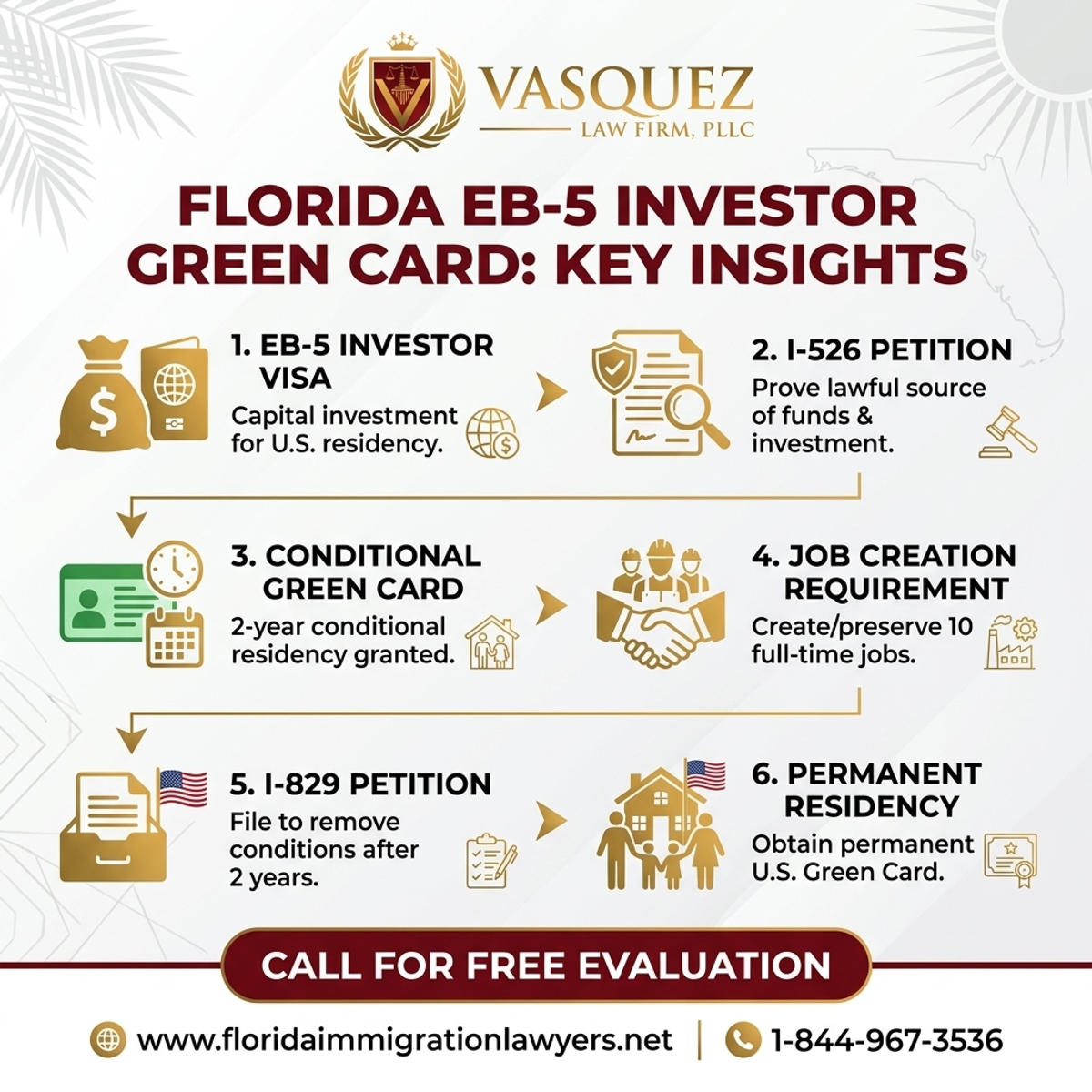
- Choose Your Investment: Decide between a direct investment or a regional center. This is a foundational decision that impacts your level of involvement and the nature of job creation requirements. Regional centers in Florida, including those in Miami and Homestead, offer various projects to consider, ranging from real estate to manufacturing. When selecting a regional center, it's crucial to conduct thorough due diligence, examining the center's track record, the project's viability, and its exit strategy. For direct investments, a comprehensive market analysis and a robust business plan demonstrating clear job creation potential are paramount.
- File Form I-526: Submit your Immigrant Petition by Alien Investor to USCIS, demonstrating your investment and job creation plans. This petition is the cornerstone of your application, requiring extensive documentation to prove the lawful source of your investment funds. USCIS scrutinizes every detail, seeking clear evidence that the capital was obtained through legal means, such as tax returns, business records, and bank statements. Working with an experienced immigration attorney, like those at Florida Immigration Lawyers, is vital to ensure all necessary documentation is meticulously prepared and presented, minimizing the risk of a Request for Evidence (RFE) or denial.
- Obtain Conditional Green Card: Upon approval of your I-526 petition, you will apply for a conditional green card. If you are already in the U.S., you may be eligible to file Form I-485 (Adjustment of Status). If you are outside the U.S., you will go through consular processing at a U.S. embassy or consulate in your home country. This step grants you legal entry and residency in the U.S. for a two-year period. During this time, you and your family members will have most of the rights and responsibilities of permanent residents, laying the groundwork for your new life in America.
- Remove Conditions: After two years of conditional residency, you must file Form I-829, Petition by Investor to Remove Conditions on Permanent Resident Status. This petition demonstrates that you have met all the requirements of the EB-5 program, specifically that your investment was sustained and created the requisite 10 full-time jobs. USCIS will review your evidence to confirm compliance with your initial business plan. Successful removal of conditions leads to the issuance of a permanent green card, solidifying your status as a lawful permanent resident of the United States.
Throughout this intricate process, the guidance of a knowledgeable legal team is indispensable. Florida Immigration Lawyers can provide comprehensive support at each stage, from initial investment selection to the final removal of conditions, ensuring compliance and maximizing your chances of success.
Document Checklist for EB-5 Application
Meticulous documentation is the bedrock of a successful EB-5 application. The sheer volume and specificity of required evidence can be overwhelming, making thorough preparation absolutely essential. This checklist provides a foundational overview, but each case is unique and may require additional specific documents tailored to your financial background and investment project. Incomplete or improperly documented submissions are a leading cause of delays and denials.
- Proof of funds and lawful source documentation (e.g., tax returns for the past five years, business registration documents, audited financial statements, property deeds, gift deeds, loan agreements)
- Business plan outlining job creation (detailed, credible, and comprehensive)
- Investment agreement (evidence of capital at risk and commitment to the enterprise)
- Form I-526 and supporting documents (all required forms, fees, and exhibits)
- Passport and personal identification documents (for all family members included in the petition)
- Evidence of investment in a new commercial enterprise (e.g., bank statements showing transfer of funds, escrow agreements)
- Proof of TEA designation (if applicable, to qualify for the lower investment amount)
Step-by-Step Process — EB-5 Investor Green Card in Florida: Key Insights
Timeline and Processing Expectations
The processing time for an EB-5 application can vary significantly, often influenced by factors such as the investor's country of origin, the volume of petitions USCIS receives, and the thoroughness of the submitted documentation. Generally, the initial I-526 petition takes about 12 to 18 months for processing, though this can extend further for applicants from high-volume countries due to visa bulletin retrogression.
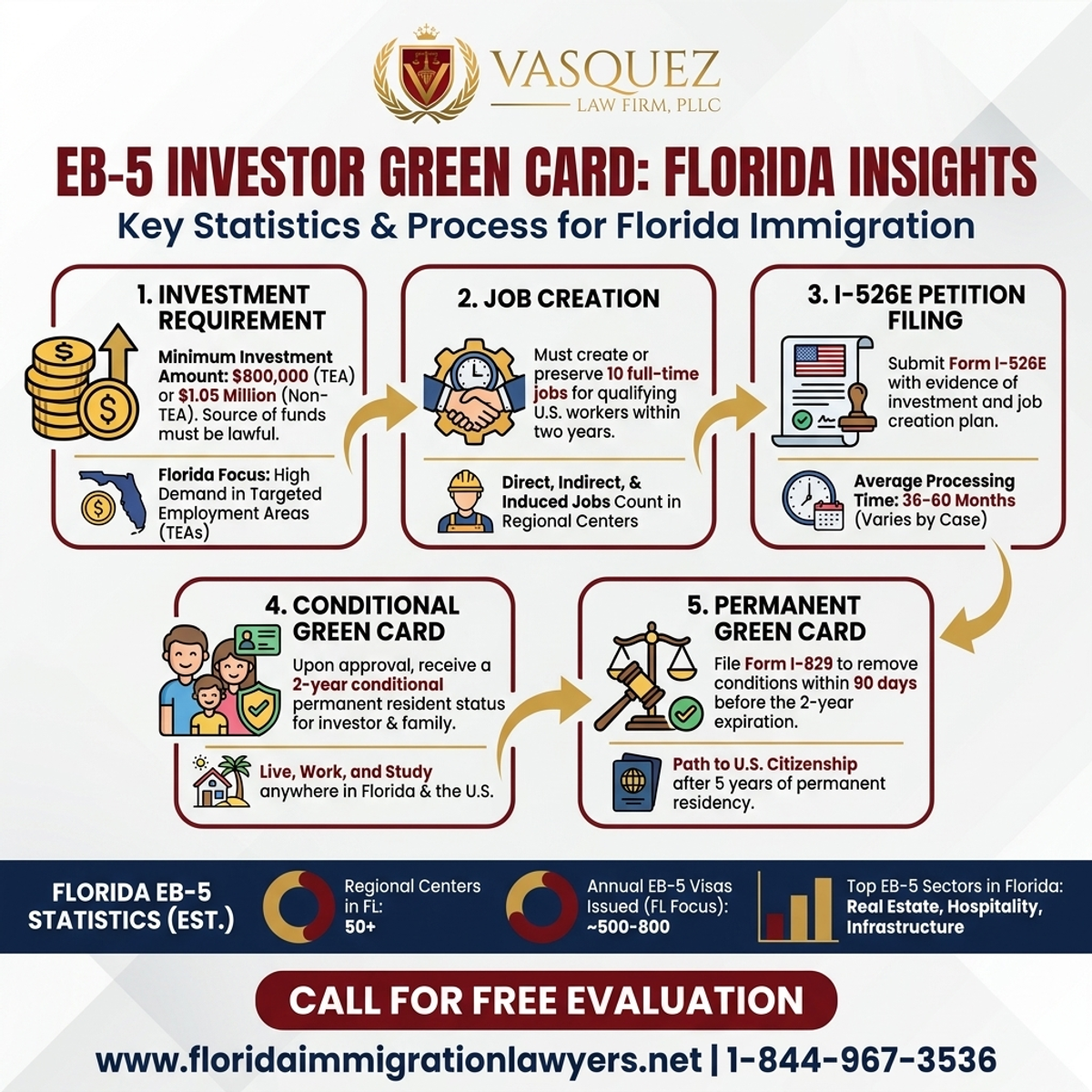
Once approved, obtaining a conditional green card may take an additional 6 to 12 months, depending on whether you are adjusting status within the U.S. or undergoing consular processing abroad. The removal of conditions through Form I-829 can take another 12 to 24 months, as USCIS meticulously verifies that all investment and job creation requirements have been met. These timelines are estimates and are subject to change based on USCIS policy updates and operational efficiency.
To minimize potential delays, it is crucial to submit a complete, accurate, and well-organized petition from the outset. Responding promptly and comprehensively to any Request for Evidence (RFE) from USCIS is also vital. Staying informed about any policy changes by USCIS that might affect processing times, such as recent changes in green card discretion rules, emphasizes the need for careful documentation and compliance. Engaging with Florida Immigration Lawyers can help you navigate these complexities and stay ahead of potential challenges, ensuring your application progresses as smoothly as possible.
Cost Factors and Fee Breakdown
While the EB-5 program requires a significant financial commitment, understanding the full spectrum of costs involved can help you plan effectively and avoid unexpected expenses. Beyond the minimum investment amount, which is either $800,000 for Targeted Employment Areas (TEAs) and rural areas or $1,050,000 for non-TEA areas, applicants should consider various other fees.
These costs typically include USCIS filing fees for Form I-526, Form I-485 (if adjusting status) or consular processing fees (if abroad), and Form I-829. Additionally, legal fees for expert immigration counsel, such as Florida Immigration Lawyers, are a crucial investment, ensuring your application is meticulously prepared and compliant. Regional center participants often incur administrative fees, typically a one-time charge, as well as due diligence fees to verify the project's legitimacy and financial soundness.
Exact fee amounts can change, so consult with a qualified attorney to get the most current information. It's also important to factor in costs for business plan preparation, economic impact analysis, and potential escrow fees for holding your investment capital. Do not navigate this complex financial and legal process alone. Contact Florida Immigration Lawyers today at 1-844-967-3536 to get a clear understanding of all potential costs and to ensure your budget aligns with the program's requirements.
Common Mistakes to Avoid
Navigating the EB-5 program is fraught with potential pitfalls that can lead to significant delays, requests for evidence (RFEs), or even outright denial of your petition. Awareness of these common mistakes is the first step toward a successful application. Proactive planning and expert guidance from Florida Immigration Lawyers can help you sidestep these costly errors and protect your investment and immigration goals.
- Insufficient Documentation: Failing to provide comprehensive and well-organized documentation can lead to delays or denials. Every claim, especially regarding the lawful source of funds and job creation, must be substantiated with clear, verifiable evidence.
- Improper Source of Funds Documentation: Not proving the lawful source of investment funds is one of the most common reasons for rejection. USCIS requires a clear, traceable path for all capital, from its origin to the investment, leaving no gaps or ambiguities.
- Choosing the Wrong Regional Center: Not all centers have a proven track record. Research thoroughly, evaluate the project's viability, and assess the regional center's history of I-526 and I-829 approvals. A poorly performing project can jeopardize your permanent green card.
- Ignoring Job Creation Requirements: Failing to meet the requirement of creating or preserving 10 full-time jobs per investor can prevent you from removing conditions and obtaining your permanent green card. The business plan must clearly outline how these jobs will be created and maintained.
- Missing Deadlines: Late submissions for any part of the process, particularly the I-829 petition, can jeopardize your application process and even lead to deportation proceedings.
- Overlooking Legal Changes: Immigration laws and USCIS policies change frequently, and staying updated is crucial. What was valid last year might not be today.
- Inadequate Legal Representation: Attempting to navigate the complex EB-5 process without expert legal help can be risky. An experienced immigration attorney can provide invaluable guidance, ensure compliance, and represent your best interests.
By being aware of these potential pitfalls and taking proactive measures, you can significantly enhance your chances of a successful EB-5 application. Florida Immigration Lawyers are dedicated to helping investors avoid these mistakes and achieve their immigration objectives.
When to Call a Lawyer
Engaging with an immigration lawyer is not merely an option but a crucial necessity when dealing with complex cases, such as the EB-5 investor program. While the general guidelines are available, the nuances of individual situations often require specialized legal expertise. You should absolutely call Florida Immigration Lawyers when documentation is incomplete, or if there are potential issues with the lawful source of funds, as these are common areas of scrutiny by USCIS.
Legal expertise is also necessary if you face any challenges during the removal of conditions process, such as changes in the investment project, lower-than-expected job creation, or if you receive a Request for Evidence (RFE) from USCIS. Furthermore, if you have any previous immigration history, criminal record, or if your home country faces visa retrogression, a lawyer's guidance becomes indispensable. Proactive engagement with legal counsel can streamline the entire process, identify potential issues before they escalate, and ensure all submissions meet the stringent requirements of U.S. immigration law. Florida Immigration Lawyers can provide the necessary guidance and representation to navigate these complexities, offering peace of mind and increasing your likelihood of success.
About Florida Immigration Lawyers
Florida Immigration Lawyers is committed to providing exceptional legal services for individuals seeking immigration solutions in Florida and across the U.S. Our experienced attorneys offer personalized assistance in all immigration matters, including complex EB-5 investments, asylum, deportation defense, citizenship, and various family and business immigration visas. We understand the profound impact immigration decisions have on individuals and families, and we approach each case with compassion, diligence, and a deep understanding of the law.
Our team prides itself on a client-centric approach, ensuring that every investor receives tailored advice and robust representation throughout the EB-5 process. We assist with everything from initial investment due diligence to the final removal of conditions, making sure all legal requirements are met and potential challenges are anticipated and addressed. Available 24/7, we offer free consultations and bilingual services, ensuring accessibility and clear communication for our diverse clientele. Contact us at 1-844-967-3536 or visit our website to learn how we can help you achieve your American dream.
Sources and References
- U.S. Citizenship and Immigration Services (USCIS)
- Executive Office for Immigration Review (EOIR)
- 8 U.S.C. Chapter 12 - Immigration and Nationality Act
- U.S. State Department
Frequently Asked Questions (FAQs)
Here are some common questions about the EB-5 Investor Green Card program in Florida, answered with practical advice to help guide your journey.
What is the minimum investment amount for EB-5?
Currently, the minimum investment amount for the EB-5 program is $800,000 for projects located in Targeted Employment Areas (TEAs) or rural areas. For investments outside of these designated areas, the required amount is $1,050,000. These figures are subject to change based on legislative updates, making it critical to consult with an experienced attorney, such as Florida Immigration Lawyers, to confirm the most current requirements for your specific investment.
What is a Targeted Employment Area (TEA)?
A Targeted Employment Area (TEA) is a geographical area that, at the time of investment, is either a rural area or has an unemployment rate of at least 150% of the national average. Investing in a USCIS-designated TEA allows for the reduced investment threshold of $800,000. Proper TEA designation is crucial and requires specific economic data and documentation, which your legal team can help verify.
How many jobs must be created?
The EB-5 program mandates the creation or preservation of at least 10 full-time jobs for qualifying U.S. workers within two years of the investor's conditional permanent residency. For direct investments, these must be direct jobs. For regional center projects, the job creation can include direct, indirect, and induced jobs, offering more flexibility in meeting this critical requirement. A robust business plan is essential to demonstrate this.
Can my family members also get green cards?
Yes, the EB-5 visa extends to the primary investor's spouse and unmarried children under the age of 21. They are eligible to receive conditional green cards concurrently with the investor and can apply to remove conditions together. This allows the entire immediate family to pursue permanent residency in the U.S., offering comprehensive immigration benefits for your loved ones.
What happens if my I-526 is denied?
An I-526 denial can occur due to various reasons, such as insufficient documentation, failure to prove the lawful source of funds, or an unqualified investment project. If your petition is denied, you may have options to appeal the decision or refile the petition, depending on the specific grounds for denial. It is crucial to consult Florida Immigration Lawyers immediately to assess your options, understand the reasons for denial, and strategize the best path forward.
Related services: H-1B specialty occupation visas, L-1 intracompany transfer visas, work visas for professionals, investment and entrepreneur visas.
This article provides general legal information and is not intended as legal advice. Every case is unique, and outcomes depend on specific facts and circumstances. Contact an attorney for advice about your particular situation.
For more information on how to pursue your EB-5 investor green card in Florida, call Florida Immigration Lawyers at 1-844-967-3536. Se Habla Español - Estamos aquí para ayudarle.
If you need legal assistance, learn more about learn about business immigration options, or call us at 1-844-967-3536 for a free consultation.
Do Not Navigate This Process Alone
Our experienced immigration attorneys are ready to fight for you. Get a free, confidential consultation today.
Se Habla Español
Frequently Asked Questions
Florida Immigration Lawyers
Immigration Attorney | Founder, Vasquez Law Firm
U.S. Air Force veteran and immigration attorney with thousands of cases resolved. J.D., NCCU School of Law. AILA member. Admitted to the 4th, 5th, and 11th Circuit Courts.
Available 24/7 - Free Evaluations
Related Legal Services
Our Florida immigration attorneys can help you with asylum protection, deportation defense and citizenship and naturalization. Call today at 1-844-967-3536 for a free consultation.
Related Links
Related Topics
Free Legal Consultation
Discuss your case with our experienced attorneys. We're available 24/7.
Se Habla Español - Estamos aquí para ayudarle.
Related Articles
E-2 Visa for Florida Business Investors | VLF Florida
Learn how the E-2 investor visa can help you start a business in Naples, Florida. We cover eligibility, application steps, common mistakes, and when to seek legal help. Contact Florida Immigration Lawyers for a free consultation.
VAWA Immigration Relief: Support in Florida | VLF Florida
Explore VAWA immigration relief options for abuse victims in Hollywood, Florida. Learn about eligibility, application steps, and common mistakes to avoid. Contact Florida Immigration Lawyers for a free consultation.
EB-5 Investor Green Card in Florida: A Comprehensive Guide
Learn how the EB-5 investor green card program can help you gain U.S. residency through investment in Florida. Discover key steps, common mistakes, and when to seek legal advice. Call Florida Immigration Lawyers at 1-844-967-3536 for a free consultation.
Derived Citizenship Florida: A Parent's Guide (2026)
For U.S. citizen parents in Florida, understanding derived citizenship is key to securing your child's future. This guide explains how children born abroad can automatically become U.S. citizens through their parents, covering eligibility, the N-600 application process, required documents, and critical timelines for 2026. Learn about the specific requirements under INA sections 320 and 322, and discover common pitfalls to avoid. Florida Immigration Lawyers serves families across the state, including Homestead, Miami, and Orlando, offering expert legal guidance to ensure a smooth and successful path to derived citizenship for your child. Call us for a free consultation.