Dual Citizenship Florida: Get Two Passports in 2026
Dreaming of holding two passports and enjoying the benefits of dual citizenship in Florida? This comprehensive guide explains the naturalization process, required documents, timelines, and costs for obtaining dual citizenship. Learn about U.S. policy regarding dual nationality, common mistakes to avoid, and when to seek legal counsel from Florida Immigration Lawyers. We cover everything from eligibility requirements to the oath ceremony, with a focus on residents in Orlando and across Florida. Understand the advantages and potential challenges of having two passports and how our firm can provide expert guidance for a smooth application process. Contact us for a free consultation.

Dual citizenship, also known as dual nationality, means a person is a citizen of two countries simultaneously. The United States generally permits dual citizenship, meaning you typically do not have to renounce your original citizenship when naturalizing as a U.S. citizen. For individuals in Florida, pursuing dual citizenship often involves the complex U.S. naturalization process. It grants benefits like expanded travel, property rights, and employment opportunities, but also carries responsibilities to both nations. Understanding both countries' laws is crucial.
- The U.S. generally allows citizens to hold dual nationality.
- Naturalization is the most common path to dual citizenship for Florida residents.
- Dual citizenship offers benefits like enhanced travel and property rights.
- It requires fulfilling duties to both countries and understanding their respective laws.
- Seeking legal counsel in Florida is highly recommended due to process complexities.
Imagine the freedom of holding two passports, effortlessly crossing borders, and enjoying the rights and privileges of two nations. For many immigrants in Florida, the dream of achieving **dual citizenship Florida** status is a powerful aspiration. It represents a deeper connection to both their heritage and their new home in the United States. However, navigating the intricate legal landscape to obtain two passports can be challenging and complex.
This comprehensive guide from Florida Immigration Lawyers will demystify the process of dual citizenship, focusing on the journey for individuals living in Florida, including Orlando and surrounding communities. We will explore what dual citizenship means, the primary pathways to achieve it, the necessary documentation, expected timelines, and the potential costs involved. Our goal is to provide clear, actionable information to help you understand your options and avoid common pitfalls.
Whether you are considering naturalization, have questions about maintaining your original citizenship, or need assistance with specific immigration challenges in Florida, our experienced team is here to help. Do not embark on this significant journey alone. For personalized guidance and to discuss your unique situation, call Florida Immigration Lawyers at 1-844-967-3536 for a free consultation today.
Understanding Dual Citizenship in Florida
Dual citizenship, or dual nationality, is the legal status of being a citizen of two countries at the same time. The United States does not explicitly prohibit dual nationality. The Immigration and Nationality Act (INA) does not contain any provisions that require a person to choose one nationality over another. This means that when an individual naturalizes as a U.S. citizen, they are generally not required by U.S. law to renounce their previous citizenship, provided their country of origin also permits dual citizenship.
Florida, with its diverse population and vibrant international communities, sees many residents pursuing this status. From the bustling streets of Miami to the family-friendly neighborhoods of Orlando, immigrants from across the globe contribute significantly to our state’s fabric. For these individuals, dual citizenship can offer immense benefits, allowing them to maintain strong ties to their home country while fully integrating into American society.
It is crucial to understand that while the U.S. generally permits dual nationality, your country of origin might have different rules. Some countries automatically revoke citizenship upon acquiring another, while others require formal renunciation. Before proceeding, thoroughly research the laws of your home country regarding dual citizenship. A knowledgeable Florida immigration lawyer can help you navigate these complex international legal considerations and ensure you make informed decisions.
The Path to Dual Citizenship: Naturalization in the U.S.
For most foreign nationals residing in Florida, the primary pathway to achieving dual citizenship involves becoming a naturalized U.S. citizen. This process, governed by the U.S. Citizenship and Immigration Services (USCIS), requires meeting specific eligibility criteria and successfully completing several steps. Understanding each stage is vital for a smooth application.
- Determine Eligibility: Generally, you must be 18 years old, a lawful permanent resident (Green Card holder) for at least 5 years (or 3 years if married to a U.S. citizen), have continuous residence and physical presence in the U.S., demonstrate good moral character, be able to read, write, and speak basic English, and have a fundamental understanding of U.S. history and government (civics). Exceptions exist for military personnel.
- File Form N-400, Application for Naturalization: This is the official application form. It is extensive and requires detailed personal information, residency history, employment, travel, and criminal record details. Accuracy is paramount, and any discrepancies can lead to delays or denial. You can find detailed instructions and the form on the USCIS website.
- Attend Biometrics Appointment: After filing, you will receive an appointment notice for biometrics collection at a local Application Support Center (ASC). This involves fingerprinting, photographs, and a signature for background checks.
- Complete the Naturalization Interview: An immigration officer will interview you at a USCIS Field Office, such as the one in Orlando, Florida. They will review your N-400 application, test your English proficiency (reading, writing, and speaking), and administer a civics test. Thorough preparation is essential for this step.
- Receive a Decision and Attend Oath Ceremony: If your application is approved, you will receive a notice for an Oath of Allegiance Ceremony. This is the final step where you formally become a U.S. citizen and receive your Certificate of Naturalization. At this point, you will legally hold dual citizenship, assuming your original country permits it.
Each step requires meticulous attention to detail and adherence to strict guidelines. Navigating the requirements, especially for those with complex backgrounds or residency issues, can be daunting. Seeking assistance from a Florida citizenship attorney can significantly improve your chances of a successful outcome.
Required Documents for Your Dual Citizenship Application
A successful naturalization application, and thus your path to **dual citizenship Florida**, hinges on submitting a complete and accurate set of supporting documents. Missing or incorrect documentation is a leading cause of delays and denials. Prepare your documents carefully and ensure all copies are legible and certified where required.
- Green Card: Your Permanent Resident Card (Form I-551) is essential proof of your lawful permanent resident status.
- State-Issued Identification: A valid driver's license or state ID card from Florida, reflecting your current address, helps confirm your residency.
- Passports and Travel Documents: All passports, both current and expired, from your home country and any other countries you have traveled to, are required. This includes travel history details.
- Marriage Certificate (if applicable): If you are applying based on marriage to a U.S. citizen (3-year rule), your marriage certificate and evidence of a bona fide marriage are necessary.
- Divorce Decrees or Death Certificates (if applicable): If you have been previously married, documentation proving the termination of those marriages is required.
- Birth Certificates: Your original birth certificate and those of your children (if listed on your application) may be requested.
- Tax Returns: Provide U.S. federal income tax returns for the past five (or three) years, demonstrating your good moral character and financial responsibility.
- Selective Service Registration: If you are a male applicant between the ages of 18 and 26, proof of Selective Service registration is mandatory.
- Court Records/Arrest Records (if applicable): Any arrest, citation, or conviction, regardless of outcome, must be disclosed and accompanied by certified court dispositions.
- Child Support/Alimony Orders (if applicable): Proof of compliance with any financial support obligations is necessary.
- Translations: Any document not in English must be accompanied by a certified English translation.
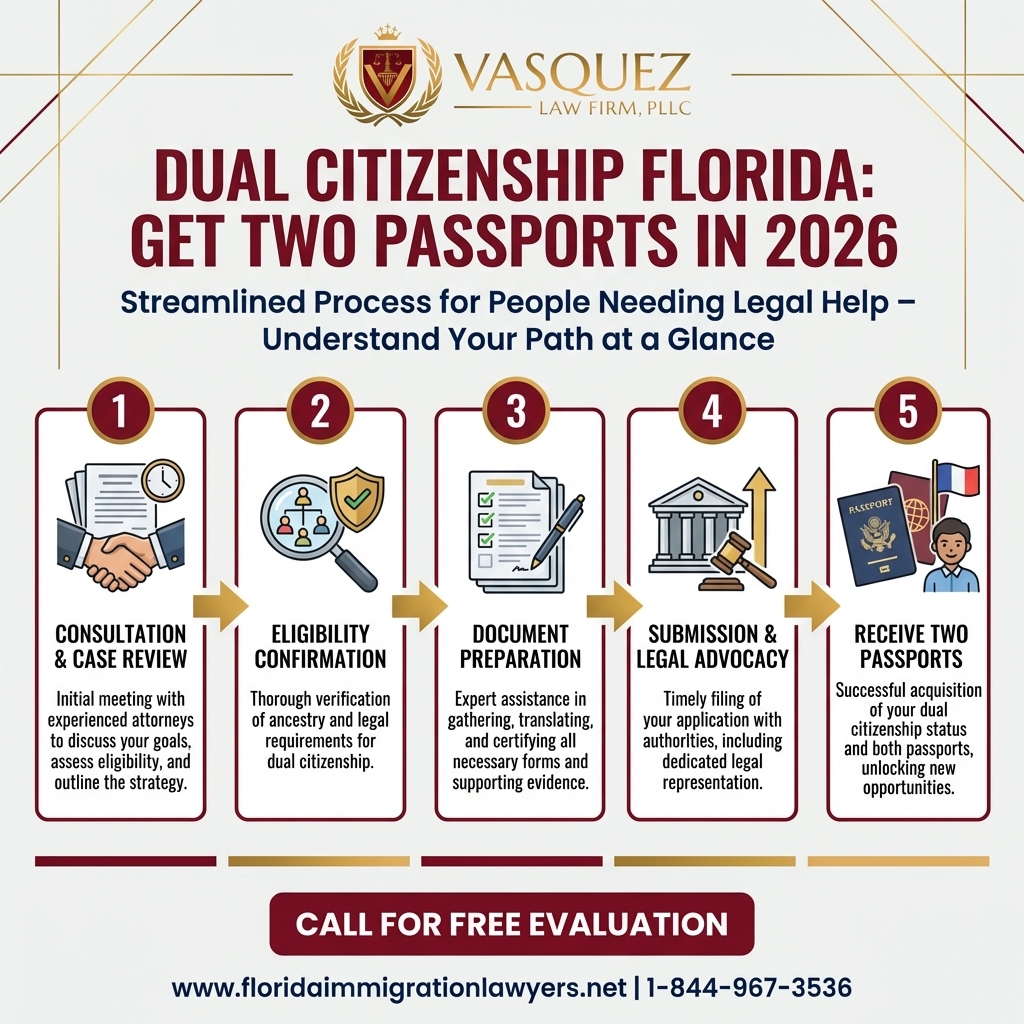
Organizing these documents can be overwhelming. A skilled immigration lawyer in Orlando, Florida, can help you compile the correct paperwork, ensure all forms are properly filled out, and verify that you meet all the submission requirements, minimizing potential issues.
Navigating the Dual Citizenship Timeline and Processing Expectations
The timeline for achieving **dual citizenship Florida** through naturalization can vary significantly. It is not a quick process, and applicants should prepare for several months, or even over a year, from filing the N-400 to attending the Oath of Allegiance Ceremony. Understanding these expectations can help you plan effectively.
Generally, the naturalization process for Form N-400 applications can take anywhere from 8 to 18 months, or sometimes longer. This duration depends heavily on several factors, including the specific USCIS Field Office handling your case (e.g., Orlando, Miami, or Tampa offices can have different backlogs), the completeness of your application, and whether USCIS requests additional evidence (RFE). You can check current processing times for your specific USCIS office on the USCIS Processing Times page.
After filing your N-400, you can typically expect to receive a receipt notice within 1-2 weeks. The biometrics appointment usually follows within 3-5 weeks of filing. The longest waiting period is often between the biometrics appointment and the naturalization interview. This stage can take several months as USCIS completes background checks and schedules interviews based on their workload. After a successful interview, the Oath Ceremony notice usually arrives within a few weeks, though sometimes the oath can be administered on the same day as the interview.
Delays can occur due to various reasons, such as incomplete applications, issues with background checks, or high volumes of applications at the local USCIS office. Staying informed and promptly responding to any USCIS requests is crucial. An experienced immigration attorney can monitor your case status, address any issues proactively, and provide realistic expectations for your particular timeline, helping to alleviate stress during this important period.
Costs and Fees Associated with Dual Citizenship
Pursuing dual citizenship through naturalization involves various costs that applicants in Florida should anticipate. While the benefits of holding two passports are significant, it is important to budget for the associated expenses. These costs are subject to change, so always verify the most current fees directly with USCIS or consult with your attorney.
The primary cost is the USCIS filing fee for Form N-400, Application for Naturalization. This fee is non-refundable and must be submitted with your application. Additionally, a biometrics services fee is typically required, though sometimes it is included in the N-400 fee. USCIS periodically adjusts these fees, so it is essential to check the current fee schedule on the USCIS website before filing. For example, as of 2026, fees might have changed from previous years.
Beyond government fees, other potential costs include:
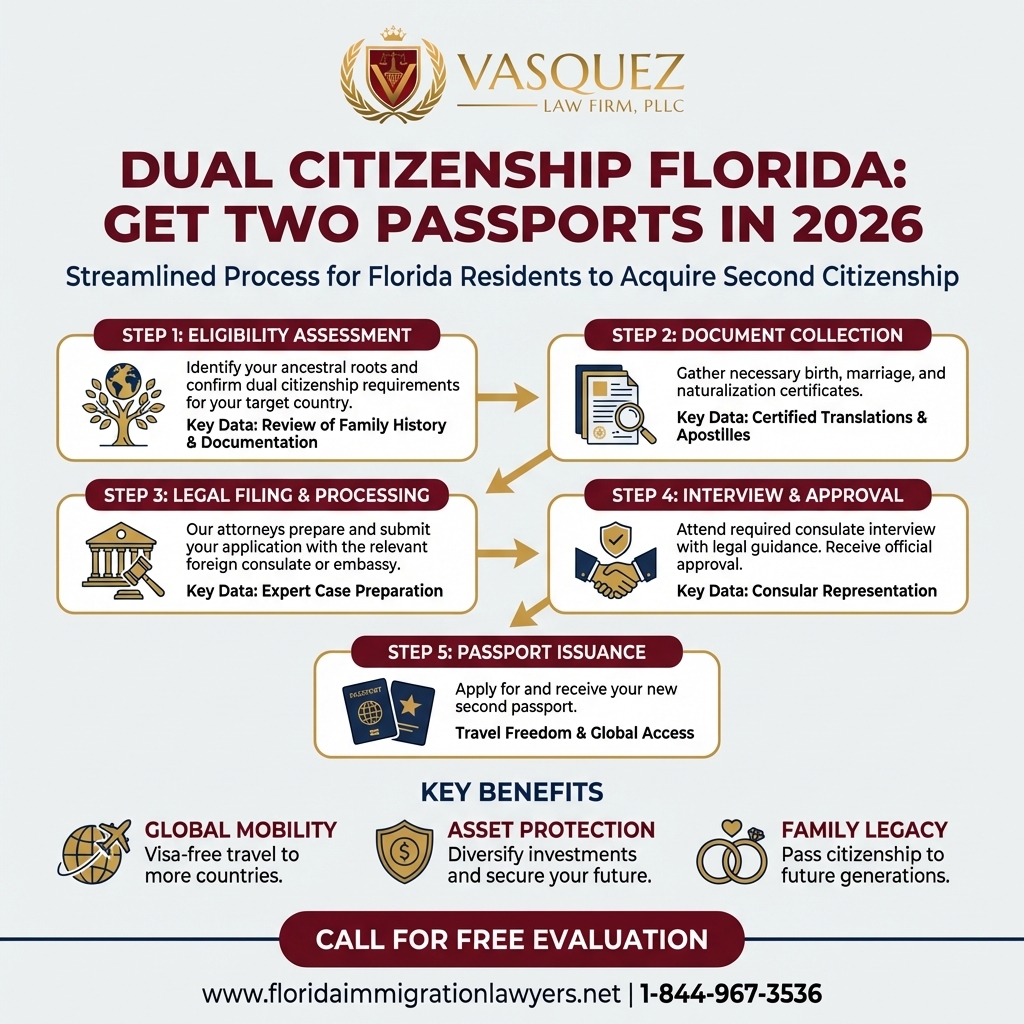
- Attorney Fees: Retaining a qualified immigration lawyer from Florida Immigration Lawyers provides invaluable expertise and guidance, significantly reducing the risk of errors and delays. Legal fees vary depending on the complexity of your case.
- Translation Services: If any of your supporting documents are not in English, you will need to pay for certified translations.
- Document Procurement: Obtaining official copies of birth certificates, marriage licenses, or court records from foreign countries can incur fees.
- Travel Expenses: You may incur costs for travel to the USCIS Application Support Center for biometrics or to the USCIS Field Office in Orlando or another Florida city for your interview and oath ceremony.
For individuals facing financial hardship, USCIS offers a fee waiver option (Form I-912, Request for Fee Waiver) for certain forms, including the N-400, if you meet specific income guidelines or receive means-tested benefits. Discussing your financial situation with an attorney can help determine if you are eligible for a fee waiver and how to properly apply for it, ensuring you do not miss out on this potential relief.
Benefits and Challenges of Holding Two Passports
The allure of **dual citizenship Florida** extends beyond mere legal status; it opens doors to a world of opportunities and, at times, presents unique challenges. For many, the benefits far outweigh the complexities, but it is important to consider both sides before embarking on this journey. For Floridians with strong ties to their home countries, dual nationality offers a bridge between two worlds.
Benefits of Dual Citizenship:
- Increased Travel Freedom: Holding two passports can simplify international travel, allowing easier entry and exit from both countries without visa restrictions. This is especially valuable for those frequently visiting family or conducting business abroad. The U.S. Department of State provides guidance on dual nationality and travel.
- Expanded Rights and Privileges: You gain full political rights in both countries, including the ability to vote, hold public office, and serve in the military (if eligible and desired). You may also enjoy property ownership rights, employment opportunities, and social benefits in both nations.
- Family Ties and Inheritance: Dual citizenship can strengthen family connections, making it easier for relatives to visit or immigrate. It also simplifies inheritance matters, property transfers, and other legal dealings across borders.
- Educational and Business Opportunities: Access to educational institutions and business ventures in both countries can provide a significant advantage, fostering international growth and personal development.
Challenges of Dual Citizenship:
- Tax Obligations: U.S. citizens, including dual citizens, are generally subject to U.S. taxation on their worldwide income, regardless of where they reside. This can complicate tax filing and may require understanding tax treaties between the U.S. and your other country of citizenship.
- Potential Conflicting Loyalties: While rare for the U.S. government to act on, situations may arise where loyalty to one country could be perceived to conflict with loyalty to the other, particularly during times of international tension.
- Military Service Requirements: Some countries require citizens to perform military service. Dual citizens may be subject to these requirements in their country of origin.
- Renunciation Laws of Other Countries: As mentioned, your original country may not permit dual citizenship, leading to automatic loss of that citizenship upon naturalizing in the U.S. It is crucial to verify this before proceeding.
Weighing these factors carefully and understanding the legal implications in both jurisdictions is essential. An experienced immigration attorney at Florida Immigration Lawyers can provide tailored advice, helping you navigate these complex considerations with confidence.
Common Mistakes to Avoid When Pursuing Dual Citizenship
The path to **dual citizenship Florida** can be fraught with potential missteps that can lead to significant delays, denials, or even more serious immigration consequences. Being aware of these common mistakes is the first step toward a successful application.
- Submitting Incomplete or Inaccurate Documentation: Failing to provide all required forms, supporting documents, or submitting forms with errors is a primary cause of RFEs (Requests for Evidence) and delays. Even minor omissions can halt your application.
- Misrepresenting Information: Any false statements or fraudulent documents can lead to immediate denial, accusations of immigration fraud, and even deportation. Honesty and accuracy are non-negotiable.
- Failing to Disclose Criminal History: Even minor arrests, citations, or convictions, regardless of how long ago they occurred or if they were expunged, must be disclosed. USCIS will uncover this information during background checks.
- Not Meeting Residency Requirements: Applicants must demonstrate continuous residence and physical presence in the U.S. for the required period. Extended trips outside the U.S. can break continuous residence, making you ineligible.
- Lack of English Proficiency or Civics Knowledge: The naturalization interview includes tests for basic English reading, writing, speaking, and knowledge of U.S. civics. Failing these tests will result in a delay or denial.
- Missing Deadlines: Failing to respond to USCIS requests for evidence or interview notices within the specified timeframe can lead to abandonment or denial of your application.
- Ignoring Your Home Country's Laws: Assuming your country of origin permits dual citizenship without verification can lead to unintended loss of your original nationality. Always research both countries' laws.
- Failure to Update USCIS on Address Changes: Moving without notifying USCIS using Form AR-11 can result in missed notices, interview appointments, and potentially jeopardize your application.
- Not Seeking Legal Counsel for Complex Cases: Cases involving criminal history, previous immigration violations, or long absences from the U.S. are highly complex. Attempting to navigate these without an attorney is a significant risk.
- Assuming Automatic Eligibility: Eligibility criteria are strict, and not every Green Card holder qualifies immediately. Thoroughly review all requirements before applying.
- Improperly Preparing for the Interview: The naturalization interview is critical. Many applicants underestimate the need to review their N-400 application thoroughly and practice for the civics and English tests.
- Neglecting Good Moral Character Requirements: USCIS assesses your good moral character for the statutory period (typically 3 or 5 years). Activities like tax evasion, habitual drunkenness, or providing false testimony can lead to denial.
When to Call a Lawyer for Dual Citizenship in Florida
While some naturalization cases may seem straightforward, the process of securing **dual citizenship Florida** status is often complex and carries significant legal implications. Knowing when to seek professional legal assistance can be the difference between a successful outcome and costly delays or denials. Florida Immigration Lawyers are here to provide the expert guidance you need.
You should consider contacting an immigration attorney in Orlando or anywhere in Florida if:
- You Have a Complex Immigration History: This includes previous visa denials, deportation proceedings, or any history of overstaying a visa.
- You Have a Criminal Record: Even minor arrests, charges, or convictions can impact your good moral character assessment. An attorney can advise on how to disclose this information and mitigate potential issues.
- You Have Spent Significant Time Outside the U.S.: Extended absences can break your continuous residency requirement. A lawyer can help determine if you still qualify and advise on potential waivers.
- You Are Unsure About Your Eligibility: If you do not meet all the standard naturalization requirements, such as the residency period or English proficiency, an attorney can assess if you qualify for any exceptions.
- You Need Assistance with Documentation: Gathering and organizing all required documents, especially those from foreign countries, can be daunting. An attorney ensures all paperwork is complete and accurate.
- You Have Received a Request for Evidence (RFE) or Notice of Intent to Deny (NOID): These notices indicate a problem with your application that requires a detailed and timely response.
- You Want to Ensure a Smooth Process: Even if your case seems simple, an attorney can provide peace of mind, ensure compliance with all regulations, and represent you during the interview if needed.
- You Are Concerned About Your Original Citizenship: An attorney can help you understand the laws of your home country regarding dual nationality and advise on any potential impacts.
Florida Immigration Lawyers has extensive experience helping individuals across Florida navigate the complexities of naturalization and dual citizenship. We can provide personalized advice, prepare your application, represent you at interviews, and advocate for your rights, ensuring you have the best possible chance for success.
About Florida Immigration Lawyers
Florida Immigration Lawyers is a leading immigration law firm dedicated to serving individuals and families across the entire state of Florida. With a deep understanding of U.S. immigration law and a commitment to our clients, we provide comprehensive legal services tailored to your unique needs. Our team of experienced attorneys is passionate about helping immigrants achieve their American dreams, whether that involves obtaining a Green Card, defending against deportation, or securing **dual citizenship Florida** status.
We pride ourselves on offering empathetic, client-focused representation. We understand that immigration matters can be incredibly stressful and life-changing, which is why we are available 24/7 to answer your questions and provide support. Our services cover a broad range of immigration areas, including family immigration, business immigration, asylum claims, deportation defense, and naturalization. We are committed to transparency, integrity, and achieving the best possible outcomes for our clients.
When you choose Florida Immigration Lawyers, you choose a partner who will stand by you every step of the way. We offer free, no-obligation consultations to discuss your case and explain your options clearly. Let us put our expertise to work for you. Visit our website at https://www.floridaimmigrationlawyers.net or call us anytime at 1-844-967-3536 to schedule your free consultation. We serve all of Florida, including Orlando, Miami, Tampa, Jacksonville, and beyond.
Sources and References
- U.S. Citizenship and Immigration Services (USCIS)
- Executive Office for Immigration Review (EOIR)
- U.S. Department of State - Dual Nationality
- 8 U.S.C. Chapter 12 - Immigration and Nationality Act (INA)
- INA Section 349 (8 U.S.C. § 1481) - Loss of Nationality
- INA Section 301 (8 U.S.C. § 1401) - Nationals and Citizens of United States at Birth
- INA Section 309 (8 U.S.C. § 1409) - Children Born Out of Wedlock
- 8 CFR Part 316 - General Requirements for Naturalization
- USCIS Policy Manual - Citizenship and Naturalization
Related services: citizenship test preparation, dual citizenship guidance, family-based immigration.
This article provides general legal information and is not intended as legal advice. Every case is unique, and outcomes depend on specific facts and circumstances. Contact an attorney for advice about your particular situation.
Embarking on the journey to **dual citizenship Florida** is a significant step, opening doors to new opportunities and strengthening your ties to both your heritage and your new home. While the process can be complex, you do not have to navigate it alone. Florida Immigration Lawyers is committed to providing the expert legal guidance and unwavering support you need to achieve your goals.
Our dedicated team is ready to answer your questions, assess your eligibility, and meticulously prepare your application, ensuring the best possible chance for success. We serve clients across all of Florida, offering personalized attention and a deep understanding of immigration law.
Take the first step towards securing your future with two passports. Call Florida Immigration Lawyers today for a free, confidential consultation. Your journey to dual citizenship starts here.
Call us now at 1-844-967-3536 for a free consultation. Se Habla Espanol - Estamos aqui para ayudarle.
Do Not Navigate This Process Alone
Our experienced immigration attorneys are ready to fight for you. Get a free, confidential consultation today.
Se Habla Español
Frequently Asked Questions

William J. Vásquez
Founding Attorney · Vasquez Law Firm
U.S. Air Force veteran and immigration attorney with thousands of cases resolved. J.D., NCCU School of Law. AILA member. Admitted to the 4th, 5th, and 11th Circuit Courts.
Available 24/7 - Free Evaluations
Related Legal Services
Our Florida immigration attorneys can help you with free immigration consultation, experienced immigration attorneys and business immigration. Call today at 1-844-967-3536 for a free consultation.
Related Links
Related Topics
Free Legal Consultation
Discuss your case with our experienced attorneys. We're available 24/7.
Se Habla Español - Estamos aquí para ayudarle.
Related Articles
H-4 EAD: Spouse Work Permit for H-1B Families in Florida
The H-4 EAD provides crucial work authorization for eligible spouses of H-1B visa holders, enabling them to pursue employment or start businesses across Florida, from Hialeah to Orlando. This guide from Florida Immigration Lawyers details eligibility criteria, the step-by-step application process for Form I-765, required documentation, and current processing timelines as of 2026. We also cover associated costs, the scope of work authorization including entrepreneurship, and how to avoid common application mistakes. Understanding these rules is vital for H-1B families seeking to enhance their financial stability and professional growth in the U.S. Contact Florida Immigration Lawyers for a free consultation to navigate your H-4 EAD application with confidence.
Green Card Through Marriage in Florida | VLF Florida
Learn how to obtain a green card through marriage in Florida. Discover the qualifications, steps, common mistakes, and when to seek legal help. Call Florida Immigration Lawyers for a free consultation.
DACA Work Permit Process in Florida 2026 | VLF Florida
Explore the process of obtaining a DACA work permit in Florida. This guide covers eligibility, application steps, and common mistakes to avoid. Call Florida Immigration Lawyers for expert assistance.
TPS to Green Card: Florida Pathway Explained | VLF Florida
Learn how to transition from TPS to a green card in Florida. Explore eligibility requirements, necessary documentation, and common pitfalls. Contact Florida Immigration Lawyers for guidance and support.
