What is a Derived Citizen? Understanding Your Status in
Understanding derived citizenship is vital for families in Florida. This article explains how a child can automatically become a U.S. citizen through their naturalized parents, covering eligibility criteria like age, lawful permanent resident status, and parental custody. We detail the step-by-step process for documenting this status via Form N-600, including timelines and potential costs. Learn about common mistakes to avoid, such as missing age deadlines or submitting incomplete documentation. Florida Immigration Lawyers provides expert guidance for families in Orlando and across the state, ensuring a smooth and successful path to confirming your child's U.S. citizenship.
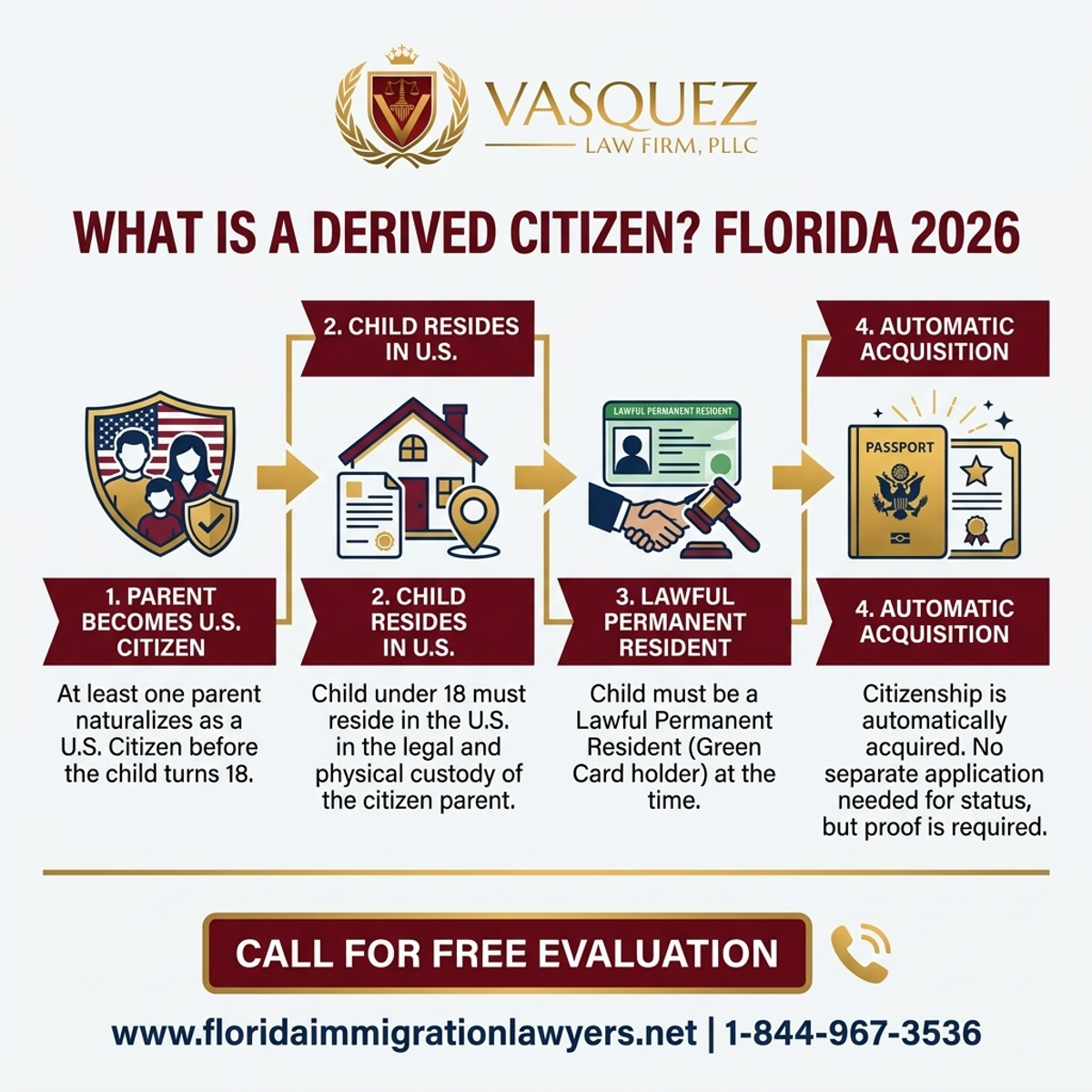
What is a derived citizen? A derived citizen is an individual who automatically acquires U.S. citizenship through the naturalization of one or both of their parents, rather than through their own independent naturalization application. This process is governed primarily by Section 320 of the Immigration and Nationality Act (INA), 8 U.S.C. § 1431. To qualify, the child must be under 18 years old, a lawful permanent resident (Green Card holder), and reside in the U.S. in the legal and physical custody of the U.S. citizen parent. This status is automatic once all conditions are met, meaning no application is typically needed for the citizenship itself, though a Certificate of Citizenship can be applied for.
- Derived citizenship is automatic once conditions are met.
- Child must be under 18, a Green Card holder, and in U.S. citizen parent's custody.
- No separate naturalization application for the child is required.
- A Certificate of Citizenship (Form N-600) can document this status.
- Laws are specific, and consulting an attorney is highly recommended.
What is a Derived Citizen? Understanding Your Status in Florida 2026
Navigating the complexities of U.S. immigration law can be a challenging journey for many families in Florida. One area that often causes confusion is the concept of derived citizenship, especially for children born abroad to parents who later become U.S. citizens. For families in Orlando and across the Sunshine State, understanding how a child can automatically become a U.S. citizen through their parents is crucial for securing their future and accessing the full range of rights and opportunities.
As of 2026, the provisions for derived citizenship remain a vital pathway to U.S. citizenship for many young individuals. This article will delve into what it means to be a derived citizen, the specific eligibility requirements, the application process for obtaining documentation, and common pitfalls to avoid. We will also provide Florida-specific context, including references to local USCIS offices and the unique demographic landscape of our state. Our goal is to demystify this important aspect of immigration law, ensuring you have the knowledge to protect your family's immigration status.
Do you have questions about your child's citizenship status or believe they may qualify for derived citizenship? The expert attorneys at Florida Immigration Lawyers are here to provide clear guidance and dedicated representation. Do not hesitate to seek professional legal assistance. Call Florida Immigration Lawyers at 1-844-967-3536 for a free consultation today.
What Exactly is Derived Citizenship and How Does it Differ from Acquired Citizenship?
Derived citizenship refers to the automatic acquisition of U.S. citizenship by a child through the naturalization of their parent(s). This is distinct from acquired citizenship, which typically applies to children born outside the U.S. to parents who were already U.S. citizens at the time of the child's birth. The key difference lies in the timing: derived citizenship occurs when the child's parent(s) naturalize after the child's birth, while acquired citizenship means the parent was a citizen at the time of birth.
For a child to obtain derived citizenship, several strict conditions must be met simultaneously. These include the child being under the age of 18, holding lawful permanent resident (LPR) status, and residing in the legal and physical custody of the U.S. citizen parent. Furthermore, the child must be residing in the United States. This automatic conferral of citizenship is a powerful provision of U.S. law, designed to keep families together and ensure children of naturalized citizens share the same status as their parents. Understanding these distinctions is vital for families in Florida, where many parents have naturalized over the years, potentially making their children eligible for this automatic pathway.
The legal basis for derived citizenship is primarily found in Section 320 of the Immigration and Nationality Act (INA), 8 U.S.C. § 1431. This section outlines the specific criteria that must be satisfied for a child to become a U.S. citizen automatically. It is a complex area, and seemingly minor details can have significant impacts on eligibility. For example, the child's marital status, the parents' marital status, and the specific sequence of events (e.g., when the parent naturalized relative to the child obtaining a green card) are all critical factors. In Florida, with its diverse immigrant communities, many families benefit from these provisions, but often require legal counsel to ensure all conditions are met and properly documented.
What are the Eligibility Requirements for Derived Citizenship in Florida in 2026?
As of 2026, the eligibility criteria for derived citizenship under INA Section 320 (8 U.S.C. § 1431) are precise and must all be met before the child's 18th birthday. Families in Orlando and throughout Florida should carefully review these conditions to determine if their child qualifies. Meeting these requirements means the child automatically becomes a U.S. citizen, often without needing to file a separate naturalization application.
Child's Age and Marital Status
The child must be under 18 years of age at the time all conditions are met. This is a strict deadline, and eligibility ceases once the child turns 18. Additionally, the child must be unmarried. If a child marries before meeting all other conditions, they are generally no longer eligible for derived citizenship under this provision. It is essential for families to track these timelines closely, especially in the fast-paced environment of immigration processing.
Lawful Permanent Resident Status
The child must be a lawful permanent resident (LPR), meaning they hold a valid Green Card. This status must have been acquired legally, and the child must maintain it until the moment derived citizenship takes effect. For many families in Florida, obtaining the Green Card is often the first major step in their immigration journey, and it's a prerequisite for derived citizenship.
Parental U.S. Citizenship
At least one parent must be a U.S. citizen. This parent can be a natural-born citizen or a naturalized citizen. If one parent is a U.S. citizen and the other is not, the child can still derive citizenship through the citizen parent, provided all other conditions are met. The naturalization process for the parent must be completed before the child's 18th birthday. This requirement underscores the importance of the parent's own journey to citizenship.
Custody and Residence in the U.S.
The child must be residing in the United States in the legal and physical custody of the U.S. citizen parent. Legal custody generally means the parent has been awarded custody by a court or is the biological parent in an intact marriage. Physical custody means the child lives with the U.S. citizen parent. Both legal and physical custody must be established at the time the parent naturalizes and the child meets the other criteria. This condition is particularly important for families with complex custody arrangements or those who have recently moved to Florida.
How to Apply for Documentation of Derived Citizenship in Florida?
While derived citizenship is often automatic once all eligibility conditions are met, individuals typically need a document to prove their U.S. citizenship. The primary way to do this is by applying for a Certificate of Citizenship (Form N-600) or a U.S. Passport. For families in Florida, navigating this documentation process requires careful attention to detail and adherence to USCIS procedures.
The application for a Certificate of Citizenship, Form N-600, is filed with U.S. Citizenship and Immigration Services (USCIS). This form serves as official proof that an individual is a U.S. citizen through their parents. While not strictly necessary for the citizenship itself, having this certificate can simplify many aspects of life, from voting to obtaining federal benefits and proving identity. Many Florida residents choose to pursue the N-600 to avoid future complications.
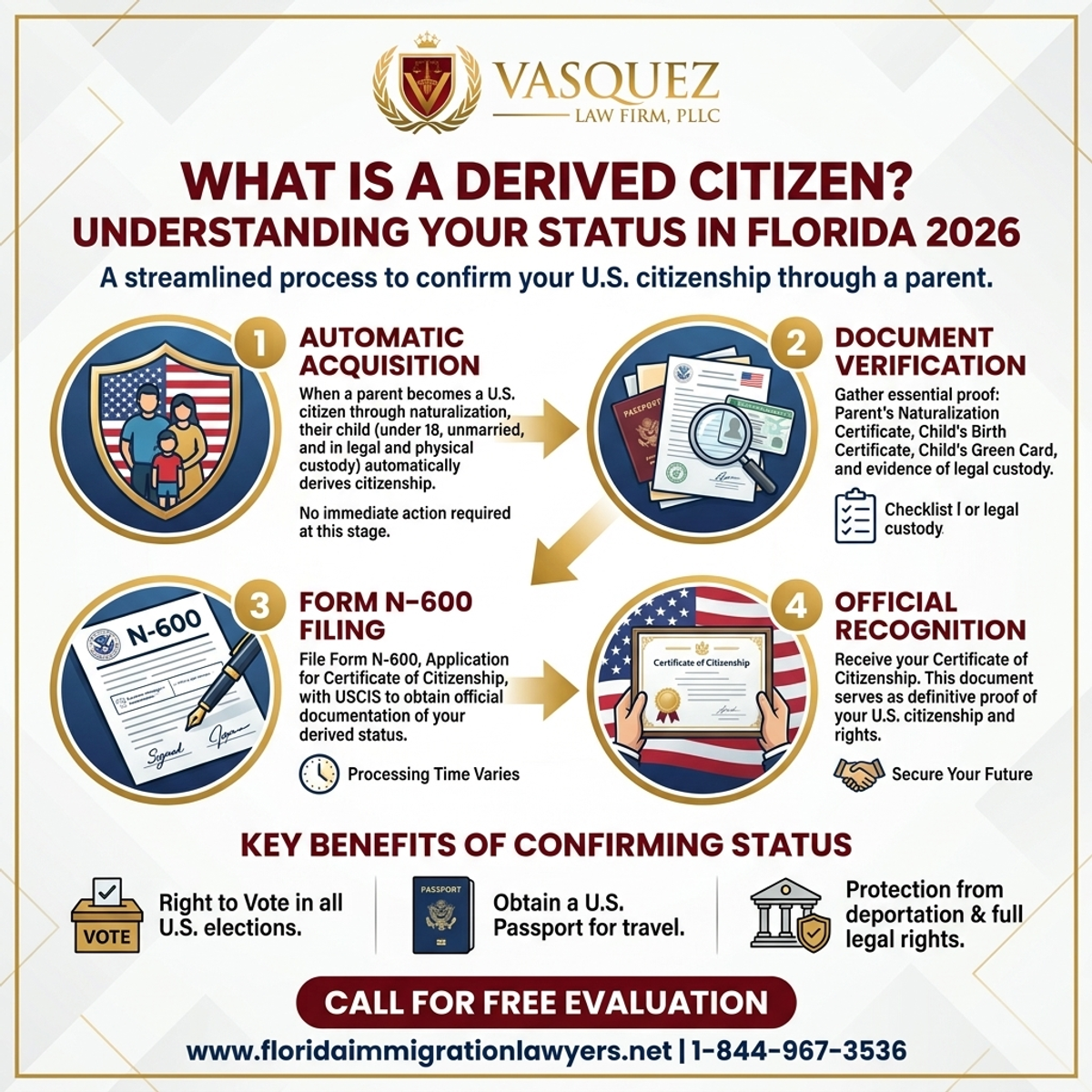
Step-by-Step Process — What is a Derived Citizen? Understanding Your Status in Florida 2026
Step-by-Step Guide to Documenting Derived Citizenship
- Gather Required Documents: Collect all necessary documents, including the child's birth certificate, parents' marriage certificate (if applicable), parent's naturalization certificate or proof of U.S. citizenship, child's Green Card, and any court orders related to custody. Ensure all foreign documents are translated into English by a certified translator.
- Complete Form N-600: Accurately fill out Form N-600, Application for Certificate of Citizenship. Be thorough and honest in providing all requested information. Any discrepancies or omissions can lead to delays or denials.
- Pay Filing Fees: Submit the required filing fee to USCIS. As of 2026, fees are subject to change, so always check the official USCIS website for the most current amount. Fee waivers may be available for eligible applicants.
- Submit Application: Mail the completed Form N-600, supporting documents, and fee to the appropriate USCIS Lockbox facility. For Florida residents, this typically means sending it to the designated address for N-600 applications. Keep copies of everything you submit.
- Attend Biometrics Appointment: USCIS will send an appointment notice for the child to attend a biometrics (fingerprinting and photograph) appointment at a local Application Support Center (ASC). For those in Florida, this might be in Orlando, Tampa, or Miami, depending on your address.
- Attend Interview (If Required): While many derived citizenship cases do not require an interview, USCIS may schedule one if they need additional information or clarification. The child and the U.S. citizen parent would typically attend this interview at a USCIS field office, such as the one in Orlando or Hialeah.
- Receive Decision: USCIS will review the application and make a decision. If approved, the child will receive their Certificate of Citizenship. This document is proof of their U.S. citizenship.
Timeline and Processing Expectations for Derived Citizenship Documentation (N-600) in 2026
Understanding the processing timeline for a Certificate of Citizenship (Form N-600) is crucial for families in Florida. While the child's citizenship status is often automatic, obtaining the physical document takes time. As of 2026, USCIS processing times can vary significantly based on the service center, the complexity of the case, and current caseloads. It is important to remember that these are typical timeframes and individual cases may differ.
For those filing in Florida, applications are processed by various USCIS service centers, and the specific field office (e.g., Orlando, Miami) may handle interviews if required. You can check the most up-to-date processing times on the official USCIS website by selecting Form N-600 and your relevant field office or service center. These estimates can help manage expectations, but legal counsel can also assist in monitoring your case status and addressing any potential delays.
The journey to obtaining a Certificate of Citizenship can feel lengthy, but with proper preparation and realistic expectations, it is a manageable process. Many families find peace of mind once they have this official document in hand, confirming their child's status as a U.S. citizen. Remember that while the N-600 documents citizenship, the citizenship itself was derived automatically upon meeting the conditions, often years prior to the application for the certificate.
| Stage | Typical Timeframe (As of 2026) | Notes |
|---|---|---|
| Preparation & Filing (Form N-600) | 1-3 months | Gathering documents, translations, filling out the form accurately. |
| Receipt Notice Issued | 2-4 weeks after filing | USCIS acknowledges receipt of your application. |
| Biometrics Appointment | 3-6 months after filing | Scheduled at a local Application Support Center (ASC) in Florida (e.g., Orlando, Tampa). |
| Interview (If Required) | 6-12 months after filing | Less common for N-600s, but can be scheduled at a USCIS field office (e.g., Miami, Orlando). |
| Decision & Certificate Issuance | 9-18 months after filing | Total processing time can fluctuate; check USCIS website for current estimates. |
Cost Factors and Fee Breakdown for Documenting Derived Citizenship
When applying for a Certificate of Citizenship (Form N-600) to document derived citizenship, understanding the associated costs is important. The primary expense is the USCIS filing fee, but other potential costs can arise. As of 2026, USCIS fees are subject to change, and it is always advisable to consult the official USCIS website or your legal counsel for the most current information. The fees discussed here are general estimates and should not be taken as exact figures.
The filing fee for Form N-600 is a significant component of the overall cost. This fee covers the processing of your application by USCIS. While the fee itself can be substantial, it is an investment in obtaining official proof of your child's U.S. citizenship, which can be invaluable for their future. For some eligible applicants, USCIS offers fee waivers based on income or receipt of certain public benefits. It is worth exploring if your family qualifies for a waiver, as this can significantly reduce the financial burden.
Beyond the direct USCIS fees, families in Florida should also account for other potential expenses. These might include costs for obtaining certified copies of documents, such as birth certificates or marriage licenses, especially if original documents are not readily available or if they need to be replaced. Additionally, if any foreign language documents need to be submitted, certified translations will be required, incurring separate costs. These translation services must be performed by a competent translator who certifies that the translation is accurate and that they are competent to translate from the foreign language into English.
Legal fees for assistance from an experienced immigration attorney are another factor to consider. While not mandatory, engaging a lawyer can streamline the process, ensure accuracy, and help navigate complex situations, potentially saving time and preventing costly errors. An attorney can help prepare the application, organize supporting documents, and represent you during interviews, offering invaluable peace of mind for families in Florida seeking to document their child's derived citizenship.
Key Statistics — What is a Derived Citizen? Understanding Your Status in Florida 2026
| Item | Typical Fee (Estimate, As of 2026) | Notes |
|---|---|---|
| USCIS Form N-600 Filing Fee | $1,170 - $1,340 | Subject to change; check official USCIS website. Fee waivers may be available. |
| Biometrics Fee | Included in N-600 filing fee | No separate fee for biometrics for N-600 applicants. |
| Certified Translations | $20 - $50 per page | Required for any non-English documents. Varies by translator and complexity. |
| Obtaining Certified Records | $10 - $30 per document | Costs for birth certificates, marriage licenses, court orders from government agencies. |
| Immigration Attorney Fees | Varies widely based on case complexity and attorney | Highly recommended for expert guidance, document preparation, and representation. |
Do not navigate this process alone. Contact Florida Immigration Lawyers today to ensure your child's derived citizenship is properly documented. Our firm is dedicated to serving families across Florida, including Orlando, Miami, and Tampa, with compassionate and expert legal advice. Call 1-844-967-3536 for a free consultation.
Common Mistakes to Avoid When Seeking Derived Citizenship Documentation
Seeking to document your child's derived citizenship can be a straightforward process if handled correctly, but several common mistakes can lead to significant delays or even denial. Being aware of these pitfalls can save families in Florida considerable time, stress, and resources.
- Missing the Age Deadline: The child must meet all derived citizenship criteria before their 18th birthday. Many families incorrectly assume the N-600 can be filed after this age, but the citizenship must have been conferred while the child was still a minor. Missing this critical deadline means the child likely cannot derive citizenship and may need to pursue their own naturalization process.
- Incomplete or Inaccurate Documentation: Submitting an N-600 application with missing documents or incorrect information is a frequent cause of Requests for Evidence (RFEs) or denials. Ensure all birth certificates, marriage certificates, naturalization certificates, Green Cards, and custody documents are provided and accurate.
- Lack of Legal or Physical Custody: A common misunderstanding is the requirement for the child to be in the legal and physical custody of the U.S. citizen parent. If custody arrangements are complex or not clearly established, this can jeopardize the application. Documentation such as court orders proving legal custody is essential.
- Child Not a Lawful Permanent Resident: Derived citizenship requires the child to be a lawful permanent resident (Green Card holder) at the time all other conditions are met. If the child's Green Card status has lapsed or was never properly obtained, they are not eligible.
- Failure to Update Addresses: If you move while your application is pending, failing to inform USCIS of your new address can result in missed notices, appointment letters, and even denial of your application. Always update your address with USCIS promptly.
- Incorrectly Assuming Automatic Citizenship without Documentation: While derived citizenship is automatic, having a Certificate of Citizenship (N-600) or a U.S. Passport is crucial for proving it. Without documentation, the child may face issues with school enrollment, employment, or travel.
- Not Seeking Legal Advice for Complex Cases: Cases involving adopted children, stepchildren, children born out of wedlock, or complex custody situations often have additional legal requirements. Attempting to navigate these without an experienced immigration attorney can lead to errors and significant delays.
When to Call a Florida Immigration Lawyer for Derived Citizenship
While the concept of derived citizenship appears straightforward, the specifics of immigration law can be incredibly intricate. Knowing when to seek professional legal counsel can make all the difference in successfully documenting your child's U.S. citizenship. Florida Immigration Lawyers are here to provide the expert guidance you need, especially in these critical scenarios.
You should strongly consider contacting an immigration attorney if your child's situation involves any complexities. For instance, if the child was adopted, born out of wedlock, or if there are complicated family circumstances regarding legal or physical custody, an attorney can help clarify eligibility. Similarly, if there are questions about the validity of a parent's naturalization or if the child's Green Card status has any issues, legal expertise is invaluable. Our attorneys regularly handle cases for families in Orlando, Miami, and other Florida communities, understanding the unique challenges they face.
Furthermore, if you have previously filed an N-600 application that was denied, or if you have received a Request for Evidence (RFE) from USCIS, it is crucial to consult a lawyer immediately. An attorney can help you understand the reasons for the denial or RFE, gather the necessary additional documentation, and strategize the best course of action for resubmission or appeal. Do not try to navigate these complex responses from USCIS alone. Florida Immigration Lawyers are experienced in responding to such challenges and will fight to protect your child's right to citizenship. We understand the nuances of the Executive Office for Immigration Review (EOIR) and citizenship processes.
About Florida Immigration Lawyers
Florida Immigration Lawyers is a leading law firm dedicated to providing comprehensive and compassionate immigration legal services across the entire state of Florida. Our experienced team of attorneys understands the profound impact immigration matters have on individuals and families, and we are committed to offering personalized, effective legal solutions.
We specialize in a wide range of immigration practice areas, including family-based immigration, business immigration, asylum, deportation defense, and, critically, citizenship processes like derived citizenship. With offices strategically located and serving all Florida communities, including Orlando, Miami, Tampa, and Jacksonville, we are readily accessible to clients throughout the state. Our attorneys are available 24/7 to address your urgent concerns and offer free consultations to help you understand your options without financial commitment. We pride ourselves on our bilingual services, with a dedicated team ready to assist clients in English and Spanish. When you choose Florida Immigration Lawyers, you choose a partner committed to achieving the best possible outcome for your immigration journey. Learn more about our team at our attorneys page or contact us directly.
Sources and References
- U.S. Citizenship and Immigration Services (USCIS)
- Executive Office for Immigration Review (EOIR)
- U.S. Department of State (Travel.State.Gov)
- Immigration and Nationality Act (INA) Section 320 (8 U.S.C. § 1431) - USCIS Policy Manual, Volume 12, Part H, Chapter 4
- Immigration and Nationality Act (INA) Section 322 (8 U.S.C. § 1433) - USCIS Policy Manual, Volume 12, Part H, Chapter 5
- 8 Code of Federal Regulations (CFR) Part 320 - Children of Citizen Parents
- 8 Code of Federal Regulations (CFR) Part 322 - Children Residing Outside the United States
Related services: citizenship test preparation, dual citizenship guidance.
This article provides general legal information and is not intended as legal advice. Every case is unique, and outcomes depend on specific facts and circumstances. Contact an attorney for advice about your particular situation.
Do not leave your child's future to chance. If you believe your child may be eligible for derived citizenship, or if you need assistance documenting their status, contact Florida Immigration Lawyers today. Our knowledgeable team is ready to assist you. Call us at 1-844-967-3536 for a free consultation. Se Habla Español - Estamos aqui para ayudarle.
Do Not Navigate This Process Alone
Our experienced immigration attorneys are ready to fight for you. Get a free, confidential consultation today.
Se Habla Español
Or leave your details and we’ll call you:
Free Evaluation in 24 Hours
Or talk to us right now

AI voice assistant — available 24/7
FreeFrequently Asked Questions

William J. Vásquez
Founding Attorney · Vasquez Law Firm
U.S. Air Force veteran and immigration attorney with years of hands-on U.S. immigration experience. J.D., NCCU School of Law. AILA member. Admitted to the 4th, 5th, and 11th Circuit Courts.
Available 24/7 - Free Evaluations
Reviewed for legal accuracy by William J. Vásquez
Licensed in North Carolina; U.S. immigration is federal practice.
Related Legal Services
Our Florida immigration attorneys can help you with immigration practice areas, free immigration consultation and experienced immigration attorneys. Call today at 1-844-967-3536 for a free consultation.
Related Links
Related Topics
Free Legal Consultation
Discuss your case with our experienced attorneys. We're available 24/7.
Se Habla Español - Estamos aquí para ayudarle.
Related Articles
Immigration Lawyer Orlando Free Consultation 2026
Discover how to find an immigration lawyer in Orlando offering a free consultation. Understand the services available and why choosing Florida Immigration Lawyers can make a difference in your case.
Military Naturalization Expedited in Florida Bases
Explore military naturalization options for families at Florida bases, including parole in place benefits in Miami. Learn how to expedite your application with expert guidance from Florida Immigration Lawyers.
K-3 Visa Timeline in Florida: What to Expect
Learn the K-3 visa timeline process in Florida, including steps, costs, and documentation. Understand your options in 2026 with guidance from Florida Immigration Lawyers.
Immigration Lawyer Orlando Free Consultation: Document
Discover the essential document checklist for immigration processes in Florida. Whether you're in Hialeah or elsewhere in Florida, this guide will help you prepare for your immigration journey. Contact Florida Immigration Lawyers for a free consultation and expert guidance today.