Immigration Lawyer Orlando Free Consultation: Document
Discover the essential document checklist for immigration processes in Florida. Whether you're in Hialeah or elsewhere in Florida, this guide will help you prepare for your immigration journey. Contact Florida Immigration Lawyers for a free consultation and expert guidance today.

When seeking an immigration lawyer in Orlando for a free consultation, it’s essential to have a comprehensive document checklist for your case. Key documents include identification, USCIS forms, and financial records. These documents are crucial for a successful immigration process in Florida. Prepare thoroughly to ensure a smooth consultation.
- Bring all personal identification documents.
- Complete necessary USCIS forms.
- Gather financial and employment records.
Introduction
Moving to Florida, and particularly to a vibrant city like Hialeah, presents many opportunities and challenges for immigrants. Understanding what documents are necessary for your immigration process is crucial. Whether you're applying for a visa, green card, or citizenship, having the correct paperwork is essential. This blog outlines the necessary documents for various immigration processes in Florida. Call Florida Immigration Lawyers at 1-844-967-3536 for a free consultation.
Florida's diverse economy, cultural richness, and strategic location make it an attractive destination for individuals and families worldwide. However, navigating the complex landscape of U.S. immigration law can be daunting. From the initial application to the final interview, every step requires meticulous attention to detail, especially when it comes to documentation. Missing or incorrect paperwork is one of the leading causes of delays and denials in immigration cases.
Preparing a thorough document checklist is not merely a bureaucratic step; it's a critical foundation for your entire immigration journey. It ensures that you can present a clear, compelling case to U.S. Citizenship and Immigration Services (USCIS) or other relevant authorities. This preparation also makes your initial consultation with an immigration lawyer much more productive, allowing them to quickly assess your situation and provide accurate guidance. Florida Immigration Lawyers are here to help you understand these requirements and prepare effectively.
What Documents Do I Need for Immigration Processes in Florida?
As of 2026, the documentation required for immigration processes in Florida includes identification, financial records, and completed USCIS forms. These documents vary depending on the type of application, such as family-based immigration or employment visas.
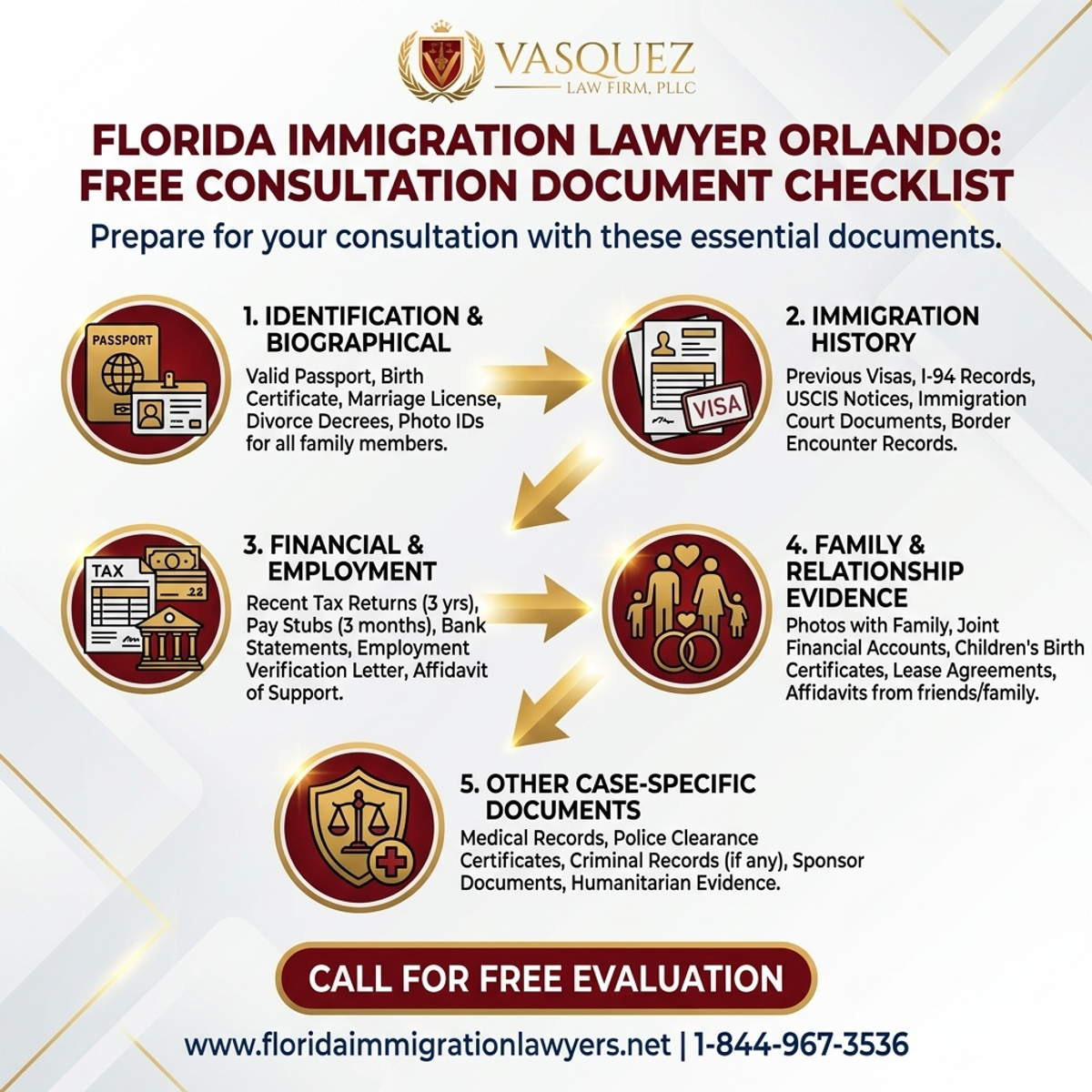
Common documents include:
- Passport and birth certificates
- Marriage certificates
- Proof of residency
- Financial documents (tax returns, pay stubs)
- Completed USCIS forms
Having these ready can streamline your application and consultation with an immigration lawyer.
Beyond these common items, specific applications demand unique supporting evidence. For family-based petitions, you might need divorce decrees, adoption papers, or extensive proof of a bona fide marital relationship, such as joint bank accounts, property deeds, and shared utility bills. Employment-based visas often require academic transcripts, professional licenses, letters of recommendation, and detailed job offer letters from U.S. employers.
It's crucial to remember that all documents submitted must be current, valid, and, if not in English, accompanied by certified translations. The consequences of submitting outdated or improperly translated documents can range from a Request for Evidence (RFE), which significantly delays your case, to an outright denial. Consulting with Florida Immigration Lawyers at 1-844-967-3536 can provide clarity on the exact documents needed for your specific situation, helping you avoid costly mistakes and ensuring your application is as strong as possible.
How to Prepare a Document Checklist for USCIS Forms
To create a comprehensive checklist, identify the specific application process you're pursuing. Each application type has different document requirements.
- Identify your immigration goal (e.g., visa, green card, citizenship).
- Visit the USCIS website to find the specific forms needed.
- Gather personal identification documents.
- Compile financial and employment records.
- Prepare any necessary affidavits or sponsor letters.
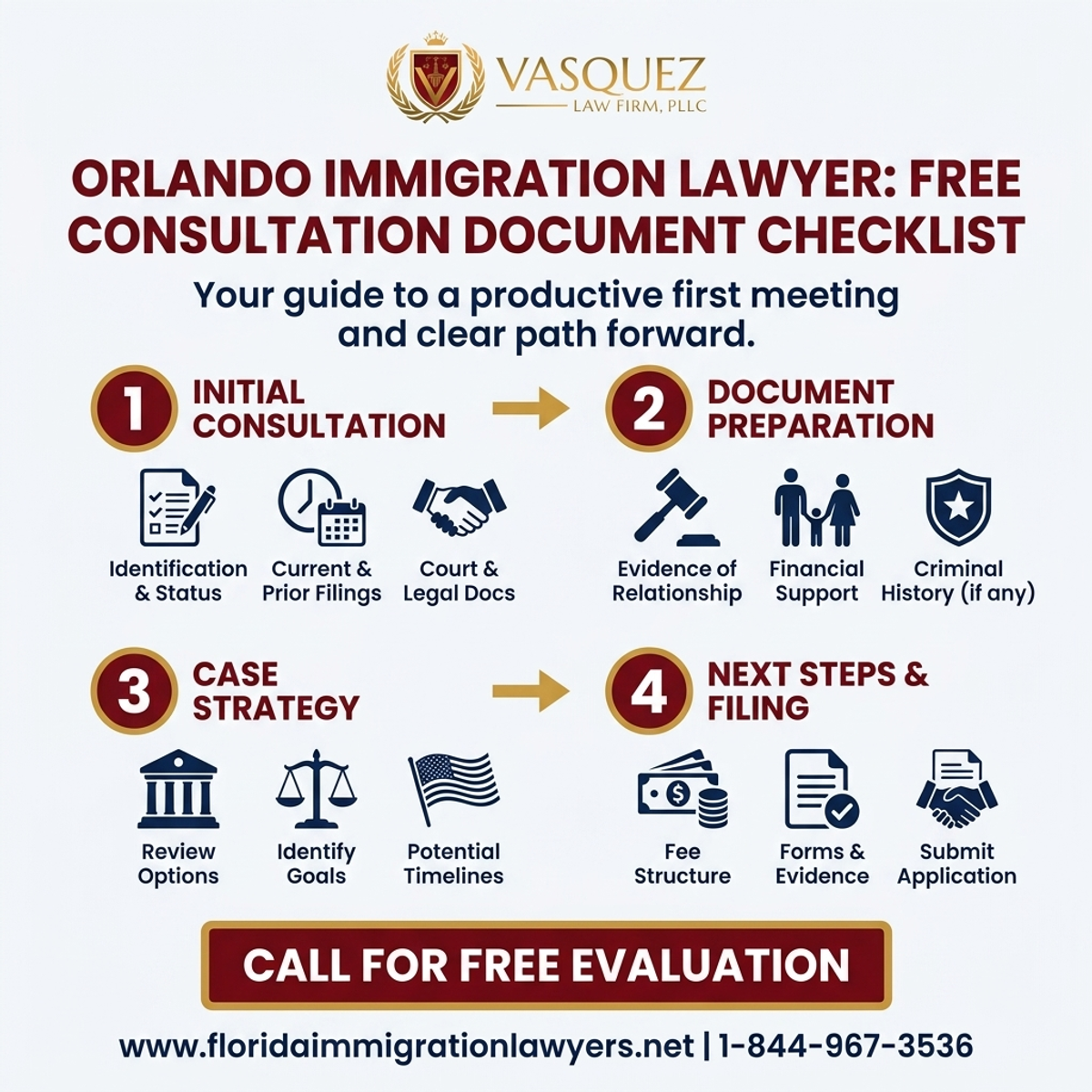
Step-by-Step Process — Immigration Lawyer Orlando Free Consultation: Document Checklist
Consulting with a lawyer can ensure that you have all necessary documents prepared correctly.
Once you've identified your goal and the corresponding USCIS forms, a practical approach involves creating a physical and digital organization system. Use binders with dividers for physical documents, labeling each section clearly. For digital copies, create a well-structured folder system on your computer or cloud storage. This meticulous organization will not only simplify the preparation process but also make it easier to retrieve documents quickly if USCIS issues a Request for Evidence (RFE).
Remember that for any document not originally in English, a certified translation is mandatory. This means the translator must attest in writing that they are competent to translate the foreign language into English and that the translation is complete and accurate. A notary public cannot certify a translation; only the translator can. Florida Immigration Lawyers can guide you on reliable translation services and ensure your translated documents meet USCIS standards, preventing potential delays or rejections.
What is the Typical Timeline for Processing Immigration Documents in Florida?
The processing time for immigration documents varies greatly depending on the type of application and the USCIS workload.
| Stage | Typical Timeframe | Notes |
|---|---|---|
| Initial Application Review | 2-4 weeks | Ensure all documents are complete and accurate. |
| Background Check | 3-6 months | Varies by individual case details. |
| Interview Scheduling | 4-8 months | Can be longer for complex cases. |
| Final Decision | 6-18 months | Depends on USCIS and case specifics. |
As of 2026, processing times are subject to change, and consulting a lawyer can provide the most current information.
Several factors can influence these timelines, including the specific service center handling your case, the volume of applications, and changes in immigration policy. For instance, a complex case involving waivers or a history of immigration violations will invariably take longer due to increased scrutiny. Conversely, a straightforward family petition with all documents perfectly in order might proceed more quickly. It's important to view the provided timeframes as estimates, not guarantees.
One common cause of delays is the issuance of a Request for Evidence (RFE). An RFE occurs when USCIS determines that an application is missing required documentation or needs further clarification. Responding promptly and thoroughly to an RFE is critical. An experienced immigration attorney from Florida Immigration Lawyers can help you understand the RFE, gather the necessary additional evidence, and submit a comprehensive response within the specified deadline, minimizing further delays.
How Much Do Immigration Document Preparations Cost in Florida?
Costs associated with preparing immigration documents can vary widely. Understanding these costs can help you budget effectively.
| Item | Typical Fee | Notes |
|---|---|---|
| USCIS Form Fees | Variable | Check the USCIS website for current fees. |
| Attorney Consultation | Free with our firm | 1-844-967-3536 for a consultation. |
| Document Preparation | $500 - $1,500 | Depends on complexity. |
Key Statistics — Immigration Lawyer Orlando Free Consultation: Document Checklist
Consult with Florida Immigration Lawyers to understand potential costs specific to your situation.
Beyond the direct USCIS filing fees, which can range from hundreds to thousands of dollars depending on the form, applicants should budget for other potential expenses. These may include biometric services fees, medical examination costs (which can be substantial and are mandatory for many green card applications), translation services for non-English documents, and even travel expenses for interviews at USCIS offices or U.S. embassies/consulates abroad. These ancillary costs can quickly add up, so comprehensive financial planning is essential.
While attorney fees might seem like an additional expense, they often represent a worthwhile investment. An experienced immigration lawyer can prevent costly errors, navigate complex legal requirements, and significantly increase the likelihood of a successful outcome, potentially saving you more money and stress in the long run. Florida Immigration Lawyers offers a free consultation at 1-844-967-3536 to discuss your case and provide a transparent overview of potential costs, ensuring you are fully informed from the start.
Middle CTA
Do not navigate this process alone. Contact Florida Immigration Lawyers today.
Common Mistakes to Avoid
Submitting incomplete forms:
Submitting incomplete forms is a primary cause of delays and rejections. USCIS will typically issue a Request for Evidence (RFE), which extends processing times significantly, or even deny the application outright if crucial information is missing. Always double-check every field and ensure all required supporting documents are attached before submission.
Failure to provide translations:
Any document not in English must be accompanied by a complete and accurate English translation, along with a certification from the translator. Failing to provide certified translations will lead to an RFE or rejection, as USCIS cannot process documents in foreign languages. Ensure the translator is competent and provides a signed certification.
Incorrect or missing signatures:
All USCIS forms require specific signatures, often from both the applicant and the petitioner, and sometimes a preparer. Missing or incorrect signatures render the form invalid, leading to immediate rejection. Always review signature requirements carefully for each form and ensure all parties sign in the correct places.
Not keeping copies:
It is absolutely vital to keep complete copies of every document you submit to USCIS, including the application forms, supporting evidence, and any correspondence. These copies serve as your personal record, are essential for future reference, and are crucial if you need to appeal a decision or reapply.
Ignoring deadlines:
USCIS sets strict deadlines for responding to RFEs, Notices of Intent to Deny (NOIDs), and other requests. Missing these deadlines can have severe consequences, including the denial or closure of your case. Always mark deadlines prominently and seek legal advice immediately if you anticipate difficulty meeting one.
Providing outdated documents:
Immigration applications often require current information, especially concerning financial status, employment, or marital status. Submitting outdated documents can lead to questions about your eligibility or current circumstances, triggering an RFE. Always provide the most recent versions of documents unless specifically requested otherwise.
Not consulting a lawyer:
Attempting to navigate complex immigration processes without professional legal guidance significantly increases the risk of errors, delays, and denials. An experienced immigration lawyer can identify potential issues, ensure compliance, and advocate on your behalf, often saving you time and money in the long run.
Assuming all cases are the same:
Every immigration case is unique, with specific requirements based on individual circumstances, nationality, and immigration history. What worked for a friend or family member may not apply to your situation. Relying on generalized advice can lead to critical missteps; always seek personalized guidance.
Overlooking financial documentation:
Financial stability is a cornerstone of many immigration applications, especially those requiring an Affidavit of Support. Failing to provide comprehensive financial documentation, such as tax returns, pay stubs, and bank statements, can raise concerns about public charge inadmissibility and lead to application denial.
Failing to update address:
It is a legal requirement to notify USCIS of any address change within 10 days of moving. Failure to do so can result in missed notices, interview appointments, or RFEs, which could lead to your application being denied or abandoned without your knowledge. Always update your address promptly via the USCIS website.
When to Call a Lawyer
Consider calling a lawyer if you face complex situations, such as legal issues or uncertain eligibility. Warning signs include receiving a notice of intent to deny or experiencing significant delays. Contact Florida Immigration Lawyers for guidance and support.
Beyond these immediate warning signs, proactive engagement with an immigration attorney can be invaluable. If you have a criminal record, previous immigration violations, or complex family situations (e.g., prior marriages, adopted children), a lawyer can help assess your eligibility and identify potential waivers or remedies. Similarly, for specialized visas like investor visas or those requiring extraordinary ability, legal expertise is essential to compile a compelling case.
Florida Immigration Lawyers are equipped to handle a wide range of challenging scenarios, from deportation defense to complex appeals. We can represent you during interviews, respond to official notices, and provide strategic advice to navigate the intricate legal framework. Don't wait until a problem escalates; an early consultation at 1-844-967-3536 can help you understand your options and build a strong foundation for your immigration goals.
About Florida Immigration Lawyers
Florida Immigration Lawyers is dedicated to assisting clients with their immigration needs. We offer comprehensive services, including visa applications, deportation defense, and family immigration. With our experienced team, we provide personalized guidance to help you navigate your immigration journey successfully. Call us at 1-844-967-3536 or visit our website at www.floridaimmigrationlawyers.net. We offer free consultations and are available 24/7, serving all of Florida.
Sources and References
- U.S. Citizenship and Immigration Services (USCIS)
- Executive Office for Immigration Review (EOIR)
- 8 U.S.C. Chapter 12 - Immigration and Nationality Act
- U.S. State Department
Related services: immigration practice areas, family immigration services.
This article provides general legal information and is not intended as legal advice. Every case is unique, and outcomes depend on specific facts and circumstances. Contact an attorney for advice about your particular situation.
Final CTA
Contact Florida Immigration Lawyers for a free consultation at 1-844-967-3536. Se Habla Español - Estamos aquí para ayudarle.
If you need legal assistance, learn more about experienced immigration attorneys in Orlando, or call us at 1-844-967-3536 for a free consultation.
Do Not Navigate This Process Alone
Our experienced immigration attorneys are ready to fight for you. Get a free, confidential consultation today.
Se Habla Español
Or leave your details and we’ll call you:
Free Evaluation in 24 Hours
Or talk to us right now

AI voice assistant — available 24/7
FreeFrequently Asked Questions

William J. Vásquez
Founding Attorney · Vasquez Law Firm
U.S. Air Force veteran and immigration attorney with years of hands-on U.S. immigration experience. J.D., NCCU School of Law. AILA member. Admitted to the 4th, 5th, and 11th Circuit Courts.
Available 24/7 - Free Evaluations
Reviewed for legal accuracy by William J. Vásquez
Licensed in North Carolina; U.S. immigration is federal practice.
Related Legal Services
Our Florida immigration attorneys can help you with free immigration consultation, experienced immigration attorneys and business immigration. Call today at 1-844-967-3536 for a free consultation.
Related Links
Related Topics
Free Legal Consultation
Discuss your case with our experienced attorneys. We're available 24/7.
Se Habla Español - Estamos aquí para ayudarle.
Related Articles
Immigration Lawyer Orlando Free Consultation 2026
Discover how to find an immigration lawyer in Orlando offering a free consultation. Understand the services available and why choosing Florida Immigration Lawyers can make a difference in your case.
Military Naturalization Expedited in Florida Bases
Explore military naturalization options for families at Florida bases, including parole in place benefits in Miami. Learn how to expedite your application with expert guidance from Florida Immigration Lawyers.
K-3 Visa Timeline in Florida: What to Expect
Learn the K-3 visa timeline process in Florida, including steps, costs, and documentation. Understand your options in 2026 with guidance from Florida Immigration Lawyers.
Dual Citizenship Lawyer Tips for Naturalization Interview
Discover crucial tips for your naturalization interview in Florida with insights from a dual citizenship lawyer. Learn what to expect, how to prepare, and common pitfalls to avoid as you embark on your journey to U.S. citizenship.